Blog

  • LiPo vs Li-Ion Drone Batteries: How to Pick the Right Power Source for Your Drone in 2026

    LiPo vs Li-Ion Drone Batteries: How to Pick the Right Power Source for Your Drone in 2026

    Ask ten FPV pilots why their drone barely made it home, and most will blame the build. Only a few will point to the part that decided the outcome before takeoff. Most people ignore the fact that battery chemistry often plays a bigger role in a drone’s performance than most pilots realize.

    Same Chemistry Family, Different Builds

    Drones have moved well past being weekend toys. Racing rigs look for split-second throttle response, while survey and delivery fleets demand maximum airtime. LiPo and Li-Ion have become the two main battery choices for both types of drones. The gap between them is shifting so fast that a choice made a year ago might already be outdated.

    The split starts with construction. Li-Ion cells are built as rigid cylinders or prismatic blocks, the same format used in laptops and electric cars. LiPo cells use a flexible foil pouch filled with a polymer electrolyte instead of a rigid shell. That construction lets manufacturers mold LiPo into the thin, oddly shaped packs that fit inside a quad’s frame.

    Why Packaging Changes the Numbers

    Packaging is not just cosmetic. It carries real electrical consequences. Commercial Li-Ion cells typically achieve around 180–250 watt-hours per kilogram. Most drone-grade LiPo packs fall between roughly 130 and 200 watt-hours per kilogram, depending on cell design. A LiPo’s pouch, meanwhile, gives current a shorter, more direct path in and out of the cell. That shorter path lowers internal resistance, which means less voltage sag when a pilot slams the throttle.

    High C-rated LiPo packs remain the benchmark for aggressive throttle response, sustaining discharge rates of 50C — sometimes past 100C — without the voltage collapsing mid-maneuver. The trade-off is fragility. A punctured pouch fails far more dramatically than a dented metal can.

    Closing the Power Gap

    LiPo has held a clear advantage in high-power drone applications for years, but that gap is becoming smaller. A newer cylindrical design called a tabless cell removes the traditional spiral tab connection. Instead, it allows current to flow across a much larger part of the cell. Less resistance along that path means less heat and less sag, even under hard pulls.

    Independent cell testing already shows tabless 21700 packs closing much of the historical performance gap against older high-discharge Li-Ion cells, particularly in endurance-focused applications. Top-tier LiPo packs still hold the edge on raw peak burst current, but that edge keeps shrinking with each new cell generation.

    What Actually Wears Out

    Lifespan tells a similar story in reverse. LiPo packs typically last 300 to 500 charge cycles before capacity drops off, while Li-Ion cells last 500 to 1,000 cycles or more. Much of that durability comes from the pack, not the bare cell. Many Li-Ion battery packs include a battery management system that balances and protects each cell. Hobby-grade LiPo packs typically rely on external balancing during charging instead. A five-inch freestyle quad pulling 100 amps out of a hard punch needs LiPo’s instant power far more than it needs extra grams of capacity.

    A mapping drone flying for 45 minutes over a survey site benefits more from steady voltage and maximum airtime per gram, which is exactly where Li-Ion earns its keep. Storage habits matter just as much as the chemistry itself. A LiPo pack left fully charged for weeks loses capacity far faster than one stored near 3.8 volts per cell.

    The Real Cost Over Time

    Cost follows the same logic over time. LiPo is cheaper to buy, which still makes sense for short-term projects and tight budgets. Over the course of hundreds of missions each year, Li-Ion’s longer cycle life and lower maintenance begin to offset the higher purchase price. The exact savings depend on duty cycle and charging habits more than on any single published figure.

    One common assumption deserves correction, too. Shipping and storage rules for lithium batteries are set by watt-hour rating, not by whether a cell is a pouch or a cylinder. Neither does chemistry get an automatic pass on safety paperwork.

    Where the Technology Is Headed

    Some experimental and industrial UAV platforms are already exploring hybrid configurations that pair a Li-Ion main pack with a LiPo booster for takeoff. Several manufacturers are also demonstrating early commercial cells using semi-solid and solid-state chemistries that exceed 300 watt-hours per kilogram.

    Battery management systems are advancing alongside battery chemistry, with adaptive charging now predicting cell health rather than just monitoring voltage. Neither LiPo nor Li-Ion will disappear soon, but the line between them keeps getting thinner with each flying season.

    Final Thoughts

    The better battery has never really been about chemistry. It is about matching current delivery, energy density, and mission profile to the way a specific drone actually flies. The biggest change is the growing overlap between LiPo and Li-Ion batteries. Pilots who understand that overlap will outfly those still choosing batteries based on brand loyalty alone.

    FAQ

    1. Which is better for drones: LiPo or Li-Ion?
      Neither battery is better for every drone. LiPo is ideal for racing and freestyle drones that need high burst power, while Li-Ion is better for long-range, mapping, and inspection drones that prioritize flight time and efficiency.
    2. Why do FPV drones use LiPo batteries?
      FPV drones rely on LiPo batteries as they deliver high discharge rates with minimal voltage sag. This provides faster throttle response and consistent performance during aggressive flying.
    3. Do Li-Ion batteries last longer than LiPo batteries?
      Yes. Li-Ion batteries typically last between 500 and 1,000 charge cycles, while most LiPo batteries deliver around 300 to 500 cycles. Proper charging and storage can extend the lifespan of both.
    4. Are tabless Li-Ion cells replacing LiPo batteries?
      Not completely. Tabless Li-Ion cells improve power delivery and reduce heat, making them more suitable for demanding drone applications. However, LiPo batteries still lead in peak burst current for high-performance FPV flying.
    5. How should LiPo drone batteries be stored?
      LiPo batteries should be stored at about 3.8 volts per cell in a cool, dry place. Storing them fully charged for long periods can reduce capacity and shorten battery life.
  • Banking on the Cloud: Tripatjeet Singh’s Blueprint for a Secure, Step-by-Step Migration

    Banking on the Cloud: Tripatjeet Singh’s Blueprint for a Secure, Step-by-Step Migration

    Financial services are increasingly turning to the cloud to improve customer service, streamline operations, and gain deeper insights into customer needs. However, this transition is far from straightforward. Most banks and financial institutions still rely on legacy systems built decades ago—systems that struggle to meet modern demands for robust security, continuous uptime, and rapid digital experiences. The challenge is compounded by strict regulations, where even minor missteps can erode customer trust. Many organizations that attempt a wholesale overhaul encounter delays, service disruptions, or outright failures.

    Instead, a phased approach is proving far more effective. The cloud should be seen not just as a technological upgrade, but as a means to build a more resilient and secure future. Tripatjeet Singh, a senior cloud engineer in the financial services industry, embodies this philosophy. His career has been marked by successfully transitioning legacy systems to modern cloud architectures, rising from junior engineer to a leadership role by delivering practical solutions to real-world problems.

    Singh does not advocate for rapid, risky transformations. Instead, he evaluates each application individually, determining the best migration strategy—whether a simple lift-and-shift, a partial modernization, or a complete rebuild—based on its criticality and technical complexity. He starts with lower-risk systems, allowing teams to build confidence and skills before tackling mission-critical workloads. This method has slashed environment setup times from weeks to just hours, enabling faster deployments while still adhering to strict industry regulations.

    But Singh’s contributions extend beyond migration itself. He places heavy emphasis on the infrastructure that ensures ongoing safe operation. He has designed multi-account cloud frameworks that embed security, monitoring, and deployment controls directly into the architecture. These reusable blueprints allow teams to move quickly without exceeding secure boundaries.

    A standout achievement is an AI-powered check fraud detection system he helped design. By analyzing transaction patterns and check images, the system flags suspicious activity with remarkable results: detection accuracy improved by 20 to 30 percent, while false positives dropped by 50 to 60 percent. This means security teams spend less time on dead ends and more time addressing genuine threats.

    His work also encompasses zero-trust security, automated certificate management, and centralized monitoring across hybrid environments—all raising the security bar for modern banking. Singh further contributes to the broader technical community by publishing research papers on topics like scalable logging for AI compliance and secure access using short-lived certificates.

    Singh’s view of the cloud is straightforward: it is more than technology—it is about building trust through robust security and governance, enabling banks to deliver the highly personalized service customers demand. His approach to supporting organizations with legacy systems, skill shortages, and data regulations is a mindset that consistently delivers results.

    Financial institutions that balance flexibility with strong security will lead the industry. With advances in AI analytics and zero-trust models, banks will be better equipped to offer personalized financial guidance. This will not happen by following trends, but through careful, researched steps. The foundation being laid today will be key to making digital finance more reliable, personal, and innovative for people worldwide.

  • How Proxgy’s Wearable AI and Connected Tech Are Transforming Worker Safety in Heavy Industries

    How Proxgy’s Wearable AI and Connected Tech Are Transforming Worker Safety in Heavy Industries

    Artificial intelligence is reshaping industrial operations, but most innovations still cater to desk-based workers. Millions of frontline employees in manufacturing, construction, mining, and logistics operate in environments where conventional devices are impractical. As connectivity spreads, the demand for purpose-built technology grows.

    In this episode of the Analytics Insight Podcast, Pulkit Ahuja, Founder and CEO of Proxgy, discusses how the company develops connected wearables and industrial hardware to enhance worker safety and productivity. He also explores India’s deep tech ecosystem, the value of IP-led innovation, and the challenges of building globally scalable hardware products.

    Proxgy’s Vision: Connecting the Underserved Workforce

    Ahuja explains that Proxgy’s name combines “proxy” (as in a human proxy) and “technology.” Founded during the first COVID-19 lockdown in 2020, the company’s mission is to connect the billion-plus people who do not work at a desk. Ahuja brings a strong background in product innovation, with over 25 inventions to his name—including the world’s first drone-assisted driving technology (recently launched by BYD) and an earthquake-protection bed. He is also the author of a national bestseller, Google to Buy God.

    Why Industrial Problems Matter More Than Consumer Convenience

    For startups targeting blue-collar workers, long-term commitment is essential, Ahuja says. Unlike purely software or AI plays, these solutions require a physical touchpoint because laptops and mobile phones are unsuitable for harsh working conditions. Proxgy has invented six niche products, including the world’s first smart safety helmet for manufacturing, construction, oil and gas, and mining. A key design principle is minimizing user behavior change—aiming for zero resistance to adoption.

    Wearable Tech and the Future of Industrial Safety

    Traditional safety methods were reactive, but connected wearables enable proactive approaches. Ahuja believes India is poised to lead because of its large workforce and diverse test cases. Solutions proven in Indian conditions can be replicated globally at optimized costs—a trend already visible at Proxgy.

    India’s Path to Global Leadership in Deep Tech

    Government support for “Make in India” is strong, and Proxgy leverages it to produce globally scalable products. However, the ecosystem requires patient capital, which India is slowly developing. Unlike in the US, most high-funded Indian startups are not deep tech or hardware companies because hardware development takes time and carries high risk.

    Realities of Building a Deep Tech Company in India Today

    Founders must lead with IP-led innovation, Ahuja advises. Chasing trends is less valuable than creating long-term value through execution, scalability, reliability, and commercial viability. Seamless integration into existing workflows is critical for success.

    To hear the full conversation, listen to the podcast episode.

  • Why Institutional Investors Are Flooding the Crypto Market in 2026: Key Drivers and Market Impact

    Why Institutional Investors Are Flooding the Crypto Market in 2026: Key Drivers and Market Impact

    Institutional investors are transforming the cryptocurrency market at an unprecedented pace. Once dominated by retail speculators, the crypto space now attracts some of the world’s largest financial institutions, thanks to clearer regulations, the success of spot Bitcoin ETFs, improved custody solutions, and growing trust in blockchain technology. This shift is not just about adding liquidity; it is fundamentally reshaping market credibility, driving product innovation, and bridging traditional finance with the digital economy.

    The Main Drivers Behind Institutional Crypto Adoption

    In 2026, institutions are investing in cryptocurrencies for reasons that go far beyond potential returns. Diversification remains a top priority, as digital assets often show low correlation with stocks and bonds. Bitcoin’s fixed supply and decentralized nature also appeal as a hedge against inflation and geopolitical uncertainty. Client demand is another powerful catalyst—wealth managers and private banks are increasingly seeking regulated digital asset exposure for high-net-worth individuals and family offices. Instead of losing clients to specialized crypto firms, many traditional institutions have built in-house crypto capabilities.

    Technological maturity also plays a role. Beyond cryptocurrencies, blockchain’s potential to modernize payments, securities settlement, supply chain management, and asset tokenization makes crypto investments part of a broader digital transformation strategy. This evolution reflects a fundamental change in institutional thinking: crypto assets are now evaluated using the same frameworks applied to commodities, foreign exchange, and alternative investments.

    How Bitcoin ETFs Are Paving the Way

    The launch of spot Bitcoin ETFs has been a game-changer. Before ETFs, institutions faced complex challenges like setting up digital wallets, managing private keys, and navigating custody regulations. Now, they can invest in Bitcoin through standard brokerage accounts, with full compliance and reporting alignment. Growing ETF inflows have boosted Bitcoin’s market liquidity, narrowing bid-ask spreads and improving price efficiency. The success of Bitcoin ETFs has also led asset managers to explore diversified crypto ETFs, actively managed blockchain funds, and multi-asset digital portfolios.

    Hedge Funds, Banks, and Asset Managers Enter the Fray

    Institutional engagement extends well beyond buying Bitcoin. Hedge funds use quantitative strategies like arbitrage and derivatives, while others hold positions in Bitcoin, Ethereum, and other digital assets as part of alternative portfolios. Global asset managers are rolling out digital asset investment products, from actively managed crypto funds to institutional custody services. Commercial banks are adopting blockchain for payments, settlements, trade finance, and cross-border transactions, with dedicated digital asset departments offering custody, tokenization, and trading.

    Venture capital and private equity continue to fund startups in decentralized finance, tokenization, cybersecurity, and enterprise blockchain. Family offices, drawn by high growth and diversification, invest both in digital assets and emerging blockchain businesses. These activities are turning fragmented retail ecosystems into mature financial infrastructures governed by professional standards.

    Regulatory Clarity Accelerates Institutional Participation

    For years, regulatory uncertainty was the biggest barrier. Now, governments and financial authorities worldwide have issued clear rules on digital assets, exchanges, custody, stablecoins, taxation, and anti-money laundering. Standardized requirements boost investor confidence, while updated accounting and tax laws reduce confusion. Regulatory frameworks also enhance consumer protection and help distinguish reputable players from bad actors. Despite varying approaches across jurisdictions, the overall trend favors responsible institutional involvement and innovation.

    Bitcoin as a Strategic Institutional Asset

    Bitcoin’s fixed supply of 21 million coins reinforces its reputation as “digital gold.” Corporate treasuries increasingly hold Bitcoin to diversify cash reserves and seek long-term appreciation. Improved infrastructure—institutional-grade custody, regulated exchanges, and risk management tools—has reduced operational hurdles. Modern portfolio theory also supports small Bitcoin allocations due to its low long-term correlation with traditional assets. As macroeconomic uncertainty persists, Bitcoin’s role in institutional portfolios is set to expand further.

    Top Companies Leading the Crypto Charge

    Major financial institutions and corporations are actively embracing crypto. Asset managers have launched regulated Bitcoin investment vehicles for pension funds, insurers, and wealth managers. Several banks now offer crypto trading, custody, blockchain research, and tokenization services. Payment gateways use stablecoins and blockchain to optimize domestic and international transactions, reducing settlement times and costs. Technology companies continue investing in blockchain infrastructure, cloud services, and decentralized apps. Publicly traded firms holding Bitcoin on their balance sheets signal growing trust in crypto as a legitimate financial asset.

    Stablecoins and Tokenization: The Next Frontier

    Stablecoins solve crypto’s volatility problem by maintaining fiat peg, making them ideal for cross-border payments, treasury operations, and decentralized finance. Tokenization of real-world assets—government bonds, real estate, commodities, private equity—unlocks fractional ownership, faster settlement, and automated compliance via smart contracts. Major institutions see tokenization as a commercially viable way to modernize capital markets without changing the underlying instruments. Industry experts predict tokenized financial markets could become a multi-billion-dollar opportunity within the next decade.

    Market Impact: Liquidity, Stability, and Price Discovery

    Institutional capital has profoundly changed crypto market dynamics. Large, well-structured investments increase liquidity, narrow spreads, and enable smoother execution of big orders. Higher liquidity improves price discovery through quantitative models and sophisticated trading strategies. As more institutions enter, market volatility may decrease, making cryptocurrencies more attractive for long-term portfolio allocation. This influx is accelerating crypto’s integration into mainstream global finance, benefiting investors, businesses, and policymakers alike.

  • Wordle June 29, 2026: Hints, Answer, and Winning Strategy for Puzzle #1836

    Wordle June 29, 2026: Hints, Answer, and Winning Strategy for Puzzle #1836

    Struggling with today’s Wordle? The June 29, 2026 puzzle (number #1836) revolves around a noun tied to change. Use the hints below to crack the code and keep your streak alive.

    Wordle Hints for June 29, 2026 (Puzzle #1836)

    • Vowels: 2 vowels
    • Consonants: 3 consonants
    • Repeated Letters: None
    • Letter Rarity: All common letters
    • First Letter: C
    • Bonus Hint: The word ends with the letter ‘E’.

    Wordle Answer for June 29, 2026

    If the clues above haven’t revealed the word, the answer for Wordle #1836 is: CRUDE.

    Best Tips to Improve Your Wordle Game

    • Start smart: Choose an opening word with common vowels and consonants to maximize information.
    • Avoid repeats early: Unless you’re sure of placement, don’t reuse letters in your first few guesses.
    • Read the colors: Green means correct position; yellow means the letter is in the word but misplaced.
    • Eliminate, don’t guess: Use each attempt to rule out possibilities rather than rushing to the answer.
    • Expand your vocabulary: Familiarity with less common five-letter words can be a huge advantage.

    Why Wordle Remains So Addictive

    Four years after its debut, Wordle continues to captivate millions. The daily puzzle offers a fresh mental workout—whether you solve it over coffee or during a work break. Each game sharpens your vocabulary and pattern recognition, proving that simple games can deliver big rewards. Here’s to keeping your 2026 streak unbroken!

  • Digital Asset Lending: A New Frontier in Financial Services

    Digital Asset Lending: A New Frontier in Financial Services

    Introduction

    The financial services industry is undergoing a profound transformation as digital assets move beyond mere speculation and into the realm of practical financial tools. One of the most promising developments is digital asset lending, which allows investors to borrow against their cryptocurrency holdings without selling them.

    What Is Digital Asset Lending?

    Digital asset lending enables individuals and institutions to use their cryptocurrency as collateral to obtain cash or stablecoins. This approach provides liquidity while allowing borrowers to maintain ownership and benefit from potential appreciation of their digital assets. It mirrors traditional securities-backed lending but operates within the blockchain ecosystem.

    Key Drivers of Growth

    Several factors have accelerated the adoption of digital asset lending:

    • Improved custody and security — Advances in wallet technology and multi-signature solutions reduce counterparty risks.
    • Automated risk management — Real-time monitoring of collateral values and automatic liquidations help maintain loan health.
    • Demand for liquidity — Investors increasingly seek ways to unlock value from their crypto portfolios without triggering taxable events.
    • Institutional interest — Hedge funds, family offices, and corporations are exploring crypto-backed loans for treasury management.

    Case Example: Arch Lending

    Companies like Arch Lending are at the forefront, offering tailored financing solutions for cryptocurrency owners. Their platforms allow borrowers to access funds quickly while keeping their digital assets intact, bridging the gap between traditional finance and the crypto economy.

    Future Outlook

    Analysts predict that digital asset lending will become a standard component of modern portfolio management. As regulatory clarity improves and technology continues to evolve, we can expect greater integration with traditional banking systems, more competitive interest rates, and a wider range of collateral options.

    Conclusion

    Digital asset lending represents a paradigm shift in how value is extracted from investments. By combining the flexibility of blockchain with the reliability of collateralized lending, it offers a powerful tool for investors seeking both growth and liquidity. The future of financial services will likely see this model become mainstream.

  • Why Observability and Reliability Are Critical for Enterprise Generative AI Systems

    Why Observability and Reliability Are Critical for Enterprise Generative AI Systems

    Traditional monitoring can confirm that servers are healthy yet still leave engineers blind to why an AI agent made a wrong decision. Ayush Jain, a software engineer who has built large-scale search, machine learning, and distributed systems, explains why observability and evaluation are becoming the foundation of trustworthy AI at enterprise scale.

    An AI agent finishes its task. Every API call returns cleanly, logs are green, dashboards show no errors—yet the answer is wrong. Nobody can explain why. This gap between a system that looks healthy and one that actually performs correctly is the problem Jain has spent his career addressing. He belongs to a group of engineers building the unglamorous layer beneath enterprise AI: the pipelines, traces, and telemetry that let teams see what autonomous systems are really doing.

    “Traditional monitoring can confirm that infrastructure is healthy,” Jain says, “but it often fails to explain why an AI system made a particular decision or produced an unexpected outcome.”

    For two decades, deterministic software left clear fingerprints when it broke: error logs, exceptions, failed health checks. Agentic systems do not work that way. They reason in probabilities, select their own tools, pull in outside context, and plan across multiple steps. These agents introduce entirely new failure modes. “An agent may successfully execute API calls while still producing incorrect outcomes due to flawed reasoning, poor tool selection, or incomplete context,” Jain adds. The pipes all work, but the judgment does not. Standard monitoring stacks, built to watch the pipes, never notice the failure.

    Jain learned this lesson at scales where small problems become expensive. At Bloomberg, he contributed to search and ranking systems supporting hundreds of thousands of user interactions across more than one hundred million documents. A search result that drifts a few points in relevance does not throw an exception, but at that volume it quietly degrades the experience for thousands. To catch such drift, he helped build observability pipelines that processed millions of telemetry events per day—turning raw system exhaust into real-time signals about search quality, user behavior, performance, and anomalies. The goal was not just to confirm machines were up, but to close the distance between an idea that worked in an experiment and a system that held up in production.

    At Microsoft, Jain has focused on AI agent platform infrastructure. The central challenge: failures are now behavioral rather than infrastructural. An agent that calls every API correctly can still choose the wrong tool, reason poorly, or act on incomplete context. So the platform must watch behavior, not just uptime. The systems he worked on capture execution traces, monitor how workflows resolve, collect telemetry about agent conduct, and let teams run the same task across different configurations to see which performs best. This is the difference between knowing a process finished and knowing it finished for the right reasons.

    Jain sees the industry shifting from optimizing model performance to optimizing whole AI systems. “I believe the industry is shifting from optimizing model performance to optimizing AI systems,” he says. For years the scoreboard was the model—a higher benchmark, a better accuracy number. But a benchmark is a single moment, while an agent makes sequences of decisions across tools and steps. Accuracy and precision stop describing what matters. “Agent behavior must be evaluated continuously rather than treated as a one-time model validation exercise,” Jain emphasizes. The metrics that count look less like test scores and more like operations reports: task completion, reasoning quality, tool effectiveness, cost, safety, and alignment with business intent.

    He draws an analogy with cloud computing and Site Reliability Engineering (SRE). “Enterprise AI is entering a phase similar to what cloud computing experienced during the rise of Site Reliability Engineering,” Jain explains. Cloud services eventually stopped being judged solely on speed and started being judged on uptime and latency that everyone could see. AI will follow the same arc, with a new vocabulary of behavioral measures: hallucination rates, reasoning consistency, retrieval effectiveness, policy adherence, and workflow completion. “I believe AI Reliability Engineering will become a foundational discipline,” he says. Companies that build it into their platforms early will hold a real advantage over those that bolt it on after something breaks.

    The attention has long gone to models and clever outputs. But Jain argues the durable problem sits one layer down: in whether anyone can explain, measure, and trust what the system did. “The challenge is no longer simply generating intelligent outputs—it is creating systems that make those outputs explainable, measurable, and trustworthy at scale.” He expects the next generation of enterprise platforms to make observability and evaluation first-class architectural components rather than afterthoughts, with online evaluation, execution traces, and feedback loops catching trouble before users do.

    His conclusion is plain: “Making AI systems measurable, explainable, and reliable is essential for successful enterprise adoption at scale.” The companies treating that as the real engineering challenge are the ones whose AI will still be trusted a year after the demo. The rest are flying on green dashboards, learning the hard way that healthy is not the same as right.

  • 76% of Small Businesses Use AI, But Few Achieve Real Integration — Here’s Why

    76% of Small Businesses Use AI, But Few Achieve Real Integration — Here’s Why

    Major AI vendors are now tailoring their offerings for small businesses. Salesforce, Microsoft, Google, Zoho, HubSpot, and others have embedded artificial intelligence into the tools that smaller companies already rely on for sales, marketing, customer service, productivity, and operations. The message is clear: AI is no longer just for enterprise tech stacks. It’s designed to be usable by a five-person team without dedicated technical support.

    Small businesses are listening. According to a March 2026 survey from Goldman Sachs 10,000 Small Businesses, 76% of small businesses are now using artificial intelligence. Among those users, 93% report a positive impact, and 84% say the main benefit is increased efficiency and productivity. These numbers suggest the market has moved beyond curiosity.

    Yet only 14% of small businesses say AI is fully integrated into their core operations. That gap between adoption and integration is the real story.

    The Vendor Race Intensifies

    Competition to capture small business AI spending has heated up. Salesforce is pushing agentic AI into customer relationship workflows. Microsoft embeds Copilot across its productivity suite. Google adds Gemini capabilities to Workspace. Zoho continues to build Zia into sales, analytics, and CX tools. HubSpot bundles its AI under Breeze for marketing, sales, and service teams.

    The pitch from each vendor sounds similar: AI is ready for small business. But being ready to buy is not the same as being ready to use. The data shows that distinction matters.

    Adoption Is High, Integration Is Low

    The Goldman Sachs survey reveals a nuanced picture. On the positive side, 93% of small businesses using AI say it has had a positive impact. 67% expect AI to increase revenue. And 87% say AI augments their workforce rather than replacing employees, challenging the narrative that small business adoption is mainly about cutting headcount.

    But friction remains: 50% of small businesses using AI cite data privacy and security as concerns. 49% say they lack the technical expertise to use AI effectively. 48% report difficulty choosing the right tools in a crowded market. More options don’t automatically lead to better decisions. For an owner trying to pick the best AI tool, a cluttered market often causes hesitation, overlap, and wasted subscriptions.

    The Core Problem: Process, Not Tools

    Small businesses adopt technology differently than large enterprises. There is usually no implementation team, no chief technology officer evaluating roadmaps, and no internal change-management function. An owner or small team signs up for a tool, tests it on a few tasks, and either keeps it or moves on.

    That works for straightforward software like invoicing or scheduling. AI is different. AI tools produce variable outputs. They require context, instructions, examples, data, and review. They only deliver consistent business value when embedded into repeatable workflows, not used for one-off tasks.

    That explains why adoption can look high while integration stays low. A business owner may ask ChatGPT to draft an email. A marketing manager may use AI to brainstorm social posts. A support team may paste complaints into a chatbot for suggested replies. Those tasks save time, but they don’t change how the business operates. Operational value emerges when AI is connected to real processes—triaging inquiries, summarizing sales calls, drafting proposals from approved inputs, routing tickets.

    Without that process layer, AI remains scattered. Tools are present; workflows are missing.

    What Full Integration Looks Like

    Small businesses that fully integrate AI into core operations treat it as an operating-system change, not a software trial. They typically start with one high-impact process, aiming for a specific, measurable goal. They build systems around the tool: defined inputs, approved prompts, review standards, handoff points, quality checks. The tool is only one piece; the business process makes the output reliable.

    Some smaller companies also seek outside support before buying more software. Working with an AI consultant for small businesses can help identify where AI fits, which workflows to redesign first, and which tools are unnecessary. For companies without internal technical resources, that guidance can determine whether AI becomes another subscription or a competitive advantage.

    The differentiator isn’t whether a business uses AI—it’s whether AI is wired into how the business actually operates.

    Training Becomes the Bottleneck

    The Goldman Sachs survey found that 73% of small businesses say they would benefit from additional training and resources to implement and evaluate AI. That number reflects a market that has bought into the idea of AI but still lacks support to use it well.

    Current learning options are uneven. Vendor documentation explains product features, not business process design. Tutorials show how a tool works without showing where it fits inside a real operation. Courses explain AI concepts without addressing the practical challenge of applying them inside a small accounting firm, e‑commerce company, agency, clinic, contractor business, or local service provider.

    Small businesses need implementation training, not just tool training. They need to know which processes to automate, which data to use (and not use), how to review AI output, how to protect customer information, and how to measure value. The survey also found that 85% of small businesses support the AI for Main Street Act, which would direct the Small Business Administration and Small Business Development Centers to provide AI training and outreach. That support signals that owners are not rejecting AI—they’re asking for practical help.

    Cheaper Tools Won’t Close the Integration Gap

    Vendor competition will continue to make AI tools more accessible. That’s good news for small businesses, but cheaper access won’t solve the core problem. A company that can’t turn a $50/month AI subscription into a functional workflow is unlikely to do better simply because another tool costs $20. The constraint isn’t price—it’s process design, technical confidence, governance, data readiness, and follow-through.

    The next phase of small business AI adoption will not be defined by who signs up for the most tools. It will be defined by who turns AI into repeatable operating capacity. That shift—from tool adoption to workflow integration—is the one many small businesses still need to make. Until then, AI vendors may keep winning sign-ups while small businesses struggle to turn those sign-ups into measurable value.

    Source: Goldman Sachs 10,000 Small Businesses Survey, March 2026. Additional reporting by Analytics Insight.


    Related Stories:

    • JPMorgan Follows Goldman Sachs in Limiting Anthropic AI Use Across Hong Kong Offices
    • Why Solana May Be Ready for Massive Growth in 2026
    • Why Did Goldman Sachs Exit $154M Worth of XRP ETFs?
    • Goldman Sachs Leads SpaceX IPO Underwriters Ahead of NASDAQ Listing
  • Top Crypto Exchanges Gaining Ground on Binance in 2026

    Top Crypto Exchanges Gaining Ground on Binance in 2026

    Binance remains the world’s largest crypto exchange in 2026, but competition is growing rapidly. Exchanges like Coinbase, OKX, Kraken, Bybit, Bitget, and Bitvavo are attracting millions of users by focusing on regulation, innovation, lower fees, and specialized trading experiences across global markets.

    Coinbase: Compliance and Expansion

    Coinbase continues expanding with strong regulatory compliance and institutional trust. Its MiCA CASP license strengthens its presence across Europe, while its beginner-friendly interface, fast onboarding, staking services, and growing expansion into Asia make it a preferred choice for compliance-focused investors.

    Kraken: Security and Transparency

    Kraken has built its reputation around security, transparency, and regulatory compliance. Regular Proof-of-Reserves audits, MiCA licensing through the Central Bank of Ireland, deep liquidity, and competitive trading features have helped it rapidly expand across Europe and attract conservative crypto traders.

    OKX: Global Competitor with Deep Liquidity

    OKX has emerged as one of Binance’s strongest global competitors with over 1,600 trading markets, advanced margin tools, and deep liquidity. Its Malta-backed European expansion, institutional investment, and appeal to both retail and professional traders continue driving impressive global growth.

    Bybit and Bitget: Innovation for Active Traders

    Bybit and Bitget are winning active traders with innovative features. Bybit offers fast trade execution and has rebuilt user confidence following its 2025 security recovery, while Bitget has surpassed 100 million users through copy trading, low fees, futures products, and beginner-friendly investing tools.

    Regional Exchanges Gain Momentum

    Regional exchanges are also gaining momentum. Netherlands-based Bitvavo has become a trusted fiat-to-crypto gateway through Dutch regulatory compliance, while KuCoin, MEXC, Gate.io, and Hyperliquid attract traders seeking wider altcoin selections, derivatives trading, decentralized perpetuals, and lower trading costs.

    The crypto exchange market is becoming more competitive rather than replacing Binance outright. While Binance still leads in liquidity and global trading volume, fast-growing rivals are succeeding by focusing on regulatory trust, institutional partnerships, derivatives, copy trading, and regional expansion to meet diverse investor needs.

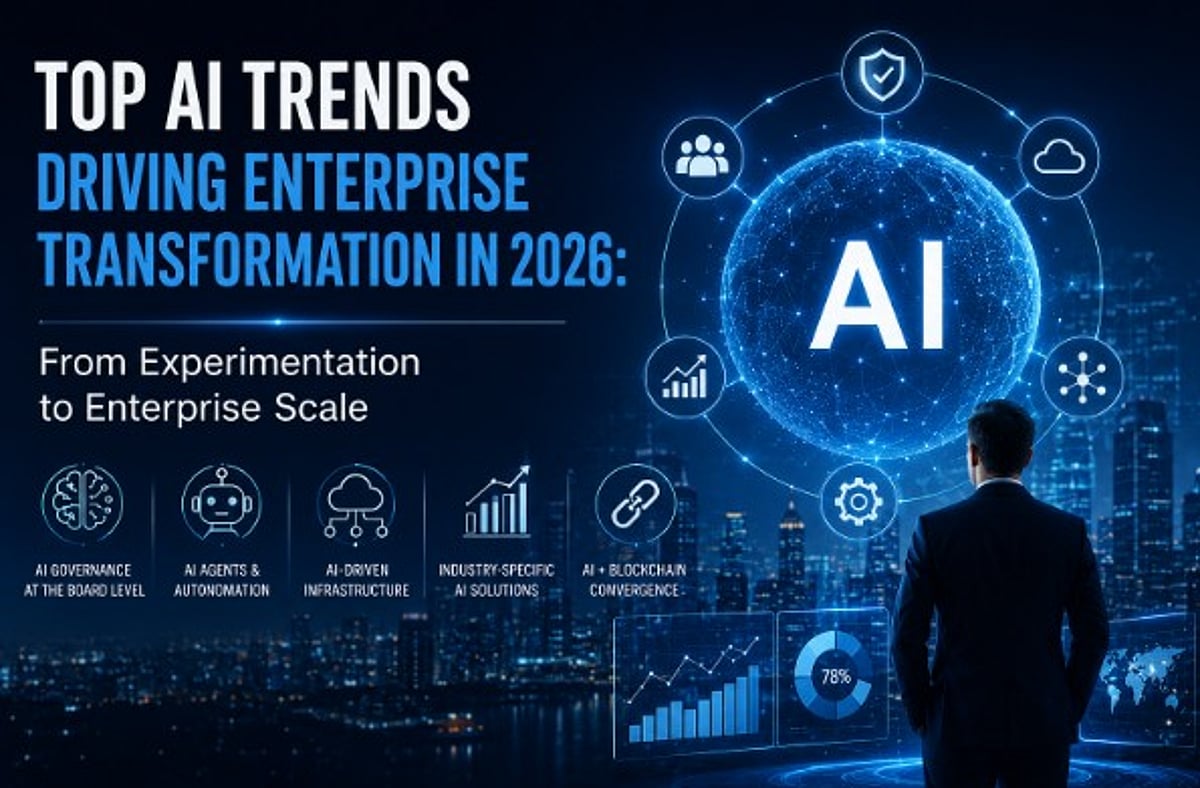
  • 7 AI Trends Reshaping Enterprise Strategy in 2026: From Pilots to Full-Scale Operations

    7 AI Trends Reshaping Enterprise Strategy in 2026: From Pilots to Full-Scale Operations

    Artificial Intelligence is entering a phase of enterprise adoption. Over the past few years, organizations have invested heavily in AI pilots, generative AI tools, and automation initiatives to explore how emerging technologies can improve business performance. While many of these projects demonstrated results, relatively few have delivered transformation at scale. As a result, the conversation surrounding AI is rapidly evolving from experimentation toward operationalization.

    According to McKinsey’s latest State of AI report, more than 70% of organizations have adopted AI in at least one business function. Gartner predicts that over 80% of enterprises will have used generative AI APIs or deployed generative AI-enabled applications by 2026. These figures indicate that AI adoption is no longer limited to innovators and early adopters. It is rapidly becoming a priority across industries.

    However, adoption alone does not guarantee business value. Many organizations continue to struggle with deployments, disconnected data environments, and unclear transformation strategies. The challenge facing enterprise leaders in 2026 is no longer whether AI works. The challenge is how to scale AI across the organization while maintaining governance, security, and measurable outcomes.

    The organizations that succeed in this phase of AI transformation will not necessarily be those with access to the most advanced models. Instead, they will be those aligning AI capabilities with business objectives, operational processes, and long-term transformation strategies.

    The Economic Opportunity Behind Enterprise AI

    The scale of AI’s potential is one of the primary reasons enterprises continue increasing investments despite ongoing implementation challenges. According to PwC’s Global AI Study, AI could contribute up to $15.7 trillion to the economy by 2030, making it one of the most transformative technologies of the modern era.

    What makes AI particularly powerful is its ability to generate value across multiple business functions simultaneously. Organizations are increasingly using AI to:

    • Improve operational efficiency and productivity
    • Enhance customer experiences through personalization
    • Accelerate product and service innovation
    • Strengthen decision-making capabilities
    • Identify new revenue opportunities

    Unlike previous waves of enterprise technology, AI is not confined to a single department. It has the potential to influence every aspect of business operations. This is why leading enterprises are shifting their focus from use cases toward enterprise-wide AI strategies.

    Trend #1: Enterprise AI Is Moving Beyond Pilot Projects

    The first phase of enterprise AI adoption was characterized by experimentation. Organizations launched customer service chatbots, automated document processing systems, predictive analytics platforms, and internal productivity assistants to explore AI’s capabilities. These initiatives often generated positive results but remained isolated within individual departments.

    Typical characteristics of AI initiatives between 2023 and 2024 included department-level deployments, limited integration with business operations, experimentation-focused objectives, unclear ROI measurement frameworks, and minimal governance oversight. As organizations move into 2026, priorities are changing significantly. Enterprise AI programs are increasingly characterized by organization-wide adoption strategies, cross-functional integration, outcome-driven implementation plans, governance and accountability frameworks, and executive-level sponsorship.

    This shift mirrors the evolution of cloud computing. Early cloud initiatives focused primarily on infrastructure optimization. Today, cloud serves as the foundation for digital business models. AI is following a similar trajectory. Business leaders are no longer asking whether AI can improve productivity. Instead, they are asking how AI can reshape operations, accelerate innovation, and create sustainable competitive advantages.

    Trend #2: AI Agents Will Become Operational Participants

    One of the most significant developments expected to shape enterprise transformation in 2026 is the emergence of AI agents. While most organizations are already familiar with AI copilots that assist employees with writing, coding, research, and knowledge retrieval, AI agents represent a more advanced stage of intelligent automation. Unlike copilots, AI agents are capable of performing tasks autonomously and coordinating activities across multiple systems.

    A procurement-focused AI agent, for example, may be able to monitor inventory levels in real time, analyze supplier performance data, forecast purchasing requirements, generate procurement recommendations, and initiate approval workflows automatically. Similarly, customer service agents can retrieve information from CRM systems, access knowledge repositories, respond to routine customer inquiries, and escalate complex issues when human intervention becomes necessary.

    According to Deloitte’s State of Generative AI in the Enterprise report, organizations are increasingly prioritizing AI initiatives that generate measurable operational outcomes rather than simply improving individual productivity. This trend reflects a broader shift in enterprise expectations: AI is no longer viewed solely as a productivity tool but as an operational capability capable of transforming how business processes are executed.

    Trend #3: AI Infrastructure Will Matter More Than AI Models

    Much of the public discussion surrounding AI has focused on models. Organizations frequently compare proprietary and open-source models, evaluate benchmark performance, and debate the advantages of different architectures. However, many enterprises are discovering that model selection is only a small part of the challenge. In practice, infrastructure is becoming more important than the model itself.

    Modern enterprise AI environments typically require data pipelines and integration layers, vector databases and knowledge repositories, governance and compliance frameworks, security and access management systems, model monitoring and observability tools, and MLOps and deployment pipelines. Without these foundational capabilities, even the most advanced AI models struggle to deliver sustainable business value.

    Many organizations encounter challenges when attempting to scale successful pilot projects. Data often resides across multiple disconnected systems, legacy applications create integration barriers, and security requirements introduce deployment constraints. These issues cannot be solved simply by choosing a different model. This reality explains why AI transformation is increasingly viewed as an architecture challenge rather than a model challenge. The organizations that invest in scalable AI infrastructure today will be better positioned to deploy new capabilities, integrate future technologies, and maintain long-term operational resilience.

    Trend #4: Decision Intelligence Will Replace Traditional Analytics

    For decades, business intelligence platforms have helped organizations understand historical performance. These systems provide visibility into trends, metrics, and operational outcomes, allowing leaders to evaluate what happened in the past. However, modern enterprises increasingly require systems that go beyond reporting.

    Decision intelligence is emerging as the next evolution of enterprise analytics by combining artificial intelligence, predictive modeling, business rules, and automation to support real-time decision-making. Rather than answering “What happened?”, decision intelligence focuses on “What is likely to happen next?” and “What should we do about it?”

    This capability is already creating value across multiple industries: retail (optimizing inventory allocation and pricing strategies), manufacturing (predicting equipment failures before they occur), financial services (identifying emerging risks and compliance concerns), logistics (dynamically adjusting operations based on demand patterns), and healthcare (improving resource planning and patient scheduling).

    A global logistics provider, for instance, handles thousands of shipments every day. Traditional analytics can only tell you that a delay happened after it occurred. Decision intelligence systems can predict disruptions before they happen, suggest ways to mitigate them, and automatically switch to a backup plan. This change helps organizations make decisions proactively rather than reacting to events that have already occurred.

    Trend #5: AI Governance Will Become a Board-Level Priority

    As AI is used more extensively in business functions, governance is becoming essential for long-term success. Early AI projects were often managed by innovation teams or technical departments. Now that AI is being used on a larger scale, executive leaders and corporate boards need to be involved. The reason is simple: AI is no longer for testing. It affects how customers interact with companies, financial decisions, compliance processes, and daily operations. As AI’s impact grows, so do the risks related to privacy, security, transparency, and accountability.

    According to IBM’s Global AI Adoption Index, trust is a barrier to using AI in businesses. Companies are realizing that successful AI implementation requires more than technical performance; it also needs confidence that AI systems work responsibly and transparently. Forward-looking companies are investing in governance frameworks that include ensuring AI system transparency, accountability, risk management, trust-building, policy establishment, oversight committees, and ethics guidelines.

    What makes governance particularly important in 2026 is the growing complexity of AI ecosystems. As organizations deploy multiple models, integrate external data sources, and introduce autonomous AI agents, maintaining visibility and control becomes increasingly challenging. Rather than viewing governance as a barrier to innovation, leading organizations treat it as a foundation for sustainable AI adoption.

    Trend #6: Industry-Specific AI Solutions Will Outperform Generic Deployments

    As companies become more adept at using AI, they are moving away from one-size-fits-all solutions and toward AI tailored to their specific industry. While the underlying AI technology remains important, the most effective solutions are those designed for a particular sector.

    Financial institutions focus heavily on risk analysis, fraud detection, regulatory compliance automation, and customer intelligence. Manufacturers prioritize predictive maintenance, quality assurance automation, and supply chain optimization. Healthcare organizations invest in clinical decision support systems, patient engagement platforms, and medical data analysis tools. The same pattern is emerging across retail, logistics, insurance, telecommunications, and energy.

    This shift reflects an important reality: AI generates the strongest business outcomes when it is closely aligned with operational objectives and industry-specific workflows. As a result, organizations are increasingly seeking partners capable of combining technical expertise with deep industry understanding.

    Trend #7: The Convergence of AI and Blockchain

    Although AI and blockchain are often discussed as separate technologies, their convergence is creating new opportunities for enterprise innovation. AI excels at generating intelligence from data; blockchain excels at establishing trust, transparency, and immutability.

    Together, these technologies can support a range of high-value enterprise applications, including supply chain transparency and traceability, decentralized digital identity systems, automated compliance reporting, secure data-sharing ecosystems, and smart contract optimization.

    Consider a global supply chain network involving manufacturers, logistics providers, distributors, and retailers. AI can analyze operational data to identify inefficiencies, forecast demand, and optimize inventory management. Blockchain can simultaneously provide an immutable record of transactions and product movements across the network. The combination creates a system that is both intelligent and trustworthy.

    As enterprises become increasingly dependent on automated decision-making, trust will become a critical competitive differentiator. This is one reason why many organizations are beginning to explore how AI and blockchain can work together as complementary technologies rather than independent initiatives.

    Why Many AI Initiatives Still Fail

    Despite significant investment and technological progress, many companies still struggle to make AI work across the entire organization. McKinsey research reveals a large gap between experimenting with AI and achieving true proficiency. One major reason is poor data quality. AI systems are only as good as the data they receive, and companies often underestimate the work required to clean and organize data before AI can deliver valuable insights.

    Another problem is the misconception that technology alone is the answer. Companies that start with AI as the solution rather than understanding the problem they need to solve often fail to demonstrate tangible results. Common barriers include disorganized data, unclear objectives, lack of executive support, organizational resistance, disconnected technology stacks, and insufficient governance.

    Perhaps the most overlooked factor is managing the human side of change. AI affects people as much as technology. Employees must learn new workflows, managers must make decisions differently, and companies must adapt their operating models. Without proper change management, even technically successful AI initiatives may not be adopted by the organization.

    Mini Case Study: From Forecasting to Autonomous Decision-Making

    A compelling example of AI evolution comes from the logistics industry. A few years ago, logistics companies used AI to predict delivery times. These systems helped with planning but were disconnected, requiring humans to interpret results and take action. Today, modern logistics systems can do much more: predict delivery times in real time, find optimal routes, handle problems automatically, track inventory, and allocate resources efficiently.

    Instead of merely warning about potential issues, these systems can suggest solutions and initiate processes autonomously. For instance, if a storm threatens a major shipping route, a traditional system would alert managers after delays begin. An AI-powered system, however, can predict the problem, recommend an alternative route, estimate cost implications, and activate a contingency plan before any disruption occurs.

    This example illustrates a broader trend across industries: the future of AI is not just about generating more information but about enabling better decisions and faster action.

    Conclusion: The Path to Enterprise AI Maturity

    The evolution of enterprise AI from 2024 to 2026 represents a fundamental shift in priorities. Organizations are moving away from isolated experiments and toward integrated, scalable, and governed AI systems. The seven trends outlined above—moving beyond pilots, adopting AI agents, prioritizing infrastructure, embracing decision intelligence, elevating governance, pursuing industry-specific solutions, and converging with blockchain—provide a roadmap for enterprises seeking to capture the full value of AI.

    The organizations that will thrive in this new era are those that treat AI not as a technology project but as a strategic transformation initiative. By aligning AI capabilities with business goals, investing in foundational infrastructure, and fostering a culture of responsible innovation, enterprises can turn AI from a promising experiment into a powerful engine for growth.