Blog

  • Amazon Prime Day 2026: Top Deals with Up to 65% Off on Bestselling Brands

    Amazon Prime Day 2026: Top Deals with Up to 65% Off on Bestselling Brands

    Amazon Prime Day has returned with one of the most expansive discount rosters the event has seen. Across tech, beauty, home, kitchen, and everyday essentials, top brands are participating with markdowns that reach up to 65% off regular retail prices. For Prime members, the window to act is narrowing fast.

    The sale spans millions of products, and the sheer volume makes navigation challenging. To help shoppers focus on genuine value, this list highlights the most compelling deals currently live on Amazon, verified across categories and confirmed at verified sale prices.

    Amazon Prime Day Deals

    This year’s Amazon Prime Day delivers a broad sweep of deals across categories that matter to everyday consumers. The discounts are not shallow percentage drops on inflated prices. Several of the products listed below have hit their lowest-ever recorded prices during this event.

    Apple AirPods Pro 3

    Sale Price: $179.00 | Original: $249.00 | Savings: 28% off

    Apple’s most advanced wireless earbuds are a highlight of this year’s Prime Day. The AirPods Pro 3 features active noise cancellation, live language translation, heart rate sensing during workouts, and up to 10 hours of battery life per charge. Five ear tip sizes are included for a custom fit, and the MagSafe charging case adds convenient wireless juicing. With over 10,000 Amazon reviews and consistent bestseller status, these are among the most trusted earbuds on the market.

    • Active Noise Cancellation with Transparency Mode
    • Heart rate sensing and calorie tracking
    • Live translation in supported languages
    • Up to 10 hours of playtime per charge
    • USB-C MagSafe charging case included

    Samsonite Omni 2 Hardside Luggage Set

    Sale Price: $134.99 | Original: $389.99 | Savings: 65% off

    The two-piece Samsonite set fetches the deepest discount on this list and is one of the most compelling travel deals of the season. It includes a 20-inch carry-on and a 24-inch checked bag. Both are expandable, scratch-resistant, and feature 360-degree dual spinner wheels for effortless navigation through airports. The checked bag has a built-in TSA-approved lock. Interior organization panels keep packing structured, and the hardside shell absorbs impact effectively across transit conditions.

    Blueair Air Purifier & Sunrise Alarm Clock

    Sale Price: $79.99 | Original: $199.99 | Savings: 60% off

    Rarely does a single device serve three distinct purposes well. The Blueair combines HEPA and HEPASilent filtration, a white noise and sound machine, and a sunrise alarm clock into a compact bedroom unit. At 60% off, shoppers are essentially receiving three devices for less than the price of one. Dimensions are 6.69″D x 6.69″ W x 11.02″H, and the unit weighs approximately 1.79 kg, making it suitable for nightstands or dressers without dominating surface space.

    Amazon Prime Day Discounts

    Several product categories carry standout Amazon Prime Day discounts this year. Beauty, tech, home appliances, and kitchen essentials each carry significant markdowns, particularly on name-brand items with established review histories.

    Tarte Shape Tape Concealer

    Sale Price: $23.25 | Original: $58.13 | Savings: 60% off

    A Shop TODAY Beauty Award winner and a consistent bestseller with over 15,000 Amazon reviews, the Tarte Shape Tape is widely regarded as one of the strongest concealers at any price. The formula delivers full-coverage with a natural matte finish across 55 shade options. It layers well without caking and holds through long wear. The travel-sized version also drops to $9 during this sale window.

    Amazon Echo Dot (5th Gen)

    Sale Price: $29.99 | Original: $49.99 | Savings: 40% off

    Echo Dot is a compact smart speaker with Alexa built in. It plays music, podcasts, and audiobooks on command, responds to voice queries on weather and commutes, and connects to compatible smart home devices. For those running an Eero mesh Wi-Fi network, it also functions as a signal extender. With 194,000-plus Amazon reviews, this is one of the most validated products across the entire sale.

    Blink Video Doorbell

    Sale Price: $19.99 | Original: $49.99 | Savings: 60% off

    At $19.99, the Blink Video Doorbell delivers home monitoring at a fraction of its standard cost. It connects to the Blink app for live streaming with a head-to-toe camera view and real-time motion alerts with a subscription. Battery life runs approximately two years on three AA batteries. Alexa integration allows voice-activated viewing on Echo devices.

    JBL Flip 7 Portable Speaker

    Sale Price: $94.95 | Original: $149.95 | Savings: 37% off

    JBL Flip 7 earned the top spot in NBC Select’s portable speaker rankings. It delivers 16 hours of playtime per charge, carries an IP68 waterproof and drop-proof rating, and produces full, bass-forward sound in a portable form factor. Ten color options are available. The PushLock accessory system lets users add third-party attachments. This speaker performs across outdoor environments from beaches to campsites without compromise.

    Which Brands Have the Biggest Discounts

    The brands with the sharpest Prime Day cuts this year span tech, travel, and home care. These are not marginal discounts. Several represent the lowest prices these products have ever carried on Amazon.

    • Samsonite: Up to 65% Off – Luggage brand’s Omni 2 two-piece hardside set carries a 65% reduction, dropping from $389.99 to $134.99. This is a lowest-price-ever record for the set.
    • Oura Ring: Up to 55% Off – Oura Ring 4 drops from $499.00 to $226.00, also a lowest-ever recorded price. This health and fitness tracking ring measures sleep stages, resting heart rate, body temperature, and activity.
    • Blueair: 60% Off – Blueair’s air purifier and sunrise alarm clock combo falls from $199.99 to $79.99. No other deals in the bedroom wellness segment come close to this discount-to-utility ratio.
    • Amazon Devices: 40%–54% Off – Amazon’s own hardware lineup carries some of the steepest cuts. The Echo Dot drops 40%, the Fire TV Stick HD falls 54%, and the Smart Plug is reduced 48% to $12.99.

    Final Words

    Amazon Prime Day offers some of the biggest savings of the year, but the best deals are not always the ones with the highest discounts. Shoppers should focus on trusted brands, verified price drops, and products with strong customer reviews to make smarter purchases. With limited-time offers and fast-changing inventory, acting early can help secure the most valuable deals before they disappear.

    FAQs

    When does Amazon Prime Day end? Amazon Prime Day runs for a limited window, typically four days. The final hours of the sale carry the highest urgency, as inventory on deeply discounted items thins out quickly.

    Do you need Amazon Prime to access Prime Day deals? The majority of Prime Day deals require an active Prime membership. A 30-day free trial is available for new members, which qualifies them for the full scope of sale pricing.

    Are Prime Day prices the lowest of the year? Many products hit their lowest recorded prices during Prime Day. Several items featured in this list, including the Samsonite luggage set, Blueair device, and Oura Ring 4, are confirmed at lowest-ever price levels as of this sale.

    Which product categories offer the best Prime Day discounts? Tech, travel, home appliances, and beauty consistently deliver the strongest markdowns. This year, luggage, smart home devices, personal care wearables, and portable audio equipment carry the deepest cuts.

    Is it safe to buy electronics during Prime Day? All products sold through Amazon and fulfilled directly carry standard return and warranty policies. Buying from reputable brands with high review volumes on Amazon is the lowest-risk approach during any sales event.

    Disclaimer: Prices mentioned are subject to change. Verify current pricing directly on Amazon before purchasing.

  • India’s Private Space Ecosystem: Why It Won’t Be a SpaceX Clone but Could Be Even Stronger

    India’s Private Space Ecosystem: Why It Won’t Be a SpaceX Clone but Could Be Even Stronger

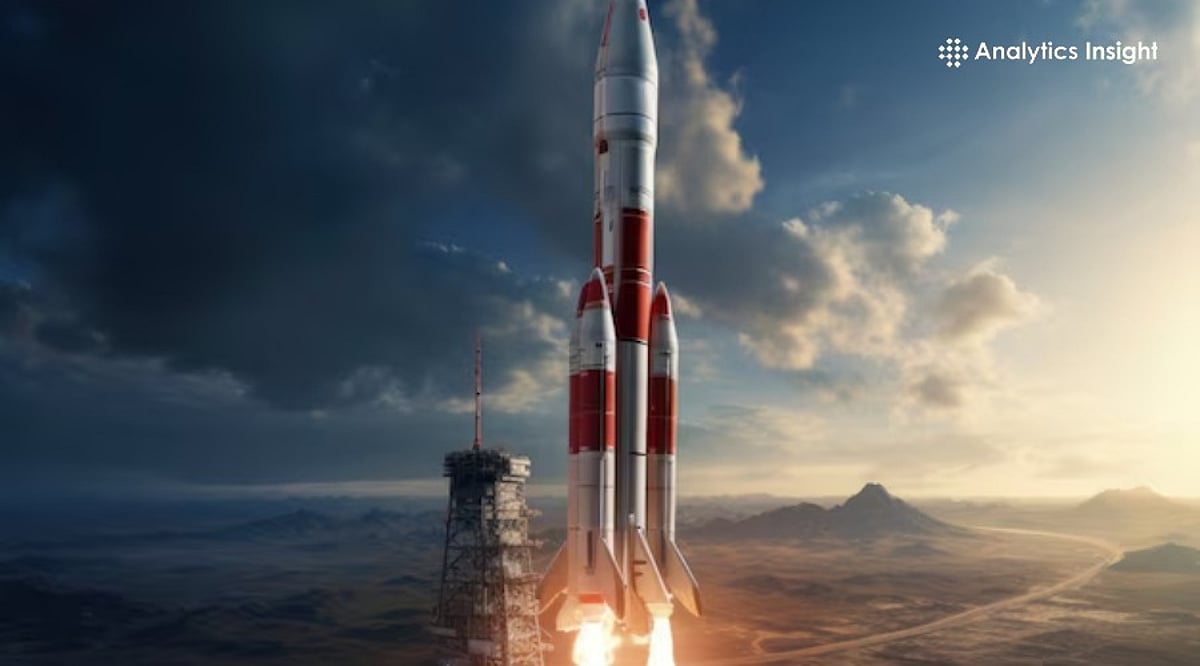
    In November 2022, a rocket called Vikram-S lifted off from Sriharikota and reached space for a few minutes before falling back to Earth. The mission carried no significant satellite and accomplished nothing of immediate commercial value—yet it changed the direction of an entire industry almost overnight. For the first time, a private Indian company had built and launched a rocket. That company was Skyroot Aerospace, founded by two former ISRO engineers four years earlier.

    Three and a half years later, Skyroot has become India’s first space-tech unicorn, raising $60 million at a $1.1 billion valuation. It is now preparing for the maiden orbital launch of Vikram-1—a moment that will determine whether an Indian private company can put a satellite into orbit on its own rocket, something fewer than a handful of companies worldwide have managed.

    This naturally invites the question: Can India build its own SpaceX? The answer is more nuanced than a simple yes or no.

    Why the Comparison Is Tempting, and Slightly Wrong

    SpaceX built a vertically integrated company controlling launch vehicles, engines, spacecraft, and a satellite constellation, scaled by reusability and an enormous addressable market. Valued north of $400 billion, it has no true global peer.

    India’s emerging space sector looks different. Rather than a single company replicating SpaceX’s everything-at-once model, India is producing a cluster of specialised companies, each going deep on one part of the problem:

    • Skyroot Aerospace – building launch vehicles
    • Agnikul Cosmos – launch vehicles with a fundamentally different manufacturing philosophy (3D-printed single-piece engines)
    • Pixxel – hyperspectral imaging satellites
    • Dhruva Space – satellite platforms and ground station networks
    • Digantara – orbital debris tracking and space traffic management

    This is not a smaller ambition than SpaceX’s; it’s a different shape of ambition—closer to Europe’s multi-specialist model than America’s increasingly SpaceX-centric approach.

    The Companies Actually Doing This

    Agnikul’s approach deserves special attention. Its Agnibaan rocket uses a single-piece, 3D-printed engine that collapses what normally takes months of assembly into weeks, eliminates hundreds of individual mechanical parts, and makes engine iteration nearly as fast as updating software. That is a structural advantage competitors using conventional manufacturing cannot easily close.

    India’s space economy was valued at roughly $8.4 billion in 2022 (about 2% of the global market). The government targets $44 billion by 2033, aiming for 8–10% global share. By early 2026, India has close to 400 active space-tech startups, up from a single company in 2014. Cumulative private investment has crossed roughly $380 million, and the space economy reportedly generates $2.54 in returns for every dollar invested—2.5 times the productivity multiplier of the broader Indian industrial economy.

    These gains stem from reforms beginning in 2020 that opened ISRO facilities to private companies. IN-SPACe, the regulatory body, now runs a dedicated venture capital fund to lower capital barriers for early-stage space startups. State governments compete for investment: Tamil Nadu passed a Space Industrial Policy in 2025 targeting Rs. 10,000 crore in investment.

    What’s Genuinely Hard

    Three major challenges remain:

    1. Unproven orbital launch capability – As of mid-2026, neither Skyroot’s Vikram-1 nor Agnikul’s Agnibaan has completed a successful commercial orbital mission. If Vikram-1’s maiden flight fails, the narrative shifts instantly from “India’s SpaceX moment” to “the sector needs more time.”
    2. Competitive pricing – SpaceX, Rocket Lab, and increasingly aggressive Chinese providers are pricing small-satellite launches hard in exactly the market Indian startups target. Lower Indian manufacturing costs help, but are not an automatic win against flight-proven reliability and reusable rocket economics.
    3. Talent pipeline – India’s startups have aggressively recruited former ISRO engineers, but the number of aerospace-trained graduates from Indian universities has not scaled to match ambition. IN-SPACe chairman Dr. Pawan Goenka has stressed that skilling is a precondition for reaching the $44 billion target, not an automatic byproduct of investment.

    The Part of the Story That’s Easy to Miss

    A meaningful share of the engineers building these rockets are in their mid-twenties, many leaving high-paying jobs at global tech companies. One Skyroot engineer, speaking after Prime Minister Modi inaugurated the company’s Hyderabad campus, put it simply: they grew up watching ISRO’s PSLV launches on Doordarshan, and now they are building the next chapter themselves.

    That generational pipeline—engineers who watched India’s state space program as children and are now building its private successor—is cultural infrastructure as much as technical infrastructure, and it may end up mattering as much as any funding round.

    So, Can India Build Its Own SpaceX?

    Probably not in the literal sense. A single company achieving SpaceX’s scale, reusability, and vertical integration within a similar timeframe looks unlikely given where Indian launch technology stands today. But that may be the wrong question.

    India appears to be building a distributed version of the same outcome: multiple specialised companies, each strong in one layer of the stack, collectively giving the country independent and increasingly commercial access to space without depending on a single company’s success or failure. If Vikram-1 reaches orbit successfully, it will be a genuine milestone. The more important test, over the next three to five years, is whether the cluster as a whole—rockets, satellites, propulsion, and debris-tracking—keeps growing fast enough to make the $44 billion target look conservative rather than fantastical.

  • Ripple’s RLUSD Stablecoin Debuts in Japan: What XRP Holders Need to Know

    Ripple’s RLUSD Stablecoin Debuts in Japan: What XRP Holders Need to Know

    On June 24, 2026, Ripple officially launched its RLUSD stablecoin in Japan after receiving full regulatory approval from the country’s Financial Services Agency. This milestone marks a significant expansion for Ripple beyond its traditional cross-border payment network and into the fast-growing stablecoin market, which now exceeds $300 billion globally.

    RLUSD is a 1:1 US dollar-pegged stablecoin, fully backed by cash reserves, short-term US government bonds, and dollar deposits. Unlike volatile cryptocurrencies such as Bitcoin or XRP, RLUSD maintains a stable price, making it ideal for banks, corporations, and financial institutions that require predictable digital payments. Within a short period, RLUSD has reached a market capitalization of approximately $1.59 billion, with an annual growth rate close to 271%.

    Why Japan?

    Japan has long been one of Ripple’s strongest markets, thanks in part to a decade-long partnership with SBI Holdings, one of the country’s largest financial firms. The launch became possible after Japan introduced new regulations allowing foreign stablecoins to enter under strict compliance rules. Japan’s clear legal framework provides a safe and predictable environment for regulated crypto assets, giving Ripple a strategic foothold in Asia.

    Ripple Expands Beyond XRP

    With RLUSD, Ripple is diversifying its business model. Instead of relying solely on XRP for crypto transfers, the company can now offer stablecoin payments, asset settlement, corporate treasury systems, and digital banking services. This does not replace XRP; XRP remains the primary bridge asset for high-speed cross-border currency transfers on Ripple’s payment network. RLUSD provides an alternative for institutions that need zero price volatility.

    What This Means for XRP Investors

    Some investors initially worried that RLUSD might diminish XRP’s role. However, the opposite appears true. By drawing more traditional financial institutions into the Ripple ecosystem, RLUSD increases overall network activity. Higher transaction volume on the XRP Ledger can drive stronger demand for XRP over the long term. The launch positions Ripple to compete directly with major stablecoins like USDT and USDC, while emphasizing regulatory compliance—a key advantage for institutional adoption.

    Competition and Outlook

    The global stablecoin market is dominated by USDT and USDC, but Ripple’s focus on regulatory compliance sets RLUSD apart. Japan’s approval is a strong signal to other markets. With over 50% of Ripple’s On-Demand Liquidity volume already coming from Asia, RLUSD could expand into Singapore, South Korea, and other regional hubs, cementing Ripple’s position as a leading blockchain payment company.

    For XRP holders, this development is positive in the long run. RLUSD strengthens Ripple’s overall financial ecosystem, driving broader institutional adoption and network utility. Japan may be just the first step in a global stablecoin expansion that could become a major growth driver for Ripple and XRP.

    FAQs

    1. What is RLUSD?
    RLUSD is Ripple’s 1:1 US dollar-pegged stablecoin, fully backed by cash reserves and short-term US government bonds, designed for banks and institutions needing stable digital payments.

    2. Why did Ripple launch RLUSD in Japan?
    Japan offers clear crypto regulations and a strong partnership with SBI Holdings, enabling a compliant rollout approved by Japan’s Financial Services Agency.

    3. Does RLUSD replace XRP?
    No. RLUSD serves institutions requiring zero volatility, while XRP remains the high-speed bridge asset for cross-border transfers in Ripple’s payment network.

    4. How big is RLUSD right now?
    RLUSD has a market cap of about $1.59 billion with nearly 271% annual growth.

    5. Why does this matter for XRP investors?
    RLUSD attracts more traditional finance into the Ripple ecosystem, increasing network activity and potentially strengthening long-term demand for XRP.

  • Top Logitech Mice with Wireless Charging Docks: 2026 Buyer’s Guide

    Top Logitech Mice with Wireless Charging Docks: 2026 Buyer’s Guide

    If you’re looking for a Logitech mouse that never runs out of power during your work or gaming sessions, models with dedicated charging docks or compatibility with Logitech’s POWERPLAY system are the perfect solution. Below we break down the best Logitech mouse models featuring convenient charging options in 2026.

    Logitech MX Master 3S

    This mouse is designed for professionals who demand ergonomic comfort and precision tracking. It supports multi-device connectivity and USB-C charging. The MX Master 3S delivers exceptional productivity for intensive daily workflows.

    Logitech G PRO X Superlight 2

    Built for competitive gaming, this ultra-lightweight mouse offers top-tier performance. It’s fully compatible with Logitech’s POWERPLAY wireless charging system, so you can keep playing without worrying about battery life.

    Logitech G502 X Lightspeed

    Featuring the HERO sensor for pinpoint accuracy, the G502 X Lightspeed offers customizable controls and wireless freedom. It works seamlessly with the Logitech POWERPLAY charging pad.

    Logitech G903 Lightspeed

    An ambidextrous design with premium wireless performance, the G903 Lightspeed comes with customizable buttons and supports continuous charging via the POWERPLAY mouse pad.

    Logitech G703 Lightspeed

    With an ergonomic shape and HERO sensor, the G703 Lightspeed delivers responsive wireless gaming. It’s compatible with Logitech’s POWERPLAY for uninterrupted charging.

    Logitech G502 Lightspeed

    A legendary design with a customizable weight system and programmable buttons, the G502 Lightspeed offers effortless wireless charging when paired with compatible POWERPLAY accessories.

    Logitech G309 Lightspeed

    An affordable option that balances reliable wireless performance and responsive tracking. It’s lightweight and supports Logitech’s wireless charging ecosystem.

    Logitech MX Anywhere 3S

    Compact and portable, the MX Anywhere 3S tracks precisely on multiple surfaces. It features USB-C charging and reliable wireless performance for professionals on the move.

    Logitech Lift Vertical Mouse

    Designed for ergonomic wrist positioning, the Lift Vertical Mouse has quiet clicks, long battery life, and wireless functionality for comfortable all-day productivity.

  • Top 5 Party Speakers with Exceptional Battery Life for 2026

    Top 5 Party Speakers with Exceptional Battery Life for 2026

    A party speaker should do more than play loud music—it should keep the energy going all night without needing a recharge. Whether you’re hosting a house party, planning an outdoor event, or setting up karaoke, long battery life is a key feature to consider.

    We’ve compared five top-rated party speakers that combine powerful audio, reliable connectivity, splash resistance, and practical extras. Here’s a breakdown of the best options available right now.

    1. Sony SRS-XV500

    The Sony SRS-XV500 stands out with an exceptional battery life of up to 25 hours on a single charge. Its X-Balanced speakers and front tweeters deliver wide, room-filling sound. A quick 10-minute charge gives you 2.5 hours of playback. It also features IPX4 splash resistance, Bluetooth, USB playback, karaoke and guitar ports, and LED lighting—all in a portable design with a handle.

    2. JBL PartyBox Club 120

    JBL’s PartyBox Club 120 offers 12 hours of playtime with JBL Pro Sound and AI Sound Boost technology for enhanced audio. Dynamic LED lights react to the beat, and the speaker is splash-proof. Dual microphone and guitar inputs make it perfect for karaoke, and the battery is replaceable.

    3. boAt PartyPal 600

    The boAt PartyPal 600 pumps out 220 watts of power with a 7-hour battery life. It supports Bluetooth 5.3, USB, AUX, and includes RGB lighting, an animated display, and a wireless UHF microphone for singing. Guitar connectivity and a companion app for audio tuning add to its versatility, plus TWS lets you pair two speakers.

    4. DIGIMORE 240W PartyBox Speaker

    This speaker features dual 8-inch drivers and delivers up to 10 hours of playback. With Bluetooth 5.3, USB, TF Card, and AUX inputs, it’s highly versatile. AI Sound Boost, deep bass tuning, RGB lights, and a wireless mic make it ideal for outdoor karaoke and parties where battery longevity matters.

    5. Xiaomi Sound Outdoor Speaker

    Designed for portability, the Xiaomi Sound Outdoor Speaker offers 12 hours of continuous play and 30 watts of output. It uses Bluetooth 5.4 and can pair wirelessly with other Xiaomi speakers for stereo sound. IP67 water and dust protection, a USB-C port, and a built-in microphone for calls round out its features.

    Quick Comparison Table

    Model Battery Life Audio Output Water Resistance Key Features
    Sony SRS-XV500 25 hours X-Balanced speakers IPX4 Quick charge, karaoke ports, LED lights
    JBL PartyBox Club 120 12 hours JBL Pro Sound + AI Boost Splash-proof Replaceable battery, dual mic/guitar inputs
    boAt PartyPal 600 7 hours 220W Not specified Wireless mic, RGB lights, TWS pairing
    DIGIMORE 240W PartyBox 10 hours 240W, dual 8-inch Not specified Wireless mic, AI Sound Boost, RGB
    Xiaomi Sound Outdoor 12 hours 30W IP67 Stereo pairing, USB-C, call mic

    Final Takeaway

    Battery performance can make or break your party experience, especially when outlets are scarce. The Sony SRS-XV500 leads with an impressive 25-hour runtime, while the JBL PartyBox Club 120 and Xiaomi Sound Outdoor Speaker each offer 12 hours. The DIGIMORE 240W balances high output and 10-hour life, and the boAt PartyPal 600 brings karaoke-focused features at 220W. Compare battery life, connectivity, and audio features to find the speaker that best fits your needs.

  • OpenAI Weighs IPO Delay to 2027 Amid $1 Trillion Valuation Skepticism

    OpenAI Weighs IPO Delay to 2027 Amid $1 Trillion Valuation Skepticism

    OpenAI is reportedly considering delaying its initial public offering until 2027, as financial advisers question whether current market conditions can support a $1 trillion valuation. The ChatGPT developer had been preparing for a possible listing in late 2026 after filing confidential paperwork with the U.S. Securities and Exchange Commission.

    The potential shift follows notable volatility in technology shares. SpaceX’s stock, which soared after its June 2026 IPO, has since fallen sharply, raising concerns about investor appetite for high-valuation tech offerings.

    Advisers Flag Concerns Over 2026 IPO Timing

    OpenAI has engaged bankers and legal teams to explore a public listing. CEO Sam Altman reportedly directed the team to target a $1 trillion market capitalization, exceeding OpenAI’s most recent private valuation of roughly $852 billion. However, advisers cautioned that public markets may not show sufficient enthusiasm for the deal under current conditions.

    According to sources familiar with the discussions, two paths were presented: wait until 2027 to pursue the full valuation, or accelerate the timeline in 2026 at a lower price. Altman described any valuation reduction as a “nonstarter.” OpenAI confirmed it has filed confidential IPO documents but emphasized it has not committed to any specific timeline.

    Financial Readiness and Spending Pressures

    OpenAI generated approximately $13 billion in revenue last year while reporting a net loss of about $21 billion. The company expects sustained heavy spending on computing infrastructure, chips, data centers, and hardware through 2030. CFO Sarah Friar has voiced concerns about whether OpenAI is prepared for the rigorous public reporting requirements, including regular financial statements, risk disclosures, and cost guidance.

    Meanwhile, OpenAI is exploring new revenue streams. It has tested advertising within ChatGPT and is pursuing commerce partnerships with Shopify and Stripe. The company has also scaled back spending on some loss-making projects, such as parts of its Sora video business, as part of a broader cost-review initiative.

    SpaceX Market Activity Reshapes IPO Sentiment

    SpaceX went public on June 12 in a record-breaking IPO that raised more than $85 billion. Shares initially surged above $225 but later dropped to around $153, demonstrating how quickly investor sentiment can shift after a high-profile debut. This volatility has become a key reference for OpenAI’s advisers, reinforcing that a strong first trading day does not guarantee sustained support at elevated valuations.

    Broader weakness in the technology sector has also made investors more cautious toward capital-intensive companies. Anthropic, another AI firm, has filed confidentially for its own IPO, and other companies like Discord, Kraken, Strava, and Oura have also entered the IPO pipeline, creating a crowded market.

    OpenAI has not made a final decision. The company could still list in late 2026 at a lower valuation, or postpone to 2027. Any update will depend on its financial performance, spending trajectory, market stability, and investor confidence in the $1 trillion target.

  • Apple Shares Tumble 6% After Raising MacBook and iPad Prices Globally

    Apple Shares Tumble 6% After Raising MacBook and iPad Prices Globally

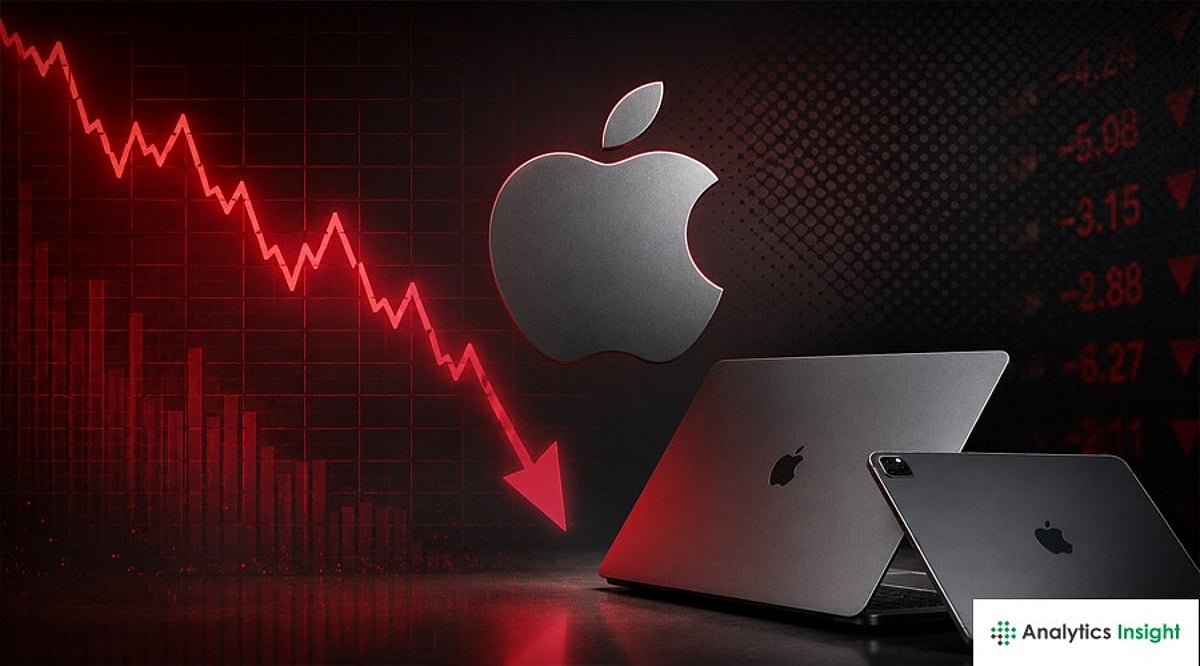
    Apple shares fell more than 6% on Thursday after the company raised prices across its MacBook and iPad lineup worldwide. The move marks Apple’s first major response to rising memory and storage costs, which have been intensified by surging demand from AI data centers. The iPhone, however, escaped a price hike for now.

    MacBook and iPad Price Hikes in Detail

    Apple increased the starting price of the MacBook Neo from $599 to $699. The MacBook Air with 512GB of storage rose from $1,099 to $1,299, while the 14-inch MacBook Pro with 1TB of storage now starts at $1,999, up from $1,699. The iPad lineup also saw significant increases: the 11-inch iPad Air jumped from $599 to $749, and the 13-inch model climbed from $799 to $949. The 11-inch iPad Pro now costs $1,199 ($999 at launch), and the 13-inch iPad Pro went from $1,299 to $1,499.

    Memory Costs Driving the Price Surge

    Apple attributed the price adjustments to an “unprecedented challenge” in the consumer electronics industry, as AI data centers consume more memory and storage components. CEO Tim Cook had warned earlier in May that rising component prices were pressuring Apple’s margins. In a later interview, he called the price increases “unavoidable” and described the shortage as a “hundred-year flood.”

    Memory and storage prices have spiked as suppliers redirect capacity toward high-bandwidth memory for AI servers, reducing supply for consumer devices. Microsoft, Sony, Nintendo, and other computer makers have also raised prices on select products. Apple has historically managed costs by discontinuing cheaper models—last month it stopped selling the $599 Mac mini with 256GB of storage, leaving buyers with fewer low-cost options.

    Investor Reaction and Market Implications

    The stock’s steep decline—its worst single-day drop in over a year—wiped an estimated $250 billion to $265 billion off Apple’s market value. Investors are concerned that higher prices could dampen demand for Macs and iPads, especially as households tighten discretionary spending. Apple’s iPhone lineup remains price-protected for now, though analysts warn that higher memory requirements for on-device AI could eventually drive up production costs for future iPhones.

    Looking Ahead: New Hardware and Software

    Apple is preparing a refreshed Siri experience with enhanced conversational abilities and in-app actions, but a European Union launch date remains unannounced. The company plans to introduce a base M6 processor for entry-level Macs later this year (current models use M5 chips). Analysts also expect Apple to enter the premium foldable phone market, which could raise average selling prices across the segment. The stock slide comes as Apple navigates a crucial balance between protecting margins and sustaining demand in a cost-sensitive environment.

  • Bitcoin ETF Assets Drop Below $73 Billion as BTC Falls Under $60,000 – June Outflows Hit $3.61 Billion

    Bitcoin ETF Assets Drop Below $73 Billion as BTC Falls Under $60,000 – June Outflows Hit $3.61 Billion

    US-listed spot Bitcoin exchange-traded funds recorded $696.3 million in net outflows on June 25 as Bitcoin slipped below the $60,000 mark. This marked the largest single-day withdrawal in June and extended the funds’ losing streak to six consecutive trading days.

    The latest outflow pushed June total withdrawals to $3.61 billion and brought year-to-date net outflows to approximately $4.6 billion. The data signals weakening demand from institutional investors as Bitcoin trades near its lowest level of 2026.

    ETF activity has become a key focus for market participants. These products previously provided steady buying pressure, but persistent redemptions are now returning coins to the market while investors reassess risk across cryptocurrencies and high-growth tech assets globally.

    Bitcoin ETF Withdrawals Accelerate in June

    The June 25 outflow surpassed the previous monthly high of $519.2 million recorded on June 2. Second-quarter net withdrawals now stand at roughly $4.07 billion, despite the funds attracting nearly $1.97 billion in April.

    Investors withdrew about $2.43 billion in May and another $3.61 billion in June, bringing the combined two-month total to approximately $6.04 billion. Spot Ether ETFs also posted about $81.87 million in outflows on the same day.

    BlackRock’s iShares Bitcoin Trust led second-quarter losses with roughly $2.01 billion in net outflows. The fund saw around $4.02 billion in withdrawals across May and June, reducing its net assets to about $44.43 billion. Fidelity’s Bitcoin fund recorded approximately $889 million in second-quarter withdrawals.

    ETF Assets Fall as Bitcoin Tests Lower Prices

    Total assets held by US spot Bitcoin ETFs dropped to about $72.6 billion, the lowest level since late 2024 and a decline of nearly 57% from the October 2025 peak of $169.5 billion.

    The drop coincided with Bitcoin losing roughly half its value from its October high. The cryptocurrency touched a 2026 low near $58,190 on Thursday before recovering toward $60,000.

    Separate wallet data shows the ETFs hold about 1.24 million BTC, with roughly 63,500 BTC leaving the products over the past 30 days. This has raised fresh questions about short-term institutional demand. Traders are watching whether daily ETF withdrawals slow near the $60,000 level and monitoring trading volume, derivatives funding rates, and open interest for signs of additional selling pressure.

    Strategy Slows Purchases as Funding Questions Grow

    Strategy bought about 3,600 BTC in June, down sharply from nearly 25,000 BTC in May and more than 50,000 BTC in April. Company filings also showed a net sale of 32 BTC earlier in the month, an unusual move during its long accumulation campaign.

    The company’s STRC preferred stock closed at $75.69 on Thursday, down 6.37% and well below its intended $100 benchmark. Some analysts have questioned whether Strategy should pause Bitcoin purchases and rebuild cash while market prices remain under pressure.

    CryptoQuant analysts expressed doubts about the company’s buying schedule and risk controls. Bitcoin supporter Samson Mow offered a different perspective, noting that STRC has a “self-repairing mechanism” when it trades below $100. He said Strategy can stop issuing new shares through its at-the-market program, which limits added supply.

    Bitcoin’s near-term direction may depend on whether ETF flows stabilize. Investors are also watching large technology shares, as stronger demand for artificial intelligence stocks has drawn capital away from other assets.

  • Claude AI Free vs Pro: A Detailed Pricing Comparison to Help You Choose

    Claude AI Free vs Pro: A Detailed Pricing Comparison to Help You Choose

    Claude AI has become a go-to assistant for writers, students, developers, and business users. While the free version handles everyday tasks, the Pro plan unlocks higher usage limits and priority access for those who rely on AI throughout the day. This comparison breaks down both tiers to help you decide which best fits your workflow.

    Claude Free Plan: What You Get at No Cost

    The free tier is the ideal starting point. After signing up, you can chat with Claude for tasks like answering questions, drafting content, summarizing information, brainstorming ideas, or getting coding help—all without spending a dime. For casual users who need only a few conversations per day, the free plan is perfectly sufficient.

    Examples include a student writing an assignment, a content creator crafting social media captions, or someone composing emails and doing personal research. The free plan lets you experience Claude’s natural writing style and reasoning abilities without any commitment. However, regular users may soon hit usage caps, especially during peak hours when conversation attempts are limited.

    Claude Pro Plan: Features and Pricing

    Claude Pro costs $17 per month. It is designed for professionals and heavy users who depend on AI daily. Benefits include more conversations, better availability during busy times, and early access to the latest model improvements. Instead of worrying about limits, Pro subscribers can maintain uninterrupted workflows.

    Anthropic also offers a top-tier subscription called Claude Max at $100 per month for users with extreme demands, but the standard Pro plan meets the needs of most power users.

    Comparing Free vs Pro: A Quick Look

    Both plans share the same core AI capabilities for writing, summarizing, and explaining. The key difference lies in usage volume:

    • Free: Limited conversations, occasional throttling during peak times, no priority access.
    • Pro: Higher usage limits, reduced restrictions during peak hours, faster access to updates.

    A user who checks Claude a few times a week may never need the paid plan. In contrast, a content writer, developer, researcher, or marketer who works with AI for several hours each day will quickly exceed free tier limits. That makes Pro the logical choice for daily workflows.

    Which Plan Offers Better Value?

    The free plan is the best entry point for anyone new to AI. It allows you to test Claude’s capabilities without financial risk. The Pro plan, however, serves a clear purpose: uninterrupted productivity for frequent users. There’s no pressure to upgrade immediately. Start free, use it for a few weeks, and decide whether the added access justifies the cost.

    Frequently Asked Questions

    1. Is Claude AI worth using for free?

    Yes. The free plan offers enough features for writing, studying, researching, brainstorming, and everyday tasks. Many users never feel the need to upgrade unless they use Claude heavily.

    2. Who should pay for Claude Pro?

    Claude Pro is best for writers, developers, researchers, marketers, and professionals who use AI throughout the day and need higher usage limits with fewer restrictions.

    3. What is the main benefit of Claude Pro?

    The biggest advantage is higher usage limits. Pro users have more conversations and face fewer restrictions during busy periods.

    4. Can I upgrade from Free to Pro later?

    Yes. Users can start with the free plan and switch to Pro whenever they need more access or a smoother experience.

    5. Does Claude Pro have better AI than the free version?

    Both plans use Claude’s core AI technology. However, Pro users often receive access to newer improvements and features sooner than free users.

  • How Blockchain Is Powering the Rise of Machine-to-Machine Transactions

    How Blockchain Is Powering the Rise of Machine-to-Machine Transactions

    As AI agents, smart meters, and connected devices begin executing payments independently, Layer 2 blockchain networks and programmable smart contracts are creating the foundation for a high-speed, machine-driven global transaction economy.

    The Shift from Human-Mediated to Machine-Mediated Commerce

    The digital economy is undergoing a structural shift. Machines are no longer passive processors of human instructions. They are active economic agents, purchasing bandwidth, settling energy trades, and coordinating supply chains without waiting for human approval. This transition from human-mediated to machine-mediated commerce is accelerating faster than most enterprise frameworks have anticipated.

    The global machine-to-machine (M2M) payment market is projected to grow from $11.29 billion in 2026 to $54.95 billion by 2034, expanding at a compound annual growth rate of 21.9%. The infrastructure that enables this growth requires speed, security, and borderless settlement. Traditional banking systems cannot provide that at scale, but blockchain can.

    What Are Machine-to-Machine Transactions?

    M2M transactions describe financial exchanges that occur directly between devices, with no human authorizing each step. Sensors, autonomous vehicles, smart meters, and AI agents all participate. The challenge is that traditional payment infrastructure was designed for human actors operating within banking hours, geographic boundaries, and institutional oversight.

    Blockchain addresses each of these limitations. Its decentralized ledger allows devices to transact peer-to-peer, with cryptographic verification replacing institutional authorization. Smart contracts execute payment terms automatically when pre-set conditions are met. No clearinghouse is required.

    How Blockchain Supports M2M Payments

    Smart Contracts as Autonomous Payment Engines

    Smart contracts are self-executing code deployed on a blockchain. When a smart meter records energy consumption beyond a threshold, a smart contract triggers immediate payment to the grid operator. No invoice, no approval workflow. The machine reads the condition and settles it.

    This automation removes the human bottleneck entirely. In logistics, a delivery drone can pay a warehouse node for storage space. In manufacturing, a production line component can authorize its own maintenance purchase. The transaction logic is embedded in code, not in process.

    Layer 2 Solutions and Scalability

    A common concern with blockchain is throughput. With Layer 2 solutions and advancements in blockchain infrastructure, scalability is no longer a barrier — systems can handle millions of machine transactions per second, which is crucial for IoT ecosystems. Payment channels and sidechains batch transactions off-chain and settle the net result on the main chain, preserving security without sacrificing speed or increasing per-transaction cost.

    Institutional Infrastructure Is Now Catching Up

    Mastercard has introduced Agent Pay for Machines, designed to help businesses support secure, continuous machine payments across cards, accounts, and stablecoins. This signals that established payment networks are repositioning around autonomous transaction flows, not resisting them. Autonomous AI agents are already executing payments, purchasing APIs, accessing compute resources, and interacting with digital services without direct human intervention. The infrastructure shift is no longer theoretical.

    Benefits of M2M Transactions Through Blockchain

    • Decentralization: No single point of failure controls the transaction flow. Machines transact on equal footing without relying on a central authority.
    • Low-Cost Microtransactions: Traditional gateways make sub-cent transactions economically unviable. Blockchain Layer 2 networks bring that cost to near zero.
    • Immutable Audit Trail: Every transaction is permanently recorded. This is critical for regulatory compliance in energy, healthcare, and logistics.
    • Programmable Conditions: Payment logic is embedded directly in smart contracts, removing manual verification at every step.
    • Cross-Border Native: A sensor in Germany can pay a data node in Singapore without currency conversion delays or correspondent banking fees.

    Blockchain’s cryptographic protocols ensure secure transactions, while its transparent ledger provides an immutable record of payments, essential for auditing and accountability in automated systems. The industries already deploying M2M blockchain infrastructure include automotive, energy utilities, retail, and manufacturing. Each sector benefits from the same core property: the ability to move value between machines at the speed of data.

    What This Means for the Digital Economy

    “As machines begin to settle transactions autonomously, the financial plumbing underneath the digital economy changes entirely. Blockchain provides the only settlement layer that is fast enough, cheap enough, and open enough to serve a machine-native economy. Businesses that integrate this infrastructure early will hold a structural advantage over those still relying on human-mediated payment rails.”

    Final Words

    The expansion of machine-to-machine transactions through blockchain is not a speculative outcome. The market data, institutional infrastructure, and technical foundations are already in place. A market growing toward $54.95 billion by 2034 does not emerge without structural demand driving it. What remains is the question of execution speed. Organizations that treat blockchain-based M2M infrastructure as a long-term consideration risk falling behind those treating it as a present-day operational priority. The machines are ready. The networks are ready. The financial logic is written. The window for early-mover advantage is open, and it will not stay open indefinitely.

    Frequently Asked Questions

    What are machine-to-machine transactions?

    Machine-to-machine transactions are automated financial exchanges between devices, systems, or AI agents that occur without direct human authorization at each step.

    Why is blockchain suited for M2M payments?

    Blockchain provides decentralized settlement, smart contract automation, low transaction costs, and an immutable audit trail, all of which traditional banking infrastructure cannot deliver at machine speed.

    What is the projected size of the M2M payment market?

    The global M2M payment market is projected to grow from $11.29 billion in 2026 to $54.95 billion by 2034, at a CAGR of 21.9%, according to Fortune Business Insights.

    Which industries are adopting M2M blockchain payments?

    Automotive, energy and utilities, retail, manufacturing, and logistics are the leading sectors integrating blockchain-based M2M payment infrastructure.

    What role do smart contracts play in M2M transactions?

    Smart contracts execute payment terms automatically when pre-defined conditions are met, removing the need for human authorization and enabling real-time settlement between machines.