Blog

  • Quordle June 25, 2026: Hints, Clues, and Complete Answers for Today’s Puzzle

    Quordle June 25, 2026: Hints, Clues, and Complete Answers for Today’s Puzzle

    Overview

    Today’s Quordle offers a balanced challenge, mixing familiar words with uncommon vocabulary. Solve all four five-letter words within nine attempts using strategic elimination. Here are hints and answers for the June 25 puzzle.

    Today’s Quordle Clues

    If you want a nudge without spoilers, try these clues:

    • Word 1 (Top Left): A flat surface mounted on a wall used to store books or ornaments.
    • Word 2 (Top Right): A light brown or yellow-brown color; often used for owls and animals.
    • Word 3 (Bottom Left): Full of energy or overly excited.
    • Word 4 (Bottom Right): To obtain a solution or solve a puzzle correctly.

    Additional Hints

    • Three distinct vowels appear across the four words.
    • None of the words contain repeating letters.
    • The letters Q, Z, X, or J are absent.
    • Two words share the same starting letter.
    • The first letters of the words are S, T, H, and S.

    Today’s Quordle Answers

    If you’re ready to check your answers, here they are:

    • SHELF
    • TAWNY
    • HYPER
    • SOLVE

    The most challenging word is likely TAWNY (an uncommon adjective), followed by HYPER (familiar but tricky in context). The rest are common, making today’s puzzle relatively easy.

    Conclusion

    Today’s Quordle balanced common and uncommon words without repeated letters. If you solved all four within nine guesses, congratulations! If not, tomorrow offers a new challenge.

  • Top Voice-Controlled Smart Lights for Modern Homes in 2026

    Top Voice-Controlled Smart Lights for Modern Homes in 2026

    Smart lighting has quietly reshaped the home decor market, pulling premium-grade technology into an accessible mid-range price. Today’s systems do more than illuminate a room. They let you dim, brighten, or shift the color of your lights on a schedule or through a simple voice command, working seamlessly with Amazon Alexa, Google Assistant, and Apple Siri.

    The appeal goes beyond convenience. A well-lit home uses less energy, adapts to your mood, and signals a deliberate choice to live smarter. Smart lighting fits naturally into the growing ecosystem of connected homes, where comfort and control go hand in hand.

    Key Features to Look For

    The smart lighting provides a wide range of modern features that deliver comfort, ambience, and a premium feel. Here are some features that have become quite mainstream and should be considered for smart lighting gadgets.

    • Voice Assistant Compatibility: Alexa, Google Assistant, Siri
    • Connectivity: Wi-Fi or Bluetooth (no hub required for most)
    • Color Options: Up to 16 million RGB colors + tunable whites
    • Smart Functions: Music sync, motion sensing, timers, app control
    • Energy Efficiency: LED-based, low power consumption

    Which Brand is Best for Which Use Case?

    Smart lights with voice control have a wide range of options. Each brand has established its niche for modern homes. Philips Wiz Neo shines as the premium all‑rounder, offering motion sensing and a larger palette of color options. Havells Glamax is a great choice for mood lighting, with music sync perfect for house parties and relaxed evenings.

    Wipro Smart LED Bulbs provide all-around lighting with advanced tunable whites and dimming, best suited for efficient work and leisure lighting. For budget‑friendly setups, Syska Smart LED features include RGB colors and scheduling, making it a solid entry‑level option.

    TP‑Link Tapo L530B is quite tech-savvy and shines with seamless Wi‑Fi integration. Realme Smart Bulbs attract the younger generation. Crompton Immensa works great on Bluetooth control, offering tunable whites and offline music sync. Finally, NovaGlow SiriSmart is specifically designed for Apple ecosystem users, with deep HomeKit integration and an elegant design, making it the best choice for Siri‑driven smart systems.

    Risks & Trade-offs

    Smart lighting provides futuristic technology, but some smart features can bring unexpected complexity. Here are things to watch out for before investing:

    • Wi-Fi Congestion: Multiple smart devices can slow down networks.
    • App Dependency: Some bulbs fall short on compatibility, requiring proprietary apps.
    • Price vs Features: Premium models (Philips, TP-Link) cost more but offer advanced features like motion sensing.
    • Compatibility Limits: Apple HomeKit users will need to stick with Siri-enabled options like NovaGlow.

    Final Thoughts

    Smart lights with voice control are gaining ground in the mainstream market for modern homes, offering utility, style, and energy efficiency. Each brand has its own strengths, catering to different lifestyles—from high-end models like Philips Wiz Neo to budget models like Syska Smart LED to ecosystem-specific options such as NovaGlow SiriSmart.

    Whether you want to automate complex setups, enjoy bright mood lighting, or integrate perfectly with your voice assistant, there is a smart light that’s right for your needs. These solutions make life easier and more lively, as lighting becomes a personal experience that reacts to your every command.

  • Dogecoin Faces Make-or-Break Moment as Key Support Nears $0.075 in 2026

    Dogecoin Faces Make-or-Break Moment as Key Support Nears $0.075 in 2026

    Dogecoin is trading near $0.076 after an 11% weekly decline, with the critical support zone between $0.075 and $0.085 under intense pressure. Market sentiment remains uncertain as analysts debate whether the meme coin can stage a recovery or sink further in the second half of 2026.

    Current Dogecoin Price in June 2026

    As of June 25, 2026, Dogecoin is trading around $0.076 (roughly ₹7.15 to ₹7.50). The coin has lost nearly 11% over the past seven days, signaling strong short-term weakness. Despite the drop, daily trading volume remains elevated—between $900 million and $950 million—indicating sustained market activity. Dogecoin’s total market capitalization stands at approximately $11.7 billion, keeping it among the largest cryptocurrencies.

    Major Support Level Faces Pressure

    The most important price zone for Dogecoin currently sits between $0.075 and $0.085. This range has become the coin’s primary support area. The 200-day moving average, a key technical indicator, is near $0.0859 and is viewed by analysts as the dividing line between bullish and bearish conditions.

    If Dogecoin fails to hold above this support, further downside could follow. Some analysts predict a drop toward $0.070 first, and if selling pressure intensifies, the next possible level is near $0.065. Recent price action shows buyers struggling to push the coin above resistance, suggesting sellers remain in control of short-term momentum.

    Technical Signals Show Weakness

    Several indicators point to weakness in Dogecoin’s price structure. The Relative Strength Index (RSI) is near 59, meaning the coin has not yet entered oversold territory—suggesting room for further declines. Meanwhile, the MACD indicator is showing bearish divergence, often a precursor to additional correction.

    Market Sentiment Looks Uncertain

    The overall mood around Dogecoin remains mixed. Some experts believe the coin can recover if Bitcoin stays strong above its own key supports. Others think meme coins may continue to underperform in 2026 as investors shift toward projects with stronger real-world utility.

    Dogecoin has underperformed the broader crypto market this week: while DOGE dropped 11.8%, the overall cryptocurrency market fell by about 3.5%. This reflects a growing caution toward speculative digital assets, especially meme coins.

    Still, Dogecoin benefits from one of the most loyal communities in crypto, which often helps sustain long-term interest and support.

    New Developments Keep Dogecoin Relevant

    Despite the price weakness, several developments have kept Dogecoin in the spotlight. A free-mint NFT collection built on the Dogecoin blockchain reached a record floor price of nearly 44,900 DOGE (about $4,100), showing the ecosystem may offer more than just payments.

    Speculation around future payment adoption has also grown, and whale activity has picked up—large holders are accumulating DOGE during the dip, signaling confidence in long-term value.

    Dogecoin Price Forecast for 2026

    Analysts offer a range of forecasts. If support holds, Dogecoin could trade between $0.083 and $0.10 by year-end, assuming the broader crypto market remains stable. A more bullish scenario—driven by a Bitcoin rally and renewed meme-coin interest—could push prices to $0.12–$0.20. Aggressive targets of $1 appear highly unlikely given current conditions.

    Immediate resistance sits at $0.085, followed by $0.095, with $0.10 as the major psychological barrier. A surge in buying volume could push DOGE above $0.12 by late 2026.

    Why This Matters

    Dogecoin is testing the limits of its meme-driven power. With retail investors pulling back and institutional ETF interest nearly nonexistent, the defense of the $0.075–$0.085 support zone will determine whether DOGE stabilizes or enters a prolonged slide.

    Final Outlook

    The next few weeks are critical. If Dogecoin holds above $0.075–$0.085, a gradual recovery toward $0.10–$0.12 is possible. Failure to do so could hand full control to sellers.

    FAQs

    1. What is Dogecoin’s current price in June 2026? Dogecoin trades near $0.076, following an 11% weekly drop.
    2. What is the main support level for Dogecoin? The key support zone is $0.075–$0.085, with the 200-day moving average at $0.0859.
    3. Can Dogecoin reach $0.10 in 2026? Yes, if support holds and market conditions improve.
    4. Why has the price dropped recently? Due to broader market weakness and reduced appetite for speculative assets.
    5. Could Dogecoin hit $1 in 2026? Highly unlikely given current bearish sentiment.
  • How to Reduce Token Consumption in Claude AI: A Practical Guide for Cost-Effective Usage

    How to Reduce Token Consumption in Claude AI: A Practical Guide for Cost-Effective Usage

    Every prompt you send to Claude AI affects token usage, response quality, and overall cost. Managing tokens isn’t about limiting Claude’s capabilities but about using its context window more efficiently. These best practices will help you reduce unnecessary token consumption while maintaining accurate and consistent results.

    What Actually Consumes Tokens

    Every time you send a message, Claude processes the entire active context before generating a response. This context includes your current prompt, all prior messages in the conversation, system instructions, any uploaded documents, and tool outputs. Both input and output tokens contribute to your overall usage and cost.

    One detail many users overlook is how the tokenizer affects token usage. A short follow-up question in a long conversation can still consume a large number of tokens, since Claude processes the entire context window with every new request. Model updates can shift this further. Anthropic’s newer tokenizer, introduced with Opus 4.7, processes the same English text into roughly 30 percent more tokens than earlier versions. Even when prompts remain unchanged, newer models may consume more tokens, reflecting changes in how they process text.

    What Contributes to Claude AI Token Usage?

    The underlying principle is consistent. Every element inside the context window carries a token cost. Unnecessary content does not improve the response. It only adds to the bill. The goal is not to reduce every token. It is to remove tokens that add no value to the final response.

    Write Prompts That Do More with Less

    Prompt quality has a direct impact on token efficiency. Long background explanations, repeated instructions, and multiple unrelated questions increase input tokens without improving the quality of the response. A focused prompt gives Claude exactly what is required and nothing extra.

    Clear instructions also help Claude produce better answers with fewer tokens. Asking Claude to analyze an entire report often generates more information than necessary. Asking it to summarise selected sections and extract specific findings usually delivers better results while using fewer tokens. Defining the output format upfront, such as requesting bullet points or capping the response at a set word count, keeps output tokens predictable and manageable.

    Better Prompt Practices

    • Be specific and concise in your requests.
    • Define the desired output format (e.g., bullet points, summary).
    • Avoid redundant instructions or background.
    • Batch related questions into a single prompt.

    Keep the Context Window Focused

    Long conversations are one of the most common causes of rising token usage. As conversations become longer, each new message becomes more expensive to process. The practical fix is straightforward: ask Claude to summarize the discussion at a natural stopping point, then carry that summary into the next session instead of the full conversation history.

    File uploads follow the same logic. Sharing an entire manual when one chapter is relevant adds unnecessary tokens to every subsequent exchange. Smaller, targeted context windows tend to produce faster responses, sharper answers, and lower costs across longer projects.

    Choose the Right Model for the Task

    Not every task justifies the most advanced model available. Summarization, formatting, classification, and structured data extraction are well within the capabilities of lighter models. Reserving larger models for tasks that genuinely require complex reasoning or deep analysis keeps costs proportional to the actual demand.

    For API users, prompt caching allows reusable instructions to be stored rather than reprocessed with every call. Claude Projects provides a similar benefit in consumer workflows, keeping persistent context available without requiring it to be re-entered in every conversation.

    A Quick Token Management Checklist

    • Keep prompts short and specific.
    • Upload only the files needed.
    • Set the response length before Claude starts writing.
    • Batch related questions into one prompt.
    • Summarize long conversations before starting a new chat.
    • Reuse saved instructions whenever possible.
    • Choose the most suitable Claude model.
    • Review token usage regularly.

    Token-Efficient Claude Workflow

    1. Start with a focused prompt.
    2. Upload only relevant files.
    3. Choose the right Claude model.
    4. Set response length.
    5. Batch-related questions.
    6. Summarise long conversations.
    7. Start a fresh chat.
    8. Lower token usage and API costs.

    Final Thought

    Token efficiency is not about doing less. It is about being deliberate with what Claude processes. Focused prompts, clean conversation history, targeted file uploads, and thoughtful model selection all reduce waste without compromising response quality. As Claude becomes a regular part of daily workflows, these habits quietly compound, keeping costs in line and results sharp across every project.

  • Wordle June 25, 2026: Hints, Answer & Expert Strategy for Puzzle #1832

    Wordle June 25, 2026: Hints, Answer & Expert Strategy for Puzzle #1832

    Wordle Hints for June 25, 2026 (Puzzle #1832)

    Stuck on today’s Wordle? The June 25 puzzle centers on a noun related to change and a short story. Use these clues to uncover the answer without breaking your streak.

    Essential Clues

    • Vowel Count: Two vowels and one semi-vowel
    • Consonant Count: Two consonants
    • Repeated Letters: None
    • Letter Rarity: All common letters
    • First Letter: U
    • Bonus Hint: The word ends with the letter ‘Y’

    Wordle Answer for June 25, 2026

    If the hints above have guided you, here’s the final answer for Wordle #1832: UNITY.

    Best Tips to Master Wordle

    New to NYT’s word puzzle? Improve your guessing strategy with these expert tips:

    • Start with words containing common vowels and consonants to gather maximum early information.
    • Avoid repeating letters in your first few guesses unless you’re certain about placement.
    • Pay close attention to color feedback: green = correct and well-placed, yellow = correct but wrong position.
    • Use each guess to eliminate possibilities instead of racing to the answer.
    • Expand your vocabulary—familiarity with less common words speeds up solving.

    Final Thoughts

    Wordle’s daily challenge combines simplicity with uncertainty, offering a quick mental workout that sharpens vocabulary and pattern recognition. Whether you solve it over morning coffee or a short break, the game rewards patience and strategy. May your 2026 streaks remain unbroken!

  • EXL Acquires iMerit to Bolster Enterprise AI with Foundation Model Capabilities

    EXL Acquires iMerit to Bolster Enterprise AI with Foundation Model Capabilities

    EXL (NASDAQ: EXLS), a global data and AI company, has announced a definitive agreement to acquire iMerit, a leader in AI model training, evaluation, and reinforcement learning. The deal, valued at up to $310 million, is expected to close in the third quarter of 2026, subject to customary conditions.

    The acquisition positions EXL at the forefront of enterprise AI innovation by adding iMerit’s direct relationships with foundation model builders. iMerit specializes in helping clients train large language and multimodal models to improve accuracy, precision, and effectiveness. By integrating iMerit’s capabilities with its own AI platforms—including EXLerate.ai, EXLdata.ai, and EXLdecision.ai—EXL aims to create a comprehensive end-to-end AI solution that moves enterprises from experimentation to production-scale deployment.

    “As organizations reimagine their businesses with AI, success requires industry-specific data, rigorous evaluation and reinforcement learning to deliver reliable results in business-critical workflows,” said Rohit Kapoor, chairman and CEO of EXL. “The acquisition of iMerit strengthens EXL’s AI strategy and ability to help clients move from experimentation to production. By combining iMerit’s capabilities with EXL’s domain expertise and AI platforms, we are setting the standard for AI that is trusted, accountable and built to perform in the enterprise.”

    iMerit brings two key assets to EXL: the Ango platform and the Scholars network. Ango enables sophisticated data interactions with generative AI models, supporting chain-of-thought reasoning, red teaming, and multimodal evaluations. Scholars expands EXL’s domain expertise through a global network of specialists—including physicians, scientists, engineers, linguists, and other subject matter experts—who provide human intelligence-driven feedback for reinforcement learning.

    These offerings will be integrated with EXL’s agentic platforms to combine expert human judgment, model evaluation, and enterprise-scale execution. The acquisition also expands EXL into high-growth AI sectors such as high tech, mobility, autonomous systems, and physical AI, leveraging iMerit’s expertise across text, image, video, voice, and LiDAR data.

    “We see EXL as an ideal leader in this defining moment for AI. We can build on our work with AI innovators and bring those insights to companies seeking to unlock their proprietary data,” said Radha Ramaswami Basu, CEO and founder of iMerit. “Both companies share a belief that specialized high-quality data is the foundation of AI success. We are excited to multiply our impact through EXL’s industry expertise, complementary technology and trusted enterprise relationships.”

    The transaction includes upfront consideration of $170 million, with an additional $140 million in incentives and earnouts over two years contingent on meeting specified milestones. The acquisition is expected to close in the third quarter of 2026, subject to regulatory approvals.

  • Every Confirmed Location in GTA 6’s Map: From Vice City to Leonida

    Every Confirmed Location in GTA 6’s Map: From Vice City to Leonida

    Rockstar Games has officially revealed the map for Grand Theft Auto 6, and it’s bigger and more diverse than ever. Set in the fictional state of Leonida—inspired by Florida—the game world includes bustling cities, tropical islands, dangerous swamps, and quiet rural towns. Here’s a breakdown of every confirmed location so far.

    Vice City Returns, Bigger Than Ever

    Vice City is the heart of GTA 6 and the most recognizable confirmed location. Inspired by Miami, the city features modern skyscrapers, busy highways, colorful neighborhoods, and crowded beaches. Rockstar has greatly expanded the city compared to its GTA: Vice City version, making it larger, denser, and more detailed.

    Leonida Keys Bring Tropical Island Vibes

    The Leonida Keys are a chain of tropical islands based on Florida’s famous Keys. Players can expect beautiful beaches, marinas, coastal roads, and plenty of water activities. The area offers a relaxing contrast to the busy streets of Vice City while creating opportunities for exploration and hidden discoveries.

    Grassrivers Offers Dangerous Wilderness

    Grassrivers is a vast swamp region inspired by the Florida Everglades. This confirmed location is filled with wetlands, wildlife, and remote areas. Rockstar has hinted at dangers lurking in the swamps, including alligators and hidden criminal activity, making it one of the most unpredictable regions in the game.

    Port Gellhorn Adds a Gritty Atmosphere

    Port Gellhorn appears to be a rundown coastal town featuring motels, industrial areas, and neglected neighborhoods. Unlike the glamour of Vice City, this location reflects a rougher side of Leonida. The area could become a hotspot for underground deals, side missions, and unique character interactions.

    Ambrosia Represents Rural Leonida

    Ambrosia is a small town surrounded by farmland and industrial facilities. The location highlights the state’s rural side, offering a completely different setting from urban Vice City. Players may encounter local businesses, factories, and countryside roads that add variety to the overall map experience.

    Mount Kalaga Brings Outdoor Adventures

    Mount Kalaga introduces elevated terrain and wilderness exploration to GTA 6. The area features forests, hiking trails, and scenic landscapes rarely seen in previous GTA settings. This confirmed location expands the game’s environmental diversity and may serve as a destination for outdoor activities and hidden secrets.

    The State of Leonida Connects Everything

    All confirmed locations exist within Leonida, the fictional state that serves as GTA 6’s main setting. Inspired by Florida, Leonida combines cities, islands, swamps, rural towns, and wilderness into one interconnected world. This diverse map design promises a larger and more immersive experience than any previous GTA title.

  • AI Procurement Co-Pilots: Unlocking the Next Productivity Layer for Enterprises

    AI Procurement Co-Pilots: Unlocking the Next Productivity Layer for Enterprises

    Procurement teams are drowning in complexity—spreadsheets, endless email threads, outdated supplier lists, and last-minute contract reviews. The result? Hours spent summarizing documents, minimal strategic focus, and missed risks. Traditional digital procurement has automated workflows and added dashboards, but AI changes the equation entirely. AI procurement co-pilots are no longer a “nice-to-have” experiment; they are becoming essential infrastructure as workloads outpace budgets.

    Procurement Has a Productivity Problem

    Global suppliers, shifting regulations, ESG reporting, risk monitoring, and internal stakeholder requests create a tangled web. Most companies handle these as separate tasks, but a supplier risk issue affects contracts, which affect compliance, which affects approvals, which affects operations. Teams manually coordinate these connections, and the cost grows with scale. Reviewing a multi-vendor RFP can involve hundreds of pages across regions and departments, eroding productivity before quality improves. That is why more procurement teams are turning to AI—not to replace experts, but to handle repetitive analysis.

    Why AI Copilots Fit Procurement Better Than Full Automation

    Full autonomy is unsafe in procurement. Approving suppliers, selecting bids, and signing contracts carry financial and legal consequences. Companies need support systems, not autonomous decision-makers. A co-pilot can analyze, recommend, summarize, detect risks, recognize patterns, and compare documents, while human specialists remain accountable. This model mirrors how enterprise leaders deploy AI across regulated functions. An AI assistant reduces operational friction around tender evaluation, supplier screening, and documentation by surfacing patterns humans would review manually. It makes procurement expertise more valuable, not less.

    Tender Analysis Is Becoming an AI-Native Workflow

    Tender analysis is one of procurement’s most resource-intensive activities. Teams review technical specs, pricing, supplier credentials, delivery commitments, compliance, and legal obligations. AI processes large document sets quickly and extracts structured insights, ensuring consistency across reviewers. A team receiving ten supplier proposals no longer spends days organizing information—they get comparative summaries, risk flags, missing document alerts, cost deviations, and capability scores. Specialists then focus on strategic assessment instead of administrative processing.

    Supplier Intelligence Moves Beyond Static Databases

    Vendor profiles are rarely updated, and performance history sits in disconnected systems. AI aggregates signals from internal procurement records, contracts, performance metrics, public disclosures, compliance updates, news, and financial indicators. The real value is early problem detection—spotting supplier deterioration weeks before a disruption becomes costly.

    Contract Risk Detection: AI’s Highest-Value Use

    Thousands of agreements contain inconsistent language, outdated clauses, renewal risks, and compliance obligations. Manual review fails at scale. AI-assisted contract analysis identifies nonstandard clauses, liability concerns, renewal deadlines, missing obligations, regulatory conflicts, and pricing inconsistencies. It does not replace legal counsel—it speeds up review, ensuring AI is seen as an augmentation tool, not a replacement.

    AI Reduces a Visibility Gap for Leaders

    Data is scattered across ERP systems, supplier portals, finance platforms, contract repositories, and communication tools. A procurement executive may have scorecards but no visibility into unresolved contract obligations; a sourcing manager may see pricing trends but not declining delivery performance. AI copilots connect signals across systems and present actionable insights, so leaders get contextual information without toggling between dashboards. Incremental gains add up to measurable operational impact across thousands of suppliers and contracts.

    AI Procurement Adoption Requires Change Management, Not Only Tech

    New systems affect approval flows, reporting, accountability, and decision ownership. Teams may distrust AI recommendations; legal experts may question transparency; compliance may demand auditability. Successful adoption starts with narrow use cases—tender comparison, contract summaries, supplier due diligence—letting teams validate outputs before expanding. This approach determines which companies convert AI investment into productivity gains and which remain stuck in experimentation.

    Human-in-the-Loop: The Operating Model Companies Need

    Defining which decisions require human accountability is more important than automation volume. Human-in-the-loop systems combine machine speed with expert judgment: AI generates options, specialists validate; AI flags risk, experts decide; AI summarizes, teams negotiate. This protects against hallucinated outputs, context errors, incomplete information, regulatory misunderstandings, and biased recommendations. Treating AI as an advisor builds internal trust and drives adoption.

    Compliance Will Shape Procurement AI Adoption

    Compliance questions now focus on data location, output ownership, and decision auditability—especially in regulated sectors like healthcare, finance, manufacturing, and government. AI procurement systems require governance around data privacy, model transparency, access controls, and retention policies. Traceability is key: if AI flags a risk, teams need evidence to support that conclusion, building confidence and adoption.

    Why Data Quality Still Determines Outcomes

    Conflicting supplier records, siloed contracts, inconsistent ERP histories, and unstructured performance metrics doom AI initiatives. Executives considering procurement copilots must assess data maturity before scaling. Better foundations unlock faster, more reliable AI outcomes.

    Procurement Roles Will Change, Not Disappear

    AI will not replace sourcing specialists or contract managers. Routine analytical work will decrease, and strategic responsibilities—negotiation, supplier strategy, risk planning, commercial analysis—will expand. Professionals who learn to work alongside AI become more productive than peers relying on manual processes.

    The Future Procurement Team Will Operate Differently

    Procurement operations will shift from sequential workflows to continuous intelligence systems, becoming proactive rather than reactive. Industry forecasts predict rapid growth in procurement technologies. The companies that gain advantage will not deploy AI everywhere at once—they will apply it where procurement friction costs the most: analysis, risk detection, contracts, and supplier intelligence. The near future pairs human judgment with AI assistance at every critical decision point.


  • 5 Key Data Signals Driving Local SEO Success in 2026

    5 Key Data Signals Driving Local SEO Success in 2026

    Most local businesses still obsess over rankings. That’s understandable — rankings are visible, easy to screenshot, report, and celebrate. But rankings are increasingly the result of dozens of smaller signals working together behind the scenes.

    Today, Google isn’t just asking whether your business is relevant to a search. It’s trying to determine whether you’re active, trustworthy, accurate, and useful right now. That’s an important distinction.

    A plumbing company that hasn’t touched its business profile in six months might technically offer the best service in town. But Google can’t evaluate service quality directly. What it can evaluate is the trail of data that the business leaves behind.

    That’s where local SEO has been heading. The businesses winning local visibility in 2026 aren’t necessarily publishing more content than everyone else. They’re feeding cleaner, fresher, and more consistent signals into Google’s ecosystem.

    Here are five data points worth paying attention to.

    1. Google Business Profile Update Cadence

    There was a time when claiming your Google Business Profile felt like the hard part. Now it’s the easy part. The profiles that tend to look healthiest are never static. New photos appear. Service information gets updated. Holiday hours change. And most importantly? Questions receive answers.

    Sometimes the changes are minor, but they create evidence that the business is still paying attention. And that’s what counts. Google has never published a formula that says “update your profile every X days.” But anyone who spends time reviewing local listings notices a pattern: neglected profiles rarely outperform well-maintained ones for long.

    So, take five minutes and check your own listing:

    • When was the last photo uploaded?
    • When did you publish an update?
    • Have you reviewed service categories recently?

    Keep all your information up-to-date. Always.

    2. Review Quality and Velocity

    A business with 800 reviews may seem impressive, but a business that earned 40 detailed reviews in the last two months? That one often looks more relevant. Don’t get us wrong — quantity matters — but reviews aren’t just ratings anymore. They contain context. Customers mention services, locations, staff members, products, pricing, and outcomes. Google gets a surprisingly detailed picture from those snippets of text.

    The timing matters as well. A steady stream of recent feedback tells a different story than a profile that exploded with reviews in 2021 and then went quiet. Something else worth watching is the review quality. A short “Great service!” review has value. But a review that explains what happened, what was purchased, and why the customer was satisfied carries far more information.

    And of course, responses still count. Inactive businesses tend to ignore reviews; active businesses usually don’t.

    3. Entity Signals and Schema Health

    If your website says one thing, a directory says another, and an old Facebook page still lists a previous phone number, your business feels uncertain to customers. Google’s systems spend a lot of time trying to determine whether references across the web describe the same business entity. The cleaner those signals become, the easier that job gets.

    This is also why schema markup still matters. Good schema doesn’t magically improve rankings; what it does is reduce ambiguity. When auditing local performance, check your NAP data, citation accuracy, and structured markup before chasing more sophisticated tactics. It’s surprising how often visibility problems start there.

    4. Map Engagement and Click-Through Rate

    A lot of SEO conversations stop at impressions. But the more interesting question is what happens next. Do people click? Do they call? Do they request directions? Do they view photos and then leave? These behaviors reveal whether your listing actually earns attention when it appears.

    If you have weak engagement, it’s usually due to presentation issues. Weak photos, vague descriptions, missing service information, poor category selection, and outdated details all chip away at engagement.

    5. Live Product Availability Through Merchant Center

    Google increasingly wants access to live information — not last month’s, or even yesterday’s information — today’s information. Enter Merchant Center. When inventory feeds are connected properly, Google gains visibility into product availability, pricing, and stock status. That creates opportunities across local shopping experiences that standard location-page optimization can’t replicate.

    Many businesses spend months refining category pages while product feeds receive almost no attention. But that imbalance may become harder to justify as local commerce continues moving toward real-time search experiences.

  • NYT Strands Hints and Answers for June 25, 2026: Theme, Spangram, and Full Solutions

    NYT Strands Hints and Answers for June 25, 2026: Theme, Spangram, and Full Solutions

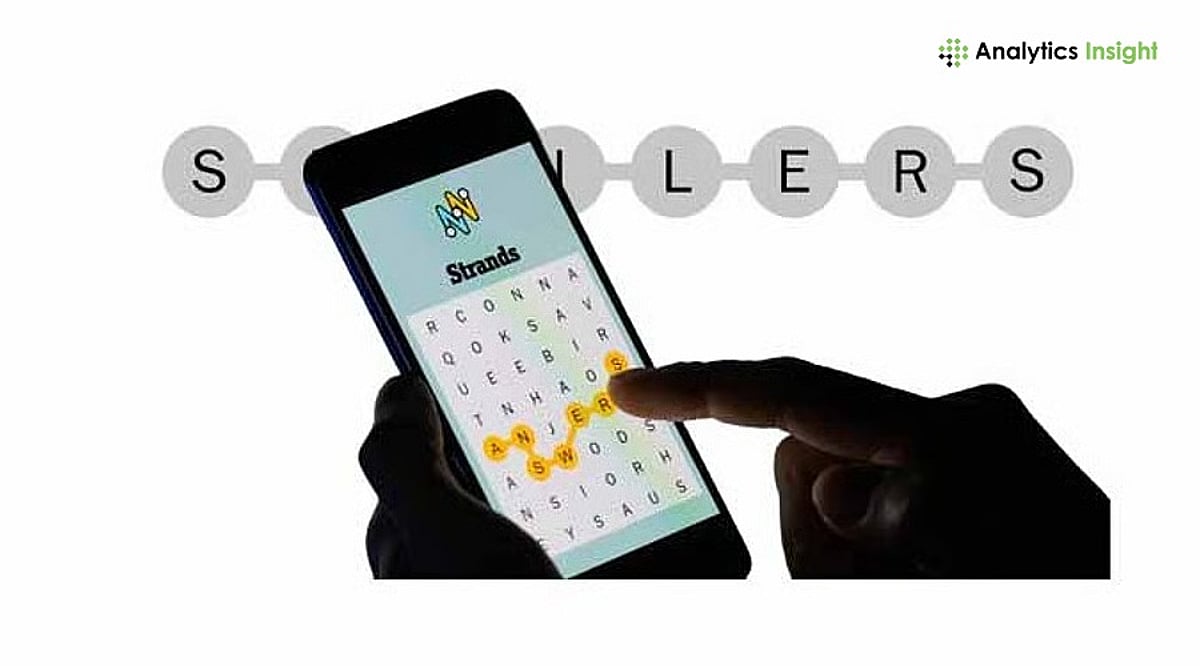
    Welcome to our daily guide for the New York Times Strands puzzle on June 25, 2026. Today’s theme is all about unwinding and relaxation. Whether you need a nudge in the right direction or the full set of answers, this article has you covered.

    What Is NYT Strands?

    NYT Strands is a daily word puzzle that combines elements of Spelling Bee, Connections, and classic Crossword. Players receive 48 letters on a 6×8 board and a daily theme as a hint. The goal is to find words that fit the theme, including a special Spangram—a phrase that ties everything together. Unlike traditional crosswords, the Spangram never runs straight; it often winds diagonally or in a zigzag pattern across the grid.

    Hints for Today’s Strands Puzzle

    If you’re stuck, try using these hint words to unlock the theme: Meat, Mate, Spat, Fail, Fare, Mass, Sage. These are designed to get you thinking about relaxation and self-care.

    Spangram Reveal: SPATREATMENT

    Today’s Spangram is SPATREATMENT. To find it, start with the S located four cells down on the far-left column, then weave across and down the grid. The term “spa treatment” refers to non-medical, therapeutic services that promote relaxation, rejuvenation, and well-being. The word ‘spa’ comes from the Latin phrase salus per aquam, meaning ‘health through water’. Modern spa treatments focus on pampering, skincare, and stress relief.

    Complete List of Answers for June 25, 2026

    Here are all the non-Spangram answers for today’s puzzle:

    • Facial
    • Massage
    • Acupuncture
    • Aromatherapy

    Understanding the Theme: ‘Just Relax’

    The theme for June 25 is ‘just relax’. This phrase means unwinding, resting, or taking a break from stress, work, or physical exertion. It describes a deliberate state of being at ease—simply taking it easy without actively worrying about or doing anything intense.

    Tips for Solving NYT Strands

    • Identify the theme first. Today’s theme is ‘just relax’. Understanding it will help you recognize related words.
    • Look for long words along the grid edges. Spangrams often stretch across the periphery, so check those areas early.
    • Use hint words. The five hint words provided above can give you a mental shortcut to the answers.

    We hope this guide helps you solve today’s NYT Strands puzzle. Stay tuned for fresh hints and answers each day!