Blog

  • Gold Dips Below $4,000 as Commodity Markets Close for Muharram Morning Session; Silver Nears $56

    Gold Dips Below $4,000 as Commodity Markets Close for Muharram Morning Session; Silver Nears $56

    The commodities market remained closed for the morning session on Friday due to Muharram, operating from 9:00 am to 5:00 pm. Evening trading resumed as usual from 5:00 pm to 11:30 pm/11:55 pm. Gold and silver prices continued to face downward pressure, extending a fourth consecutive weekly decline amid a stronger US dollar and expectations of higher US interest rates.

    According to the CME FedWatch Tool, traders now anticipate three rate hikes from the US Federal Reserve this year, with a 64% probability of a September increase. The robust dollar and hawkish Fed outlook weighed heavily on bullion, pushing spot gold below the $4,000 mark for the first time since November 2025. Spot gold fell 0.9% to $3,991.49 per ounce, while US gold futures for August delivery lost 1% to $4,007.30.

    Other precious metals also declined: spot silver dropped 3.2% to $56.01 per ounce, platinum lost 2.4% to $1,563.20, and palladium slid 1.6% to $1,165.93. Gold has fallen roughly 29% from its record high of $5,594.82 on January 29.

    Domestic Gold Prices in India

    In the domestic market, 24K gold rose by Rs. 27 to Rs. 1,41,600 per 10 grams, while 22K gold gained Rs. 25 to Rs. 1,29,800. City-wise prices were: Mumbai and Kolkata at Rs. 1,41,600, Delhi at Rs. 1,41,750, and Chennai at Rs. 1,43,340.

    Key Levels to Watch

    “The rapid repricing of the hawkish Fed created a strong bullish momentum in the US dollar, which eventually led to this significant downward drift in gold prices,” said Kelvin Wong, senior market analyst at OANDA. Renisha Chainani, Head of Research at Augmont, noted that the unwinding of yen carry trades, as USDJPY slides to a 40-year low on rising Japanese interest rates, is creating ripple-effect selling across safe-haven assets.

    Chainani explained that gold has broken below its key $4,000 support and dropped toward $3,950. A sustained breakdown could open the path toward $3,600, although oversold conditions leave room for a bottom-fishing or short-covering rally toward $4,100 and $4,165. She added that silver has also broken below the $60 level and slipped to $55.50, with the next support at $50 if bearish momentum continues.

    Meanwhile, Brent crude futures declined 1.77% to $73.93 a barrel, and US West Texas Intermediate (WTI) fell 1.86% to $70.58 per barrel.

  • Morning Tech Roundup: OpenAI Debuts Jalapeño AI Chip, Leyden Labs Secures €40M, and More

    Morning Tech Roundup: OpenAI Debuts Jalapeño AI Chip, Leyden Labs Secures €40M, and More

    Good morning, tech enthusiasts! Here’s your quick roundup of the biggest stories making headlines today—from artificial intelligence and healthcare to careers, consumer technology, and cryptocurrency.

    OpenAI Unveils First In-House AI Inference Chip

    OpenAI has introduced its first self-developed AI inference chip, named Jalapeño, built in collaboration with Broadcom. The chip is designed to speed up AI responses while consuming less power, marking a strategic step toward reducing OpenAI’s reliance on Nvidia and lowering computing costs. Early tests have yielded strong results, and the company plans to deploy the chip for customer services later this year as part of its long-term hardware strategy.

    Leyden Labs Raises €40M for Broad Flu Protection Nasal Spray

    Dutch biotech firm Leyden Labs has secured €40 million to advance its PanFlu nasal spray through clinical trials. The spray delivers antibodies directly into the nose to block influenza viruses before they spread in the body. Unlike traditional flu vaccines, this approach may also benefit individuals with weakened immune systems. The funding will support further research, expand work on other respiratory viruses, and improve access in lower-income countries.

    Fresh Graduate Left Without Job After Campus Offer Revoked

    A recent engineering graduate has shared their distress online after the company that hired them through campus placements revoked its job offer following graduation. With no internship or work experience, the graduate now faces significant challenges in finding a new position. They have asked for guidance rather than sympathy, highlighting a growing concern among new graduates in a volatile job market.

    Tech Giants Look Beyond Phone Screens

    Major tech companies are increasingly focusing on screen-free devices such as smart glasses, AI earbuds, and AI pendants. The goal is to reduce reliance on smartphones for everyday tasks. However, privacy and public trust remain significant hurdles. While phones are not disappearing, screen-free tools may gradually reshape how people interact with technology.

    Bitcoin May Face More Weakness Before Recovery

    Bitcoin could remain under pressure for another quarter before reaching a major market bottom, according to analysts tracking its four-year cycle. Prices may stay weak through the third quarter, though long-term indicators—including market value, ETF demand, and global money supply—point to a potential rebound later in the year. Until then, caution is advised, especially if Bitcoin stays below key price levels.

    Stay tuned for more updates throughout the day.

  • Pegasystems Invests $7.5M in New Bengaluru Executive Briefing Center to Boost India Operations

    Pegasystems Inc. (NASDAQ: PEGA), a leader in enterprise AI software for mission-critical operations, has opened a new office at EcoWorld Tech Park in Bengaluru, India. The facility, representing an investment of over INR 60 crore (approximately $7.5 million), is one of the company’s largest infrastructure expansions in the country. This move underscores Pega’s long-term commitment to India as a hub for technology innovation, engineering excellence, and client engagement.

    The inauguration was led by Shri Priyank M. Kharge, Hon’ble Minister for Home, Information Technology & Biotechnology and e-Governance, Government of Karnataka, alongside senior global and India leadership from Pega.

    World-Class Executive Briefing Center

    At the heart of the new facility is the Bengaluru Executive Briefing Center (EBC), a high-impact space designed to enhance collaboration with clients, partners, and prospects. The EBC will host executive-level meetings, partner collaborations, immersive product demonstrations, solution showcases, roadmap and advisory sessions, and curated Pega Days. This investment reflects Pega’s commitment to bringing advanced capabilities and thought leadership closer to regional customers.

    The new office reinforces Bengaluru’s role as a strategic anchor in Pega’s global operations, serving as a center of engineering excellence and a key destination for client engagement across Asia-Pacific and beyond.

    Scale and Capability for Growth

    The new office is 1.5 times larger than Pega’s previous Bengaluru facility, expanding its footprint by about 60%. It features over 350 seats, 35+ meeting and conference rooms, and connected floors designed for collaboration and productivity. The workspace includes advanced AV-equipped meeting rooms, flexible seating zones, open collaboration areas, and recreational and wellness spaces, including a mother’s room.

    Aligned with Pega’s global workplace standards, the facility is certified under LEED, WELL, and IGBC Platinum standards, prioritizing natural light, air quality, energy efficiency, and employee well-being. Campus amenities include a food court, gym, daycare facilities, and strong public transport connectivity with upcoming metro access.

    Quotes and Commentary

    “Karnataka warmly welcomes Pegasystems’ expanded presence in Bengaluru,” said Shri Priyank Kharge. “This investment is a strong endorsement of the state’s position as a global technology hub and reflects the confidence that leading enterprises place in Karnataka’s talent and ecosystem.”

    “India is central to Pega’s global growth strategy, and this expansion reflects the confidence we have in the talent and capabilities here,” said Alan Trefler, founder and CEO of Pega. “The new Bengaluru Executive Briefing Center is a significant addition, designed to offer our clients a premier destination to experience Pega’s innovation first-hand.”

    “This new office marks an important milestone for Pega India,” said Deepak Visweswaraiah, senior vice president and managing director, Pega India. “It enables us to deliver immersive, high-value experiences for our clients right here in Bengaluru, from live demonstrations to strategic executive-level conversations.”

    About Pegasystems

    Pega delivers a platform to reimagine, run, and evolve the processes and decisions enterprises can’t afford to get wrong. Combining AI with proven architecture, Pega keeps mission-critical operations governed, scalable, and continuously adaptable. Since 1983, the world’s largest organizations have trusted Pega to turn transformation ambition into durable results.

  • Apple Raises MacBook, iPad, and Mac mini Prices in India Amid AI-Driven Component Cost Surge

    Apple Raises MacBook, iPad, and Mac mini Prices in India Amid AI-Driven Component Cost Surge

    Apple has raised prices on several products in India, including MacBooks, iPads, Mac mini, and HomePod devices, citing rising costs of memory and storage chips driven by the global AI boom. iPhone prices remain unchanged for now.

    The price hike affects the MacBook Neo, MacBook Air M5, MacBook Pro range, Mac mini M4, iPad lineup, and HomePod lineup. The steepest increase is on the MacBook Pro M5 Max, which now starts at ₹4,99,900, up ₹1 lakh. The standard MacBook Pro M5 starts at ₹2,39,900 after a ₹70,000 increase, while the MacBook Air M5 is now priced from ₹1,49,900, up ₹29,000.

    Apple’s more affordable Mac lineup also saw significant increases. The Mac mini M4 now starts at ₹94,900, compared to its earlier launch price of ₹59,900 — one of the largest percentage jumps. The entry-level MacBook Neo starts at ₹79,900, up ₹10,000.

    For tablets, the 11th-generation iPad now starts at ₹49,900, the iPad mini at ₹69,900, the iPad Air at ₹89,900, and the iPad Pro at ₹1,39,900.

    Apple attributes the price hikes to higher costs of memory and storage chips, as suppliers prioritize manufacturers focused on AI, limiting supply to consumer electronics and raising production expenses. Industry experts note Apple has shielded iPhone customers from these increases for now.

  • How Intelligent CI/CD and Infrastructure Automation Cut Operational Risk in Financial Services

    How Intelligent CI/CD and Infrastructure Automation Cut Operational Risk in Financial Services

    In financial services, the cost of a failed software release is rarely limited to engineering. A single production issue can disrupt payments, delay transactions, lock out customers, and draw immediate scrutiny from risk and compliance teams. As banks expand across cloud-native systems, digital channels, and modern payments infrastructure, the pace of change has increased sharply. So has the need to make every release path more controlled, predictable, and resilient.

    That pressure is now visible well beyond internal technology teams. Reuters reported in March 2026 that more than 40% of cyber incidents reported to the UK’s Financial Conduct Authority in 2025 involved a third party, including outages at Cloudflare and AWS. In Australia, regulators intensified scrutiny of ASX after software-upgrade failures and trade-processing glitches, and Reuters reported that an announcements-platform outage in December 2025 placed about 80 companies into a trading halt after the exchange linked the disruption to a software deployment for a security upgrade. In April 2026, S&P Global downgraded ASX after ASIC found governance and risk-management failures, underscoring how technology execution can now influence not only resilience but institutional credibility.

    Against that backdrop, Amol Agade’s work is best understood not simply as delivery acceleration, but as a response to a broader problem in regulated technology operations: how to increase the pace of change without weakening control. His focus in DevOps, automation, and regulated delivery has been on building release systems that detect risk earlier, reduce avoidable friction, and improve audit readiness before changes ever reach production.

    Over the past decade, his work has centered on modernizing how mission-critical banking platforms are built, tested, provisioned, and released. By embedding predictive checks, policy-based controls, and stronger automation into CI/CD pipelines, he has helped teams move away from fragile, manually coordinated release processes and toward more repeatable, governed systems. In practice, that has meant standardizing how infrastructure is provisioned, how deployment decisions are evaluated, and how operational evidence is captured across engineering workflows.

    The operational gains are most visible before changes reach production. In programs where predictive checks and policy-driven controls were standardized, deployment-related incidents fell by more than two-fifths. Infrastructure preparation that once required days of manual coordination was reduced to less than 30 minutes in standardized environments, while environment-related defects fell materially as provisioning became more consistent. In some systems, automated diagnostics and telemetry-driven analysis also shortened recovery times significantly by identifying likely causes earlier and reducing dependence on ad hoc troubleshooting.

    Security and compliance readiness improved as well. With automated patching, configuration management, and more consistent guardrails built into delivery workflows, compliance performance moved from uneven baseline coverage to a far more dependable level, in some cases improving from roughly two-thirds of target coverage to well above 90 percent. Agade’s contribution has also been organizational: treating automation not merely as a convenience, but as a risk-control strategy. Standard Terraform modules, reusable delivery patterns, and embedded compliance rules created a common language for safer change across engineering teams and adjacent platform partners.

    The broader lesson is becoming harder for financial institutions to ignore. In an environment where regulators are tightening incident-reporting expectations and market operators are being penalized for technology failures, intelligent CI/CD and infrastructure automation are no longer just productivity tools. They are increasingly part of how financial institutions defend trust, reduce operational risk, and deliver change safely at scale. Agade’s work fits into that larger shift: not as a stand-alone success story, but as a practical example of how governed automation is becoming a core discipline in modern banking operations.

  • Free Fire MAX Redeem Codes June 26: Grab Premium Skins and Bundles Now

    Free Fire MAX Redeem Codes June 26: Grab Premium Skins and Bundles Now

    Garena Free Fire MAX has released new redeem codes for June 26, 2026, giving players a chance to unlock premium weapon skins, bundles, emotes, and other exclusive in-game rewards. These codes are limited-time offers, so act fast to claim yours before they expire.

    Today’s Free Fire MAX Redeem Codes (June 26, 2026)

    Below is the full list of active codes. Copy and paste them directly into the redemption site to avoid errors:

    • FF7TRD2SQA9
    • FFPSTQ7MXNP
    • Y54N8M2XL9R
    • 1G3H8YC4TN6
    • VKQ9FF8HG3J
    • K5L0PFF5B6Y
    • UHBVF3FFR3G
    • T5YJH76FFRS
    • X4CYHLLQFFS
    • KTXVQF2NRFF
    • DMNSW9KG2FF
    • CBRAXQTS9SF
    • FSGT7KNFQ2X
    • FFK7XC8P0N3
    • MFF1V2CB34E
    • RTB1RK7C5ZL
    • 8YT4ST1ZTBZ
    • BRP9BR43FMA
    • PYEZZUPQ7X5
    • NMJ64VS9QK2
    • L6VP3MRFFB2
    • GH3KJL566KW
    • MFJVMQQYGJ3
    • ZKQ57Z2P2P3
    • IBBMSL7AK8G
    • B3G7A22TWDR7X

    All codes above were verified as active at the time of writing. However, redemption limits apply, so claim them as soon as possible.

    How to Redeem Free Fire MAX Codes

    If you’re new to the process, follow these simple steps:

    1. Visit the official Garena Free Fire redemption website.
    2. Log in using your linked Facebook, Twitter, or Google account. Guest accounts cannot redeem codes.
    3. Enter the code exactly as shown in the provided text box. Copy-paste is recommended to avoid typos.
    4. Click the Confirm button. A success message will appear if the code is valid.
    5. Wait up to 24 hours for the rewards to appear in your in-game mail.

    Pro Tips for Success

    Thousands of players compete for these codes daily. Increase your chances with these tips:

    • Redeem codes within 18–24 hours of release, as most expire quickly.
    • Be among the first 1,000 redeemers—codes often have limited redemptions.
    • Always link your game account to social media; guest accounts are not eligible.
    • Follow official Free Fire channels and top streamers on Twitch and YouTube for future code announcements.

    Final Thoughts

    Free Fire MAX redeem codes are one of the easiest ways to obtain rare skins and items without spending hours in-game. The key is timing—redeem promptly and ensure your account is properly linked. Don’t miss out on today’s rewards!

  • Indian Stock Markets Closed for Muharram: All Eyes on Wall Street and Fed for Monday’s Direction

    Indian Stock Markets Closed for Muharram: All Eyes on Wall Street and Fed for Monday’s Direction

    India’s stock market remained closed on Friday, June 26, 2026, for the Muharram holiday. Both the National Stock Exchange (NSE) and Bombay Stock Exchange (BSE) suspended trading in equity, derivatives, and currency segments. With no domestic activity, investors shifted their focus to global markets, particularly the United States, where tonight’s session will likely set the tone for when Indian exchanges reopen on Monday.

    Despite the break, sentiment remains upbeat after a strong performance earlier in the week. Market experts believe traders will closely watch U.S. market movements before the Monday open.

    Strong Finish Before the Holiday

    Before today’s closure, Indian indices ended Thursday on a positive note. The BSE Sensex rose approximately 109 points to close near 77,100, while the NSE Nifty 50 advanced to settle around 24,055. The gains were modest but signaled that buyers remain in control of the market, reinforcing investor confidence heading into the holiday break.

    Several sectors contributed to the rally. Banking stocks, particularly private sector banks, remained a major driver due to stable loan growth and healthy balance sheets. The IT sector also gained support from optimistic demand expectations in the United States, a key market for Indian technology firms. Metal companies saw buying interest following a weaker U.S. dollar, which typically boosts commodity prices.

    Key Factors Behind the Rally

    Lower crude oil prices have been a significant tailwind for India, a major oil importer. Cheaper oil reduces inflationary pressures and helps companies save costs, creating a positive ripple effect across the economy. Additionally, the Indian rupee strengthened against the U.S. dollar this week, which helps control imported costs and improves foreign investor sentiment.

    Global sentiment also improved as concerns over Middle East tensions eased, prompting foreign investors to return to emerging markets like India.

    What to Watch on Monday

    When markets reopen on June 29, traders will focus on sectors that drove the recent uptrend. Banking stocks such as HDFC Bank and ICICI Bank may remain in the spotlight. IT companies like Infosys and TCS could react to the performance of U.S. tech stocks overnight. Energy stocks, especially Reliance Industries, may benefit if crude prices stay subdued.

    Technically, analysts suggest that if global conditions remain stable over the weekend, the Nifty 50 could target the 24,300–24,500 zone, while the Sensex may push toward the 78,000 level.

    Wall Street and the Fed in Focus

    With Indian exchanges closed, all attention now shifts to Wall Street. The U.S. market session later today will be crucial for global investors. The biggest question revolves around the Federal Reserve’s next move on interest rates. Although U.S. inflation has cooled gradually, the central bank remains cautious, and any fresh signals about rate cuts could sway markets.

    Technology stocks—led by Nvidia, Apple, and Microsoft—continue to drive U.S. markets. Their performance tonight will likely influence sentiment in Asia and other emerging markets. Additionally, upcoming U.S. economic data will be scrutinized for signs of stability and recession avoidance.

    Market participants will also watch for any sudden shifts in crude oil prices or geopolitical developments that could alter the risk appetite.

    Outlook for Next Week

    Indian equities enter the new week with solid momentum. Analysts believe that if the U.S. market avoids sharp declines, domestic indices could extend their gains. However, surprises from the Federal Reserve, a spike in oil prices, or renewed global tensions could introduce volatility.

    June ends with strong confidence in Indian stocks, and today’s holiday merely provides a brief pause before what could be another decisive week for investors.

  • Ishan Technologies Names Saibal Roy as COO to Drive Operational Excellence and Enterprise Growth

    Ishan Technologies Names Saibal Roy as COO to Drive Operational Excellence and Enterprise Growth

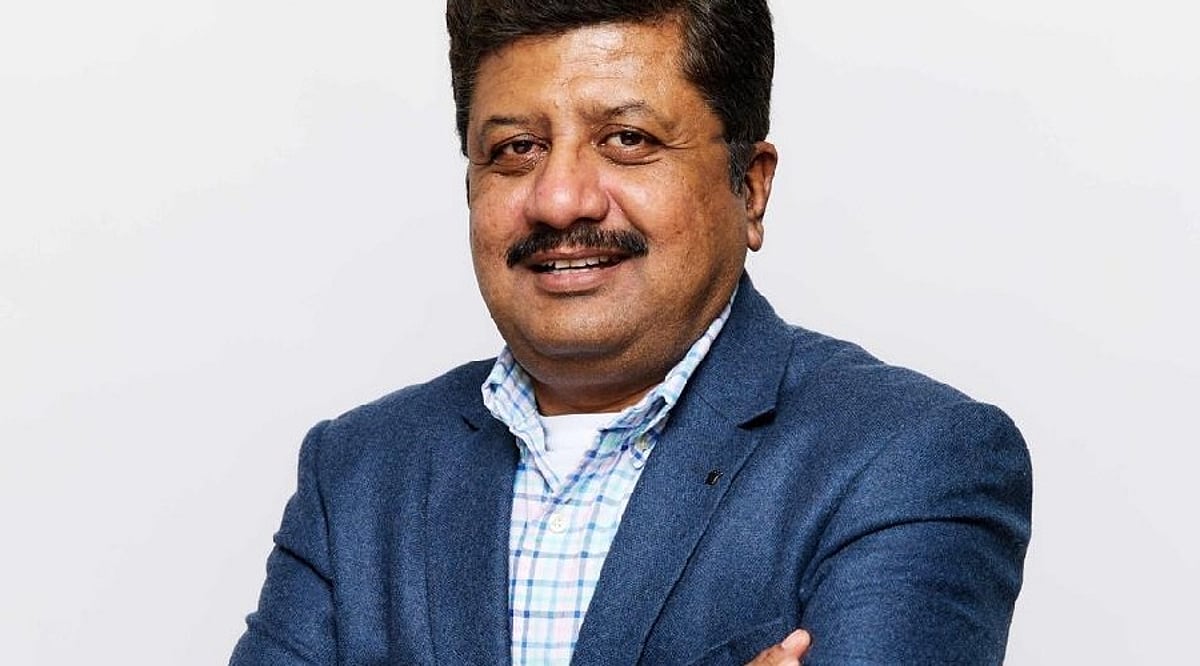
    Ishan Technologies, a leading pan-India ICT and digital infrastructure provider, has appointed Mr. Saibal Roy as its Chief Operating Officer. The move strengthens the company’s leadership as it expands its digital infrastructure capabilities and enhances operational excellence.

    About Saibal Roy

    Mr. Roy is a seasoned enterprise leader with over three decades of experience in India’s ICT and telecommunications industry. He has led large-scale businesses, developed successful go-to-market strategies, and built high-performing teams across complex and competitive markets.

    During his nearly 14-year tenure at Bharti Airtel, he held leadership roles across Government Business, Enterprise Business, and Carrier Wholesale, driving sustained growth in each segment. Prior to joining Ishan Technologies, he served as India Vertical Head for Manufacturing, Retail, and Distribution at ServiceNow India. His career also includes leadership positions at Tata Communications, HFCL, and Tulip Telecom, giving him deep expertise in enterprise connectivity, digital transformation, and customer-centric growth. He holds a bachelor’s degree in Electronics Engineering and is an alumnus of ISB Hyderabad and INSEAD Fontainebleau.

    Leadership Perspectives

    Commenting on the appointment, Mrs. Purvi Kotecha, Director of Ishan Technologies, said: “Over the past 25 years, we have built a business that our customers trust. As we continue to grow, strengthening our operational capabilities becomes increasingly important. Saibal brings extensive leadership experience, a deep understanding of the enterprise technology landscape, and a proven ability to build scalable organisations. We are confident that his expertise will play a significant role in supporting Ishan Technologies’ next phase of growth.”

    Mr. Saibal Roy, Chief Operating Officer, Ishan Technologies, added: “Ishan Technologies has built a strong reputation through its customer-first approach, robust digital infrastructure, and deep market understanding. I look forward to working with the team to further strengthen operational excellence and build capabilities that support the company’s long-term growth ambitions.”

    About Ishan Technologies

    Founded in 2000, Ishan Technologies is a leading ICT company with a strong pan-India presence, enabling organisations to build and scale digital infrastructure for the AI era. The company delivers integrated solutions across network connectivity, data centre services, cloud, and AI-ready digital platforms, serving enterprises, government institutions, and retail customers. With over 25 years of expertise, Ishan Technologies is committed to building secure, scalable, and sovereign digital ecosystems that power India’s next phase of digital and AI growth.

    For more information, visit: www.ishantechnologies.com

  • Bitcoin Plunges to Multi-Month Low as Crypto Market Braces for Continued Pressure Since October 2024

    Bitcoin Plunges to Multi-Month Low as Crypto Market Braces for Continued Pressure Since October 2024

    Bitcoin has dropped to its lowest level in several months, falling below the $60,000 mark and sparking fresh panic across the cryptocurrency market. The world’s largest digital currency recently dipped into the $58,000 to $60,000 range, a threshold not seen since late 2024. This sharp decline has also dragged down other major cryptocurrencies, including Ethereum, Solana, and Binance Coin, as the broader market faces sustained headwinds.

    The crypto market has been under pressure for months, but the latest downturn has intensified concerns. Since October 2024, digital assets have struggled as investors grapple with economic uncertainty, waning market confidence, and heavy selling pressure. The total global crypto market capitalization has shed billions of dollars in a short period.

    Federal Reserve Policy Creates Market Pressure

    One of the primary drivers of Bitcoin’s recent struggles is the monetary policy of the U.S. Federal Reserve. With inflation remaining a persistent issue, the Fed has kept interest rates elevated. The latest inflation data shows the U.S. Consumer Price Index sitting just above 4.2% year over year, well outside the range expected by market participants.

    When interest rates are high, investment capital tends to flow out of riskier assets like Bitcoin and into traditional investments. Higher borrowing costs have reduced overall demand for cryptocurrencies over the past several months.

    Bitcoin ETFs Face Major Outflows

    Another key factor behind the recent crash is a sudden exodus from Spot Bitcoin exchange-traded funds (ETFs). These investment products had previously helped Bitcoin reach record highs by attracting significant institutional demand. However, recent reports indicate that Bitcoin ETFs have seen withdrawals totaling nearly $4.4 billion over multiple trading sessions. This has fueled fear, as institutional investors typically play a crucial role in market stability.

    Liquidation Shock Hits Crypto Traders

    The crypto market relies heavily on leveraged trading, where traders borrow money to place larger bets. This system can trigger sharp moves when prices fall suddenly. After Bitcoin broke below key support levels, crypto exchanges experienced forced liquidations across futures markets. Reports suggest that more than $2 billion worth of crypto positions were wiped out during the latest market crash.

    This cascading effect worsened the decline. Once automatic selling began, prices fell even faster. Ethereum also came under pressure, trading around $1,500 to $1,700, while Solana and several altcoins lost double-digit value within days.

    Large Institutional Selling Creates Fear

    Institutional investors have also added to the pressure. Attention recently turned to Strategy, the company known for holding massive amounts of Bitcoin under executive chairman Michael Saylor. Reports about Bitcoin sales from large treasury holders have sparked concern across the market, leading investors to question whether major institutions still have strong confidence in Bitcoin after months of weakness.

    Global Tensions Add More Uncertainty

    The global economic environment has become increasingly challenging. Rising tensions in the Middle East and concerns about higher energy prices have pushed investors toward safer assets such as government bonds and the U.S. dollar. While Bitcoin was once viewed as an alternative asset during uncertain times, recent market behavior shows it now trades more like technology stocks and other risky investments.

    Why This Matters

    This crash shatters the ‘safe-haven’ narrative, as Bitcoin mirrors highly volatile tech stocks under macroeconomic stress. With $4.4 billion exiting ETFs and extreme fear setting in, institutional support is facing its ultimate test since late 2024.

    Fear Dominates the Crypto Market

    Investor sentiment has turned extremely negative. The Crypto Fear and Greed Index recently entered ‘Extreme Fear’ territory, reflecting deep nervousness across the market. Bitcoin remains nearly 50% below its previous peak of $126,000 reached in October. Market analysts believe another drop is possible if Bitcoin falls below the critical support level of $59,000.

    For now, Bitcoin’s future hinges on Federal Reserve decisions, fresh ETF demand, market confidence, and overall economic conditions. Until these pressures ease, the cryptocurrency market may continue to face one of its toughest phases since late 2024.

    FAQs

    1. Why has Bitcoin fallen sharply recently?
    Bitcoin’s crash is driven by sticky U.S. inflation (~4.2%), prolonged high Federal Reserve interest rates, massive multi-session spot ETF outflows totaling $4.4 billion, and heavy cascading futures liquidations.

    2. What is Bitcoin’s current price range?
    Bitcoin has plunged into the $58,000 to $60,000 zone, marking its lowest level in several months and dragging major altcoins like Ethereum down with it.

    3. How much capital has exited Bitcoin ETFs recently?
    Institutional investors have pulled approximately $4.4 billion out of spot Bitcoin ETFs over a multi-day selling streak, severely damaging market liquidity and confidence.

    4. How severe was the liquidation shock during this crypto crash?
    Sudden price drops triggered a massive leverage squeeze, resulting in over $2 billion worth of forced liquidations across various crypto futures markets within days.

    5. Can Bitcoin prices fall further from here?
    Yes. Market analysts warn that if Bitcoin fails to hold its critical psychological support level at $59,000, it could trigger a deeper sell-off across the entire digital asset space.


  • Dearness Allowance in India 2026: Rates, Formula, Tax Rules, and Salary Impact Explained

    Dearness Allowance in India 2026: Rates, Formula, Tax Rules, and Salary Impact Explained

    What is Dearness Allowance?

    Dearness Allowance (DA) is a cost-of-living allowance paid to central government employees, state government employees, public sector workers, and pensioners. It helps offset the impact of inflation on income by adjusting salaries and pensions in line with rising living costs.

    Latest DA Rate in 2026

    The Union Cabinet has approved a 2% increase in DA, raising it from 58% to 60% of basic pay for central government employees under the 7th Pay Commission. This hike takes effect from January 1, 2026.

    DA Calculation Formula

    DA is linked to the All-India Consumer Price Index for Industrial Workers (AICPI-IW). Using a 12-month average, the formula under the 7th Pay Commission is:

    DA% = [(12-month average AICPI-IW × 2.88 − 261.42) ÷ 261.42] × 100

    The latest calculation yielded approximately 60.39%, which was rounded down to 60%. DA is revised twice a year, in January and July.

    Types of Dearness Allowance

    There are two main types:

    • Industrial Dearness Allowance (IDA): Applies to workers in public sector undertakings and is revised periodically based on inflation trends.
    • Variable Dearness Allowance (VDA): Covers workers under minimum wage rules, adjusted based on CPI movement and the base index.

    Is DA Taxable?

    Yes, Dearness Allowance is fully taxable under the head “Income from Salary.” It is added to taxable income and appears separately in salary slips and Form 16.

    Impact on Salary and Pensioners

    The increase directly boosts take-home pay for millions of employees and also raises pension payouts for eligible pensioners via Dearness Relief (DR). A basic pay of ₹50,000 with 60% DA adds ₹30,000 to the salary component.

    FAQs

    1. What is the latest DA rate in India for 2026?

    60% of basic pay, effective January 1, 2026.

    2. How is DA calculated?

    Using the 12-month average AICPI-IW and the formula above.

    3. Is DA taxable?

    Yes, fully taxable.

    4. How does DA affect pensioners?

    Pensioners receive an equivalent raise called Dearness Relief (DR) whenever DA is increased.