Blog

  • Kasi Cloud CEO Johnson Agogbua on Building Hyperscale AI-Ready Data Centers in Africa

    Kasi Cloud CEO Johnson Agogbua on Building Hyperscale AI-Ready Data Centers in Africa

    Johnson Agogbua, co-founder and CEO of Kasi Cloud, is leveraging three decades of internet infrastructure expertise to bring hyperscale, AI-ready data centers to Africa. In an exclusive interview, Agogbua details how his experience at UUNET Technologies, Movaz (now ADVA), Meta, and Reliance Jio has shaped Kasi Cloud’s mission to close Africa’s digital infrastructure gap.

    Founded with Mark Adams, former Chief Strategy Officer at Equinix, Kasi Cloud emerged from the simple question: why not Africa? The company formally launched in early 2020, just as the pandemic hit. Rather than stalling progress, COVID-19 allowed Agogbua to conduct deep market research while grounded in Nigeria. Kasi acquired 4.2 hectares in Lagos, secured backing from the Nigerian Sovereign Wealth Fund and seed funding from DH Capital (now Citizens Bank), and broke ground in 2022.

    Kasi Cloud differentiates itself through what Agogbua calls “unstoppable capacity”—a hyperscale-first design that anticipates Africa’s digital demands a decade ahead. The company redesigned data center power architecture from utility to rack level, partnering with global power management firm Eaton to cut delivery timelines by 50%. Kasi also built redundant carrier-neutral colocation space, with one visiting network CEO noting it was larger than any existing data center in Lagos.

    “We didn’t set out to be a data center company alone,” Agogbua explains. “We set out to solve problems… We imagined a world where the population says, ‘We are truly digital.’” He emphasizes that Kasi will not use hand-me-down technology: “World-class belongs in Africa as well.”

    The interview underscores a pivotal moment for AI and cloud infrastructure on the continent, with Kasi Cloud positioned to address an urgent need for scalable, AI-ready digital platforms.

  • Schneider Electric CAIO Philippe Rambach on Scaling AI with a Business-First Strategy and Critical Thinking

    Schneider Electric CAIO Philippe Rambach on Scaling AI with a Business-First Strategy and Critical Thinking

    In a wide-ranging interview, Philippe Rambach, Chief Artificial Intelligence Officer at Schneider Electric, shares how the global energy management and automation company is scaling AI across more than 160 factories and 140 countries. The key, he explains, is a disciplined business-first approach that prioritizes real-world value over technological novelty.

    Business Value Over Technology

    Rambach warns against “technology tourism”—the temptation to run hundreds of pilots without a clear business case. Instead, Schneider Electric starts by identifying a specific business impact, then asks if AI can help. Each use case passes through gate reviews that test both technical feasibility and business value. Projects are halted immediately if either criterion fails.

    “We do a pilot that keeps in mind what we want to deliver at scale,” Rambach notes. This rigor prevents “pilot purgatory” and ensures that lab successes translate to real factory results.

    Agentic AI and the Sera Assistant

    Schneider recently launched Sera, an AI agent that transforms how users interact with environmental data. However, Rambach cautions against overhyping generative AI. “Generative AI agents do not replace forecasting, anomaly detection, prediction or optimisation—we still need that,” he asserts. Sera adds a conversational layer, allowing operators to ask complex questions in natural language, moving beyond rigid dashboards.

    Critical Thinking as a Core Skill

    To counter blind faith in AI outputs, Schneider has introduced an “AI for All” training program with the same institutional rigor as safety training. The centerpiece is critical thinking. “We want people to keep critical thinking when AI gives an answer,” Rambach says, acknowledging that AI can be wrong or partially wrong. The company also hosts “promptathons” and a virtual “Genius Bar” for employees to share prompting strategies.

    Edge vs. Cloud: A Matter of Physics and Policy

    Deciding where to run AI depends on data sovereignty and latency. In industrial settings, sensitive data often must stay local, and real-time applications like visual inspection require edge processing for speed. Schneider’s solutions are designed to be versatile enough for both environments.

    Addressing the Energy Density Crisis

    Schneider Electric, which builds data center infrastructure, is acutely aware that AI training consumes vast energy. Rambach notes the irony: AI is part of the solution. The company uses AI to optimize power management for its own factories and partners like NVIDIA to precisely manage energy in AI factories. He also advocates treating AI as an “unreliable component,” building reliable systems with human-in-the-loop checks, as in customer care where AI drafts responses but humans verify them.

    Navigating Regulation and Ethics

    Operating under the EU AI Act, Schneider has published an external Trust Charter that explicitly bans facial recognition. Rambach says compliance with the Act does not slow the company down. The ethical framework is backed by a dedicated responsible AI team within the AI Hub.

    The Future of the CAIO Role

    Rambach admits he is “very scared of becoming the bottleneck” as AI becomes pervasive. He sees the CAIO role evolving toward defining technical policy and supporting large, bespoke use cases. His overarching message is to not forget centuries of human wisdom: “My big message is we should not forget everything we have learned in the last 2,000 years, just because there’s a new technique.”

    For industrial giants, AI is not a replacement for human engineering but its most powerful tool—and mastering it lies in the critical mind of the user.

  • Stellantis AI Chief Kaynaz Behdin on Industrializing Enterprise AI for Measurable Business Impact

    Stellantis AI Chief Kaynaz Behdin on Industrializing Enterprise AI for Measurable Business Impact

    Kaynaz Behdin, Senior Vice President of Digital, Data & AI at Stellantis, is redefining how the automotive giant approaches artificial intelligence. In a recent interview, Behdin emphasized that her focus is not on experimentation but on building AI as a disciplined enterprise capability that drives customer satisfaction, value creation, operational performance, and speed.

    Stellantis, the multinational automaker behind brands like Jeep, Peugeot, Fiat, and Vauxhall, operates a distributed global environment. Behdin’s strategy relies on a three-layer operating model: translating leadership priorities into a single execution framework, embedding AI and Data Business Hubs directly into functions, and providing global platforms and shared talent pools to industrialize delivery.

    AI is already applied across Stellantis’ full value chain, including sales conversion and retention, warranty and quality cost reduction, logistics efficiency, manufacturing uptime, and faster engineering cycles. Key criteria for prioritizing use cases include business ownership, scalability across plants and regions, and strict safety and compliance frameworks.

    Behdin identified the main barriers to AI adoption as organizational and human, not technological. To address this, Stellantis runs an AI Academy with persona-based training—from executive coaching to hands-on workshops—to embed AI literacy into daily work. She also highlighted the importance of governance as an accelerator, with risk assessment built across the data-to-AI lifecycle and observability tools tracking what agents and models do.

    Looking ahead, Behdin sees generative AI transforming in-vehicle experiences, engineering cycles, operations, and commercial performance. Stellantis has deployed an Agent Gateway—a standardized infrastructure layer for AI agents to interact with enterprise platforms—and is rolling out a system called Metabot inside Microsoft Teams to bring the agent ecosystem to employees’ daily workspace.

    Behdin’s three priorities for 2026 are embedding AI into the business, industrializing agentic AI at scale with strong abstraction layers to avoid vendor lock-in, and ensuring value measurement and compliance by design. She concluded: “It’s the year we move from ‘great use cases’ to true AI-first, enterprise-level transformation, with our customers and our people at the centre of everything we do.”

  • Schneider Electric’s CAIO on Scaling AI with Business-First Strategy and Critical Thinking

    Schneider Electric’s CAIO on Scaling AI with Business-First Strategy and Critical Thinking

    Philippe Rambach, Chief AI Officer at Schneider Electric, discusses how the company integrates artificial intelligence across its global operations while maintaining a pragmatic, business-first approach. In an interview with AI Magazine, Rambach outlines the principles guiding AI adoption in over 160 factories and 140 countries.

    Rather than chasing the latest technology trends, Schneider Electric evaluates AI use cases based on business value and technical feasibility. Every project passes through gate reviews that assess these factors, preventing what Rambach calls “pilot purgatory.” The company prioritizes solutions that can scale from the start, avoiding lab experiments that fail in production.

    The rise of agentic AI is another key topic. Schneider recently launched Sera, an AI agent that allows users to interact with environmental data using natural language. Rambach emphasizes that generative AI agents complement, not replace, classical AI methods like forecasting and anomaly detection. He warns against the common mistake of treating generative AI as a one-size-fits-all replacement.

    To prepare employees for AI adoption, Schneider has implemented a training program called “AI for All.” The curriculum emphasizes critical thinking, helping staff evaluate AI outputs rather than trusting them blindly. The company also hosts “promptathons” and maintains a prompt library to share best practices across teams.

    On the technical side, Rambach explains the decision between edge and cloud AI deployment. Factors include data sovereignty, cybersecurity, and latency—especially in high-speed manufacturing processes where millisecond delays matter. Schneider builds solutions that work in both environments.

    The interview also touches on the energy demands of large AI models. As a supplier to data centers, Schneider Electric uses AI to optimize power management in collaboration with partners like NVIDIA. Rambach views AI as both a contributor to and a solution for the energy density problem.

    Regulatory compliance under the EU AI Act is managed through a responsible AI team, and Schneider has published a public Trust Charter that excludes uses like facial recognition. Rambach notes that regulation has not slowed down innovation.

    Looking ahead, Rambach sees the CAIO role evolving from overseeing all AI initiatives to setting technical policy and supporting large-scale use cases. He warns against becoming a bottleneck and stresses the importance of leveraging existing transformation teams rather than creating new ones.

    The key takeaway: AI in heavy industry must serve real business needs, and human critical thinking remains indispensable. As Rambach puts it, “We should not forget everything we have learned in the last 2,000 years, just because there’s a new technique.”

  • MIT Forum Explores How AI Reshapes Jobs, Democracy, and Society

    MIT Forum Explores How AI Reshapes Jobs, Democracy, and Society

    At the AI and Society Forum held at MIT, leading researchers from across the Institute gathered to examine the profound ways artificial intelligence is influencing employment, democratic processes, and the very fabric of society. Co-organized by the School of Humanities, Arts, and Social Sciences (SHASS) and the Social and Ethical Responsibilities of Computing (SERC), the event featured keynote talks, panel discussions, and even a musical performance blending generative AI with live instrumentation.

    AI and the Future of Work

    Economist David Autor challenged the widespread fear that AI will simply eliminate jobs. Instead, he argued that the technology’s impact hinges on how it alters the scarcity and value of human expertise. “When I think about how technology interacts with the value of labor, I think about it in terms of how it changes the scarcity of expertise, whether it makes it more valuable or whether it makes it more of a commodity,” Autor said. He emphasized that proactive policies—like worker training, wage insurance, and broader capital ownership—are essential to navigate the coming changes.

    During a panel moderated by Rob Loughlin of McKinsey & Company, MIT experts explored the changing nature of work. Daniela Rus, director of CSAIL, envisioned AI as a collaborative assistant: “I’d like to imagine the robot as your friend and assistant… but the role of the human as the decider, as the person with good judgment, remains super important.” David Mindell added that history shows work constantly evolves, and the key is to “constantly be creating the new work.” Sendhil Mullainathan cautioned that while AI offers productivity gains, long-term growth requires careful differentiation, and we are entering a period of high variance in workforce restructuring.

    Democracy and AI

    The second session turned to AI’s impact on democratic institutions. Chara Podimata of MIT Sloan presented research auditing large language models for bias in election information. Her study of 12 major models during the 2024 U.S. presidential election revealed that responses varied dramatically based on users’ stated demographics and political leanings. A new audit is planned for the 2026 midterms.

    In a panel moderated by Songyee Yoon, experts voiced both concerns and cautious optimism. Bailey Flanigan warned that automating decision-making could strip away the procedural rituals essential to democracy. Charles Stewart III highlighted the risk of AI-induced chaos in elections, noting that “if an election is called into question, that can lead to violence.” Lily Tsai argued that AI designers must embed democratic values such as agency, equality, and mutual respect. She shared a promising example: a Socratic dialogue chatbot that helps people articulate their beliefs, which actually moderated their policy positions.

    A Call for Interdisciplinary Action

    In his opening remarks, SHASS Dean Agustín Rayo stressed that “paying attention to the societal consequences of AI is not a departure from MIT’s mission; it’s a way of ensuring that our technical leadership has maximum impact.” Dan Huttenlocher, dean of the MIT Schwarzman College of Computing, echoed the need for interdisciplinary research to avoid overreliance and unintended consequences. The forum made clear that as AI continues to advance, understanding its societal impacts is as critical as the technology itself.

  • Murakkab: New System Cuts AI Agent Energy Use and Cost by Over 70%

    Murakkab: New System Cuts AI Agent Energy Use and Cost by Over 70%

    Agentic workflows — AI-powered software systems that chain multiple models and tools to complete complex tasks — are becoming the backbone of cloud computing. But their fragmented design often wastes computation, energy, and money. Researchers from MIT and Microsoft have developed a new system called Murakkab that streamlines the design and deployment of these workflows, automatically optimizing them for speed, energy efficiency, and cost.

    With Murakkab, developers describe their application’s goal in plain language, and the system automatically selects the best AI models, tools, hardware configurations, and resource allocations. It adjusts these on the fly based on user priorities, such as minimizing costs or maximizing speed. In tests, Murakkab used only about 35% of the computation, 27% of the energy, and under 25% of the cost compared to traditional methods — without sacrificing performance.

    “Agentic workflows are getting very complicated and quickly becoming the backbone of what cloud providers are doing,” says Gohar Chaudhry, an MIT EECS graduate student and lead author of the paper presented at USENIX OSDI. “Energy usage is a huge concern, so we need to be very careful about how efficient these workflows are.”

    Murakkab also adapts dynamically when new models or hardware become available, eliminating the need for developers to manually reconfigure their systems. The researchers plan to expand the system to more complex workflows and larger computing clusters.

  • Why Curiosity-Driven Research Remains the Bedrock of American Scientific Leadership

    Why Curiosity-Driven Research Remains the Bedrock of American Scientific Leadership

    Over the past 80 years, sustained investment in basic scientific research has propelled the United States to global leadership, delivering prosperity, national security, and tangible benefits for all Americans. In a special section published June 16, 2026, Scientific American highlights this legacy in “The Young American Scientists,” profiling early-career researchers and featuring commentary from MIT faculty on why curiosity-driven science remains vital.

    MIT President Sally Kornbluth underscored that discovery “is part of our American DNA and has yielded vast returns to the citizens of this country and the world.” She called for a renewed commitment to public investment in science, noting that “investing in American science is not a gamble.” Institute Professor Robert Langer echoed that sentiment, remarking that “what American science has done over the past 50, 100 years has been remarkable.”

    At MIT, this commitment is embodied in initiatives such as Curiosity on a Mission and the Generative AI Impact Consortium, which seek to harness basic research for real-world solutions. Kornbluth observed that while the technological possibilities are “more exciting than ever,” funding uncertainty—particularly for foundational discovery science—poses an unprecedented threat to the ecosystem that fuels the economy and societal impact.

    Early Sparks of Scientific Passion

    Professor Alan Lightman recalled how the launch of Sputnik ignited his fascination with science, leading him to build his own rocket. In his essay “My childhood in science,” Lightman described how those early experiments shaped him into a writer and physicist. “We need science combined with literature, philosophy, history and art,” he wrote. “We need to discover not only the physical world but also our own humanity.”

    Former NFL player and MIT Professor John Urschel emphasized the power of interdisciplinary collaboration. “A lot of good research happens when people can draw on tools, techniques and insights from different areas,” he said, urging young scientists to build broad backgrounds and communicate across fields.

    Invention and Discovery in Action

    The section profiles MIT students and alumni tackling major challenges. Visiting Scientist Alice Stanton developed miBrain, a 3D tissue model of the human brain, and a brain-on-a-chip to test personalized treatments for Alzheimer’s and Parkinson’s. She cautioned that “the road to effective treatments is long and bumpy,” made worse by funding cuts.

    Bob Mumgaard PhD ’08, CEO of Commonwealth Fusion Systems, is working to commercialize fusion power. “Our ability to use new tools to tackle some of these big, meaty problems is super exciting,” he said. Graduate student Alex Zhang addresses “context rot” in AI language models by developing recursive language models that allow the system to reevaluate its reasoning.

    The Benefits of Collaboration

    Professor Emery Brown highlighted the MIT Health and Life Sciences Collaborative (HEALS), which brings together scientists and engineers from diverse backgrounds to address pressing health challenges. “The enthusiasm for HEALS has been contagious across the campus,” he noted.

    MIT alumna Lucy Jones PhD ’81, who created the Great ShakeOut earthquake drill, stressed the necessity of collaboration with policymakers. She also described how computing advances have transformed seismology: “My first year in grad school, I was reading paper seismograms. Now everything is computerized. Computers have changed everything, including science.”

    The State of American Science

    Many interviewees voiced concerns about federal funding instability. Professor Feng Zhang, a CRISPR pioneer, warned: “We can lose the lead rapidly if we do not protect our innovation ecosystem.” He pointed to pressures on NIH and NSF funding, immigration uncertainty, and eroding public trust in expertise.

    Professor Alan Guth expressed optimism about progress in cosmology—new techniques are helping unravel the universe—but echoed worries about future funding. Robert Langer offered a hopeful long view: “I look at the history of American innovation and education over the past 250 years, and it’s been spectacular. Plenty of times there’ve been setbacks … and people keep persisting. That gives me a lot of cause for hope.”

    The Scientific American feature underscores a simple truth: curiosity-driven science is not a luxury—it is the essential ingredient that has made America a leader and will continue to do so if the nation recommits to supporting it.


  • Two LLMs Team Up to Help Robots Interpret Vague Instructions and Prioritize What Matters

    Two LLMs Team Up to Help Robots Interpret Vague Instructions and Prioritize What Matters

    Researchers at MIT’s Computer Science and Artificial Intelligence Laboratory (CSAIL) have developed a new method that uses two large language models (LLMs) to help robots understand ambiguous instructions and focus on key details. The approach, called Masked Inverse Reinforcement Learning (Masked IRL), reduces the amount of demonstration data needed to teach a robot by nearly five times, while improving the robot’s ability to infer unspoken user preferences.

    Traditional robot training often requires either extensive physical demonstrations or detailed written instructions. Masked IRL automates the process: first, one LLM clarifies ambiguous prompts (e.g., turning “stay close” into “stay close to the surface of the table”) by comparing a user’s demonstration trajectory to the shortest possible path. Then a second LLM evaluates the environment and “masks” irrelevant details – such as a person leaning on a table – while highlighting critical ones like obstacles to avoid. The robot then uses these prioritized details to generate a safe motion plan.

    In experiments, the system correctly identified unstated user preferences up to 15 percent more often than comparable baselines. Real-world tests showed a robotic arm successfully moving a coffee mug around a laptop, wiping a table while “staying close” to it, and handing a user a bag of chips while “staying away” from both the person and the table – all after fewer than 50 kinesthetic demonstrations.

    The team plans to enhance Masked IRL with camera input, allowing robots to visually focus on relevant objects in dynamic environments. The work was supported by the Tata Group via the MIT Generative AI Impact Consortium Award and the Department of Defense, and will be presented at the 2026 IEEE International Conference on Robotics and Automation.

  • MIT Economist David Autor Appointed Head of Department of Economics

    MIT Economist David Autor Appointed Head of Department of Economics

    David Autor, the Daniel (1972) and Gail Rubinfeld Professor in MIT’s Department of Economics, has been named head of the department, effective July 1, 2026. A faculty member since 1999, Autor is a leading researcher in artificial intelligence and the future of work.

    “David is a world-class labor economist,” said Agustín Rayo, the Kenan Sahin Dean of the School of Humanities, Arts, and Social Sciences. “He is also an individual of wisdom and insight. I look forward to welcoming him to the school’s leadership team.”

    Autor’s scholarship explores the labor-market impacts of technological change and globalization on job polarization, skill demands, earnings inequality, and electoral outcomes. He co-directs the James M. and Cathleen D. Stone Center on Inequality and Shaping the Future of Work.

    “I’ve been at MIT since 1999, and I owe my career to the Institute, the department, and colleagues who are as kind as they are accomplished,” Autor said. “Stepping into this role is a chance to contribute to a place that has shaped me at every stage.”

    Autor succeeds Jon Gruber, the Ford Professor of Economics, who served as department head since July 2023. In his new role, Autor aims to “build on the stellar standard set by its faculty and students while navigating budget tightening and a shifting political landscape.” He added: “Just as important, I want to lead the department toward the opportunities that advancing AI is opening in how we teach and what we research.”

    A co-director of the National Bureau of Economic Research (NBER) Labor Studies Program, Autor holds a BA in psychology from Tufts University and a PhD in public policy from Harvard Kennedy School. His honors include the NSF CAREER Award, an Alfred P. Sloan Fellowship, the Sherwin Rosen Prize, an Andrew Carnegie Fellowship, the Society for Progress Medal, and the Heinz 25th Special Recognition Award. In 2023 he was named a NOMIS Distinguished Scientist, and in 2024 an AI2050 Senior Fellow by Schmidt Sciences.

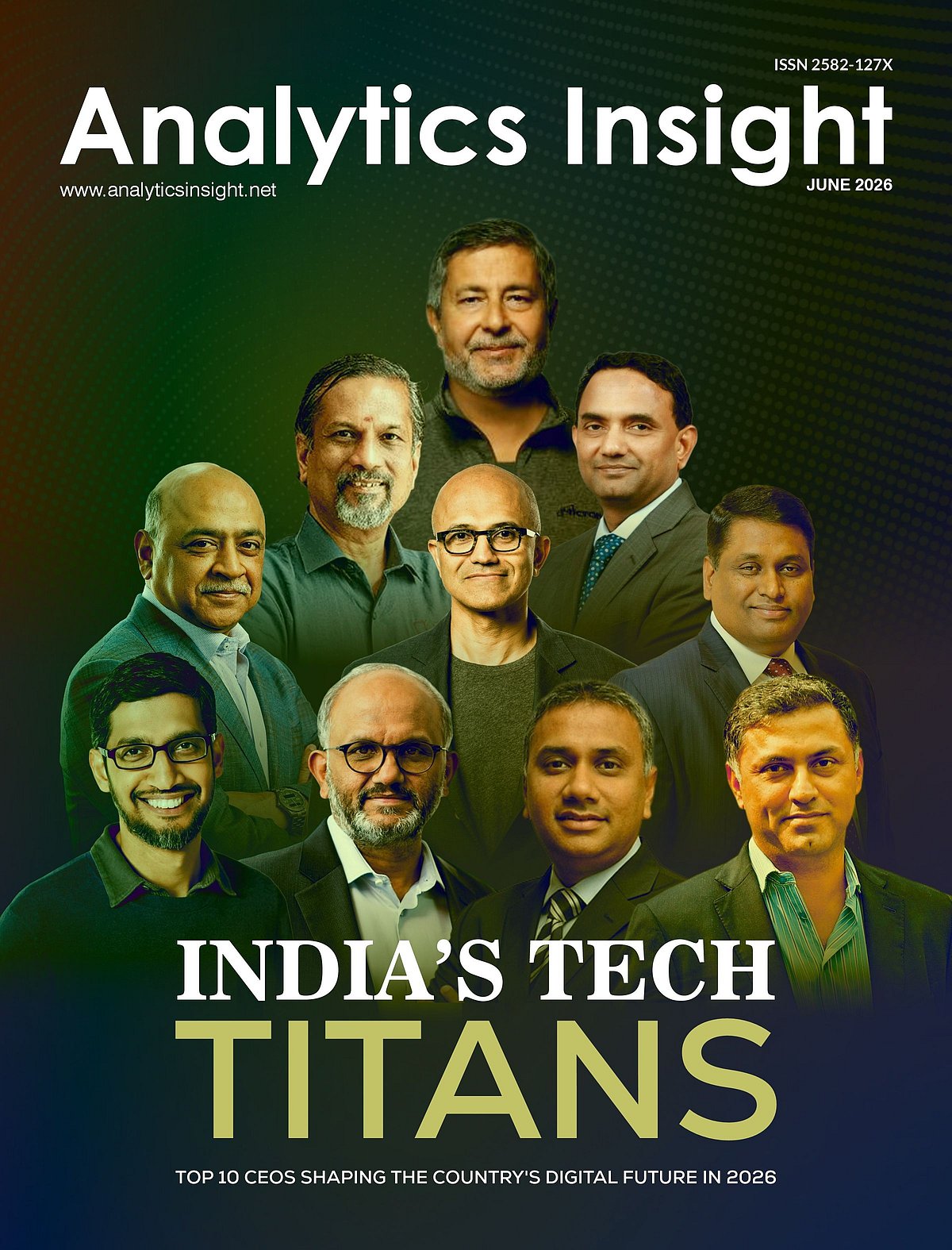
  • India’s Tech Titans and AI Frontier: Analytics Insight’s June 2026 Issue Highlights

    India’s Tech Titans and AI Frontier: Analytics Insight’s June 2026 Issue Highlights

    Analytics Insight’s June 2026 issue delivers a comprehensive look at India’s rapidly evolving technology landscape, profiling the nation’s top 10 tech CEOs who are shaping the digital future—from Sundar Pichai to Bhavish Aggarwal. The edition dives deep into semiconductors, space startups, fintech, and AI leadership readiness.

    Key Articles in This Issue

    • Capability Over Scale: Piper Serica’s Ajay Modi argues that India’s most important startups are hidden inside supply chains.
    • Aravind Srinivas and the Rise of Perplexity: From IIT classrooms to the center of the AI search race.
    • Leading Without the Noise: The Salil Parekh way.
    • Semiconductor Dreams: Can India build a chip industry from scratch?
    • Roshni Nadar Malhotra’s Journey: From media to HCLTech leadership.
    • How Small-town India Became the World’s Most Exciting Fintech Market.
    • Building Intelligence for a Billion Voices: Vivek Raghavan’s next national infrastructure bet.
    • Bhavish Aggarwal’s Journey: From Ola Cabs to Ola Electric and Krutrim AI.
    • India’s Private Space Startups: Who will be the country’s SpaceX?

    This issue underscores India’s ambition to lead in AI, semiconductors, and space technology, with detailed analysis and exclusive interviews. Whether you’re tracking the fintech revolution or the rise of indigenous AI models, the June 2026 edition is a must-read.