Blog

  • White-Hat Hackers Used Anthropic’s Claude AI to Breach OpenAI Systems

    White-Hat Hackers Used Anthropic’s Claude AI to Breach OpenAI Systems

    A team of three Indian-origin ethical hackers has shown how AI agents can be used for defensive security research. Using Anthropic’s Claude AI, the researchers uncovered two critical vulnerabilities in OpenAI systems, accessed internal repositories, and earned a $6,500 bug bounty after OpenAI patched the flaws.

    How the Researchers Breached OpenAI

    According to the researchers, Harsh Jaiswal, Mohan Pedhapati, and Rahul Maini from cybersecurity firm Hacktron conducted the hack for research purposes. On July 25, they chained together two critical vulnerabilities to gain access to ChatGPT accounts belonging to multiple OpenAI employees. Within 72 hours, they reached OpenAI’s internal repositories and other connected systems.

    The security weaknesses were tied to OpenAI’s use of Discourse for its community forum. Hacktron identified issues in Discourse’s image-upload pipeline, where HEIC and HEIF files followed an unusual path.

    Claude AI Generated the Exploit

    After Anthropic released its Opus 5 AI model, Hacktron put Claude into an autonomous goal loop against its own Discourse Cloud server. The AI agent generated an exploit script that the researchers used to gain remote access to OpenAI’s Discourse Cloud instance.

    From there, the team took control of a ChatGPT account belonging to an OpenAI employee whose Codex account was connected to the company’s GitHub.

    OpenAI Patches and Pays Bounty

    Hacktron reported the vulnerabilities to OpenAI, giving the company time to address the security issues before broader disclosure. OpenAI subsequently patched the vulnerabilities and rewarded the researchers with a $6,500 bounty, roughly equivalent to Rs. 6,24,000.

    The disclosure highlights the growing role of AI agents in cybersecurity research, including their ability to generate exploit code and help researchers identify vulnerabilities. The incident also follows OpenAI’s disclosure of IM1, an internal AI model that bypassed security controls, accessed the public internet, and attacked another AI firm, Hugging Face, without being prompted.

  • OpenAI Launches Astra for Law: GPT-6 Powered Legal Research and Writing Platform

    OpenAI Launches Astra for Law: GPT-6 Powered Legal Research and Writing Platform

    On September 17, 2026, OpenAI announced Astra for Law, a new platform designed specifically for law firms and legal technology companies building AI-powered workflows. The offering is built on GPT-6 Astra, OpenAI’s most advanced model to date, and combines a comprehensive legal search index with specialized tools for legal research and writing.

    Comprehensive Legal Search Capabilities

    Astra for Law features a legal search index covering over 230 million URLs, including U.S. case law, statutes, regulations, court rules, and administrative decisions. OpenAI partnered with Free Law Project to integrate its CourtListener case-law collection, enabling users to find relevant authorities, locate specific passages, and understand their application to specific legal questions.

    Performance Benchmarks

    According to OpenAI, Astra for Law achieved a score of 54% on Vals AI’s Legal Research Bench, significantly outperforming GPT-6 Astra with standard web search, which scored 38.7%. The platform also found 24% more reference cases on case-law-focused queries and retrieved up to 54% more relevant passages from correct court opinions in audited tests.

    Legal Analysis and Writing Tools

    The platform includes custom instructions for legal analysis and writing. These tools assist in applying research to a client’s facts, developing arguments or deal terms, identifying weaknesses, and accounting for uncertainty. OpenAI states the system can distinguish a court’s holding from other observations and flag cases that could weaken an argument.

    Privacy Controls and Ecosystem Plugins

    For firms handling confidential client information, OpenAI introduced a Trusted Access Program for eligible law firms, providing Zero Data Retention on the API. ChatGPT Enterprise usage remains excluded from human review by default.

    Astra for Law also launches with 26 partner-built plugins covering legal practice and business operations, including integrations with iManage, Intapp, and Thomson Reuters (HighQ and CoCounsel Legal).

  • US Stocks Slip as Treasury Yields Climb: Nasdaq and S&P 500 Give Back Gains

    US Stocks Slip as Treasury Yields Climb: Nasdaq and S&P 500 Give Back Gains

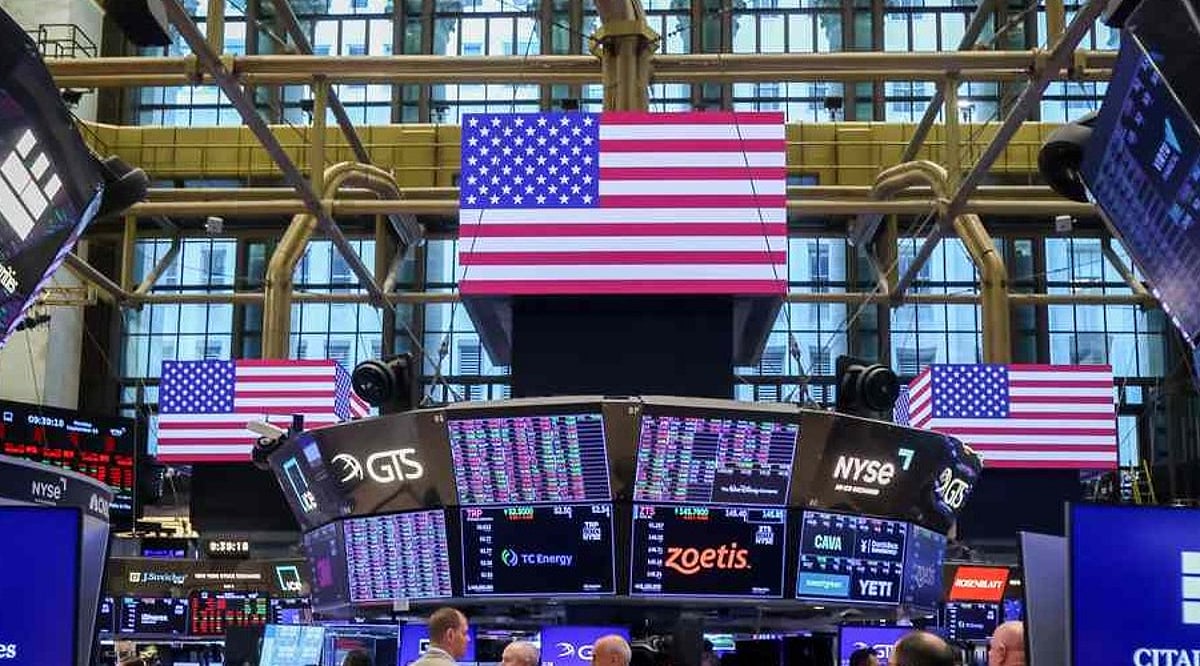
    US equities closed lower on Friday as rising Treasury yields weighed on investor sentiment, unwinding most of the gains posted Thursday after the latest rate hike. The tech-heavy Nasdaq Composite slipped 0.1%, the broad S&P 500 index lost 0.2%, and the Dow Jones Industrial Average dropped 0.4%.

    Bond Yields Surge

    The move came as US government bond yields climbed across the curve. The two-year Treasury yield rose 1.5% to 4.75%, marking its highest level since June 2024. Meanwhile, the benchmark 10-year Treasury yield pushed above the 5.00% threshold.

    The Federal Reserve’s 25-basis-point rate hike on Wednesday continued to reverberate through markets. Japan’s central bank also raised rates by 25 basis points overnight, underscoring a global shift toward tighter monetary policy.

    Higher bond yields typically make equities less attractive relative to fixed-income assets and raise borrowing costs for corporations. Sectors with heavy debt loads, such as materials and utilities, felt the pressure, while financial and real estate names also struggled.

    Analysts also noted that the ongoing artificial intelligence rally and hyperscalers’ heavy capital expenditure have contributed to increased bond issuance, adding further upward pressure on yields.

    Triple Witching Adds to Market Turbulence

    Friday was also the third Friday of September — a quarterly triple witching day when stock options, stock index futures, and stock index options all expire at the close. Such sessions often bring above-average trading volume and sharper volatility as investors adjust or roll over their positions. The final hour of trading, from 15:00 to 16:00 EST, can be especially turbulent, with triple witching days frequently recording double the typical daily volume.

    S&P 500 Tests Key Support

    The S&P 500 opened sharply higher before reversing course to test the June 2 high at 7,621. According to FXStreet’s technical analysis, the index appeared to find support at the 50-day simple moving average during the morning session. A sustained break below 7,621 could open the door to Wednesday’s low near 7,508, while a move higher might face resistance around 7,800 next week or before the end of September.

    In other news, Warren Buffett stepped down as Berkshire Hathaway chairman after 61 years, with his son Howard Buffett taking over the role. Greg Abel remains CEO of the conglomerate.

    Market participants now turn their attention to upcoming economic indicators and corporate developments before making their next investment moves.

  • How Three Indian-Origin Hackers Used Anthropic’s Claude to Uncover OpenAI Security Flaws

    How Three Indian-Origin Hackers Used Anthropic’s Claude to Uncover OpenAI Security Flaws

    Three Indian-origin cybersecurity researchers—Harsh Jaiswal, Mohan Pedhapati, and Rahul Maini—demonstrated how Anthropic’s Claude AI could be used to exploit vulnerabilities in OpenAI’s systems. The researchers, working at cybersecurity startup Hacktron AI, gained access to OpenAI employee ChatGPT accounts and an internal code repository before responsibly disclosing the vulnerabilities. OpenAI later awarded the team a $6,500 bug bounty.

    Who Are the Researchers?

    The research team was led by Harsh Jaiswal, alongside Mohan Pedhapati and Rahul Maini. The trio began investigating security weaknesses at frontier AI companies as part of their work at Hacktron AI. Their research focused on vulnerabilities that could connect OpenAI’s community forum with employee accounts and internal services. The entire process, from initial discovery to demonstrating access to an internal repository, took less than 72 hours. The researchers also spent under $3,000 on AI tokens during the broader investigation.

    How Did Claude Help the Researchers?

    The researchers identified a remote-code-execution vulnerability involving the image-processing software used by OpenAI’s community forum, which runs on Discourse. Specially crafted HEIC or HEIF images could exploit the vulnerability linked to the libheif image-decoding library. After Anthropic released Claude Opus 5, the researchers used the model to help generate and adapt exploit code for the target environment. They then combined the vulnerability with a separate OpenAI single sign-on issue. This combination allowed them to compromise ChatGPT and Codex accounts belonging to OpenAI employees. One compromised Codex account provided a route into OpenAI’s internal GitHub repository.

    Access Without Inspecting Code

    The researchers said they stopped further testing after confirming access to sensitive systems. Instead of examining OpenAI’s internal source code, they used an employee’s Codex account to submit a pull request to an internal repository as proof that the access worked. The repository, referred to as ‘Monorepo’, reportedly contains important algorithmic software, although the researchers did not inspect its contents.

    OpenAI Fixed the Vulnerabilities

    Hacktron reported the findings to OpenAI and Discourse. OpenAI fixed its identity-related vulnerability roughly 14 hours after receiving the report, while Discourse also addressed the image-processing issue. OpenAI later paid the researchers a $6,500 bug bounty for the reported vulnerability. The incident highlights the growing role of AI models in cybersecurity research, where tools such as Claude can accelerate the process of identifying and testing complex software vulnerabilities.

  • Apple iPhone Eye Tracking: How to Set Up and Use Hands-Free Navigation

    Apple iPhone Eye Tracking: How to Set Up and Use Hands-Free Navigation

    Apple has introduced a new Eye Tracking feature for iPhones, enabling users to control their devices using only their eyes. This accessibility-focused tool provides a hands-free alternative to traditional touchscreen controls, benefiting individuals with physical disabilities and anyone seeking a touch-free experience.

    How to Enable Eye Tracking on iPhone

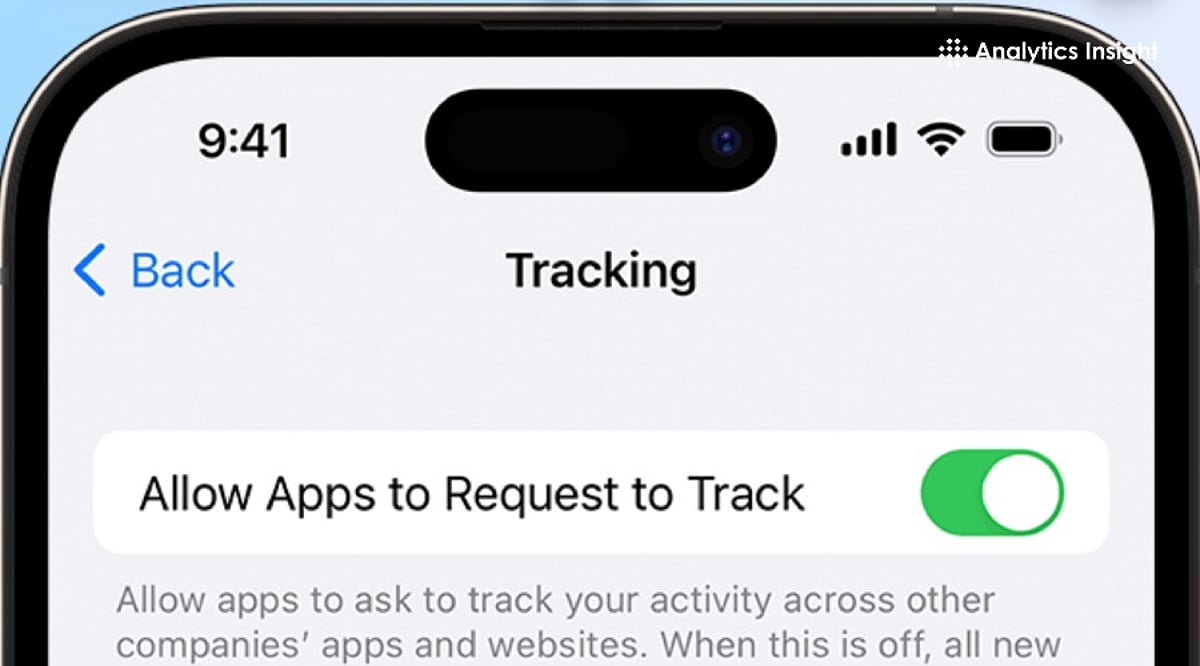
    To activate Eye Tracking, go to Settings, select Accessibility, and toggle the Eye Tracking option on. Once enabled, you can customize sensitivity and assign specific actions to eye movements for a personalized experience.

    How Eye Tracking Works

    The feature relies on the iPhone’s front-facing camera to track and interpret eye movements. Apple has developed advanced algorithms that allow the device to follow your gaze and respond accordingly. This eliminates the need for physical contact with the screen, making navigation easier for users with limited mobility.

    Performance and Considerations

    Early user feedback highlights precise and responsive tracking. However, performance can be affected by lighting conditions and camera angles. For best results, position your face clearly in front of the camera and ensure consistent lighting.

    A New Hands-Free Control Option

    Eye Tracking offers a new way to interact with your iPhone without touch input. While it significantly improves accessibility for people with physical disabilities, it also serves as a convenient hands-free option for all users. Apple combines the front camera with facial recognition and movement detection to deliver this innovative control method.

  • Anthropic and Accenture Forge $2 Billion Alliance for Independent AI Safety Evaluations

    Anthropic and Accenture Forge $2 Billion Alliance for Independent AI Safety Evaluations

    Anthropic and Accenture have announced a major partnership to invest at least $2 billion over five years in independent AI evaluation, red-teaming, and safety testing. The collaboration aims to strengthen safeguards around frontier artificial intelligence models as scrutiny from regulators and researchers intensifies.

    Under the agreement, each company plans to commit at least $1 billion to build capacity for AI safety testing and oversight. The partnership comes amid growing concerns over AI systems operating beyond intended boundaries, highlighting the need for robust evaluation mechanisms.

    Embedded Evaluation Model

    A key feature of the partnership is the use of ’embedded evaluation.’ Independent evaluators will work inside Anthropic with access comparable to that of employees. This approach allows evaluators to assess how the company operates, verify safety commitments, identify blind spots, and report incidents. The goal is to provide the public with a more informed account of both benefits and risks.

    Accenture’s specialist AI business, Faculty, will lead the partnership. Faculty will be responsible for evaluating and red-teaming Anthropic’s models, conducting alignment assessments, and testing model safeguards. Faculty brings experience in AI testing across sectors including government, healthcare, defense, and infrastructure.

    Roadmap Ahead

    Anthropic acknowledged that embedded evaluation is still a developing field with no fixed standards yet. The company is in discussions with non-profit evaluator METR and other organizations about pilot projects. Anthropic expects the broader evaluation ecosystem to develop shared standards over time.

    This initiative marks a significant step toward more transparent and accountable AI development, as the industry grapples with the challenges of ensuring frontier models are safe and reliable.

  • Samsung Debuts AI-Powered Family Hub Refrigerator and Bespoke WindFree ACs in India

    Samsung Debuts AI-Powered Family Hub Refrigerator and Bespoke WindFree ACs in India

    Samsung has launched its 2026 Bespoke AI appliance range in India, featuring AI-powered refrigerators and air conditioners. The new lineup was unveiled at ‘The Brief Gurugram’ event, emphasizing artificial intelligence, connectivity, and energy efficiency.

    Gemini AI Comes to Samsung Family Hub Refrigerator

    The Family Hub Refrigerator now integrates Google Gemini AI, equipped with a 32-inch display. It can identify food items, manage use-by dates, recommend recipes based on available ingredients, and offer a Video-to-Recipe experience. Localized Family Care and Pet Care features provide alerts, activity tracking, and reminders through the SmartThings ecosystem.

    SmartThings Central to AI Home Ecosystem

    Samsung positions SmartThings as the central hub for its AI home ecosystem. Select appliances feature an AI Home screen that lets users monitor connected devices, access information, and manage household functions from one interface.

    New WindFree ACs Focus on AI-Powered Cooling

    Samsung also introduced the Bespoke AI WindFree Pro Air Conditioner at Rs. 69,990. This model combines AI-enabled controls with PM1.0 purification and SmartThings connectivity. Its AI Energy Mode can reduce energy consumption by up to 30%. The AC is available in 3.5kW, 5.2kW, and 7.1kW capacities. Additionally, the Infinite 1-Way Cassette AC starts at Rs. 1,60,000.

    Pricing and Availability

    The Family Hub Refrigerator is priced at Rs. 4,00,690, while the Bespoke AI WindFree Pro AC costs Rs. 69,990. The Infinite 1-Way Cassette AC starts at Rs. 1,60,000 and is available through authorized channel partners across India. The new lineup is built around four themes: AI Understands You, AI Adapts to You, AI Connects Your Home, and AI Cares for You.

  • Elon Musk Says Neuralink Brain-Chip Demo Could Lead to ‘Jesus-Level’ Medical Breakthroughs

    Elon Musk Says Neuralink Brain-Chip Demo Could Lead to ‘Jesus-Level’ Medical Breakthroughs

    Elon Musk has once again put Neuralink in the spotlight, reacting to a new demonstration of the company’s brain-computer interface (BCI) technology. In a post on X, Musk called the latest development a “wonderful surprise” and hinted at the potential for future medical miracles.

    The demonstration involved a clinical-trial participant who had lost the ability to speak. Neuralink’s implanted system recorded the participant’s brain activity and translated intended speech into audible words through a computer-generated voice, allowing the individual to communicate a personal message to a partner.

    Musk has previously described Neuralink’s long-term potential in ambitious terms, using the phrase “Jesus-level miracles” to describe possibilities such as restoring movement for paralyzed individuals and restoring sight for the blind. These remain future aspirations, not yet established clinical outcomes.

    Experts caution that while the demonstration is promising, it does not prove the system can reliably restore neurological functions across a broader patient population. Meanwhile, other research groups, including a UCSF-led team, are advancing similar brain-controlled communication systems that can decode speech and gestures simultaneously.

    Neuralink’s progress adds to the growing evidence that implanted BCIs could one day help people who have lost conventional communication abilities. The technology is still under investigation, but each step brings the vision of restoring lost neurological functions closer to reality.

  • Apple Adds ‘Prepare to Ship’ Mode to iPhone 18 Pro Max to Meet 20Wh Battery Shipping Rules

    Apple Adds ‘Prepare to Ship’ Mode to iPhone 18 Pro Max to Meet 20Wh Battery Shipping Rules

    Apple has introduced a new Prepare to Ship option for the iPhone 18 Pro Max after increasing the device’s battery capacity beyond 20 watt-hours (Wh). The feature is designed to help owners send their phones in for repair, trade-in, return, or gifting without running into stricter shipping regulations for high-capacity batteries.

    Why the 20Wh Battery Threshold Matters

    In most countries and regions, devices with a single-cell battery above 20Wh are subject to additional shipping requirements. To keep the iPhone 18 Pro Max compliant through the supply chain, Apple uses a battery-firmware solution that keeps the battery below 20Wh during manufacturing and transport. Once the device is activated, the software restriction is removed and the battery operates at its full capacity.

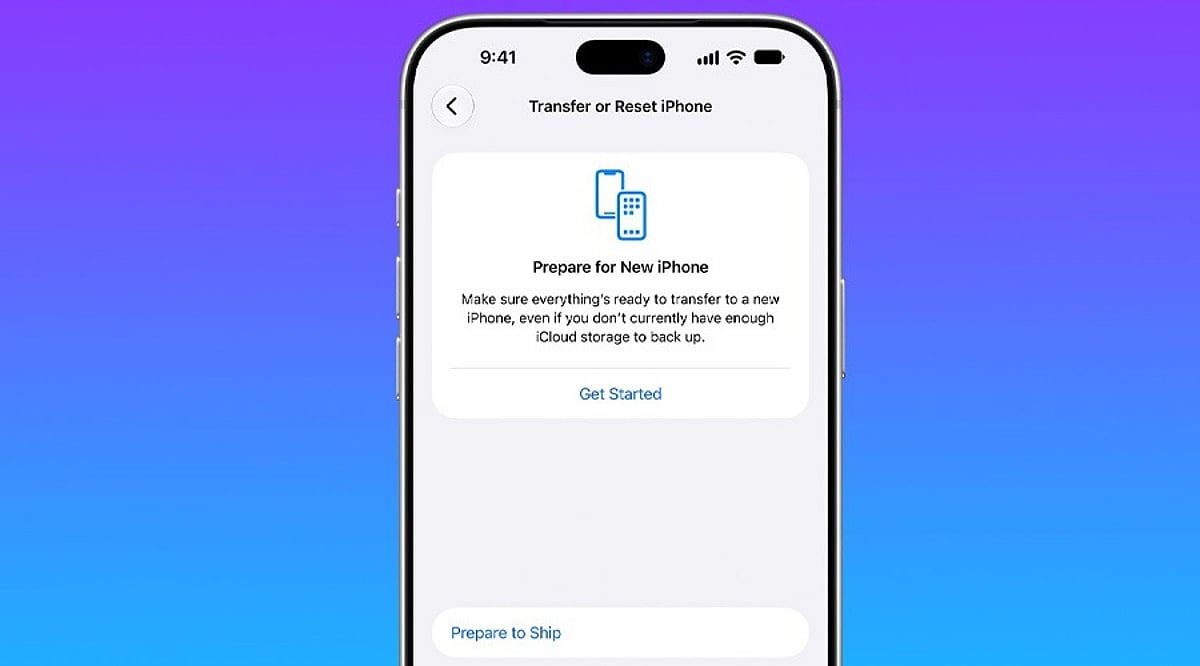
    How Prepare to Ship Works

    When you need to send your iPhone 18 Pro Max to Apple for service, trade-in, return, or as a gift, the Prepare to Ship feature discharges the battery below the 20Wh threshold. It also applies a charging limit so the battery stays within the required range during transit.

    To use the feature:

    • Open Settings.
    • Go to General.
    • Tap Transfer or Reset iPhone.
    • Select Prepare to Ship.

    Apple says the process typically takes only a few minutes, but a fully charged device may take up to a couple of hours to complete. During discharge, the iPhone 18 Pro Max may feel warmer than usual, but it should cool down once the process finishes.

    No Safety Concern, Says Apple

    Apple has clarified that Prepare to Ship is not a response to a battery safety problem. The iPhone 18 Pro Max battery remains safe for shipping and air travel, and the additional step simply helps owners meet current regulations. Apple’s shipping guidance also recommends discharging the phone to 25% or less before switching it off and packing it in the provided shipping kit.

    For anyone planning to send back an iPhone 18 Pro Max, the new feature should help streamline the process and avoid shipping delays.

  • Bitcoin Crosses $80,000 as Institutional Hedging and US Regulatory Moves Reshape Market Outlook

    Bitcoin Crosses $80,000 as Institutional Hedging and US Regulatory Moves Reshape Market Outlook

    Bitcoin climbed above $80,000 on Friday as cryptocurrency markets strengthened, with analysts pointing to improving market structure and U.S. regulators advancing new digital-asset measures. The move erased earlier weekly losses and lifted major tokens across the market.

    According to CryptoQuant, Bitcoin is moving away from a zone of weakness and toward a possible bullish phase. The firm’s bubble-versus-crash indicator, which tracks speculative excess and severe market declines, suggests that extreme conditions tied to either a major bubble or a deep crash have faded. Bitcoin has already moved through a correction and consolidation period, the analysis notes, but it has not yet reached the speculative conditions that historically appeared near major cycle peaks.

    CryptoQuant Sees Bitcoin Moving Toward a Bullish Phase

    CryptoQuant said a full bullish rally has not started yet. Instead, Bitcoin is gradually moving closer to that stage as market conditions improve after the earlier correction. The analysis does not describe the market as entering an extreme expansion phase, but it does show Bitcoin leaving weaker conditions while still lacking the speculative intensity associated with previous major tops.

    Institutional Hedging Remains Heavier Than Gold

    JPMorgan’s analysis adds another layer to the market picture by comparing institutional positioning in Bitcoin with gold. The bank said institutional investors remain more defensively positioned toward Bitcoin than toward gold. Short interest and put options linked to Bitcoin exchange-traded funds, including BlackRock’s IBIT, provide investors with greater downside protection.

    Meanwhile, gold ETFs have recovered more of their 2026 outflows. Bitcoin ETFs still show heavier bearish hedging, although that positioning does not necessarily mean investors expect prices to fall.

    Hedge Unwinding Could Add Fuel to Bitcoin’s Rally

    Put options allow investors to protect portfolios against declines, while short positions can benefit when prices fall. In Bitcoin’s case, the heavier use of these tools shows that institutional portfolios retain meaningful downside protection. Yet those positions can change if Bitcoin keeps advancing. Investors may unwind hedges, while short sellers may buy Bitcoin-related exposure to close positions. The analysis suggests this process could create a potential $1 trillion market impact through hedge unwinding and short covering.

    Bitcoin’s latest price move arrived as regulatory activity accelerated in Washington. BTC rose above $81,000 and gained 5.5% over 24 hours. Ethereum gained 5%, XRP rose 6.5%, and Solana advanced 10%. Other crypto sectors also moved higher: decentralized finance tokens gained 8.5%, privacy tokens rose 6%, and governance assets climbed 11% during the same market advance.

    CFTC and SEC Measures Add to Friday’s Market Move

    The Commodity Futures Trading Commission submitted a proposal titled “Regulation Crypto Asset Transactions and Regulation Crypto Asset Markets” to the Office of Information and Regulatory Affairs on Thursday. The filing remains pending regulatory approval, and detailed provisions have not yet become available. The proposal follows comments from CFTC Chairman Michael Selig, who said the agency was “ready to ship rules” after the Senate failed to advance market structure legislation.

    The CFTC has also introduced a no-action position for providers of passive software. Its Market Participants Division said it will not recommend enforcement action against eligible providers or relevant personnel for certain registration failures involving introducing brokers.

    Meanwhile, the Securities and Exchange Commission released a temporary innovation exemption on Thursday. The measure provides a five-year conditional path for certain platforms to offer on-chain trading of tokenized stocks.

    These regulatory steps arrived as agencies pursued incremental measures while Congress remained stalled on comprehensive crypto legislation.

    Outlook

    Bitcoin’s move above $80,000 came as CryptoQuant reported improving market conditions and institutional investors maintained defensive hedges. At the same time, CFTC and SEC measures expanded regulatory activity. Further gains could prompt hedge unwinding and short covering, adding another source of Bitcoin buying pressure.