Tag: Acquisition

  • MoonPay Bolsters Tokenized Asset Strategy With $60M All-Stock North Capital Acquisition

    MoonPay Bolsters Tokenized Asset Strategy With $60M All-Stock North Capital Acquisition

    Cryptocurrency payments company MoonPay is expanding beyond digital asset payments with an all-stock acquisition of North Capital, a private-markets investment platform, in a deal valued at more than $60 million. The transaction, announced Wednesday, is pending regulatory approval.

    North Capital to Operate as MoonPay Subsidiary

    Once the deal closes, Salt Lake City-based North Capital will become a wholly owned subsidiary of MoonPay. The platform has processed about $9 billion in combined primary and secondary transaction volume.

    North Capital supplies technology infrastructure for private securities issuers and fund managers, covering capital raising, asset management, clearing, custody, and secondary trading. Its affiliates also hold broker-dealer, trading, transfer, and investment advisory registrations with the U.S. Securities and Exchange Commission (SEC).

    MoonPay said the acquisition will add North Capital’s securities tokenization infrastructure and regulatory capabilities to its existing payments and tokenization stack.

    Why MoonPay Is Buying North Capital

    The deal supports MoonPay’s focus on tokenized real-world assets (RWAs). MoonPay CEO Ivan Soto-Wright said the acquisition will help create the regulatory foundation needed for wider adoption of tokenized RWAs.

    “We believe bringing those capabilities into the MoonPay ecosystem can help connect different parts of the financial system through modern, programmable infrastructure,” Soto-Wright said.

    Tokenization converts real-world assets such as equities, bonds, and commodities into blockchain-based tokens that can be bought, sold, and traded on distributed ledgers.

    MoonPay’s Push Beyond Crypto Payments

    The purchase is the latest step in MoonPay’s move beyond its core cryptocurrency payments business. The company’s Trade platform connects banks and fintech companies with tokenized assets, decentralized finance (DeFi) protocols, and stablecoin liquidity.

    Earlier this year, MoonPay also acquired Solana-based trading infrastructure provider DFlow and security startup Sodot. The North Capital deal adds another layer to its push into tokenized assets, a growing blockchain use case among traditional financial institutions.
  • FCC Opens Door for Foreign Investors in Paramount-Warner Bros. Acquisition

    FCC Opens Door for Foreign Investors in Paramount-Warner Bros. Acquisition

    The U.S. Federal Communications Commission (FCC) has approved a request from Paramount Skydance that permits foreign investors to provide funding for its planned acquisition of Warner Bros. Discovery. This decision clears another regulatory hurdle for the massive $110 billion deal, which includes debt.

    Foreign Investors to Hold Non-Voting Equity

    Under the approved structure, foreign investors can collectively hold a substantial share of Paramount’s nonvoting equity. Major investors include the Saudi Arabia Public Investment Fund, Abu Dhabi-based L’Imad Holding, and the Qatar Investment Authority. It is expected that these international entities will hold approximately 49.5% of the company’s nonvoting shares. Meanwhile, the Ellison family and RedBird Capital Partners will maintain control of voting shares.

    The FCC also authorized certain foreign investors to increase their individual equity stakes within specified limits, subject to agency rules.

    Restrictions on Foreign Influence

    The approval comes with conditions designed to prevent foreign investors from gaining control over Paramount’s operations. According to the FCC decision, these investors will not receive voting rights or governance powers, nor can they influence management or content decisions. Additionally, they are barred from accessing nonpublic information involving U.S. citizens.

    The arrangement follows a national security review by the Committee for the Assessment of Foreign Participation in the United States Telecommunications Services Sector, commonly known as Team Telecom. Paramount argued that the additional capital would strengthen its ability to invest in broadcasting, news gathering, and content, helping the combined company compete in the global media market.

    Warner Bros Deal Still Faces Legal Hurdle

    While the FCC decision removes one obstacle, the transaction is far from complete. The proposed merger still faces legal challenges from a group of U.S. states and other parties. Although the U.S. Justice Department and regulators in several other jurisdictions have cleared the deal, litigation remains pending, with a trial expected in March 2027.

    The FCC’s ruling marks another step toward the proposed combination, but its completion still depends on the outcome of the remaining legal proceedings and other closing conditions.

  • Apple Acquires Part of Sonera to Advance Brain-Sensing Wearables

    Apple Acquires Part of Sonera to Advance Brain-Sensing Wearables

    Apple is reportedly acquiring parts of Sonera, a company known for developing compact magnetic sensors capable of detecting the tiny magnetic signals produced by activity in the brain and body. The move could open the door to a new generation of brain-sensing wearables, though Apple has not confirmed any specific product plans.

    Acquisition Details Emerge From EU Filing

    Neither Apple nor Sonera has publicly commented on the deal, but a regulatory filing in the European Union has revealed that Apple will acquire certain assets from Sonera and hire a number of its employees through one of its subsidiaries. This suggests the tech giant is actively investing in the underlying technology.

    Sonera’s proprietary biomagnetic chip is the centerpiece of the deal. Unlike many biosensors, these sensors can pick up signals without requiring direct contact with the skin, making them particularly interesting for wearable applications.

    What This Could Mean for Apple Watch and Other Wearables

    For Apple, Sonera’s technology could provide new ways to monitor health and body signals. Future Apple Watch models or other wearable devices might use these sensors to track brain activity or other physiological data. However, Apple has not confirmed any product based on Sonera’s technology, and the concept remains in its early stages. Users should not expect a brain-controlled Apple Watch anytime soon.

    Beyond Touchscreens and Voice Commands

    Touchscreens remain the easiest way to interact with phones and watches, while voice commands handle simple tasks. Gestures already let users control devices without touching them. Brain-sensing controls could take this further, allowing users to trigger features simply by thinking.

    The Sonera deal does not mean Apple is ready to launch a thought-controlled device. But it shows that Apple is exploring new ways to make wearables smarter. The next major shift in device control may not come from a better display — it could come from how the device reads the human body.

  • Fairfax Faces Valuation Dispute in IDBI Bank Stake Buy, Deal Likely Delayed

    Fairfax Faces Valuation Dispute in IDBI Bank Stake Buy, Deal Likely Delayed

    Fairfax Financial Holdings’ proposed acquisition of a controlling 60.72% stake in IDBI Bank is at risk of delay as the Indian government reviews the Canadian investor’s valuation offer of approximately Rs. 81 per share. The deal, valued at nearly Rs. 53,000 crore for the entire stake, has hit a snag after a high-level meeting at the Finance Ministry failed to reach an agreement.

    Finance Ministry Reviews Fairfax Offer

    On Monday, a high-level meeting convened by the Finance Ministry assessed Fairfax’s reported offer to determine if it aligns with the government’s valuation expectations. The stake sale is a key part of the Centre’s broader disinvestment strategy, and its success is critical for planned fiscal targets. Sources indicate that the government is not satisfied with the Rs. 81 per share figure, which matches the stock’s closing price of Rs. 81.12 after a 10.56% decline on Tuesday.

    Wider Banking Consolidation Plans

    Fairfax, led by Prem Watsa, intends to merge its existing banking operations with IDBI Bank if the acquisition goes through. The group already holds about 40% of CSB Bank and could combine the two lenders under a single banking license. However, funding remains a question. Speculation that Fairfax would sell its stake in IIFL Finance to help finance the deal was denied by IIFL Finance on Wednesday, which stated that no such negotiations are underway.

    The delay underscores the challenge of valuing state-owned banking assets amid market volatility and regulatory hurdles. Investors will closely watch for further developments as the government and Fairfax continue talks.

  • Freedom Holding Corp. Enters Turkish Banking with Acquisition of Turkish Bank A.Ş.

    Freedom Holding Corp. Enters Turkish Banking with Acquisition of Turkish Bank A.Ş.

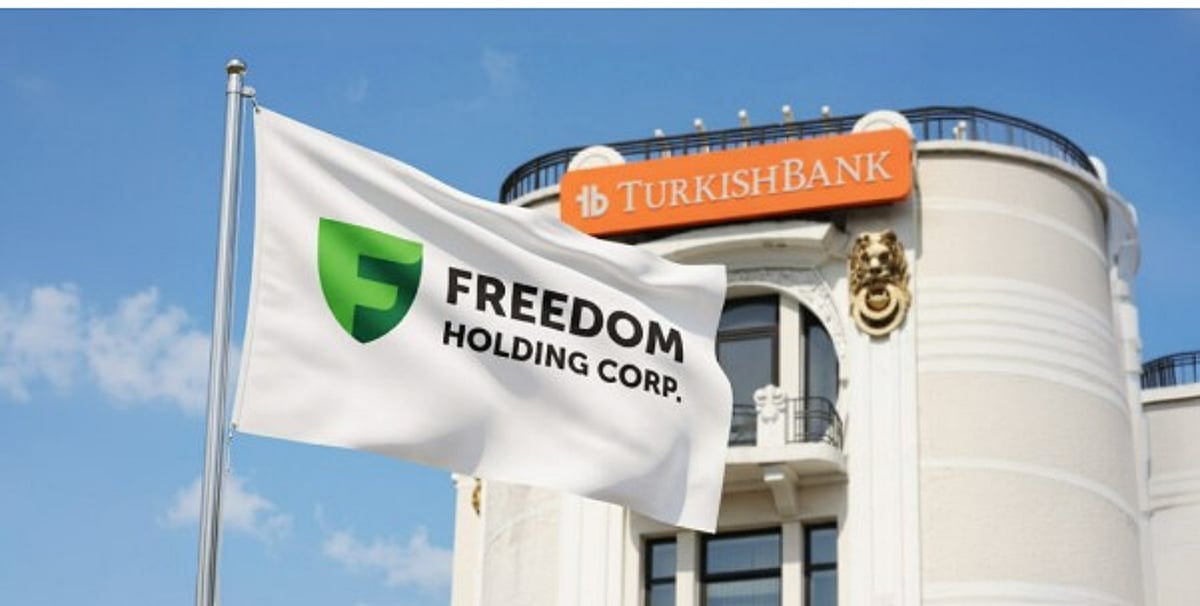
    Nasdaq-listed Freedom Holding Corp. has completed the acquisition of a 99.32% stake in Turkish Bank A.Ş., marking its formal entry into Türkiye’s banking sector and laying the groundwork for an integrated financial and digital platform. The transaction was executed through its subsidiary, Freedom Finansal Hizmetler A.Ş., and the bank has been renamed Freedom Bank A.Ş. following the transfer of control.

    The Acquisition Is Only the First Step

    The deal was finalized after receiving approval from Türkiye’s Banking Regulation and Supervision Agency (BDDK) and the Turkish competition authority. Freedom Holding plans to strengthen the bank’s capital position, upgrade its IT infrastructure, develop digital channels, launch new products, and improve operational efficiency.

    According to the BDDK, more than 120 million digital bank accounts have been opened in the country, with approximately 85% of the population using mobile banking. Turkish customers are already accustomed to advanced mobile-banking services, meaning the new platform must compete not only on product range but also on app usability, transaction speed, and overall customer experience.

    Türkiye occupies a special place in Freedom Holding Corp.’s global growth strategy. The country serves as a geographical bridge between Europe and Asia and a strategic gateway connecting the world’s largest financial markets.

    Why the Ecosystem Needs Its Own Bank

    Freedom Holding Corp. began building its Turkish infrastructure in 2022 with the establishment of Freedom Finansal Hizmetler A.Ş., created to support investments in banking, insurance, capital markets, payment systems, and other financial-services segments. In 2025, after approval from Türkiye’s Capital Markets Board, Freedom Yatırım Menkul Değerler A.Ş. was formed as the group’s local brokerage platform.

    The bank acquisition complements Freedom’s expansion into Türkiye’s capital markets. The group now has a banking platform on which to build its own ecosystem in the country. Banking services provide regular customer contact through accounts, cards, payments, transfers, deposits, and lending products, placing the acquired bank at the center of the future platform.

    Testing Freedom’s Kazakhstan Model in Türkiye

    In Kazakhstan, Freedom Holding has already built an ecosystem combining banking, brokerage, investment, insurance, payment services, e-commerce, travel, ticketing, and entertainment. The group plans to draw on this experience in Türkiye.

    “In Kazakhstan, we built an ecosystem in which financial and everyday services operate through a single SuperApp, which has become the country’s fastest-growing digital service,” said Timur Turlov, founder and CEO of Freedom Holding Corp. “We are now bringing this model to Türkiye, where customers already have high expectations of their banks. Our task over the next few years is to strengthen the bank’s capital base and technological capabilities so that an ecosystem can develop rapidly around it.”

    The group’s experience in Kazakhstan demonstrates that financial and lifestyle services can be combined on a single digital platform. Türkiye will show how successfully the model can scale beyond the home market.

    Freedom Holding Corp. operates in 22 countries, including Kazakhstan, the United States, Cyprus, Poland, Spain, Uzbekistan, and Armenia, with its principal executive office in New York. Its shares trade under the ticker FRHC on Nasdaq, the Kazakhstan Stock Exchange, and the Astana International Exchange.

    The company strengthened its financial position in fiscal year 2026, which ended March 31. Revenue increased 9% year-on-year to $2.19 billion, while net income more than doubled to $153.3 million from $76.2 million a year earlier. Total assets rose 33% to $13.16 billion. By March 2026, the Freedom ecosystem served more than 14 million customers.

    In June 2026, S&P Global Ratings upgraded the credit ratings of four Freedom subsidiaries to BB- with a Stable outlook, while affirming the holding company’s long-term issuer credit rating at B-, also with a Stable outlook.

  • Netflix Acquires Ben Affleck’s AI Startup InterPositive for $587 Million to Boost Original Content Production

    Netflix Acquires Ben Affleck’s AI Startup InterPositive for $587 Million to Boost Original Content Production

    Netflix is making another big bet on artificial intelligence by agreeing to buy InterPositive, the AI filmmaking startup co-founded by Ben Affleck. The acquisition news came to light initially in March 2026.

    According to the latest reports found in a regulatory filing, the deal is worth around $587 million, and they paid this amount in cash as part of the acquisition. If the acquisition successfully happens, it will be Netflix’s biggest investment in AI tools for film and TV production.

    When the news first surfaced, Ben Affleck mentioned that the deal aims to ‘protect the power of human creativity.’ He added, “InterPublic’s AI tools help filmmakers improve their footage in post-production, particularly with real-world production challenges such as missing shots, background replacements or incorrect lighting.”

    Netflix also announced that the entire InterPositive team will join the company, with Affleck as a senior advisor. While Netflix has not shared exactly when the technology will be used, the company believes AI can help creators work faster without replacing them.

    The move comes as streaming companies continue to spend billions on original content every year. Finding ways to streamline production has become just as important as creating new shows. InterPositive’s technology could help Netflix release more original movies and series each year. If parts of the production process take less time, creative teams may be able to work on more projects over the same period.

    Netflix has not announced any immediate changes to its production process. However, this deal shows that the company believes AI will play a bigger role in creating future Netflix Originals.

  • Netflix Acquires Ben Affleck’s AI Startup InterPositive for $587M

    Netflix Acquires Ben Affleck’s AI Startup InterPositive for $587M

    Netflix has disclosed a $587 million cash payment for a business acquired in March 2026, now confirmed to be InterPositive, the AI filmmaking startup co-founded by actor and director Ben Affleck. The streaming giant announced the purchase on March 5 but withheld the price until its latest quarterly filing revealed the $587 million figure.

    Netflix Brings InterPositive Team In-House

    InterPositive develops AI tools for film and television production, focusing on post-production tasks such as generating missing shots, background replacements, and lighting corrections. Netflix stated that the technology is designed to support filmmakers while keeping humans in control of creative decisions.

    The acquisition brings InterPositive’s full team into Netflix, with Affleck joining as a senior adviser. Netflix has not published the startup’s revenue, earlier valuation, or a detailed purchase-price breakdown.

    Affleck said he began developing the company after studying production AI systems in 2022, believing existing models did not meet filmmakers’ needs. His team recorded a private dataset on a controlled soundstage to train its first model, which studies visual logic, editing consistency, and real production conditions. InterPositive says its smaller datasets focus on filmmaking methods rather than performances. Affleck emphasized he wanted to “protect the power of human creativity and the people behind it.”

    AI Tools Address Post-Production Problems

    Film productions often discover missing material or visual errors after shooting ends. Fixing those problems can require reshoots, new sets, extra crew time, and more spending. InterPositive designed its tools to handle some corrections within the editing process.

    Its system can generate or adjust footage while following the style of existing material, matching lighting, camera movement, and scene structure. Netflix has not identified which InterPositive products are already active on its films or series, nor confirmed whether outside studios will receive the technology. In March, Affleck said he expected the broader creative community to access future work, though neither Netflix nor InterPositive provided a release schedule or licensing plan.

    Company executives said AI tools should expand creative choices without replacing writers, directors, actors, or crews. Netflix has not released employment figures, savings estimates, or production data tied directly to the startup’s technology.

    Netflix Expands Generative AI Use

    Netflix’s second-quarter shareholder letter shows wider generative AI use across its content pipeline. The company said AI workflows featured in roughly 300 titles during 2026, with most of that work taking place during post-production.

    Netflix named Glory from India, Brasil 70: A Saga do Tri, and The American Experiment as examples. Those projects used AI for enhanced crowds, historical battle scenes, and large establishing shots. Netflix said some shots may not have appeared without the technology.

    The streamer also uses AI for title discovery, natural-language search, and advertising services. Buying InterPositive adds filmmaker-focused production software to that wider technology plan. Netflix has not stated how quickly the acquisition could reduce costs.

    The $587 million disclosure gives investors a clearer figure for Netflix’s spending on production AI. Future filings may provide more information about integration expenses, accounting treatment, and the startup’s contribution to Netflix’s operations, as well as whether the tools reach outside productions.

  • Uber to Acquire Delivery Hero in $14.8 Billion Deal to Expand Global Food Delivery Network

    Uber to Acquire Delivery Hero in $14.8 Billion Deal to Expand Global Food Delivery Network

    Uber is making a major play in the food delivery market. The company announced it will acquire Delivery Hero’s food delivery business in a deal valued at $14.8 billion. Under the terms, Uber will pay Delivery Hero shareholders €41.50 per share in cash.

    Dara Khosrowshahi, CEO of Uber, said, “By bringing our platforms together, Uber will extend affordable, reliable delivery to many millions more people in some of the world’s most dynamic economies, while creating more opportunities for merchants and couriers.”

    The acquisition will be financed through a mix of cash and shares. Once completed, Uber will gain a stronger foothold in markets where Delivery Hero already has a large customer base. This is one of the largest deals in the food delivery industry in recent years.

    Additionally, Uber has committed to investing €2 billion in Germany through 2031, focusing on developing its local corporate workforce and expanding its nationwide business. Niklas Östberg, Co-Founder and CEO of Delivery Hero, commented, “This acquisition and Uber’s planned investment in Germany demonstrate the attractiveness of the European tech ecosystem, and we intend to keep contributing to its growth.”

    For consumers, the deal could mean faster deliveries and more choices. A larger delivery network typically leads to more delivery partners and better coverage, potentially reducing wait times, especially in busy urban areas.

  • Celestia Labs Acquires Sovereign Labs to Deliver High-Performance Custom Blockchain Solutions

    Celestia Labs Acquires Sovereign Labs to Deliver High-Performance Custom Blockchain Solutions

    New York, NY — July 15, 2026 — Celestia Labs, the core engineering team behind the modular Layer 1 blockchain Celestia, announced today the acquisition of Sovereign Labs. The deal brings together technology and talent from both companies, positioning Celestia Labs as a full-stack custom blockchain development partner for enterprises seeking high performance, scalability, and customization.

    Sovereign Labs has been a foundational part of the Celestia ecosystem since its founding in 2021 by Cem Ozer and Preston Evans. Its Sovereign SDK has become the industry’s leading framework for building application-specific, high-performance blockchains. The SDK powers major applications such as Relay — the top bridge by volume, handling over $8.5 billion in transfers — and Bullet, a perpetuals exchange that clears orders in 1.2 milliseconds and processes more than 30,000 transactions per second.

    Combined, the two teams have shipped over 25 production blockchains. As part of the acquisition, six Sovereign Labs team members join Celestia Labs, and co-founder Preston Evans has been promoted to Chief Technology Officer. Evans commented: “Companies migrating onchain can’t build in-house what Celestia Labs’ team and tech offers, in terms of reliability or scale. I’m excited to keep building on the legacy Celestia Labs has created, and push the boundaries of blockchain infrastructure engineering to meet the demands of the next era of onchain applications.”

    The acquisition comes as demand for custom blockchains surges. General-purpose chains often cannot provide the scale, latency, and custom order flow rules needed for next-generation applications. For example, Hyperliquid built its own blockchain to achieve low latency, and Polymarket — which processed $6 billion in volume in the first half of 2025 — is migrating to a custom chain to solve congestion issues. Celestia Labs aims to fill the gap as a design and engineering partner for such projects.

    Nick White, CEO of Celestia Labs, stated: “Internet-scale applications, from agentic payments solutions to global exchanges and prediction markets, require custom infrastructure that only a highly experienced implementation team can provide. The newly combined expertise and technology from this acquisition position Celestia Labs as a full-stack infrastructure and design partner for companies that need their own blockchains.”

    About the Celestia Foundation
    The Celestia Foundation is a non-profit organization supporting the long-term development, governance, and ecosystem of the Celestia network, led by CEO and Co-founder Mustafa Al-Bassam.

    About Celestia Labs
    Celestia Labs is the core engineering team building and maintaining the Celestia network. The team has shipped over 25 custom chains into production, built the industry’s leading framework for high-performance blockchains, and raised over $155 million from Bain Capital Crypto, Coinbase Ventures, and others. For more information, visit celestia.org.

  • Stripe and Advent’s $53 Billion Bid Lifts PayPal Stock Higher

    Stripe and Advent’s $53 Billion Bid Lifts PayPal Stock Higher

    Shares of PayPal moved higher after reports surfaced that payments giant Stripe and private equity firm Advent International have jointly submitted a takeover proposal worth more than $53 billion. The consortium reportedly offered $60.50 per share—about 28% above PayPal’s recent closing price—and has secured around $50 billion in bank commitments to support the deal.

    Stripe and Advent Await PayPal’s Response

    According to sources familiar with the matter, Stripe and Advent submitted the latest proposal earlier this month, following an initial approach in early April. PayPal’s board has not yet responded, but the two firms hope to move discussions forward in the coming weeks. Under the proposed structure, Stripe and Advent would each hold a 50% stake and keep PayPal intact rather than splitting its operations. The acquisition would give Stripe access to PayPal’s broad consumer network, including Venmo and Braintree.

    PayPal’s Strong First-Quarter Results

    The takeover interest follows stronger-than-expected first-quarter earnings from PayPal. Revenue rose 7% year-over-year to $8.35 billion, beating analysts’ estimate of $8.05 billion. Currency-neutral total payment volume increased 8% to approximately $464 billion. Adjusted earnings came in at $1.34 per share. Despite the solid results, investors have been seeking clearer evidence that PayPal’s turnaround can sustain growth. Management has been pursuing operational improvements through artificial intelligence, expecting AI tools and organizational changes to reduce duplicated work and generate about $1.5 billion in savings over the next two to three years, which will be directed toward growth initiatives.

    PayPal Shares Slip Before Reported Offer

    PayPal shares fell 0.59% during Monday’s regular trading session, closing at $47.37, according to Google Finance. The stock recovered slightly after hours, edging 0.06% higher to $47.40. The proposed $60.50 price stands well above the latest closing level. Stripe remains one of the world’s most valuable privately held fintech companies, valued at approximately $159 billion in a February employee tender offer. The company reported that businesses using its platform generated $1.9 trillion in payment volume during 2025, up 34% from the previous year. Advent would bring private equity capital and payments-sector experience, managing about $94 billion in assets as of March 31, 2026.

    What’s Next?

    Any completed acquisition would require financing, shareholder, and regulatory reviews. The reported proposal remains pending while Stripe and Advent wait for PayPal’s response. Investors will watch the next trading session for any reaction to the acquisition news.