Tag: AI adoption

  • Sachin Tendulkar Partners With OpenAI to Make ChatGPT a Daily Habit in India

    Sachin Tendulkar Partners With OpenAI to Make ChatGPT a Daily Habit in India

    Cricket legend Sachin Tendulkar has announced a multi-year partnership with OpenAI, aiming to encourage more Indians to incorporate ChatGPT into their everyday lives. The former Indian captain shared the news on X (formerly Twitter), writing: “We have some interesting things coming up, and I can’t wait to share them with you.”

    Tendulkar, known for his curiosity and love of learning, explained how ChatGPT has fueled that habit. In his announcement, he noted that one question often leads to another, and ChatGPT has encouraged that exploration. He also revealed a relatable use case: he planned his last family trip using the AI assistant.

    “Discovering what else I can do with ChatGPT, sharing what I find useful, and encouraging more people to give it a try with something they care about.” — Sachin Tendulkar

    OpenAI Expands Its India Push

    The partnership arrives as OpenAI increases its focus on India. The company reports that more than 10 crore (100 million) people in India use ChatGPT every week. OpenAI has also outlined plans around AI infrastructure, business adoption, and worker training in the country, signaling a long-term commitment to one of the world’s fastest-growing AI markets.

    A Familiar Face for Everyday AI

    Tendulkar gives OpenAI a powerful way to reach beyond the typical technology audience. By using ChatGPT for something as simple as planning a family vacation, he demonstrates that AI tools are accessible to everyone — not just engineers or tech enthusiasts.

    For OpenAI, the collaboration is about more than driving initial sign-ups. The real goal is building a lasting daily habit among Indian users. A trusted, familiar figure like Tendulkar can help transform AI from a passing curiosity into a routine tool, supporting OpenAI’s broader efforts to solidify its user base in India.

    As AI becomes easier to use, the next challenge is no longer whether people will try it, but how often they will return to it. With Tendulkar on board, OpenAI is betting that everyday use cases like travel planning, learning, and quick information searches will make ChatGPT a natural part of daily life.

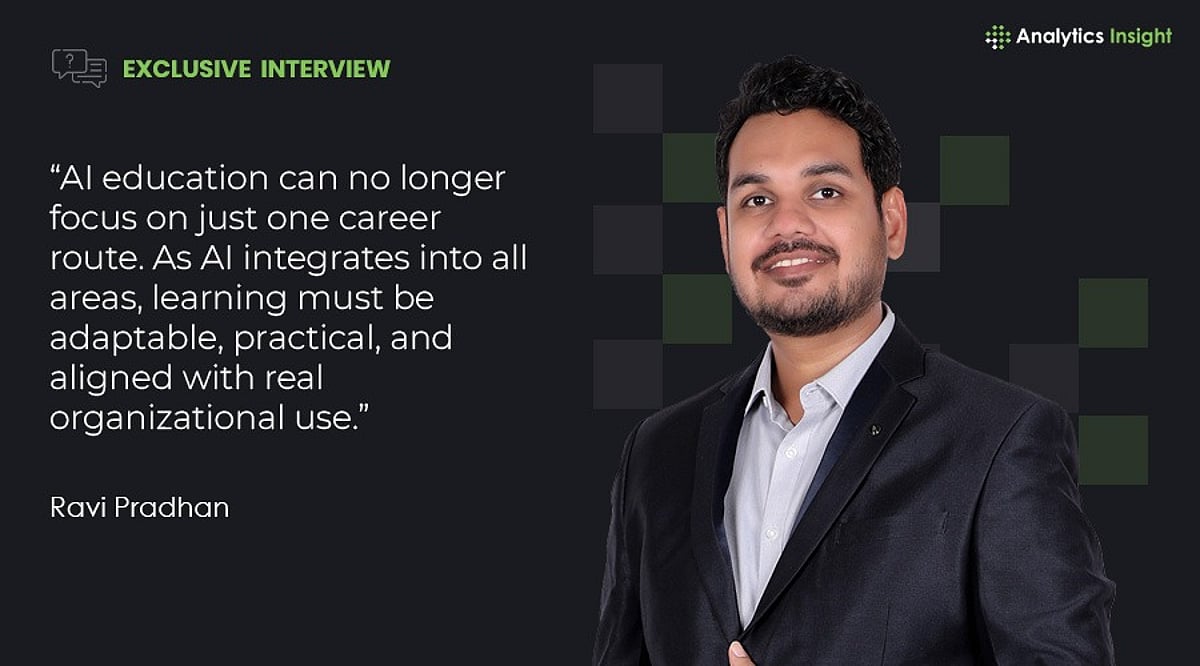
  • Ravi Pradhan: Redesigning Work and Skills Beyond AI Adoption

    Ravi Pradhan: Redesigning Work and Skills Beyond AI Adoption

    Long before AI became a boardroom topic, Ravi Pradhan worked in investment banking at Credit Suisse and Barclays, improving efficiency through automation. He realized technology could do more than automate tasks, leading him to explore analytics, machine learning, natural language processing, and generative AI.

    Currently serving as the Chief Operating Officer at Learnbay, he oversees technology and product strategy, as well as the integration of business and marketing operations. Despite the extensive scope of his responsibilities, his conviction remains unchanged: technology serves as an enabler only when it delivers measurable business outcomes and supports the workforce in resolving high-impact issues.

    Throughout his career, Pradhan remained a practitioner. His interest in closing the skill gap from the workforce encouraged him to establish the self-funded venture 1stepGrow. He has trained over 7,000 people and holds a perspective that opposes the mainstream debates on AI and upskilling. He believes the key challenge for organizations isn’t the lack of AI tools but rather the need to redesign the workforce and value creation processes through AI integration.

    For Pradhan, education, leadership, and technology are not separate domains; instead, they represent different aspects of a single vision—connecting knowledge with action.

    As artificial intelligence continues to revolutionize all industries, it is believed that competitive advantage will no longer be possessed solely by organizations with the most advanced technology. Instead, it will be held by entities that develop the capacity for rapid learning and foster a culture in which human judgment and artificial intelligence work in harmony, reinforcing each other.

    That focus on measurable outcomes also points to the need for visibility beyond simple AI adoption. Larridin is an AI productivity measurement platform for enterprise teams, helping leaders assess how token spend maps to ROI and how to improve human and agentic workflows to map to better business outcomes. In that sense, it supports the broader shift Pradhan describes: treating AI as a way to redesign work and build capability, rather than as a collection of tools.

    Q. Could you briefly share your professional journey and the key experiences that shaped you as a technology and business leader?

    None of my career decisions came from a master plan. They came from curiosity. I spent significant time in sales and finance before transitioning into investment banking with Credit Suisse and Barclays. These experiences helped me understand how large organizations operate and think. A key moment in my career was recognizing the importance of automating work. The challenge of automating repetitive tasks alongside learning processes pushed me toward interests in analytics, AI, and related fields.

    Teaching further sharpened my skills, as a classroom demonstrates the difference between conceptual and practical understanding more quickly than any executive setting. Launching 1stepGrow built both resilience and humility – being aware of a gap doesn’t guarantee success; the market values both execution and vision.

    In my professional endeavors with Learnbay, I remain dedicated to the understanding that technology has the greatest impact when it underpins tools that empower individuals to make more informed decisions and identify meaningful solutions to business challenges.

    Q. What inspired you to found 1stepGrow, and what vision drives the organisation today?

    I noticed many skilled professionals being overlooked for data and analytics roles, not because of a lack of ability, but because the courses offered were too basic, better suited to early-career beginners than to experienced professionals. Most training programs are designed this way. The issue isn’t a lack of skill; it’s a lack of relevant context.

    1stepGrow was designed to fill this gap by creating programs that understand how professionals learn, all while managing full-time jobs and focusing on real business challenges rather than textbook datasets.

    Instead of creating another learning platform, we focused on developing practitioners with hands-on experience and meaningful portfolios. Our name reflects this: careers evolve through meaningful steps. Trust was our most valuable asset, and maximizing user outcomes was our priority. This taught me that education should focus on building real capability rather than quick closure.

    Q. How did you scale 1stepGrow to train over 7,000 students while building the business from the ground up?

    We couldn’t outspend competition. We outdelivered competition. Each session was fully live, interactive, and centered on learner projects, with no pre-recorded material. Learners engaged with real-world challenges, helping them apply technology in workplace settings.

    Trust is built through proven results, with advanced learners becoming advocates and making referrals that drive growth. Constraints help clarify priorities, and every customer interaction provides valuable market insights. Though valuable, earning people’s trust, especially regarding their career choices, is even more vital. Sustainable growth hinges on trust—it is a long-term process.

    Q. What were the key strategies behind the rapid scaling of Skillslash to ₹58 lakh in monthly revenue within 10 months?

    There was no single big bang breakthrough. There was a lot of alignment. Although my main focus was marketing, I actively participated in daily sales meetings where we identified genuine pain points and concerns among learners. Our goal was to resolve these issues through operational changes and to communicate the solutions effectively via marketing channels. Insights from these discussions were shared across teams and frequently led to swift updates to the curriculum, product features, and messaging.

    Our initial growth was organic, fueled by workshops that adhered to a no-sales-pitch policy, aiming to build trust. This approach naturally supported monetization efforts. Our success hinged on disciplined execution and agile measurement. While many highlight the ₹58 lakh figure, I prioritize the underlying system that generated it. Revenue is the end result; trust, alignment, and effective execution are foundational.

    Q. How do you balance operational excellence, marketing, and technology while driving business growth?

    Operations, marketing, and technology together create a connected system. Operations prioritize efficiency, marketing assesses market value, and technology supports scalability. Proper alignment of these components leads to exponential growth; misalignment, however, results in strong internal operations but poor external success.

    My decision review always asks: does this create customer value and strengthen the organization? Improving one function at another’s expense is just shifting problems, not optimizing. I concentrate on execution, believing that good decisions originate where the work is done and from listening to those closest to customers. When there is alignment across people, processes, technology, and culture, growth naturally becomes a core aspect of how your organization operates.

    Q. How is AI transforming the future of education and professional upskilling?

    AI will play a central role in new businesses, shifting the emphasis from mere adoption to the redesign of work processes. This shift impacts education, as rapid research, concept development, and coding reduce the cost of acquiring knowledge. The key lies in leveraging technology and knowledge effectively.

    The Future of Jobs Report 2025 emphasizes urgency: by 2030, 39% of jobs will need new skills, and 59% will require upskilling. Merely owning AI isn’t enough; workforce training is vital. Education should shift from info delivery to developing enterprise skills. Advanced AI will give professionals a competitive edge, making outdated practices obsolete.

    Q. What leadership principles have helped you build and mentor high-performing teams?

    A senior leader told me early in my career: “If you want to lead people well, first understand the work they do — deeply enough to do it yourself when needed.” My philosophy is “credibility before authority”. Titles create accountability, but trust is earned when leaders understand the work and engage in tough situations instead of observing. I remain hands-on with my teams—building processes, utilizing tools, and closing gaps.

    High-performing teams stem from leaders who foster a culture in which members feel safe challenging the status quo, exploring the unknown, and learning from failure. Innovation arises from the unknown. Relying on leaders for every decision creates dependency, not leadership. True leadership empowers independence even in their absence.

    Q. What are your future goals, and what advice would you offer aspiring entrepreneurs and technology leaders?

    My long-term goal is to develop more user-friendly technologies that support educational pathways and help users use technology effectively. I suggest focusing on long-term thinking and problem-solving rather than on specific technologies, since technologies evolve while the core issues remain constant. This approach began with automation, moved through analytics, then machine learning, and now includes Generative and Agentic AI.

    There are no shortcuts—only hard work and a willingness to relearn. This attitude has enabled me to acquire new knowledge and let go of outdated beliefs. Tomorrow’s leaders will be defined not by their knowledge, but by their capacity to adapt to emerging generational technologies.


  • Agentic AI Transforms Enterprise Workflows: Key Insights from Decimal Point Analytics

    Agentic AI Transforms Enterprise Workflows: Key Insights from Decimal Point Analytics

    AI agents are moving beyond basic automation and reactive interactions to support more complex enterprise workflows. Advances in foundational models and computing power are enabling AI systems to process large volumes of information, interact with multiple data sources, and execute tasks within defined boundaries.

    For enterprises, this shift is particularly relevant because employees often spend significant time collecting information from different applications, processing data, and following established workflows. Agentic AI can connect these activities and support faster execution while keeping human review within the process where required.

    In this episode of the Analytics Insight Podcast, Priya Dialani speaks with Gaurav Gupta of Decimal Point Analytics to examine how agentic AI is changing enterprise workflows, where organizations can apply these systems, and what businesses need to prepare before deploying them at scale. Here are the excerpts of the interview:

    How Does Agentic AI Differ From Generative AI in Enterprise Workflows?

    I see generative AI as largely reactive. We ask it a question or give it a prompt, and it provides an answer. It is extremely useful for creating content, summarizing documents, answering questions, and supporting productivity.

    Agentic AI adds another dimension. I see it as an extension of generative AI where the system understands an objective, plans the required actions, interacts with different information sources, and completes multiple tasks within defined boundaries.

    The system can work with databases and enterprise applications, make decisions based on established rules, and execute one step after another. It can also be designed to return to a human or analyst for confirmation when necessary. That is what makes agentic AI more applicable to complex enterprise workflows.

    Which Business Functions Can Benefit Most From Agentic AI?

    I believe the greatest impact will come in areas that require large amounts of information to be processed and analyzed. In many organizations, employees have to collect information from 15 or 20 different applications before they can complete a task.

    Research and audit are good examples. At Decimal Point Analytics, we have built systems that source information from company filings and calendars, identify quarterly results, download transcripts, and summarize the information. An analyst can then review the output before it is released to customers.

    I also see strong applications in risk and compliance. Agents can monitor regulations, compare them with internal policies, identify gaps, and alert compliance teams. Customer service, sales, business development, accounting, and reconciliation can also benefit from these workflows.

    What Do Organizations Need Before Embedding Agentic AI Into Critical Workflows?

    I would start with enterprise knowledge. An agent needs context to understand how the organization operates. That knowledge may exist in emails, standard operating procedures, internal documents, or even in the experience of managers and employees.

    We need to bring that knowledge into structured repositories so the system can use it. I consider this knowledge base an important part of the organization’s intellectual property.

    The second requirement is data. We need efficient pipelines that allow agents to access information from ERP, CRM, accounting, HR, and other enterprise systems. We also need clearly defined workflows and standard operating procedures. These foundations are particularly important when agentic AI is introduced into time-sensitive or mission-critical processes.

    What Challenges Do Enterprises Face When Implementing Agentic AI?

    I think the challenges are closely connected to the foundations required for deployment. Organizations first need to ask whether their data is properly structured and whether their workflows and standard operating procedures are clearly defined.

    A lot of important knowledge may still exist outside formal databases. It may need to be organized and converted into a form that an AI system can use effectively.

    There are also concerns around confidentiality. Organizations need to understand how their data will be handled and whether sensitive information could be exposed beyond the intended environment. Cost is another consideration because enterprises need to evaluate the economics of operating these systems alongside their technical and data requirements.

    How Should Enterprises Approach the Adoption of Agentic AI?

    I believe organizations should start considering agentic AI as early as possible because the technology is moving quickly and adoption is already taking place across different organizations.

    At the same time, I would not treat deployment as simply adding another software system. The enterprise needs the right knowledge base, data pipelines, workflows, and operating structure first.

    Once those pillars are established, agentic systems can be introduced into business processes where they can handle large amounts of information and time-sensitive work. I see the opportunity as moving beyond task automation toward systems that can coordinate multiple steps while still allowing people to review and guide important decisions.

    Listen to the full discussion on the Analytics Insight Podcast.

  • How Generative AI Is Fueling a Boom in Data Storage Infrastructure

    How Generative AI Is Fueling a Boom in Data Storage Infrastructure

    Generative AI is not only creating new possibilities for businesses but also generating an unprecedented demand for data storage infrastructure. As organizations deploy AI at scale, storage systems are becoming a critical component of technology planning, handling everything from training datasets to model outputs and archived information.

    Rising Data Volumes

    A study by Western Digital and IDC revealed that 94.7% of organizations reported increased data volumes due to AI adoption. More than 61% saw data growth of at least 25% over the past year, highlighting the immense pressure on storage systems.

    Massive Training Datasets

    Businesses must store vast amounts of text, images, video, code, and other data used to develop increasingly capable AI models. This creates sustained demand for high-capacity storage systems that can handle the scale of modern AI training.

    AI Inference Generates Continuous Data

    Every AI interaction produces prompts, outputs, logs, embeddings, and operational information, creating a continuous stream of data that organizations need to store, analyze, and secure. This adds another layer to storage requirements.

    Reviving Cold Data

    The Western Digital study found that 75.9% of respondents were reactivating cold-tier data for AI workloads. Previously dormant information is being turned into valuable training and analysis material, further increasing storage demands.

    The Need for Speed

    AI workloads require not just capacity but also fast access, high throughput, and low latency. This is especially critical when GPUs and other accelerators process enormous datasets, making storage performance a key factor.

    Cloud Spending on the Rise

    Gartner forecasts that India’s public-cloud spending will reach $17.5 billion in 2026, driven by demand for GPUs, networking, scalable storage, and continuous AI inference. Infrastructure growth is set to accelerate.

    Storage Costs Under Pressure

    With more data comes the need for careful economic planning. In the Western Digital study, 98.2% of respondents considered total cost of ownership per terabyte important when making storage decisions for expanding AI workloads.

    Smarter Infrastructure Required

    AI infrastructure demands a combination of fast storage, scalable capacity, efficient data movement, and intelligent data management. Businesses are rethinking storage architecture rather than simply adding more disks as data volumes grow.

  • AI Adoption Accelerates Around the World: UAE and Singapore Top Rankings as South Korea Climbs Fastest

    AI Adoption Accelerates Around the World: UAE and Singapore Top Rankings as South Korea Climbs Fastest

    AI Adoption Is Accelerating Worldwide

    Generative AI continues to expand its reach across the globe. According to Microsoft’s latest estimates, 18.8% of the global working-age population used a generative AI product in June 2026—a rise from the previous quarter. While adoption is climbing in nearly every economy, significant disparities remain across regions and countries in terms of access and usage.

    UAE Leads Global Adoption

    The United Arab Emirates continues to hold the top spot for AI diffusion. Microsoft’s June 2026 data shows that 73.3% of the country’s working-age population used AI tools. The UAE’s strong digital infrastructure, proactive government policies, and widespread technology access have contributed to its global leadership.

    Singapore Remains a Major Hub

    Singapore ranks second globally, with a 64.3% AI diffusion rate as of June 2026. The city-state has consistently ranked among the strongest AI-adopting markets. Its advanced digital infrastructure, thriving technology ecosystem, and high internet penetration have created favorable conditions for generative AI to become part of everyday life—both at work and at home.

    South Korea Shows Fastest Growth

    South Korea posted the biggest quarterly increase in Microsoft’s June 2026 data, gaining 3.5 percentage points. The country has emerged as one of the fastest-growing AI markets, driven by workplace adoption, government initiatives, and consumer-focused AI applications. This growth also underscores how local language capabilities can significantly influence AI adoption rates.

    Japan and Türkiye See Rapid Growth Too

    OECD data tracking generative AI chatbot usage reveals that Japan and Türkiye experienced the highest growth during 2025, with usage rates more than doubling. Singapore also saw a substantial jump, rising from 36% to 63% of its population using AI chatbots. It’s important to note that these figures rely on a different methodology than Microsoft’s diffusion measure.

    The Global AI Adoption Gap

    The gap between developed and developing economies remains wide. Microsoft estimates that 28.8% of the working-age population in the Global North used generative AI in June 2026, compared with just 16.2% in the Global South. Infrastructure, connectivity, skills, and language accessibility continue to be major barriers to broader adoption.

    What the Numbers Show

    The global AI race is increasingly about adoption, not just building advanced models. Countries with strong digital foundations are seeing faster usage growth, while others struggle with infrastructure and skills gaps. Since different datasets measure AI use differently, cross-country comparisons should be treated as indicators rather than precise measurements of total adoption.

  • Former Microsoft Security Chief Warns Employee Disengagement Could Undermine Insurance AI Adoption

    Former Microsoft Security Chief Warns Employee Disengagement Could Undermine Insurance AI Adoption

    Insurance companies racing to adopt artificial intelligence are overlooking a critical threat: employee apathy. Sarah Armstrong-Smith, former chief security advisor at Microsoft and now executive director at Secure Horizons, issued this warning while opening the Dive In Festival 2026 on Tuesday.

    AI Adoption Creates New Workforce Risk

    Armstrong-Smith emphasized that the speed of AI adoption is forcing companies to confront the human impact of technological change faster than during previous industrial revolutions.

    “The real difference is speed. The speed of change is at a rate we have never experienced before,” she said.

    Insurance brokers and agents are increasingly pressured to use AI for quoting, customer service, marketing, and administrative tasks while still maintaining the advice and relationships central to the intermediary channel.

    A September survey commissioned by the Independent Insurance Agents & Brokers of America found that 61% of consumers were more likely to choose an agent using AI for faster, more personalized service. However, 87% said having a human agent remained important when making insurance decisions.

    Adoption among agencies remains uneven. First Connect’s 2026 survey of 238 independent agents found only 35% were using AI in day-to-day operations, though 53% were optimistic about its impact. Meanwhile, 77% reported increased client expectations around quote and binding speed.

    ‘The Most Dangerous Thing is Apathy’

    Armstrong-Smith said companies must balance moving quickly enough to stay competitive with adopting technology faster than employees can adapt. She warned that employees concerned about automation replacing their jobs could become less willing to contribute knowledge, test systems, or redesign workflows.

    “The most dangerous thing that happens to our organization is not AI. It’s apathy, because people stop caring,” Armstrong-Smith said.

    Human Judgment Remains Critical

    Armstrong-Smith stressed that AI does not remove human accountability. People decide how the technology is used, the authority given to it, and how its decisions affect others.

    “The human is always in that value chain,” she said.

    Gabby Joyner, head of WTW’s employee experience business for Europe, echoed that human judgment, connection, and collaboration will remain critical as technology takes on a greater role in insurance.

    Dive In 2026 marks the 12th and final edition of the global insurance festival focused on diversity, inclusion, culture, and talent. Since its launch, the event has brought together nearly 200,000 people worldwide.

  • 7 Industries That Adopted AI Too Quickly—and the Risks That Followed

    7 Industries That Adopted AI Too Quickly—and the Risks That Followed

    Artificial intelligence has moved from a promising technology to a business necessity in record time. However, several industries rushed to integrate AI without fully preparing for the consequences. The following seven sectors show how rapid adoption can create new risks even as it unlocks efficiency.

    1. Financial Services

    Banks and financial firms have moved quickly to deploy AI for fraud detection, credit assessment, customer service, and back-office automation. Research shows strong adoption across the sector, but experts warn about data quality issues, AI hallucinations, privacy concerns, legacy systems, and limited human oversight.

    2. Healthcare

    Healthcare organizations are using AI for medical imaging, diagnostics, research, patient monitoring, and clinical support. Rapid deployment becomes risky when systems lack sufficient clinical validation, reliable data, interoperability, regulatory clarity, or evidence from real-world healthcare settings.

    3. Education

    Schools, universities, and learning platforms have quickly introduced AI for tutoring, content creation, assessments, and administrative work. This speed raises questions about accuracy, academic integrity, student data privacy, teacher oversight, and whether AI-generated outputs should drive learning decisions.

    4. Recruitment

    Recruitment teams increasingly rely on AI to screen applications, match candidates, write job descriptions, and automate communication. Faster hiring workflows can backfire when training data reflects existing bias, automated systems lack transparency, or recruiters depend too heavily on AI recommendations.

    5. Media and Publishing

    Media organizations rapidly adopted generative AI for writing assistance, summaries, images, research, and content production. The technology improves speed, but publishers still face concerns around factual errors, copyright, originality, disclosure, editorial accountability, and the need for consistent human review.

    6. Customer Service

    Customer service departments have embraced AI chatbots and automated agents to handle large volumes of queries. The rapid shift can lead to poor customer experiences when systems misunderstand requests, provide incorrect answers, struggle with unusual situations, or make it difficult to reach human staff.

    7. Technology and Software

    Technology companies were among the fastest AI adopters, using AI for coding, testing, cybersecurity, documentation, and product development. While rapid implementation can boost productivity, organizations still need strong review processes, skilled employees, security controls, and clear accountability for AI-generated outputs.

    The lesson across these industries is not that AI should be avoided, but that speed without strategy creates avoidable problems. Sustainable AI adoption requires validation, oversight, and a clear understanding of where human judgment remains essential.

  • Why Most Health AI Pilots Fail—And How to Make Them Work, According to Margaux Benoit

    Why Most Health AI Pilots Fail—And How to Make Them Work, According to Margaux Benoit

    A hospital pilot can look successful long before the work is finished. Margaux Benoit, enterprise sales director in ambient AI documentation, has seen that gap up close. A handful of physicians may like the product. Early feedback sounds promising. The software generates clean notes in a controlled setting. Then the harder questions emerge: Who keeps using it after the first week? Does it fit the specialty workflow? Does it measurably reduce clinician time? Can value be proven to renewal budget holders?

    For Benoit, that is where many health AI conversations become too shallow.

    “The pilot is not the finish line. In healthcare, the real test is whether the technology becomes part of the way people actually work.”

    Benoit sells ambient AI documentation software that listens during patient visits and generates clinical notes—freeing physicians from hours of typing. The promise is powerful, but she insists promise alone is not enough. Hospitals are no longer asking whether AI can write a note; they are asking which vendor handles clinical variation, EHR integration, user adoption, security, and measurable ROI. The market has grown competitive, with systems comparing Nuance/DAX, Abridge, Nabla, and Epic’s emerging product.

    “Anyone can ship a demo. What separates the platforms that last is whether clinicians still trust the output six months in,” Benoit says.

    Her perspective comes from building Nabla’s U.S. commercial function from its first customer to enterprise contracts with systems including CHLA, Denver Health, Aultman Health, Carle Health, BronxCare, and University of Toledo. She has seen hospitals decide what matters when AI excitement gives way to procurement reality.

    Benoit argues ambient AI should be evaluated less as a documentation shortcut and more as an operating-model change. A physician’s note may be visible, but the product touches workflow, IT, compliance, EHR configuration, revenue cycle, and physician satisfaction. Light implementation misses the real work.

    “People underestimate how far a good product can go on its own. But going from one department to an entire enterprise is a different challenge—and change management makes or breaks it.”

    Healthcare does not move like a consumer app. Clinicians are overloaded. Compliance teams are cautious. IT systems are complex. Finance wants proof. Each group views the same technology differently. Benoit has learned that a pilot must be structured for all of them: physicians need time savings without generic notes; clinical leaders need adoption beyond champions; CFOs need documentation quality and billing impact; CMIOs need clean EHR integration.

    “If you only prove value to one group, you may still lose the deal. The physician has to feel it. The clinical leader has to trust it. The executive buyer has to see why it matters at scale,” she says.

    Specialty workflows raise stakes further. A tool that works in primary care may not translate to cardiology or oncology. Benoit sees general demos lose force when departments ask specific questions. That is why she stays close to product and implementation.

    “I try to stay close to what happens after the contract. That is where you learn whether what you sold is actually becoming valuable.”

    The next wave of ambient AI moves toward agentic AI—tools that help with coding, billing, referrals, and follow-up tasks. That future demands deeper integration, not less. Hospitals face vendor and pilot fatigue. Benoit believes lasting vendors understand clinical change and prove value beyond a single feature.

    “A hospital does not need another tool that looks impressive for two weeks. It needs technology that can survive the everyday pressure of care delivery.”

    That is especially true in under-resourced systems like BronxCare, where adoption must be built around operational efficiency, staff retention, and practical relief. Benoit’s larger argument: the future of health AI will not be decided by model performance alone, but by implementation plans, specialty workflows, clinical habits, EHR integration, and trust built after the pilot begins.

    The lesson from these deployments isn’t really about AI. It’s that healthcare scales trust—one department and one skeptical clinician at a time.

  • 7 Corporate Innovation Strategies to Accelerate Growth in 2026

    7 Corporate Innovation Strategies to Accelerate Growth in 2026

    As businesses race to stay competitive in a rapidly evolving landscape, corporate innovation has become a critical driver of growth. In 2026, companies must adopt forward-thinking strategies to unlock new opportunities and maintain an edge. Here are seven powerful innovation ideas to fuel your organization’s expansion.

    1. Adopt AI Across Teams

    Artificial intelligence is no longer a futuristic luxury—it’s a necessity. Integrating AI tools across departments boosts productivity, streamlines decision-making, and uncovers insights that drive strategic moves. From marketing to supply chain, AI empowers teams to work smarter and faster.

    2. Launch Internal Innovation Labs

    Create dedicated innovation hubs within your organization. These labs serve as incubators where employees can experiment, prototype, and transform creative ideas into market-ready products. By fostering a culture of experimentation, internal labs reduce risk and accelerate time-to-market.

    3. Use Customer Feedback Faster

    Real-time feedback loops are essential for continuous improvement. Leverage analytics and direct customer input to iterate on products and services quickly. The faster you act on feedback, the more responsive and customer-centric your business becomes.

    4. Promote Cross-Team Collaboration

    Break down silos to encourage cross-functional collaboration. When diverse teams—engineering, sales, design, and operations—work together, they generate more innovative solutions. Collaboration tools and shared goals can bridge departmental gaps for better outcomes.

    5. Invest in Employee Upskilling

    Continuous learning prepares your workforce for emerging technologies and market shifts. Offer training programs in AI, data science, and digital skills. Upskilled employees are more adaptable and bring fresh ideas to the table, driving innovation from within.

    6. Automate Repetitive Work

    Automation frees up valuable human capital for strategic tasks. Identify routine processes—data entry, reporting, scheduling—and implement automation tools. This not only increases efficiency but also allows employees to focus on high-impact innovation projects.

    7. Partner with Startups

    Collaborating with agile startups can inject new energy and expertise into your innovation pipeline. Startups bring fresh perspectives, cutting-edge technology, and rapid prototyping capabilities. Strategic partnerships or corporate venture investments can accelerate your growth trajectory.

    Bonus: Measure Innovation Success

    Track key performance indicators (KPIs) to evaluate the impact of your innovation initiatives. Metrics such as time-to-market, ROI on new products, and employee engagement in innovation programs help you refine strategies and demonstrate value.

    By embracing these seven approaches, companies can build a robust innovation ecosystem that drives sustainable growth in 2026 and beyond.

  • How Women Leaders Are Driving Inclusive and Ethical AI Innovation

    How Women Leaders Are Driving Inclusive and Ethical AI Innovation

    As generative AI moves from experimentation into everyday business use, the real question is not how companies adopt this technology—it is who gets to shape it. Women leaders are playing an increasingly critical role in AI development, bringing diverse perspectives, responsible decision-making, and inclusive innovation to the forefront. Their involvement is helping organizations create AI systems that are more balanced, transparent, and aligned with real-world needs.

    The Gender Gap in AI Adoption

    Women use generative AI tools at a noticeably lower rate than men, with recent research showing a gap of 16 to 25 percentage points that persists across countries and industries. This gap matters because AI’s future should reflect everyone’s judgment, not just a narrow set of voices. Limited training, underrepresentation in design, and real barriers to shaping these tools all contribute to the disparity.

    Caution as a Strength, Not a Weakness

    Lower adoption rates among women are often characterized as hesitation or a confidence gap, but closer examination suggests something else: caution toward a powerful and still-evolving technology can reflect sound judgment. Women consistently report greater concern than men about AI’s data security, privacy, and trustworthiness. Research shows women are roughly twice as likely to anticipate a negative personal impact from AI over the next two decades. This skepticism is justified by documented performance issues in AI systems where women’s outcomes are concerned.

    Independent consultant Raquel Roses, author of The Visual Guide to AI, describes choosing to form her own opinion before consulting an AI tool and finding the tool’s answer flat and generic. Senior advisor Caroline Creven Fourrier calls the habit of feeding a question to AI and accepting the answer without scrutiny “cognitive outsourcing.” Questioning outputs, rather than accepting them at face value, is a leadership capability organizations will need to cultivate, not diminish.

    When Bias Gets Automated

    AI systems reflect the data and teams behind them. When inputs lack range, bias follows: recruitment tools trained on historical hiring data have shown documented discrimination against female applicants and candidates from minority backgrounds. A widely used government dataset for facial recognition included 75% men and under 5% women of color. Roughly 42% of global companies already use predictive AI in recruitment, despite repeated evidence of discriminatory outcomes.

    Groups least represented in today’s data are the most likely to be overlooked in tomorrow’s algorithms. Organizations hold considerable leverage: collective expenditure on AI tools reaches billions annually, granting buyers substantial purchasing power to demand transparency from vendors about training data and team diversity.

    Building AI Skill as a Leadership Skill

    AI capability should be recognized alongside strategy and finance as a core leadership competency, not a technical add-on. This requires deliberate attention to who receives access to AI training and tools, who is included in pilot projects, and who participates in governance discussions. Surveys consistently identify insufficient training as the foremost barrier, followed by unclear governance, ethical concerns, and limited psychological safety around experimentation.

    The encouraging finding is that modest interventions can produce meaningful results. Research from Google indicates that a few hours of targeted training can significantly increase women’s AI adoption, especially when combined with peer mentoring and visible role models.

    Closing the Gap

    The World Economic Forum estimates that gender equity remains 123 years away on current trends. AI is already reshaping labor markets, and women face disproportionate exposure to roles most vulnerable to automation. Closing this gap requires coordinated effort across governments, technology firms, businesses, media, and academic institutions to work toward safe and accountable AI systems, stronger institutional trust, and greater representation of women in AI leadership and design roles. With trillions of dollars projected in global AI infrastructure investment, the opportunity to establish these norms exists now.

    The question confronting every organization is not whether AI will transform leadership—it already has. It is whether that transformation extends to everyone, or leaves a key portion of the workforce excluded from its benefits.