
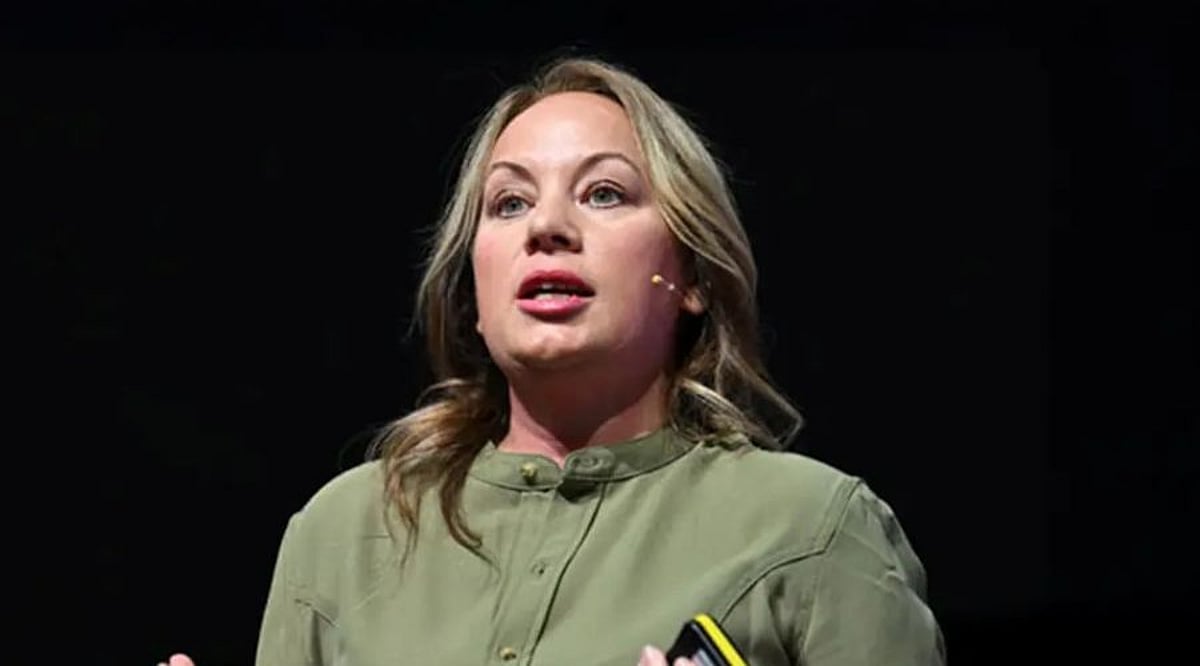
Insurance companies racing to adopt artificial intelligence are overlooking a critical threat: employee apathy. Sarah Armstrong-Smith, former chief security advisor at Microsoft and now executive director at Secure Horizons, issued this warning while opening the Dive In Festival 2026 on Tuesday.
AI Adoption Creates New Workforce Risk
Armstrong-Smith emphasized that the speed of AI adoption is forcing companies to confront the human impact of technological change faster than during previous industrial revolutions.
“The real difference is speed. The speed of change is at a rate we have never experienced before,” she said.
Insurance brokers and agents are increasingly pressured to use AI for quoting, customer service, marketing, and administrative tasks while still maintaining the advice and relationships central to the intermediary channel.
A September survey commissioned by the Independent Insurance Agents & Brokers of America found that 61% of consumers were more likely to choose an agent using AI for faster, more personalized service. However, 87% said having a human agent remained important when making insurance decisions.
Adoption among agencies remains uneven. First Connect’s 2026 survey of 238 independent agents found only 35% were using AI in day-to-day operations, though 53% were optimistic about its impact. Meanwhile, 77% reported increased client expectations around quote and binding speed.
‘The Most Dangerous Thing is Apathy’
Armstrong-Smith said companies must balance moving quickly enough to stay competitive with adopting technology faster than employees can adapt. She warned that employees concerned about automation replacing their jobs could become less willing to contribute knowledge, test systems, or redesign workflows.
“The most dangerous thing that happens to our organization is not AI. It’s apathy, because people stop caring,” Armstrong-Smith said.
Human Judgment Remains Critical
Armstrong-Smith stressed that AI does not remove human accountability. People decide how the technology is used, the authority given to it, and how its decisions affect others.
“The human is always in that value chain,” she said.
Gabby Joyner, head of WTW’s employee experience business for Europe, echoed that human judgment, connection, and collaboration will remain critical as technology takes on a greater role in insurance.
Dive In 2026 marks the 12th and final edition of the global insurance festival focused on diversity, inclusion, culture, and talent. Since its launch, the event has brought together nearly 200,000 people worldwide.
Leave a Reply