Tag: AI chip

  • Alibaba Unveils Zhenwu V900 AI Chip to Power Domestic AI Ecosystem and Massive Data Center Expansion

    Alibaba Unveils Zhenwu V900 AI Chip to Power Domestic AI Ecosystem and Massive Data Center Expansion

    Alibaba has taken a significant step in advancing China’s domestic AI capabilities with the unveiling of its latest artificial intelligence chip, the Zhenwu V900. Developed by Alibaba’s semiconductor unit T-Head, the new accelerator is designed to handle both AI training and inference tasks, marking a key milestone in the company’s push to build a full-stack AI ecosystem.

    According to Alibaba, the V900 delivers three times the performance of its predecessor, the Zhenwu M890 chip, which was launched in May. While the company did not provide independent benchmark results to support this claim, the V900 is scheduled to enter mass production and commercial release in the first quarter of 2027.

    Zhenwu V900 Specifications

    The V900 comes equipped with 216GB of memory and offers 1,200GB/s of chip-to-chip bandwidth. It also supports FP8 and FP4 precision formats, which are becoming increasingly critical for efficient AI inference and large-scale model workloads.

    Alibaba stated, “The chip can be connected into clusters containing as many as 500,000 accelerators. This architecture is designed to handle demanding AI workloads that require thousands of processors to work together.”

    The company is also integrating the V900 with its broader hardware stack, including networking and storage components, allowing Alibaba to control more of the infrastructure required to train and deploy large AI models. This strategy directly links Alibaba’s chip development with its AI model roadmap, as more powerful accelerators provide the computing capacity needed for increasingly large models.

    Alibaba Expands AI Infrastructure

    Alibaba is also planning a major expansion of its cloud infrastructure. CEO Eddie Wu stated, “Alibaba Cloud aims to increase its global data-center capacity to more than 20 gigawatts by 2032.”

    The V900 highlights Alibaba’s effort to develop chips, AI models, and cloud infrastructure as one integrated ecosystem. This initiative comes as Chinese technology companies accelerate domestic AI chip development amid restrictions on access to advanced foreign processors.

    The tech giant further explained that demand for AI computing is growing rapidly while supply constraints limit the pace of expansion. Alibaba also plans to bring AI supernodes into commercial operation this quarter.

  • Alibaba Stock Rallies on New AI Chip and Flagship Model as China’s AI Ambitions Intensify

    Alibaba Stock Rallies on New AI Chip and Flagship Model as China’s AI Ambitions Intensify

    Alibaba shares rose in premarket trading on Tuesday after the Chinese technology giant unveiled its latest artificial intelligence chip and its most powerful flagship AI model to date. The announcements mark another step in China’s efforts to close the gap with US tech leaders, though significant challenges remain.

    Alibaba Unveils Its Most Powerful AI Chip

    The company introduced the Zhenwu V900, which it described as its most powerful AI chip to date. Alibaba said the new chip delivers three times the performance of its predecessor, which was released just four months ago. Alongside the chip, Alibaba also launched Qen3.8-Max, its most powerful flagship AI model so far.

    Data-Center Expansion Plans

    Alibaba CEO Eddie Wu said the company expects significant growth in annual AI chip shipment volumes. He also pointed to shortages across the global AI data-center supply chain as a constraint on the pace at which Alibaba can expand its computing infrastructure. Wu said Alibaba would work with partners to address these challenges.

    Alibaba Cloud is targeting more than 20 gigawatts of global data-center capacity by 2032. The company sees expanding computing infrastructure as a core part of its broader AI strategy as demand for AI services continues to grow.

    Alibaba Still Trails US AI Leaders

    Despite the latest announcements, Alibaba’s AI infrastructure still lags behind leading US companies. The Zhenwu V900 is considered competitive with NVIDIA’s Hopper hardware, which is now two generations old. The data-center gap is also significant: one major US player has said it intends to have enough power and cooling to support 20 gigawatts of computing capacity by the end of next year.

    Parv Sharma, senior analyst at Counterpoint Research, said China’s AI infrastructure is more supply-constrained because AI has become a strategic priority. He noted that Alibaba’s 20-gigawatt target by 2032 should be viewed against the scale already operated by US hyperscalers.

    US-China Talks Could Shape AI Competition

    Investors are also watching talks between US President Donald Trump and Chinese President Xi Jinping, particularly for any developments affecting AI technology and access to advanced chips. According to Barron’s, China’s ability to close the gap with the US could remain constrained unless access to cutting-edge chips improves.

    Before Tuesday’s trading session, Alibaba’s American depositary receipts had fallen 21% so far this year.

  • MediaTek Dimensity 9600 Pro: The Next Leap in AI-Powered Flagship Chips

    MediaTek Dimensity 9600 Pro: The Next Leap in AI-Powered Flagship Chips

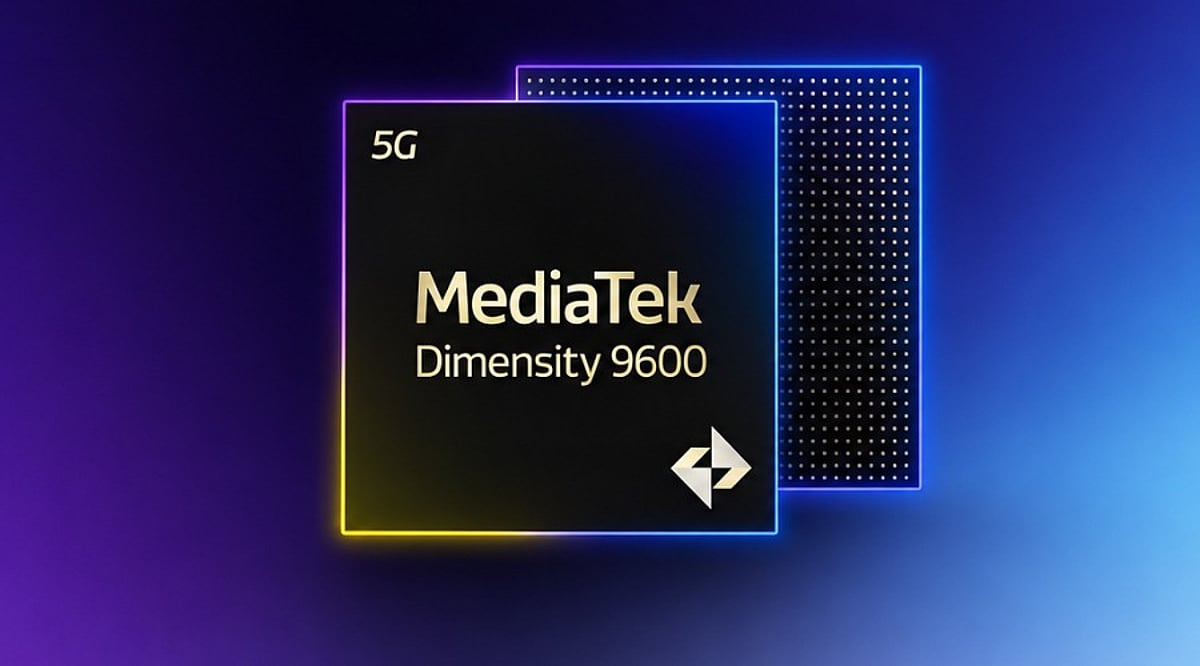
    MediaTek has unveiled its latest flagship processor, the Dimensity 9600 Pro, positioning it as a transformative step for next-generation smartphones. Built on TSMC’s 2nm process, this chip integrates a fourth-generation all-big-core CPU, a dual-NPU architecture, LPDDR6 memory support, and UFS 5.0 storage. MediaTek claims significant gains in performance, power efficiency, and on-device AI capabilities, setting a new standard for premium mobile hardware.

    Key Takeaways

    • The Dimensity 9600 Pro uses a 2nm process with an all-big-core CPU, claiming major performance and efficiency improvements.
    • Its dual-NPU design supports advanced on-device AI, handling models up to 30 billion parameters.
    • LPDDR6, UFS 5.0, stronger graphics, and advanced camera features mark a comprehensive hardware upgrade for flagships.

    A Revolutionary 2nm Design

    The Dimensity 9600 Pro is MediaTek’s first mobile chip built on a 2nm process. Its CPU configuration includes two Arm C2-Ultra cores at up to 4.55GHz, three Arm C2-Pro cores at 4.35GHz, and three additional Arm C2-Pro cores at 3.1GHz. This fourth-generation all-big-core architecture also incorporates a 21% larger L2 cache.

    MediaTek’s internal benchmarks show a 17% increase in single-core performance with 37% better power efficiency, while multi-core tasks see a 15% performance boost and a remarkable 61% reduction in power consumption. These figures, however, come from lab tests and may vary in real-world devices depending on thermal design, battery size, and software optimization.

    AI Takes Center Stage

    The chip features two neural processing units (NPUs): the NPU 1090 for heavy on-device AI tasks and the Super Efficient NPU 2.0 for low-power, always-on AI operations. MediaTek claims a 51% improvement in large language model (LLM) prefill performance and a 55% gain in token generation per watt. The platform supports on-device models with up to 30 billion parameters, aided by a compression engine that reduces memory footprint and support for Mixture of Experts (MoE) architecture.

    The Super Efficient NPU 2.0 also cuts power consumption for always-on AI by 40%, a critical factor for AI assistants that continuously access phone data, sensors, and apps.

    Memory and Storage Advancements

    With first-wave support for LPDDR6 memory and UFS 5.0 storage, the Dimensity 9600 Pro delivers substantial improvements in data throughput. UFS 5.0 offers twice the read and write speeds of its predecessor, while LPDDR6 increases effective memory bandwidth by 33% at the same frequency. A larger 34.5MB cache further enhances overall system responsiveness.

    Graphics Performance for High Frame Rates

    The new G2-Ultra NX GPU delivers up to 27% higher peak performance, 24% lower power consumption at peak, and up to 18% faster ray-tracing. The chip can support native gameplay above 185fps. MediaTek integrates the GPU with the NPU through its Neural Graphics Architecture, enabling AI-assisted graphics rendering and super-resolution tasks.

    Camera and Imaging Upgrades

    The Imagiq 1290 image signal processor (ISP) pairs with an AI Imaging Fusion Architecture to support 60fps subject focus, 4K240 slow-motion video, 4K60 AI True Color Tone, and 4K120 cinematic log. The system also handles 17EV dynamic range imaging, 4K live photo with full depth of field, H.266 hardware video decode, and MV-HEVC for spatial video—all without relying on cloud services.

    First Phones and Real-World Testing

    MediaTek has announced that the first Dimensity 9600 Pro phones will arrive this quarter. According to Reuters, Xiaomi, OPPO, and vivo are among the manufacturers collaborating with MediaTek. OPPO has confirmed the Find X10 Pro Max with this chip, slated for a September 22 launch in China.

    The true test lies in how these devices perform in the real world. MediaTek’s claims are based on its own lab tests, so independent reviews will be crucial to verify whether retail units match the stated figures.

    What the 9600 Pro Changes

    The Dimensity 9600 Pro shifts the focus from raw CPU speed to a balanced integration of CPU, GPU, NPU, memory, storage, and camera hardware. Its 2nm foundation and dual-NPU design amplify the role of on-device AI, while faster memory and storage enable a smoother user experience. For the next wave of premium smartphones, this chip signals a clear direction: high-performance processing, advanced graphics, powerful local AI, and cutting-edge camera capabilities must work as a cohesive system.

    Frequently Asked Questions

    1. What is the Dimensity 9600 Pro?

    The Dimensity 9600 Pro is MediaTek’s flagship smartphone processor featuring a 2nm design, advanced CPU and GPU hardware, dual-NPU AI, and support for LPDDR6 and UFS 5.0.

    2. How powerful is the Dimensity 9600 Pro?

    MediaTek claims up to 17% higher single-core performance, 15% higher multi-core performance, and a 61% reduction in multi-core power usage compared to its stated previous-generation baseline.

    3. What AI features does the chip offer?

    The dual-NPU system supports on-device AI models with up to 30 billion parameters, along with improved AI performance per watt and a dedicated super-efficient NPU for always-on tasks.

    4. Does the Dimensity 9600 Pro support advanced gaming?

    Yes. Its G2-Ultra NX GPU provides higher peak graphics performance, faster ray tracing, and support for native gameplay above 185fps.

    5. What memory and storage does the Dimensity 9600 Pro support?

    The platform supports LPDDR6 memory and UFS 5.0 storage, along with a generous 34.5MB cache for improved data throughput.


  • Daily Tech Digest: Google’s Gemini AI Chip, Xiaomi 18 Early Launch, Anthropic Rare Disease Research, and X Phishing Scams

    Daily Tech Digest: Google’s Gemini AI Chip, Xiaomi 18 Early Launch, Anthropic Rare Disease Research, and X Phishing Scams

    Today’s tech landscape is buzzing with major developments. Google’s upcoming Frozen v2 AI chip is designed to boost the efficiency of its Gemini model, with deployment potentially starting in 2028. Meanwhile, Xiaomi’s next flagship, the Xiaomi 18, may launch earlier than expected in India, signaling a strategic push in the competitive smartphone market. In healthcare AI, Anthropic is funding research into rare diseases, leveraging its AI capabilities to address underserved medical areas. On the security front, X (formerly Twitter) is facing a wave of phishing scams targeting users, raising concerns about platform safety. Additionally, the broader conversation around AI governance in healthcare continues to evolve, as regulators and companies work to balance innovation with patient privacy and ethical standards.

  • Google’s ‘Frozen v2’ Chip Targets Gemini AI Efficiency Gains, Deployment Targeted for 2028

    Google’s ‘Frozen v2’ Chip Targets Gemini AI Efficiency Gains, Deployment Targeted for 2028

    Google is reportedly developing a new server chip optimized specifically for its Gemini artificial intelligence models. Internally referred to as ‘Frozen v2’, the chip is designed to integrate core elements of Gemini’s architecture directly into the hardware, according to a report from The Information.

    This initiative underscores Google’s strategy to build bespoke infrastructure for its AI services. As demand for Gemini accelerates, the company aims to increase AI output while reducing computing power and electricity consumption.

    Frozen v2 Could Deliver Major Efficiency Gains

    The proposed chip is expected to minimize data movement and processing decisions during AI inference. These improvements would enhance the efficiency of serving Gemini models to users.

    According to the report, “Frozen v2 could deliver six to 10 times greater efficiency than Google’s latest custom AI chips when measured by the number of AI tokens generated per unit of power. Engineers are still working on the final design and deciding how much of the Gemini model architecture should be hardwired into the chip.”

    Google may deploy the new chip as early as 2028, though the timeline could shift as development continues. The company has not made any official statement. Notably, the Frozen project is intended to complement Google’s existing Tensor Processing Units (TPUs) rather than replace them, potentially creating a family of chips for AI processing.

    AI Computing Shortage Drives Infrastructure Push

    The chip development comes amid mounting pressure on Google’s AI computing capacity. Surging demand for Gemini services has reportedly caused internal strain and forced Google Cloud to turn down some external deals.

    A semiconductor chip based on Gemini would allow Google to perform more AI tasks with fewer computing resources, and also reduce the energy costs associated with generating AI tokens.

    Google’s overall strategy involves custom TPUs and other in-house semiconductors. The Frozen v2 version would be even more specialized by embedding architectural elements into the chip.

  • Today’s Tech Roundup: Google’s New AI Chip, Transition VC Fund, IT Hiring Shifts & Crypto Funding

    Today’s Tech Roundup: Google’s New AI Chip, Transition VC Fund, IT Hiring Shifts & Crypto Funding

    Good morning, tech fam! Here are the biggest headlines making waves today, from artificial intelligence and startup funding to hiring trends, global AI competition, and cryptocurrency.

    Google’s New AI Chip Could Make Gemini Faster and Smarter

    Google is reportedly building a new AI chip called Frozen v2 to run Gemini more efficiently. The chip promises better performance while using less power, potentially reducing Google’s reliance on external hardware and strengthening its AI infrastructure in the coming years.

    Transition VC Expands Support for Energy Startups

    Transition VC has launched its Rs. 1,500 crore Fund II to invest in energy technology startups across India. The fund aims to help early-stage companies grow, build clean energy solutions, and accelerate innovation in the country’s energy sector.

    IT Firms Change Hiring Plans as Freshers Face Longer Waits

    India’s IT hiring landscape is shifting: companies are slowing campus recruitment, delaying joining dates, and linking offers to business demand. Firms now prioritize graduates with AI and deep tech skills, leaving many freshers with longer waits and fewer entry-level opportunities.

    Countries Driving the Global AI Race in 2026

    The global AI race in 2026 is led by nations investing in research, chips, talent, and robust digital systems. The United States and China remain ahead, while the UK, Singapore, Canada, and India continue to grow through innovation, skilled workers, and government support.

    Luxxfolio Raises $1.55 Million for Crypto Expansion

    Luxxfolio has completed a $1.55 million private placement by issuing 7.77 million units. The company plans to use the funds to grow its crypto projects, support Litecoin mining, and meet general business needs while offering warrants to investors.

  • Meta to Begin Production of Custom Iris AI Chip in September, Targets 14 GW Computing Capacity

    Meta to Begin Production of Custom Iris AI Chip in September, Targets 14 GW Computing Capacity

    Meta Platforms has announced plans to begin production of its in-house artificial intelligence chip, code-named Iris, in September as part of a broader strategy to expand custom hardware development and reduce reliance on external suppliers. The move, outlined in an internal company memo reviewed by Reuters, aims to boost Meta’s computing capacity to 14 gigawatts next year while supporting the growing demands of AI workloads across Facebook, Instagram, and other services.

    Iris AI Chip: A Step Forward for Meta’s MTIA Program

    The Iris chip is part of Meta’s MTIA (Meta Training and Inference Accelerator) program. According to the memo, the chip completed bug testing in just six weeks with no major issues—a notable achievement for a program that has faced earlier delays since its launch over five years ago. Broadcom is assisting with design, while Taiwan Semiconductor Manufacturing Co (TSMC) is expected to handle production. The chip will not immediately replace GPUs from Nvidia and AMD but will complement them, supporting large-scale AI training and inference workloads.

    The memo notes that adopting the latest GPUs at Meta’s scale “has been a heavy lift, and it has cost us time,” underscoring the company’s push for greater control over its AI hardware stack. Meta declined to comment on the Reuters report.

    Computing Capacity Expansion: 14 GW by Next Year

    Meta plans to deploy 7 gigawatts of computing infrastructure this year, having added 1 gigawatt in the first half and expecting to add another 5.5 gigawatts by year-end. The company then aims to double total capacity to 14 gigawatts next year. To put that in perspective, 1 gigawatt can power approximately 800,000 homes, highlighting the immense energy requirements of large-scale AI data centers.

    This expansion comes as major tech firms ramp up AI infrastructure spending. Meta expects to spend up to $145 billion on AI infrastructure this year, part of a projected $700 billion in Big Tech spending on AI technology.

    Reducing Supplier Dependence with Custom Silicon

    Meta’s custom chip initiative is designed to reduce cost pressures tied to purchasing advanced AI chips from external suppliers like Nvidia and AMD. It also enables faster hardware iteration: Meta unveiled Iris under its technical name in March, along with three other AI processors, and plans to release a new chip roughly every six months through 2027—a much faster cycle than the industry standard of one year or more.

    Mike Gualtieri, a vice president and principal analyst at Forrester, commented, “You can’t become an AI titan if you are dependent on another company for chips.” He added that hyperscalers and SpaceX are also pursuing custom chip designs as model usage becomes more price-driven.

    Long-Term Supply Deals Support Data Center Growth

    To support its data center buildout, Meta has secured multi-year supply agreements with Samsung Electronics for memory chips, Sandisk for flash storage, and Sumitomo Electric for fiber-optic equipment. These deals are critical as AI demand strains the global chip supply chain, driving up prices for memory, storage, and AI processors. Sandisk declined to comment, while Samsung and Sumitomo Electric did not respond to Reuters requests.

    Morgan Stanley analysts have described rising chip and memory prices as “chipflation,” a broader concern for the technology sector. Meanwhile, companies like Apple have raised prices on some products amid memory supply constraints.

    Meta shares initially fell after the Reuters report but later recovered, trading up 4.6% in late afternoon trading after the company announced developer access to an AI coding model that competes with tools from OpenAI and Anthropic.

  • Morning Tech Roundup: NVIDIA’s New PC AI Chip, Enlife Raises ₹6 Crore, BOI Opens 779 Credit Officer Jobs, and More

    Morning Tech Roundup: NVIDIA’s New PC AI Chip, Enlife Raises ₹6 Crore, BOI Opens 779 Credit Officer Jobs, and More

    Good morning, tech fam! Here are the top headlines you need to know: NVIDIA has launched a new AI chip for personal computers, Enlife Research secured ₹6 crore in seed funding, Bank of India announced 779 Credit Officer vacancies, AI agents are advancing automation, and the Bank of England clarified its crypto policy stance.

    NVIDIA Introduces a New AI Chip for Personal Computers

    NVIDIA has unveiled a new AI chip designed specifically for laptops and desktops. This chip processes AI tasks directly on the device, reducing reliance on cloud services. The company promises faster performance, better privacy, and improved energy efficiency. NVIDIA believes this innovation will bring advanced AI capabilities to everyday PCs, transforming personal computing.

    Enlife Research Raises ₹6 Crore in Seed Funding

    Bengaluru-based deep-tech startup Enlife Research has raised ₹6 crore in a seed round led by Piper Serica VC Fund. The company is developing an AI-based blood test that could detect Alzheimer’s disease years before symptoms appear. The funds will be used to advance research, refine the product, and prepare for broader deployment.

    Bank of India Credit Officer Recruitment 2026: Key Details

    Bank of India has announced 779 Credit Officer vacancies in the GBO stream across MMGS-II, MMGS-III, and SMGS-IV scales. Online applications open from 30 June to 20 July 2026. The notification covers eligibility, age limits, education, work experience, fees, salary, selection process, and the revised exam pattern with English Language and Professional Knowledge sections.

    Future of AI Agents and Autonomous Workflows

    AI agents are evolving beyond simple chat interfaces into tools that can plan, use software, retain information, and complete tasks with minimal human intervention. Enhanced reasoning allows them to solve complex problems step by step. Teams of AI agents can collaborate, improving results. Companies are adopting these agents to save time and increase accuracy while maintaining safety, monitoring, and human oversight for critical tasks.

    Bank of England Says Farage Did Not Affect Crypto Policy

    Bank of England Governor Andrew Bailey stated that a private meeting with Nigel Farage did not result in any policy changes. Bailey emphasized the bank’s ability to recognize lobbying and make independent decisions. Farage had urged the bank to abandon plans for a potential state-backed digital currency. The Bank of England continues to study whether such a currency should be introduced.

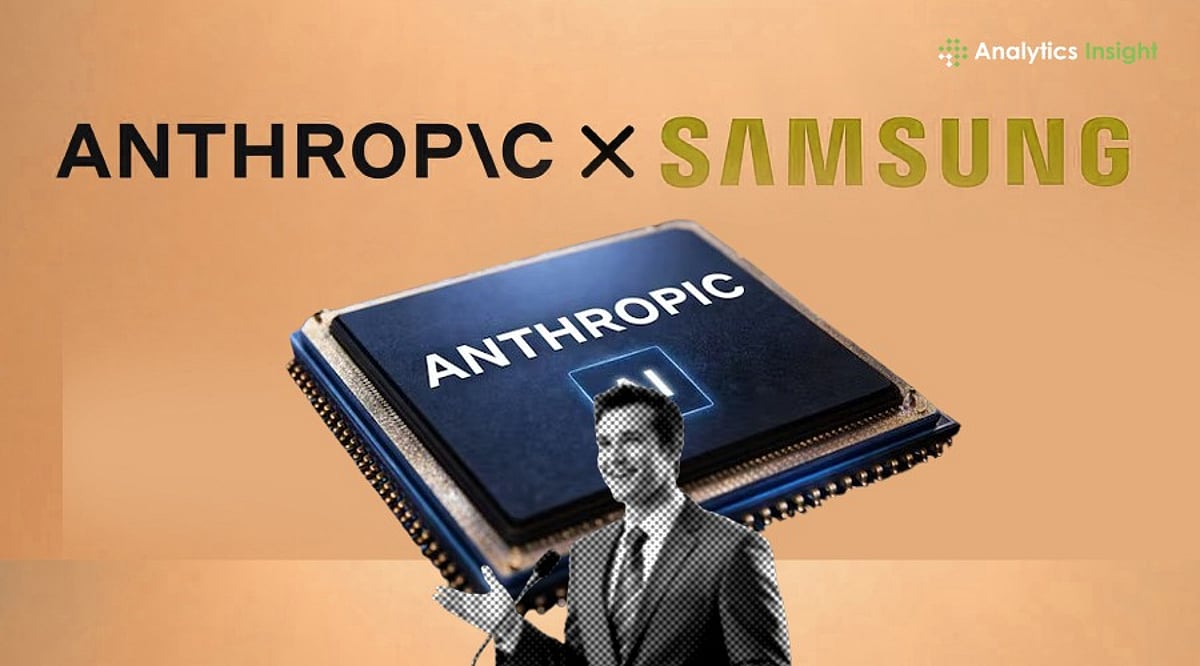
  • Anthropic Reportedly Discusses Custom AI Chip Development with Samsung

    Anthropic Reportedly Discusses Custom AI Chip Development with Samsung

    Anthropic is reportedly exploring the development of a custom AI chip and has held discussions with Samsung over a potential collaboration, according to The Information. The move places the AI startup among a growing number of technology firms seeking greater control over hardware as demand for AI computing surges.

    Earlier reports from Reuters indicated that Anthropic was considering in-house chip design to address concerns about AI hardware availability and supply constraints. However, key details of the proposed processor—including its intended use, integration into server systems, and performance targets—remain unconfirmed.

    According to the report, Anthropic has not finalized the chip’s specifications and declined to comment on the discussions with Samsung. The company reiterated that its current infrastructure strategy continues to rely on chips from Google, Amazon, and NVIDIA, and that there are no further updates on potential collaboration talks with Samsung at this time.

    The reported move reflects a wider trend among AI companies investing in custom silicon to improve efficiency and reduce dependence on dominant chip suppliers—particularly NVIDIA, which leads the market for AI accelerators used in large-scale model training and inference. As demand for AI computing expands across industries, firms are looking for greater control over cost, performance, and supply chains.

    Anthropic’s discussions come shortly after other major technology firms advanced their custom chip efforts. OpenAI recently introduced its first custom inference chip, Jalapeno, developed with Broadcom. Amazon continues to scale its Trainium chips for AI training workloads, and Google is expanding access to its Tensor Processing Units (TPUs) via its cloud infrastructure.

    Samsung already plays a pivotal role in the global semiconductor supply chain, manufacturing advanced chips for companies like NVIDIA and exploring partnerships with others such as Google. The talks between Anthropic and Samsung underscore the increasing convergence of AI software development and semiconductor manufacturing, as firms pursue tighter integration between hardware and AI systems.