
Tag: AI in education

  • How AI Is Transforming Education: Personalized Learning, Virtual Tutors, and the Future of Teaching

    How AI Is Transforming Education: Personalized Learning, Virtual Tutors, and the Future of Teaching

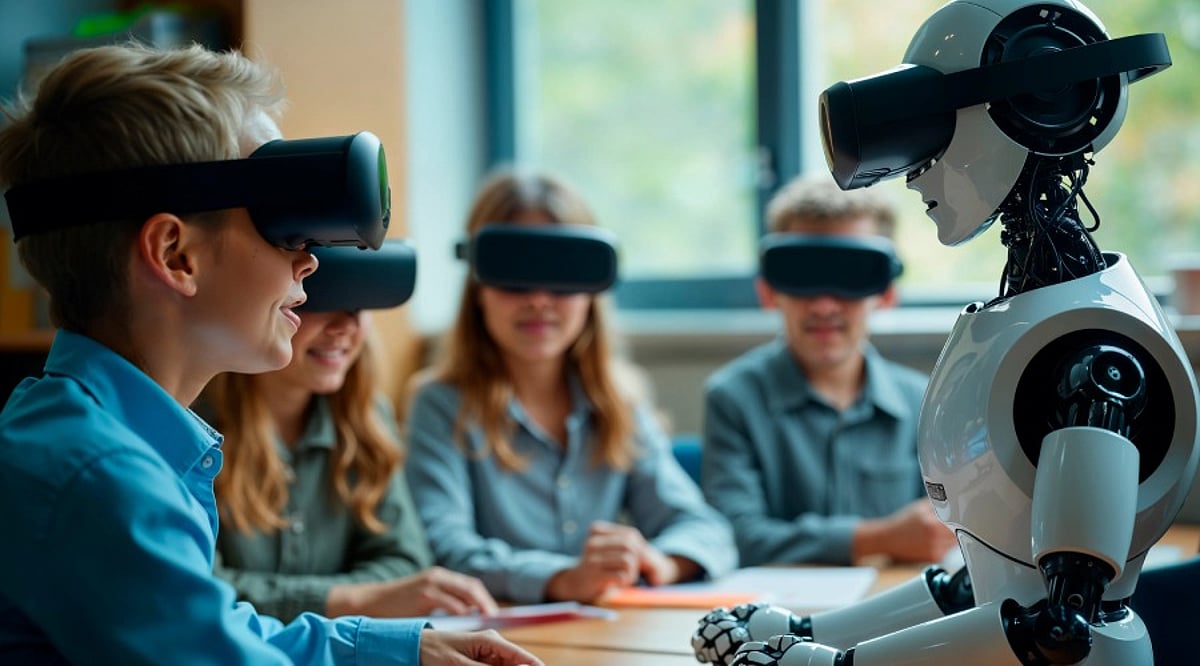
    Artificial intelligence is reshaping the educational landscape, influencing how students learn, how teachers work, and how institutions manage their operations. From personalized learning platforms to automated grading and virtual tutors, AI is making education more adaptive, accessible, and data-driven.

    The Shift in Skills Demand

    This transformation aligns with changing workforce needs. According to the World Economic Forum’s Future of Jobs Report 2025, 39% of core skills required by workers will change over the next decade, with AI and big data among the fastest-growing skill areas. This underscores the urgent need for schools, universities, and training providers to redesign curricula around digital literacy and lifelong learning.

    Personalized Learning at Scale

    Traditional classrooms follow a one-size-fits-all curriculum. AI-powered platforms can analyze each student’s responses, learning pace, and specific difficulties to adjust lessons and practice problems in real time. A student struggling with math might receive additional explanations and simpler exercises, while an advanced learner can move on to more challenging material. This allows institutions to cater to diverse learning levels without requiring separate programs for each student.

    AI tutors and chat-based learning assistants provide immediate feedback outside class hours. They can explain concepts, solve practice questions, summarize chapters, and offer editing advice. However, their outputs still need supervision, as generative AI can sometimes produce inaccurate or misleading information.

    Supporting Teachers and Institutions

    AI is increasingly used to automate repetitive tasks such as attendance tracking, basic grading, timetable creation, and handling routine student inquiries. This frees up teachers to focus on lesson planning, mentoring, and direct student interaction.

    Predictive analytics helps identify students at risk of falling behind by analyzing attendance, assessment scores, and engagement patterns. Administrators can intervene before a student drops out. The technology also influences curriculum design: the WEF found that 86% of employers expect AI and information-processing technologies to transform their businesses by 2030. Education providers must therefore prepare students for careers in AI, cybersecurity, data analysis, and digital transformation.

    Expanding Access to Education

    AI can deliver content in multiple languages through translation, and assist students with language barriers or disabilities via speech recognition and text-to-speech tools. Virtual classrooms and automated support systems can bring learning opportunities to regions lacking qualified teachers.

    Yet access remains uneven. Not everyone has the necessary devices, internet connectivity, or digital skills to benefit from AI-supported learning. UNESCO has acknowledged that while AI can enhance access and personalization, it may also deepen inequalities and raise concerns about privacy, safety, and governance.

    The Road Ahead

    AI will not replace teachers, but it will change what they do. The most successful education systems will combine AI’s power with human insight and creativity. Effective implementation requires robust privacy protections, transparent algorithms, and teacher training to ensure AI does not undermine equity or student confidence.

    Frequently Asked Questions

    • How is artificial intelligence changing education? AI makes education more personalized, accessible, and data-driven by adapting lessons to individual needs, providing instant feedback, and automating routine tasks like grading and attendance.
    • Can AI replace teachers in the classroom? No. Education requires empathy, judgment, creativity, and personal interaction. AI supports teachers by reducing administrative work and improving lesson planning.
    • What is personalized learning through AI? AI-powered platforms analyze student performance, learning speed, and areas of difficulty, then recommend suitable lessons, explanations, and practice questions tailored to each learner.
    • How can AI improve access to education? AI-powered translation, speech recognition, and text-to-speech tools help learners with language barriers or disabilities. Virtual classrooms can reach students in areas with limited access to qualified teachers.
    • What are the risks of using AI in education? Risks include inaccurate information, data privacy concerns, algorithmic bias, and unequal access to devices or internet. Strong governance, transparency, and teacher supervision are essential.
  • 10 Innovative Technologies Transforming Modern Classrooms

    10 Innovative Technologies Transforming Modern Classrooms

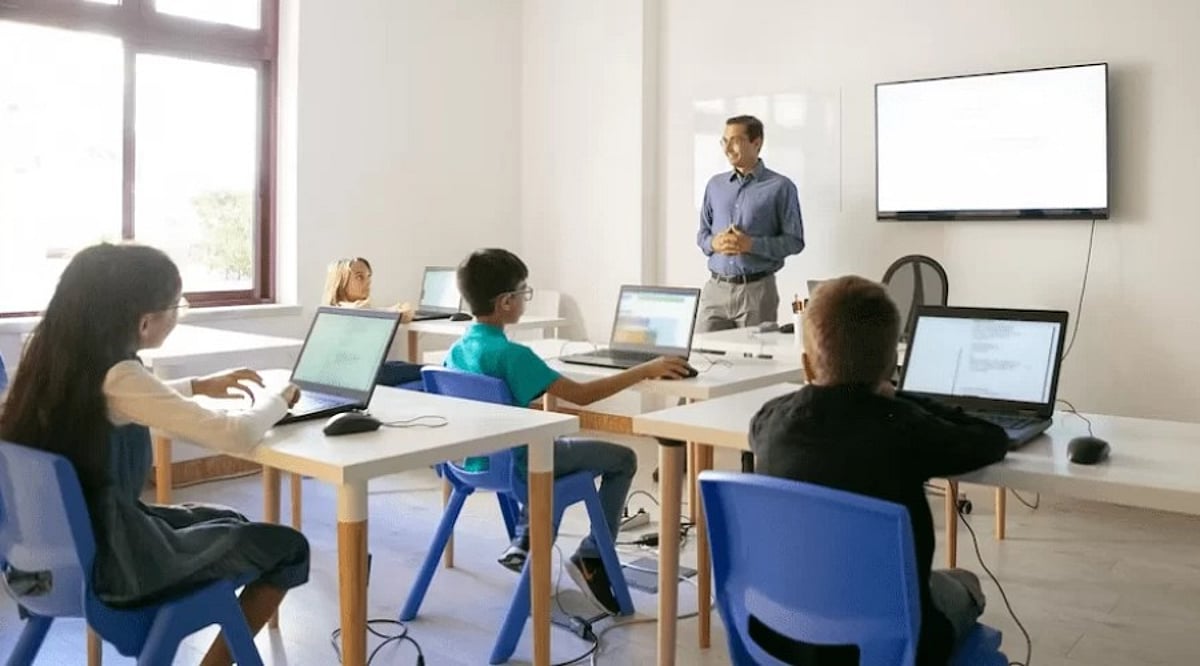
    Technology is reshaping classrooms, making learning more interactive, personalized, and flexible. From AI-driven lessons to smartboards and e-books, these tools empower teachers to teach more effectively while offering students engaging and accessible ways to learn.

    Overview

    Modern technology is making classrooms more interactive, engaging, and easier to manage for both teachers and students. Smart tools like AI, digital learning platforms, and smartboards support different learning styles and boost classroom participation. These innovations help students learn at their own pace while equipping them with future-ready skills.

    Classrooms have evolved significantly. Not long ago, students relied on blackboards and printed books. Today, digital tools make lessons more interesting and accessible. Students can watch videos, attend online classes, and learn in ways that suit them best.

    Teachers remain central to every classroom. Technology provides them with additional tools to explain concepts and keep students engaged. Here are ten technologies that help schools create better learning experiences every day.

    AI-Driven Personalized Learning

    Students learn differently. Some grasp topics quickly, while others need more practice. AI-powered learning platforms tailor lessons to each student’s progress. They recommend additional practice when needed and allow students to move on when ready. This approach helps students learn without feeling rushed or left behind.

    Gamification of Education

    Many students find learning more enjoyable when lessons include fun activities. Schools now use quizzes, points, rewards, and badges to maintain interest. Small, achievable goals make learning exciting and less stressful. These activities also engage students in class and encourage them to do their best every day.

    Digital Pads

    Digital pads are now common in many classrooms. Students can write notes, complete homework, and draw diagrams on a single device. Everything stays organized, making it easy to find old notes. Teachers can also send worksheets and study materials in seconds.

    Smartboards

    Smartboards have made classroom teaching more dynamic. Teachers can display photos, videos, maps, and presentations with a single tap. Students can answer questions on-screen and participate in interactive activities. Everyone gets a clear view, making lessons easier to understand.

    Microlearning Platforms

    Studying for long hours can be exhausting. Microlearning platforms break lessons into short, manageable segments. Students learn one concept at a time, which simplifies learning and improves retention, especially during exam periods.

    Social-Emotional Learning Tools

    School is about more than grades. Students also need to develop collaboration, emotional management, and problem-solving skills. Social-emotional learning tools include simple activities and classroom discussions that support personal growth alongside academic achievement.

    Lifelong Learning Platforms

    Learning shouldn’t stop after school. Lifelong learning platforms allow students to acquire new skills at their own pace. Whether it’s coding, communication, or a new language, these platforms make continuous education accessible at any stage of life.

    E-Books

    E-books have become a practical choice for many schools. Students can carry numerous books on a single device instead of heavy backpacks. Features like search, highlighting, and note-taking enhance the reading experience. Some e-books also include videos and practice questions.

    Remote Learning

    Remote learning has made education more flexible. Students can attend classes from home when they can’t be at school. Live sessions, recorded lessons, and online discussions keep them connected with teachers and classmates. This flexibility means learning can happen almost anywhere.

    Document Camera

    Document cameras simplify classroom demonstrations. Teachers can place a book, worksheet, or science experiment under the camera, and it displays on a large screen. Every student gets a clear view without leaving their seat—especially useful for practical lessons.

    Personal Recommendation: Three Technologies Every Student Should Try

    If I had to choose three, they would be AI-Driven Personalized Learning, Smartboards, and Microlearning Platforms. AI-powered learning provides the extra support students need without pressure. Everyone learns at their own pace. Smartboards bring lessons to life with pictures, videos, and live examples, making tough topics easier to grasp. Microlearning platforms are perfect for busy students—bite-sized lessons fit into daily routines and make exam revision less stressful. Together, these tools make learning more fun, improve understanding, and build student confidence.

    Learning Is Becoming Better Every Day

    Technology has opened new doors for both students and teachers. Classrooms are more interactive, lessons more interesting, and learning more flexible. Information is more accessible than ever. However, teachers remain the most important part of education. Technology works best when it supports teaching, not replaces it. With more tools in schools, students can learn more, explore new ideas, and prepare for the future with confidence.

    FAQs

    1. How is technology improving today’s classrooms?
    Technology makes lessons more interactive through videos, quizzes, and digital activities. It helps teachers explain topics clearly while offering students different ways to learn based on their needs.

    2. Which classroom technology is most useful for students?
    AI-driven personalized learning is one of the most useful tools because it adjusts lessons to each student’s progress. Smartboards and microlearning platforms are also great for making learning easier and more engaging.

    3. Can technology replace teachers in the future?
    No. Technology supports teachers but cannot replace them. Teachers guide students, answer questions, and create meaningful learning experiences that digital tools alone cannot provide.

    4. Why are schools moving from printed books to e-books?
    E-books are easier to carry, simple to update, and offer features like search, bookmarks, notes, and interactive content. They provide quick access to learning materials anytime.

    5. What should schools consider before using new classroom technology?
    Schools should choose tools that are easy to use, support learning goals, and are accessible to both teachers and students. Proper training and reliable internet access are also essential for best results.

  • Zoho Launches AI-Powered Classes 2.0 Across India with Support for 22 Languages

    Zoho Launches AI-Powered Classes 2.0 Across India with Support for 22 Languages

    Zoho has unveiled Zoho Classes 2.0, an advanced Learning Management System (LMS) that leverages artificial intelligence to simplify teaching and learning. The platform introduces a suite of new tools designed for students, teachers, schools, colleges, and universities. Notably, Zoho is offering the platform free of charge to government educational institutions across India.

    Originally launched during the COVID-19 pandemic as a tool for teachers to collect assignments online, Zoho Classes has evolved significantly based on educator feedback. Zoho Classes 2.0 now functions as a comprehensive learning platform that supports everyday classroom activities.

    AI Tools Enhance Teaching and Learning

    One of the standout features is the AI tutor, which only answers questions related to the subjects a student is studying. This ensures learners stay focused on their curriculum rather than receiving answers on unrelated topics. The platform also offers daily practice questions and rewards consistent learning through simple streaks.

    Teachers benefit from time-saving AI tools that can quickly generate lesson plans, course details, learning objectives, and classroom content. Educators can review and customize materials before sharing them with students, significantly speeding up lesson preparation.

    Another valuable addition is AI-based grading, which evaluates computer science assignments and prepares feedback for teachers. Teachers retain final control before releasing marks to students. Zoho states this feature can reduce hours of manual grading each semester, allowing educators to dedicate more time to student interaction.

    New Features for Schools and Colleges

    Educational institutions gain tools to streamline administrative tasks. Many schools and colleges must prepare reports for government and education authorities. Zoho Classes 2.0 helps collect course information and learning records, simplifying and accelerating report generation.

    The platform supports all 22 scheduled Indian languages, enabling students and teachers from diverse regions to use it comfortably. Zoho says the AI understands multiple Indian languages, making learning more natural for users.

    Safety features are also enhanced. The AI tutor restricts answers to classroom subjects, and schools can decide whether to enable AI features for students. The mobile app allows students to view saved lessons offline for a limited time, though full downloads are not available.

    Free Access for Government Institutions

    Zoho is providing Zoho Classes 2.0 at no cost to central and state government schools, colleges, and universities. Individual teachers can use it free for up to 100 students. Private institutions can subscribe for Rs 500 per teacher per month.

    With Zoho Classes 2.0, the company aims to make education more accessible and efficient. The platform reduces routine tasks for teachers, offers better learning support for students, and helps schools manage academic operations smoothly. Its intuitive AI features and multilingual support are expected to drive digital learning adoption across India in the coming years.

  • Norway’s New School Rules Restrict AI Use for Kids to Foster Critical Thinking

    Norway’s New School Rules Restrict AI Use for Kids to Foster Critical Thinking

    Norway has introduced a comprehensive set of guidelines restricting the unrestricted use of artificial intelligence in classrooms, aiming to encourage independent thinking, creativity, and stronger foundational learning among students. The new rules apply to all age groups but impose stricter limitations on younger students, while older learners receive guided access under structured educational supervision.

    Teacher Oversight and Academic Integrity

    Educators remain responsible for supervising AI usage, ensuring technology supports education without replacing critical learning or student participation. The rules also discourage students from submitting AI-generated work without proper disclosure, protecting fairness and maintaining educational standards nationwide.

    Critical Thinking and Digital Literacy

    Schools are now required to teach students how to evaluate AI-generated content critically, rather than accepting automated responses without verification. Digital literacy education covers responsible AI use, ethical considerations, online safety, and understanding algorithmic limitations.

    Privacy and Responsible Innovation

    Guidelines emphasize safeguarding student data and preventing unauthorized sharing of personal information with AI platforms and online services. Norway promotes a balanced approach to AI adoption, encouraging technological advancement while protecting educational quality, fairness, and meaningful student engagement.

    The updated framework may influence other countries considering similar regulations for integrating artificial intelligence into school education responsibly.