Tag: AI infrastructure

  • Meta to Begin Production of Custom Iris AI Chip in September, Targets 14 GW Computing Capacity

    Meta to Begin Production of Custom Iris AI Chip in September, Targets 14 GW Computing Capacity

    Meta Platforms has announced plans to begin production of its in-house artificial intelligence chip, code-named Iris, in September as part of a broader strategy to expand custom hardware development and reduce reliance on external suppliers. The move, outlined in an internal company memo reviewed by Reuters, aims to boost Meta’s computing capacity to 14 gigawatts next year while supporting the growing demands of AI workloads across Facebook, Instagram, and other services.

    Iris AI Chip: A Step Forward for Meta’s MTIA Program

    The Iris chip is part of Meta’s MTIA (Meta Training and Inference Accelerator) program. According to the memo, the chip completed bug testing in just six weeks with no major issues—a notable achievement for a program that has faced earlier delays since its launch over five years ago. Broadcom is assisting with design, while Taiwan Semiconductor Manufacturing Co (TSMC) is expected to handle production. The chip will not immediately replace GPUs from Nvidia and AMD but will complement them, supporting large-scale AI training and inference workloads.

    The memo notes that adopting the latest GPUs at Meta’s scale “has been a heavy lift, and it has cost us time,” underscoring the company’s push for greater control over its AI hardware stack. Meta declined to comment on the Reuters report.

    Computing Capacity Expansion: 14 GW by Next Year

    Meta plans to deploy 7 gigawatts of computing infrastructure this year, having added 1 gigawatt in the first half and expecting to add another 5.5 gigawatts by year-end. The company then aims to double total capacity to 14 gigawatts next year. To put that in perspective, 1 gigawatt can power approximately 800,000 homes, highlighting the immense energy requirements of large-scale AI data centers.

    This expansion comes as major tech firms ramp up AI infrastructure spending. Meta expects to spend up to $145 billion on AI infrastructure this year, part of a projected $700 billion in Big Tech spending on AI technology.

    Reducing Supplier Dependence with Custom Silicon

    Meta’s custom chip initiative is designed to reduce cost pressures tied to purchasing advanced AI chips from external suppliers like Nvidia and AMD. It also enables faster hardware iteration: Meta unveiled Iris under its technical name in March, along with three other AI processors, and plans to release a new chip roughly every six months through 2027—a much faster cycle than the industry standard of one year or more.

    Mike Gualtieri, a vice president and principal analyst at Forrester, commented, “You can’t become an AI titan if you are dependent on another company for chips.” He added that hyperscalers and SpaceX are also pursuing custom chip designs as model usage becomes more price-driven.

    Long-Term Supply Deals Support Data Center Growth

    To support its data center buildout, Meta has secured multi-year supply agreements with Samsung Electronics for memory chips, Sandisk for flash storage, and Sumitomo Electric for fiber-optic equipment. These deals are critical as AI demand strains the global chip supply chain, driving up prices for memory, storage, and AI processors. Sandisk declined to comment, while Samsung and Sumitomo Electric did not respond to Reuters requests.

    Morgan Stanley analysts have described rising chip and memory prices as “chipflation,” a broader concern for the technology sector. Meanwhile, companies like Apple have raised prices on some products amid memory supply constraints.

    Meta shares initially fell after the Reuters report but later recovered, trading up 4.6% in late afternoon trading after the company announced developer access to an AI coding model that competes with tools from OpenAI and Anthropic.

  • Google Selects 20 AI-First Startups for India Accelerator 2026 Cohort

    Google Selects 20 AI-First Startups for India Accelerator 2026 Cohort

    Google has chosen 20 homegrown AI-first startups for the 2026 cohort of its Google for Startups Accelerator: India program. The tech giant selected these companies from more than 2,500 applications, highlighting the growing depth of India’s AI startup ecosystem.

    The selected startups recently completed an in-person bootcamp at Google’s Bengaluru campus. Over the next three months, Google will provide mentorship, AI tools, cloud resources, and technical guidance to help founders refine their products, strengthen infrastructure, and scale globally.

    A Cohort Built Around Applied AI Infrastructure

    This year’s selections lean heavily toward startups building AI infrastructure and vertical-specific tools rather than consumer apps. Several are tackling embedded and industrial AI: CraftifAI and H2Loop AI automate embedded software and firmware development for robotics, automotive, and semiconductor hardware, while Jidoka applies computer vision to manufacturing quality inspection.

    Others focus on enterprise workflows: Binocs automates financial due diligence, OnFinanceAI builds compliance and risk tools for banks and insurers, and TartanHQ handles identity verification and onboarding through AI-powered APIs. Healthtech and climate tech also feature prominently, with Aikenist building AI-accelerated radiology tools, FlexifyMe offering AI-guided chronic pain therapy, and Aurassure and Fitsol tackling environmental monitoring and carbon emissions tracking respectively.

    Notable Names and Their Backers

    A few startups in the cohort have already built visible track records. Adalat AI, incubated at MIT, applies speech transcription and workflow automation to reduce courtroom case backlogs. Dodo Payments, backed by Antler and 100Unicorns, is building global payment infrastructure for SaaS and AI companies across more than 150 countries. Pipeshift, which came out of Y Combinator’s Summer 2024 batch, focuses on low-latency inference infrastructure for open-source AI models, while Soundverse AI, featured on Shark Tank India, offers a generative AI music platform for prompt-based composition. Several others, including CraftifAI, H2Loop AI, and Binocs, have already raised institutional funding from investors such as Accel, Ankur Capital, and IvyCap Ventures.

    What the Accelerator Offers Founders

    Google India vice president and country manager Preeti Lobana said the program is designed to equip founders with Google’s full AI stack and deep technical mentorship. She framed it as a way to accelerate their path to enterprise scale while strengthening the technical capabilities that support the broader India AI Mission. Google first launched the accelerator in April 2024, and its 2025 cohort included companies such as Apptile, Knit, MyWonder, Phot.AI, and SparkyAI.

    What Comes Next for the Cohort

    Beyond mentorship, Google’s accelerator model typically emphasizes technical depth over generic startup coaching. Founders will stress-test their architecture and prepare for scaled, enterprise-grade deployment rather than simply polishing a pitch deck. With this cohort skewing heavily toward infrastructure-level AI tools serving manufacturing, financial services, and healthcare, the selections suggest Google is positioning the program as a pipeline for startups building the underlying technical layers of India’s AI economy, rather than consumer-facing AI products alone.

  • MEXC Expands Tokenized Stock Offerings with Nine New Ondo Trading Pairs Focused on AI Infrastructure

    MEXC Expands Tokenized Stock Offerings with Nine New Ondo Trading Pairs Focused on AI Infrastructure

    Victoria, Seychelles — MEXC, a leading zero-fee digital asset exchange, has announced the addition of nine tokenized stock and ETF trading pairs from Ondo Finance to its spot market. The listings, effective July 8, 2026, expand the range of on-chain U.S. equity exposure available to users, targeting companies involved in data centers, semiconductors, and power supply chains—key sectors driven by rising AI infrastructure demand.

    The new pairs include tokenized versions of stocks and ETFs such as Bloom Energy (BEON/USDT), Astera Labs (ALABON/USDT), Credo Technology (CRDOON/USDT), the Roundhill Memory ETF (DRAMON/USDT), Innodata (INODON/USDT), and Celestica (CLSON/USDT). Full listing times are available in MEXC’s official announcement.

    Ondo Finance specializes in bringing traditional financial assets onto blockchain networks through compliant infrastructure. Each tokenized asset is backed by the underlying security held via regulated custodial brokers. This latest batch further strengthens MEXC’s lineup of tokenized stocks, reinforcing the platform’s commitment to offering “Infinite Opportunities” for its users.

    Beyond Ondo’s products, MEXC also provides “RealStocks,” which allows users to hold actual share ownership and receive dividends. The integrated trading experience enables users to access a wide range of investment products without switching platforms.

    About MEXC
    MEXC is one of the fastest-growing cryptocurrency exchanges globally, trusted by over 40 million users across 170+ markets. It offers industry-leading zero-fee trading and access to more than 3,000 digital assets, including cryptocurrencies, tokenized stocks, ETFs, commodities, and precious metals.

    Risk Disclaimer: This content does not constitute investment advice. The cryptocurrency market is highly volatile; investors should conduct their own research before making any trading decisions.

  • Envirotech Vehicles Completes Azio AI Merger Early, Targeting $487B AI Infrastructure Market

    Envirotech Vehicles Completes Azio AI Merger Early, Targeting $487B AI Infrastructure Market

    Envirotech Vehicles, Inc. (NASDAQ: EVTV) has successfully completed its merger with Azio AI Corporation ahead of schedule, closing on July 2, 2026. The accelerated transaction positions the combined company to capitalize on the rapidly growing artificial intelligence infrastructure market, which the International Data Corporation (IDC) projects will reach $487 billion in global spending in 2026 and exceed $1 trillion by 2029.

    Strategic Transformation and Immediate Focus

    The merger marks a pivotal step in EVTV’s transformation into an AI datacenter provider, offering enterprise GPU compute, digital power solutions, data center development, and digital asset infrastructure. By amending the transaction structure, the parties expedited closing, enabling the combined company to begin operations as a fully integrated public entity much sooner than originally anticipated. Management is now concentrating on commercialization, infrastructure deployment, and long-term growth.

    Operational Milestones

    In recent months, EVTV has made significant progress at its South Texas development site, deploying six megawatts of off-grid power for modular data centers. The company also secured rights to a 548-acre site with the potential to scale up to 500 megawatts — capacity suitable for future AI hyperscale data centers. Management believes these achievements demonstrate meaningful operational momentum already in place, including established customer commitments and active commercial execution.

    Leadership Changes

    In connection with the merger closing, Phillip Oldridge stepped down as CEO, and Jason Maddox moved from President to CFO. The Board appointed Simon Yu as President and Chris Young as CEO, effective immediately. Young brings experience from Clubhouse Media Group and Amplify, while Yu is a serial entrepreneur with a track record of taking companies public and scaling businesses to billion-dollar valuations.

    Market Opportunity and Strategy

    The completion of the merger comes at a time when global investment in AI infrastructure is accelerating. Enterprises increasingly demand high-performance computing, GPU resources, and scalable digital power. The combined company plans to monetize power assets across multiple revenue streams, including AI data centers, enterprise compute infrastructure, power hosting, and digital asset mining operations.

    Transaction and Operational Highlights

    • Successfully merged with Azio AI under an amended agreement.
    • Approximately six megawatts of off-grid digital infrastructure deployed at South Texas site.
    • Development footprint exceeds 548 acres with potential for up to 500 MW capacity.
    • Positioned to accelerate commercialization across AI infrastructure, GPU compute, digital power, and digital asset mining.
    • Merger consideration: 2,655,157 shares of common stock and 973,450 shares of non-voting convertible preferred stock.
    • Chis Young appointed CEO and Chairman; Simon Yu appointed President; Jason Maddox appointed CFO.

    For more information, visit Azio AI or contact Phoenix MGMT & Consulting at Press@PhoenixMGMTConsulting.com.

  • How AI Is Forcing a Fundamental Redesign of Cloud Infrastructure

    How AI Is Forcing a Fundamental Redesign of Cloud Infrastructure

    Traditional cloud infrastructure was built for a different era of computing. Designed to support applications, databases, websites, and enterprise systems that operated within relatively predictable performance patterns, these models are now being tested by the demands of artificial intelligence. As organizations move from AI experimentation to large-scale deployment, many are discovering that the infrastructure supporting their digital transformation is not well-suited to AI workloads.

    Running AI models, processing large volumes of unstructured data, and delivering real-time AI-powered services require a different approach to compute, storage, networking, and data management. As a result, cloud architecture is entering a new phase of evolution. According to an IDC report, global spending on AI-centric infrastructure is expected to exceed $200 billion by 2028, driven by growing investments in specialized compute, storage, and networking environments designed specifically for AI workloads.

    Why Traditional Cloud Models Face New Pressures

    For most of the cloud era, enterprise workloads were relatively predictable. Applications required stable uptime, databases needed consistent performance, and infrastructure could be scaled based on anticipated demand. AI applications change this equation entirely. Whether deploying a large language model, building an AI-powered customer support platform, or running analytics on large datasets, AI workloads often require intensive bursts of computing power that vary significantly over time. The volume of data involved is substantially larger, and processing requirements are more dynamic than those of traditional enterprise applications.

    AI systems run differently from normal workloads because they continuously process, learn from, and react to varying inputs. This creates infrastructure requirements that are far more demanding in terms of performance, scalability, and operational management. Cloud environments built for traditional workloads will need significant modification to support large-scale AI applications.

    How Cloud Architecture Is Evolving

    One of the most visible changes is in compute infrastructure. In traditional cloud environments, businesses could rely on standard compute resources and scale them according to demand. AI workloads have changed that equation. Training models, running inference workloads, and processing large datasets increasingly require specialized infrastructure optimized for AI performance rather than general-purpose computing.

    Data architecture is also becoming a much bigger consideration. As AI applications depend on large volumes of data, organizations are paying closer attention to where that data is stored and processed. Moving data across multiple regions can introduce delays that may be acceptable for conventional workloads but become problematic for real-time AI applications. This is driving growing interest in regional cloud infrastructure and low-latency deployment models that bring processing closer to end users and business operations.

    Security and compliance requirements add another layer of complexity. When AI systems process sensitive business information, customer records, financial data, or healthcare information, organizations need clear visibility into how data is handled, where it is processed, and whether it remains compliant with regulatory requirements. Infrastructure decisions are becoming increasingly linked to governance, risk management, and data sovereignty considerations.

    The New Requirements of AI-Driven Infrastructure

    The next generation of cloud architecture will be more purpose-built for AI rather than based on infrastructure models originally designed for traditional applications. Organizations are increasingly evaluating cloud environments based on the specific requirements of their AI workloads, including performance, data governance, scalability, and cloud computing infrastructure.

    For Indian enterprises, this trend is intersecting with growing interest in data sovereignty, localized infrastructure, and managed cloud services. As AI becomes embedded across customer-facing platforms and business operations, factors such as latency, compliance, and infrastructure visibility are becoming more important than ever before.

    The fundamentals of cloud computing are not changing. What is changing is the level of performance, flexibility, and governance that modern workloads require. As AI adoption accelerates, cloud architecture is evolving from a general-purpose technology foundation into a specialized platform designed to support the next generation of digital services and intelligent applications.

    Authored by Rahul Takkallapally, Co-Founder, BharathCloud

  • Why Creator Commerce’s Future Depends on Infrastructure, Not Follower Counts

    Why Creator Commerce’s Future Depends on Infrastructure, Not Follower Counts

    For years, the creator economy has been measured by a simple scoreboard: followers, views, and engagement. Creators built audiences on platforms like YouTube, TikTok, and Instagram, then converted attention into income through ads, sponsorships, affiliate links, and product drops. But as creator commerce enters its next decade, follower count is no longer enough.

    As the industry evolves, creators may not realize that platform-based success can be short-lived. What we see online is largely dictated by the platforms themselves and their algorithms. A small change to your main platform’s algorithm or a priority shift can immediately impact followers, views, and engagement — ultimately affecting traffic and creator income. While creators own their content, they don’t fully own their audience.

    The obvious solution is to remove the unpredictable algorithms by shifting from essentially renting platform traffic to owning the brand entirely. This shift resembles what happened with e-commerce, where early online sellers relied heavily on marketplaces to find buyers. Over time, many realized that long-term value came from building their own storefronts, collecting customer data, and developing direct relationships with buyers. Now it’s time for creators to follow a similar path.

    The Hidden Roadblock: Creators Become the Integration Glue

    Seasoned content creators may think audience growth is their biggest challenge — but it’s not. Many already have engaged communities and strong audience trust. The real problem is knowing how to turn that trust into a sustainable business. Smart creators know you can’t do everything yourself at scale, so they rely on systems. But when different systems manage different parts of the business — analytics, content planning, storefront, customer databases, product sourcing, link-in-bio — creators end up as the glue linking everything together. It’s exhausting. The complexity creates a barrier for many mid-tier creators, who have audience potential but lack the time or resources to build a complete commerce operation from scratch. That digital infrastructure is crucial.

    AI Infrastructure: Compressing Fragmented Operations into a Single Engine

    We’ve all seen AI-generated content, but AI can do much more. Rather than replacing creative aspects, what if you could harness AI to reduce operational disconnects? That’s exactly what fypro.ai attempts to do. As an AI creator growth engine, fypro.ai closes the loop from audience growth to monetization in a single workflow, laying the foundations for an owned digital business.

    How Does Fypro.ai Work?

    It starts with the creator’s social handle. Creators drop their handle to receive a free AI growth plan — account connection takes about 30 seconds. The system analyzes audience demographics, content style, engagement patterns, and viral performance signals to inform the plan. AI Studio, fypro.ai’s content engine, has been trained on more than 4 million viral TikToks and refined by creator strategists to optimize results. Fypro.ai then produces a plan matching the creator’s niche and voice. A branded site goes live in minutes — with a homepage, product shop, content blog, and link-in-bio under the creator’s own domain. Colors, messaging, tone, and positioning are informed by existing content rather than generic templates. Fypro.ai is currently in public beta with more than 2,000 active creators, and content planned on the platform generated more than 10 million views last quarter.

    The Monetization Conundrum

    Even the most successful content creators need help turning content into revenue. With fypro.ai, creators get help answering the common question: “What should I sell?” For example, Marty, a pet comedy micro-creator with over 3,000 followers and an 11% engagement rate, had strong audience loyalty but no commercial system. Using fypro.ai’s tailored commercial content library, structured content calendar, and smart scheduled publishing, Marty turned engagement into more than $2,000 in first revenue within weeks. The engine matches products to your niche, shows margins clearly (typical margins range from 30% to 70% compared to roughly 10% in many affiliate arrangements), and lets you choose what fits your brand.

    The Ultimate Asset: Digital Property Rights and Owned Customer Data

    While followers can disappear and algorithms can change, the one thing that lasts is the creator’s relationship with their followers and customers. Every time you capture an email address, build a customer profile, or record purchase history, you’re creating a business asset independent of any platform. When a creator owns their customer database, they can communicate directly, review purchase histories, identify repeat buyers, and evaluate organic site traffic. Control is key. Fypro.ai emphasizes this ownership layer by helping creators build branded experiences on their own domains while maintaining direct control of customer information — with one-click data export. SEO-ready content surfaces generate discoverable traffic outside social feeds.

    The Next Chapter of Individual Entrepreneurship

    Gone are the days of defining the creator economy strictly through follower numbers and engagement stats. Increasingly, success is measured by ownership: owned audiences, owned customer relationships, owned domains, and owned brands. Success increases as creators learn to view social platforms as discovery tools, not final brand destinations. Once you have an audience, using an AI growth engine like fypro.ai helps you own your content and systems. The result is a lasting business, assisted by AI — letting content creators do what they set out to do: create content they’re passionate about, while the tech handles the infrastructure heavy lifting.

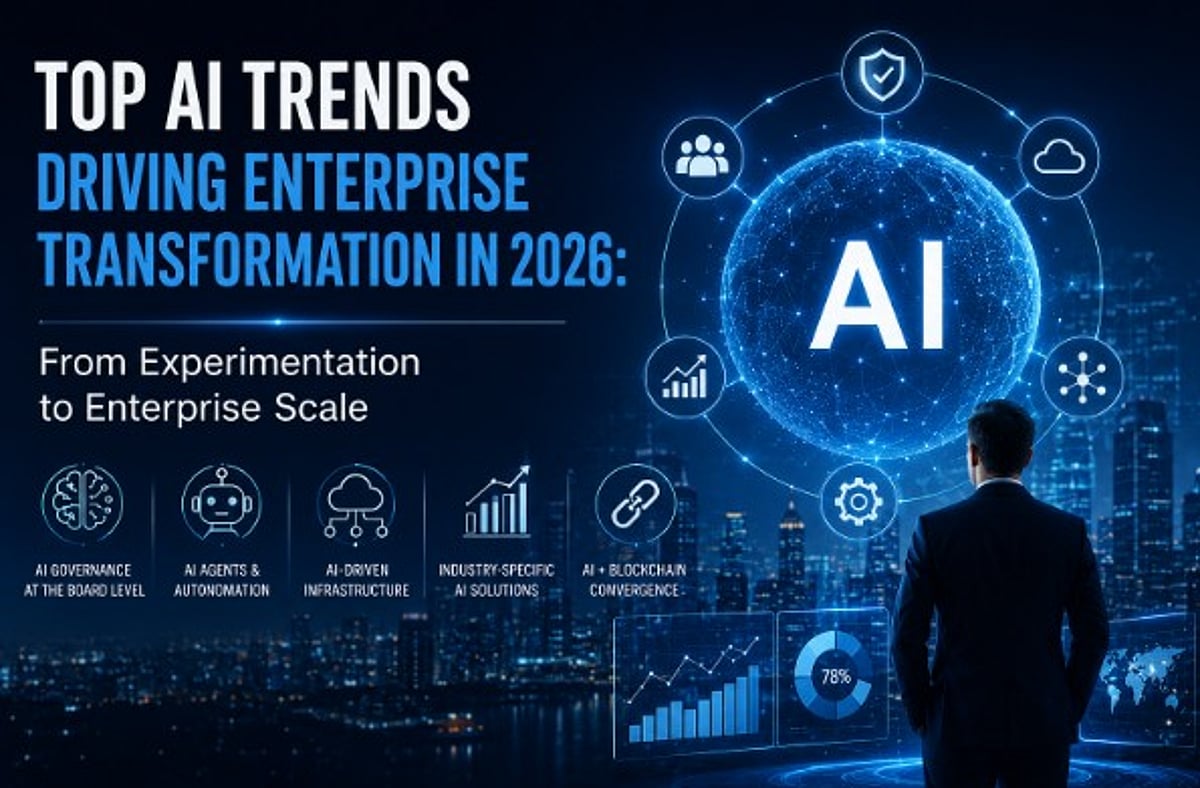
  • 7 AI Trends Reshaping Enterprise Strategy in 2026: From Pilots to Full-Scale Operations

    7 AI Trends Reshaping Enterprise Strategy in 2026: From Pilots to Full-Scale Operations

    Artificial Intelligence is entering a phase of enterprise adoption. Over the past few years, organizations have invested heavily in AI pilots, generative AI tools, and automation initiatives to explore how emerging technologies can improve business performance. While many of these projects demonstrated results, relatively few have delivered transformation at scale. As a result, the conversation surrounding AI is rapidly evolving from experimentation toward operationalization.

    According to McKinsey’s latest State of AI report, more than 70% of organizations have adopted AI in at least one business function. Gartner predicts that over 80% of enterprises will have used generative AI APIs or deployed generative AI-enabled applications by 2026. These figures indicate that AI adoption is no longer limited to innovators and early adopters. It is rapidly becoming a priority across industries.

    However, adoption alone does not guarantee business value. Many organizations continue to struggle with deployments, disconnected data environments, and unclear transformation strategies. The challenge facing enterprise leaders in 2026 is no longer whether AI works. The challenge is how to scale AI across the organization while maintaining governance, security, and measurable outcomes.

    The organizations that succeed in this phase of AI transformation will not necessarily be those with access to the most advanced models. Instead, they will be those aligning AI capabilities with business objectives, operational processes, and long-term transformation strategies.

    The Economic Opportunity Behind Enterprise AI

    The scale of AI’s potential is one of the primary reasons enterprises continue increasing investments despite ongoing implementation challenges. According to PwC’s Global AI Study, AI could contribute up to $15.7 trillion to the economy by 2030, making it one of the most transformative technologies of the modern era.

    What makes AI particularly powerful is its ability to generate value across multiple business functions simultaneously. Organizations are increasingly using AI to:

    • Improve operational efficiency and productivity
    • Enhance customer experiences through personalization
    • Accelerate product and service innovation
    • Strengthen decision-making capabilities
    • Identify new revenue opportunities

    Unlike previous waves of enterprise technology, AI is not confined to a single department. It has the potential to influence every aspect of business operations. This is why leading enterprises are shifting their focus from use cases toward enterprise-wide AI strategies.

    Trend #1: Enterprise AI Is Moving Beyond Pilot Projects

    The first phase of enterprise AI adoption was characterized by experimentation. Organizations launched customer service chatbots, automated document processing systems, predictive analytics platforms, and internal productivity assistants to explore AI’s capabilities. These initiatives often generated positive results but remained isolated within individual departments.

    Typical characteristics of AI initiatives between 2023 and 2024 included department-level deployments, limited integration with business operations, experimentation-focused objectives, unclear ROI measurement frameworks, and minimal governance oversight. As organizations move into 2026, priorities are changing significantly. Enterprise AI programs are increasingly characterized by organization-wide adoption strategies, cross-functional integration, outcome-driven implementation plans, governance and accountability frameworks, and executive-level sponsorship.

    This shift mirrors the evolution of cloud computing. Early cloud initiatives focused primarily on infrastructure optimization. Today, cloud serves as the foundation for digital business models. AI is following a similar trajectory. Business leaders are no longer asking whether AI can improve productivity. Instead, they are asking how AI can reshape operations, accelerate innovation, and create sustainable competitive advantages.

    Trend #2: AI Agents Will Become Operational Participants

    One of the most significant developments expected to shape enterprise transformation in 2026 is the emergence of AI agents. While most organizations are already familiar with AI copilots that assist employees with writing, coding, research, and knowledge retrieval, AI agents represent a more advanced stage of intelligent automation. Unlike copilots, AI agents are capable of performing tasks autonomously and coordinating activities across multiple systems.

    A procurement-focused AI agent, for example, may be able to monitor inventory levels in real time, analyze supplier performance data, forecast purchasing requirements, generate procurement recommendations, and initiate approval workflows automatically. Similarly, customer service agents can retrieve information from CRM systems, access knowledge repositories, respond to routine customer inquiries, and escalate complex issues when human intervention becomes necessary.

    According to Deloitte’s State of Generative AI in the Enterprise report, organizations are increasingly prioritizing AI initiatives that generate measurable operational outcomes rather than simply improving individual productivity. This trend reflects a broader shift in enterprise expectations: AI is no longer viewed solely as a productivity tool but as an operational capability capable of transforming how business processes are executed.

    Trend #3: AI Infrastructure Will Matter More Than AI Models

    Much of the public discussion surrounding AI has focused on models. Organizations frequently compare proprietary and open-source models, evaluate benchmark performance, and debate the advantages of different architectures. However, many enterprises are discovering that model selection is only a small part of the challenge. In practice, infrastructure is becoming more important than the model itself.

    Modern enterprise AI environments typically require data pipelines and integration layers, vector databases and knowledge repositories, governance and compliance frameworks, security and access management systems, model monitoring and observability tools, and MLOps and deployment pipelines. Without these foundational capabilities, even the most advanced AI models struggle to deliver sustainable business value.

    Many organizations encounter challenges when attempting to scale successful pilot projects. Data often resides across multiple disconnected systems, legacy applications create integration barriers, and security requirements introduce deployment constraints. These issues cannot be solved simply by choosing a different model. This reality explains why AI transformation is increasingly viewed as an architecture challenge rather than a model challenge. The organizations that invest in scalable AI infrastructure today will be better positioned to deploy new capabilities, integrate future technologies, and maintain long-term operational resilience.

    Trend #4: Decision Intelligence Will Replace Traditional Analytics

    For decades, business intelligence platforms have helped organizations understand historical performance. These systems provide visibility into trends, metrics, and operational outcomes, allowing leaders to evaluate what happened in the past. However, modern enterprises increasingly require systems that go beyond reporting.

    Decision intelligence is emerging as the next evolution of enterprise analytics by combining artificial intelligence, predictive modeling, business rules, and automation to support real-time decision-making. Rather than answering “What happened?”, decision intelligence focuses on “What is likely to happen next?” and “What should we do about it?”

    This capability is already creating value across multiple industries: retail (optimizing inventory allocation and pricing strategies), manufacturing (predicting equipment failures before they occur), financial services (identifying emerging risks and compliance concerns), logistics (dynamically adjusting operations based on demand patterns), and healthcare (improving resource planning and patient scheduling).

    A global logistics provider, for instance, handles thousands of shipments every day. Traditional analytics can only tell you that a delay happened after it occurred. Decision intelligence systems can predict disruptions before they happen, suggest ways to mitigate them, and automatically switch to a backup plan. This change helps organizations make decisions proactively rather than reacting to events that have already occurred.

    Trend #5: AI Governance Will Become a Board-Level Priority

    As AI is used more extensively in business functions, governance is becoming essential for long-term success. Early AI projects were often managed by innovation teams or technical departments. Now that AI is being used on a larger scale, executive leaders and corporate boards need to be involved. The reason is simple: AI is no longer for testing. It affects how customers interact with companies, financial decisions, compliance processes, and daily operations. As AI’s impact grows, so do the risks related to privacy, security, transparency, and accountability.

    According to IBM’s Global AI Adoption Index, trust is a barrier to using AI in businesses. Companies are realizing that successful AI implementation requires more than technical performance; it also needs confidence that AI systems work responsibly and transparently. Forward-looking companies are investing in governance frameworks that include ensuring AI system transparency, accountability, risk management, trust-building, policy establishment, oversight committees, and ethics guidelines.

    What makes governance particularly important in 2026 is the growing complexity of AI ecosystems. As organizations deploy multiple models, integrate external data sources, and introduce autonomous AI agents, maintaining visibility and control becomes increasingly challenging. Rather than viewing governance as a barrier to innovation, leading organizations treat it as a foundation for sustainable AI adoption.

    Trend #6: Industry-Specific AI Solutions Will Outperform Generic Deployments

    As companies become more adept at using AI, they are moving away from one-size-fits-all solutions and toward AI tailored to their specific industry. While the underlying AI technology remains important, the most effective solutions are those designed for a particular sector.

    Financial institutions focus heavily on risk analysis, fraud detection, regulatory compliance automation, and customer intelligence. Manufacturers prioritize predictive maintenance, quality assurance automation, and supply chain optimization. Healthcare organizations invest in clinical decision support systems, patient engagement platforms, and medical data analysis tools. The same pattern is emerging across retail, logistics, insurance, telecommunications, and energy.

    This shift reflects an important reality: AI generates the strongest business outcomes when it is closely aligned with operational objectives and industry-specific workflows. As a result, organizations are increasingly seeking partners capable of combining technical expertise with deep industry understanding.

    Trend #7: The Convergence of AI and Blockchain

    Although AI and blockchain are often discussed as separate technologies, their convergence is creating new opportunities for enterprise innovation. AI excels at generating intelligence from data; blockchain excels at establishing trust, transparency, and immutability.

    Together, these technologies can support a range of high-value enterprise applications, including supply chain transparency and traceability, decentralized digital identity systems, automated compliance reporting, secure data-sharing ecosystems, and smart contract optimization.

    Consider a global supply chain network involving manufacturers, logistics providers, distributors, and retailers. AI can analyze operational data to identify inefficiencies, forecast demand, and optimize inventory management. Blockchain can simultaneously provide an immutable record of transactions and product movements across the network. The combination creates a system that is both intelligent and trustworthy.

    As enterprises become increasingly dependent on automated decision-making, trust will become a critical competitive differentiator. This is one reason why many organizations are beginning to explore how AI and blockchain can work together as complementary technologies rather than independent initiatives.

    Why Many AI Initiatives Still Fail

    Despite significant investment and technological progress, many companies still struggle to make AI work across the entire organization. McKinsey research reveals a large gap between experimenting with AI and achieving true proficiency. One major reason is poor data quality. AI systems are only as good as the data they receive, and companies often underestimate the work required to clean and organize data before AI can deliver valuable insights.

    Another problem is the misconception that technology alone is the answer. Companies that start with AI as the solution rather than understanding the problem they need to solve often fail to demonstrate tangible results. Common barriers include disorganized data, unclear objectives, lack of executive support, organizational resistance, disconnected technology stacks, and insufficient governance.

    Perhaps the most overlooked factor is managing the human side of change. AI affects people as much as technology. Employees must learn new workflows, managers must make decisions differently, and companies must adapt their operating models. Without proper change management, even technically successful AI initiatives may not be adopted by the organization.

    Mini Case Study: From Forecasting to Autonomous Decision-Making

    A compelling example of AI evolution comes from the logistics industry. A few years ago, logistics companies used AI to predict delivery times. These systems helped with planning but were disconnected, requiring humans to interpret results and take action. Today, modern logistics systems can do much more: predict delivery times in real time, find optimal routes, handle problems automatically, track inventory, and allocate resources efficiently.

    Instead of merely warning about potential issues, these systems can suggest solutions and initiate processes autonomously. For instance, if a storm threatens a major shipping route, a traditional system would alert managers after delays begin. An AI-powered system, however, can predict the problem, recommend an alternative route, estimate cost implications, and activate a contingency plan before any disruption occurs.

    This example illustrates a broader trend across industries: the future of AI is not just about generating more information but about enabling better decisions and faster action.

    Conclusion: The Path to Enterprise AI Maturity

    The evolution of enterprise AI from 2024 to 2026 represents a fundamental shift in priorities. Organizations are moving away from isolated experiments and toward integrated, scalable, and governed AI systems. The seven trends outlined above—moving beyond pilots, adopting AI agents, prioritizing infrastructure, embracing decision intelligence, elevating governance, pursuing industry-specific solutions, and converging with blockchain—provide a roadmap for enterprises seeking to capture the full value of AI.

    The organizations that will thrive in this new era are those that treat AI not as a technology project but as a strategic transformation initiative. By aligning AI capabilities with business goals, investing in foundational infrastructure, and fostering a culture of responsible innovation, enterprises can turn AI from a promising experiment into a powerful engine for growth.

  • Google Restricts Meta’s Gemini AI Access Amid Global Compute Crunch

    Google Restricts Meta’s Gemini AI Access Amid Global Compute Crunch

    Google has reportedly limited Meta’s access to its Gemini AI models after the social media giant requested more computing capacity than Google could provide. The move highlights mounting infrastructure challenges faced by even the world’s biggest AI companies as demand for generative AI continues to surge.

    According to a Financial Times report, Google informed Meta around March that it could not fulfill the company’s full request for Gemini capacity, disrupting some of Meta’s internal AI projects. Reuters has not independently verified the report.

    Compute Shortage Hits AI Expansion

    The report says Meta has been affected more than other Google Cloud customers because of its unusually high demand for Gemini models. The restrictions have reportedly delayed several internal projects that rely on Google’s AI infrastructure.

    In response, Meta has encouraged employees to use AI tokens more efficiently. AI tokens measure how much computing power AI applications consume, making them a key factor in managing large-scale AI workloads.

    Meta Pushes Ahead with Its Own AI Strategy

    Meta has used Gemini for content moderation, scam detection, customer service, advertising tools, and software development. It is said that Meta began using Gemini because it outperformed some of its own AI models on certain tasks.

    Nonetheless, Meta has recently been moving some of its workloads from Gemini to its own Muse Spark model, thereby reducing its dependence on external AI providers while still investing billions of dollars in building its infrastructure.

    AI Infrastructure Emerges as Next Battleground

    The reported restrictions reflect a broader challenge across the AI industry. Companies are investing billions in chips, servers, and data centers, yet demand for AI computing continues to outpace supply.

    Google has previously acknowledged that limited computing capacity has constrained growth in its cloud business despite strong customer demand. If the report is accurate, the latest development suggests that access to AI infrastructure is becoming as strategically important as the AI models themselves, with compute power emerging as one of the industry’s most valuable resources. Neither Google nor Meta has publicly commented on the report.

  • Wall Street Braces for Jobs Data Amid Tech Turbulence and Fed Rate Uncertainty

    Wall Street Braces for Jobs Data Amid Tech Turbulence and Fed Rate Uncertainty

    Wall Street enters a holiday-shortened week with investors closely monitoring June jobs data, rising Federal Reserve rate-hike expectations, and heightened volatility in technology shares. The S&P 500 has posted a solid gain of more than 7% in the first half of 2026, but June brought weaker trading and wider daily swings, leaving markets on edge.

    The June payrolls report, scheduled for release on Thursday, July 2, will provide a critical measure of economic strength. Economists anticipate the addition of approximately 135,000 jobs, following a gain of 172,000 in May. A stronger-than-expected reading could reinforce the view that the economy can withstand higher borrowing costs, while a weaker report might ease pressure on the Federal Reserve to tighten policy soon.

    Markets have already raised the odds of a Fed rate increase by September, a sharp reversal from early 2026 when traders expected rate cuts. Doug Huber of Wealth Enhancement noted, “If we do get a really good jobs number, my guess is the market’s not going to treat that as good news,” reflecting concerns that robust growth could fuel rate hikes rather than support stock gains.

    Inflation remains a key concern, having moved above 4% for the first time in three years, driven by higher energy costs linked to the Middle East conflict. The Fed’s latest meeting underscored a strong focus on price stability, with investors viewing the tone as more hawkish than anticipated. Brad Conger of Hirtle & Co. commented, “Even if the jobs data is not a big surprise, it can tilt the Fed in one direction or the other.”

    Technology shares faced renewed selling pressure as investors reassess high spending on artificial intelligence infrastructure. Micron Technology, Advanced Micro Devices, Intel, and Oracle all traded lower on Friday, dragging the NASDAQ Composite toward a weekly loss. The Philadelphia Semiconductor Index, which had surged more than 90% from its late-March low, has recently declined, raising questions about whether the rally outpaced fundamentals.

    Adding to AI sector concerns, a report that OpenAI may delay its initial public offering until 2027 has weighed on chip and software stocks. Adam Crisafulli of Vital Knowledge said the reported delay “could slow the pace of infrastructure spending,” as investors worry about the heavy capital needs across the AI landscape. Traders will watch whether the selling pressure extends beyond semiconductors and software companies.

    Oil prices have fallen toward $70 a barrel after trading near $100 a month earlier, with Brent crude dipping below $73 on Friday. Investors are closely watching whether the Middle East ceasefire holds and whether lower energy costs ease inflation pressures. Meanwhile, the European Central Bank’s annual forum will draw attention from currency and bond markets, and Nike’s upcoming earnings report will offer an early view of consumer demand ahead of the broader second-quarter reporting season in July.

    As Wall Street navigates a shortened trading week, all eyes remain on the jobs report, tech volatility, and global policy signals that could shape market direction for the remainder of 2026.