Tag: AI infrastructure

  • Top Data Center Stocks and REITs to Invest In Amid Rising AI Demand

    Top Data Center Stocks and REITs to Invest In Amid Rising AI Demand

    Artificial intelligence is fueling a massive surge in demand for data centers, creating lucrative opportunities for investors in leading infrastructure companies and real estate investment trusts (REITs) worldwide. As AI workloads require immense computing power and storage, firms that own, operate, or supply data center technology are well-positioned for growth.

    Key Data Center Stocks and REITs

    Equinix (EQIX)

    Equinix operates premium global data centers with a strong base of enterprise customers. As a REIT, it benefits directly from rising AI infrastructure demand, providing reliable and secure colocation services.

    Digital Realty Trust (DLR)

    Digital Realty offers large-scale colocation facilities across the globe, attracting hyperscalers and AI companies that need secure, scalable, and connected data center space.

    NVIDIA (NVDA)

    NVIDIA powers AI data centers with advanced GPUs, making it one of the biggest beneficiaries of expanding artificial intelligence infrastructure investments.

    Vertiv Holdings (VRT)

    Vertiv provides cooling, power, and infrastructure solutions that help modern AI data centers operate efficiently while handling demanding computing workloads.

    Iron Mountain (IRM)

    Iron Mountain has expanded beyond traditional storage into data centers, offering investors exposure to digital infrastructure through a well-established REIT business.

    CoreWeave (CRWV)

    CoreWeave specializes in AI cloud computing and GPU infrastructure, emerging as a key player as enterprises accelerate AI model development.

    AMD (AMD)

    AMD supplies AI accelerators and server processors that strengthen data center performance, supporting growing demand from cloud and enterprise customers.

    Invest with a Long-Term Focus

    AI infrastructure demand continues to rise, but investors should carefully evaluate financial strength, valuations, growth prospects, and risks before making investment decisions.

  • Why Iceland Is Becoming a Top Hub for AI Data Centers

    Why Iceland Is Becoming a Top Hub for AI Data Centers

    Iceland is rapidly emerging as a preferred destination for AI data centers, driven by its abundant renewable energy, naturally cool climate, and stable infrastructure. As AI workloads demand ever more power, location strategies are shifting away from urban proximity toward reliable, low-carbon electricity. The country’s data center market, valued at $425 million in 2024, is projected to reach $812 million by 2030, growing at an annual rate of 11.39 percent.

    Why Iceland Attracts AI Data Centers

    For years, Iceland marketed itself on cold weather and renewable energy. Today, those advantages are more critical than ever. AI training and inference workloads operate at far higher power densities than traditional cloud storage or web hosting. A single high-performance GPU cluster can draw the electricity load of a small town continuously for months. Operators now prioritize grids that can deliver stable, long-term power at fixed costs. Iceland’s fully renewable grid—powered by hydropower and geothermal generation—offers prices that do not fluctuate with global gas markets.

    Efficiency Gains in Icelandic Data Centers

    Icelandic facilities consistently achieve power usage effectiveness (PUE) ratios between 1.1 and 1.2, well below the global average of 1.57. This gap translates into substantial savings on every megawatt drawn, compounded over round-the-clock operations. The natural cooling advantage comes from Iceland’s climate, which eliminates the need for energy-intensive chillers. For GPU clusters generating intense heat, this cooling headroom becomes a design advantage, not just a marketing point.

    Expansion of AI Infrastructure in Iceland

    A clear signal of this shift is the 2025 agreement between data center operator Verne and AI hyperscaler Nscale. The deal will deploy roughly 4,600 Nvidia Blackwell Ultra GPUs across Verne’s Icelandic campus through 2026. Notably, 85% of the installation will be liquid-cooled, marking a departure from the air-cooled colocation halls that defined Iceland’s earlier data center wave. This deployment confirms a move beyond traditional colocation toward purpose-built AI infrastructure.

    Connectivity Advantages

    Iceland’s location in the North Atlantic, once seen as a limitation, now works in its favor. The country is connected to Europe and North America via undersea cables, enabling operators to use it as a hub for backup, disaster recovery, and intercontinental AI workloads. As part of the European Economic Area (EEA), Iceland provides access to the European single market while offering a strategic transatlantic position for transmitting training data and model checkpoints between continents.

    Challenges and Grid Constraints

    Despite its advantages, Iceland faces a hard ceiling: the grid itself. Data centers already consume about 6 percent of the country’s electricity and contribute close to 5 percent of its GDP. The real constraint is not generation but approvals. New transmission lines and geothermal projects require years of environmental review and public licensing. Deciding how to allocate electricity between industries, homes, and data centers has become a political issue. Regulators and permitting timelines now shape the pace of AI investment as much as demand from hyperscalers.

    Why Iceland Stands Out

    Iceland is not the only renewable-rich destination competing for AI infrastructure. Norway and Sweden offer comparable hydropower and cool climates; Quebec pairs hydroelectric capacity with lower land costs. However, Iceland combines all three advantages: geothermal and hydropower, a fully renewable national grid, and transatlantic cable connectivity. Most competing sites offer only two of the three.

    Final Thoughts

    Iceland’s current wave of AI infrastructure investment highlights a broader trend: power availability, cooling efficiency, and grid stability are overtaking proximity to population centers as deciding factors. Green data centers in Iceland are becoming the reference case for this shift. As transmission capacity becomes the real constraint on AI growth worldwide, other renewable-rich regions will likely face the same question: how much AI infrastructure can a small grid carry before it turns from advantage into bottleneck?

  • Nvidia-OpenAI $250 Billion Deal Raises Concerns Over Circular Financing and Debt Risks

    Nvidia-OpenAI $250 Billion Deal Raises Concerns Over Circular Financing and Debt Risks

    According to reports, OpenAI is in discussions with semiconductor giant Nvidia about a 10 GW AI data center campus in Pike County, Ohio, that will include up to $250 billion in lease and construction financing. The guarantee would cover funding for the facility and not Nvidia’s AI chips.

    SB Energy, a subsidiary of SoftBank, would help OpenAI build the facility in Ohio. The project could eventually cost more than $500 billion, including the AI chips used inside the data center, and is expected to deliver 800 megawatts of power by 2028.

    Why the Deal is Drawing Attention

    OpenAI, which is valued by private investors at around $1 trillion, continues to operate with no profit; given this, the proposed arrangement has raised questions. According to reports, Nvidia has already invested $30 billion in OpenAI and is also in talks to provide hundreds of billions of dollars’ worth of AI chips for future infrastructure.

    Critics argue that financing mechanisms of this scale blur the line between genuine customer demand and vendor-supported expansion. They warned that if infrastructure spending outpaces revenue growth from AI, then every company in the AI ecosystem may become more dependent on projects that rely on debt and credit.

    Michael Burry Raises Concerns

    Recently, Burry published a software-sector research report and made it freely available on June 21, outlining which companies he believes are best positioned for the AI era and which face greater disruption risks. Burry pushed back against claims that software companies are ‘dead’, arguing that large language models (LLMs) cannot replace human creativity. “LLMs, no matter how advanced they get at being LLMs, will never beat that creative instinct of a talented human being,” he wrote.

    Boston College Associate Dean Aleksandar Tomic added concerns about the financing model of industry, adding that “What is happening right now with OpenAI and others is that they need computing, but apparently they don’t really have the revenue or the financial capability to engage in the capital expenditures necessary to support their activities.” He also said, “They’re paying themselves Nvidia’s money to get Nvidia chips.”

    However, not everyone has the same opinion. Michael Monaghan, founder of Founder’s ETF, defended the broader investment cycle, stating, “That’s not necessarily circular financing. That’s just an economy.”

    AI Infrastructure Race Continues

    Despite these concerns, the reported agreement reflects the unprecedented scale of investment in global AI infrastructure. Leading tech giants like Microsoft, Amazon, Google, and Meta continue investing hundreds of billions of dollars to build AI data centers and computing power for next-generation foundation models.

    AI software, infrastructure, and related services are expected to exceed $631 billion globally by 2028, making businesses compete for their long-term computing resources, according to IDC.

    Regardless of whether Nvidia’s proposed backstop ever gets traction, it raises a larger issue in the AI industry: can AI infrastructure investments keep growing at the current pace, or are increasingly complex financing models just going to pose challenges for the industry?

  • Michael Burry Criticizes NVIDIA’s $250 Billion OpenAI Guarantee, Highlights Circular Financing Risks

    Michael Burry Criticizes NVIDIA’s $250 Billion OpenAI Guarantee, Highlights Circular Financing Risks

    Veteran investor Michael Burry, famous for predicting the 2008 financial crisis, has publicly challenged reports that NVIDIA is planning to back a $250 billion financing guarantee for OpenAI. The deal, reported by the Wall Street Journal, would involve NVIDIA guaranteeing financing for a massive 10-gigawatt AI data center campus being developed by SoftBank’s SB Energy in Ohio.

    According to the report, the guarantee would help OpenAI lease the facility despite lacking an investment-grade credit rating. The total project cost, including AI chips and supporting infrastructure, could eventually exceed $500 billion. Burry warned that such arrangements represent what he calls ‘circular financing’—where companies fund the infrastructure needed to purchase their own products, creating layers of financial dependence rather than demand driven by sustainable profits.

    Burry’s concerns echo growing skepticism among analysts who argue that mega AI projects rely on complex financing structures while many AI firms, including OpenAI, continue to operate without consistent profitability. Critics say the model could become vulnerable if AI demand cools or capital becomes more expensive.

    NVIDIA’s potential role extends beyond chip sales. The company has already invested around $30 billion in OpenAI and is reportedly considering providing up to $350 billion in financing for chip purchases. This guarantee would enable SoftBank to borrow on more favorable terms while ensuring ongoing demand for NVIDIA’s hardware. However, discussions remain ongoing, and no final agreement has been reached.

    As capital spending on AI infrastructure surges, Burry’s remarks highlight the tension between optimism about AI’s future and concerns about the sustainability of financing models. While supporters argue that demand for AI computing will continue to grow, skeptics warn that the industry’s reliance on massive investment commitments could pose dangers to both companies and investors.

  • How AI Architecture, Not Just Models, Drives Enterprise Success: Insights from NewStreetTech’s Shrish Anand Lal

    How AI Architecture, Not Just Models, Drives Enterprise Success: Insights from NewStreetTech’s Shrish Anand Lal

    Artificial intelligence has moved beyond the experimental phase. CIOs and technology leaders are now making strategic decisions about deploying AI in real-world, production environments where operational constraints and real consequences are the norm. As organizations shift from AI pilots to full-scale adoption, the spotlight is turning from the models themselves to the infrastructure that supports them.

    In a recent episode of the Analytics Insight Podcast, host Priya Diyalani spoke with Shrish Anand Lal, Executive Director and Chief Business Officer at NewStreetTech, about why enterprises need to focus on AI architecture and infrastructure rather than relying solely on AI models. The conversation covered the limitations of model-first strategies, core building blocks of enterprise AI infrastructure, cloud and hybrid deployment evolution, AI ROI, autonomous agents, platform strategy, and the importance of deterministic execution and governance. Below are the key takeaways.

    Why AI Models Alone Are Not Enough for Enterprise Adoption

    According to Lal, the AI model represents only about 20% of the challenge when it comes to enterprise adoption. The remaining 80% involves everything else — what NewStreetTech calls the FITS framework: Fear, Inertia, Trust, and Surprise. None of these issues can be solved by simply adopting a better model.

    Referencing research from NASSCOM, Lal noted that 65% of companies in India have launched AI pilots, but only 15% have reached production. He emphasized that models must be applied at the design phase, while execution must remain deterministic. “The AI model is becoming a commodity very quickly, but the AI architecture will be a competitive advantage,” he said.

    Core Building Blocks of Enterprise AI Infrastructure

    Lal outlined four essential building blocks:

    1. Separation — AI operates at the design and configuration stage, while execution remains deterministic. The two layers must not interact.
    2. Governance by design — Maker-checker workflows, audit trails, version control, and role-based access should be foundational, not afterthoughts.
    3. Orchestration — Using a single AI platform for everything is the wrong approach. NewStreetTech’s MyFix.ai, for instance, uses over 36 configuration agents and 14 execution engines, all deterministic.
    4. Deployment flexibility — Organizations must have the option to deploy on-premises, in the cloud, or via a hybrid model, especially for regulated industries.

    Cloud and Modern Architectures Evolving for Enterprise AI

    AI computing costs are dropping rapidly, which is good for adoption. But the real revolution, Lal argued, is not just about computing — it’s about architecture. The shift is from “AI as a service” to “AI as an infrastructure.” Organizations need resilience through multiple providers to avoid lock-in. Some workloads must remain on-premise; others can go to the cloud. This architecture transformation is critical for regulated industries, where leaving everything to AI creates a black box with unanswered questions.

    How the Conversation Around AI ROI Has Changed

    Two years ago, boardrooms asked whether they should invest in AI. Today, the question is why AI hasn’t yet gone into production. The ROI debate has shifted from the cost of implementing AI to the cost of not implementing AI. Enterprises now worry about falling behind competitors. Companies that are seeing real ROI started small.

    AI Agents and Autonomous Workflows: Reshaping Enterprise Infrastructure

    Lal clarified that AI agents are not chatbots. They are specialized workers handling specific tasks. At MyFix.ai, there are more than 37 specialized configuration agents and 14 deterministic execution engines. Agents build the system, humans approve it, and engines run it. This is the fundamental difference between building enterprise-grade AI infrastructure and simply adding more computing power.

    “The future will not be one AI system doing everything. It will be specialized agents working through orchestration, trust levels, cross-validation, and human oversight,” Lal concluded.

    Listen to the full discussion on the Analytics Insight Podcast.

  • Jensen Huang: AI Boom Driven by Infrastructure Demand, Not Speculation

    Jensen Huang: AI Boom Driven by Infrastructure Demand, Not Speculation

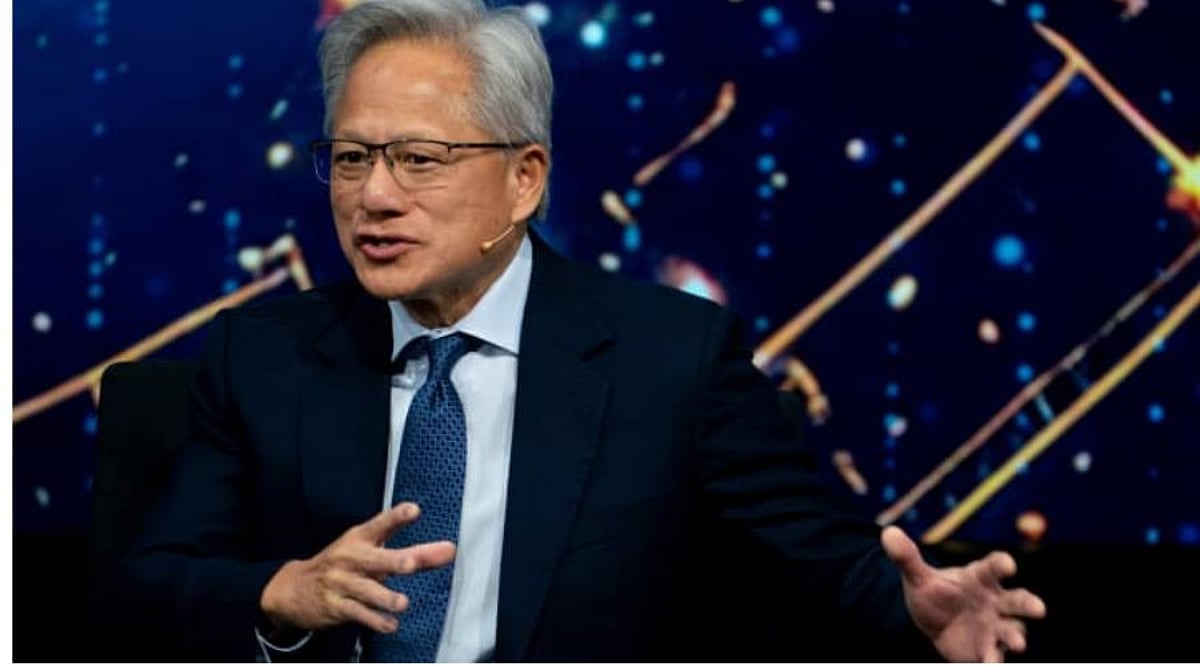
    Artificial intelligence is unlikely to experience a bubble burst anytime soon, according to NVIDIA CEO Jensen Huang, who believes the current AI boom is driven by a fundamental shift in computing rather than short-term market hype. His remarks come as investors continue to debate whether massive spending on AI infrastructure can be sustained.

    Infrastructure Shift Backs AI Demand

    Speaking during an interview with Axios co-founder Mike Allen, Huang argued that the semiconductor industry’s current growth cycle differs from previous booms. He said that the demand is not being driven by seasonal buying patterns or temporary trends but by a structural transformation in computing.

    According to Huang, AI requires an entirely new computing infrastructure, with businesses, governments, and developers investing heavily in data centers and advanced processors. He believes the industry will need to expand several times over the next decade to meet rising AI requirements.

    No Signs of a Slowdown Yet

    The NVIDIA chief highlighted that he does not expect a downturn in AI chip demand ‘for a while,’ despite concerns over rising capital expenditure by technology companies. His comments arrive after semiconductor stocks experienced volatility amid questions about whether spending on AI hardware can continue at its current pace.

    Huang maintained that customers are investing because AI infrastructure is becoming an essential part of modern computing rather than an optional technology upgrade. In his view, the industry’s growth is tied to long-term technological change instead of speculative buying.

    Bullish View from AI Chip Leader

    NVIDIA has emerged as the biggest beneficiary of the AI boom, with its graphics processors powering many of the world’s leading AI models. As the company’s chief executive, Huang has consistently defended the long-term outlook for AI investments.

    His latest comments also reinforce his broader position that AI adoption is still in its early stages. He has repeatedly argued that wider use of AI will create new opportunities across industries and continue driving demand for computing infrastructure, rather than triggering a rapid market correction.

    While some analysts remain cautious about the pace of AI spending, Huang believes the industry’s trajectory is supported by real technological needs rather than speculative enthusiasm. For NVIDIA, that translates into continued demand for AI chips as businesses build the infrastructure needed for the next generation of computing.

  • Daily Tech Digest: Japan Chip Rally, SBI’s $200M Fund, AMD’s NVIDIA Challenge, and Trump’s Crypto Windfall

    Daily Tech Digest: Japan Chip Rally, SBI’s $200M Fund, AMD’s NVIDIA Challenge, and Trump’s Crypto Windfall

    Good morning! Here’s your quick roundup of today’s biggest developments across semiconductors, technology investments, hiring, crypto, and AI infrastructure.

    Fast-Track Insights

    • Japan’s chip stocks rise on AI infrastructure optimism.
    • SBI Funds plans a $200 million tech fund.
    • Cost controls slow graduate hiring more than AI.
    • Trump reports over $1.4 billion crypto income.
    • AMD expands its full-stack AI infrastructure challenge.

    Japan’s Chip Stocks Rise as AI Spending Fuels Rally

    Japanese markets closed higher, with technology and semiconductor stocks tracking global gains linked to rising AI infrastructure investment. The Nikkei 225 advanced 0.46%, while the Topix gained 0.51%. Advantest, Lasertec, SoftBank Group, and Murata Manufacturing led the gains. However, potential Bank of Japan rate hikes limited broader market optimism.

    SBI Funds Plans $200 Million Fund for Technology Investments

    According to reports, SBI Funds Management is set to launch an alternative investment fund of about $200 million, which will be technology-centric. This funding will make investments in private technology firms and is dependent on regulatory clearance for its launch. It demonstrates the rising interest in the Indian alternative investment sector.

    Cost Controls, Not AI, Drive Graduate Hiring Slowdown

    Businesses are slowing graduate recruitment primarily due to cost-control pressures rather than artificial intelligence, according to a report shared by Personnel Today. Chief financial officers are prioritizing spending discipline amid economic uncertainty. The trend could delay entry-level opportunities as companies reassess workforce budgets, hiring plans, and broader talent strategies.

    Trump Reports Over $1.4 Billion From Crypto Ventures

    US President Donald Trump reported more than $1.4 billion in income from family-linked crypto ventures in 2025, according to financial disclosures. World Liberty Financial generated nearly $800 million. Trump meme coin sales contributed another $635 million. The new reports highlight crypto’s growing role in his financial portfolio and renewed conflict-of-interest concerns.

    AMD Builds Full-Stack AI Infrastructure Challenge Against NVIDIA

    AMD is developing its Helios rack-scale AI platform using MI450-series and Venice processors as it begins its battle against NVIDIA. In addition, AMD has partnered with Anthropic, under which AMD will supply up to 2 gigawatts of its processors to Anthropic, and has planned an investment of up to $5 billion.

  • Why the Top AI ETF Diversifies Beyond Chip Stocks for Better Returns

    Why the Top AI ETF Diversifies Beyond Chip Stocks for Better Returns

    The best-performing AI ETF of 2026 proves that investing across the entire AI ecosystem—not just semiconductor companies—can deliver superior returns while reducing risk. The VistaShares Artificial Intelligence Supercycle ETF (AIS) has surged approximately 119% year-to-date as of early June 2026, outperforming many popular chip-focused funds.

    The Shift Beyond Semiconductors

    For the past two years, investors have concentrated heavily on semiconductor stocks like Nvidia, Broadcom, TSMC, and AMD, which powered AI growth. However, the AI landscape has expanded dramatically. Modern AI systems require cloud platforms, data centers, fast networking, software, memory, and storage—not just chips. As businesses integrate AI into daily operations, companies across these sectors are seeing revenue growth, reshaping investment strategies.

    How AIS Achieves Superior Performance

    Unlike traditional semiconductor ETFs that often overweight a few chipmakers—Nvidia alone can dominate fund allocations—AIS spreads its investments across multiple AI segments:

    • Chip manufacturers
    • Cloud providers
    • Networking companies
    • Enterprise software firms
    • Digital infrastructure businesses
    • Memory technology companies

    This diversification helps absorb shocks when one sector underperforms, while still capturing the broad AI growth story.

    Pressure on Chip Stocks

    Semiconductor companies continue to report strong results, but investor expectations have reached extreme levels. For example, Texas Instruments reported 23% revenue growth and record quarterly revenue of $5.46 billion, yet its stock fell because markets anticipated even more. This illustrates how even excellent performance can disappoint when priced in fully.

    Recent market volatility further highlights the risk of overconcentration. The iShares Semiconductor ETF (SOXX) posted strong gains earlier in the year but suffered a sharp July decline as doubts emerged about sustained AI infrastructure spending. Diversified AI funds like AIS are better positioned to weather such swings.

    AI Spending Continues to Accelerate

    Despite short-term price fluctuations, corporate investment in AI remains massive. Major tech firms are pouring billions into new data centers, cloud services, networking gear, custom chips, and power infrastructure. Global semiconductor revenue is projected to reach $1.29 trillion in 2026—approximately 53% annual growth—driven primarily by AI. These investments create opportunities across the entire AI value chain, not just chip manufacturing.

    The Internet Parallel

    The current AI investment cycle mirrors the early internet era. Initially, hardware companies dominated investor attention. Later, software, internet platforms, and cloud businesses became the biggest winners. AI is following the same trajectory: chip companies remain essential, but cloud providers, networking firms, software developers, cybersecurity companies, and digital infrastructure players are now generating significant long-term value. Investors who focus solely on semiconductors risk missing these opportunities.

    Why This Matters

    Artificial intelligence represents one of the most significant investment opportunities in decades. Yet many investors remain fixated on chip stocks, overlooking the broader ecosystem. Understanding this shift can help build stronger portfolios, reduce concentration risk, and identify emerging growth areas before they become mainstream.

    Final Thoughts

    The success of AIS demonstrates that AI investing has entered a new phase. While chips remain foundational, they are just one component of a vast industry. A diversified AI ETF offers exposure to the full AI ecosystem—clouds, software, networks, and digital infrastructure—rather than concentrating capital in a few semiconductor firms. As AI adoption spreads across the economy, companies in these adjacent sectors will play increasingly critical roles. This innovative approach has propelled AIS to the top of AI ETFs, proving that pure semiconductor investment is no longer the only path to AI-driven returns.

  • AMD Challenges NVIDIA with New Helios AI Platform, MI450 GPUs, and Anthropic Partnership

    AMD Challenges NVIDIA with New Helios AI Platform, MI450 GPUs, and Anthropic Partnership

    AMD is preparing to launch a comprehensive new AI infrastructure lineup, including the Helios server rack, Instinct MI450 GPUs, and EPYC Venice processors, directly challenging NVIDIA’s dominance in data center AI. The company also announced a major partnership with Anthropic, the developer of the Claude AI model, to deploy up to two gigawatts of AMD chips starting in 2027.

    Helios is AMD’s first full server rack designed for AI workloads, combining MI455X graphics processors, EPYC Venice CPUs, and Pensando networking technology. It targets both AI training and inference, competing with NVIDIA’s integrated systems like the upcoming Rubin-Vera platform. AMD has already demonstrated Helios at the Moscone West convention center, with cloud providers Vultr and TensorWave showing systems using AMD hardware.

    Under the Anthropic agreement, the first gigawatt of AMD chips is scheduled to begin operating in the first half of 2027, using Helios systems with MI455X processors. The companies will also collaborate on software development, with Claude optimizing workloads on AMD graphics processors and aiding development of the ROCm software platform. AMD has committed to an equity investment of up to $5 billion in Anthropic.

    AMD is expanding its position in the AI chip market as demand for AI computing grows. While NVIDIA still controls a large share of the data center accelerator market, AI developers are seeking more supplier options. AMD previously signed a multiyear agreement with OpenAI that could generate tens of billions of dollars in yearly revenue, and OpenAI received an option to acquire a roughly 10% stake in AMD. The Anthropic partnership follows a similar strategy, combining hardware supply with closer access to a major AI model developer.

    Thursday’s launch will provide more details on Helios and the Venice processor, showcasing AMD’s full-system approach to compete with NVIDIA across processors, accelerators, networking, and software.

  • Utho Cloud Commits to 10,000 GPU Deployment to Power India’s Sovereign AI Compute Backbone

    Utho Cloud Commits to 10,000 GPU Deployment to Power India’s Sovereign AI Compute Backbone

    Utho Cloud, India’s sovereign cloud and AI infrastructure platform, has announced a landmark commitment to deploy 10,000 GPUs over the next 7–8 quarters. The investment is part of a long-term vision to build India’s sovereign AI compute backbone, enabling businesses, startups, researchers, and public sector organizations to access high-performance AI infrastructure hosted entirely within the country.

    The GPU portfolio will span NVIDIA’s enterprise-grade offerings, including the H200, H100, A100, RTX PRO 6000 Blackwell, and L4 models. This expansion guarantees GPU availability without long waitlists or auction-based pricing, a significant advantage in a market often plagued by shortages and unpredictable costs.

    Key features of the infrastructure include:

    • Sovereign AI compute: Customer data and model training remain within their chosen jurisdiction, with full ownership of intellectual property.
    • Transparent and predictable pricing: Up to 60% lower than traditional hyperscaler GPU rates, with billing in Indian Rupees.
    • Flexibility: Supports workloads from single-model inference to large-scale distributed AI training.
    • 24/7 human support: Dedicated assistance for mission-critical production AI workloads.

    With over 51,000 users, Utho Cloud already offers cloud infrastructure with data residency in India and compliance with the Digital Personal Data Protection (DPDP) Act.

    “We have spent years building a cloud platform designed around India’s data sovereignty and regulatory requirements. With this expansion, we will offer guaranteed GPU availability without extended wait times, sovereign AI compute with data and model training hosted within customer jurisdictions, transparent and predictable pricing, and the flexibility to support workloads ranging from AI inference to large-scale model training. By combining 100% data residency, compliance with the DPDP Act, and cost-efficient AI infrastructure, we aim to remove the barriers that have long limited access to high-performance AI computing and accelerate India’s journey towards becoming a global AI powerhouse.”

    — Manoj Dhanda, Founder and CEO of Utho Cloud

    The announcement comes amid growing concerns over AI compute availability, with GPU shortages, rising costs, and extended procurement timelines emerging as key challenges for enterprises worldwide. Unlike conventional cloud models that often expose businesses to foreign currency billing, unpredictable GPU costs, and infrastructure dependencies outside India, Utho’s sovereign AI platform is designed to provide organizations with predictable pricing in Indian Rupees, complete data residency, and enterprise-grade AI infrastructure deployed within Indian jurisdiction.

    Utho Cloud positions itself as “Bharat ka Cloud” — proudly Indian and sharply attuned to the needs of domestic enterprises. Today, 70% of India’s cloud telephony runs on Utho. Enterprises like FIITJEE, Jindal Steel & Power, and APL Apollo trust the platform, and over 51,000 businesses — from solo developers to unicorn startups — deploy production workloads on infrastructure that Utho owns, operates, and supports 24/7.