Tag: AI spending

  • Managing AI Token Costs in Financial Services: Strategies for Visibility and Control

    Managing AI Token Costs in Financial Services: Strategies for Visibility and Control

    What Is an AI Token Cost?

    An AI token is a small unit of text that an AI model processes. It can represent part of a word, a whole word, or punctuation. AI providers typically charge based on the number of tokens processed. Input tokens are the information sent to the model, while output tokens are the model’s response. Output tokens often cost significantly more than input tokens. For financial companies, token costs can escalate quickly. A customer chatbot may handle thousands of conversations daily, and an investment research system may process lengthy reports and filings. The number of users is only part of the equation — the amount of information processed matters just as much.

    Why AI Token Costs Are Hard to Control

    Traditional technology budgets are often easier to forecast. AI consumption can change with every interaction. A simple request might use few tokens, while another could include documents, previous conversations, and detailed instructions. AI agents add another layer of complexity: one user request can trigger multiple model calls, tool calls, and retries, all increasing the final bill. Financial companies also use different models for different tasks. Using the most powerful model everywhere can create unnecessary spending.

    How Financial Companies Can Track AI Spending

    The first step is creating clear visibility into AI consumption. Companies should know which teams use each model and track usage by application, workflow, and business function. Useful metrics include cost per request, cost per user, and cost per completed task. An AI gateway or proxy can help collect this information and connect API usage with teams, applications, and internal cost centers. The FinOps Foundation recommends API governance and proxy layers for stronger attribution. Financial companies should also establish clear ownership: technology teams control architecture, finance teams manage budgets, and security and procurement have important responsibilities.

    Reduce Costs Through Smarter Model Selection

    Model selection significantly affects AI spending. Not every financial task needs a premium model. A smaller model can effectively handle document classification or simple customer-service questions. More advanced models should be reserved for complex research or reasoning tasks. This approach is known as model routing — automatically sending requests to the most appropriate model based on complexity. Prompt design also matters: unnecessary instructions and repeated information increase token usage. Companies should remove irrelevant context and summarize older conversations before sending them again.

    Use Caching, Batching, and Workflow Controls

    Repeated information does not always need to be processed from scratch. Prompt caching can reduce repeated input-token costs, especially for financial applications using stable documents or instructions. Research systems may repeatedly reference the same datasets or regulatory materials. Batch processing can also lower costs for non-urgent workloads by processing large groups of tasks together. Agentic workflows require additional controls: limit unnecessary retries and repeated tool calls, and monitor agent loops and escalation paths. A McKinsey report identified caching, model selection, prompt optimization, and workflow controls as important AI cost levers.

    Build AI Cost Management Around Business Value

    Financial companies should not treat token spending as only an IT problem. The bigger question is whether that spending creates measurable business value. A cheaper model is not useful if it produces poor results, while an expensive model can be justified for high-value financial analysis. Companies should connect AI costs with measurable outcomes such as processing time, customer resolution rates, or analyst productivity. The emerging discipline of “tokenomics” focuses on this broader relationship, considering model selection, routing, workflows, infrastructure, and business value as a whole. AI costs will remain an important concern as adoption expands. Financial companies need visibility before optimization and governance before AI spending becomes difficult to control. The strongest approach combines finance, technology, security, and business teams. Token costs are only one part of AI economics — managing them effectively requires understanding the entire workflow behind each AI request.

  • SpaceX’s First Earnings Report: Starlink Profits, AI Spending, and Starship’s Future

    SpaceX’s First Earnings Report: Starlink Profits, AI Spending, and Starship’s Future

    SpaceX is set to release its first quarterly earnings report since its blockbuster initial public offering, giving investors a detailed look at whether the company’s financial performance can sustain Elon Musk’s ambitious expansion into artificial intelligence and space technology. The results, due after the market closes on Tuesday, August 4, 2026, are expected to reveal how effectively Starlink’s profits can fund growing investments while justifying SpaceX’s lofty valuation.

    Starlink Remains the Financial Backbone

    Analysts project Starlink, SpaceX’s satellite internet division, will report around $3.82 billion in revenue and $1.42 billion in operating profit for the second quarter, fueled by subscriber growth and expansion into new markets. However, investors are increasingly questioning whether Starlink alone can finance the company’s rapidly rising spending on AI infrastructure and next-generation space projects.

    “Starlink is executing beautifully, but it cannot single-handedly fund a $30 billion annualized AI capex program,” said Will Rhind, founder and CEO of GraniteShares, an asset manager offering ETFs tied to SpaceX stock performance.

    AI Spending and Capital Costs in Focus

    Wall Street will closely monitor SpaceX’s capital expenditure, forecast to reach nearly $14.05 billion during the April–June quarter. A significant share of that investment is tied to AI ambitions, including compute infrastructure, advanced software development, and future data center projects. While analysts expect the AI segment’s revenue to nearly triple to $2.33 billion, many believe profitability could take much longer because of the substantial investment required. Overall, SpaceX is expected to report approximately $6.93 billion in second-quarter revenue but an operating loss of about $1.55 billion.

    “The key question for investors is whether SpaceX can monetize its AI infrastructure through third-party compute fast enough to offset xAI’s extraordinary capital intensity,” said Michael Monaghan, portfolio manager of the Founders 100 ETF (FFF.Z), which holds SpaceX shares.

    Starship Progress Could Shape Long-Term Outlook

    Beyond financial results, investors will also look for updates on Starship, the reusable rocket central to SpaceX’s long-term growth strategy. Starship is expected to support future Starlink expansion, NASA’s Artemis Moon missions, and potential space-based computing infrastructure. Recent tests successfully deployed upgraded Starlink V3 satellites, although the Super Heavy booster did not complete its planned splashdown.

    According to analysts, the future progress of Starship is crucial for SpaceX to retain investor confidence as it balances significant expenses with future growth. Given the questions surrounding AI investments, profitability, and upcoming share lock-up expirations, this earnings report is among the most important events for SpaceX since it became a publicly traded company.

  • Meta Shares Drop 9% on Q2 Earnings Miss Despite Record Revenue of $60.8 Billion

    Meta Shares Drop 9% on Q2 Earnings Miss Despite Record Revenue of $60.8 Billion

    Meta Platforms shares fell approximately 9% in premarket trading after the company reported second-quarter earnings that missed Wall Street expectations. The company posted stronger-than-expected revenue growth, but lower earnings per share (EPS) and higher costs related to artificial intelligence investments pressured investor sentiment.

    Meta Q2 Earnings Miss Drives Stock Decline

    Meta reported earnings per share of $6.18 for the quarter, below analyst expectations of around $7.14. Revenue reached $60.8 billion, exceeding forecasts of $60.2 billion and marking a 28% increase from the previous year. The EPS figure included several one-time expenses that reduced quarterly profit, including a $2.4 billion charge linked to legal contingencies and $1.2 billion in severance expenses. Without these charges, Meta’s earnings performance would have been stronger. However, investors focused on the reported profit figure as the company continues to increase spending across artificial intelligence projects and data center expansion.

    Advertising Business Continues to Deliver Growth

    Meta’s advertising business continued to deliver growth during the quarter. Advertising revenue reached $59.3 billion, slightly above analyst expectations of $59.07 billion. The company’s platforms, including Facebook and Instagram, continued generating most of its revenue. Meta has also linked improvements in advertising performance to artificial intelligence tools used for recommendations and ad targeting.

    AI Spending Increases as Meta Expands Infrastructure

    Meta raised the lower end of its 2026 capital expenditure forecast as it continues investing in artificial intelligence infrastructure. The company now expects capital spending between $135 billion and $145 billion, compared with the previous range of $125 billion to $145 billion. The higher spending includes investments in data centers, servers and computing equipment needed to support AI development. Meta has also been expanding its plans to develop and provide AI products for businesses.

    CEO Mark Zuckerberg said, “AI spending is accelerating every part of our core business,” as the company continues building AI models and tools. Meta also announced a partnership with BlackRock to develop a $14 billion data center project in Texas. BlackRock will hold an 80% stake in the facility, while Meta will own the remaining 20%. Additionally, Meta introduced its Muse Spark 1.1 AI model with pricing designed to compete with other AI providers, offering lower costs for developers using its AI models.

    Meta Revenue Outlook Falls Below Wall Street Forecasts

    Meta’s third-quarter revenue forecast added pressure after the company projected revenue between $61 billion and $64 billion. The midpoint of the guidance came below Wall Street expectations of about $63.1 billion. The company’s lower forecast range increased market attention toward future revenue growth and the financial return from its AI investments.

    Meta’s free cash flow also declined during the quarter. The company reported $784 million in free cash flow, compared with $8.5 billion during the same period last year. Nevertheless, analysts continue tracking Meta’s long-term AI strategy as the company works to build new products and commercial services. Zuckerberg said the company expects AI agents and business-focused AI tools to become part of its future product offerings.

    Meta’s stock has faced pressure in 2026, with shares already trading lower before the earnings release. The latest decline followed concerns surrounding rising expenses, slower guidance growth, and the cost of expanding AI infrastructure.

  • Wall Street Tightens Scrutiny on Big Tech AI Spending as Investors Demand Clearer Returns

    Wall Street Tightens Scrutiny on Big Tech AI Spending as Investors Demand Clearer Returns

    Wall Street is changing how it judges artificial intelligence spending. Investors once rewarded major technology companies for expanding data centers, buying chips, and building new AI services. Strong revenue growth often eased concerns about the cost.

    That pattern changed after Alphabet and Tesla reported second-quarter results. Both companies posted sharp share losses after announcing higher spending plans. The reaction showed that investors now want clearer proof that AI investment can support cash flow, margins, and earnings.

    This shift comes before earnings from Microsoft and Meta on Wednesday, followed by Apple and Amazon on Thursday. Their capex forecasts, cloud growth, and free cash flow will give investors new data on the cost of the AI buildout.

    Alphabet Selloff Shifts the AI Capex Debate

    Alphabet raised its 2026 capital expenditure forecast to between $195 billion and $205 billion. The range increased from an earlier estimate of $180 billion to $190 billion. Most of the spending will support servers, data centers, networking equipment, and AI computing capacity.

    Google Cloud revenue rose 82% to $24.8 billion during the quarter. Total revenue reached $119.8 billion, above market estimates. However, Alphabet recorded negative free cash flow of $5.9 billion. Its shares then fell 7.13% on July 23, cutting about $294 billion from its market value.

    Investors focused on the gap between rising revenue and heavier cash use. Alphabet said demand still exceeded its available capacity. Still, the higher spending forecast raised questions about how quickly new infrastructure can produce steady returns.

    Tesla Spending Adds to Wall Street Concerns

    Tesla also increased pressure on the AI spending trade. The company spent a record $5.79 billion on capital projects during the second quarter. That spending helped push free cash flow to negative $1.09 billion.

    Management expects 2026 capital expenditure to exceed $25 billion. Tesla plans to fund robotaxis, Optimus production, AI compute, factories, solar manufacturing, and other projects. Elon Musk called 2026 a “massive capex year,” while finance chief Vaibhav Taneja said spending could rise for another two or three years.

    Tesla shares dropped about 14% after the report. Investors also reviewed weaker earnings and lower cash generation. The market response added to concern that large AI plans can pressure stocks when spending rises faster than near-term profit.

    Michael Burry Points to a New Market Test

    Michael Burry said, “the market has voted and the results are clear.” He referred to data showing that Alphabet, Microsoft, Amazon, Meta, Oracle, Micron, and Tesla had weighed on the S&P 500 since early June.

    Apple stood apart from that group. The company has avoided the largest AI infrastructure budgets and has relied more on partnerships with model developers. Apple shares gained strongly in July as investors favored its lower spending approach.

    AI demand continues to support cloud growth, chip sales, and enterprise adoption. Big Tech companies still plan to spend more than $700 billion this year, mainly on computing infrastructure. Analysts expect Microsoft, Meta, Amazon, and Alphabet to face closer review as they publish new results.

    Wall Street is not rejecting AI investment. Instead, investors are applying a stricter test. Companies must now show that higher capital spending can produce revenue growth without weakening cash flow for long periods.

  • Why Massive AI Spending Is Rattling Wall Street

    Why Massive AI Spending Is Rattling Wall Street

    Artificial intelligence is reshaping industries, but the enormous investments required are creating a wave of anxiety on Wall Street. As tech giants pour billions into AI infrastructure, talent, and compliance, investors are questioning whether the returns will ever justify the costs.

    The Infrastructure Boom

    Companies are spending staggering sums on AI chips, cloud servers, and massive data centers. This infrastructure buildout is essential for training and deploying advanced models, but it also locks firms into long-term capital commitments that may not pay off for years.

    Profit Pressure Mounts

    Investors are increasingly worried about whether AI investments will generate sufficient returns. The gap between spending and revenue is widening, and any hint of disappointing earnings triggers sharp market reactions. Wall Street’s patience is wearing thin.

    Rising Competition and Talent Costs

    Big Tech firms are locked in an arms race, escalating AI spending to stay ahead. At the same time, hiring top AI engineers and researchers has become prohibitively expensive, further squeezing margins. The talent war shows no signs of cooling.

    Regulatory and Monetization Hurdles

    Compliance with emerging AI governance frameworks adds billions to operational expenses. Meanwhile, many companies still struggle to convert AI capabilities into sustainable profits. Monetization challenges remain a critical weak point in the AI business case.

    Market Volatility and Long-Term Opportunity

    Wall Street reacts swiftly whenever AI earnings fall short of expectations, creating volatility. Yet despite these risks, AI remains one of the most significant investment opportunities of the decade. The key will be balancing bold spending with realistic milestones and clear paths to profitability.

    As the AI revolution accelerates, the tension between massive outlays and financial discipline will continue to shape market sentiment. The companies that navigate this delicate balance may emerge as the leaders of the next economic era.

  • Tesla Stock Drops Near $300 After Q2 Earnings Miss Triggers Market Selloff

    Tesla Stock Drops Near $300 After Q2 Earnings Miss Triggers Market Selloff

    Tesla shares fell nearly 15% after second-quarter results raised concerns over weaker margins, negative free cash flow, and rising AI spending. The selloff pushed the stock toward the $300 support area and added pressure to the NASDAQ, while Bitcoin and Ether also declined as risk sentiment weakened.

    Tesla shares closed at $313.03 on July 24 after falling 2.08% during the session. The stock also slipped to about $311.40 in after-hours trading. Over one month, Tesla lost around 16.55% as investors reassessed the company’s second-quarter results and spending plans.

    The latest decline followed a 14.52% plunge on July 23. Tesla reported record vehicle deliveries and higher revenue, yet weaker margins and negative free cash flow drew more attention. The stock now trades close to the lower end of its recent range, with $300 becoming the nearest major technical level.

    Tesla Stock Nears Key $300 Support

    Tesla stock traded as high as $322.87 on July 24 before falling to an intraday low near $306.53. Selling pressure stayed firm after the earnings-driven decline. As a result, the shares closed only a few dollars above their first major support zone.

    The area between $306.50 and $300 now serves as short-term support. A sustained close below $300 could bring the 52-week low near $297.82 back into focus. On the other hand, buyers need to reclaim the $320 to $323 range to slow the current decline.

    Stronger resistance sits between $340 and $342. Tesla traded near that area before the post-earnings gap widened. A recovery toward that range would require stronger demand and improved confidence in the company’s profit outlook.

    Record Deliveries Fail to Calm Investors

    Tesla delivered a record 480,126 vehicles during the second quarter. The total exceeded the company-compiled estimate of about 406,000 vehicles. Model 3 and Model Y deliveries reached 467,762 units and accounted for most of the quarter’s volume.

    Revenue rose 26% from a year earlier to about $28.24 billion. Automotive revenue reached nearly $20.5 billion, while services and other revenue increased 50% to $4.58 billion. These results showed that Tesla continued to expand sales across its main business lines.

    Nevertheless, investors focused on profitability. Tesla’s operating margin fell to 1.4% from 4.1% a year earlier. Lower vehicle prices and higher costs supported deliveries but reduced earnings from each sale.

    The weaker margin also raised questions about how quickly Tesla can turn rising sales into stronger cash generation. This issue became more important as the company increased spending on artificial intelligence, batteries, robotics, and autonomous-driving systems.

    AI Spending Adds Pressure Across Markets

    Tesla’s capital expenditure reached about $5.8 billion during the quarter. Free cash flow turned negative by roughly $1.1 billion, marking the company’s first quarterly cash burn in more than two years. Tesla also expects annual capital spending to exceed $25 billion.

    The company continues to fund robotaxi development, artificial intelligence infrastructure, next-generation manufacturing, and the Optimus robot program. Meanwhile, investors are waiting for clearer revenue growth from these projects as costs rise in the near term.

    The concern spread beyond Tesla. Alphabet shares also fell as investors reviewed higher artificial intelligence spending plans. It raised its 2026 capital expenditure guidance to between $195 billion and $205 billion, up from its earlier range.

    The NASDAQ moved lower as investors reduced exposure to high-growth technology stocks. Risk-off trading also reached digital assets. Bitcoin fell about 1.8% toward $64,800, while Ether dropped around 3% to nearly $1,870. Concerns over technology spending affected several risk markets during the same trading period.

  • Big Tech’s Hidden AI Debt Surpasses $1.65 Trillion, Report Reveals

    Big Tech’s Hidden AI Debt Surpasses $1.65 Trillion, Report Reveals

    A new report by Nikkei Asia reveals that the world’s largest technology companies—Microsoft, Alphabet, Amazon, Meta, and Oracle—have collectively taken on approximately $1.65 trillion in off-balance-sheet debt tied to artificial intelligence investments. This “invisible debt” figure exceeds their combined official liabilities, highlighting the scale of their commitments to AI infrastructure.

    The hidden debt stems from future payment obligations such as long-term operating leases for data centers not yet built, bulk GPU supply contracts, and joint ventures. These tech giants are not required to record these as liabilities on their balance sheets until the assets are delivered or the facilities become operational.

    Meta and Oracle carry the largest hidden debts. Meta’s off-balance-sheet debt is estimated at $420 billion—three times its official debt—while Oracle’s stands at approximately $273.3 billion. The remaining three companies collectively hold around $1.45 trillion in off-balance-sheet obligations for cloud services and other business commitments as of March 2026.

    What Does ‘Off-Book’ Spending Mean?

    The term ‘off-book’ spending refers to agreements where a company commits to future payments that are not listed on its regular debt sheet. For example, long-term rentals for data centers, AI chips, and cloud services allow Big Tech companies to secure critical resources before demand escalates further.

    Why These Commitments Matter

    These future payments could become a financial burden if the AI market slows. Companies would still be obligated to pay for contracts they have signed, even if their AI business underperforms. Agencies like Morgan Stanley and Moody’s have warned about these rising debt commitments. While AI creates new opportunities, it also pushes companies into massive financial commitments that could shape their future growth.

  • The Hidden Inflationary Risks of Central Bank AI Spending

    The Hidden Inflationary Risks of Central Bank AI Spending

    Massive investments in artificial intelligence are reshaping global economies, but they also carry hidden risks for central banks. As governments and corporations pour billions into AI infrastructure—chips, data centers, energy, and skilled labor—these spending surges are creating powerful demand pressures that could stoke inflation before any productivity benefits materialize.

    Central banks face a difficult policy dilemma. They must balance the promise of AI-driven growth against the risk of overheating economies. Prematurely restricting investments could stifle future productivity gains, but ignoring inflationary signals could destabilize prices. The challenge is compounded because AI’s productivity improvements may take years to emerge, while the costs are immediate.

    Financial markets are increasingly tied to AI optimism. Stock valuations and investor sentiment now hinge on AI companies’ performance, raising systemic risks if returns fall short. Meanwhile, corporate debt levels are climbing as firms borrow heavily to fund AI infrastructure. If demand slows or investments underperform, this debt could trigger financial stress.

    Energy demand is another concern. AI data centers require enormous electricity supplies, potentially driving up energy prices and adding to inflationary pressures. This creates a feedback loop where AI spending itself becomes a source of cost increases.

    Traditional economic models may prove unreliable in this new landscape. Rapid technological change is disrupting historical relationships between productivity, employment, inflation, and growth. Policymakers can no longer rely on conventional indicators alone. They must now monitor AI investment levels, market concentration, infrastructure spending, and corporate debt alongside standard metrics.

    Central banks need to develop new tools to track these hidden systemic risks. The era of AI-driven economies demands a broader, more dynamic approach to monetary policy—one that accounts for the unique pressures of technological transformation.

  • Tesla Q2 Deliveries Surge 25% as Robotaxi and Optimus Spending Strains Cash Flow

    Tesla Q2 Deliveries Surge 25% as Robotaxi and Optimus Spending Strains Cash Flow

    Tesla approaches its second-quarter earnings report with strong vehicle deliveries and higher expected revenue. However, rising spending on Robotaxi, Optimus, AI data centers, and Cybercab production could push free cash flow deep into negative territory.

    Wall Street expects Tesla Q2 revenue of $26.21 billion, up 16% from a year earlier. Analysts also forecast adjusted earnings of $0.50 per share and adjusted EBITDA of $4 billion.

    Tesla Q2 Deliveries Support Revenue Growth

    Tesla delivered 480,126 vehicles during the quarter, up 25% from a year earlier. The total also exceeded the Bloomberg consensus estimate of 397,466 vehicles by a wide margin.

    The new Model Y helped improve production after last year’s factory transition reduced output. Tesla also used lower prices across several markets, which supported demand and lifted deliveries.

    Energy storage deployments reached 13.5 gigawatt-hours during the quarter. This figure rose more than 50% from 8.8 gigawatt-hours in the first quarter.

    Regional sales trends moved in different directions. Cox Automotive expects Tesla’s US sales to fall 20% after the federal EV tax credit expired. Meanwhile, European registrations rose sharply, with Greater Europe up nearly 108% in May.

    Deutsche Bank analyst Edison Yu said, “International strength is doing the heavy lifting.” He identified Europe as the main driver, while China also supported results. Tesla also plans to raise production at its Berlin factory during 2026.

    Robotaxi and Optimus Spending Pressures Cash

    Tesla’s stronger deliveries may not prevent a steep drop in free cash flow. Company-compiled analyst estimates point to negative free cash flow of $3.254 billion for the quarter.

    Capital spending could reach $6.7 billion, more than double the level from a year earlier. Tesla generated nearly $5.6 billion in free cash flow during the same quarter last year.

    The company continues to spend on Optimus robot production, AI data centers, and Cybercab manufacturing. These projects require large upfront investment while commercial returns remain limited.

    Morgan Stanley analyst Andrew Percoco said investors still question whether Robotaxi and Optimus can advance fast enough. “As capex more than doubles and free cash flow turns negative,” he wrote. Investors want evidence that spending can build Tesla’s physical AI business.

    Tesla’s long-term valuation depends heavily on growth beyond vehicle sales. Therefore, the earnings call may focus on production timelines, technology progress, and spending plans for these projects.

    Tesla Earnings History Adds Caution

    Tesla shares have fallen about 16% this year as investors weigh stronger deliveries against higher spending. The stock also faces pressure from uncertainty around future earnings growth and cash generation.

    Recent earnings history may also shape expectations. Tesla has missed adjusted earnings-per-share estimates in five of the past eight quarters, according to Bloomberg data.

    The company’s international sales recovery offers support, while weaker US demand adds pressure. High capital spending adds another challenge as Tesla expands several projects at the same time.

    The quarterly update will give investors fresh details on automotive margins, energy revenue, and cash use. Management may also provide new targets for Robotaxi, Optimus, Cybercab, and AI infrastructure spending.

    Investors will compare those updates with delivery growth and regional sales trends. Any change in the full-year spending outlook could affect expectations for Tesla’s near-term cash position over the coming several quarters.

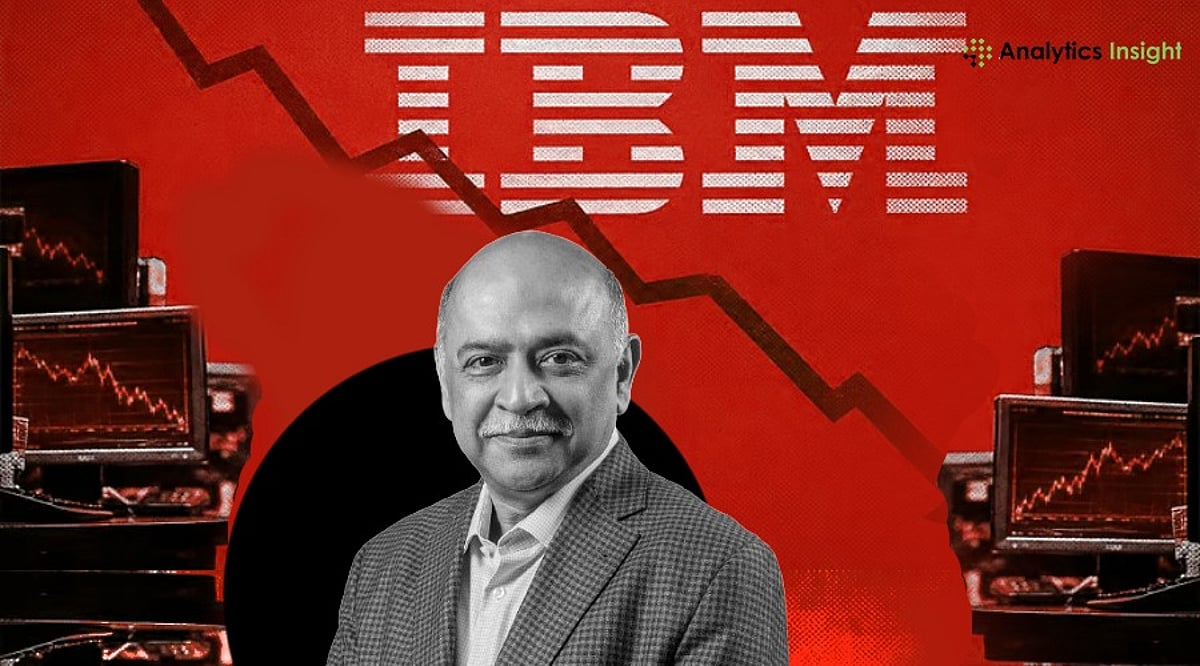
  • IBM Stock Plunges 25% After CEO Krishna Admits Company Was Too Slow on AI

    IBM Stock Plunges 25% After CEO Krishna Admits Company Was Too Slow on AI

    IBM shares posted their steepest one-day drop in decades after the company reported disappointing preliminary second-quarter results, with CEO Arvind Krishna acknowledging that the company failed to adapt quickly enough to the artificial intelligence spending boom. The selloff erased billions of dollars in market value and sent shockwaves through the technology sector.

    Revenue Miss and Profit Warning

    The technology giant reported revenue of $17.2 billion for the quarter ended June, up just 1% from the same period last year but below analysts’ expectations. Adjusted earnings per share also missed estimates, triggering a sharp market reaction. IBM shares fell about 25% in a single trading session, marking the steepest stock decline for the company in decades.

    CEO Admits Execution Failures

    In a letter to investors, Krishna said IBM underestimated how rapidly enterprise customers would redirect technology budgets toward AI infrastructure such as servers, storage systems, and memory hardware.

    “These conditions require our teams to execute perfectly, and this quarter we faltered. We did not adapt and move quickly enough,” Krishna wrote.

    He added that several large deals also failed to close within the expected timeline, further weighing on the company’s performance. IBM had anticipated supply-chain constraints would limit demand, but instead customers accelerated purchases of AI infrastructure, reducing spending on software and mainframe-related products.

    Spending Shift Hurts Software Business

    IBM’s infrastructure division posted a 7% decline in revenue, while software revenue grew 5%, slower than market expectations. Consulting revenue remained largely flat, reflecting cautious enterprise spending.

    The results highlight a broader industry shift: businesses are prioritizing investments in AI hardware and data center infrastructure over traditional software deployments. Analysts warn the trend could pressure other enterprise software companies in the coming quarters.

    Bright Spots in the Quarter

    Despite the overall disappointment, certain parts of IBM’s business performed well. Red Hat recorded 11% revenue growth, while recently acquired companies HashiCorp and Confluent delivered strong results. IBM also noted that its Distributed Infrastructure business achieved record performance, supported by demand for Power servers and storage systems, with a backlog of approximately $500 million exiting the quarter.

    IBM maintained that its long-term AI strategy remains intact, but the latest results underscore how rapidly changing enterprise priorities are reshaping the technology industry as companies race to build AI infrastructure.