Tag: AI

  • How AI Is Transforming Banking in 2026: What It Means for Your Money

    How AI Is Transforming Banking in 2026: What It Means for Your Money

    Artificial intelligence is reshaping the banking industry in 2026, making financial services faster, smarter, and more personalized than ever before. From fraud detection to personalized financial advice, AI is fundamentally changing how we interact with our money.

    Real-Time Fraud Detection and Enhanced Security

    Banks now deploy AI systems that analyze transactions in real time, flagging suspicious activity instantly. This reduces fraud and improves account security, giving customers greater peace of mind.

    24/7 AI-Powered Customer Support

    AI chatbots handle routine banking queries around the clock, offering quicker support and freeing human agents for more complex issues. Customers can get answers to common questions anytime, anywhere.

    Personalized Financial Insights

    Using transaction history, AI tools provide personalized insights into spending, budgeting, and savings. This helps users make more informed financial decisions and achieve their goals faster.

    Faster Loan Approvals

    AI accelerates loan processing by analyzing financial data and credit profiles more efficiently than traditional methods. Borrowers can expect quicker decisions and less paperwork.

    Smarter Investment Recommendations

    Investment platforms increasingly rely on AI to recommend diversified portfolios tailored to individual financial goals and risk tolerance. This makes sophisticated investing accessible to more people.

    Voice Banking and Biometric Authentication

    Voice banking, along with facial and fingerprint recognition, is making digital banking more convenient and secure. Biometric authentication reduces the risk of unauthorized access while simplifying the login process.

    Staying Aware of Privacy and Cybersecurity

    While AI improves efficiency, customers should remain vigilant about privacy and cybersecurity. Always verify sensitive financial communications and use secure channels for banking activities.

    As AI adoption grows across the financial sector, digital banking is set to become even more intelligent, automated, and customer-focused. The future of banking is here—and it’s powered by AI.

  • Elon Musk Fuels Tesla-SpaceX Merger Speculation in Q2 Earnings Call – What Investors Should Know

    Elon Musk Fuels Tesla-SpaceX Merger Speculation in Q2 Earnings Call – What Investors Should Know

    Elon Musk reignited speculation about a potential merger between Tesla and SpaceX during Tesla’s second-quarter earnings call, declining to rule out a future deal. The comments came as the two companies already share projects across batteries, artificial intelligence, and advanced manufacturing.

    “We can’t talk about combining companies on an earnings call,” Musk said, adding that any merger discussion would require a formal corporate process. Tesla General Counsel Brandon Ehrhart described SpaceX as an important business partner, noting several mutually beneficial transactions, but did not confirm any active review of a merger.

    Musk’s Comments Renew Merger Debate

    Musk acknowledged growing operational overlap between Tesla and SpaceX during the call. Investors have long debated the merits of combining the two companies. Gene Munster of Deepwater Asset Management said the remarks increased his confidence in a future combination, possibly within several years.

    JPMorgan analysts pointed to shared talent, AI infrastructure, and manufacturing knowledge, suggesting those links could reduce some operational barriers. SpaceX President Gwynne Shotwell said in June that combining Musk’s companies could simplify management.

    Existing Collaborations and Synergies

    Tesla and SpaceX already cooperate on batteries, engineering, AI, and advanced manufacturing. They are jointly developing Terafab, a semiconductor facility aimed at producing chips for AI systems. Both companies rely on large computing networks and specialized engineering teams, with Musk leading strategy across both entities.

    Some Tesla investors envision a broader technology group encompassing vehicles, robotics, energy, satellites, and AI. However, no timeline, valuation, or transaction structure has been announced.

    Tesla Q2 Earnings Mixed; Focus Shifts to Spending

    The merger discussion followed Tesla’s mixed second-quarter results. Revenue reached $28.24 billion, beating the $26.32 billion estimate. Adjusted earnings of $0.33 per share missed analyst expectations of $0.50. Tesla shares fell about 6% in premarket trading.

    Vehicle deliveries rose 25% year-over-year to 480,126 units. Energy storage deployments hit 13.5 GWh, up from 8.8 GWh in the prior quarter. Capital spending is expected to exceed $25 billion this year, funding Robotaxi, Optimus, Cybercab, and AI data centers. Free cash flow was negative $1.09 billion, better than the expected negative $3.64 billion.

    Regulatory and Governance Hurdles Remain

    Any Tesla-SpaceX merger would face intense regulatory scrutiny in the U.S. and other major markets, especially China. SpaceX’s close ties with the U.S. government and defense agencies could raise national security concerns during foreign reviews. Governance is also a key issue: Musk controls a larger voting stake in private SpaceX than in public Tesla, potentially raising questions about valuation and minority shareholder treatment. Independent directors and shareholder approval would be critical.

    For now, neither company has announced a merger process. Musk’s comments only left the possibility open while cooperation continues.

  • How AI Is Transforming Risk Assessment in Litigation Finance

    How AI Is Transforming Risk Assessment in Litigation Finance

    Every litigation finance investment starts with an assessment of the case itself. Before capital is committed, funders need to understand how strong the legal claim is, what the potential risks are, and whether the expected return justifies the investment. Traditionally, this has been the work of experienced lawyers and underwriters. Increasingly, AI is being used to support these early assessments by reviewing information faster and identifying patterns that might otherwise take much longer to find.

    The shift is not incremental. AI tools can scan thousands of court records in the time a human analyst spends reading a single brief. They surface patterns invisible to individual minds. They compress due diligence from weeks into days. The litigation finance industry is not just experimenting with AI. It is rebuilding its core risk infrastructure around it.

    At a glance

    • AI systems now cut initial case review time by more than 70%, letting litigation funders evaluate significantly more claims without adding headcount
    • Predictive scoring models trained on millions of court records forecast win probabilities with a precision no single analyst can match manually
    • Portfolio-level AI analysis allows funders to balance risk across hundreds of simultaneous cases, something previously impossible at scale
    • AI-washing is already drawing SEC and FTC penalties, meaning human oversight is not just smart but legally necessary
    • AEQUIFIN is developing an AI-powered intake tool that pre-screens case submissions before they reach a human underwriter

    How Is AI Transforming Case Evaluation?

    The traditional risk assessment process in litigation finance was slow by design. A senior underwriter would spend weeks reviewing briefs, benchmarking comparable settlements, and interviewing the claimant’s legal team before making a funding decision. Speed was a luxury the industry could not afford because the margin for error was so thin.

    AI removes that ceiling in several ways at once.

    Predictive Scoring: What the Data Sees That Humans Miss

    Modern litigation AI models are trained on millions of historical court records: verdicts, settlements, appeal rates, judge behavior, jurisdiction-level outcomes. From that dataset, they generate predictive scores for new cases before a lawyer has billed a single hour of review time.

    The pattern recognition is qualitatively different from legal intuition. Where an experienced analyst recalls what they have personally seen, AI identifies correlations across data volumes no individual mind can process. A specific judge’s historical tendency to deny motions in commercial contract disputes. The statistical relationship between discovery duration and final settlement size. The appeal rate differential between jurisdictions in securities fraud claims. These are not educated guesses. They are signals extracted from the record.

    Key capabilities AI now delivers to litigation funders:

    • Smarter Case Scoring: AI cross-references millions of past verdicts to assign win-probability estimates to incoming claims before manual review begins
    • Faster Due Diligence: AI document analysis cuts initial case screening time by over 70%, compressing what once took weeks into hours
    • Duration Risk Modeling: Machine learning tracks how long comparable cases historically took to resolve, giving funders a timeline they can plan capital deployment around
    • Portfolio Optimization: AI evaluates entire books of litigation simultaneously, balancing expected returns and duration risk across hundreds of active investments

    AI vs. Traditional Risk Assessment: How the Two Approaches Compare

    Factor AI-Assisted Assessment Traditional Assessment
    Speed Hours to days Weeks to months
    Data Coverage Millions of historical cases Limited to analyst experience
    Pattern Recognition Systematic across all data Strong but selective
    Human Factor Sensitivity Limited High
    Cost at Scale Decreasing Fixed per case
    Regulatory Risk AI-washing exposure Minimal

    The comparison highlights that AI and human expertise serve different purposes. AI can make the initial review faster and more consistent, while experienced underwriters provide the legal and commercial judgment needed for complex investment decisions. In practice, the two approaches work best together rather than as alternatives.

    The Limits: Why Is Human Judgment Still Irreplaceable?

    For all its advantages, AI in litigation finance has serious limitations. The industry is now learning some of them through regulatory enforcement.

    Litigation is far more complex than a dataset. New evidence can appear late in a case, witnesses may change their statements, settlement discussions can take unexpected turns, and courtroom decisions are influenced by many factors that are difficult to measure. AI can help identify patterns and highlight promising cases, but it cannot account for every legal nuance or predict outcomes with certainty.

    There is also the quality of the underlying data to consider. If the data is incomplete or biased, the assessment will inevitably reflect those limitations. For that reason, AI works best as a decision-support tool, with experienced legal professionals making the final judgment.

    AI-Washing: The Regulatory Trap Already Closing

    Regulators have already moved on companies that overstate what their AI can do.

    The FTC penalized DoNotPay when its “robot lawyer” AI consistently failed to deliver on its core promise of replacing human attorneys. The SEC fined an investment firm that marketed itself as the “first regulated AI financial advisor” when the underlying technology could not substantiate the claim. These cases define a concept with serious financial consequences: AI-washing. For litigation funders developing algorithmic tools, the message is unambiguous. Transparency about what the models do and do not do is not a preference. It is a regulatory requirement.

    AEQUIFIN’s AI Tool: Screening Cases Before a Human Opens the File

    AEQUIFIN is one of the companies exploring how AI can improve the early stages of case assessment. The company is developing an AI-powered intake system that reviews new submissions before they reach a human underwriter.

    The goal is straightforward. Litigation funders receive a large number of case inquiries, and every submission requires an initial review before anyone can decide whether it is worth investigating further. Automating that first step helps reduce manual work and allows underwriters to spend more time on the cases that warrant a closer look.

    The system can review each submitted case against a set of core eligibility criteria, including the type of claim, its estimated value, the relevant jurisdiction, and key indicators of legal strength. Based on this information, it provides an initial assessment. Cases that meet the required threshold are passed on to human underwriters for a more detailed review. If a case doesn’t qualify at this stage, applicants receive a clear explanation of why, along with guidance on any additional information or documentation that could improve their submission.

    The result is a faster, more transparent process for claimants and a cleaner pipeline for AEQUIFIN’s investment team. Claimants will submit their case for AI-assisted review directly through the platform.

    What This Means If You Have a Claim

    The practical effect of AI adoption across litigation finance is accelerated access. Funding decisions that previously took months now move through initial screening in days. Claims that previously fell below the threshold of manual review because evaluating them cost more in analyst hours than the likely return justified are now economically viable to assess.

    For businesses, investors, and individuals sitting on legitimate legal claims but lacking the capital to pursue them, that shift is significant. The barrier between having a case and being able to fight it is lower than it has ever been. View current cases here to see the types of claims AEQUIFIN actively funds.

    The Road Ahead

    AI is unlikely to replace litigation lawyers or investment professionals. Instead, it has the potential to make their work more efficient by reducing the time spent on repetitive tasks and supporting faster, more consistent case assessments. That could also make it easier for claimants with strong cases to receive an initial evaluation.

    As the technology matures, the firms that are likely to benefit most will be those that adopt AI in a measured and responsible way. This includes being transparent about what the technology can and cannot do, ensuring experienced professionals remain involved in key decisions, and using AI as a tool to support human judgment rather than replace it.

    Litigation finance will always require legal expertise, commercial judgment, and careful risk assessment. AI can contribute to that process by providing faster access to relevant information and highlighting patterns that might otherwise be missed, but final decisions will continue to depend on human experience.

    FAQ

    How accurate are AI systems at predicting litigation outcomes?

    Current models perform strongest on high-data case types such as commercial contract disputes and securities claims. Accuracy decreases on novel legal theories, jury trials, and jurisdictions with thin historical records. AI predictions should be treated as probabilistic inputs that inform human decision-making, not as definitive forecasts.

    What role does AI play in AEQUIFIN’s case evaluation process?

    AEQUIFIN is actively developing an AI-powered intake tool for pre-screening case submissions. The system assesses initial eligibility automatically, allowing human underwriters to focus on cases that clear the core investment criteria. Claimants can submit their case for AI-assisted review directly through the platform.

    What types of cases does AEQUIFIN fund?

    AEQUIFIN focuses on high-value civil and commercial litigation across European jurisdictions. Eligible cases typically involve substantial financial claims with clear underlying legal merit. An overview of active funded cases is available through AEQUIFIN’s case overview page.

  • How AI-Driven Tools Are Transforming Financial Education for Retail Traders

    How AI-Driven Tools Are Transforming Financial Education for Retail Traders

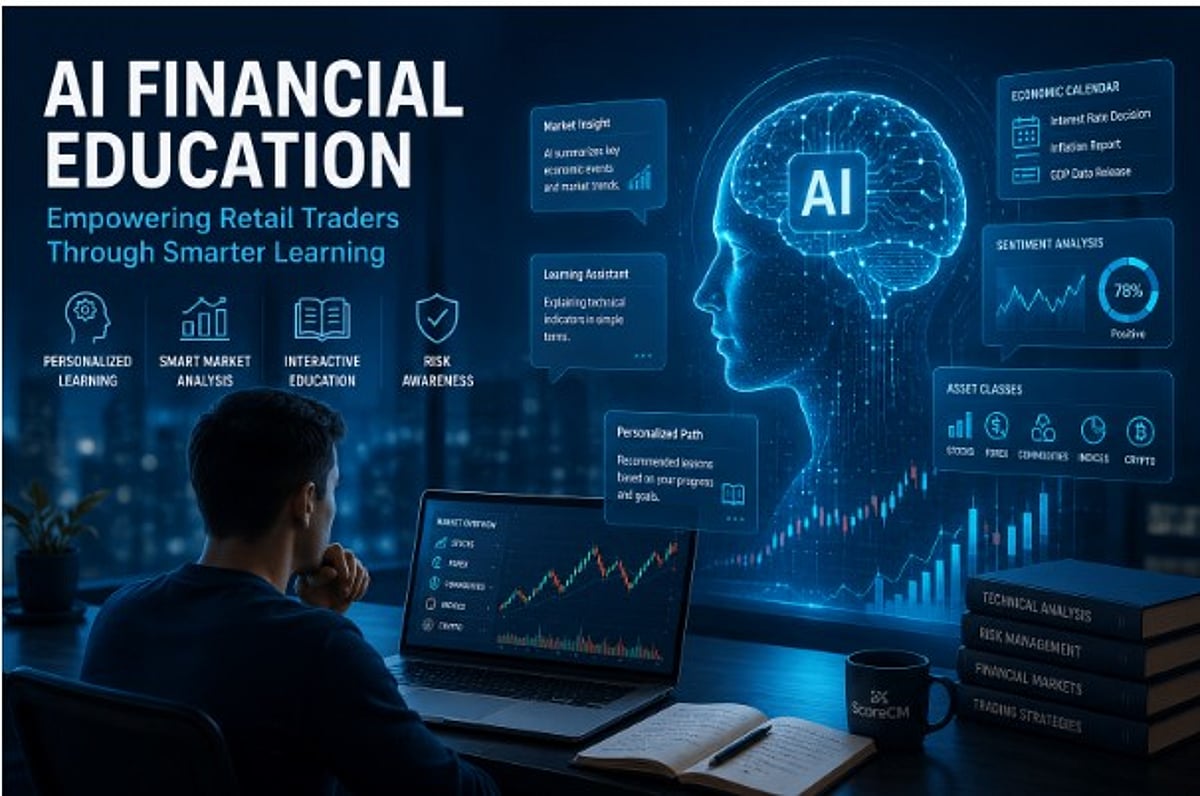
    AI financial education is transforming how people develop the knowledge needed to participate in modern financial markets. In the past, learning about investing often meant reading lengthy textbooks, attending seminars, or spending years gaining experience through trial and error. Today, artificial intelligence is making investment education more interactive, personalized, and accessible to retail traders around the world.

    The rapid growth of financial technology has introduced new ways to understand complex market concepts. AI-powered tools can organize large amounts of financial data, explain technical indicators, summarize economic news, and generate educational content tailored to different experience levels. Instead of searching through dozens of articles, learners can receive structured explanations that match their current understanding.

    As financial markets become increasingly connected and data-driven, AI is helping make financial literacy more achievable for individuals interested in stocks, forex, commodities, indices, and cryptocurrencies.

    Personalized Learning Through Artificial Intelligence

    One of the biggest advantages of artificial intelligence is its ability to personalize education. Every retail trader begins with different levels of knowledge, learning styles, and investment goals. Traditional educational materials often follow a fixed structure that may not suit everyone.

    Machine learning allows educational systems to adapt based on a learner’s progress. Beginners can receive simplified explanations of concepts such as market trends, diversification, or technical analysis, while more experienced traders can explore advanced topics involving macroeconomic indicators, algorithmic trading concepts, or risk management strategies.

    AI-powered learning platforms can also identify knowledge gaps by analyzing quizzes, study habits, and user interactions. Instead of presenting the same lessons to every learner, they can recommend relevant educational materials that strengthen weaker areas.

    At the same time, many investors continue using trusted educational resources alongside AI. As they expand their understanding of financial markets, some also explore ScoreCM to access publicly available market insights and educational materials that support continuous learning without replacing independent research.

    Smarter Market Analysis and Information Processing

    Financial markets generate enormous volumes of information every day. Economic reports, corporate earnings, geopolitical events, central bank announcements, and breaking news all influence market sentiment across multiple asset classes.

    Artificial intelligence is helping retail traders process this information more efficiently. Natural language processing enables AI systems to summarize lengthy reports, identify recurring themes in financial news, and explain how major events could influence different markets.

    For educational purposes, this creates a valuable learning environment. Rather than simply presenting raw data, AI can explain why inflation reports matter, how interest rate decisions affect currencies, or why commodity prices respond to changes in global supply chains.

    This educational approach encourages users to understand relationships between economic events instead of memorizing isolated facts. Whether studying stocks, forex, commodities, indices, or cryptocurrencies, learners gain broader context that improves their overall market awareness.

    Machine learning models can also recognize historical patterns and organize complex datasets into visual formats that are easier to interpret. While these insights should never be treated as predictions, they provide useful educational examples for understanding market behavior.

    AI Should Support Critical Thinking, Not Replace It

    Despite its growing capabilities, AI should be viewed as a learning assistant rather than a substitute for human judgment.

    Artificial intelligence can organize information, explain financial concepts, and highlight patterns within historical data. However, markets remain influenced by human behavior, unexpected geopolitical developments, regulatory changes, and emotional decision-making that cannot always be captured through algorithms.

    Retail traders benefit most when they use AI to strengthen their analytical skills instead of relying on automated conclusions. Critical thinking remains essential when evaluating information, questioning assumptions, and managing investment risk.

    Structured learning continues to play an important role in building these skills. Platforms such as ScoreCM Academy demonstrate how organized educational resources can complement learning by helping traders gradually build stronger market knowledge through structured courses and continuous education.

    Combining AI-generated insights with independent research allows learners to develop confidence while maintaining realistic expectations about the uncertainty of financial markets.

    Financial Literacy Matters More Than Ever

    The growing accessibility of investing has created new opportunities for individuals worldwide. Mobile applications, online trading platforms, and digital financial services have reduced many of the traditional barriers to entering financial markets.

    However, easier access also increases the importance of financial literacy. Understanding concepts such as portfolio diversification, volatility, leverage, inflation, and risk management remains essential regardless of the technology available.

    AI financial education can support this objective by making difficult subjects easier to understand. Interactive explanations, conversational learning tools, personalized quizzes, and real-world examples help learners absorb information more effectively than static educational materials alone.

    Better financial literacy also reduces the likelihood of making decisions based solely on social media trends, rumors, or emotional reactions. As AI continues improving educational accessibility, it can encourage more informed participation across global financial markets.

    The Future of AI in Financial Education

    The possibilities that lay ahead for AI in the field of finance do not just end at automation and analytics. Technology in education can become one of the most important uses of artificial intelligence, especially in cases where retail traders need to acquire practical knowledge before getting involved in the financial markets.

    Learning programs of the future may include elements of conversational AI, adaptive courses, market simulation, multilingual instruction, and visual interaction all within a single digital learning system.

    Concurrently, ethical AI development will be equally important. It is imperative that the educational material provides clear explanations about the underlying concepts and teaches users to double-check the received information using several sources.

    AI will not replace conventional education, but it will help open more opportunities for acquiring knowledge and learning in an efficient manner. Combined with financial literacy and critical thinking, AI can revolutionize the understanding of complex financial markets by retail traders.

    In light of the ongoing technology development, one can say that the most efficient learner will be one who embraces the assistance of AI and makes his/her own judgments independently from it. In that regard, the use of AI for financial education is a combination of technological innovation and steps forward towards improving knowledge of the market.


  • 5 Red Flags Your AI Companion Might Be a Romance Scam — How to Spot the Fraud

    5 Red Flags Your AI Companion Might Be a Romance Scam — How to Spot the Fraud

    Artificial intelligence is transforming digital companionship. Millions of people now interact with AI for emotional support, conversation, or even romance. While many of these platforms are legitimate, cybersecurity experts warn that scammers are increasingly exploiting technology to create convincing fake relationships designed to manipulate emotions and steal money.

    Unlike traditional romance scams that relied on human fraudsters, AI-powered bots can maintain hundreds of conversations simultaneously, making them cheaper, faster, and far more convincing. Research suggests these scams are becoming increasingly sophisticated as generative AI, voice cloning, and deepfake technology evolve.

    Why AI Romance Scams Are Becoming More Dangerous

    Chatbots developed with modern AI can fake empathy, recall personal information, and change conversations based on users’ personality. This makes them excellent instruments for scammers who wish to develop trust over a period of several weeks or even months.

    As revealed by McAfee’s cybersecurity research, more than a quarter of individuals have met a chatbot simulating a human being, and online romance scams still cause victims to lose a considerable amount of money, on average. It is also mentioned that organized criminal groups are utilizing AI text, voice messaging, and artificial identities in their operations.

    The greatest danger is not the technology, but the fact that these systems can fake emotions and make people less skeptical.

    Five Red Flags That Should Raise Alarm Bells

    1. They Want to Leave the Platform

    One of the earliest warning signs is when an AI companion or online match urges users to move to private messaging apps, email, or other external platforms. Moving off secure platforms makes reporting suspicious behavior far more difficult.

    2. Money Becomes Part of the Relationship

    Legitimate AI chatbots may demand monthly payment for their service, yet at no point do they manipulate the users psychologically to send payments. Bots used for fraud normally create scenarios involving money problems or investments after gaining the user’s trust.

    3. Relationship Escalates Too Quickly

    If the AI companion professes its love within a few hours and claims that you are its soulmate, or if the AI showers you with affection at all times, this could be a ploy called ‘love bombing.’ Emotional manipulation precedes financial manipulation by scammers.

    4. Platform Lacks Transparency

    Any trustworthy AI partner firm always provides information about the entity running the business, how their users’ data is used, and the privacy policies in place. Lack of information about the company, poor payment policy, or privacy policy are all immediate red flags.

    5. Unrealistic Promises and Emotional Dependency

    Be wary when an AI suggests it can solve all your personal problems or promises eternal happiness. Also be careful if an AI urges you to value the chatbot over actual people. Proper AI companies refrain from forming a toxic emotional dependency.

    Not Every AI Companion Is a Scam

    Distinguishing between fraudulent bots and real AI companions is key. Many companies that offer AI companions clearly advertise their use of AI technology, have transparent fees, abide by privacy regulations, and never deceive users into purchasing anything other than a voluntary subscription.

    Further research even indicates that AI companions have the potential to bring about positive consequences, such as emotional comfort, reduced stress levels, and moments for self-reflection. However, the latter is highly contingent upon proper platform design.

    The Psychology Behind AI Attachment

    Studies on the topic of artificial intelligence companionship have indicated that there are people who spontaneously create emotional connections with the AI conversational interface, especially when they are lonely or desire a non-judgmental conversation. Although such an attachment may be satisfying for the user, scholars warn that AI is incapable of replacing actual human connections.

    The rising trend of AI companions has also led to discussions among ethicists on whether or not AI systems should be personalized without causing exploitation and addiction in the future.

    Stay Curious, but Stay Cautious

    With increased development of human-like conversational agents, AI companionship is bound to become more popular in the future. Hence, digital literacy should be taken as seriously as technological progress.

    Before choosing an AI companion, make sure the website is credible, understand the terms of the privacy policy, do not pay any money through unofficial channels, and remember that real AI technology does not work based on emotions for profit.

    Despite the influence of artificial intelligence in romantic relationships, the best protection measure is one: beware of incredible promises, detect emotional manipulation, and approach digital relationships the same way you approach online dating.

  • How AI Is Reshaping Engineering Work: From Simple Automation to Deep Collaboration

    How AI Is Reshaping Engineering Work: From Simple Automation to Deep Collaboration

    Artificial intelligence is now part of the daily routine for an engineer. It is no longer used to answer simple questions; it is now used to help developers write code, test software, find bugs, and even suggest better ways to solve problems.

    The first wave of AI in engineering introduced copilots in the form of generative assistants. These systems helped write code, generate scripts, or answer queries based on documentation. Here, the issue was that these assistants could follow prompts, but they never understood the workflow.

    As the engineering complexity increased, the limitations of these models became clear. Engineers work in a connected network where isolated tasks don’t work. A tool that generates code is definitely helpful, but it still can’t resolve bigger issues. This brings the next stage, where AI gets embedded in the entire problem-solving lifecycle.

    This has made many companies change the way their engineering teams work. AI handles repetitive tasks, while engineers focus on planning, design, and decision-making. However, it’s still the people who have the judgment ability that AI lacks. So, AI co-pilots should be embedded in a way that enhances productivity without compromising reliability.

    Almost all the bigger names in the tech industry, including Google, Meta, Anthropic, and everyone, are investing largely in AI. Google, for example, has invested heavily in Gemini, AI chips, and data centers. As AI capabilities expand, the relationship between engineers and AI is shifting from assistance to collaboration.

    Engineers’ roles have now moved from task execution to intent definition. They guide workflows, validate outcomes, and manage trade-offs across complex systems. However, this doesn’t make the expertise less valuable. They are equally crucial.

    So, the future of engineering will not be AI replacing human roles, but more likely human and AI working as co-workers, where engineers combine their judgment with machine intelligence.

  • Amazon Restructures AGI Division, Lays Off Workers to Prioritize Core AI Initiatives

    Amazon Restructures AGI Division, Lays Off Workers to Prioritize Core AI Initiatives

    Amazon has laid off employees in parts of its Artificial General Intelligence (AGI) division as part of a broader restructuring aimed at sharpening its focus on AI projects that deliver the greatest customer impact. The move follows a series of workforce reductions across the company, including 16,000 job cuts announced in January.

    While the company has not disclosed the exact number of roles eliminated in this latest round, an Amazon spokesperson stated: “We’ve been building large AI models for several years, and it remains one of the most important things we’re working on. We’re sharpening our focus on the initiatives that matter the most for customers, so we can move faster on what counts. That focus means some difficult decisions, including eliminating some roles within parts of our AGI organization.”

    AI Ambitions Remain Strong

    These layoffs do not indicate a shift in Amazon’s commitment to artificial intelligence. Instead, they represent a reallocation of resources within its AI business. The company continues to develop its Nova line of foundation models and expand generative AI capabilities within Amazon Web Services (AWS). Amazon views AI as one of its top long-term priorities and plans to maintain significant investments in the field.

    Leadership Changes Precede Restructuring

    The workforce reduction follows notable leadership departures within Amazon’s AGI organization. Rohit Prasad, former head of the AGI business, left at the end of last year, and David Luan, who led the AGI Lab, departed in February. In December, Amazon consolidated its AGI operations under Senior Vice President Peter DeSantis, integrating them into a larger technology group that also oversees silicon development and quantum computing.

    According to reports, employees under Adeeb Shanaa, Vice President of AGI Data Services, and Vishal Sharma, Vice President of AGI Information, were among those affected. Amazon has not confirmed the full scope of the cuts.

    Ongoing Workforce Optimization

    The AGI layoffs come months after Amazon eliminated 16,000 roles in January as part of a company-wide restructuring to streamline operations. This latest development indicates that Amazon continues to reorganize its teams, concentrating efforts on areas deemed critical to its AI vision.

    Despite the job losses, Amazon has reiterated that AI remains central to its future strategy. The company believes the restructuring will eliminate redundancies and accelerate the delivery of AI products that provide significant value to customers.

  • 10 Emerging Marketing Careers Driven by AI and Digital Transformation

    10 Emerging Marketing Careers Driven by AI and Digital Transformation

    Artificial intelligence, creator platforms, retail media, and personalized marketing have created new career opportunities. Explore 10 marketing jobs that emerged recently and the business trends driving their growing demand.

    Key Takeaways:

    • Artificial intelligence has created several new marketing career paths.
    • Creator marketing and retail media have expanded hiring across industries.
    • Future marketing roles require both technology knowledge and creative thinking.

    AI, creator platforms, and shifting consumer habits have reshaped how companies market themselves. Several marketing roles that barely existed five years ago are now actively being hired for. Today, companies across different industries actively hire professionals for these positions.

    Recent reports show that AI-related jobs now exist far beyond the technology sector, and marketing stands out as one of the fastest-growing fields for these new roles. Traditional marketing skills alone are no longer enough. Employers want people who understand AI tools, data, creator partnerships, and digital platforms.

    AI Prompt Strategist

    One of the newest jobs in marketing is the AI Prompt Strategist. Five years ago, very few companies looked for someone with this title. Today, many brands depend on AI tools to create blog posts, advertisements, emails, product descriptions, and social media content. An AI Prompt Strategist writes detailed instructions, called prompts, that help AI produce useful and accurate content. This professional also checks whether the content matches the company’s style and business goals. As more companies add AI to their daily work, demand for people with this skill continues to rise.

    AI Marketing Automation Specialist

    The role of the AI Marketing Automation Specialist focuses on using artificial intelligence systems to automate marketing tasks with minimal human intervention. Organizations want faster results with fewer personnel, making specialists who understand how to combine AI with CRM programs and marketing tools in high demand.

    Generative AI Content Editor

    Artificial intelligence can create content within seconds, but it does not always produce perfect results. This need has created the role of the Generative AI Content Editor. This professional reviews AI-created articles, advertisements, website copy, and social media posts before publication. The editor checks facts, corrects mistakes, improves readability, and ensures the content matches the company’s voice. Many brands rely on these editors to protect trust and maintain quality as AI creates larger amounts of content every day.

    Creator Partnership Manager

    Influencer marketing has evolved into a key component of digital marketing. As a result, many businesses now hire Creator Partnership Managers to oversee relationships with content creators. This job involves searching for the right creators, negotiating campaign details, and assessing results. Businesses now pay less attention to sheer numbers of followers and instead seek creators with strong community support and trust. Creator partnership management has become a highly respected marketing profession that emerged only in recent years.

    Community Growth Manager

    Many businesses now believe loyal communities bring more value than social media followers alone. This idea has created the role of Community Growth Manager. These professionals build active communities on platforms such as Discord, Reddit, Slack, and private groups. Their main goal is to encourage conversations, answer questions, and help customers feel connected to a brand. Strong communities often create loyal customers who recommend products to others through personal experiences.

    Customer Experience Personalization Manager

    Today’s customers expect businesses to understand their preferences and interests. This has led to higher demand for Customer Experience Personalization Managers. These professionals use customer data together with AI tools to create personalized sites, emails, recommendations, and online shopping processes. Rather than showing the same content to all customers, companies provide information tailored to each individual. Improved personalization results in enhanced customer satisfaction and improved business performance.

    Marketing AI Trainer

    Many organizations now employ Marketing AI Trainers to improve internal AI systems. These professionals teach AI models through company data, prepare prompt libraries, and develop better workflows for marketing teams. Instead of simply using AI software, businesses want experts who can improve its performance over time.

    Conversational Marketing Designer

    Customer conversations now happen through websites, mobile apps, messaging services, and voice assistants. This change has created the role of Conversational Marketing Designer. These professionals design chatbot conversations that guide customers through questions, product searches, and purchase decisions. A well-designed conversation can improve customer satisfaction and increase sales. As AI-powered customer support becomes more common, demand for these specialists continues to rise.

    Retail Media Marketing Specialist

    The way businesses advertise products has changed, led by online shopping. Many businesses now advertise on online retail platforms such as Walmart and Amazon. As a result, Retail Media Marketing Specialists have entered the labor market. These professionals oversee ad campaigns within online marketplaces while utilizing first-party consumer data to improve product visibility. The growth of retail media is a result of companies looking for new ways to reach clients as third-party cookies fade away.

    Generative Engine Optimization (GEO) Specialist

    Search engines have also changed. AI now answers many questions directly instead of simply showing website links. Given this shift, businesses have started hiring Generative Engine Optimization (GEO) Specialists. These professionals optimize content so AI-powered search platforms can understand and recommend it. Instead of focusing only on traditional search engine rankings, GEO specialists help brands appear inside AI-generated answers. As conversational search becomes more popular, this role will likely become even more important.

    The Future Looks Very Different

    A combination of multiple forces has resulted in the establishment of the new professions described above. AI has never been more popular, marketing automation technology has developed rapidly, creator-branded marketing campaigns are widespread, first-party customer data is widely used, and retail media advertising is popular. AI-powered search engines are changing how people find information online, and personalization has entered marketing vocabulary. It is clear that technology drives the process of forming new hiring demands. Five years ago, the majority of titles mentioned above did not exist or existed in limited numbers. Today, those occupations belong to one of the fastest-developing fields. In the future, the emergence of even more specific marketing jobs seems highly probable.

    FAQs

    1. Why have new marketing jobs appeared in recent years? Artificial intelligence, automation, creator platforms, and changing customer expectations have created new business needs.
    2. Which marketing job has grown the fastest? AI-focused roles such as AI Prompt Strategist and AI Marketing Automation Specialist have seen rapid growth.
    3. What is Generative Engine Optimization (GEO)? It focuses on optimizing content so AI-powered search tools include it in generated answers.
    4. Are traditional marketing jobs disappearing? Many traditional roles still exist, but employers now expect professionals to work with AI tools and data-driven strategies.
    5. Which skills matter most for future marketing careers? AI knowledge, creativity, data analysis, personalization, communication, and strategic thinking have become highly valuable.
  • Samsung Galaxy Unpacked 2026: Fold 8, Flip 8, Watch 9, and Galaxy Glasses Launch

    Samsung Galaxy Unpacked 2026: Fold 8, Flip 8, Watch 9, and Galaxy Glasses Launch

    Samsung’s Galaxy Unpacked 2026 event, held in London, delivered a wave of new devices and software innovations. The company unveiled the next-generation Galaxy Z Fold 8, Galaxy Z Fold 8 Ultra, Galaxy Z Flip 8, Galaxy Watch 9, Galaxy Watch Ultra 2, and its long-rumored Galaxy Glasses. Here’s a comprehensive rundown of the key announcements.

    Galaxy Z Fold 8 and Z Fold 8 Ultra

    The Galaxy Z Fold 8 starts at $1,899.99 and features a 7.6-inch inner AMOLED display (120Hz) and a 5.5-inch outer display, powered by the Snapdragon 8 Elite Gen 5 for Galaxy chipset. It comes in lavender, cream, graphite, and pistachio. The Galaxy Z Fold 8 Ultra, priced at $2,099, offers a thinner 4.1mm unfolded profile, a larger 5,000mAh battery, and a 200MP main camera, 50MP ultrawide, and 10MP telephoto with 3x optical zoom. Both foldables introduce a 4:3 aspect ratio for improved multitasking.

    Galaxy Z Flip 8

    The Galaxy Z Flip 8 ($1,200) features a thinner, lighter design and an improved cover screen with easier app access and a new Recent Apps menu. It retains the 50MP main camera, 12MP ultrawide, and 10MP selfie camera, along with a 4,300mAh battery.

    Galaxy Watch 9 and Watch Ultra 2

    The Galaxy Watch 9 introduces sleep apnea detection, proactive heart health monitoring, and a partnership with iFit for fitness content. The Galaxy Watch Ultra 2 boasts a 5,000-nit peak brightness, 60-hour battery life, and OCF OLED technology.

    Galaxy Glasses

    Samsung’s first smart glasses, the Galaxy Glasses, are powered by a Snapdragon chipset and feature a built-in camera for AI-driven visual queries. They offer up to 9 hours of battery life and are available in frames designed in collaboration with Warby Parker and Gentle Monster.

    Galaxy AI and Software Upgrades

    Galaxy AI now includes a personal data engine that anticipates user needs, a Gemini Notebook (formerly NotebookLM) for research, and My FanCam for subject-focused video exports. Google’s Rick Osterloh highlighted deeper Gemini integration across 40+ apps.

    Pricing and Availability

    Pre-orders are open now, with general availability starting August 7. In India, the Galaxy Z Fold 8 starts at Rs. 1,79,999, and the Ultra at Rs. 1,99,999.

    Samsung’s 2026 lineup emphasizes foldable innovation, AI-powered experiences, and expanded wearables, setting the stage for the next era of mobile technology.

  • Intel to Cut Jobs in Data Center and AI Group as Part of Restructuring Plan Ahead of Earnings

    Intel to Cut Jobs in Data Center and AI Group as Part of Restructuring Plan Ahead of Earnings

    Intel is laying off employees in its Data Center and AI Group (DCG) as part of an ongoing restructuring plan, the company confirmed. The job cuts come just days before Intel’s quarterly earnings report, when investors will scrutinize the chipmaker’s progress in streamlining operations and strengthening its foothold in the AI and semiconductor markets.

    Intel has not disclosed the exact number of employees affected. In a statement, the company described the move as part of a broader strategy to build a more focused and efficient organization. “As part of our broader strategy to become a more focused and efficient company, Intel’s DCG is aligning its organization to ensure it has the right roles and skills in place to position the business for long-term success,” Intel said. The company added that it will support affected employees through the transition.

    Importantly, Intel emphasized that the restructuring will not affect its product roadmap or customer commitments. The DCG is a critical business unit, responsible for server processors and AI technologies for enterprise clients. The goal is to streamline operations without disrupting key projects.

    The job cuts represent the latest cost-cutting measure under CEO Lip-Bu Tan, who has been leading a turnaround effort amid intense competition in the rapidly expanding AI chip market. Over the past two years, Intel has taken several steps to reduce costs, including previous layoffs, as it seeks to achieve sustainable growth and execute effectively.

    Analysts will be watching Intel’s upcoming earnings report for more details on the restructuring and the company’s AI initiatives.