Tag: AI

  • YuVerse Hosts Yunite 2026: Industry Leaders Map AI’s Future Across E-Commerce, Healthcare, Real Estate, and More

    YuVerse Hosts Yunite 2026: Industry Leaders Map AI’s Future Across E-Commerce, Healthcare, Real Estate, and More

    Bengaluru, July 27, 2026 — YuVerse, the last-mile AI company, convened the fifth edition of Yunite in Bengaluru, bringing together founders, CXOs, and director-level executives from over 45 companies across 10 industries. The forum focused on candid dialogue about real-world AI applications in finance, technology, education, real estate, human resources, retail, e-commerce, healthcare, telecommunications, logistics, and FMCG.

    Co-founder and CEO Mathangi Sri Ramachandran led discussions on leveraging AI for business outcomes while preserving empathy and dignity in customer interactions at scale. YuVerse showcased practical agentic AI workflows across retail, e-commerce, healthcare, real estate, and insurance, demonstrating a complete customer lifecycle from brand awareness to re-engagement.

    Four Critical Dimensions of AI’s Future

    The forum addressed four key areas:

    • Access as a multiplier: Nikkitha Shanker, Founder and CEO of SuperBryn, highlighted AI’s potential to address structural deficiencies in India’s healthcare and education sectors, envisioning AI doctors triaging patients in tier 3 and tier 4 cities.
    • Regulatory clarity and market development: Jatin Sehgal, a Senior Market Risk professional, called on SEBI to learn from smaller Asian markets and use AI to model payoffs and flag risks, citing underdeveloped credit default swaps in India.
    • Reimagining the workforce: Shanker argued for iterative regulatory approaches as workforces become part human, part AI, and predicted third-party evaluators for voice AI agents will become mandatory.
    • The shifting skills premium: Nicolai Nazareth, Executive Director of Evaluationz India Pvt. Ltd, noted that problem comprehension, articulation, and critical analysis will become more valuable than execution as AI handles execution layers.

    The event concluded with a rapid-fire Q&A session hosted by a YuVerse AI agent, showcasing real-time conversation intelligence and personality detection. Mathangi reflected, “We had sparkling answers from a really diverse group. The rapid fire session brought the capabilities to life in a way that felt immediate and genuine.”

    Yunite’s ethos is grounded in accountability, thoughtful regulation, and measurable real-world impact. Mathangi summed up: “We had discussions spanning everything from politics to how AI impacts children, from positive applications to guardrails regulators should implement. That’s what Yunite is built for.”

    YuVerse is part of the Yubi Group, backed by Peak XV, Insight Partners, Lightspeed, B Capital Group, Dragoneer, and TVS Capital. For more, visit yuverse.ai.

  • Smartphone AI Screening: Krishnam Raju Nimmala Brings Vision Tests to Underserved Communities

    Smartphone AI Screening: Krishnam Raju Nimmala Brings Vision Tests to Underserved Communities

    For years, vision problems can go undetected simply because the right equipment or specialist is not nearby. Krishnam Raju Nimmala, a software engineer with over two decades of experience in enterprise data systems and AI, is tackling this access gap head-on with Eyevo—a smartphone-based AI vision screening platform designed to work in low-resource settings.

    Eyevo uses computer vision and machine learning to perform vision screening in just two to three minutes on an ordinary smartphone. The platform processes all data locally, ensuring privacy and eliminating the need for cloud connectivity or specialized hardware. This makes it ideal for school-based programs, community health initiatives, and economically under-resourced populations.

    Nimmala, currently an Informatica MDM Engineer at Ford Motor Company, brings a data governance discipline to Eyevo that reflects his enterprise background. “In healthcare, the technology has to earn confidence before it earns adoption,” he says. “Accuracy matters, but so do privacy, security, reliability, and the way people experience the tool.”

    Eyevo has been validated across six U.S. states, with more than 350 screening sessions completed through beta testing and real-world demonstrations. It has been featured in the IEEE Region 3 Newsletter and recognized independently by the IEEE Computer Society. Nimmala also received the 2026 Global Recognition Award and the Bronze Globee Most Innovative AI Person of the Year 2026 Award for this work.

    The potential impact extends beyond health: early detection can improve educational outcomes, reduce preventable vision loss, and help people avoid delays that affect work and daily life. “The most powerful technologies are not always the ones that impress the industry first,” Nimmala notes. “They are the ones that reach people who were waiting for someone to build with them in mind.”

  • 7 Innovative Ways Camera Robots Are Revolutionizing Key Industries

    7 Innovative Ways Camera Robots Are Revolutionizing Key Industries

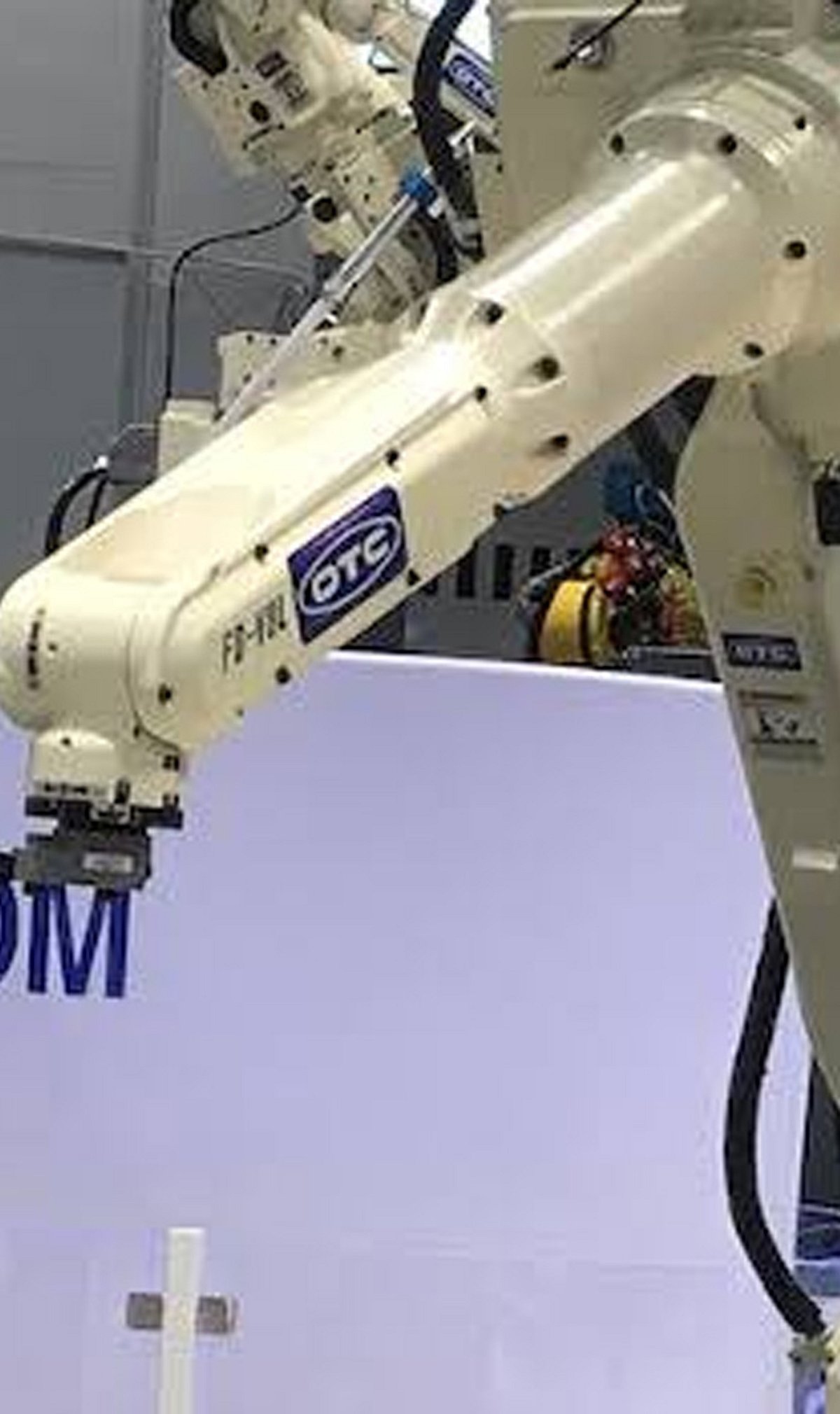
    Camera robots are rapidly transforming how industries operate, from enhancing security to improving medical procedures. By combining artificial intelligence, advanced optics, and autonomous navigation, these machines are delivering unprecedented capabilities across multiple sectors. Below, we explore seven key areas where camera robots are making a significant impact.

    1. Autonomous Surveillance

    Camera robots equipped with AI continuously monitor environments, detecting suspicious activity and improving security in commercial, industrial, and public spaces. Their ability to operate around the clock without fatigue enhances threat detection and response times.

    2. Cinematic Filmmaking

    Advanced robotic camera systems capture smooth, repeatable, and highly precise shots that elevate filmmaking quality. By automating camera movements, they reduce the need for manual operation and allow directors to achieve complex angles with ease.

    3. Infrastructure Inspection

    Camera robots safely inspect bridges, power plants, pipelines, and construction sites. They identify structural issues such as cracks or corrosion without exposing human workers to hazardous environments, thereby improving safety and reducing downtime.

    4. Medical Assistance

    In healthcare, robotic cameras support surgeons by providing enhanced visualization during minimally invasive procedures. This leads to greater precision, smaller incisions, and improved patient outcomes.

    5. Wildlife Observation

    Researchers deploy camera robots to monitor wildlife behavior without disturbing natural habitats. These systems collect valuable ecological data over long periods, aiding conservation studies and biodiversity assessments.

    6. Warehouse Automation

    Robotic cameras track inventory movement, identify misplaced goods, and assist automated logistics systems. This boosts warehouse efficiency, reduces errors, and streamlines supply chain operations.

    7. Disaster Response

    Camera-equipped robots enter dangerous disaster zones—such as collapsed buildings or fire sites—transmitting live visuals that help emergency teams assess damage and locate survivors more effectively.

    Additional applications include sports broadcasting, where robotic cameras deliver dynamic angles and automated tracking, and agricultural monitoring, where farmers use them to assess crop health and optimize irrigation. As technology advances, camera robots will continue to reshape industries by improving accuracy, safety, and productivity.

  • Nothing Denies Market Exit Reports Amid Restructuring and Job Cuts

    Nothing Denies Market Exit Reports Amid Restructuring and Job Cuts

    Nothing has dismissed reports claiming it is preparing to withdraw from multiple international markets, even as the London-based smartphone maker confirmed that an internal restructuring will lead to job cuts. The company said the exercise aims to improve efficiency and support its next phase of growth, while insisting that reports of a large-scale market exit are inaccurate.

    Company Rejects Shutdown Claims

    Nothing co-founder Akis Evangelidis called reports of the company exiting 12 markets ‘fake news’ in a post on X. He said that Nothing is not shutting down operations in any region and stressed that its recently launched Phone (4b) recorded strong first-day sales of 29,537 units, describing it as a record for its price segment.

    The clarification came after reports suggested the company was scaling back its international presence following a decline in global smartphone shipments. Nothing maintains that it remains committed to expanding its business rather than reducing its footprint.

    Restructuring to Bring Layoffs

    Nothing recognized that certain employees might be impacted by its restructuring while rejecting the market departure assertions. Teams are being reorganized, country operations are being consolidated into regional hubs, and specialized business units, including a new AI-native division, are being established.

    Citing continuing consultation procedures and legal obligations, Evangelidis refused to reveal the precise number of impacted workers, claiming that the stated number of layoffs has been inflated. He went on to say that the business will assist those who were affected by the change.

    Industry Faces Mounting Cost Pressures

    The restructuring is happening while smartphone makers are dealing with component costs that keep climbing, especially for memory chips, and those lower profits pretty much all across the sector. Nothing’s main focus is the fierce mid-range smartphone market, where producers feel extra strain because production expenses are rising.

    The company rolled out the Phone (4b) earlier this month, basically to pull in customers who are more budget-minded in developing economies, and to strengthen its position in India, one of its biggest markets. It has also pushed harder on retail, like expanding its outlets and even placing a flagship store in Bengaluru.

    Growth Approach Stays the Same

    The reorganization is meant to tighten operations and get everything lined up for what comes next in terms of expansion. The business insists that its long-term plan still relies on innovation, AI-driven devices, and improving its stance across overseas smartphone markets, even with layoffs.

  • Jensen Huang: AI Boom Driven by Infrastructure Demand, Not Speculation

    Jensen Huang: AI Boom Driven by Infrastructure Demand, Not Speculation

    Artificial intelligence is unlikely to experience a bubble burst anytime soon, according to NVIDIA CEO Jensen Huang, who believes the current AI boom is driven by a fundamental shift in computing rather than short-term market hype. His remarks come as investors continue to debate whether massive spending on AI infrastructure can be sustained.

    Infrastructure Shift Backs AI Demand

    Speaking during an interview with Axios co-founder Mike Allen, Huang argued that the semiconductor industry’s current growth cycle differs from previous booms. He said that the demand is not being driven by seasonal buying patterns or temporary trends but by a structural transformation in computing.

    According to Huang, AI requires an entirely new computing infrastructure, with businesses, governments, and developers investing heavily in data centers and advanced processors. He believes the industry will need to expand several times over the next decade to meet rising AI requirements.

    No Signs of a Slowdown Yet

    The NVIDIA chief highlighted that he does not expect a downturn in AI chip demand ‘for a while,’ despite concerns over rising capital expenditure by technology companies. His comments arrive after semiconductor stocks experienced volatility amid questions about whether spending on AI hardware can continue at its current pace.

    Huang maintained that customers are investing because AI infrastructure is becoming an essential part of modern computing rather than an optional technology upgrade. In his view, the industry’s growth is tied to long-term technological change instead of speculative buying.

    Bullish View from AI Chip Leader

    NVIDIA has emerged as the biggest beneficiary of the AI boom, with its graphics processors powering many of the world’s leading AI models. As the company’s chief executive, Huang has consistently defended the long-term outlook for AI investments.

    His latest comments also reinforce his broader position that AI adoption is still in its early stages. He has repeatedly argued that wider use of AI will create new opportunities across industries and continue driving demand for computing infrastructure, rather than triggering a rapid market correction.

    While some analysts remain cautious about the pace of AI spending, Huang believes the industry’s trajectory is supported by real technological needs rather than speculative enthusiasm. For NVIDIA, that translates into continued demand for AI chips as businesses build the infrastructure needed for the next generation of computing.

  • 10 Essential Skills Every Business Analyst Needs in 2026

    10 Essential Skills Every Business Analyst Needs in 2026

    Modern business analysts do much more than gather requirements. They combine business knowledge, data analysis, and stakeholder collaboration to solve real-world challenges. Developing these ten skills builds the foundation for long-term career success and organizational impact.

    Overview

    Modern business analysts combine business knowledge, data analysis, technical literacy, and communication to turn complex challenges into practical, evidence-based solutions. Core competencies such as requirements elicitation, process modeling, stakeholder engagement, predictive thinking, and AI-assisted analysis support better decision-making and project outcomes. Continuous learning, real-world practice, and a balance of business, analytical, people, and technical skills help analysts adapt to evolving organizational and technology demands.

    A decade ago, a business analyst’s value was measured by how well they wrote requirements documents. That measure has changed. The role now sits at the intersection of business strategy, live data, and technology delivery, where the analyst turns a vague problem into something a team can actually build. This shift shows up clearly in enterprise digital transformation work, where analysts read a profit-and-loss statement as comfortably as a process diagram and run a SQL query to test an assumption before presenting the result to an executive. The ten skills below separate analysts who simply document from analysts who shape decisions.

    10 Must-Have Skills

    1. Business Acumen and Domain Understanding: An analyst who understands how a business earns revenue, serves customers, and tracks KPIs like ROI and churn can link requirements directly to strategy instead of treating them as isolated tasks.
    2. Requirements Elicitation: Interviews, workshops, and direct observation uncover what stakeholders actually need. The result is concrete: user stories and acceptance criteria that developers can build against without guesswork.
    3. Process Modeling: Mapping workflows with BPMN or swimlane diagrams reveals the as-is state, exposes bottlenecks, and defines a measurable to-be process. Gap analysis usually follows, pinpointing exactly where the current state falls short.
    4. Data Analysis: Comfort with SQL, Excel, and dashboards in tools like Power BI lets an analyst pull numbers directly, run pivot tables, and validate assumptions rather than relying on secondhand reports.
    5. Predictive Thinking: Data analysis explains what happened. Predictive thinking asks what happens next, using trends and simple forecasting to shape a recommendation before a decision gets made.
    6. Communication: This skill centers on executive presentations and clear documentation, turning a complex finding into a short narrative: the problem, the evidence, and the recommended option.
    7. Stakeholder Engagement: Projects involve competing priorities. This skill covers prioritization and conflict resolution, building enough trust that trade-offs get made without stalling the project.
    8. Critical Thinking: Strong analysts break a messy situation into root causes and test assumptions before proposing a fix, catching hidden impacts that a surface-level read would miss.
    9. Technical Literacy: Fluency with tools like Jira, Confluence, and Lucidchart, paired with a working sense of APIs, databases, and system architecture, keeps collaboration with engineering teams fast and accurate.
    10. AI-Assisted Analysis: Analysts now use AI tools to draft requirements, summarize meetings, and surface patterns across large data sets. The analyst still validates every output, flags business risk, and confirms each recommendation aligns with organizational goals.

    How to Actually Master These 10 Skills

    One practical approach is to pick a single skill from each group and focus on it for a quarter: SQL for data, BPMN for process modeling, and facilitation for stakeholder work. Real assignments teach faster than courses alone. Leading a requirements session, mapping an existing workflow, or drafting an executive summary for a report already in progress all build muscle memory. Feedback sharpens that practice further. A senior analyst reviewing a requirements document, a diagram, or a presentation before it goes out catches gaps that self-review misses. Progress shows up in outcomes over a few projects: fewer rounds of rework, faster and clearer decisions.

    Final Thoughts

    The strongest business analysts are not defined by one technical skill or certification. They combine business understanding, analytical thinking, communication, and technical awareness to help organizations make better decisions with confidence.

    FAQs

    1. What are the most important skills every business analyst should master? Business analysts should master business acumen, requirements elicitation, data analysis, process modeling, stakeholder communication, critical thinking, technical literacy, and adaptability to deliver effective business solutions.
    2. Do business analysts need technical skills? Yes. While coding is not mandatory for most roles, knowledge of SQL, Excel, business intelligence tools, APIs, and platforms like Jira or Confluence helps analysts work effectively with technical teams.
    3. Why is stakeholder communication important for business analysts? Strong stakeholder communication helps business analysts gather accurate requirements, resolve conflicting priorities, build consensus, and ensure projects align with business objectives.
    4. How can aspiring business analysts develop these skills? Aspiring business analysts can build these skills through hands-on projects, professional certifications, mentoring, practical experience, and continuous learning in business analysis tools and methodologies.
    5. Are business analyst certifications enough to get hired? Certifications strengthen your profile, but employers also look for practical experience, problem-solving ability, communication skills, and evidence of successfully improving business processes and decision-making.
  • Samsung Galaxy Unpacked 2026: Z Fold8 Ultra, Z Flip8, Watch9, and Smart Glasses Revealed

    Samsung Galaxy Unpacked 2026: Z Fold8 Ultra, Z Flip8, Watch9, and Smart Glasses Revealed

    Samsung’s Galaxy Unpacked 2026 event delivered a wave of new devices and AI-driven features, reinforcing the company’s commitment to foldables, wearables, and intelligent ecosystems. Here are the ten most important announcements from the event.

    1. Galaxy Z Fold8 Ultra Takes Centre Stage

    Samsung introduced its first Ultra-branded foldable, the Galaxy Z Fold8 Ultra, featuring a larger display, a 200MP camera, premium hardware, and enhanced AI-powered productivity tools.

    2. Galaxy Z Fold8 Gets a Wider Design

    The Galaxy Z Fold8 arrives with a redesigned, wider form factor, upgraded display technology, and Snapdragon 8 Elite Gen 5 performance, offering a more refined foldable experience.

    3. Galaxy Z Flip8 Targets Pocketable AI

    Samsung’s latest clamshell foldable brings performance upgrades, improved cover-screen functionality, and enhanced camera features tailored for everyday users.

    4. Galaxy Watch9 Brings New Health Tools

    The Galaxy Watch9 adds upgraded internals and wellness features, including Heart Health Score and Daily Cardio Load tracking, to help users monitor their fitness more closely.

    5. Galaxy Watch Ultra2 Gets Tougher

    The Galaxy Watch Ultra2 features a larger 800mAh battery, a slimmer design, increased storage, and advanced outdoor fitness capabilities, built for durability and extended use.

    6. Samsung Expands Its AI Ecosystem

    Samsung highlighted agentic AI experiences designed to understand user intent and support tasks across its latest Galaxy devices, making interactions more intuitive and seamless.

    7. AI Tools Upgrade Photo Editing

    New AI features help users reframe videos, edit photos using natural language prompts, improve stabilisation, and create more polished visual content directly on their devices.

    8. Smart Glasses Enter the Galaxy Ecosystem

    Samsung showcased intelligent eyewear developed in partnership with Google, Gentle Monster, and Warby Parker, marking the company’s entry into the smart glasses market.

    9. Google Joins Samsung’s Wearable Push

    Google presented new smart-glass frame designs, signalling deeper collaboration around AI-powered wearable technology and expanding the possibilities for augmented reality.

    10. Samsung Doubles Down on Foldables

    The event made Samsung’s strategy clear: combine new foldable designs, agentic AI, health technology, and connected wearables to create a cohesive ecosystem for the future.

  • 5 Essential Apple Intelligence Features to Master in 2026

    5 Essential Apple Intelligence Features to Master in 2026

    Apple Intelligence has evolved significantly in 2026, bringing smarter writing tools, live translation, AI-powered shortcuts, advanced photo editing, and an upgraded Siri that makes everyday tasks on iPhone, iPad, and Mac faster and easier. Here are the top five features you should start using today.

    1. Writing Tools Help You Finish Faster

    Built into apps like Mail, Notes, and Messages, Apple’s Writing Tools now offer spelling checks, sentence restructuring, tone adjustments, and email summarization. Whether you’re a student or a professional, these tools eliminate the need for third-party editing apps.

    2. Live Translation Works Across Calls and Messages

    Live Translation simplifies communication in multiple languages. It works in text messages, FaceTime calls, and even regular phone calls, translating conversations in real time. This is invaluable for travel, client meetings, or keeping in touch with international friends and family—all while maintaining Apple’s privacy standards.

    3. Shortcuts Get an AI Upgrade

    The Shortcuts app now integrates Apple Intelligence, allowing you to create automations that summarize articles, organize notes, draft messages, and perform multiple actions with a single tap. For example, you can set a shortcut to collect all meeting notes, summarize them, and email them automatically.

    4. Edit Photos Without Third-Party Apps

    The Photos app now includes AI-powered editing features such as removing background distractions, recomposing images, and erasing unwanted objects. These tools are designed for everyday use—perfect for travel photos, family portraits, and social media posts.

    5. Siri Understands Context Better

    Siri’s improved context awareness allows it to answer follow-up questions, understand what’s on your screen, and take actions across multiple apps. You no longer need to repeat yourself; Siri maintains a natural conversation flow.

    Apple Intelligence Features at a Glance

    All these features are designed to enhance everyday tasks without changing how you use your iPhone, iPad, or Mac. They integrate seamlessly into Apple’s existing apps, saving you time and reducing repetitive manual work.

    As Apple continues to expand its AI capabilities in 2026, these five features are the most practical to explore first. Whether you’re writing, translating, editing, or automating, Apple Intelligence makes your devices smarter without demanding a new learning curve.

  • Today’s Top Tech Roundup: Microsoft Copilot AI, Foldable Phone Boom, Tesla Stock Dip, Google Gemini Spark, and Xbox Cloud Gaming

    Today’s Top Tech Roundup: Microsoft Copilot AI, Foldable Phone Boom, Tesla Stock Dip, Google Gemini Spark, and Xbox Cloud Gaming

    Microsoft is expanding its artificial intelligence capabilities with new updates to Copilot, foldable smartphones continue to gain market momentum, Tesla’s stock has taken a hit, Google has upgraded its Gemini Spark AI agent, and Xbox is testing free cloud game streaming.

    In the latest tech news roundup, several major developments are shaping the industry. Microsoft’s Copilot AI is receiving enhancements that broaden its functionality, reinforcing the company’s commitment to AI-driven productivity. Meanwhile, the foldable phone segment is seeing increased consumer interest and manufacturer investment, signaling a shift in mobile device design trends.

    On the financial front, Tesla’s stock has experienced a decline, reflecting ongoing market volatility and investor sentiment. Google has introduced an upgraded version of its Gemini Spark AI agent, bringing advanced AI capabilities directly to users’ desktops via macOS. Additionally, Xbox is experimenting with free cloud game streaming, a move that could democratize access to high-quality gaming experiences without the need for expensive hardware.

    These stories represent the key technology trends of the day, from AI expansion and mobile innovation to market shifts and gaming accessibility.

  • How AI and Data Analytics Are Reshaping the Competitive Gaming Landscape

    How AI and Data Analytics Are Reshaping the Competitive Gaming Landscape

    Artificial intelligence is changing how people work, learn, and play. Healthcare, finance, manufacturing, and cybersecurity have all felt its effects. Competitive gaming is no different.

    Millions of players now compete in games like League of Legends, Valorant, Counter-Strike 2, and Wild Rift. As competition gets tougher, more players are turning to data and technology to sharpen their skills.

    Gaming Gets More Data-Driven

    Every esports match creates a mountain of gameplay data. Pro teams, streamers, and everyday players all lean on stats to figure out what works and what doesn’t.

    Match data can show:

    • Win rates
    • Champion or agent performance
    • Team compositions
    • Objective control
    • Economy management
    • Individual decision-making

    Instead of guessing and hoping, players can now use real numbers to guide their choices and get better faster.

    AI Is Changing How Players Improve

    AI is also making coaching easier to reach. Not everyone can afford a personal coach, but AI tools are closing that gap.

    These tools can:

    • Review gameplay automatically
    • Spot repeated mistakes
    • Suggest better builds and strategies
    • Check positioning during fights
    • Flag poor macro decisions
    • Recommend a personal improvement plan

    Players get useful feedback much faster than they would from traditional coaching alone.

    New Platforms Are Shaping Gaming’s Future

    As esports has grown, so has the demand for platforms that mix technology with real player development.

    Many players now turn to coaching platforms, replay reviews, learning resources, and performance tools. This helps them improve while still juggling work, school, or other parts of life.

    Platforms such as rankforge, a leading competitive gaming platform, offer coaching and performance tools built to help gamers hit their goals across several esports titles.

    Trust and Security Still Come First

    As online gaming grows, trust matters more than ever. Players want platforms that offer:

    • Secure accounts
    • Clear, upfront pricing
    • Real customer support
    • Skilled specialists
    • Honest communication at every step

    Good technology helps companies deliver a safer experience and build lasting trust with their players.

    What’s Next for AI in Esports

    AI will keep shaping competitive gaming in the years ahead. Expect more:

    • Real-time AI coaching
    • Predictive gameplay analysis
    • Personal training tips
    • Deeper team performance reviews
    • Automated strategy insights

    As these tools grow, players at every level will get access to resources once kept for top pro teams.

    Final Thought

    Competitive gaming is now one of the fastest-growing corners of digital entertainment. AI, data tools, and cloud platforms are reshaping how players learn and compete, and that shift is only picking up speed. Platforms that put players first, with real coaching and honest support, will help set the pace for what comes next in esports.