Tag: AI

  • Samsung Refutes US Share Listing Rumors After SK Hynix’s Record NASDAQ Debut

    Samsung Refutes US Share Listing Rumors After SK Hynix’s Record NASDAQ Debut

    Samsung Electronics has officially denied recent reports that it is considering a United States share listing via American depositary receipts (ADRs). The denial follows a media report suggesting the company had held preliminary discussions with banks about a potential offering. In a statement, a Samsung spokesperson said, “Samsung Electronics is not reviewing the possibility of issuing American Depositary Receipts,” directly challenging the earlier account. The company did not elaborate on any past discussions or its reasoning.

    The earlier report indicated that any talks were at a very early stage and that Samsung had not decided whether to proceed. It also noted that the review “may not result in a listing.” Samsung had previously explored a similar plan but ultimately chose not to move forward. ADRs allow foreign companies to list shares on U.S. exchanges, making them more accessible to American retail investors. Currently, Samsung Electronics trades primarily on the Korea Exchange, limiting direct access for U.S. investors.

    The speculation gained momentum after SK Hynix, Samsung’s main competitor in memory chips, completed a massive U.S. share offering. SK Hynix priced its ADRs at $149 each, raising approximately $26.5 billion — the largest U.S. listing by a foreign company, according to Reuters. The shares began trading on NASDAQ on July 10 and surged more than 12% on their first day, reflecting strong investor demand for exposure to memory chips used in AI data centers.

    Both Samsung and SK Hynix compete in the DRAM, NAND, and high-bandwidth memory markets, and both have benefited from surging demand for chips powering artificial intelligence servers. However, memory stocks remain volatile. SK Hynix shares later fell as some investors took profits, and market participants are closely watching production growth, chip supply, and the pace of AI infrastructure spending.

    Samsung recently released preliminary second-quarter results, estimating sales of about 171 trillion won and operating profit of approximately 89.4 trillion won — a dramatic increase from 4.68 trillion won a year earlier. Despite the strong profit growth, Samsung shares declined after the update, as investors weighed high expectations against concerns about future AI spending and potential oversupply. The company plans to publish detailed quarterly results on July 30.

    In June, Samsung and the SK Group announced major manufacturing expansions, each planning to build two new chip plants in South Korea. The combined investment totals 800 trillion won (about $536 billion). Additionally, South Korean companies including Naver have committed 550 trillion won to build 8.4 gigawatts of data-center capacity by 2029. For now, Samsung’s public denial leaves no active ADR plan confirmed. Any future U.S. listing would require a new official announcement or regulatory filing.

  • BlockDAG’s AI Launch and 100% Bonus Drive Buyer Interest as Polkadot and Shiba Inu Struggle

    BlockDAG’s AI Launch and 100% Bonus Drive Buyer Interest as Polkadot and Shiba Inu Struggle

    Crypto markets are trading cautiously this week, with major coins holding steady. The Sui price remains locked between $0.50 and $0.70, waiting for a catalyst as its network tests AI-driven transactions. The Shiba Inu coin price sits near $0.00000429, pressured by a tightening triangle despite a burn spike topping 3,000%.

    BlockDAG is definitely becoming everyone’s favourite gradually. Its casino has already collected $15 million in deposits and nearly $150 million in wagers from 13,000 users in a single month, all built on DAG-based infrastructure. BDAG AI’s launch added an estimated $500 million to its valuation almost overnight. Priced at $0.00000033 against a $0.03 buyback rate, and boosted by a 100% bonus, BlockDAG (BDAG) keeps surfacing as the best crypto to buy today.

    Sui Focuses on Machine Economy Foundations

    SUI is currently trading in a tight consolidation range between $0.50 and $0.70. While some traders expect a major breakout, the immediate Sui price remains tied to broader market trends and Bitcoin’s movement. Buyers have consistently defended the support level, balancing out recent daily losses and maintaining a stable market capitalization.

    Simultaneously, the network is expanding its utility by demonstrating AI-powered autonomous transactions. During testing, the platform achieved high transaction speeds, aiming to become the foundation for a machine-driven ecosystem where AI agents exchange value independently. If network activity increases and trading volume breaks through resistance, it could support the Sui price over the long term. However, future growth depends heavily on sustained user adoption and broader market stability driving the Sui price forward.

    Shiba Inu Coin Price Faces Critical Resistance

    The Shiba Inu coin price dropped slightly to $0.00000429 on July 8 as its daily chart formed a tightening descending triangle. Analysts note that Bollinger Bands have highly compressed, indicating a potential sharp move ahead, though multiple moving averages currently suggest a bearish trend.

    On-chain data revealed a major activity spike when a Robinhood-linked address burned over 109 million tokens. This individual transaction, likely fueled by platform trading fee allocations, caused the 24-hour burn rate to jump by over 3,000%. While this massive token reduction captured community attention, the immediate Shiba Inu coin price remains bounded by psychological support near $0.0000040. Traders are watching these compressed chart levels closely to determine if the next breakout will impact the Shiba Inu coin price positively.

    BlockDAG’s 100% Bonus Draws Buyers’ Focus

    Adoption figures tell a story that marketing alone cannot, and BlockDAG’s numbers are telling a compelling one right now. The BlockDAG Casino has already logged more than 13,000 users, pulled in upward of $15 million in deposits, and processed close to $150 million in wagers, all within its first month of operation.

    Every one of those transactions runs through the project’s DAG-based architecture, a structure built to handle high-speed payments and smart contract execution on a single layer, something many older blockchain designs still struggle to combine.

    That same infrastructure is now paired with fresh technical momentum. BDAG AI went live recently, adding an estimated $500 million to the project’s valuation almost immediately, a signal that the market responds strongly to real functionality rather than announcements alone.

    Pricing has moved in favor of buyers at the same time. BDAG remains priced at $0.00000033, the buyback rate sits at $0.03, and the newly launched code EARLY delivers a 100% bonus on every purchase, doubling the previous 100% offer and setting a fresh record for the project. This bonus allocation carries a limit and will close once it is fully claimed.

    Genuine usage, working technology, and a low entry price rarely converge this precisely at the same moment. The casino figures point to users staying active rather than testing the platform once. The AI launch points to development delivering real results. And the bonus points to timing working strongly in favor of anyone considering an entry now. That alignment is exactly why BlockDAG keeps surfacing among answers to the best crypto to buy today.

    Conclusion

    The Sui price still hovers between $0.50 and $0.70, tied to AI-driven transaction tests that hint at long-term rather than quick potential. The Shiba Inu coin price stays pinned near $0.00000429, even as one burn pushed the daily rate above 3,000%.

    BlockDAG’s numbers carry more weight. Its casino counts 13,000 users, $15 million in deposits, and nearly $150 million in wagers in one month, all on DAG-based rails. BDAG AI’s launch added $500 million to its valuation overnight, while a $0.00000033 price, $0.03 buyback, and 100% EARLY bonus keep it among the best cryptos to buy today. Some projects announce themselves for a moment; others just build until the numbers convince.

    Presale: https://purchase.blockdag.network
    Website: https://blockdag.network
    Telegram: https://t.me/blockDAGnetworkOfficial
    Discord: https://discord.gg/Q7BxghMVyu

    Disclaimer: Analytics Insight does not provide financial advice or guidance on cryptocurrencies and stocks. Also note that the cryptocurrencies mentioned/listed on the website could potentially be risky, i.e. designed to induce you to invest financial resources that may be lost forever and not be recoverable once investments are made. This article is provided for informational purposes and does not constitute investment advice. You are responsible for conducting your own research (DYOR) before making any investments. Read more about the financial risks involved here.

  • BlockDAG’s 100% Bonus and Exchange Launch Attract Analyst Attention as Dogecoin and MemeCore Falter

    BlockDAG’s 100% Bonus and Exchange Launch Attract Analyst Attention as Dogecoin and MemeCore Falter

    Meme coins are struggling to hold ground this week while one project keeps pulling attention elsewhere. The Dogecoin price stays pinned beneath its major weekly moving averages, even after regulators classified it as a digital commodity. MemeCore has fared worse, dropping 16.92% in a day to $1.1964 and sliding into oversold territory below $1.3774.

    BlockDAG tells a different story. Pre-registration just opened for BlockDAG X, its upcoming exchange with spot and futures trading arriving within 14 days. BDAG AI’s launch added roughly $500 million to the project’s valuation almost overnight, and its casino has already processed close to $150 million in wagers. Priced at $0.00000033 against a $0.03 buyback and backed by a 100% bonus, BlockDAG (BDAG) is why people keep calling it the next crypto to explode.

    Dogecoin Defends Key Range Limits

    The Dogecoin price faces ongoing pressure, consistently trading beneath its major weekly moving averages as selling momentum persists. Despite these immediate chart struggles, the underlying ecosystem is showing steady signs of development. Recent regulatory decisions officially classified Dogecoin as a digital commodity, which has provided valuable market clarity.

    This milestone, paired with rising active wallet counts, has kept the broader Dogecoin price relatively anchored amid broader consolidation. Ongoing projects like DogeOS and the anticipation of institutional trading products continue to bolster user confidence. While technical indicators suggest the market remains in a bearish range for now, these growing network fundamentals are expected to support the Dogecoin price once buying interest eventually returns.

    MemeCore (M) Slips Into Oversold Territory

    The cryptocurrency MemeCore (M) is currently trading at $1.1964 following a sharp 16.92% daily decline. Technical charts indicate that the token remains below its key short- and long-term moving averages, reflecting intensifying bearish momentum.

    Market indicators show that MemeCore (M) has entered oversold territory, with sellers dominating the intraday action. Analysts expect the price to remain constrained within a volatile range between $1.029 and $1.3774 over the next few sessions. Without positive ecosystem news or a decisive break above the immediate resistance level of $1.3107, the likelihood of a sustained upward move remains low. Traders are advised to exercise caution as MemeCore (M) tests these lower support areas.

    BlockDAG’s 100% Bonus Has The Whole Market Talking

    Sharp price moves rarely trace back to a single cause. They tend to follow a cluster of developments landing close together, and BlockDAG is currently building exactly that kind of cluster. Pre-registration opened this week for BlockDAG X, the project’s upcoming exchange, with spot trading, futures, and dedicated mobile apps expected within 14 days.

    Around the same time, BDAG AI went live, adding an estimated $500 million to the project’s valuation almost overnight. The BlockDAG Casino adds further weight, having already surpassed 13,000 users and processed close to $150 million in wagers within its first month alone.

    None of that activity happens on a network struggling to keep up. Every casino transaction runs on BlockDAG’s DAG-based architecture, which supports high-speed payments and smart contract execution on one system rather than splitting the work across separate layers, a combination many legacy chains still cannot match. An upgrade targeting 7,000 transactions per second is also rolling out in the coming days, built to keep pace with rising demand across gaming, payments, lending, and stablecoins.

    Timing ties all of it together. Despite these many developments landing at once, entry remains remarkably low. BDAG sits at $0.00000033, the buyback price stands at $0.03, and the code EARLY adds a full 100% extra BDAG to every purchase. The return potential between entry and buyback already looks substantial, and it climbs considerably higher once the bonus tokens are included. A new exchange, a live AI launch, a scaling network, and a record bonus arriving together is precisely the setup that tends to precede a strong move, and it is why many now call BlockDAG the next crypto to explode.

    Conclusion

    The Dogecoin price remains stuck below key moving averages despite its new digital commodity status, while MemeCore sits deep in oversold territory after a 16.92% drop, testing support near $1.029. Neither shows strong signs of reversing soon.

    BlockDAG keeps stacking reasons to pay attention. BlockDAG X pre-registration is live, BDAG AI added $500 million to its valuation, and the casino has crossed 13,000 users with nearly $150 million in wagers. A coming upgrade targets 7,000 transactions per second, and EARLY still delivers its 100% bonus at $0.00000033 against a $0.03 buyback. That combination is exactly why BlockDAG keeps coming up as the next crypto to explode. Sometimes the loudest signal is just consistent building.

    Presale: https://purchase.blockdag.network
    Website: https://blockdag.network
    Telegram: https://t.me/blockDAGnetworkOfficial
    Discord: https://discord.gg/Q7BxghMVyu

    Disclaimer: Analytics Insight does not provide financial advice or guidance on cryptocurrencies and stocks. Also note that the cryptocurrencies mentioned/listed on the website could potentially be risky, i.e. designed to induce you to invest financial resources that may be lost forever and not be recoverable once investments are made. This article is provided for informational purposes and does not constitute investment advice. You are responsible for conducting your own research (DYOR) before making any investments. Read more about the financial risks involved here.

  • 5 Key Reasons Python Remains the Top Language for AI and Machine Learning

    5 Key Reasons Python Remains the Top Language for AI and Machine Learning

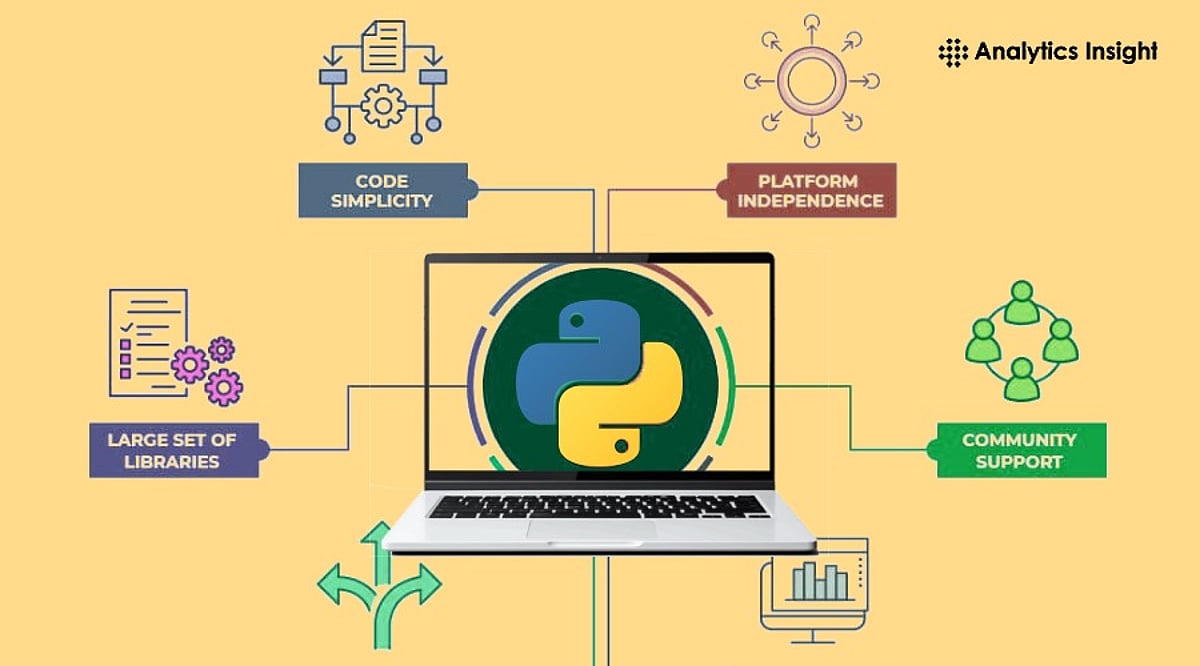
    Python has become the go-to programming language for artificial intelligence and machine learning due to its simplicity, readability, and rich ecosystem of libraries. Developers can build smart applications faster, test ideas quickly, and deploy models with minimal friction.

    Why Python Leads in AI Development

    Python’s clean syntax and minimal learning curve allow developers to focus on solving problems rather than wrestling with complex code. Its extensive library collection, strong community support, and flexibility across industries make it the trusted choice for AI projects, from startups to global enterprises.

    1. Simple, Readable Code Speeds Development

    Python’s syntax is intuitive and clean. Even when reading someone else’s project, the logic is easy to follow. This simplicity reduces the time spent debugging and improves collaboration—critical when AI models frequently need updates and iteration.

    2. Powerful Libraries Save Hours of Work

    Developers don’t have to build AI features from scratch. Python offers mature libraries for every task:

    • TensorFlow and PyTorch for deep learning
    • Scikit-learn for classical machine learning
    • Pandas and NumPy for data manipulation
    • OpenCV for computer vision

    These pre-built tools let developers focus on refining models instead of rewriting boilerplate code.

    3. A Thriving Community Offers Endless Support

    Python’s huge global community means help is always just a search away. Forums, tutorials, guides, and open-source projects ensure that even complex problems have documented solutions. This collective knowledge keeps Python evolving with regular updates and new features.

    4. Versatility Across Industries and Projects

    AI is no longer confined to tech companies. Python powers applications in healthcare, finance, retail, manufacturing, agriculture, and more. The same language can drive a chatbot, a fraud detection system, a recommendation engine, or an image recognition pipeline—eliminating the need to learn a new language for each domain.

    5. Seamless Integration with Modern Infrastructure

    Building an AI model is only half the battle; deploying it matters too. Python integrates smoothly with cloud platforms, databases, APIs, and web frameworks. Many cloud services run Python natively, so moving from training to production requires minimal changes.

    Why This Matters

    Python isn’t just another language—it’s the backbone of many AI tools used daily. As companies embed AI into their products, knowing Python gives developers a durable advantage. While Python may not be the fastest language, its clarity and rapid prototyping capabilities often matter more in AI. With continuous improvements and a growing ecosystem, Python is well-positioned to remain at the center of AI innovation.

    Frequently Asked Questions

    1. Why do most AI developers choose Python?
    Python’s readability, ease of learning, and vast library ecosystem enable faster development with fewer errors.

    2. Which Python libraries are popular for AI?
    TensorFlow, PyTorch, Scikit-learn, Pandas, NumPy, Keras, and OpenCV are widely used for machine learning, deep learning, and data analysis.

    3. Is Python good for AI beginners?
    Yes, its simple syntax and abundant free resources make it one of the best starting points.

    4. Do large companies use Python for AI?
    Yes, many tech giants rely on Python for AI, data science, and automation due to its reliability and strong ecosystem.

    5. Will Python remain important for AI?
    Almost certainly. Its community continues to grow, and new AI tools consistently support Python.

  • 10 AI-Enabled ERP Vendors Reshaping Business Operations in 2026

    10 AI-Enabled ERP Vendors Reshaping Business Operations in 2026

    Enterprise resource planning (ERP) platforms are increasingly integrating artificial intelligence to automate workflows, deliver predictive insights, and enhance decision-making across finance, supply chain, manufacturing, and field service. Here are ten AI-enabled ERP vendors to watch as they leverage advanced AI capabilities to transform enterprise operations in 2026.

    SAP S/4HANA – AI-powered automation, predictive analytics, and intelligent enterprise planning enable organizations to streamline processes and forecast outcomes with greater accuracy.

    Oracle Fusion Cloud ERP – Combines generative AI with finance, procurement, and supply chain automation to drive efficiency and innovation across the enterprise.

    Microsoft Dynamics 365 – Copilot AI boosts productivity across finance, sales, and operations by providing real-time insights and automating routine tasks.

    Infor CloudSuite – Industry-specific AI delivers smarter manufacturing and supply chain insights, helping businesses make data-driven decisions faster.

    IFS Cloud – Uses AI to optimize asset management, field service, and enterprise operations, improving uptime and service delivery.

    Epicor Kinetic – A manufacturing-focused ERP with embedded AI for operational efficiency, enabling smarter production scheduling and quality control.

    Acumatica Cloud ERP – Cloud-native ERP that helps businesses automate workflows using AI insights, resulting in improved agility and cost savings.

    NetSuite ERP – Oracle NetSuite integrates AI for finance automation and business intelligence, providing real-time visibility into financial health and performance.

  • StepX Neo: The World’s First Agentic AI Smartphone Beats OpenAI to the Punch

    StepX Neo: The World’s First Agentic AI Smartphone Beats OpenAI to the Punch

    StepX has officially unveiled the StepX Neo, which it claims is the world’s first agentic smartphone. While many expected OpenAI to launch the first truly AI-driven phone, the Chinese manufacturer has taken an unexpected lead. The StepX Neo is built around an AI-first operating system and a deeply integrated assistant called Amoo, promising smarter automation and seamless app integration.

    A Phone Designed Around an AI Agent

    Unlike other smartphones that simply add AI features to existing operating systems, StepX designed the hardware, software, and AI model as a single cohesive system. The device runs on Step AOS, an operating system purpose-built for AI agents. Amoo, the company’s own AI assistant, is embedded deeply into the phone and can handle complex tasks that go far beyond a typical chatbot or voice assistant. This integrated approach puts StepX ahead of OpenAI in a race many expected the American company to win first.

    Second Screen and Major App Partnerships

    The StepX Neo features a secondary display on the back, providing quick access to notifications and AI features without needing to unlock the main screen. The company has not yet revealed exact details about how this second screen will function. The phone also includes a dual-camera setup, though specifications for the cameras, RAM, storage, and battery remain undisclosed.

    StepX has confirmed partnerships with several major apps and services, including Meituan, WPS, CapCut, Ctrip, Gaode Maps, and Alipay. Amoo can leverage these partnerships to execute tasks across multiple apps, reducing the need for users to switch between applications manually. The assistant works in the background to connect these services autonomously.

    Bold Claims, But Many Questions Remain

    While the StepX Neo sounds impressive on paper, many details are still missing. StepX has not announced a launch date or pricing. Industry experts expect the phone to launch in China sometime next year and target the premium segment. Whether it will be available in other markets, such as India, remains unclear.

    This announcement raises an interesting question for the industry: Can a lesser-known company beat established giants like OpenAI to a major AI milestone? StepX certainly believes so. The coming months will reveal whether the StepX Neo lives up to its bold claims. Until official specs and pricing are released, the device remains a promising concept rather than a finished product.

  • OpenAI Shifts Focus to Family: ChatGPT Developing Features for Parents, Caregivers, and Seniors

    OpenAI Shifts Focus to Family: ChatGPT Developing Features for Parents, Caregivers, and Seniors

    OpenAI is making a strategic move to expand ChatGPT’s reach beyond individual users into the family household. The company has posted a job listing for a role based in San Francisco focused on developing products for parents, families, and trust-sensitive consumer experiences. This signals a major shift in how the AI firm envisions its popular chatbot being used.

    According to recent data from Sensor Tower, the demographic of ChatGPT users is changing. The share of older adult users rose to 31% in Q2 from 26% a year earlier, while the younger user base dropped to 29% from 34%. This aging user base suggests a growing need for features tailored to different life stages and family roles.

    While OpenAI has not officially announced a family version of ChatGPT, the hiring indicates potential future features such as shared reminders, family schedules, learning assistance, and personalized support for each household member. The move aligns with a broader trend in Silicon Valley where tech companies are increasingly targeting families as a key growth opportunity.

    Companies like Netflix, Spotify, and Google One have successfully grown by offering family plans. AI companies are now following a similar path, seeing families as a chance to reach millions of new users who can use the same service in different ways across multiple profiles.

    If OpenAI eventually launches a family plan, it could become an important revenue stream. One person could pay the bill while each family member gets a separate profile with extra features, better safety tools, memory options, and personal assistants. This subscription model has proven successful for streaming and cloud services.

    For now, the company is keeping its plans under wraps, but the hiring move strongly suggests that ChatGPT is evolving from a personal assistant into a service designed for the entire home.

  • 10 Mind-Blowing AI Capabilities That Were Impossible Just Five Years Ago

    10 Mind-Blowing AI Capabilities That Were Impossible Just Five Years Ago

    Artificial intelligence has advanced at an astonishing pace. Here are some of the most impressive AI capabilities that seemed like science fiction just half a decade ago:

    • AI Writes Like a Human: AI can now draft emails, stories, reports, and scripts in seconds, naturally matching tone, style, and context.
    • AI Creates Stunning Images: Simple text prompts generate detailed artwork, product designs, portraits, and realistic scenes without requiring traditional drawing skills.
    • AI Talks and Listens Naturally: Modern AI understands speech, answers questions aloud, and holds conversations that feel surprisingly smooth, helpful, and humanlike.
    • AI Translates Languages Instantly: AI translates conversations, documents, and videos across many languages while preserving meaning, tone, and context with remarkable accuracy.
    • AI Helps People Code: Developers use AI to write code, fix bugs, explain functions, and build applications much faster than before.
    • AI Makes Videos From Text: AI can turn written prompts into short videos with motion, characters, backgrounds, and cinematic effects within minutes.
    • AI Understands Photos and Screens: AI identifies objects, reads text, explains screenshots, and answers questions about images with impressive accuracy across devices.
    • AI Becomes a Personal Tutor: Students can ask questions anytime, receive step-by-step explanations, practice problems, and personalized learning support from AI assistants.
    • AI Works Across Many Tasks: One AI assistant can research, summarize, plan trips, organize information, brainstorm ideas, and automate everyday tasks efficiently.

    Read More Stories

    Join our WhatsApp Channel to get the latest news, exclusives and videos on WhatsApp.

  • How AI-Driven Intelligence Is Transforming Enterprise Compliance and Configuration Risk Detection

    How AI-Driven Intelligence Is Transforming Enterprise Compliance and Configuration Risk Detection

    In today’s hyperconnected enterprise environment, compliance and configuration management have become mission-critical functions. With hybrid infrastructures spanning cloud and on-premise systems, traditional audit-based approaches—periodic, manual, and retrospective—are no longer sufficient to manage risk. Organizations are turning to artificial intelligence to shift from reactive compliance validation to continuous, predictive risk intelligence. This transformation is redefining governance models, enabling real-time anomaly detection, automated remediation, and scalable compliance visibility across increasingly complex digital ecosystems.

    Nadeem Siddiqui, a Senior Software Engineer, leads this technological transition with his expertise in automation and configuration management. Siddiqui has dedicated his career to developing enterprise-scale systems, designing and enhancing a compliance intelligence platform that operates between 15,000 and 20,000 hybrid endpoints and implements AI-powered risk detection for enterprise governance. “Compliance is no longer just about passing audits,” Siddiqui explains. “It’s about continuously understanding your infrastructure, identifying risk in real time, and acting on it before it becomes a violation.”

    Over the past four years, Siddiqui has contributed to transforming traditional compliance workflows into intelligent, automated systems. By integrating AI-driven risk visibility into configuration management processes, he has helped organizations move away from manual data collection and static validation cycles toward continuous monitoring models that provide ongoing insight into system health and compliance posture.

    A key aspect of his work has been centralizing configuration telemetry across hybrid environments and enabling intelligent drift detection, allowing organizations to quickly identify deviations from compliance baselines. This approach has significantly reduced the need for manual audit evidence gathering while improving the speed and accuracy of anomaly detection. “Drift is inevitable in dynamic systems,” he notes. “The real value lies in detecting it early and understanding its impact across the environment.”

    Siddiqui’s contributions extend to co-architecting an in-house compliance and configuration intelligence platform that integrates AI-powered analytics with automation pipelines. The system continuously monitors infrastructure, translating regulatory requirements into machine-enforceable policies that are embedded directly into DevOps workflows. This ensures that compliance is not an afterthought, but an integral part of system design and deployment.

    The measurable impact of this work is reflected in the platform’s scale and efficiency. Supporting governance across up to 20,000 endpoints, with approximately 75–80% in the cloud, the system has replaced periodic compliance validation with continuous monitoring capabilities. Automated reporting has significantly reduced manual operational overhead, while AI-assisted visibility has improved remediation response times and strengthened collaboration between cybersecurity, DevOps, and audit teams.

    However, implementing such a transformation has required overcoming significant challenges. Siddiqui highlights the complexity of standardizing configuration data across diverse environments, ensuring consistency in AI models, and aligning cross-functional teams around a unified compliance strategy. Additionally, translating regulatory controls into machine-interpretable policies, without slowing down deployment velocity, has been a critical engineering and governance challenge. “Balancing compliance rigor with engineering agility is one of the hardest problems in modern enterprises,” he says. “You need systems that are both strict and flexible at the same time.”

    Beyond his engineering contributions, Siddiqui has also advanced thought leadership through peer-reviewed research on AI-enabled infrastructure intelligence and governance models. His work bridges the gap between academic frameworks and real-world enterprise applications, offering insights into how intelligent systems can be leveraged to enhance compliance and risk management at scale.

    Looking ahead, Siddiqui sees the future of enterprise compliance being driven by predictive analytics, explainable AI, and deeper integration with operational systems. As organizations continue their journey toward DevOps and cloud-native architectures, compliance will morph into an intelligent control layer baked into the infrastructure, rather than a standalone audit function. “We are moving toward a model where compliance systems don’t just detect issues, they anticipate them,” he observes. “Predictive risk intelligence will become a cornerstone of how enterprises manage security and governance.”

    As the scale and complexity of technology increase, coupled with an increasingly challenging regulatory environment, thought leaders such as Nadeem Siddiqui are helping change the way enterprises think about compliance—transforming it from a reactive burden to a strategic asset powered by intelligent systems.

  • Top GPUs for AI and Machine Learning Workloads in 2026: A Comprehensive Guide

    Top GPUs for AI and Machine Learning Workloads in 2026: A Comprehensive Guide

    As artificial intelligence and machine learning continue to evolve, the demand for powerful graphics processing units (GPUs) has never been higher. In 2026, several new and updated GPUs are set to dominate the market, offering exceptional performance for training, inference, and deployment of AI models. Below is a curated list of the best GPUs for AI and machine learning workloads in 2026, covering options from NVIDIA, AMD, and Intel.

    NVIDIA RTX 6090

    The NVIDIA RTX 6090 delivers exceptional AI training performance, massive VRAM, advanced Tensor Cores, and outstanding capabilities for generative AI and deep learning projects. It is the top choice for researchers and developers who need maximum compute power.

    NVIDIA RTX 6080

    The RTX 6080 offers powerful AI inference, high-speed processing, efficient energy consumption, and excellent value for researchers and AI developers building modern applications. It strikes a strong balance between performance and cost.

    NVIDIA RTX Pro 7000 Blackwell

    Built for enterprise AI, the RTX Pro 7000 Blackwell features enormous memory capacity, workstation reliability, advanced ray tracing, and the ability to handle demanding machine learning workloads worldwide.

    NVIDIA H300 Tensor Core GPU

    Optimized for large-scale AI model training, inference acceleration, enterprise deployment, and high-performance computing, the H300 Tensor Core GPU is a powerhouse for modern data centers globally.

    AMD Instinct MI400

    AMD’s Instinct MI400 provides competitive AI acceleration, strong memory bandwidth, enterprise scalability, and efficient processing for machine learning and scientific computing applications worldwide.

    AMD Radeon AI Pro R9700

    The AMD Radeon AI Pro R9700 delivers workstation-grade AI performance, creative acceleration, efficient multitasking, and optimized support for professional AI development environments and workflows.

    Intel Gaudi 4 Accelerator

    Intel’s Gaudi 4 Accelerator focuses on cost-effective AI training, scalable infrastructure, efficient networking, and enterprise deployment for advanced machine learning applications across industries.

    NVIDIA L50 GPU

    Designed for AI inference, virtualization, graphics acceleration, cloud deployment, and efficient enterprise AI workloads, the NVIDIA L50 GPU offers balanced performance and flexibility consistently.

    AMD Radeon RX 9900 XTX

    The AMD Radeon RX 9900 XTX offers strong local AI performance, gaming capabilities, content creation acceleration, and affordability for enthusiasts experimenting with machine learning projects regularly.

    NVIDIA RTX 5080

    The NVIDIA RTX 5080 balances AI performance, gaming power, efficient Tensor processing, and competitive pricing for developers, creators, and AI enthusiasts building personal workstations.

    For the latest news, exclusives, and videos, join our WhatsApp Channel.