Tag: Alphabet

  • Top Tech Companies by Revenue for 2026: Amazon Tops $742B, NVIDIA Surges on AI

    Top Tech Companies by Revenue for 2026: Amazon Tops $742B, NVIDIA Surges on AI

    Amazon leads the 2026 ranking of the world’s largest technology companies by trailing-12-month (TTM) revenue with $742.77 billion, followed by Apple and Alphabet. The list highlights how artificial intelligence, cloud computing, e-commerce, and semiconductors drive massive scale. NVIDIA’s exceptional rise underscores AI’s commercial impact, while Chinese giants JD.com and Alibaba hold strong positions.

    Key Takeaways

    • Amazon tops the 2026 ranking with $742.77 billion in TTM revenue.
    • AI is reshaping tech: NVIDIA’s surge highlights the growing commercial impact of artificial intelligence and data-center demand.
    • Diverse markets drive scale: Retail, cloud, advertising, semiconductors, e-commerce, software, and consumer electronics power the world’s largest technology companies.

    Amazon

    Amazon ranks first with TTM revenue of $742.77 billion. Its business covers online retail, cloud services, ads, devices, and digital products. Fortune also placed Amazon at No. 1 in its 2026 Global 500, with $716.9 billion in fiscal-year 2025 revenue. That reach gives the company unusual scale across several major technology markets.

    Apple

    Apple ranks second with $451.44 billion in TTM revenue. The iPhone remains a central part of its business, while Mac, iPad, services, and other devices add more sales. Fortune placed Apple at No. 6 on the 2026 Global 500, with $416.2 billion in fiscal-year 2025 revenue.

    Alphabet

    Alphabet ranks third with $422.49 billion in TTM revenue. Google Search remains a major source of sales, while YouTube, cloud services, and other digital products add more value. Alphabet also has a major role in artificial intelligence through its products and research. Fortune placed Alphabet at No. 8, with $402.8 billion in fiscal-year 2025 revenue.

    Microsoft

    Microsoft ranks fourth with $318.27 billion in TTM revenue. Its business covers software, cloud services, enterprise tools, games, and artificial intelligence products. Azure produced $101.9 billion in revenue for the fiscal year ended June 2026. Microsoft also reported $281.7 billion in latest fiscal-year revenue. Cloud and AI now hold a major place in its business.

    Samsung Electronics

    Samsung Electronics ranks fifth with $270.94 billion in TTM revenue. Its product range covers smartphones, televisions, home appliances, displays, and semiconductors. This mix gives Samsung several major sources of sales. Fortune placed Samsung Electronics at No. 26 on its 2026 Global 500, with $234.7 billion in fiscal-year 2025 revenue.

    Foxconn

    Foxconn ranks sixth with $261.93 billion in TTM revenue. The company follows a different model from Apple or Microsoft. Foxconn serves as a major electronics manufacturer and supports global brands across the hardware supply chain.

    NVIDIA

    NVIDIA ranks seventh with $253.49 billion in TTM revenue. The company has seen an exceptional rise in sales from artificial intelligence hardware. Its graphics processors and data-center products support large AI systems. Fortune reported $215.9 billion in fiscal-year 2025 revenue, with a 65.5% rise. NVIDIA now holds a much larger place in the semiconductor market.

    Meta Platforms

    Meta Platforms ranks eighth with $214.96 billion in TTM revenue. The company owns Facebook, Instagram, and WhatsApp. Digital ads provide most of its revenue, while artificial intelligence and virtual reality shape its product strategy.

    JD.com

    JD.com ranks ninth with $187.94 billion in TTM revenue. The Chinese company has a major position in online retail and related digital services. Its scale places it ahead of many well-known US and European technology firms.

    Alibaba

    Alibaba ranks tenth with $145.39 billion in TTM revenue. Its business covers e-commerce, cloud services, digital platforms, and other internet products. Alibaba remains one of China’s most important technology companies.

    What the 2026 Data Shows

    The top ten list shows several major sources of technology revenue. Amazon leads with a huge retail and cloud base, while Apple and Alphabet stay above $400 billion. Microsoft sits above $300 billion, while Samsung Electronics and Foxconn each exceed $260 billion. NVIDIA now exceeds $250 billion, while Meta Platforms, JD.com, and Alibaba each exceed $100 billion.

    TTM revenue offers the most current view, while Fortune’s 2026 Global 500 uses fiscal-year 2025 revenue. The two measures should remain separate in a direct comparison. The data also shows how artificial intelligence, cloud services, semiconductors, e-commerce, and consumer devices contribute to the scale of the world’s largest technology companies.

    FAQs

    Which is the largest technology company by revenue in 2026?

    Amazon ranks first, with $742.77 billion in trailing-12-month (TTM) revenue.

    Which technology companies have more than $400 billion in TTM revenue?

    Amazon, Apple, and Alphabet all exceed $400 billion in TTM revenue.

    Why has NVIDIA’s revenue grown so rapidly?

    NVIDIA has benefited from exceptional demand for AI-focused GPUs, data-center hardware, and infrastructure supporting large-scale artificial intelligence systems.

    What is TTM revenue?

    TTM, or trailing-12-month revenue, measures a company’s revenue over its most recent 12-month period, providing a more current view than an older fiscal year.

    Is TTM revenue directly comparable with Fortune’s Global 500 figures?

    Not exactly. TTM figures reflect the latest 12 months, while Fortune’s 2026 Global 500 ranking uses fiscal-year 2025 revenue, so the measures should be kept separate.

  • Top US Stocks Driving Strong Market Momentum in 2025

    Top US Stocks Driving Strong Market Momentum in 2025

    Several U.S. equities have consistently outperformed in recent months, buoyed by advancements in artificial intelligence, cloud computing, and digital advertising. Below is an overview of the top-performing stocks that continue to deliver robust market momentum.

    Nvidia (NVDA)

    Nvidia dominates AI chip manufacturing, benefiting from surging demand for data centers, enterprise computing, and artificial intelligence infrastructure worldwide.

    Microsoft (MSFT)

    Microsoft’s cloud services and AI-powered software continue driving revenue growth, making it a consistent performer among technology industry leaders globally.

    Apple (AAPL)

    Apple’s ecosystem, premium devices, and expanding services business generate resilient revenue, supporting long-term investor confidence despite competitive technology markets.

    Amazon (AMZN)

    Amazon combines cloud computing leadership with advertising, logistics, and artificial intelligence investments, creating multiple high-growth revenue opportunities for shareholders.

    Meta Platforms (META)

    Meta’s AI investments and digital advertising business continue improving profitability while expanding virtual reality and social media platform capabilities globally.

    Broadcom (AVGO)

    Broadcom benefits from rising semiconductor demand, enterprise software growth, and AI infrastructure expansion, supporting consistent financial performance and shareholder returns.

    Tesla (TSLA)

    Tesla continues innovating in electric vehicles, autonomous driving technology, and energy storage, maintaining significant influence within global automotive markets.

    Alphabet (GOOGL)

    Alphabet strengthens revenue through search, cloud computing, YouTube, and artificial intelligence innovations across consumer and enterprise technology services worldwide.

    Palantir Technologies (PLTR)

    Palantir’s AI-powered analytics platforms drive enterprise and government adoption, supporting impressive revenue growth and expanding commercial customer relationships.

  • The Massive Conglomerates That Own the World’s Most Iconic Brands

    The Massive Conglomerates That Own the World’s Most Iconic Brands

    Many of the world’s most beloved brands are actually owned by a small group of massive parent companies. These conglomerates control thousands of products that consumers purchase every day, from food and beverages to household goods and digital services.

    Nestlé, the Swiss food and beverage giant, owns household names such as Nescafé, KitKat, Purina, and Gerber, making it one of the largest food companies globally.

    Procter & Gamble (P&G) dominates household and personal care with brands like Tide, Pampers, Gillette, Ariel, and Head & Shoulders.

    Unilever, a British-Dutch multinational, oversees Dove, Vaseline, Knorr, Hellmann’s, and Ben & Jerry’s, operating in over 190 countries.

    PepsiCo is a global leader in snacks and beverages, owning Pepsi, Lay’s, Doritos, Quaker, and Gatorade.

    In the tech world, Alphabet controls Google, YouTube, Fitbit, and Waymo, while Meta owns Facebook, Instagram, and WhatsApp. Amazon has expanded into diverse sectors with Whole Foods, Twitch, Ring, and Audible, and Disney manages Marvel, Pixar, Star Wars, and ESPN.

    Automotive giant Volkswagen Group includes Audi, Porsche, Bentley, and Lamborghini, while luxury conglomerate LVMH holds Louis Vuitton, Dior, Bulgari, and Moët & Chandon.

    Altogether, these parent companies collectively control nearly 1,500 brands, shaping prices, competition, and the products consumers buy every day. Understanding these corporate structures reveals just how concentrated the global marketplace has become.

  • Wall Street Tightens Scrutiny on Big Tech AI Spending as Investors Demand Clearer Returns

    Wall Street Tightens Scrutiny on Big Tech AI Spending as Investors Demand Clearer Returns

    Wall Street is changing how it judges artificial intelligence spending. Investors once rewarded major technology companies for expanding data centers, buying chips, and building new AI services. Strong revenue growth often eased concerns about the cost.

    That pattern changed after Alphabet and Tesla reported second-quarter results. Both companies posted sharp share losses after announcing higher spending plans. The reaction showed that investors now want clearer proof that AI investment can support cash flow, margins, and earnings.

    This shift comes before earnings from Microsoft and Meta on Wednesday, followed by Apple and Amazon on Thursday. Their capex forecasts, cloud growth, and free cash flow will give investors new data on the cost of the AI buildout.

    Alphabet Selloff Shifts the AI Capex Debate

    Alphabet raised its 2026 capital expenditure forecast to between $195 billion and $205 billion. The range increased from an earlier estimate of $180 billion to $190 billion. Most of the spending will support servers, data centers, networking equipment, and AI computing capacity.

    Google Cloud revenue rose 82% to $24.8 billion during the quarter. Total revenue reached $119.8 billion, above market estimates. However, Alphabet recorded negative free cash flow of $5.9 billion. Its shares then fell 7.13% on July 23, cutting about $294 billion from its market value.

    Investors focused on the gap between rising revenue and heavier cash use. Alphabet said demand still exceeded its available capacity. Still, the higher spending forecast raised questions about how quickly new infrastructure can produce steady returns.

    Tesla Spending Adds to Wall Street Concerns

    Tesla also increased pressure on the AI spending trade. The company spent a record $5.79 billion on capital projects during the second quarter. That spending helped push free cash flow to negative $1.09 billion.

    Management expects 2026 capital expenditure to exceed $25 billion. Tesla plans to fund robotaxis, Optimus production, AI compute, factories, solar manufacturing, and other projects. Elon Musk called 2026 a “massive capex year,” while finance chief Vaibhav Taneja said spending could rise for another two or three years.

    Tesla shares dropped about 14% after the report. Investors also reviewed weaker earnings and lower cash generation. The market response added to concern that large AI plans can pressure stocks when spending rises faster than near-term profit.

    Michael Burry Points to a New Market Test

    Michael Burry said, “the market has voted and the results are clear.” He referred to data showing that Alphabet, Microsoft, Amazon, Meta, Oracle, Micron, and Tesla had weighed on the S&P 500 since early June.

    Apple stood apart from that group. The company has avoided the largest AI infrastructure budgets and has relied more on partnerships with model developers. Apple shares gained strongly in July as investors favored its lower spending approach.

    AI demand continues to support cloud growth, chip sales, and enterprise adoption. Big Tech companies still plan to spend more than $700 billion this year, mainly on computing infrastructure. Analysts expect Microsoft, Meta, Amazon, and Alphabet to face closer review as they publish new results.

    Wall Street is not rejecting AI investment. Instead, investors are applying a stricter test. Companies must now show that higher capital spending can produce revenue growth without weakening cash flow for long periods.

  • Alphabet Reveals $94.1 Billion SpaceX Stake Under Full Trading Lock-Up

    Alphabet Reveals $94.1 Billion SpaceX Stake Under Full Trading Lock-Up

    Alphabet has disclosed that its SpaceX investment was valued at approximately $94.1 billion at the end of the second quarter. This holding makes the Google parent one of SpaceX’s largest outside shareholders.

    The disclosure follows SpaceX’s listing on NASDAQ in June. The filing explains how market gains boosted Alphabet’s reported profit without adding cash to its accounts. Currently, Alphabet cannot sell any part of the position because all shares remain under short-term or long-term trading restrictions.

    Alphabet’s SpaceX Stake Reaches $94.1 Billion

    Alphabet’s quarterly filing shows that about $80 billion of SpaceX shares carry short-term restrictions on the ability to sell. Another $14.1 billion remains restricted through the third quarter of 2027. Together, these two groups cover the full reported position.

    The investment dates back to January 2015, when Google and Fidelity invested a combined $1 billion in SpaceX, receiving a stake of just under 10% at the time. Later funding rounds and SpaceX’s public offering reduced Alphabet’s ownership percentage through dilution.

    The filing provides the stake’s dollar value but does not disclose an ownership percentage. Published estimates range from about 4% to 6%, based on valuation and share-count methods. SpaceX stock has since fallen below its $135 IPO price, so Alphabet’s position is now worth less than its reported June 30 value.

    Unrealized Gain Boosts Alphabet’s Quarterly Profit

    Alphabet recorded a $99 billion gain on equity securities during the quarter. The company stated that the increase mainly came from unrealized gains tied to SpaceX and another private company investment, which media reports have identified as AI developer Anthropic.

    Alphabet’s net income rose to $112.1 billion, with earnings reaching $9.11 per share. Revenue increased 24% from a year earlier to $119.8 billion. Google Cloud revenue rose 82% to $24.8 billion during the same period.

    However, the equity gain did not provide cash for Alphabet’s daily operations or investment plans. The company adjusted the value of the holdings on its balance sheet without selling the shares. Future price changes can raise or lower the reported value.

    Meanwhile, Alphabet reported negative free cash flow of $5.9 billion. It also raised its 2026 capital spending forecast to between $195 billion and $205 billion, mainly to support data centers, servers, networking equipment, and other AI infrastructure.

    SpaceX Lock-Up Releases Start in August

    SpaceX priced its initial public offering at $135 per share and began trading under the SPCX ticker on June 12. The company later confirmed that the offering raised about $85.7 billion after underwriters exercised their option for additional shares.

    SpaceX plans to publish its first quarterly results as a public company after the market closes on August 4. Its lock-up schedule starts releasing some restricted shares on August 6, two full trading days after the earnings report.

    Alphabet has not announced plans to sell its shares when the first restrictions expire. A separate $14.1 billion group will stay restricted through September 2027, limiting how much of the position Alphabet can convert into cash. SpaceX shares recently traded near $112, below both the IPO price and their June peak.

    This decline lowers the market value of Alphabet’s holding. Later quarterly filings will record changes based on SpaceX’s share price and any shares that Alphabet sells after the restrictions end.

  • EU Imposes Record €890 Million Fine on Google for Violating Digital Markets Act

    EU Imposes Record €890 Million Fine on Google for Violating Digital Markets Act

    The European Union has fined Google’s parent company, Alphabet, €890 million (approximately Rs. 9,796 crore) for breaching the Digital Markets Act through its Search and Play Store practices. The European Commission announced the decision on Thursday, concluding a two-year investigation that found Google gave its own services an unfair advantage in search results and restricted app developers’ ability to offer alternative payment options.

    The fine is split into €460 million for Google Search and €430 million for Play Store violations. Regulators determined that Google prominently displayed its own Shopping, Hotels, Flights, and other services over rival platforms, and prevented Android developers from directing users to cheaper payment methods outside the Play Store.

    In response, the European Commission has ordered Google to treat competing services fairly in search results and allow developers to freely promote alternative payment systems. While Google implemented some changes during discussions with regulators, the Commission concluded these adjustments did not fully comply with the Digital Markets Act.

    Google has announced its intention to appeal the decision, arguing that the Digital Markets Act makes its products less useful and could increase Android users’ vulnerability to scams and harmful links. This penalty marks Google’s first major fine under the Digital Markets Act and signals the EU’s continued strict enforcement of digital competition rules against large technology companies.

  • Wall Street Tumbles: Dow Loses 500 Points as Oil Surge and Tech Losses Bite

    Wall Street Tumbles: Dow Loses 500 Points as Oil Surge and Tech Losses Bite

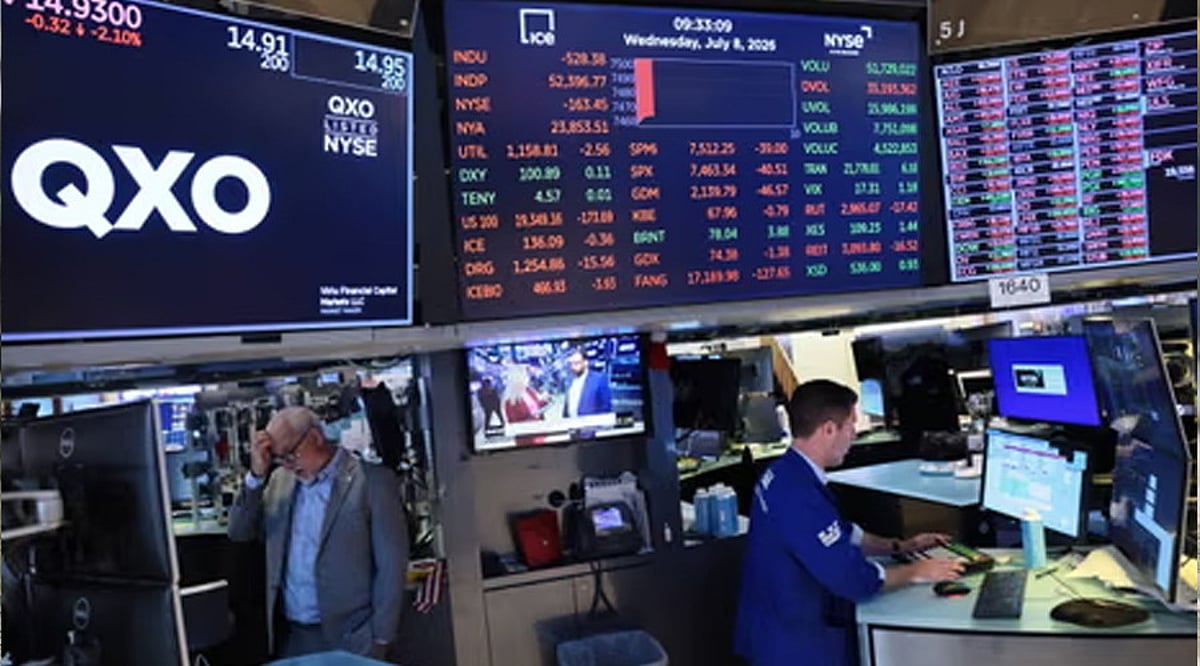
    US stocks fell sharply on Thursday as a surge in oil prices, rising bond yields, and disappointing earnings from major technology companies weighed on market sentiment. The Dow Jones Industrial Average dropped approximately 500 points during morning trading, with the S&P 500 losing nearly 1% and the Nasdaq Composite falling around 1.7%.

    The sell-off pushed major indexes to multi-week lows, with declining shares outnumbering advancing stocks on both the New York Stock Exchange and Nasdaq. The CBOE Volatility Index rose to 18.79 after three consecutive declines, reflecting heightened investor anxiety.

    Oil Rally Raises Inflation Concerns

    Brent crude futures surged 6.7% to $100.37 per barrel during European trading, while West Texas Intermediate gained 5.5% to $91.91 per barrel. The rally followed reports that Houthi forces attacked two Saudi oil tankers near the Bab el-Mandeb Strait, raising fresh supply concerns and threatening another major shipping route.

    Higher oil prices pushed Treasury yields upward, with the 10-year yield reaching its highest level since January 2025 and the two-year yield hitting a 17-month high. This renewed inflation fears, prompting traders to increase bets on a Federal Reserve rate hike at the July meeting. CME FedWatch data showed markets pricing a 38% chance of a quarter-point increase, up from about 12% just one week earlier.

    Alphabet and Tesla Pressure Nasdaq

    Alphabet shares fell more than 6% after the company raised its 2026 capital spending forecast, with investors focusing on costs tied to artificial intelligence infrastructure. AJ Bell investment director Russ Mould noted a “healthy degree of scepticism” about returns from such spending. The decline pulled communication services stocks lower.

    Tesla shares dropped more than 12% after reporting negative quarterly free cash flow and higher operating expenses relative to revenue growth. CEO Elon Musk called 2026 a “massive capex year,” with spending plans including robots, data centers, manufacturing projects, and its robotaxi business.

    Energy Shares Rise With Crude Prices

    Energy companies moved higher as oil prices extended a five-day rally. Exxon Mobil gained 1.6%, while Chevron rose 1.9%. Diamondback Energy, Devon Energy, ConocoPhillips, and Occidental Petroleum gained between 1.7% and 2.7%. Refiners also advanced, with Valero Energy, Marathon Petroleum, and Phillips 66 rising between 1.1% and 1.3%.

    Analysts also watched shipping activity in the Middle East. UBS analyst Giovanni Staunovo said subdued vessel traffic could slow the region’s production recovery.

    Rate Expectations Shift Before Fed Meeting

    The oil rally renewed concern that higher fuel costs could keep inflation elevated. New labor data also supported expectations that the Fed could keep policy tight, with initial unemployment claims falling to 187,000, below forecasts of 210,000.

    Airline shares faced pressure as higher fuel costs threatened operating expenses, while transport stocks moved lower. Lockheed Martin shares rose after the company lifted its 2026 forecasts, and ServiceNow gained after raising its annual subscription revenue outlook.

    Markets will likely remain focused on oil prices, upcoming inflation data, and the Federal Reserve’s next policy decision for direction.

  • Dow Rises, Nasdaq Slips as Wall Street Awaits Alphabet and Tesla Earnings Amid Rising Oil Prices

    Dow Rises, Nasdaq Slips as Wall Street Awaits Alphabet and Tesla Earnings Amid Rising Oil Prices

    U.S. stocks ended mixed on Wednesday as investors weighed rising oil prices, a downturn in semiconductor shares, and anticipation of major earnings reports from technology giants. The Dow Jones Industrial Average gained roughly 0.5%, while the S&P 500 hovered near the flatline. The Nasdaq Composite fell about 0.3%, dragged lower by weakness in chip stocks.

    Big Tech Earnings in Focus

    Alphabet, Tesla, IBM, ServiceNow, and Texas Instruments are set to report quarterly results after the closing bell. Their updates are expected to shed light on artificial intelligence spending, cloud demand, and corporate technology budgets. Alphabet and Tesla are the first members of the ‘Magnificent Seven’ to release second-quarter results, with investors closely watching revenue growth, capital expenditure, and forward guidance.

    Alphabet shares traded near $346 ahead of the report. The company faces scrutiny over its AI strategy after delaying a model launch tied to its development plans. Tesla’s results will also be closely watched as the automaker continues heavy spending on new projects. Analysts will focus on cash flow, operating costs, and capital outlays.

    Sam Stovall, chief investment strategist at CFRA Research, noted that investors may adopt a ‘wait-and-see attitude’ before making larger market moves, with spending levels playing a central role in the response to these earnings.

    Oil Prices Surge on Geopolitical Tensions

    Oil prices climbed as the United States conducted its eleventh straight round of strikes against Iran. Brent crude rose about 3% to trade above $93 per barrel, briefly crossing $95. West Texas Intermediate advanced above $86 per barrel. U.S. Secretary of State Marco Rubio stated that Washington would continue protecting shipping through the Strait of Hormuz and described Iran as ‘not serious’ about negotiations.

    Higher energy prices reignited concerns about inflation and interest rates. Federal funds futures indicated a strong likelihood that the Federal Reserve will hold rates steady at its next meeting, though markets still price in a potential rate increase later in 2026.

    Chip Stocks Weigh on Nasdaq

    Technology stocks were the weakest sector during morning trading, with semiconductor shares under pressure after several volatile sessions. The Philadelphia Semiconductor Index traded near unchanged levels, having closed lower in five of the past ten sessions. Texas Instruments edged lower ahead of its earnings release. Investors are scrutinizing chip demand, order growth, and management forecasts during this earnings season. AI infrastructure spending has supported semiconductor valuations, but recent price swings have slowed the Nasdaq’s momentum.

    Materials and utilities sectors moved higher, limiting broader market losses. Strength in industrial and materials shares also supported the Dow. Market breadth remained positive, with advancing stocks outnumbering decliners on both the NYSE and Nasdaq.

    Notable Stock Movers

    Super Micro Computer surged more than 20% after the AI server maker issued a strong business update, securing over $60 billion in new fourth-quarter orders and forecasting gross margins above previous expectations. AT&T gained about 3% after adding more wireless subscribers than analysts anticipated and reporting better-than-expected quarterly earnings.

    GE Vernova shares fell despite reporting $11.1 billion in revenue and raising its 2026 guidance, as earnings missed market estimates. The company posted an 88% rise in total orders to $24.2 billion, with data center orders exceeding $5 billion in the first half of the year—more than double its full-year total in 2025.

    Shares of generic drugmakers declined after President Donald Trump announced plans for future tariffs on imported generic medicines, starting with a 100% tariff in August 2028 and rising to 200% a year later.

    With oil prices rising and Big Tech earnings approaching, markets remain focused on the next major catalyst for direction.

  • Leading US Tech Giants: Apple, Microsoft, NVIDIA, and More Dominate 2025

    Leading US Tech Giants: Apple, Microsoft, NVIDIA, and More Dominate 2025

    The United States continues to be the global epicenter of technological innovation, housing some of the most influential companies that shape industries ranging from consumer electronics to enterprise software and artificial intelligence. Here is an overview of the top 10 tech companies in the US, highlighting their core strengths and market impact.

    1. Apple

    Apple leads consumer technology with premium iPhones, Macs, and wearables. The company is expanding its AI capabilities, developing powerful silicon chips, and maintaining a thriving global ecosystem that keeps users engaged across devices.

    2. Microsoft

    Microsoft dominates enterprise software with Azure cloud services, AI innovation, productivity tools like Office 365, gaming through Xbox, cybersecurity solutions, and business applications used by millions worldwide.

    3. NVIDIA

    NVIDIA powers the AI revolution through advanced GPUs, data center technologies, autonomous driving platforms, and high-performance computing infrastructure that are critical for modern AI workloads.

    4. Amazon

    Amazon combines global e-commerce leadership with AWS cloud services, AI innovations, logistics expertise, and smart consumer devices like Alexa and Echo, reaching consumers and businesses across markets.

    5. Alphabet (Google)

    Alphabet, the parent company of Google, drives internet search, AI breakthroughs, cloud services, the Android ecosystem, and cutting-edge digital advertising technologies that underpin much of the web.

    6. Meta

    Meta connects billions through Facebook, Instagram, and WhatsApp, while investing heavily in AI research, virtual reality, and metaverse initiatives that aim to shape future digital interactions.

    7. Oracle

    Oracle specializes in enterprise databases, cloud infrastructure, AI-powered business applications, and mission-critical software that serve governments and multinational corporations worldwide.

    8. IBM

    IBM focuses on hybrid cloud, artificial intelligence, quantum computing, consulting services, and enterprise technology solutions tailored for regulated industries such as finance and healthcare.

    9. Intel

    Intel develops advanced processors, semiconductor technologies, AI accelerators, networking solutions, and manufacturing innovations that support global computing infrastructure from PCs to data centers.

    10. Cisco

    Cisco provides networking hardware, cybersecurity solutions, collaboration platforms like Webex, and enterprise connectivity that power businesses, governments, and digital transformation initiatives around the world.

    These ten companies not only drive technological progress but also create millions of jobs and generate trillions of dollars in market value, solidifying the US position as a leader in the global tech landscape.

  • Big Tech’s Revenue Per Second: How Amazon, Apple, and Others Generate $68,000 Every Moment

    Big Tech’s Revenue Per Second: How Amazon, Apple, and Others Generate $68,000 Every Moment

    Every second, the world’s largest technology companies collectively generate nearly $68,000 in revenue, a staggering figure that puts their financial scale into perspective. Amazon, Apple, Alphabet, Microsoft, and Meta—the five US tech giants ranked by trailing twelve-month revenue through March 2026—drive this rapid cash flow through distinct business models: cloud infrastructure, digital advertising, enterprise software, hardware ecosystems, and online retail.

    Why Revenue Per Second Matters

    Market cap and headline revenue are common benchmarks, but revenue per second reveals how quickly money moves through a business. Calculated by dividing trailing twelve-month (TTM) revenue by 31,536,000 seconds in a year, this metric stays current—unlike stale annual reports. Critically, revenue is not profit; it’s income before costs, R&D, marketing, and taxes. A company can have high revenue per second yet thin margins, a distinction often overlooked in coverage.

    Company-by-Company Breakdown

    Amazon

    Amazon leads by a wide margin, thanks to its three-tiered model: retail (thin margins), AWS cloud (roughly 30% operating margin), and advertising (near-pure margin). Together, they outpace rivals even in categories where Amazon isn’t the largest player.

    Apple

    Apple’s speed comes from maximizing existing customers. Services like the App Store, Apple Music, iCloud, and Apple TV+ now boast gross margins above 70%. Each device sold becomes a platform for recurring services revenue.

    Alphabet

    Alphabet’s revenue flows from a live auction. Every search query triggers real-time bidding among advertisers, with Alphabet taking a cut. Billions of daily queries translate into constant per-second revenue tied to auction volume.

    Microsoft

    Microsoft benefits from structural stickiness. Enterprise customers reliant on Azure or Microsoft 365 face high switching costs, turning contracts into recurring compounding revenue. AI tools like Copilot further deepen that dependency.

    Meta

    Meta doesn’t sell products to its 3.56 billion daily active users; it sells access to their attention via ad inventory. Average ad prices rose 12% year-over-year while impressions climbed 19%, meaning Meta earns more per unit of attention and more units overall.

    What the Numbers Really Reveal

    Revenue per second says nothing about margin. Amazon’s TTM net income is about $90.8 billion on $743 billion revenue, a far lower conversion than Apple’s $451.4 billion revenue yielding over $100 billion profit. Two companies can move money at similar speeds but land in very different profit positions. The underlying business mechanism—ad auction, subscription, or cloud contract—matters far more than the per-second figure itself.

    Final Thoughts

    Two companies can match revenue speed yet have almost nothing in common underneath. One lives off subscriptions, another off cloud contracts, another off ad auctions in an ecosystem users rarely leave. The number grabs attention, but the differences underneath explain everything.