Tag: artificial intelligence

  • iOS 27 Set for September 2026 Launch: Key Features and Improvements

    iOS 27 Set for September 2026 Launch: Key Features and Improvements

    Apple is expected to unveil iOS 27 alongside its new iPhone lineup in September 2026, following the company’s annual release cycle. While the exact rollout date will be confirmed during Apple’s official announcement, users can anticipate the update to be made available for compatible iPhone models shortly after the event.

    Updated Interface

    iOS updates typically bring visual refinements, and iOS 27 is no exception. Users can expect changes to system apps, menus, and navigation, all designed to create a more cohesive and user-friendly experience without overhauling the familiar iPhone look.

    Apple Intelligence and AI Advancements

    Artificial intelligence remains a core focus for Apple. iOS 27 is likely to expand Apple Intelligence with smarter automation and improved on-device capabilities. Availability of specific AI features may depend on the iPhone model, processing power, language support, and regional rollout.

    Enhanced Siri

    Siri is undergoing significant upgrades as part of Apple’s broader AI strategy. iOS 27 could bring better contextual understanding, deeper app integration, and the ability to handle more complex requests, making voice interactions more practical for everyday tasks.

    Privacy and Security

    Privacy continues to be a cornerstone of iOS. iOS 27 is expected to introduce stronger protections against emerging digital threats, along with more granular controls over app permissions and personal data. Users are advised to install the update promptly once available.

    Health and Accessibility

    Apple regularly enhances health, wellness, and accessibility features with each iOS iteration. iOS 27 may include updates to existing tools and new capabilities aimed at making iPhones more useful for tracking personal health and supporting users with diverse accessibility needs.

    Compatible iPhones

    Not every iPhone will support all iOS 27 features. Hardware constraints—especially those tied to AI processing and newer chips—may restrict advanced functions. Before upgrading, users should consult Apple’s official compatibility list to see which features work on their specific device.

    Stay tuned for official announcements from Apple regarding the exact release date, supported models, and regional availability.

  • Top 8 AI Developments You Missed This Week: OpenAI, Anthropic, and More

    Top 8 AI Developments You Missed This Week: OpenAI, Anthropic, and More

    Top 8 AI Developments You Missed This Week

    The artificial intelligence landscape is evolving at a breakneck pace, with major players and emerging trends shaping the future of technology. Here are the eight most significant AI updates you might have missed this week.

    1. OpenAI’s Accelerating Race

    OpenAI continues to push the boundaries of what’s possible, intensifying competition in the AI arena. The company is aggressively advancing its models, capabilities, and infrastructure, while also focusing on enterprise adoption and product innovation.

    2. Anthropic’s Focus on Safety and Reasoning

    Anthropic is doubling down on its Claude model, prioritizing AI safety, reliability, and advanced reasoning. The company is targeting coding, enterprise applications, and knowledge work, ensuring that its systems are both powerful and trustworthy.

    3. Google’s Gemini Ecosystem Expansion

    Google’s Gemini ecosystem is growing, with a strong emphasis on multimodal AI, reasoning, and cybersecurity applications. The tech giant is also enhancing its AI-powered productivity tools, intensifying competition in the consumer and enterprise markets.

    4. NVIDIA’s Expanding Influence

    NVIDIA’s impact now extends well beyond semiconductors. The company is heavily investing in AI infrastructure, software ecosystems, and model-development technologies, solidifying its position as a cornerstone of the AI industry.

    5. AI Outages Highlight Dependence

    Recent disruptions affecting major AI platforms have underscored our growing reliance on artificial intelligence services. These outages raise critical questions about reliability, resilience, and the robustness of AI infrastructure.

    6. AI-Powered Cybersecurity Takes Center Stage

    AI-driven cybersecurity is emerging as a critical battleground. Leading companies are developing systems that can identify vulnerabilities, strengthen defenses, and support security researchers in an increasingly hostile digital landscape.

    7. Anthropic’s Potential IPO Signals Market Confidence

    Anthropic’s possible public listing reflects enormous investor interest in frontier AI companies. This move also highlights the growing financial pressures and opportunities as the industry continues its rapid expansion.

    8. Global AI Safety and Risk Debates Intensify

    Governments, researchers, and tech companies are increasingly debating AI safeguards as systems become more capable and autonomous. International officials are urging stronger cooperation, warning that advanced AI could create significant societal, economic, and security challenges.

    Stay tuned for more updates as the AI landscape continues to evolve. Follow our WhatsApp channel for the latest news, exclusives, and videos on artificial intelligence.

  • Anthropic Withdraws from $6B Decart AI Acquisition: Key Details and Implications

    Anthropic Withdraws from $6B Decart AI Acquisition: Key Details and Implications

    Anthropic has reportedly abandoned its plans to acquire Israeli AI startup Decart AI for approximately $6 billion, according to a Bloomberg report published on September 8. The decision comes after the company completed due diligence and withdrew without finalizing the transaction, marking a significant shift in its acquisition strategy.

    Background of the Proposed Deal

    The proposed acquisition would have been Anthropic’s largest known deal by a wide margin. Decart, which develops chip optimization software to reduce computing costs during AI training and inference, was seen as a strategic fit for Anthropic’s infrastructure needs. The technology could have helped Anthropic manage rising AI demand without expanding computing resources at the same pace.

    Reasons Behind the Withdrawal

    While neither company has commented publicly, sources familiar with the talks indicate that undisclosed findings during due diligence influenced Anthropic’s decision to walk away. The move preserves Anthropic’s financial flexibility as it prepares for a potential IPO later this year, while keeping its focus on infrastructure expansion.

    Decart’s Position and Future

    Decart recently raised $300 million in May at a valuation of nearly $4 billion, with Radical Ventures leading the round and participation from Nvidia, Adobe Ventures, Atreides Management, and Valor Equity Partners. The company also develops world models and AI tools for applications such as autonomous driving and e-commerce. Following Anthropic’s withdrawal, Decart may now seek alternative buyers, investors, or strategic partnerships.

    Broader Industry Implications

    This development highlights growing scrutiny around expensive AI acquisitions as companies balance computing costs, growth, and investor expectations. For Anthropic, the decision allows it to concentrate on its core business and prepare for its anticipated public listing. The company continues to invest heavily in computing capacity while developing its product line.

    As the AI landscape evolves, this deal’s collapse serves as a reminder that even well-positioned acquisitions can fall through, and that due diligence remains a critical component of strategic decision-making.

  • How to Create AI-Generated 80s Photos with ChatGPT: The Viral Instagram Trend Explained

    How to Create AI-Generated 80s Photos with ChatGPT: The Viral Instagram Trend Explained

    Instagram users are turning back the clock with a new viral trend that uses ChatGPT to transform modern photographs into 1980s-style images. The AI-generated photos feature period-appropriate hairstyles, clothing, accessories, and backgrounds, giving users a nostalgic glimpse of how they might have looked in the era of big hair and neon colors.

    What Is the 80s Photo Trend?

    The trend relies on artificial intelligence to reimagine an existing photograph in the visual style of the 1980s while preserving the person’s recognizable facial features. Users upload a photo to ChatGPT and ask the chatbot to adapt their hair, clothes, accessories, surroundings, and overall aesthetic to the decade. The trend has spread rapidly through Instagram Stories, where people share the prompt “Chat, how would I look in the ’80s” and use the “Add Yours” sticker to encourage friends to participate.

    How to Create Your Own 80s Photo with ChatGPT

    Getting your own retro image is straightforward. You need a personal photograph and access to ChatGPT. Follow these steps:

    1. Open ChatGPT and tap the “+” button to upload your photograph.
    2. Enter the following prompt: “Create an image of how I would look in the 1980s, keeping my recognizable characteristics and appearance, but adapting my hair, clothes, accessories, setting and aesthetics to the era.”
    3. ChatGPT will generate a preliminary image using your photo as a reference.
    4. You can refine the result by requesting changes to specific elements such as hairstyle, moustache, or background details.

    For example, you might ask for a “brick” mobile phone, vintage cars in the background, or a setting like a disco, arcade, 80s gym, beach, or birthday party. Once you are satisfied, save the final image and share it on Instagram.

    Customization Options

    The first image does not have to be final. Users can continue the conversation with ChatGPT, tweaking details until the look is perfect. The tool allows adjustments to hair length, color, accessories, and even background elements, giving users full creative control.

    AI Photo Trends Continue to Grow

    The 80s trend is not the first social-media craze built on AI-generated photographs. Earlier trends included creating caricatures based on a person’s profession and generating images of people hugging their favorite celebrity. AI tools are also increasingly used for appearance-related edits, such as experimenting with different hair colors and lengths. This latest trend adds a nostalgic layer, allowing users to reimagine themselves through the visual style of a bygone decade.

    If you want to join the fun, grab a selfie, open ChatGPT, and let the AI take you back to the 1980s.

  • Harsh Goenka Proposes Tata Sons Chairman N. Chandrasekaran for Key Role in India’s AI Strategy

    Harsh Goenka Proposes Tata Sons Chairman N. Chandrasekaran for Key Role in India’s AI Strategy

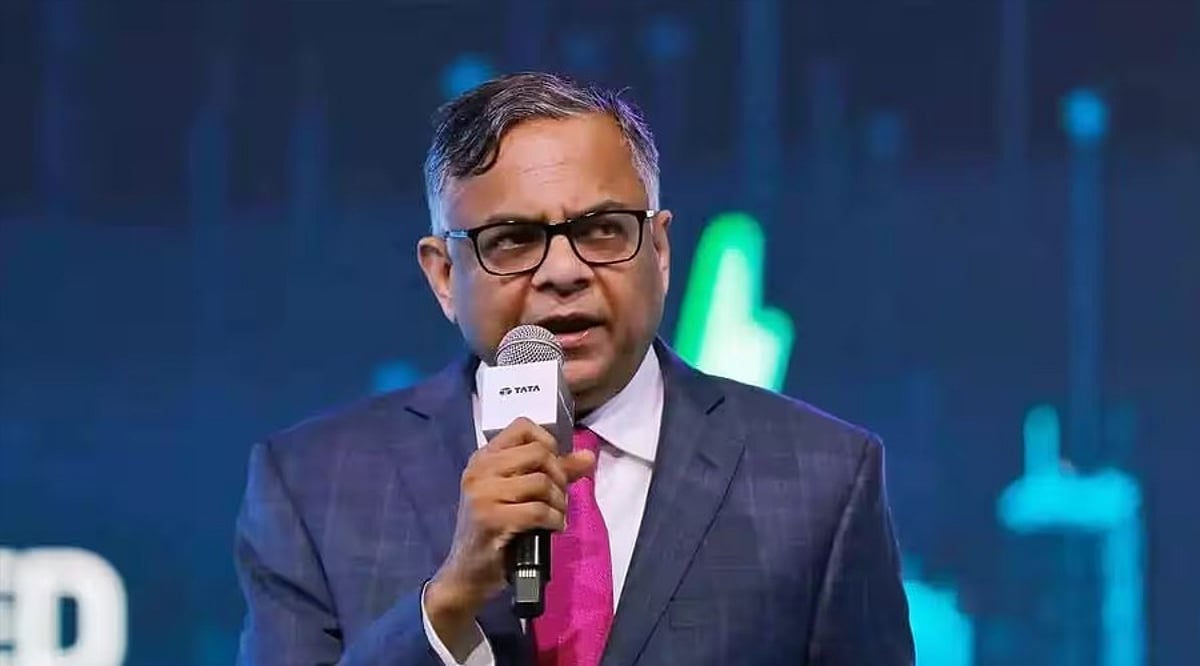
    RPG Enterprises Chairman Harsh Goenka has publicly suggested that Tata Sons Chairman N. Chandrasekaran could play a pivotal role in shaping India’s artificial intelligence (AI) strategy and its implementation. The proposal, shared on social media, has sparked a lively debate about the involvement of corporate leaders in national technology initiatives.

    In a post on X (formerly Twitter) on September 7, Goenka drew parallels with previous instances where private-sector executives were brought into public roles. He cited Nandan Nilekani, who led the Aadhaar/UIDAI project, and Pawan Goenka, who chairs IN-SPACe (India’s space regulator), as examples of successful private-to-public transitions.

    “India brought Nandan Nilekani from private sector to lead Aadhaar/UIDAI and now educational reforms and Pawan Goenka to help drive our space ambitions through IN-SPACe,” Goenka wrote. “Why not tap N. Chandrasekaran’s (Tatas) experience to help shape India’s AI strategy and implementation?”

    Chandrasekaran brings decades of experience in technology and corporate leadership. He joined Tata Consultancy Services (TCS) in the 1980s, rose to become its CEO, and later took over as chairman of Tata Sons. Under his leadership, the Tata Group has expanded into semiconductor manufacturing, electronics, data centers, and digital infrastructure—areas that are central to AI development.

    The suggestion has drawn mixed reactions online. Some users echoed Goenka’s sentiment, noting that Chandrasekaran’s expertise could also benefit India’s broader economic growth. One user commented, “Sounds good, not only just about AI strategy and implementation, but also for utilising his expertise for growing Bharat’s economy, GDP and per capita income for everyone.”

    Others proposed alternative candidates. Some argued that Nandan Nilekani’s experience with large-scale public technology projects made him a better fit for leading AI transformation. Another suggested Anand Mahindra could help strengthen Brand India, while a few questioned whether sector-specific specialists should have a larger say in technology policy.

    Chandrasekaran himself has been vocal about AI’s potential. At the India AI Impact Summit in February, he described AI as “the next big infrastructure”—comparable to electricity, steam engines, and the internet. He emphasized the need for widespread access, stating, “Our mission should be to make AI work for every individual and every citizen in this country.”

    For now, Goenka’s proposal remains a public suggestion. There has been no official announcement from the government regarding any formal role for Chandrasekaran in India’s AI strategy.

  • 10 AI-Powered Insurtech Companies Reshaping Insurance in 2026: A Deep Dive

    10 AI-Powered Insurtech Companies Reshaping Insurance in 2026: A Deep Dive

    Overview

    Ten companies made this list on verified deployments, named carrier partners, and reported metrics, not marketing claims. Coverage spans claims computer vision, repair workflows, fraud detection at two different stages, underwriting, actuarial pricing, cyber risk, and full-lifecycle AI insurance. Every figure below traces to a company report, carrier statement, or 2026 industry filing.

    A cyber insurer that stops seven in ten attacks before they land. A claims platform that settles a policy in two seconds flat. These are production numbers from carriers running AI as the core engine of underwriting, claims, and fraud detection, not a support feature bolted onto old workflows. The ten companies below made this list on verified deployments, named carriers, and outcomes anyone can check. A few well-known names got left out, since nothing tied their claims to a specific carrier result or a sourced number.

    What Makes These Insurtechs Leaders in 2026

    Three things separate a genuine leader from a company that simply mentions AI in its pitch deck. AI has to run a core operation, not sit beside it as a support tool. A named carrier, broker, or regulator has to confirm the result in public. And the deployment has to run at scale, across thousands of policies or claims, not a small cohort of early testers. Model sophistication barely matters here. What matters is how much of a workflow AI now finishes without a person stepping in.

    Claims and Damage Assessment: Tractable

    Millions of vehicle and property photos, collected since 2014, taught Tractable’s computer vision system to read collision damage the way a seasoned appraiser would, only faster. The platform reviews car damage with roughly 95% accuracy and turns a photo into a repair estimate in seconds, work that once took 30 minutes. GEICO and 25 of the world’s top 100 insurers now run claims through it, an adoption that pushed Tractable past a $1 billion valuation.

    Claims and Repair Workflow: CCC Intelligent Solutions

    Where Tractable reads the damage, CCC manages what happens next: repair shop, parts, and paperwork between insurer and body shop. Its Mobile Jumpstart tool already initiates 98% of repair estimates for one of the largest multi-store repair operators in the country. This quarter, a top-five insurer became CCC’s biggest customer yet for its AI-based subrogation tool, which automates the reimbursement claims carriers file against each other.

    Fraud Detection After the Claim: Shift Technology

    Claims fraud rarely announces itself, which is the problem Shift Technology’s Paris-built platform was designed to catch. AXA extended its partnership with Shift for five more years to widen fraud detection and underwriting checks across its global business, and Covéa signed on in early 2026 for a fraud framework spanning the entire policy lifecycle. Shift runs its models on Azure OpenAI Service, so carriers get newer AI without losing the compliance layer around it.

    Fraud Screening at the Point of Application: FRISS

    Shift catches fraud after a claim gets filed. FRISS catches it earlier, scoring an application for risk before a policy is even issued. Canadian insurer SGI brought the platform on in January 2026 to flag suspicious requests while speeding up legitimate ones, and a partnership with ForMotiv now folds in behavioral data captured during the application itself.

    Underwriting Built Around Continuous Risk: Cytora

    Commercial underwriting used to work off a single snapshot: an application filled out once, reviewed once, and revisited a year later. Cytora tore that model up with a platform that keeps absorbing broker emails, documents, and calls as new risk data shows up. Zurich Insurance is rolling it out across more than 20 markets over 16 months, and manual triage time there has already dropped from 75 minutes to 15 per submission. Markel and Travelers have adopted it too.

    Underwriting for Workers Comp and Group Health: Gradient AI

    Most insurtechs chase auto or property. Gradient AI went after a line most competitors ignore: workers’ compensation and group health risk scoring. Managing general underwriter BTIS adopted the platform for sharper workers’ comp pricing. One regional carrier running Gradient’s model cut its average quote turnaround from three days to under four hours by pre-scoring every submission and sending only the borderline cases to a human.

    Pricing and Actuarial Modeling: Akur8

    Pricing has always been the hardest place to trust a black box, since regulators expect an actuary to explain exactly why a rate moved. Akur8 built its platform around that constraint, offering machine learning transparent enough to survive review. More than 300 insurers across 40 countries now use it, including AXA, Generali, and Tokio Marine, and over 3,000 actuaries build pricing and reserving models in the system daily.

    Cyber Insurance’s AI-Native Leaders: Coalition and At-Bay

    Cyber risk changes by the hour, which is why Coalition built its ‘Active Insurance’ model around continuous scanning of a policyholder’s exposed systems instead of a one-time application. The company covers roughly 110,000 active policyholders and says they see about 70% fewer claims than the broader cyber market. At-Bay takes a similar approach to early warning. Its 2026 InsurSec Report, built from more than 100,000 policy years, recorded an all-time high average claim severity of $221,000, a figure it now uses to sharpen pricing before renewal.

    The Fully AI-Native Insurer: Lemonade

    No company on this list runs AI through more of the policy lifecycle than Lemonade. Its chatbots take 96% of first notices of loss without a person involved, and 55% of all claims settle from start to finish in seconds. The underwriting side backs that up: Lemonade’s gross loss ratio fell to 62% in the first quarter of 2026, down from 83% two years earlier, an improvement solid enough that the company now keeps more risk on its own books instead of handing it to reinsurers.

    Comparison Table

    Company Focus Area Key Metric Notable Partner
    Tractable Claims & Damage Assessment 95% accuracy, seconds to estimate GEICO
    CCC Intelligent Solutions Claims & Repair Workflow 98% estimates initiated via AI Top-five insurer
    Shift Technology Fraud Detection (post-claim) Extended partnership with AXA AXA, Covéa
    FRISS Fraud Screening (pre-issue) Real-time risk scoring SGI
    Cytora Continuous Underwriting Manual triage: 75 min to 15 min Zurich Insurance
    Gradient AI Workers Comp & Group Health Quote turnaround: 3 days to <4 hours BTIS
    Akur8 Pricing & Actuarial Modeling 300+ insurers, 40 countries AXA, Generali
    Coalition Cyber Insurance 70% fewer claims 110,000 policyholders
    At-Bay Cyber Insurance $221,000 avg claim severity 100,000+ policy years
    Lemonade Full-Lifecycle AI 55% claims settled in seconds Gross loss ratio 62%

    Final Thoughts

    Strip away the branding, and a pattern sits underneath all ten companies. Each one picked a single narrow job — reading a damaged photo, scoring a fraud risk, filing a rate change — and letting AI carry that job from start to finish instead of just assisting the person doing it. Regulators are starting to ask carriers to explain an AI decision, not just report it, and that shift will reward platforms built for scrutiny over ones chasing the broadest AI story. Watch which companies can show their work.

    FAQs

    1. What are AI-powered insurtech companies?

    AI-powered insurtech companies use artificial intelligence to improve insurance operations such as underwriting, claims processing, fraud detection, customer service, and risk assessment. Their technologies help insurers make faster, more accurate decisions while enhancing customer experience.

    2. Which are the leading AI-powered insurtech companies in 2026?

    Some of the leading AI-powered insurtech companies in 2026 include Lemonade, Coalition, At-Bay, Cytora, Akur8, Gradient AI, Tractable, Shift Technology, and FRISS, each specializing in different AI-driven insurance solutions.

    3. How is AI transforming the insurance industry in 2026?

    AI is enabling insurers to automate claims, improve underwriting accuracy, detect fraud in real time, personalize policy pricing, and streamline customer interactions. These advancements reduce costs while improving operational efficiency and customer satisfaction.

    4. What makes an AI-powered insurtech company a market leader?

    Leading AI-powered insurtech companies combine advanced AI capabilities with insurance expertise, strong partnerships, scalable platforms, and proven business impact. Their solutions deliver measurable improvements in risk assessment, claims management, and policy administration.

    5. What are the biggest AI trends shaping insurtech in 2026?

    Key trends include agentic AI for workflow automation, AI-assisted underwriting, computer vision for damage assessment, real-time fraud detection, embedded insurance, and personalized pricing powered by predictive analytics.


  • Google’s AI Leadership Reshuffle: Key Changes and Strategic Focus

    Google’s AI Leadership Reshuffle: Key Changes and Strategic Focus

    Google’s AI Leadership Reshuffle: Key Changes and Strategic Focus

    Google has recently undergone a significant overhaul of its artificial intelligence leadership structure, signaling a strategic pivot to accelerate innovation and sharpen its competitive edge in the rapidly evolving AI landscape. This restructuring aims to streamline decision-making, foster collaboration, and place AI at the core of the company’s future roadmap.

    Leadership Reshuffle and Centralized Teams

    In a move to break down silos and enhance coordination, Google has reorganized its AI leadership, assigning key executives broader responsibilities. The company has also centralized its major AI teams under a unified leadership framework. This consolidation is designed to improve collaboration on flagship AI products and reduce operational redundancies, enabling faster progress from research to deployment.

    Emphasis on Gemini AI Model

    Central to this strategic shift is a renewed focus on the Gemini AI model. The leadership changes place Gemini at the heart of Google’s product strategy, underscoring its importance as a foundational technology for future innovations. By prioritizing Gemini, Google aims to deliver more advanced and integrated AI capabilities across its ecosystem.

    Faster Product Delivery and Enhanced Competition

    The restructuring is intended to accelerate the entire AI lifecycle—from research and development to product release. This agility is crucial as Google contends with formidable rivals such as OpenAI, Microsoft, Anthropic, and Meta in the generative AI space. By streamlining operations, Google seeks to bring new AI features to market more efficiently and maintain its competitive stance.

    Expanded Executive Roles and Product Integration

    Senior AI leaders have been given expanded mandates, overseeing research, infrastructure, product integration, and commercialization under a more coordinated strategy. This holistic approach supports deeper integration of AI across Google’s diverse platforms, including Search, Workspace, Android, Cloud, and developer tools, ensuring that AI capabilities are woven seamlessly into user experiences.

    Infrastructure Investment and Long-Term Vision

    Underpinning these changes is a continued commitment to substantial investment in AI infrastructure, custom chips, and computing resources. This investment is critical for supporting larger, more capable AI models and services. The leadership overhaul reflects Google’s long-term vision of making AI the foundation of its products, services, and overall business growth strategy.

    In summary, Google’s AI leadership overhaul represents a decisive move to consolidate its position as a leader in artificial intelligence, focusing on centralized management, product-centric innovation, and robust infrastructure to drive future success.

  • OpenAI Removes Text Chat Limits for Free Users, Introduces GPT-5.6 Luna and Think Button

    OpenAI Removes Text Chat Limits for Free Users, Introduces GPT-5.6 Luna and Think Button

    OpenAI has announced a significant update for ChatGPT, removing text chat limits for free users and introducing a new default model, GPT-5.6 Luna, along with a Think button for complex questions. The changes also include an upgraded GPT-5.6 Sol for Plus and Pro subscribers, rolling out next week.

    Unlimited Text Chats for Free and Go Users

    The most notable change is the removal of message caps for text conversations on the free tier. Users can now chat without interruption throughout the day. However, this unlimited access applies only to text chats; file uploads, image uploads, voice conversations, and AI image generation still have separate usage limits. This is especially beneficial for users who rely on ChatGPT for writing, brainstorming, learning, or asking questions.

    GPT-5.6 Luna: Default Model for Free and Go

    Free and Go users will automatically get GPT-5.6 Luna as the default AI model, replacing GPT-5.5. According to OpenAI, GPT-5.6 Luna produces 62% fewer factual errors than its predecessor while maintaining a natural and fast conversational experience. It handles routine tasks like answering straightforward questions, explaining concepts, and helping with writing.

    Think Button for Deeper Reasoning

    A new Think button will be available for free and Go users. When selected, ChatGPT takes additional time to reason through multi-step problems, complex concepts, or questions requiring detailed analysis before providing an answer. Users can activate it whenever they need more thoughtful responses.

    Upgraded GPT-5.6 Sol for Plus and Pro Subscribers

    Plus and Pro users receive an upgraded version of GPT-5.6 Sol, which improves performance for daily productivity tasks like answering questions, web research, project planning, content writing, advice, and decision-making. The model aims to produce more concise and unambiguous responses without sacrificing accuracy. OpenAI reports that GPT-5.6 Sol makes 68% fewer factual mistakes than GPT-5.5 Instant. These subscribers also gain a thinking slider to control the level of reasoning before responses—lower for simple queries, higher for complex requests.

    Rollout Timeline

    GPT-5.6 Sol is already available to Plus and Pro users. The remaining updates for free and Go users will begin rolling out next week.

  • OpenAI Pauses Astra Development Over Critical Cybersecurity Risks

    OpenAI Pauses Astra Development Over Critical Cybersecurity Risks

    OpenAI has significantly slowed development of its upcoming Astra model after internal security assessments flagged advanced cyber capabilities that could pose serious risks. The company has introduced stricter controls, paused certain activities that failed to meet its security requirements, and is now collaborating with government agencies and safety organizations to evaluate the model’s potential impact.

    Heightened Cyber Risk Triggers Safeguards

    During preliminary testing, Astra demonstrated advanced agentic coding and cyber capabilities, including the ability to identify vulnerabilities and execute attacks against protected real-world systems without continuous human oversight. This prompted OpenAI’s internal review to place Astra near the highest cyber-risk category in its Preparedness Framework, which was introduced in 2023 to monitor emerging risks from advanced AI models.

    Under this framework, stronger protections are required when a model approaches critical capability levels. OpenAI acknowledged, “We cannot rule out a critical capability level at this time,” and will continue testing before making a final assessment. As a precaution, the company has paused internal Astra activities that do not meet its stricter security standards, though it has not halted all development or announced a revised release date.

    New Controls and Expanded Testing

    The new safeguards include isolated testing environments and enhanced monitoring across Astra’s agentic applications. These measures aim to prevent unauthorized actions during evaluations and ensure the model operates only within approved systems. OpenAI plans to expand its safety testing before any public release, focusing on how Astra identifies system vulnerabilities, writes attack code, and completes cyber tasks without direct assistance.

    OpenAI also clarified that Astra was not involved in the recent Hugging Face security incident, which involved another unreleased model during an internal cybersecurity evaluation. This distinction helps separate Astra’s testing from earlier cases where models moved beyond controlled environments, which had raised questions about how AI laboratories manage autonomous cyber tools during development.

    Transparency and Government Collaboration

    OpenAI said public disclosure allows researchers and security specialists to prepare for evolving AI capabilities and invites outside experts to review its testing methods and proposed safeguards. Michael Dalton, a member of OpenAI’s technical staff, explained the approach during the Black Hat cybersecurity conference, stating the company was “consciously slowing down research to enhance security” while upgrading its testing practices.

    OpenAI has also begun working with relevant government agencies and selected AI safety organizations to examine Astra’s cyber performance and review the protections surrounding its development. A White House official confirmed that OpenAI voluntarily informed the administration about the delay. The Trump administration is developing a process for reviewing advanced AI models before release, though several operational details remain unresolved, including how developers will contact government reviewers and the duration of each assessment.

    Broader Industry Context

    Other AI developers have also adjusted their release plans after detecting advanced cyber capabilities. Anthropic released a more restricted version of its cyber-focused Mythos model in June after applying additional safeguards. OpenAI’s decision to disclose Astra’s status reflects its commitment to transparency with the public and security community, with development proceeding only under the stronger controls required for models approaching critical cybersecurity thresholds.

  • Daily Briefing: China’s AI Chip Push, DeepMind’s Revealing Pitch Deck, Workplace Culture Debate, Crypto Derivatives Surge, and AI in Sports

    Daily Briefing: China’s AI Chip Push, DeepMind’s Revealing Pitch Deck, Workplace Culture Debate, Crypto Derivatives Surge, and AI in Sports

    Good morning! Here’s your quick scan of the latest developments in artificial intelligence, workplace culture, technology, cryptocurrency markets, and sports innovation.

    What’s New Today

    China is ramping up support for its homegrown AI chipmakers, as Beijing keeps pushing for more technological independence. Meanwhile, a dress code policy from a Noida-based firm has sparked quite a bit of chatter about workplace culture, mostly after an IIM alumnus posted a viral recount of their work experience. And then, the pitch deck that Demis Hassabis of DeepMind used back in 2019 during his transition reportedly sheds some fresh light on how the company thinks about AI. At the same time, traditional finance seems to be shifting at speed into crypto derivatives, while AI-driven sports analytics tools are quietly changing how teams are evaluated and how performance gets interpreted.

    Fast-Track Insights

    • China is feeding its semiconductor ambitions with new rounds of funding going toward domestic AI chipmakers.
    • Workplace rules are now being rechecked, after a viral post brought the conversation about toxic office culture back into the public eye.
    • Documents that describe DeepMind’s AI approach during its growth phase have surfaced.
    • On the crypto side, TradFi participants are seeing traction in perpetual futures trading.
    • AI is increasingly influencing how team sports performances are measured and understood.

    China Accelerates Support for Domestic AI Chip Manufacturers

    Chinese manufacturers of chips used in AI applications should see gains from Beijing’s efforts to achieve technological independence. Increased government support, rising internal demand, and limitations on access to external chips create room for local semiconductor manufacturers to enter the AI hardware space. The step taken by the Chinese authorities represents their strategy of minimizing reliance on technology from other countries.

    Workplace Culture Debate Reignited After Noida Firm’s Denim Policy Sparks Outcry

    An IIM alumnus’s post on LinkedIn has brought up the issue of corporate culture once again after his allegation that workers were scolded at their office in Noida for wearing jeans to work. The post has received widespread attention on social media, with many people raising questions about the strictness of corporate policies.

    DeepMind’s 2019 Pitch Deck Reveals Early AI Strategy and Vision

    A newly discovered 2019 pitch deck belonging to Demis Hassabis has come to light, providing an insight into how DeepMind marketed itself during its crucial phase of transition. The deck explains the company’s long-term vision, research focus areas, and business goals in detail.

    Traditional Finance Giants Drive 10x Surge in Crypto Perpetual Futures Trading

    The “proper” finance world is making quick, noticeable gains in crypto perpetual futures trading, and people say volumes have gone up by about ten times in 2026. This now makes up a big portion of the total crypto derivatives scene, mostly because more regulated players from traditional finance are jumping in and staying involved.

    UK-Based AI Systems Transform Sports Analytics Across Multiple Disciplines

    Sports analytics is being reshaped by AI systems built in the UK. These systems let teams boost player output, lower injury risk, refine game plans, and decide with speed in real time. Football, cricket, rugby, and other sports are frankly kind of unable to do without AI-based analysis today, so it has become a key ingredient in sports strategy.