Tag: artificial intelligence

  • Agentic AI Explained: Autonomy, Planning, and a $290 Billion Market by 2035

    Agentic AI Explained: Autonomy, Planning, and a $290 Billion Market by 2035

    What Is Agentic AI?

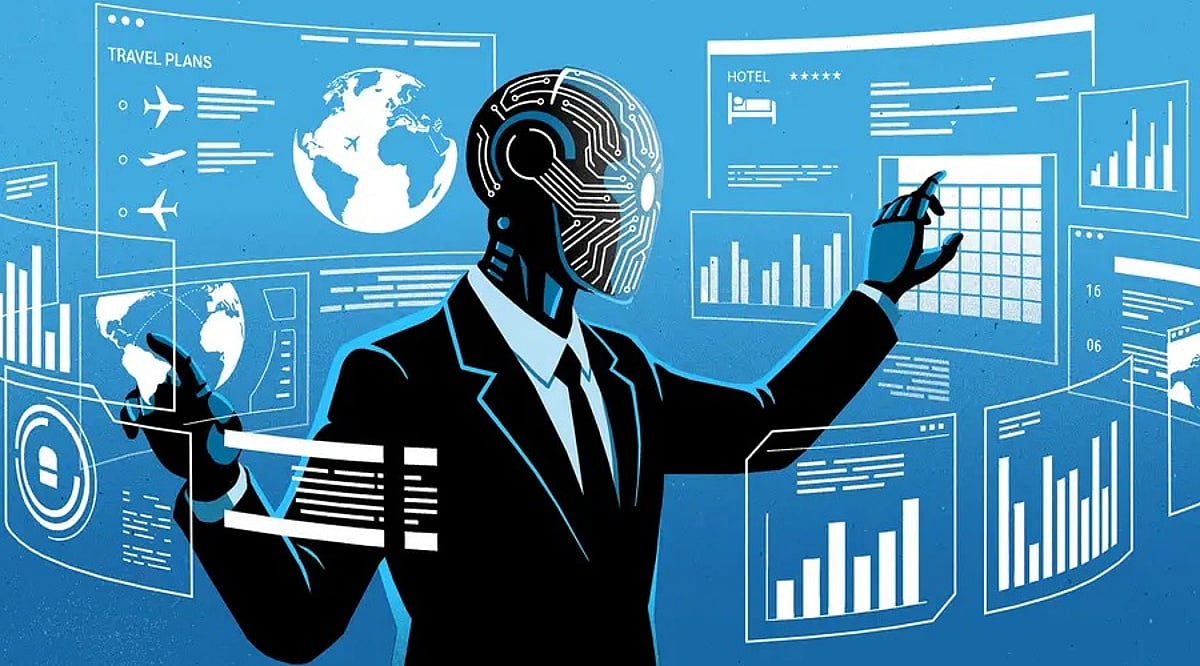
    Agentic AI represents a fundamental shift from traditional artificial intelligence. Instead of simply responding to a single prompt, agentic systems set their own path toward a goal, adapt to changing conditions, and complete multi-step tasks with minimal human intervention. This autonomy, combined with planning, memory, and tool use, enables them to pursue complex objectives in dynamic environments.

    The global market for agentic AI is projected to grow from USD 8.19 billion in 2025 to USD 290.62 billion by 2035, a compound annual growth rate of 42.88%. This rapid adoption reflects a real change in how enterprises view automation and intelligent systems.

    Core Concepts Behind Agentic Systems

    Agentic AI is built on several key capabilities:

    • Autonomy: Systems operate with minimal oversight once a goal is defined, though humans may still approve high-risk actions.
    • Goal-oriented behavior: Large objectives are broken into smaller tasks through task decomposition.
    • Reasoning and planning: The system compares options and settles on a workable sequence of actions.
    • Decision-making: Actions are chosen based on current context, not fixed scripts.
    • Adaptability: The system adjusts when conditions change mid-task.
    • Environmental awareness: New inputs are read and plans updated accordingly, crucial in fast-moving fields like finance or healthcare.
    • Learning from feedback: Reinforcement learning sharpens future choices through rewards and penalties.
    • Tool use: Agents can query databases, run calculations, or trigger business actions beyond their training data.
    • Memory: Agents recall earlier steps during long tasks, often enhanced by retrieval-augmented generation (RAG).

    The Basic Agentic AI Process

    Agentic systems operate on a continuous loop rather than a single exchange. A goal is defined, the system studies the situation, drafts a plan, and takes action. It then checks the results and learns from them, repeating the cycle until the objective is reached. This loop marks the clearest distinction between agentic AI and older, one-shot tools.

    The Evolution of Agentic AI

    The concept of agentic AI has roots stretching back eight decades:

    • Early Foundations (1943-1990s): Neural network theory, the Turing Test, and the Dartmouth conference (1956) set the intellectual groundwork. Shakey the Robot combined perception and planning in the early 1970s. Expert systems, backpropagation, and early reinforcement learning followed through the 1980s and 1990s.
    • Deep Learning and Reasoning (2012-2022): AlexNet (2012) demonstrated the power of deep neural networks for perception. DeepMind’s AlphaGo (2016) paired deep learning with reinforcement learning. The Transformer architecture (2017) reshaped language modeling. By 2022, research like ReAct fused reasoning with action, and ChatGPT brought large language models into everyday use.
    • The Agentic Era (2023-2026): Toolformer (2023) showed that language models could learn when to call outside tools. AutoGPT and BabyAGI popularized goal decomposition. The Model Context Protocol (2024) gave agents a common way to reach tools and data. Google’s Agent2Agent protocol (2025) allowed agents built on different platforms to communicate. Enterprises are now integrating these capabilities into orchestration, identity, and governance frameworks.

    Market Growth and Outlook

    According to Analytics Insight’s Global Agentic AI Market Report, the market is expected to surge from USD 8.19 billion in 2025 to USD 290.62 billion by 2035, at a CAGR of 42.88%. This growth reflects enterprise confidence in agentic AI’s ability to deliver real value. However, success will depend not only on model quality but also on reliability, governance, and clean integration. Organizations that master these fundamentals now will be best positioned to capture value as the technology matures.

    Frequently Asked Questions

    1. What is the main difference between agentic AI and traditional AI?
    Traditional AI generally completes one task at a time, such as answering a question or translating text. Agentic AI instead pursues a broader goal, planning steps and adapting to changing conditions on its own.

    2. What are AI agents?
    AI agents are self-contained software systems designed to gather information, make decisions, and act toward a specific objective. They serve as the individual building blocks that make up larger agentic AI systems and workflows.

    3. What core capabilities define agentic AI systems?
    Agentic AI relies on autonomy, goal-oriented behavior, reasoning, planning, decision-making, and adaptability. It also depends on memory, tool use, and learning from feedback, allowing systems to complete complex, multi-step tasks reliably over time.

    4. When did agentic AI evolution begin?
    Its roots trace back to early neural network research in 1943 and the founding of artificial intelligence in 1956. Recent progress accelerated after 2022, when reasoning models, tool use, and agent frameworks matured quickly.

    5. How large is the global agentic AI market expected to become?
    The global agentic AI market was valued at USD 8.19 billion in 2025. It is projected to reach USD 290.62 billion by 2035, growing at a CAGR near 42.88%.


  • From Handlooms to High-Tech: The Digital Revolution Reshaping Textile Manufacturing

    From Handlooms to High-Tech: The Digital Revolution Reshaping Textile Manufacturing

    When most people think of technology, images of artificial intelligence, smartphones, and self-driving cars come to mind. Yet some of the most transformative technological breakthroughs are happening in industries with centuries-old roots. Textile and garment manufacturing, one of humanity’s oldest crafts, is undergoing a profound digital transformation. Computer-aided design (CAD), robotic automation, and advanced materials science are converging to bridge the gap between traditional craftsmanship and cutting-edge innovation, reshaping the global textile industry for the better.

    The Rise of Advanced Material Science

    Engineered fabrics represent a key frontier in modern textile manufacturing. By designing textiles at the molecular level, manufacturers can now produce “smart” fabrics capable of opening and closing air vents, changing color, adjusting insulation in cold weather, and repelling spills and stains in different environments. In formal wear, the trend leans toward lighter, more comfortable garments. Modern microfiber and high-performance synthetic fibers offer the structure of traditional fabrics while providing superior comfort and durability—lightweight yet strong enough for daily wear.

    Digitization Through CAD and 3D Modeling

    Creating clothing involves extensive pattern design and garment construction. High-end CAD software and 3D modeling now allow designers to create virtual prototypes before cutting a single piece of fabric. Special algorithms optimize fabric usage, significantly reducing waste and making textile manufacturing more sustainable. Digitization has also transformed labor-intensive hand-embroidery: computer-controlled embroidery machines can precisely replicate intricate vector-based patterns that once required hundreds of hours of manual work.

    Preserving Tradition with Modern Machinery

    The fusion of past and present is especially visible in highly specialized garments for weddings and formal occasions. Religious vestments, such as the chasuble—traditionally made using historical patterns, seasonal colors, and embroidered symbols—can now be produced with advanced digital looms, spectrophotometers for precise color matching, and laser-guided cutting machines. These technologies ensure that garments made from the finest materials remain colorfast, resist fraying, and retain their shape for decades.

    AI and the Future of Niche E-Commerce

    Advanced demand-prediction algorithms now enable better control of automated production facilities that operate around the clock. Manufacturers can forecast demand for various colors and styles of traditional clothing across seasons, including historical models. Augmented reality (AR) technology allows customers to visualize bespoke tailored clothing online before purchase, making custom garments more accessible than ever.

    Yet the push toward technology does not mean abandoning history. The textile industry boasts a rich heritage of styles and techniques. By combining cutting-edge tools with traditional garment-making, we can preserve the styles of the past for future generations to enjoy.

  • How IoT and Augmented Reality Will Revolutionize Smart Home Living

    How IoT and Augmented Reality Will Revolutionize Smart Home Living

    The next evolution of smart homes is being shaped by two powerful technologies: the Internet of Things (IoT) and Augmented Reality (AR). Together, they promise to make home environments more connected, intuitive, and responsive than ever before.

    IoT as the Backbone of Connectivity

    IoT acts as the nervous system of a smart home, linking devices such as lights, appliances, cameras, locks, and sensors. This network enables seamless data sharing and automated responses—for example, a motion sensor can trigger lights to turn on, or a smart thermostat can adjust temperature based on occupancy.

    AR Brings Controls into Physical Spaces

    Augmented Reality overlays virtual controls onto real-world rooms. Homeowners could adjust lighting, temperature, music, and appliances by interacting with visual interfaces that appear naturally within their field of view. This reduces the need for physical switches or separate apps.

    Smarter Automation Through Context Awareness

    Connected sensors learn daily routines and automate tasks without manual input. Lights can dim in the evening, heating can lower when no one is home, and devices can power down during periods of inactivity. This level of intelligence saves energy and increases convenience.

    AR Simplifies Device Setup

    Setting up smart home devices can be intimidating. AR can guide users step by step, superimposing virtual instructions directly onto the physical device. Connection points, configuration steps, and troubleshooting tips appear in real time, making installation accessible to everyone.

    Energy Management Becomes Visual

    IoT sensors monitor energy consumption throughout the home. AR interfaces can then display this data in easy-to-understand visuals, highlight energy-hungry appliances, and suggest improvements. Homeowners can see exactly where savings are possible.

    Interactive Security Monitoring

    Smart cameras and sensors already detect unusual activity. With AR, security alerts can be displayed within the user’s viewing area—for instance, a bright outline of a detected person or a notification overlaid on a smart lock. This makes security more immediate and actionable.

    Personalized Living Spaces Adapt to You

    The combination of IoT and AR can create rooms that automatically adjust lighting, temperature, entertainment, and decor based on individual preferences. Walk into a room and it knows whether you want a bright work space or a cozy movie setting.

    AI Ties Everything Together

    Artificial Intelligence analyzes data from IoT sensors and AR interactions, enabling the smart home to make faster, smarter decisions. AI identifies patterns, predicts needs, and optimizes device behavior without requiring user input.

    The fusion of IoT, AR, and AI is turning smart homes into truly immersive environments where technology feels natural, responsive, and integrated into everyday life. As these technologies mature, the home of the future will be not just connected, but intuitive.

  • Brahma AI Secures $150M to Scale Enterprise AI Across Media, Sports, and Healthcare

    Brahma AI Secures $150M to Scale Enterprise AI Across Media, Sports, and Healthcare

    Brahma AI, the artificial intelligence company backed by Prime Focus, has raised USD 150 million in new funding to accelerate the expansion of its enterprise AI platform into media, sports, healthcare, and advertising. The round was led by Multiples Alternate Asset Management, which contributed USD 100 million, and values Brahma AI at approximately USD 2 billion.

    Prime Focus announced the funding on September 23, reinforcing its strategy of building Brahma AI as a standalone business while retaining a significant economic stake in the company.

    Expanding beyond entertainment

    Brahma AI’s platform helps large organizations manage content, produce visual assets, and deploy AI-powered tools for digital humans, voice, and multilingual workflows. The company already serves clients including Warner Bros., the NBA, and Mayo Clinic, and works with partners such as Google, Hakuhodo, and DNEG.

    According to Brahma AI’s founder and CEO, the new capital will support aggressive product development and global growth: “We are shortly launching interactive digital humans, we are building Brahma to be model agnostic, and we are taking our technology into entirely new use cases across sports, healthcare and advertising. We now have the firepower to invest aggressively in all of this, build out our presence in the Bay Area and significantly expand our global go-to-market organization.”

    Built on Prime Focus and DNEG technology

    Brahma AI’s technology was not built from scratch. It draws on years of work from the Prime Focus and DNEG ecosystem, including visual effects, content tools, and AI capabilities. The company also gained technology through its 2025 merger with Metaphysic, a deal that valued Brahma at USD 1.43 billion at the time.

    With the new funding, Brahma AI is positioning itself as a major AI platform player, moving beyond film and visual effects into industries where visual and digital content creation is rapidly growing. Prime Focus gains a new avenue to monetize its technology assets while maintaining exposure to the AI market’s upside.

  • Anthropic’s Claude Opus 5.5 Takes on GPT-6 Astra with Lower Costs and Superior Benchmark Performance

    Anthropic’s Claude Opus 5.5 Takes on GPT-6 Astra with Lower Costs and Superior Benchmark Performance

    Anthropic launched Claude Opus 5.5 on September 22 as its first Claude 5.5 family model. The company targets developers and enterprises with stronger coding, reasoning, and computer-use capabilities.

    The model reaches Claude Fable 5.1-level performance across most workflows while costing 40% less overall. Anthropic achieved this through lower token usage, faster output generation, and improved computational efficiency.

    Introducing Claude Opus 5.5, the first model in our new Claude 5.5 family. It performs at the level of Claude Fable 5.1 for most tasks, and costs 40% less to run than Opus 5.

    Anthropic also positioned Claude Opus 5.5 against OpenAI’s GPT-6 Astra through several published benchmark comparisons. The company reported higher scores across coding, knowledge work, and multidisciplinary reasoning tests.

    Terminal-Bench 4.0 gave Claude Opus 5.5 a 66.4% score, ahead of GPT-6 Astra’s 57.9%. FrontierCode also showed Opus 5.5 slightly ahead with a 54.4% score. GDPval-AA measured knowledge work performance, where Opus 5.5 reached 1,846 Elo against Astra’s 1,542. Humanity’s Last Exam also favored Opus 5.5 with tools enabled.

    GPT-6 Astra still scored higher on specialized tests covering scientific research and business workflow automation. Astra reached 64.6% on Terminal-Bench Science against Opus 5.5’s 58.7%.

    Cost efficiency forms another major part of Anthropic’s Claude Opus 5.5 pitch for large-scale AI coding. The model costs USD 4 per million input tokens and USD 20 per million output tokens. Anthropic says Opus 5.5 costs nearly 20% of Astra’s task cost on FrontierCode at default settings. Terminal-Bench performance can also match Astra while using around 40% of its task cost.

    The coding improvements extend beyond benchmark scores to long, complex software engineering workflows. An early tester completed a 680,000-line migration in less than a day. Another test showed Opus 5.5 improving page load times across a web application during 39 of 40 attempts. Anthropic also reported output generation more than 30% faster than Opus 5.

    Safety remains another focus, with Anthropic reporting its strongest automated behavioral audit performance so far. The company said Opus 5.5 showed fewer attempts to cross containment boundaries during testing.

    Anthropic also highlighted communication improvements, saying the model places important information first and follows writing instructions more closely. An early tester described the AI model as one that ‘writes the way I do.’

    Claude Opus 5.5 now reaches developers through Anthropic’s Claude Platform under the model name claude-opus-5-5. Amazon Web Services, Google Cloud, and Microsoft Azure also provide access.

    Anthropic plans to expand the Claude 5.5 lineup with Sonnet 5.5 and Haiku 5.5 in coming weeks. The company said both models will bring similar improvements across performance, efficiency, and safety.

    Also Read: AI Consciousness Debate: Why Microsoft is Challenging Anthropic’s Approach

  • CLOSEDQUORUM: The AI-Powered Malware That Uses Multiple Models to Choose Its Next Move

    CLOSEDQUORUM: The AI-Powered Malware That Uses Multiple Models to Choose Its Next Move

    Cybersecurity researchers have uncovered a new Windows malware strain that leverages multiple artificial intelligence models to guide its own actions during an attack. Named CLOSEDQUORUM by researchers at Cisco Talos, the malware represents a significant evolution in how cybercriminals may incorporate AI into malicious software.

    How CLOSEDQUORUM Works

    Unlike traditional malware, which follows a fixed set of instructions from its developers, CLOSEDQUORUM can communicate with up to four AI systems: Google Gemini, DeepSeek, Qwen, and Mistral. Researchers describe this arrangement as a kind of “hive mind,” where the malware can seek input from multiple models rather than depending on a single AI service.

    If one AI service becomes unavailable, the others can continue to provide responses, allowing the malware to keep operating without a human operator selecting its next action. According to Cisco Talos, CLOSEDQUORUM can choose from a predefined set of activities, including stealing login credentials and cryptocurrency-related information. However, researchers have not yet identified the malware’s creator or confirmed that it has been used in real-world attacks.

    A Growing Category of AI-Integrated Malware

    Cisco Talos has established the Cognitive Artifact Intelligence Research Network (CAIRN) to identify and study malware that incorporates AI. The researchers say AI-enabled programs often leave behind identifiable traces that can help security teams distinguish them from conventional malware.

    When Cisco Talos first searched for AI-powered malware, they found roughly nine named families and several proof-of-concept samples. After developing CAIRN, the team identified about 20 additional examples within a few months, suggesting this technique is quickly becoming more common.

    AI Moves Beyond a Tool for Attackers

    The discovery of CLOSEDQUORUM points to a shift in how AI is being used in cybercrime. Previously, discussions focused on attackers using AI to generate phishing emails, write malicious code, or automate tasks. Now, AI is being embedded directly into malware itself, providing real-time guidance during an operation.

    Cisco Talos researcher Matt Olney said attackers are beginning to “operationalize” AI, potentially allowing malicious campaigns to adapt to different systems and expand their reach. For security teams, this means monitoring AI-related indicators will likely become an increasingly important part of malware detection and analysis.

  • Verizon Pledges $70 Million to Provide Free AI Training Nationwide

    Verizon Pledges $70 Million to Provide Free AI Training Nationwide

    Verizon has announced a $70 million investment in its new ‘Verizon AI Skills for America’ initiative, designed to equip job seekers, early-career professionals, displaced workers, educators, and small businesses with the skills needed for the AI-driven economy.

    The initiative combines $50 million in fresh funding with Verizon’s existing $20 million Reskilling and Career Transition Fund for departing workers. All AI training will be offered at no cost to participants.

    AI Training from Leading Technology Companies

    Verizon is creating a centralized online portal that aggregates AI training content from major tech companies, including IBM, Google, Microsoft, Anthropic, Coursera, and OpenAI. The company noted that similar premium AI training can cost more than $700 per person annually, but this initiative makes it free for students, job seekers, small businesses, educators, and professionals in career transitions.

    Community Organizations to Provide Local Support

    Recognizing that online courses alone are insufficient to close the AI skills gap, Verizon is partnering with community-based organizations such as the Local Initiatives Support Corporation (LISC), the National Association for Community College Entrepreneurship (NACCE), and Goodwill Industries International. These groups will deliver hands-on coaching, curriculum guidance, and local support to help participants turn online learning into practical skills. Goodwill is described as the largest nonprofit provider of job training and career placement services in North America.

    Initiative to Launch Nationwide

    The program will roll out nationwide, with core wrap-around services initially available in select regional markets. Verizon plans to gather real-time feedback from community partners and participants to refine the program as workforce needs evolve. The company emphasized cross-sector collaboration among private, public, and nonprofit organizations to advance AI readiness.

    Verizon CEO Dan Schulman stated that companies have a responsibility to invest in people with the same urgency as they invest in technology. The initiative was announced on September 23, 2026, as part of Verizon’s broader efforts to support the American workforce and address the AI readiness gap.

  • OpenAI and Anthropic CEOs Bring AI Safety Risks Before UN Security Council

    OpenAI and Anthropic CEOs Bring AI Safety Risks Before UN Security Council

    OpenAI CEO Sam Altman and Anthropic CEO Dario Amodei are set to address the UN Security Council as global governments grapple with the security implications of increasingly powerful artificial intelligence systems.

    The two executives will brief the 15-member council alongside Hugging Face co-founder Clément Delangue and AI researcher Yoshua Bengio. Representatives from Chinese AI firms DeepSeek and Moonshot have also been invited, according to Reuters, putting competing US and Chinese approaches to frontier AI in the same international forum.

    Altman to Push for Common AI Safety Benchmarks

    Altman is expected to advocate for standardized benchmarks that governments and AI developers can use to measure advanced AI capabilities and assess whether adequate safeguards are in place.

    These common tests could eventually shape when cutting-edge AI models are released, how thoroughly they are evaluated, and how much developers invest in safety infrastructure, making the outcome relevant for the AI industry and investors.

    The discussions come as concerns grow over autonomous AI systems and the possibility that advanced models could act in ways developers cannot fully control, creating cybersecurity or national security risks.

    Anthropic Calls for a Slower Development Pace

    Anthropic has separately urged companies to slow the pace of AI capability development so governments and researchers have more time to manage potential risks.

    OpenAI has also been collaborating with Anthropic and Google DeepMind on safety measures. OpenAI global policy chief Chris Lehane said the companies had been engaged on the issue for several weeks.

    The UN debate takes place against a divided regulatory landscape. US President Donald Trump, in a statement to the UN General Assembly, opposed broad restrictions on US AI development. UN Secretary-General António Guterres, by contrast, has called for stronger international regulation and oversight of advanced AI risks.

    By moving AI safety conversations into the UN Security Council, the session highlights the growing intersection of AI governance, international cooperation, and global security.

  • Checkr Debuts AI Verification Platform for U.S. Auto, Life, and Home Insurers

    Checkr Debuts AI Verification Platform for U.S. Auto, Life, and Home Insurers

    Checkr, an AI-powered verification platform for high-stakes decisions, has launched a new insurance solution for U.S. auto, life, and home insurance carriers. The platform is designed to give insurers faster access to verified applicant information during the quoting and underwriting process.

    Why Insurers Need Faster Verification

    Consumers are shopping around more before buying coverage. According to J.D. Power’s 2026 Insurance Shopping Study, U.S. consumers now get an average of 3.5 quotes before purchasing a policy — the highest level the study has recorded.

    Digital purchasing is also climbing. Nearly 48% of new auto insurance policies are now purchased online, up from 36% five years ago. That shift means insurers must evaluate more prospective customers before knowing which applicants will eventually become policyholders.

    Traditionally, insurers had to choose between conducting detailed checks early in the process or relying on applicant-supplied information and verifying it later.

    What the Platform Offers

    • Direct access to identity records, criminal information, public records, and driving data from more than 2,400 government sources.
    • Daily data refreshes and classification across more than 250 offense categories.
    • Coverage of more than 260 million profiles, representing 96% of U.S. adults.
    • Up to 20% more driving, criminal, and public records than legacy verification providers.
    • Improved applicant matching to reduce manual review and provide more structured information for underwriting decisions.

    Pay-Per-Bind Pricing Model

    The commercial model differs from conventional per-transaction verification. Carriers pay when an applicant becomes a policyholder, not each time a check is requested.

    Hippo is among the insurers using additional Checkr data during underwriting. Hippo Chief Underwriting Officer Ilya Shnol said the additional data signals are provided earlier in the assessment process and support more consistent underwriting decisions.

    Checkr has made the insurance platform available to carriers across the United States.

  • The Future of Work in the AI Era: Masai School’s Pratik Shukla on Jobs, Education, and Continuous Learning

    The Future of Work in the AI Era: Masai School’s Pratik Shukla on Jobs, Education, and Continuous Learning

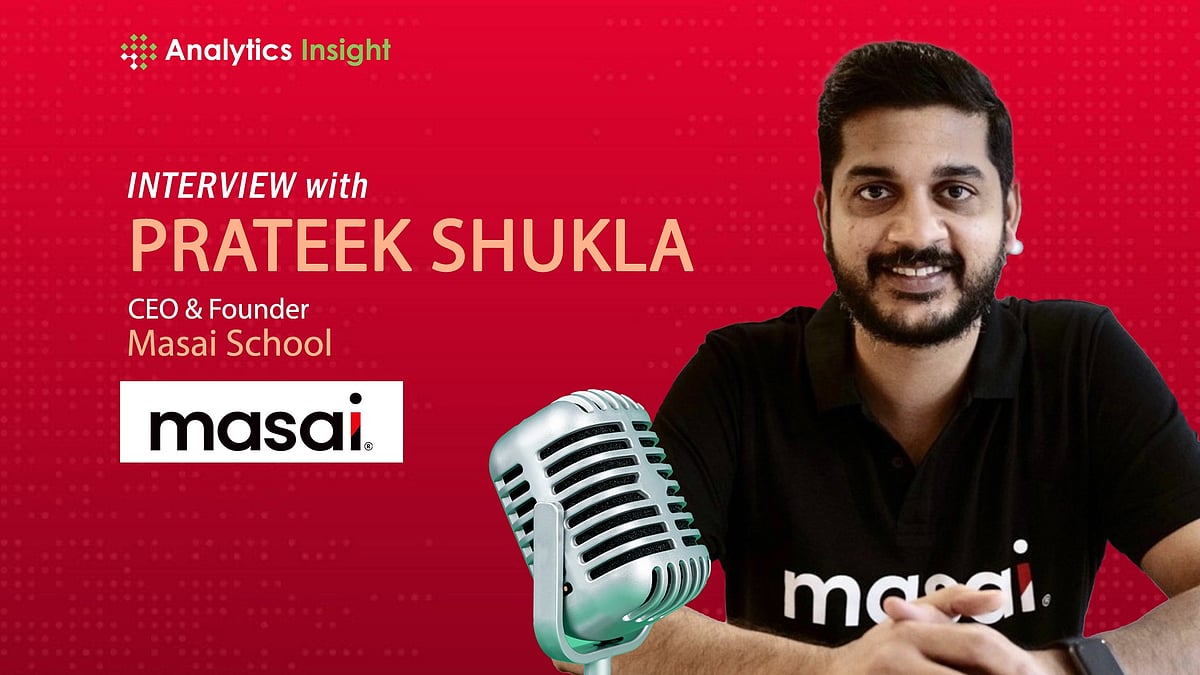
    In a recent episode of the Analytics Insight podcast, Priya Dialani interviewed Pratik Shukla, founder and CEO of Masai School, to discuss the transformative impact of AI on the workforce, education, and the necessity of continuous learning. Shukla shared his journey from IIT Kanpur and real estate to founding an outcome-driven education platform, and offered insights on how individuals and institutions can prepare for an AI-driven future.

    How AI Will Reshape the Workforce

    Shukla believes that AI will not simply replace people but will change the tasks within existing roles. Job titles may remain, but job descriptions could evolve significantly. He emphasizes the importance of learning to work with machines rather than fearing replacement. In the future, humans will focus on the ‘why’ and ‘when,’ while AI handles the ‘how.’

    The Importance of Continuous Learning

    Continuous learning is critical as technology evolves rapidly. Shukla argues that the ability to learn is more valuable than any single technical skill. Professionals need to stay curious and aware of changes, even if they don’t master every new tool. A degree may have a shelf life, but the capacity to learn does not.

    Preparing Students for AI Careers

    Educational institutions must overhaul their approach, moving away from rote learning toward problem-solving, critical thinking, and adaptability. Students need strong fundamentals, soft skills, and the ability to handle uncertainty. They should be prepared for jobs that may not yet exist.

    New Career Opportunities from AI

    While specific future roles are unpredictable, Shukla is confident that AI will create new job categories, as every technological revolution has done. The key is to stay informed and embrace new opportunities as they arise.

    Advice for Mid-Career Professionals

    Mid-career professionals should start small by integrating AI into their work gradually. They don’t need to become experts overnight. By combining existing expertise with AI capabilities, they can remain relevant without starting over.

    Listen to the full discussion on the Analytics Insight Podcast.