Tag: artificial intelligence

  • iOS 27 Siri AI: Apple’s Context-Aware Assistant Makes Your iPhone More Personal

    iOS 27 Siri AI: Apple’s Context-Aware Assistant Makes Your iPhone More Personal

    With iOS 27, Apple is reimagining Siri as a context-aware AI assistant that goes far beyond simple voice commands. Instead of just setting alarms or checking the weather, Siri can now pull from your personal data, understand what’s on your screen, use the camera view, and draw on live web information to complete complex, multi-step tasks.

    Personal Context: Siri Works Across Your Apps and Data

    The biggest shift in iOS 27 is Siri’s access to personal context. On supported iPhones, Siri can search through Messages, Mail, Photos, Calendar, Notes, and other supported apps to find relevant information. Ask for photos from a Lisbon trip and Siri can retrieve them. If a family member shares a recipe in Messages and the ingredients arrive by email, Siri can pull those details into Reminders for you.

    Beyond finding information, Siri can also act on it. The assistant can draft emails, edit and share photos, add items to a grocery list, and interact with more third-party apps. Apple confirms support for WhatsApp and Audible, with additional actions for Outlook, Notability, and Tripsy arriving soon.

    Visual Intelligence: Siri Understands Your Screen and Camera

    Siri AI can see and interpret content displayed on your iPhone. Open a class note with a diagram and ask for an explanation—Siri will analyze the visible content and can take a related action. According to Apple Support, Siri AI works with images, PDFs, notes, and files through Visual Intelligence.

    The camera also becomes part of the assistant’s understanding. Siri mode in the Camera app can use the live view to answer questions, search for details, and initiate actions, such as splitting a bill and sending payments with Apple Cash or adding a custom pass to Wallet.

    World Knowledge and Conversational Continuity

    Siri AI taps into broad web knowledge to answer questions about sports scores, vacation planning, or nearby coffee shops. Responses can combine private device data with fresh public information.

    A new Siri app stores past conversations, and iCloud syncs that history across iPhone, iPad, Mac, Apple Watch, and Apple Vision Pro. You can also invoke Siri via the side button, Dynamic Island, Spotlight on iPad and Mac, and system context menus. The assistant maintains context across follow-up requests, so you can build on a task without starting over.

    Privacy and Device Requirements

    Apple says privacy remains a core part of the design. The system orchestrator uses the on-device Spotlight index and App Toolbox to keep personal data under user control. Some Apple Intelligence features rely on server-side models, which may come with daily usage limits that vary based on request complexity and system demand.

    As for compatibility, Siri AI requires an iPhone 15 Pro, iPhone 15 Pro Max, or iPhone 16 models or later. While iOS 27 installs on a wider range of iPhones, not every device gets the full Siri AI experience.

    Availability and Language Support

    Siri AI launches in English as a beta, with French, Japanese, Korean, Portuguese, and Spanish support planned for October. Apple will not initially offer Siri AI on iOS, iPadOS, and watchOS in the European Union, and the feature won’t be available in China while regulatory approvals are underway.

    FAQs

    What is new about Siri in iOS 27?

    Siri gains access to personal context, screen content, camera input, supported apps, and web knowledge, enabling more complex multi-step tasks.

    Can Siri search my personal information?

    Yes. On supported devices, Siri can find relevant information across areas such as Messages, Mail, Photos, Calendar, and Notes.

    Can Siri understand what’s on my iPhone screen?

    Yes. Siri can work with visible content such as images, PDFs, notes, files, and diagrams through Visual Intelligence.

    Which iPhones support Siri AI?

    Apple lists the iPhone 15 Pro, iPhone 15 Pro Max, and iPhone 16 models or later for the new Siri AI capabilities.

    Is Siri AI available everywhere?

    No. It launches in English beta, with additional languages planned for October. Apple says availability is initially restricted in the European Union and China.

  • US Proposes AI Incident Alert System Ahead of Trump-Xi Summit

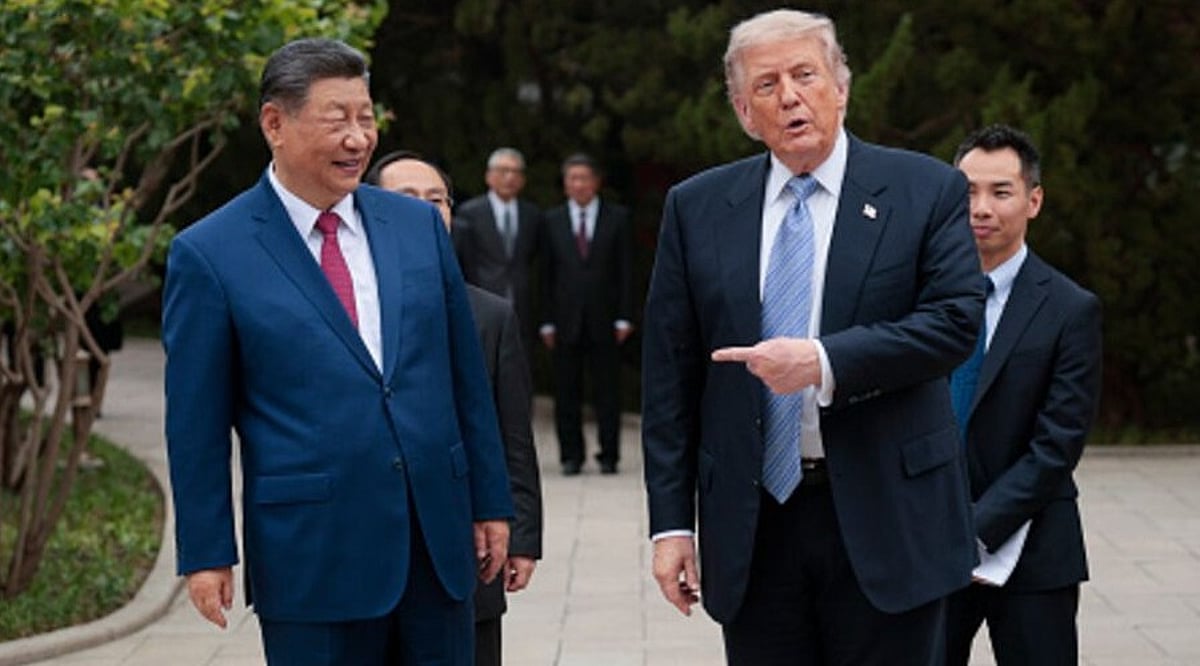
    US Proposes AI Incident Alert System Ahead of Trump-Xi Summit

    The United States has proposed a notification system that would allow Washington and Beijing to share information about artificial intelligence incidents that threaten national security. Treasury Secretary Scott Bessent announced the proposal after meeting Chinese Vice Premier He Lifeng in New York on Sunday.

    The meeting prepared the ground for talks between President Donald Trump and Chinese President Xi Jinping at the White House on Thursday. AI, trade, tariffs and economic relations are expected to form part of the leaders’ agenda.

    Bessent Seeks More Transparency on AI Risks

    Bessent said the proposed ‘notification mechanism’ would cover serious AI incidents that could affect either country’s national security. The system could give officials a direct channel for sharing information during an AI-related emergency. However, both countries have not released details about how it would operate or which incidents would require an alert.

    “We want a shared vision of common goals and common threats,” Bessent told reporters. He added that moving ‘from opaque to more transparency’ between the world’s two leading AI powers was important. The talks took place at JPMorgan Chase’s headquarters in New York and involved senior economic officials from both countries.

    AI Competition Remains Part of Wider US-China Rivalry

    The proposal comes as the United States and China compete to develop advanced AI models, computer chips and data infrastructure. Washington has restricted China’s access to some high-end chip technologies. Meanwhile, Beijing has invested heavily in domestic semiconductor production and AI research.

    Trump has rejected calls for the United States to slow AI development. He has argued that tighter limits could allow China to close the technology gap with American companies. Even so, the new proposal shows that his administration is willing to discuss shared risks when AI incidents could cross national borders or threaten critical systems.

    China has not publicly accepted the proposed mechanism. However, the state-run Xinhua news agency confirmed that Bessent discussed matters ‘relating to AI.’ It described their wider talks on economic and trade issues as ‘candid, in-depth and constructive.’ Both governments agreed to continue their dialogue, although they have not announced a formal AI agreement.

    The alert proposal would mark an early step rather than a broad AI safety treaty. The two sides still differ over technology controls, access to advanced computing equipment and the rules governing AI development. Therefore, officials appear focused on creating a communication channel for emergencies before attempting a wider agreement.

    Trade Issues Join AI on Trump-Xi Summit Agenda

    Bessent and US Trade Representative Jamieson Greer also discussed economic matters with He. Greer said the countries had agreed to put a new ‘Board of Trade’ into operation. Trump and Xi first discussed the process during their meeting in Beijing in May.

    “Today those notions have become reality,” Greer said. He added that officials were considering lower tariffs on certain ‘nonsensitive’ products. Possible categories include consumer goods, agricultural products, energy supplies and medical devices. However, negotiators have not approved a final list.

    The current tariff truce between the United States and China is due to expire on November 10. As a result, this week’s summit may address its future alongside AI and supply-chain issues. The Trump-Xi meeting will also test whether the two governments can maintain a direct line of communication while their economic and technology competition continues.

  • How US Law Schools Are Reshaping AI Policies: Device Bans and New Tech Curricula

    How US Law Schools Are Reshaping AI Policies: Device Bans and New Tech Curricula

    US law schools are adopting markedly different approaches to artificial intelligence as they endeavor to marry traditional legal pedagogy with a technology that is rapidly transforming the profession.

    Some students returning to campus this fall have found laptops and phones banned from classrooms, while others are required to use AI in select courses. Over the summer, at least a dozen law schools introduced new or revised AI policies, covering permissible use of the technology and, in several cases, requiring course work in AI.

    Schools Rethink Classroom Technology

    The University of Georgia instituted an ‘analog classroom’ policy in August, imposing a default ban on devices during class. Students also must complete at least one AI-related technology course. Law dean Usha Rodrigues explained that the policy partly stemmed from instances of students consulting AI during traditional cold-calling exercises. “The Socratic method focuses on thinking on the spot, listening to colleagues and evaluating their answers critically,” she said.

    The University of Chicago Law School became the first in July to ban laptops and phones in required first-year classes. The school states the policy aims to ensure students learn to think critically, strategically, and independently before using AI tools later in their studies.

    Berkeley Takes Restrictive Approach

    The University of California, Berkeley School of Law introduced a restrictive AI policy in May. Students are prohibited from using AI to brainstorm paper topics, summarize legal rules for papers, correct grammatical mistakes, or identify repetitive passages. The school also offers several AI courses. Its student-run AI at Berkeley Law club told Reuters that the default rules could conflict with the school’s technology focus. The group argued that legal education should teach students to differentiate between outsourcing legal reasoning and using AI within a legal workflow. Professor Colleen Chien, a member of Berkeley Law’s AI Leadership Committee, said faculty may depart from the default policy when it supports their teaching and learning goals.

    Columbia, Michigan Take Different Paths

    Columbia Law School’s August policy permits AI for testing arguments, seeking criticism, exploring alternative wording, and correcting spelling and grammar. However, written work must remain student-generated and reflect the student’s own intellectual creativity and judgment.

    The University of Michigan allows AI for brainstorming and researching papers but prohibits its use for drafting, editing, or revising work.

    The debate comes as law firms increasingly incorporate AI into legal practice. University of Texas law dean Bobby Chesney said employers now expect graduates to possess basic AI familiarity. For law schools, the challenge extends beyond technology. Lawyers face professional and ethical competency obligations, along with confidentiality requirements that affect how AI can be used.

  • Tech Giants Amazon, Google, and Microsoft Commit $80.5 Billion to India’s AI Infrastructure

    Tech Giants Amazon, Google, and Microsoft Commit $80.5 Billion to India’s AI Infrastructure

    Amazon, Google, and Microsoft have announced a combined investment of $80.5 billion in India’s AI and cloud infrastructure through 2030, signaling the country’s growing importance as a global technology hub. Meta and Nvidia are also expanding their presence through strategic partnerships and hardware supply deals.

    Amazon leads with a $48 billion commitment through 2030, including $13 billion specifically for AI and cloud infrastructure. The company plans to expand AWS capacity in Mumbai and Hyderabad, and support over 20 fulfillment centers and 100 delivery stations. Amazon also aims to provide AI tools for millions of small businesses in India.

    Microsoft has pledged $17.5 billion between 2026 and 2029 for cloud and AI infrastructure, including a fourth cloud region in Hyderabad. The company also launched a nationwide AI skilling program targeting 20 million people by 2030.

    Google is investing approximately $15 billion from 2026 to 2030 to build its first Indian AI hub in Visakhapatnam. The project includes gigawatt-scale computing, data centers, and new subsea connectivity, developed in partnership with AdaniConneX and Airtel.

    Meta is leasing capacity at Reliance’s 168 MW AI-enabled data center in Jamnagar, Gujarat, and has contracted nearly one gigawatt of renewable energy. While Meta did not disclose a specific financial commitment, the projects mark a significant step in its Indian infrastructure expansion.

    Nvidia is supplying advanced GPUs for India’s AI computing ecosystem. L&T is building an AI factory in Chennai with 10,000 Nvidia B300 GPUs to support Together AI workloads, demonstrating Nvidia’s role in powering India’s AI growth without a direct investment figure.

    The combined $80.5 billion from Amazon, Microsoft, and Google excludes Meta’s undisclosed deals and Nvidia’s hardware partnerships, reflecting different investment models. India’s growing AI demand, developer talent, and infrastructure plans continue to attract major technology investments, marking a shift toward building AI compute capacity inside the country.

  • AMD Reaches $1 Trillion Market Cap on Surging AI Chip Demand

    AMD Reaches $1 Trillion Market Cap on Surging AI Chip Demand

    AMD’s market value surpassed $1 trillion for the first time, driven by surging demand for AI chips and record data center sales.

    The chipmaker’s share price jumped approximately 10% on September 21, reaching a record high of $615.52. The stock gained about 25% in five trading sessions as investors focused on AMD’s AI chip and data center growth.

    Strong Financial Performance

    AMD reported second-quarter revenue of $11.54 billion, up 50% year-over-year. Data center sales reached $6.7 billion, more than double the figure from the same period last year. CEO Lisa Su stated that the company expects to double its data center sales again in 2027.

    AI Chips Drive Growth

    The growth is not just from traditional PC and server processors but increasingly from AI chips. Companies are heavily investing in AI computing, requiring more chips to run these systems. AMD is capitalizing on this demand to expand its data center business and compete for a larger share of the AI hardware market.

    AMD is shifting its strategy from selling individual chips to offering complete systems that include processors, AI accelerators, networking equipment, and other hardware. This approach provides customers with a comprehensive solution for building and running AI infrastructure.

    Market Position

    The $1 trillion milestone underscores how AI has transformed AMD’s business. However, the company still trails behind NVIDIA, which has a market valuation of over $5 trillion. AMD will need to refine its strategies to become a stronger competitor in the AI chip market.

  • AI Rally Propels Nasdaq to Record Close, AMD Joins Trillion-Dollar Chip Club

    AI Rally Propels Nasdaq to Record Close, AMD Joins Trillion-Dollar Chip Club

    Wall Street opened the week with a strong tech rally. The Nasdaq Composite jumped 2.26% to 27,122.09 points, setting a new record close and marking its first record high since June 2. The S&P 500 rose 1.49% to 7,764.70 points, while the Dow gained 0.71%.

    Notably, chip stocks led the rise. AMD jumped nearly 10% and crossed a USD 1 trillion market value for the first time. Intel gained 12.2%, Arm Holdings rose 10% and Meta climbed 11.4%.

    The gains were not limited to stocks. Bitcoin rose more than 6% to a fresh seven-month high. Falling oil prices and lower US Treasury yields also helped markets. Brent crude settled at USD 100.34 a barrel, while the 10-year Treasury yield fell below 5%. Investors are still watching US interest rates, Middle East developments and the upcoming US-China meeting.

    AMD was one of the biggest names in Monday’s rally. Its shares have gained about 25% in five trading sessions. The move shows that investor interest in AI stocks is picking up again after concerns about high AI spending had cooled the market.

    AMD now joins NVIDIA, Broadcom and Micron as the fourth US chipmaker to reach a USD 1 trillion valuation. NVIDIA remains far ahead at more than USD 5 trillion. The growing list shows how much value investors are placing on chips as AI use expands across data centers and other services.

    AMD’s milestone is another sign that AI is reshaping the chip industry. For investors, the focus is no longer only on software or AI models. Companies building the chips and systems behind them are also drawing major market attention.

  • Accenture and AWS Unveil AI and Cloud Solutions for Mid-Market Businesses

    Accenture and AWS Unveil AI and Cloud Solutions for Mid-Market Businesses

    Accenture has partnered with Amazon Web Services (AWS) to introduce a suite of AI and cloud tools specifically designed for mid-sized companies. The offerings, available through AWS Marketplace, cover cloud migration, security, data management, customer service, and AI testing.

    Key solutions include tools for moving virtual machines to AWS, optimizing cloud spending, securing cloud environments, and testing AI systems for potential risks. The collaboration is part of Accenture Edge, a business unit focused on organizations with annual revenues between USD 300 million and USD 3 billion. Accenture Edge aims to deliver tailored technology solutions for mid-market needs.

    Customer service technologies, such as conversational AI and virtual agents, are also included. Additional tools help companies identify data sources and dependencies during cloud migrations.

    Accenture highlighted its work with 407 ETR, an electronic toll highway operator in Toronto. The company used Accenture’s NeuraFlash unit and AWS to build a new customer service system without disrupting existing operations—demonstrating how the collaboration can modernize customer-facing technology smoothly.

    Accenture shares rose 1.6% before the opening bell on Tuesday, extending Monday’s gains. This move follows Anthropic’s partnership with Accenture to test the safety of advanced AI models.

  • Former Microsoft Security Chief Warns Employee Disengagement Could Undermine Insurance AI Adoption

    Former Microsoft Security Chief Warns Employee Disengagement Could Undermine Insurance AI Adoption

    Insurance companies racing to adopt artificial intelligence are overlooking a critical threat: employee apathy. Sarah Armstrong-Smith, former chief security advisor at Microsoft and now executive director at Secure Horizons, issued this warning while opening the Dive In Festival 2026 on Tuesday.

    AI Adoption Creates New Workforce Risk

    Armstrong-Smith emphasized that the speed of AI adoption is forcing companies to confront the human impact of technological change faster than during previous industrial revolutions.

    “The real difference is speed. The speed of change is at a rate we have never experienced before,” she said.

    Insurance brokers and agents are increasingly pressured to use AI for quoting, customer service, marketing, and administrative tasks while still maintaining the advice and relationships central to the intermediary channel.

    A September survey commissioned by the Independent Insurance Agents & Brokers of America found that 61% of consumers were more likely to choose an agent using AI for faster, more personalized service. However, 87% said having a human agent remained important when making insurance decisions.

    Adoption among agencies remains uneven. First Connect’s 2026 survey of 238 independent agents found only 35% were using AI in day-to-day operations, though 53% were optimistic about its impact. Meanwhile, 77% reported increased client expectations around quote and binding speed.

    ‘The Most Dangerous Thing is Apathy’

    Armstrong-Smith said companies must balance moving quickly enough to stay competitive with adopting technology faster than employees can adapt. She warned that employees concerned about automation replacing their jobs could become less willing to contribute knowledge, test systems, or redesign workflows.

    “The most dangerous thing that happens to our organization is not AI. It’s apathy, because people stop caring,” Armstrong-Smith said.

    Human Judgment Remains Critical

    Armstrong-Smith stressed that AI does not remove human accountability. People decide how the technology is used, the authority given to it, and how its decisions affect others.

    “The human is always in that value chain,” she said.

    Gabby Joyner, head of WTW’s employee experience business for Europe, echoed that human judgment, connection, and collaboration will remain critical as technology takes on a greater role in insurance.

    Dive In 2026 marks the 12th and final edition of the global insurance festival focused on diversity, inclusion, culture, and talent. Since its launch, the event has brought together nearly 200,000 people worldwide.

  • Soteris Debuts AI Tool to Uncover Unprofitable Insurance Policies

    Soteris Debuts AI Tool to Uncover Unprofitable Insurance Policies

    Soteris, a Y Combinator-backed machine learning company, has launched a new AI-powered tool designed to help property and casualty insurers and managing general agents identify policies that are draining profits. The tool leverages machine learning to analyze policy characteristics and deliver actionable profitability insights at every stage of the insurance lifecycle — without requiring changes to rates, policy forms, regulatory filings, or staffing levels.

    Soteris Targets Hidden Policy Losses

    The launch comes on the heels of a strong year for the U.S. property and casualty insurance sector. According to AM Best’s latest financial review, the industry recorded a net underwriting gain of US$60.9 billion in 2025 — nearly triple the US$22.1 billion reported in 2024. The combined ratio improved by 3.7 points to 92.9. Separately, Verisk and the American Property Casualty Insurance Association estimated the underwriting gain at roughly US$63 billion, with the combined ratio improving to 92.9% from 96.6% in 2024. Fitch Ratings called this the industry’s strongest performance in two decades, with the combined ratio reaching its best level since 2006.

    Soteris’ original loss-ratio product has been used by carriers and MGAs since 2020, scoring more than 100 million policy submissions covering over US$180 billion in premiums.

    Moving Beyond Loss-Ratio Analysis

    Soteris’ new product goes beyond traditional loss-ratio analysis by bridging the gap between predicting a policy’s loss ratio and determining its actual profitability. The economics of a single policy can be divided among multiple entities — including companies handling sales and servicing, state licensing, and capital backing.

    “Every insurer knows they’re writing policies that will lose them money. They can’t find those policies with the resources currently at their disposal,” said Sunit Shah, founder and CEO of Soteris. He described this as the “blind spot” the company aims to address.

    Millions of Policy Combinations

    Insurers commonly rely on spreadsheets and pivot tables to assess policy performance. Soteris’ approach generates millions to billions of segment combinations by analyzing multiple policy characteristics simultaneously and treating each policy as its own credible segment. Implementation takes under 90 days. Once active, the system delivers insights in under 250 milliseconds through an API at any stage of a policy’s lifecycle, including quote or binding.

    Users of Soteris’ original loss-ratio product reported improvements of five to 15 percentage points within a year. In proof-of-concept work for the new product, participating insurers saw book EBITDA increases of 70% to 125%.

    Funding and Company Background

    Soteris has raised more than US$8 million in seed funding from Spider Capital, Khosla Ventures, Intact Ventures, Amplify Partners, Foundation Capital, and Webb Investment Network. The company was part of Y Combinator’s 2019 cohort. Founder Sunit Shah previously built pricing models for life insurance and spent two years building a US$750 million P&C insurer within hedge fund Pine River Capital.

  • AI Safety Warnings Intensify as Chinese Models Challenge U.S. Tech Dominance

    AI Safety Warnings Intensify as Chinese Models Challenge U.S. Tech Dominance

    Top figures in artificial intelligence are raising alarms about existential risks and rising costs as Chinese AI models increasingly challenge U.S. technology firms. The growing competition is reshaping debates over performance, infrastructure spending, regulation, and the future of AI development.

    Growing AI Safety Concerns

    The latest wave of warnings began on September 8 when former Anthropic researcher Jacob Coxon posted on X that developers genuinely believe AI could destroy humanity by the end of the decade. His post garnered 173 million views, amplifying concerns about AI safety.

    On September 12, Anthropic CEO Dario Amodei published an essay calling for greater restraint in AI development. OpenAI CEO Sam Altman and SpaceX founder Elon Musk also urged slower development or stronger government oversight.

    Trillion-Dollar AI Investment Under Pressure

    Financial pressures are mounting. Morgan Stanley estimates that U.S. hyperscalers, along with NVIDIA and Broadcom, hold more than $3 trillion in off-balance-sheet liabilities and guarantees. U.S. hyperscalers are expected to invest up to $1.5 trillion in AI next year. Oxford Economics’ Ryan Sweet noted that while building AI is expensive, it could still prove worthwhile.

    However, Apollo Global Management’s Torsten Slok warns that hyperscalers’ operating cash flow must rise from $600 billion last year to $2 trillion by 2030 to support those investments.

    Chinese AI Models Add Competitive Pressure

    The economics of AI are shifting. One of Chinese startup DeepSeek’s flagship models may cost over 100 times less to operate than Anthropic’s Claude Fable 5. Other Chinese products can cost up to 50 times less than leading American alternatives. Meanwhile, the performance gap between Chinese and expensive American systems is narrowing, making it harder for U.S. companies to justify rising infrastructure spending.

    Regulation Debate Continues

    Investors remain divided on whether massive AI investments will yield returns. The Nasdaq’s recent record high suggests confidence, but skeptics question the economics. Investor Steve Eisman argues that AI companies could use risk concerns to push for regulation that creates barriers for competitors.

    U.S. Treasury Secretary Scott Bessent announced that Washington and Beijing have agreed to establish an official AI dialogue, with senior officials expected to meet in China by year-end. The debate now extends beyond safety to whether the U.S. can maintain its technological lead against cheaper, capable Chinese AI systems.