Tag: artificial intelligence

  • How IoT and AI Are Reshaping the Automatic Door Industry in 2026: 5 Key Trends

    How IoT and AI Are Reshaping the Automatic Door Industry in 2026: 5 Key Trends

    The automatic door at your office entrance is no longer just a mechanical convenience. In 2026, it is a data-generating, self-diagnosing node in a building-wide intelligence network — and the companies manufacturing these systems are undergoing a transformation just as dramatic as the technology itself.

    The global automatic door market, valued at approximately USD 2.8 billion in 2025, is projected to grow at a CAGR of 6.2% through 2030. But the real story is not the market size — it is how IoT connectivity and AI-driven predictive maintenance are reshaping the entire value chain, from contract manufacturers to facilities managers.

    Here are five shifts redefining this industry.

    1. Predictive Maintenance Replaces Reactive Repairs

    Traditional automatic door maintenance follows a simple pattern: something breaks, someone calls a technician, and the building pays a premium for emergency service. IoT sensors are flipping this model. Modern door operators from brands like Dormakaba and Geze now embed vibration, temperature, and cycle-count sensors that stream data to cloud platforms. Algorithms detect degradation patterns — a worn drive belt, a drifting motor controller — weeks before failure.

    For facilities managers overseeing hundreds of entry points across multiple sites, this shift is transformative. Instead of scheduling reactive maintenance visits, they receive automated alerts ranked by urgency. The result: up to 40% fewer unplanned downtime events, according to early adopter case studies from European commercial real estate firms.

    2. Contract Manufacturers Become the Innovation Layer

    The brands that dominate automatic door installations — Dormakaba, Geze, Record, Assa Abloy, Gilgen, and BEA — rely on a network of specialized contract manufacturers to produce critical components. These manufacturers are no longer passive suppliers executing blueprints. Increasingly, they are co-developing next-generation parts: IoT-ready motor controllers, energy-efficient drive systems, and sensor arrays compatible with Building Management Systems (BMS).

    DoorDynamic, for example, serves as a contract manufacturer for several of the world’s leading automatic door brands, producing both genuine OEM components and certified compatible alternatives. This dual-track model — genuine brands alongside 100% compatible parts — gives distributors and facilities managers flexibility on cost without compromising on performance or warranty coverage.

    3. The Rise of Compatible Alternatives Disrupts Pricing

    One of the most significant trends in the automatic door aftermarket is the growing acceptance of compatible replacement parts. Historically, building operators had no choice but to purchase OEM components at premium prices. Today, manufacturers like DoorDynamic offer certified compatible alternatives for drive motors, controllers, drive belts, safety sensors, and door operators — all backed by warranties of up to five years.

    This shift mirrors what happened in the automotive aftermarket a decade ago. Independent manufacturers proved they could match OEM specifications at a fraction of the cost, and the market adjusted. In the automatic door industry, compatible parts are projected to capture 25% of the aftermarket by 2028, driven by cost-conscious facilities managers and distributors seeking better margins.

    4. Edge Computing Brings Intelligence to the Door

    Not every smart door use case requires cloud connectivity. Edge computing — processing data locally on the door controller — is emerging as the preferred architecture for latency-sensitive applications like safety sensor fusion and real-time obstacle detection. BEA’s latest sensor systems, for instance, combine radar and laser scanning to create a 3D detection zone that adapts in real time, reducing false triggers in high-traffic environments.

    This trend favors contract manufacturers with embedded systems expertise. The ability to integrate edge-capable controllers into existing door form factors — without requiring full system replacements — is becoming a key differentiator.

    5. Sustainability Drives Component-Level Upgrades

    Green building certifications like LEED and BREEAM are pushing building owners to evaluate the energy footprint of every system, including automatic doors. The good news: upgrading a door’s motor, controller, and sensors can reduce its energy consumption by 30-50% without replacing the entire door assembly.

    Contract manufacturers are responding with high-efficiency brushless motors, low-standby-power controllers, and LED-integrated sensor housings. For buildings pursuing net-zero targets, these component-level upgrades offer a fast ROI — often under 18 months — compared to full door replacements.

    What This Means for the Industry

    The automatic door industry is at an inflection point. IoT and AI are not just adding features to existing products — they are restructuring how components are designed, manufactured, and serviced. Contract manufacturers that invest in smart-component capabilities are moving up the value chain. Distributors that embrace compatible alternatives are unlocking new margins. And facilities managers that adopt predictive maintenance are cutting costs while improving reliability.

    For decision-makers evaluating building access solutions, the takeaway is clear: the intelligence of your automatic doors now depends less on the brand on the box and more on the capabilities of the manufacturers and suppliers behind it.

  • Data Science and AI Learning Path: 5 Free Microsoft GitHub Courses to Explore

    Data Science and AI Learning Path: 5 Free Microsoft GitHub Courses to Explore

    Microsoft has published a series of free, structured GitHub courses that guide learners from the fundamentals of data science through machine learning, artificial intelligence, generative AI, and agentic systems. Each course includes lessons, quizzes, assignments, and hands-on exercises, making it possible to build practical AI skills without enrolling in an expensive training program.

    1. Data Science for Beginners

    Built for learners with no prior experience, this 10-week curriculum features 20 lessons covering statistics, probability, data ethics, data preparation, visualization, and analysis. Quizzes, assignments, and real-world datasets give learners hands-on exposure to the full data science workflow.

    2. Machine Learning for Beginners

    This 12-week, 26-lesson course builds on foundational data knowledge. It covers regression, classification, clustering, natural language processing, time-series forecasting, and reinforcement learning. Learners work with Python and Scikit-learn to train and evaluate traditional machine learning models.

    3. Artificial Intelligence for Beginners

    Offering 24 lessons across 12 weeks, this course introduces broader AI concepts such as neural networks, computer vision, natural language processing, deep learning, symbolic AI, and reinforcement learning. Learners also explore tools and techniques including PyTorch, TensorFlow, transformers, embeddings, transfer learning, and generative adversarial networks.

    4. Generative AI for Beginners

    This 21-lesson course focuses on modern AI application development. Topics include prompt engineering, model selection, responsible AI, function calling, retrieval-augmented generation (RAG), vector databases, AI agents, fine-tuning, security, small language models, and open-source models. Practical examples use both Python and TypeScript.

    5. AI Agents for Beginners

    Designed for developers interested in agentic AI, this 18-lesson curriculum covers tool use, agentic RAG, planning, memory, context engineering, multi-agent systems, MCP, computer-use agents, security, and deployment. Hands-on examples use technologies such as Microsoft Agent Framework and Microsoft Foundry Agent Service.

    A Progression From Fundamentals to Agents

    Together, these courses form a clear learning path. Learners can start with data science fundamentals, move through machine learning and AI concepts, then explore generative AI and agentic systems. This step-by-step progression helps avoid the common mistake of jumping directly into advanced LLM applications without understanding data, models, training, evaluation, and AI fundamentals.

    Free Learning Through GitHub

    All five courses provide structured materials without the cost of traditional training programs. Depending on the curriculum, learners can access lessons, quizzes, assignments, projects, and code examples. Some generative AI exercises may require access to an AI API or Microsoft Foundry, while other models can run locally on your own machine.

  • AI-First Service Delivery: How Enterprises Are Building Smarter Customer and Employee Experiences

    AI-First Service Delivery: How Enterprises Are Building Smarter Customer and Employee Experiences

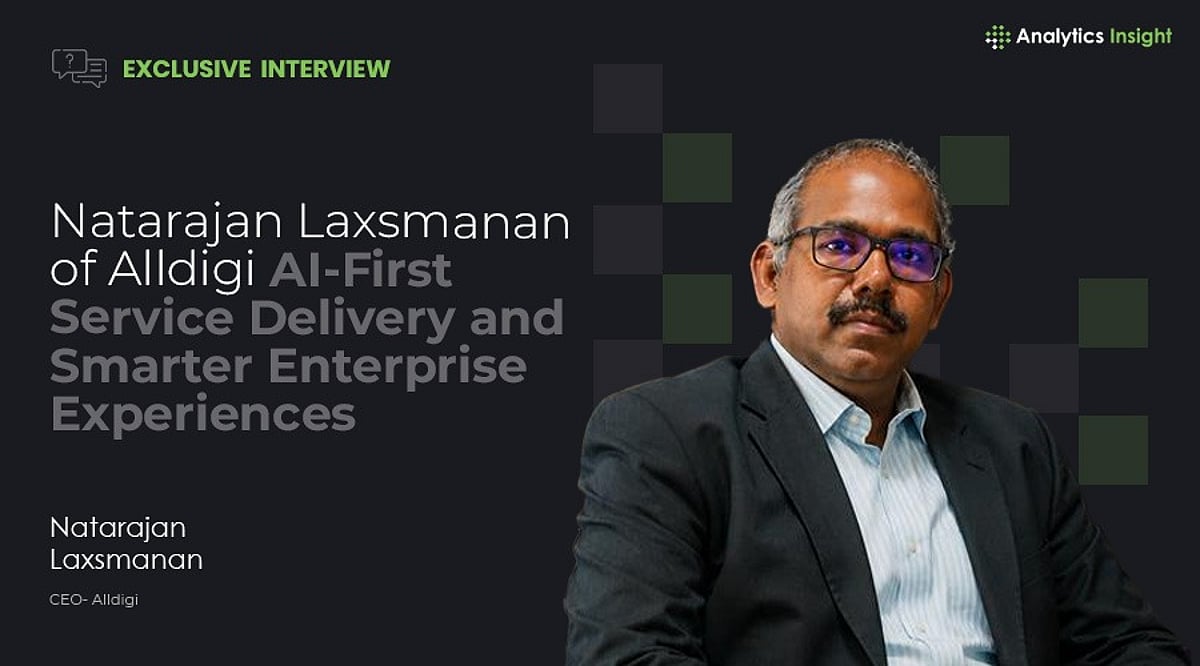
    Artificial intelligence is no longer just a support tool—it is becoming the foundation of enterprise service delivery. In a recent interview, Natarajan Laxsmanan, CEO of Alldigi, shared how AI is transforming customer and employee experiences through predictive engagement, intelligent automation, integrated workflows, and stronger governance. Here are the key insights from that conversation.

    From Reactive Support to Predictive Engagement

    AI is fundamentally changing customer experience by helping businesses move from issue resolution to issue prevention. Traditional support models are reactive: companies respond only after a customer raises a concern. AI enables organizations to anticipate needs by analyzing behavioral patterns, historical interactions, transaction data, and real-time signals.

    This intelligence allows businesses to proactively address issues, offer personalized recommendations, and create highly contextual interactions across channels. AI-powered virtual assistants, intelligent routing, sentiment analysis, and predictive service models are helping enterprises deliver faster resolutions while improving overall customer satisfaction. The result is a shift from transactional touchpoints to continuous, personalized engagement that strengthens loyalty and lifetime value.

    One practical way to operationalize this balance is to use AI-powered service platforms that bring AI agents and human teams together across channels. Connected knowledge, ticketing, messaging, voice, and reporting tools can help organizations automate routine, high-volume requests while keeping human expertise in the loop—supporting faster service without losing empathy or accountability.

    Employee Experience as a Strategic Growth Driver

    Employee experience is no longer just an HR priority; it is a business performance imperative. Organizations increasingly recognize the direct connection between employee satisfaction, productivity, innovation, retention, customer outcomes, and overall business growth.

    Modern employees expect workplace experiences that are as intuitive and responsive as the digital experiences they encounter as consumers. This requires cross-functional collaboration across HR, operations, technology, finance, and leadership teams. AI is helping organizations create more personalized employee journeys through intelligent support, workforce analytics, learning recommendations, and automated service delivery.

    Enterprises that treat employee experience as a strategic lever rather than an administrative function are better positioned to build an engaged workforce, improve operational agility, and drive sustainable growth in an increasingly competitive environment.

    Scaling AI Across the Enterprise

    The biggest challenge is not implementing AI, but identifying where it can create enterprise-wide value. Many organizations deploy AI in isolated applications, leading to fragmented insights and disconnected workflows.

    The real opportunity lies in connecting payroll, compliance, workforce management, and customer experience systems into an integrated operating ecosystem. When AI can access and analyze data across functions, it can uncover patterns, automate decisions, improve compliance oversight, optimize workforce planning, and deliver more personalized experiences for both employees and customers.

    However, success depends on strong data foundations, system interoperability, governance frameworks, security controls, and clearly defined business objectives. Organizations that get these fundamentals right can leverage AI as a strategic capability that delivers measurable improvements in efficiency, compliance, agility, and stakeholder experience.

    Balancing Automation with Human Interaction

    The goal of AI should not be to replace human interaction, but to elevate it. Automation is most effective when applied to repetitive, high-volume, and rules-based tasks, allowing employees to focus on activities that require empathy, judgment, creativity, and relationship-building.

    Whether serving customers or supporting employees, there will always be moments where human intervention is essential. Businesses must therefore design operating models where AI handles routine processes while humans manage complex and emotionally nuanced interactions.

    The organizations that achieve the best outcomes are those that view AI and human expertise as complementary strengths. This approach enables greater efficiency while preserving the trust, personalization, and authenticity that remain critical to exceptional experiences.

    Building an AI-First Operating Model

    Adopting an AI-first approach requires organizations to rethink more than technology. It demands changes across operating models, governance structures, and workforce strategies.

    First, businesses need to redesign workflows around intelligence, automation, and predictive decision-making rather than simply embedding AI into existing processes. Second, robust governance frameworks must be established to ensure transparency, accountability, security, privacy, compliance, and ethical AI usage.

    Equally important is workforce transformation. Employees need the skills and confidence to work alongside AI systems, interpret insights, and focus on higher-value responsibilities. Organizations that invest in continuous learning, digital capability building, and change management are more likely to realize the full benefits of AI.

    Ultimately, successful AI-first enterprises combine technology, governance, and people transformation to create scalable, trusted, and outcome-driven service delivery models that continuously evolve with business needs.

  • AI Agents Move Beyond Chatbots: 4 Real-World Jobs Where They Act Autonomously

    AI Agents Move Beyond Chatbots: 4 Real-World Jobs Where They Act Autonomously

    AI agents are evolving from simple question-answering tools into autonomous operators that can plan tasks, use software, verify results, and execute multi-step workflows with minimal human oversight. This shift from generating answers to completing entire processes is reshaping industries. Here are four key areas where AI agents are taking independent action in 2026.

    Financial Operations

    Financial firms now deploy AI agents for research, portfolio monitoring, risk assessments, and other complex workflows. Some systems rebalance portfolios within approved limits or handle operational exceptions automatically. Human-defined rules, permissions, and oversight remain essential for high-impact financial decisions, but routine tasks are increasingly handled by agents.

    Customer Support

    AI support agents have moved beyond scripted responses. They can classify customer requests, retrieve account data, check policies, process eligible refunds, update CRM records, send responses, and escalate unusual cases. The goal is no longer just answering a question—it’s resolving the entire customer case autonomously.

    Smart Buildings and Infrastructure

    AI agents connect with building systems, sensors, and HVAC equipment to monitor conditions and adjust operations in real time. Research from 2026 demonstrates agent-based systems that continuously optimize cooling and energy usage, showing how AI can take physical-world actions in smart buildings.

    Software and IT Operations

    Coding agents read repositories, identify relevant files, modify code, run tests, inspect failures, and prepare changes for review. IT agents investigate alerts, search logs, and handle routine fixes. While human engineers still review security-sensitive or high-impact changes, agents now manage significant portions of development and maintenance workflows.

    Setting Boundaries for Autonomous Agents

    Independent action introduces new risks: agents may act on incorrect information, receive excessive permissions, follow malicious instructions, or propagate errors across connected systems. Security experts recommend least-privilege access, detailed activity logs, continuous monitoring, rigorous testing, and human approval for high-risk actions. The transition from assistants to operators requires careful governance.

    The takeaway: AI agents are not replacing all workers overnight. Instead, they are owning narrow, repeatable workflows while humans handle exceptions, accountability, and major decisions. Finance, customer operations, software development, and smart infrastructure are leading this transformation in 2026.

  • The Future of Retail: 2027 Trends in AI, Robotics, and Connected Store Technology

    The Future of Retail: 2027 Trends in AI, Robotics, and Connected Store Technology

    Retail is entering a new phase as artificial intelligence, computer vision, connected stores, and automated commerce become more deeply integrated into the shopping experience. The transformation is no longer limited to online marketplaces — physical stores are also deploying advanced technologies to improve inventory management, personalize customer journeys, and reduce checkout friction.

    Research from Deloitte, Gartner, McKinsey, NRF, KPMG, and Intel points to several technologies that could shape the smart retail landscape in 2027. Here’s a closer look at the trends retailers and consumers should watch.

    Agentic AI Could Change How People Shop

    AI agents are emerging as a new retail channel. These systems can search for products, compare prices, build shopping baskets, and eventually complete purchases on behalf of consumers. Deloitte advises retailers to prepare product data and technology systems for this shift, making information accessible to AI-driven purchasing decisions.

    AI-Driven Personalization

    Artificial intelligence is playing a growing role in how retailers tailor recommendations, promotions, and customer experiences. Deloitte’s 2026 retail outlook found that 67% of surveyed retail executives expected AI-driven personalization capabilities within the following year. The goal is to deliver more relevant experiences based on customer behavior and preferences.

    Computer Vision Enters Physical Stores

    Computer vision is becoming an important part of the smart-store technology stack. Camera-based systems can monitor shelves, understand customer behavior, automate checkout, and identify potential losses. This helps stores respond to situations in real time while reducing manual monitoring for routine retail operations.

    RFID Improves Inventory Tracking

    RFID systems can detect multiple items simultaneously and provide better item-level inventory information. Compared with traditional barcode scanning, RFID offers a more efficient way to track products, stock levels, restocking, and checkout processes.

    Smart Carts and Frictionless Checkout

    Smart carts are gaining attention as a way to minimize friction at checkout. These carts combine sensors, displays, payment options, and AI to help customers navigate the store without necessarily passing through a traditional checkout counter. Gartner lists smart carts as a technology retailers should consider.

    Edge Computing Gains Importance

    The growing number of cameras, sensors, AI systems, and connected devices in stores is increasing demand for faster data processing. Edge computing processes data closer to where it is generated, reducing latency and supporting real-time decisions. Intel and Comcast identify edge computing as a key part of connected retail infrastructure.

    Robotics Moves into Retail Operations

    Robots and smart automation are moving beyond warehouses and into day-to-day store tasks, including stock tracking and other frontline jobs. Gartner expects robots and drones to be used more widely across companies, so stores may adopt self-directed systems over the next few years.

    AR Brings Immersive Shopping Experiences

    Augmented reality could play a larger role in shopping. AR lets consumers visualize products, try items virtually, or see how products fit into their surroundings before buying. Shopify identifies 3D and AR shopping experiences as an important part of retail’s digital transformation, especially as retailers bridge digital and physical shopping.

    Stores Become More Connected

    The traditional distinction between online and offline shopping is becoming less important as retailers connect inventory, customer data, fulfillment, and store experiences. McKinsey expects physical stores to increasingly focus on fulfillment, convenience, product validation, and differentiated experiences, transforming them into connected parts of a wider retail network.

    AI Governance and Cybersecurity

    As retailers let AI systems operate more independently, security, privacy, and clear rules become more important. NRF has pointed to dangers tied to agentic AI, while KPMG highlights governance gaps, fragmented technology platforms, and cyber risk as key roadblocks for wider AI use in retail.

    Heading into 2027, retail technology decisions won’t just be about plugging in AI tools. Retailers will need strong back-end systems and guardrails to handle the security and privacy issues that come with more connected stores. Overall, the trends point to a retail world where AI, automation, connected systems, and physical locations continue to blend. Each retailer may choose different tools, but the direction is clear: more tasks become automated, shoppers get more tailored help, and the point of sale becomes less of a hassle.

    FAQ: Smart Retail Trends for 2027

    What are the biggest smart retail trends for 2027?

    AI agents, smart carts, computer vision, RFID, robotics, augmented reality, and connected stores are expected to shape retail experiences.

    How could AI agents change shopping?

    AI agents could search products, compare prices, build shopping baskets, and eventually complete purchases automatically for consumers.

    What role will computer vision play in retail?

    Computer vision can monitor shelves, understand customer behavior, support automated checkout, and help retailers identify potential losses.

    Why are smart carts becoming important?

    Smart carts combine sensors, displays, payment systems, and AI, helping shoppers navigate stores while reducing checkout friction.

    Will physical stores remain important in 2027?

    Yes. McKinsey expects stores to increasingly focus on fulfillment, convenience, product validation, and differentiated shopping experiences.

  • Deep Learning Cheat Sheet: Core Concepts, Architectures, and Tools for AI Practitioners

    Deep Learning Cheat Sheet: Core Concepts, Architectures, and Tools for AI Practitioners

    Deep learning has become the backbone of modern artificial intelligence, powering everything from image recognition and speech systems to generative AI and language models. For beginners, the field can seem overwhelming due to its technical jargon. Even seasoned professionals need a quick reference when navigating model development workflows. This cheat sheet distills the essential concepts, architectures, training processes, and tools you need to understand and apply deep learning effectively.

    What is Deep Learning?

    Deep learning is a subset of machine learning that relies on neural networks with multiple layers (hence “deep”) to learn patterns from data. Each layer transforms its input, passing it forward to the next. Early layers tend to capture simple features (like edges in images or word relationships), while deeper layers learn complex abstractions. During training, the model adjusts its weights based on prediction errors via a process called backpropagation, which calculates gradients used by an optimizer to update parameters. The core idea is simple: data goes in, patterns are learned, and predictions come out.

    Key Neural Network Terms

    • Neuron: The basic computational unit of a neural network.
    • Layer: A group of neurons that processes inputs together.
    • Weights: Learnable parameters that determine how inputs influence outputs.
    • Bias: An additional learnable parameter that shifts the neuron’s output.
    • Activation Function: Introduces non-linearity, enabling the network to learn complex patterns.
    • Loss Function: Measures how far the model’s predictions are from the actual target values.
    • Epoch: One full pass over the entire training dataset.
    • Batch: A subset of training examples processed together in one iteration.
    • Learning Rate: Controls the step size during weight updates.
    • Overfitting: When the model performs well on training data but poorly on unseen data.

    Major Deep Learning Architectures

    Different architectures are suited for different tasks:

    • CNNs (Convolutional Neural Networks): Primarily used for computer vision tasks; they learn spatial hierarchies of features like edges, textures, and shapes.
    • RNNs (Recurrent Neural Networks): Designed for sequential data, such as time series, speech, and text, by maintaining a hidden state across time steps.
    • LSTMs (Long Short-Term Memory networks): A type of RNN that mitigates the vanishing gradient problem and can capture long-range dependencies.
    • Transformers: Rely on self-attention mechanisms to capture relationships across sequences; they underpin most modern language models and generative AI.
    • Autoencoders: Learn compressed representations of input data, useful for anomaly detection, denoising, and representation learning.

    Choosing the right architecture depends on your data type, problem complexity, and deployment constraints.

    How a Deep Learning Model is Trained

    Training typically starts with data preparation, splitting the dataset into training, validation, and test sets. The model makes predictions on training examples, the loss function evaluates errors, and backpropagation computes gradients. An optimizer (like SGD or Adam) updates the weights accordingly. This iterative process repeats over multiple batches and epochs. Validation data is used to monitor performance on unseen examples and avoid overfitting. Modern frameworks like PyTorch offer built-in workflows that cover dataset handling, model construction, automatic differentiation, optimization, and model saving.

    Essential Tools for Deep Learning

    Python remains the go-to language for deep learning. Core libraries include:

    • PyTorch: A flexible, dynamic framework for building, training, and deploying neural networks.
    • TensorFlow and Keras: Another widely adopted stack, especially for production deployments.
    • NumPy and Pandas: For numerical computing and data manipulation.
    • Matplotlib: For visualization of data and training metrics.
    • GPU acceleration: Essential for large models and datasets; NVIDIA GPUs are commonly used to parallelize operations.

    Cloud-based notebooks (like Google Colab or AWS SageMaker) allow access to powerful hardware without owning a dedicated GPU.

    Why This Matters

    Deep learning is central to AI innovation, driving advances in computer vision, natural language processing, speech recognition, recommendation systems, and generative AI. For beginners, mastering the core workflow—from data preparation to model deployment—is more valuable than memorizing formulas. Professionals also need skills in model optimization, profiling, quantization, pruning, and distributed training to deploy efficient, scalable solutions.

    Deep Learning Roadmap for 2026

    Begin with Python and foundational machine learning concepts. Then move on to tensors, neural network basics, loss functions, and optimization. Build small projects to gain hands-on experience—image classification is a great starting point for vision tasks, while text classification suits language processing. Progress to transformers and pretrained models, and study transfer learning, fine-tuning, evaluation, and deployment practices.

    In production, consider memory usage, inference speed, cost, reliability, and monitoring alongside model accuracy. A practical learning path combines theory with coding, experimentation, and real-world deployment.

    Frequently Asked Questions

    What is deep learning?

    Deep learning is a branch of machine learning that uses multi-layer neural networks to automatically learn patterns from large amounts of data.

    What is a neural network?

    A neural network is a computational model made up of connected layers and learnable parameters. It processes inputs through layers to produce an output, adjusting parameters during training to reduce errors.

    What is the difference between machine learning and deep learning?

    Deep learning is a subset of machine learning. Traditional ML often relies on engineered features, while deep learning can automatically learn representations from raw data using neural networks.

    What are CNNs used for?

    Convolutional neural networks are primarily used for image and computer vision tasks, learning local patterns such as edges, textures, shapes, and more complex visual features.

    What is backpropagation?

    Backpropagation is an algorithm that calculates the gradient of the loss function with respect to each parameter, enabling the optimizer to update weights during training.

  • The Invisible AI Revolution: 7 Smart Devices Where Artificial Intelligence Blends Seamlessly into Daily Life

    The Invisible AI Revolution: 7 Smart Devices Where Artificial Intelligence Blends Seamlessly into Daily Life

    Artificial intelligence is rapidly moving from a flashy, attention-grabbing feature to a quiet, indispensable assistant. The next wave of smart devices integrates AI so smoothly that users often forget it is there. From earbuds that translate in real time to home appliances that learn your routines, here are seven products where AI is becoming invisible.

    1. AI Earbuds

    Smart earbuds now leverage AI for real-time translation, intelligent noise management, voice assistance, and personalized audio profiles. The technology adapts to your environment without requiring any manual adjustments, making the experience effortless.

    2. AI Smart Glasses

    AI-powered glasses can recognize surroundings, answer questions, translate text, and deliver useful information without demanding constant screen interaction. They overlay digital insights onto the physical world, keeping your hands and eyes free.

    3. AI Smartwatches

    Modern smartwatches use AI to interpret health trends, summarize notifications, assist with workouts, and provide contextual suggestions directly from your wrist. The intelligence works in the background, offering proactive support when you need it.

    4. AI Smartphones

    Today’s smartphones embed AI into cameras, call quality, search, writing assistance, and personalization. These intelligent features feel like ordinary phone functions, enhancing everyday tasks without adding complexity.

    5. AI Home Appliances

    Refrigerators, washing machines, and ovens increasingly use AI to adjust settings, recognize usage patterns, and automate routine household decisions. The devices learn your habits and optimize performance automatically.

    6. AI Security Cameras

    AI cameras can identify people, vehicles, unusual activity, and important events, reducing the need for users to monitor footage constantly. Alerts are smart and contextual, so you only see what matters.

    7. AI Personal Robots

    Emerging personal robots combine cameras, microphones, sensors, and AI to understand environments, respond naturally, and handle simple household tasks. They adapt to your home without requiring complicated programming.

    Beyond these seven categories, AI is also transforming cars, health devices, and more. The common thread is that the technology fades into the background, making life simpler and more intuitive. As AI continues to evolve, the smartest devices will be the ones you barely notice.

  • Data Science Goes to the Edge: 5 Trends Reshaping Modern Analytics

    Data Science Goes to the Edge: 5 Trends Reshaping Modern Analytics

    Data science is moving closer to the edge. More analytics workloads are being processed where data is created, enabling faster responses and reducing unnecessary data transfers. From edge AI to real-time intelligence, these five trends are reshaping modern analytics.

    Edge AI

    Cameras, sensors, smartphones, and industrial machines can analyze information without constantly sending raw data to the cloud. The result is faster decisions, lower latency, and greater resilience when connectivity is limited.

    Real-Time Data Streaming

    Real-time streaming allows analytics systems and AI agents to react to events almost immediately. Gartner identifies agentic data streaming as a major data and analytics trend as organizations demand faster intelligence.

    Smaller AI Models

    Techniques such as quantization and pruning can reduce model size while retaining useful performance. This makes local inference more practical for smartphones, industrial equipment, healthcare devices, and other resource-constrained systems.

    AI-Powered Data Management

    AI agents can help identify patterns, recommend actions, and support routine data processes in real time. Gartner expects agentic approaches to increasingly reshape how organizations manage complex and rapidly growing data environments.

    Analytics Meets IoT

    Edge analytics allows connected devices to filter and interpret information locally before sending only useful insights onward. This approach is especially relevant to manufacturing, logistics, healthcare, energy, and smart-city applications.

    Privacy Moves Closer to the Data

    This is especially useful when devices handle sensitive images, health information, or industrial data. Edge architectures therefore offer another tool for organizations trying to balance analytics performance with privacy and security requirements.

    5G Adds More Momentum

    5G can connect distributed devices with nearby computing infrastructure while supporting data-intensive applications. Together, 5G, specialized AI chips, and optimized models are helping push analytics beyond traditional cloud-only architectures.

    From Dashboards to Instant Decisions

    Modern analytics is moving beyond simply explaining what happened. Streaming data, AI agents, and edge processing can help systems detect events and support decisions as they happen.

  • India’s Deep-Tech Boom: 9 Defining Technologies for 2026

    India’s Deep-Tech Boom: 9 Defining Technologies for 2026

    India is entering a new era of technological innovation. By 2026, a wave of deep-tech advancements is expected to reshape industries, businesses, and public services across the country. From artificial intelligence and semiconductors to space exploration and biotech, these are the key technologies driving India’s deep-tech boom.

    AI and Generative AI

    India’s AI ecosystem continues to expand rapidly, with applications spreading across business, research, and government services. Generative AI tools and platforms are becoming central to productivity and innovation, making advanced AI one of the most significant technology drivers of 2026.

    Semiconductor Technology

    India is investing heavily in semiconductor manufacturing, chip design, and related infrastructure. New fabrication plants and design centers are being developed to reduce reliance on global supply chains and strengthen the country’s electronics ecosystem.

    Quantum Computing

    Quantum technology is gaining momentum in India, with research focused on quantum computing, secure communications, advanced sensing, and future industrial applications. These developments could unlock entirely new capabilities across healthcare, finance, and logistics.

    Space Technology

    India’s space sector is opening up to private participation, fostering innovation in launch systems, satellites, Earth observation, and commercial space services. Startups and established companies alike are exploring new ways to make space more accessible.

    Robotics and Automation

    Robotics is moving beyond factory floors. Indian startups are developing intelligent machines for healthcare, logistics, agriculture, defense, and other real-world applications, bringing automation to everyday life.

    Advanced Drones

    Drone technology is expanding into agriculture, mapping, delivery, surveillance, and infrastructure inspection. These applications are creating new opportunities for deep-tech startups and transforming traditional industries.

    Biotechnology

    India’s biotechnology sector is advancing drug discovery, genomics, medical research, and agricultural innovation. These efforts are strengthening the country’s future pipeline of high-impact technologies.

    Electric Mobility Technology

    Battery innovation, electric vehicles, and charging infrastructure are transforming mobility in India. Deep-tech companies are developing more efficient energy solutions to support the shift to electric transportation.

    Defense Technology

    India’s defense sector is embracing drones, sensors, artificial intelligence, robotics, and space systems. A renewed focus on indigenous development is helping the country build self-reliant defense capabilities.

    Together, these technologies signal a transformative period for India, positioning the country as a major player in the global deep-tech landscape.

  • Elon Musk Ditches Luxury for an Airstream Trailer at xAI’s Memphis Data Center

    Elon Musk Ditches Luxury for an Airstream Trailer at xAI’s Memphis Data Center

    Elon Musk is swapping five-star comforts for a compact Airstream trailer while he oversees xAI’s rapidly expanding artificial intelligence operations in Memphis. The Tesla and SpaceX CEO described the trailer as his “palace” during a recent appearance on the All-In podcast, where he was joined by SpaceX President and COO Gwynne Shotwell.

    A Hands-On Approach in Memphis

    Musk has been staying near xAI’s Colossus supercomputer facility, which supports the company’s Grok AI models. According to reports, he has lived in the trailer for more than 10 days, choosing the basic setup so he can be close to the project instead of commuting from a conventional residence.

    The exact Airstream model was not disclosed, but these compact trailers typically include sleeping quarters, a kitchen, and a bathroom — enough to keep the billionaire close to the action without sacrificing basic comforts.

    Why Memphis Matters to xAI

    xAI began building the original Colossus facility in 2024 and is now working to expand its computing capacity in Memphis. Musk said he needed to be on site to help bring additional GPUs online, describing the trailer as his base near the infrastructure work.

    During the podcast, Shotwell noted Musk’s habit of staying close to major projects and confirmed he has been helping with construction work in Memphis. The expanded facility is expected to support the next wave of Grok AI development and reinforce xAI’s position in the competitive artificial intelligence race.

    “I needed to be in Memphis to work on additional GPUs online,” Musk said, explaining why he chose the Airstream over a more traditional stay.

    Musk’s temporary living arrangement underscores how the project has become a personal priority for the billionaire as xAI pushes forward with one of the largest AI computing installations in the region.