Tag: artificial intelligence

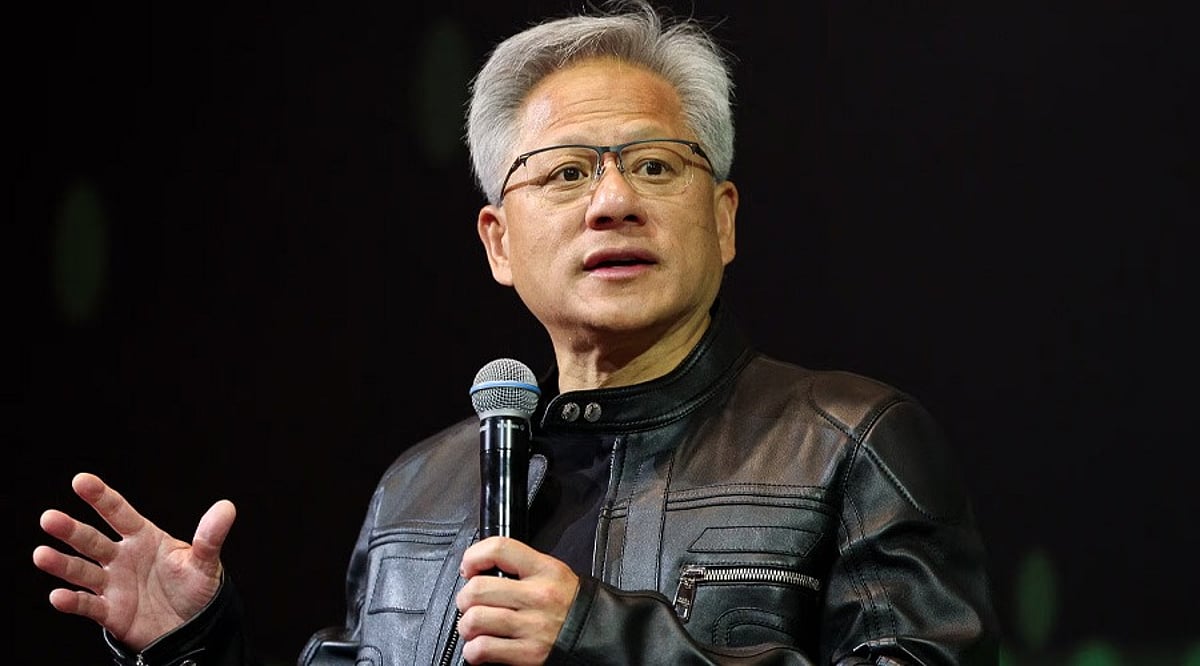
  • Nvidia CEO Jensen Huang Rejects 2030 AI Doomsday Predictions, Urges Speed With Safety

    Nvidia CEO Jensen Huang Rejects 2030 AI Doomsday Predictions, Urges Speed With Safety

    Nvidia CEO Jensen Huang has firmly rejected claims that artificial intelligence could end humanity by 2030, calling the scenario unrealistic and urging the industry to keep advancing while prioritizing safety.

    Huang Dismisses AI Extinction Fears

    During an interview with CBS News, Huang pushed back on alarming AI predictions. “I believe the claims, The end of the world, [are] stirring fear across America. The people who are doing it make no sense to me. So they must be doing it for ulterior reasons – maybe it’s political, maybe it’s otherwise, maybe just attention grabbing,” he said.

    AI Development Should Move Fast, But Not Recklessly

    Huang rejected calls to slow AI research. “We should go as fast as we can, irrespective of anyone else. But we would never ever, and never should, ship products before they’re ready and deliver products that are unsafe,” he said.

    The Nvidia chief has repeated this position at recent industry events, arguing that AI can be managed safely and questioning the need for additional regulation. Nvidia is the leading supplier of processors used to develop and run AI systems.

    AI Safety Debate Gains Momentum

    Huang’s comments come amid growing warnings from researchers. Former Anthropic researcher Jacob Coxon recently raised concerns that advanced AI could cause catastrophic harm within the decade. Anthropic CEO Dario Amodei has called for stronger safety measures, while OpenAI CEO Sam Altman has supported greater coordination around AI safeguards.

    Huang’s remarks add another major voice to the debate over how fast AI should advance and what safeguards should accompany future systems. The full CBS interview is scheduled to air on Sunday.

  • GPT-5.6 Sol Streamlines Quantum Computing Experiments with Automated Calibration

    GPT-5.6 Sol Streamlines Quantum Computing Experiments with Automated Calibration

    Researchers at MIT have successfully used OpenAI’s GPT-5.6 Sol model to automate parts of quantum computing experiments, reducing the manual workload for scientists and enabling overnight data collection. The AI agent, integrated via Codex, handled routine measurements and qubit calibration on real superconducting hardware.

    AI Meets Quantum Computing

    Quantum experiments often require hundreds or thousands of preliminary measurements before researchers can proceed to the main experiment. MIT researcher Beatriz Yankelevich tested whether GPT-5.6 Sol could automate these workflows. By connecting the model to lab software through Codex, it could interact directly with quantum experiments.

    Worked With Real Qubits

    The experiments involved superconducting qubits cooled to extremely low temperatures inside dilution refrigerators. Once the chip was prepared, researchers controlled it via software using microwave signals. This environment became a natural testbed for an AI agent capable of interacting with measurement software.

    GPT-5.6 Sol Could Run Measurements

    Yankelevich gave Codex specialized skills explaining how individual measurements should be performed and evaluated. GPT-5.6 Sol could then select parameters, operate the hardware, analyze measurements, and decide whether to refine the experiment or move forward.

    It Helped Calibrate Qubits

    The model worked on an uncalibrated six-qubit chip used by the research group. It identified transition frequencies, calibrated control and readout pulses, and measured how long qubits retained quantum information. These steps are essential for accurately controlling superconducting quantum processors.

    Overnight Experiments Became Possible

    One major advantage was time. Researchers could allow agents to run routine measurements for hours while they worked elsewhere in the laboratory. Yankelevich said she could check progress remotely and intervene when an experiment needed correction or a different direction.

    AI Still Has Limits

    GPT-5.6 Sol performed better when experimental signals were clear and workflows were well defined. Weak or noisy signals were harder, sometimes requiring guidance from an experienced researcher. The results suggest AI agents can automate routine workflows while humans remain important for ambiguous physical results.

    Researchers Move Up the Stack

    The biggest impact is not simply faster measurements. By handing routine calibration and analysis tasks to agents, researchers can spend more time interpreting results, designing experiments, and planning new research directions. OpenAI says the MIT group now regularly uses agents for routine measurements.

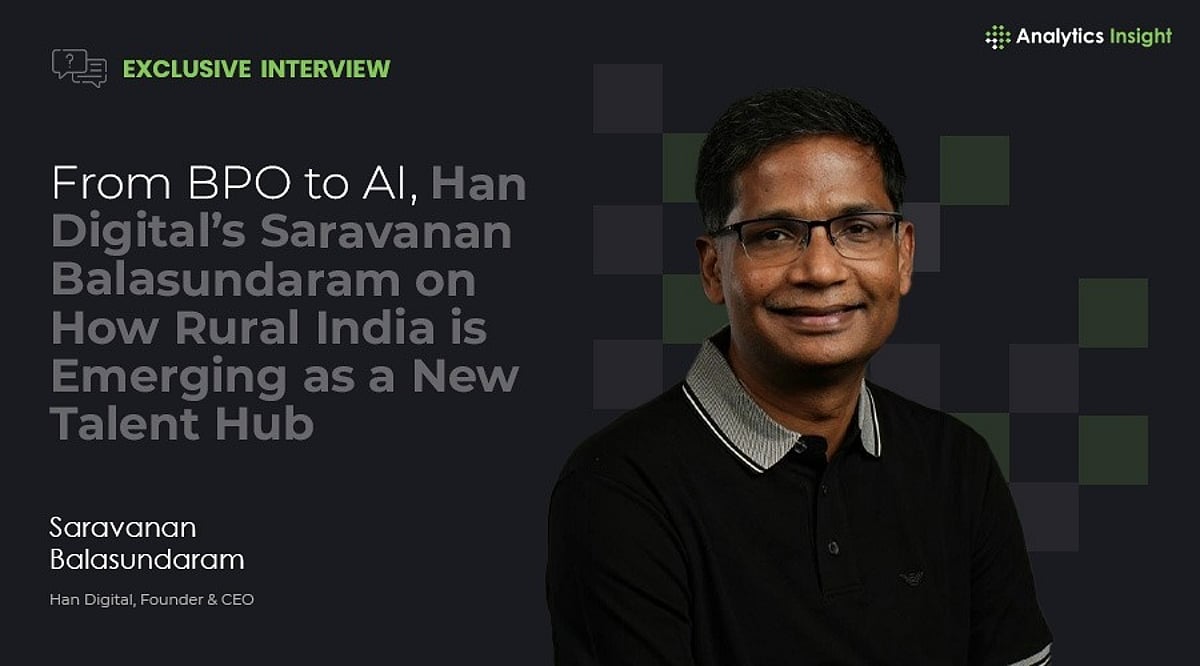
  • How AI-Led Productivity Is Redefining IT Hiring: Q&A with Han Digital CEO Saravanan Balasundaram

    How AI-Led Productivity Is Redefining IT Hiring: Q&A with Han Digital CEO Saravanan Balasundaram

    Saravanan Balasundaram, Founder and CEO of Han Digital Solution, sees a fundamental shift underway in India’s IT-BPM industry. In a recent interview, he outlined how AI-led productivity gains—not just weaker tech spending—are driving the sharp slowdown in net workforce additions. He also explained which roles will thrive, why flexible staffing is becoming the norm, and what graduates need to do to stay employable.

    The Numbers Behind the Hiring Slowdown

    According to Balasundaram, two forces are shaping H1 FY27 workforce trends. Around two-thirds of the decline can be attributed to AI-led productivity, which is reducing the number of people needed to deliver the same work, especially in traditional IT services and BPO. The remainder stems from cautious discretionary spending, reinforced by continued uncertainty in West Asia and its effect on sectors like retail, travel, and manufacturing.

    But overall technology spending has not collapsed. Global IT spending is expected to approach $6.3 trillion in 2026, and Indian enterprises are directing more than 40% of technology capex toward data modernization, AI, and cybersecurity. The result, says Balasundaram, is a shift from mass hiring to precision hiring—where each technology investment must deliver stronger capability and productivity.

    “The bigger imperative is to move the workforce up the value chain faster than the productivity curve is rising,” he said.

    Which Job Roles Will Grow or Decline?

    Hiring demand will center on professionals who can combine AI expertise with technical or domain knowledge. Balasundaram expects strong growth in AI/ML engineering, cybersecurity, robotics and AI, and platform-specific specialists across SAP, Oracle, Microsoft, AWS, Salesforce, and ServiceNow. He also flagged emerging roles such as Loop Engineers and Forward Deployed Engineers—positions built around deploying and operating AI systems autonomously.

    On the other side, repetitive and rules-based tasks will face the most pressure. L1 support, ticketing, transactional processing, basic QA, and some entry-level coding and testing roles will see their share of hiring fall significantly. Balasundaram doesn’t expect these jobs to vanish overnight, but he does see the hiring pyramid shifting from volume-based to skills-based.

    The Rise of Flexible Staffing

    Contract and project-based work is becoming a core part of India’s IT workforce, not just a tool for managing hiring cycles. As Global Capability Centers (GCCs) expand and AI-driven roles emerge, organizations need specialized talent quickly. Flexible staffing lets them access skills like AI, cloud, data, cybersecurity, enterprise platforms, and multilingual capability on demand.

    For mid-career professionals, this means more opportunities to work across projects and organizations. For fresh graduates, however, the entry bar is rising. Companies are moving away from high-volume campus hiring and looking for candidates who already have practical AI skills, domain understanding, and the ability to contribute in production environments. The staffing model, Balasundaram notes, is shifting from “people on demand” to “skills on demand.”

    What AI Readiness Really Means for Gen Z

    Balasundaram argues that AI readiness is too often reduced to prompt engineering. Prompting, he says, is becoming a baseline capability rather than a differentiator. Real readiness means knowing how to build, deploy, integrate, and manage AI systems that operate autonomously across business functions.

    He recommends three priorities for graduates: domain expertise layered with AI skills; technology and platform skills that go beyond using AI tools—including how to build production-ready code; and meta-skills like rapid learning, experimentation, problem-solving, and adaptability. Universities also need to move faster; static curricula risk producing graduates equipped for yesterday’s technology environment.

    When Will Stronger Hiring Return?

    Looking beyond FY27, Balasundaram says enterprise AI spending is surging globally, but ROI has not yet caught up. Workforce growth will rebound when AI moves from cost optimization to value creation through AI-native products, agentic systems, new digital businesses, and technology-led revenue streams. Until then, productivity gains will continue to suppress traditional headcount needs.

    GCCs will be a key signal to watch. As they evolve from executing roadmaps to shaping global strategy and owning products, demand for talent should strengthen—but with a very different skill mix. The next hiring cycle in IT-BPM will likely be smaller in volume, but potentially much higher in value.

    This article is based on insights from Saravanan Balasundaram, Founder & CEO of Han Digital Solution.

  • Meta’s Muse AI Agent Expands to Mac: Hands-Free Task Automation Goes Desktop

    Meta’s Muse AI Agent Expands to Mac: Hands-Free Task Automation Goes Desktop

    Meta has expanded its personal AI agent, Muse, to the Mac platform with a dedicated desktop application. This move significantly broadens Muse’s role in users’ daily workflows, allowing it to interact directly with files, messages, and applications stored on the computer, not just through a phone or web browser.

    Muse originally launched on September 8th in the United States across iOS, Android, the web, and WhatsApp. The Mac app is the latest step in Meta’s push into the agentic AI space, emphasizing AI that performs multi-step tasks rather than just responding to queries.

    More Than a Chatbot

    Muse is designed to handle real-world tasks. On the Mac, users can ask it to organize files, retrieve information from Messages, Calendar, or Notes, and fill out forms using saved documents. The agent works across a user’s entire digital routine, reducing the manual effort of moving data between applications.

    A standout feature is Muse’s ability to continue working even after the app is closed. It resumes when it needs user input or when a task is complete. This background operation distinguishes it from most current AI tools, which typically stop when the conversation ends.

    Built With Privacy in Mind

    Meta has granted users clear control over Muse’s access. Computer access is opt-in, and Full Disk Access is optional. Users can adjust permissions at any time through Mac settings.

    On the technical side, Muse operates within a dedicated virtual space called Muse Secure VM. This private environment gives the agent its own browser, storage, and computing resources. Meta states this setup keeps the agent away from sensitive login credentials and manages actions involving connected services.

    Also Read: Meta Launches Muse AI Agent, Can Send Emails, Book Travel: How It Works

    A Bigger Play for Agentic AI

    The Mac launch is part of Meta’s broader strategy toward AI that performs actions rather than just generating text. Muse is intended to execute multi-step tasks such as sending emails or booking travel with minimal user intervention.

    Currently, Muse is available only in the US. Meta has announced plans to expand the service to additional regions in the coming months.

    Join our WhatsApp Channel to get the latest news, exclusives and videos on WhatsApp.

  • Claude AI Now Drives 26% of Anthropic’s Internal Research, Company Reveals

    Claude AI Now Drives 26% of Anthropic’s Internal Research, Company Reveals

    Anthropic has disclosed that its Claude AI models now lead approximately 26% of the company’s internal artificial intelligence research and development work — a dramatic increase from under 1% just six months ago in February 2026. The data comes from a newly developed internal tool called the R&D Automation Index, which tracks how much AI contributes across different research tasks.

    The index uses a scale built by Epoch AI, ranging from AL0 (no AI involvement) to AL5 (fully autonomous operation). Claude currently operates at the AL4 level for 26% of the work, meaning the AI takes on most of a task after receiving a high-level instruction while a human remains in the loop to supervise. Anthropic emphasized that Claude is not yet running any operations fully on its own.

    More than 90% of the company’s measured AI research now occurs at or above the level where AI and humans collaborate side by side. These areas include model training, reinforcement learning, evaluation, and engineering.

    The scale of the operation is significant. In August, roughly 30,000 AI agents were active at any given time on Anthropic’s most-used internal platform. Over one billion agent decisions were tracked that month, of which approximately 0.002% were stopped by the company’s monitoring system. Additionally, about 6% of AI research compute was allocated to safety work during a week in July, rising to nearly 12% within AI-driven research specifically.

    Anthropic plans to publish these measurements regularly and is calling on other leading AI developers to release similar data. The company believes that shared methods and external verification can help the broader industry keep pace with the rapid evolution of AI development itself. This report represents one of the most detailed looks any major AI company has offered into how its own tools are shaping the work of building the next generation of AI.

  • Maximizing Siri AI on iPhone 18 Pro: Features, Tips, and What’s New in iOS 27

    Maximizing Siri AI on iPhone 18 Pro: Features, Tips, and What’s New in iOS 27

    Apple’s Siri AI has officially arrived in India with iOS 27, bringing a more intelligent and context-aware voice assistant to compatible iPhones. The feature launched on September 14 and comes pre-installed on the iPhone 18 Pro. Currently in beta, Siri AI supports English and requires users to join a waiting list. Apple also enforces daily limits on server requests to manage load.

    Deeper Access to iPhone Data

    The updated Siri can search across Messages, Mail, and Photos. Users can ask Siri to retrieve specific details, such as booking codes from older emails. During business calls, Call Context can display relevant information like a booking number automatically.

    Screen Awareness and App Integration

    Siri AI now understands content on your screen. For example, you can ask it to turn a sports fixture list from a webpage into calendar entries. Activate Siri via the wake phrase, side button, or a swipe down from the Dynamic Island.

    Visual Intelligence in Camera

    Visual Intelligence works through the Camera app as a Siri mode. Point your camera at a printed schedule, such as a wedding card, and ask Siri to extract relevant details.

    Third-Party App Support

    Siri AI integrates with third-party apps. Apple specifically mentions WhatsApp for sending messages via voice commands. Audible playback is supported, and apps like Microsoft Outlook, Notability, and Tripsy are slated for upcoming support.

    Writing, Dictation, and Shortcuts

    Writing Tools can draft and rewrite text in any app where you type. Siri can adapt its writing style to match yours. Dictation gets an upgrade via Apple’s AFM Core Advanced model, adding punctuation and formatting as you speak. The Shortcuts app now accepts plain-language instructions—just describe the action you want instead of manually building each step.

    Price Tracking and Personal Organization

    Safari’s Notify Me feature monitors webpages for changes, including restocks and price drops. Calendar and Reminders can add events and list items through spoken instructions. Siri AI maintains conversation history across devices via iCloud, so chats continue seamlessly on Mac, iPad, Apple Watch, or Vision Pro.

    Language Support in India

    Siri AI launched with English only. French, Japanese, Korean, Portuguese, and Spanish are scheduled to arrive next month, but Apple has not announced a timeline for Hindi. The feature works on iPhone 15 Pro and later models, including the iPhone 18 Pro and iPhone Duo.

  • Agentic AI Reshapes Banking, Payments, and Fintech: Key Insights

    Agentic AI Reshapes Banking, Payments, and Fintech: Key Insights

    Agentic AI is poised to revolutionize the financial sector by moving beyond simple customer service to autonomously handling complex banking tasks, payments, and fraud detection. This technology enables AI agents to analyze spending, execute transactions, and offer personalized financial advice, all while reducing manual effort and improving efficiency.

    Smarter Banking Decisions

    Agentic AI can analyze a customer’s spending habits, understand their financial goals, compare available options, and take approved actions. From moving money between accounts to managing recurring payments, these systems make everyday banking more automated, faster, and user-friendly.

    AI-Powered Payments

    Instead of manually completing every step of a payment, an AI agent can identify bills, check payment details, and complete transactions after receiving permission. It also monitors upcoming expenses and reminds users about payments, making digital transactions more convenient and organized.

    Fraud Detection Gets Proactive

    Traditional fraud systems react to unusual activity after it occurs. Agentic AI continuously monitors transactions, customer behavior, and account activity to spot risks earlier. It can investigate unusual patterns, request additional verification, and alert financial institutions, enabling faster threat response.

    Personalized Financial Services

    By studying a customer’s financial activity, Agentic AI offers tailored services such as spending pattern analysis, expense management suggestions, and savings planning. Unlike basic recommendation tools, AI agents can follow through on approved actions, turning suggestions into practical steps.

    Faster Fintech Operations

    Fintech companies handle large volumes of customer requests, transactions, compliance checks, and data. Agentic AI automates repetitive processes and coordinates tasks across systems, reducing manual work and allowing teams to focus on complex issues, product development, and business decisions.

    A New Role for Human Bankers

    Agentic AI does not eliminate the need for human employees. Instead, it handles routine tasks while bankers focus on areas requiring judgment, relationships, and complex financial advice. Human oversight remains essential, especially when AI agents make decisions involving money, sensitive data, or financial risk.

    The Road Ahead for Agentic Finance

    Agentic AI is pushing banking and fintech toward services that act rather than simply respond. Customers may increasingly rely on AI agents to manage routine financial tasks across accounts and services. This shift raises important questions about security, privacy, accountability, consent, and the degree of control customers grant AI systems.

  • Money in Motion: The Key Technologies Transforming Digital Finance

    Money in Motion: The Key Technologies Transforming Digital Finance

    Digital finance is evolving at unprecedented speed. From artificial intelligence to biometric authentication, a range of technologies is changing how consumers and institutions handle money. Here is a closer look at the innovations reshaping payments, banking, and financial services.

    Artificial Intelligence

    AI is changing how banks and financial apps handle everyday money tasks. It can detect unusual transactions, assess risks, answer customer questions, and offer personalized financial services. AI also helps institutions process large amounts of data quickly, making digital payments and banking services faster, safer, and more responsive.

    Blockchain

    Blockchain provides a shared digital record that can track transactions without relying on a single central database. The technology supports cryptocurrencies, smart contracts, and other financial applications. Banks and businesses are exploring blockchain for faster settlements, cross-border payments, digital assets, and records that are easier to verify and trace.

    Mobile Payments

    Smartphones have become a central part of everyday finance. Users can pay bills, transfer money, shop online, and make purchases at physical stores through banking apps and digital wallets. QR codes and near-field communication have further simplified payments, reducing the need for cash and cards.

    Cloud Computing

    Cloud computing gives financial institutions flexible computing power and storage through internet-based systems. Banks use cloud infrastructure to run applications, manage data, and launch digital services without relying entirely on traditional hardware. It also supports faster updates and helps financial platforms handle changing customer demand.

    Open Banking

    Open banking allows customers to share financial information with authorized third-party services through secure APIs. This connects bank accounts with budgeting apps, payment platforms, lending services, and other financial tools. By making data easier to access with permission, open banking is creating more connected digital financial experiences.

    Biometric Authentication

    Biometric authentication uses features such as fingerprints, facial recognition, or voice patterns to confirm a user’s identity. It has become common across smartphones and financial applications, helping users access accounts and approve transactions. Biometrics make authentication quicker while adding another layer of identity verification to digital financial services.

  • AI Expansion, Chip Rivalry, and Deep-Tech Funding Lead Today’s Tech Landscape

    AI Expansion, Chip Rivalry, and Deep-Tech Funding Lead Today’s Tech Landscape

    The technology world is undergoing a rapid transformation as artificial intelligence reshapes industries, business workflows, and workforce requirements. Competition is intensifying across AI infrastructure, semiconductor technology, and specialized applications. From legal services and aerospace to financial markets and engineering education, companies and institutions are adapting to a market increasingly defined by AI adoption, hardware capabilities, and changing professional needs.

    What’s New Today

    The tech world is shifting from experimenting with AI to integrating it into real-world systems. AI is moving deeper into professional workflows, while competition around the computing infrastructure needed to support these applications continues to grow. Investment is flowing into deep-tech and aerospace innovation, and education systems are adapting to changing technology-related career requirements. Financial markets are also reflecting shifting investor sentiment around digital assets. Together, these developments show how AI is influencing not just software, but the wider technology ecosystem—from chips and infrastructure to jobs, industry applications, and investment.

    New OpenAI Model Brings AI Deeper Into Legal Workflows

    OpenAI is expanding further into the legal sector with a new AI model designed specifically for law firms. The move reflects the growing use of AI for tasks such as legal research, document analysis, and drafting. For lawyers, the technology could help reduce time spent on routine work while keeping human review central to complex legal decisions.

    Avaana Capital Leads Rs. 43 Crore Funding Round in DheyaTech

    Bengaluru-based deep-tech startup DheyaTech has raised Rs. 43 crore in a funding round led by Avaana Capital, with participation from Unimech Aerospace and Manufacturing. The company will use the fresh capital to scale production, build an integrated testing facility, and accelerate customer deployments. DheyaTech develops small gas turbine engines for aerial mobility, defense, and energy applications, strengthening India’s indigenous propulsion capabilities.

    Huawei Targets Nvidia With Next-Gen AI Chip Arriving in Q1 2027

    Huawei is accelerating its AI chip ambitions, bringing the launch of its next-generation Ascend 960DT forward to the first quarter of 2027 from the previously planned third quarter. The move comes as Huawei works to strengthen its position in AI computing and compete with Nvidia. The company is also developing its Peerium Computing Architecture, designed to connect large numbers of AI chips into powerful systems for training and inference. The push highlights China’s growing focus on building domestic AI computing capabilities amid ongoing semiconductor restrictions.

    Bitcoin Gains Ground While Ether and XRP ETF Flows Turn Negative

    Bitcoin is showing resilience above USD 77,000, even as investor flows into other major crypto assets weaken. Ether and XRP ETFs are facing outflows, highlighting a shift in short-term investor demand toward Bitcoin. The divergence comes amid broader market uncertainty and changing expectations around U.S. monetary policy, leaving traders closely watching ETF flows for clues about the next move.

    Software Jobs Face AI Disruption as Universities Prepare Students for Chip Industry

    As AI reshapes traditional software engineering roles, U.S. universities are preparing students for a different opportunity: semiconductor manufacturing. The shift comes as the country expands domestic chip production and faces a projected shortage of up to 157,000 semiconductor workers by 2030. Universities including Purdue and Arizona State are expanding chip-focused programs, giving engineering graduates a new path into the growing AI hardware economy.

  • How Amrita Online’s MBA in Artificial Intelligence Creates Data-Driven Leaders

    How Amrita Online’s MBA in Artificial Intelligence Creates Data-Driven Leaders

    Why Data-Driven Leadership Is the New MBA Baseline

    Business decisions today rarely happen without a dashboard, a model, or a forecast behind them. Organizations across banking, technology, consulting, and manufacturing are pushing decision-making down to managers who can read data directly instead of waiting for a separate analytics team to translate it. The Online MBA in Artificial Intelligence from Amrita Online is built to answer that shift. Rather than treating AI and analytics as an elective bolt-on to a traditional MBA, the curriculum weaves machine learning, deep learning, and data visualization into core management training, along with a strong emphasis on responsible AI and ethics.

    Inside the AI and Analytics Curriculum

    The program’s applied, tool-based approach starts with foundations such as a first-semester elective on computer systems, then builds into machine learning, deep learning, and natural language processing. This is not AI taught as a business case study to read about; it is AI taught as a set of working techniques students apply directly to business problems.

    Layered onto this technical core is a strong data visualization component, giving students the advanced analytical skills needed to turn raw data into decision-ready insight. The goal is for graduates to lead AI transformation in their organizations, not just understand it from the sidelines.

    Key technical areas covered include:

    • Programming and computer systems foundations
    • Machine learning and deep learning techniques
    • Natural language processing for unstructured data
    • Business intelligence-style data visualization for communicating results

    Capstone-Style Projects: Where Tools Meet Business

    Technical tools only build career-ready leaders when applied to real business problems. That is where the program’s project-based structure comes in. The curriculum combines videos, case studies, and projects developed by faculty and industry leaders, giving students applied, capstone-style assignments rather than purely theoretical coursework.

    The semester structure opens with foundational management subjects such as Fundamentals of Management and Organizational Behaviour, Human Resources and Organizational Development, and Marketing and Consumer Behaviour. Students then apply AI and analytics tools inside real management contexts, from HR analytics to marketing forecasting to operational decision-making.

    Measurable Career Outcomes and Placement Support

    Amrita Online is the online learning division of Amrita Vishwa Vidyapeetham, ranked 8th by India’s National Institutional Ranking Framework (NIRF 2025). The program reports an average salary growth of 33.94 percent among recent Online MBA graduates, based on a graduate survey.

    Beyond the classroom, students receive mentorship from industry experts, soft skills and aptitude training, resume building, and mock interviews. Placement assistance connects graduates with hiring partners including Honeywell, HDFC Bank, Amazon, Deloitte, Philips, BNY Mellon, Apple, Grant Thornton, and Exide.

    Program at a Glance

    • Duration: Minimum 2 years, extendable up to 4 years, across 4 semesters
    • Accreditation: UGC-recognized and AICTE-approved; NIRF rank #8 in India
    • Quality: NAAC A++ accredited, values-driven institution
    • Outcomes: Alumni report an average 33.94% salary growth
    • Global Credibility: WES-recognized credentials with study abroad pathways at premier US and European universities
    • Startup Ecosystem: Access to Amrita TBI, recipient of the National Award for Best Startup Incubator (2017)
    • Community: Learners across more than 50 countries and 28 Indian states

    Eligibility Criteria

    • A minimum of 50 percent marks in undergraduate studies
    • Completion of 10+2
    • An undergraduate degree of at least three years
    • Final-year students may apply with their last completed semester results
    • Work experience is an added advantage, reflecting the program’s design for working professionals

    Fees and Payment Options

    For Indian students: The total tuition fee for the Online MBA in Artificial Intelligence is Rs. 2,44,000, split as Rs. 61,000 per semester across four semesters. Paying the full one-year fee upfront brings a 5 percent discount, reducing the one-year fee to Rs. 1,15,900. A zero-cost EMI option is available at Rs. 10,625 per month.

    For foreign nationals: The semester fee is Rs. 73,000, with a discounted one-year fee of Rs. 1,38,700 and a total tuition fee of Rs. 2,92,000. All students additionally pay a registration fee of Rs. 700 and an examination fee of Rs. 2,750 per semester.

    Global Exposure Alongside the Technical Curriculum

    Students can access international exposure through Amrita’s global university partnerships, including Oakland University, University of New Mexico, Institut Mines-Télécom, and the University of Barcelona. Opportunities include student exchange programs, study abroad semesters, and summer programs, often without paying tuition fees at the host university.

    Same Degree, Same Recognition

    The curriculum, faculty, and academic standards for the online program mirror those of the on-campus MBA, with the online mode of study noted only on the back of the certificate. Graduates also join the Amrita alumni network, connecting them with a global community of professionals across industries.

    Is the Amrita Online MBA in AI Worth It?

    For working professionals and graduates who want an MBA that builds real fluency in AI, machine learning, and data visualization rather than just business theory, the program makes a strong, evidence-backed case. The tool-based curriculum, applied project work, and structured placement support are designed to convert technical fluency into measurable career growth. For entrepreneurs and professionals seeking flexibility without sacrificing institutional prestige, Amrita’s NAAC A++ grade and NIRF ranking add credibility.

    Note: Fees, deadlines, and program details can change. Confirm the latest information directly on the official Amrita Online website before applying.