Tag: augmented reality

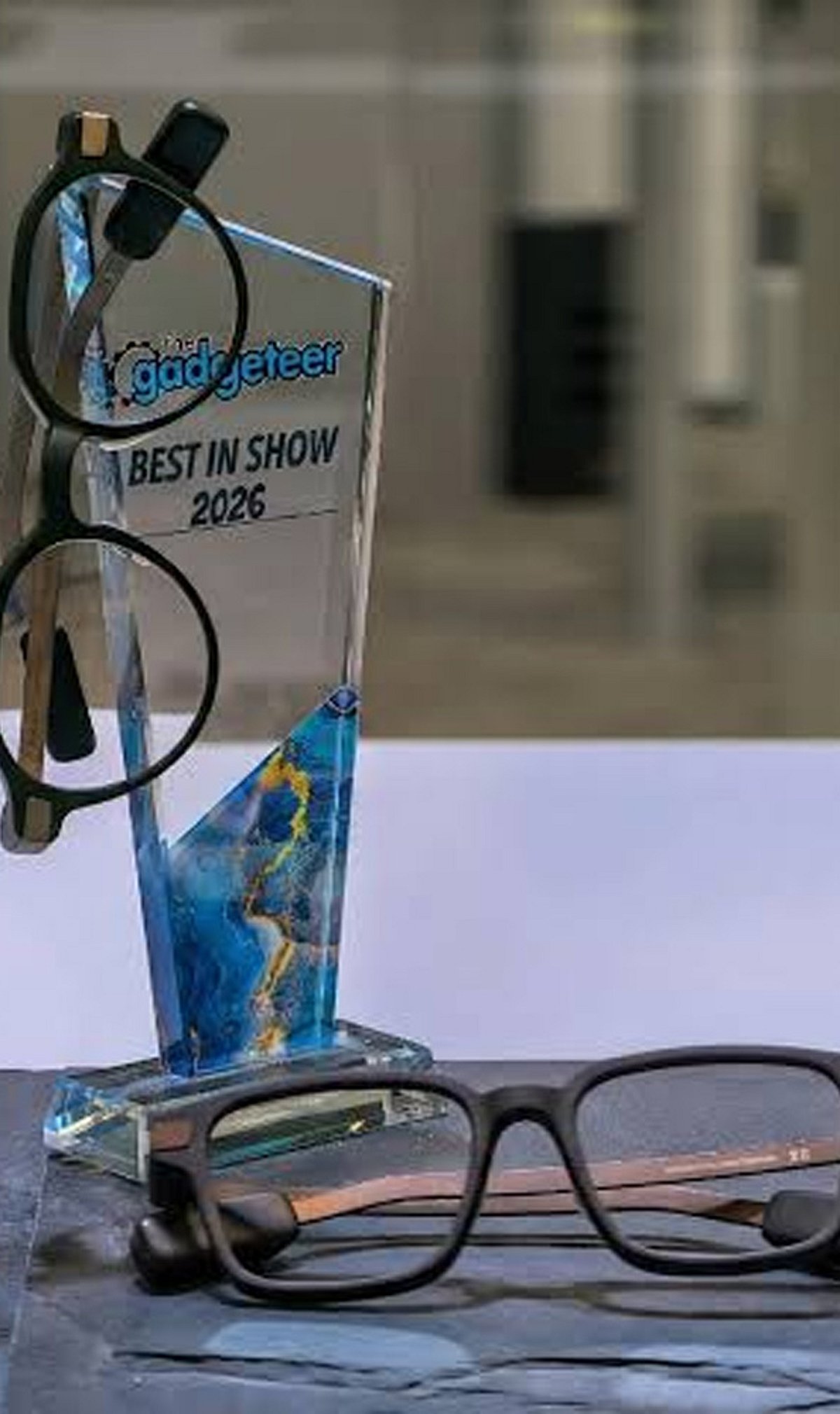
  • Leading Smart Glasses Brands Shaping 2026: Meta, XREAL, Apple & More

    Leading Smart Glasses Brands Shaping 2026: Meta, XREAL, Apple & More

    The smart glasses market is rapidly evolving, with 2026 poised to be a breakthrough year for wearable AI and augmented reality. From stylish consumer frames to enterprise-grade headsets, several brands are leading the charge. Here’s a look at the companies defining the future of smart eyewear.

    Meta Ray-Ban

    Meta’s collaboration with Ray-Ban has produced stylish smart glasses integrated with AI features, a camera, speakers, and voice assistance. These glasses blend fashion with functionality, making them a popular choice for everyday use.

    XREAL

    XREAL (formerly known as Nreal) offers popular AR glasses designed for immersive entertainment and productivity. Their lightweight form factor and compatibility with smartphones make them a leader in consumer AR.

    Google

    Google continues to develop AI-powered smart eyewear that integrates with its Gemini AI platform. Leveraging years of research, Google aims to bring contextual assistance and hands-free computing to users.

    Apple

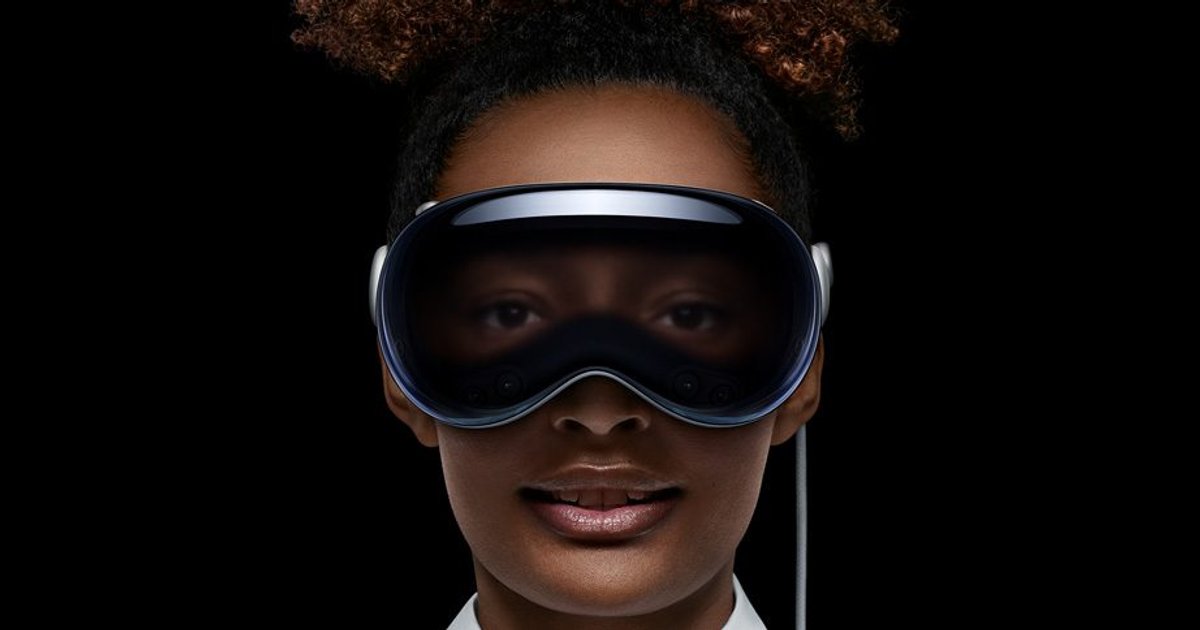
    Apple’s wearable roadmap is expected to redefine premium mixed-reality experiences. While the Apple Vision Pro sets the stage, future iterations may bring more accessible smart glasses, combining high-end design with advanced sensors.

    Vuzix

    Vuzix focuses on enterprise-grade smart glasses for logistics, healthcare, and industrial applications. Their headsets provide rugged, hands-free solutions for workers requiring real-time data overlays.

    Lenovo

    Lenovo offers innovative AR wearables designed for business collaboration and virtual workspaces. Their ThinkReality series targets professionals seeking augmented productivity tools.

    Rokid

    Rokid produces affordable AR smart glasses that are gaining popularity for education and entertainment. Their devices focus on accessibility, making AR experiences available to a wider audience.

    Samsung

    Samsung is building an AI-powered XR ecosystem expected to expand wearable computing. With deep expertise in displays and mobile technology, Samsung’s upcoming smart glasses could integrate seamlessly with Galaxy devices.

    These brands are pushing the boundaries of what wearable AI and AR can achieve, from personal assistants to immersive work tools. Keep an eye on 2026 as these companies release next-generation smart glasses.

  • iOS 27 Beta Code Hints at Apple’s Next AI Wearable: Vision Glasses or Camera-Equipped AirPods?

    iOS 27 Beta Code Hints at Apple’s Next AI Wearable: Vision Glasses or Camera-Equipped AirPods?

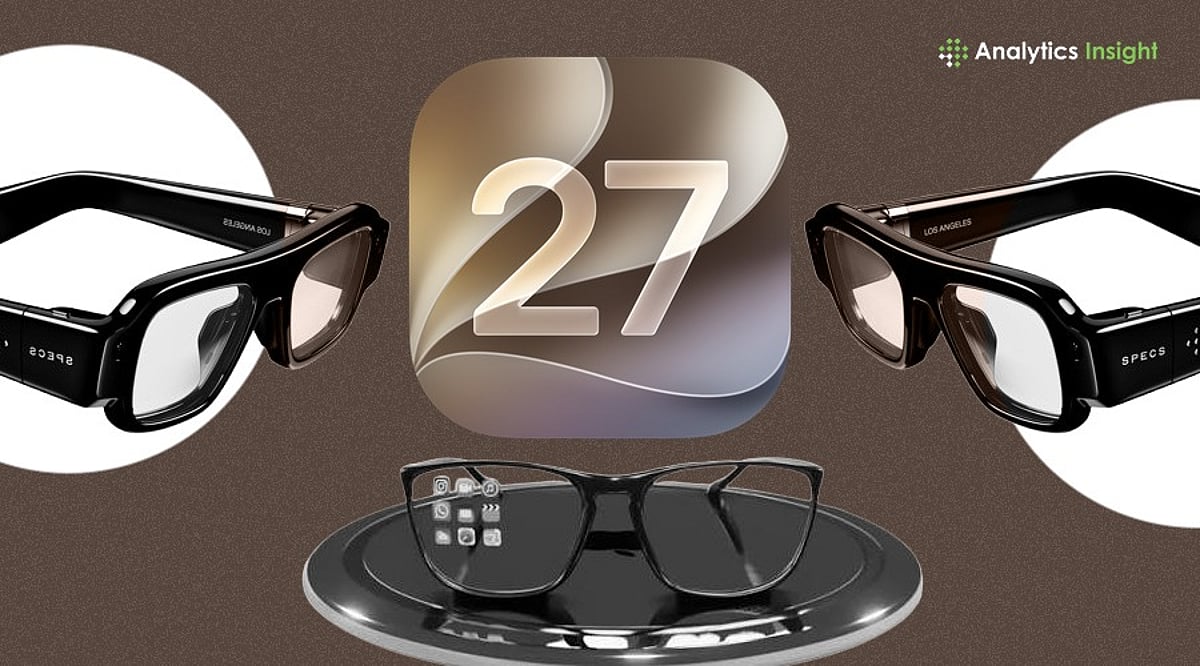
    New code discovered inside Apple’s iOS 27 developer beta has reignited speculation about the company’s upcoming AI-powered wearable. Initially, the code appeared to reference the long-rumored Apple Vision Glasses, but developers now believe it may point to a pair of camera-equipped AirPods instead.

    The mystery device, carrying the internal codename B790, was uncovered by developer Sam Henri Gold in the second beta of iOS 27. The code includes system messages tied to Apple’s Visual Intelligence feature, which allows a wearable to recognize landmarks, text, and objects using onboard cameras. Examples embedded in the software—such as the Eiffel Tower and a coffee mug—suggest the wearable could deliver real-time contextual information about what users see.

    What initially fueled Vision Glasses hype has shifted after closer analysis. The code describes images captured “from cameras on either side of a user’s head,” a description that aligns more naturally with earbuds than eyewear. Developers also note that the B790 codename follows a pattern consistent with earlier AirPods identifiers, while Apple’s rumored smart glasses are believed to carry a different internal designation.

    Visual Intelligence, part of Apple’s broader Apple Intelligence initiative, already enables users to identify objects and landmarks through AI-powered image recognition on the iPhone. The latest code indicates Apple intends to extend this functionality to wearable devices. Whether the final product will be Vision Glasses or camera-equipped AirPods remains unknown, but one thing is clear: Apple is actively developing software for a new class of AI-powered wearables with integrated cameras.

  • Top Augmented Reality Games That Seamlessly Blend Digital Play with the Real World

    Top Augmented Reality Games That Seamlessly Blend Digital Play with the Real World

    Augmented reality (AR) gaming has evolved far beyond simple smartphone novelties. Today’s AR titles use GPS, camera overlays, and persistent digital worlds to create immersive experiences that encourage physical activity, exploration, and social interaction. Here’s a look at the most compelling AR games that merge virtual gameplay with your real-life surroundings.

    Outdoor Exploration and Adventure

    Pokémon GO remains the trailblazer, letting players catch virtual Pokémon, battle at Gyms, and explore real streets, parks, and landmarks using GPS and the phone’s camera. Its success inspired a wave of location-based AR games.

    Ingress Prime, Pikmin Bloom, and Monster Hunter Now each offer unique twists: Ingress turns neighborhoods into a sci-fi faction war, Pikmin Bloom encourages walking and planting virtual flowers, and Monster Hunter Now lets you battle giant monsters that appear in real-world locations.

    Orna overlays a full fantasy RPG on your GPS location, while Jurassic World Alive fills your city with roaming dinosaurs to collect, battle, and evolve — turning every commute into a prehistoric adventure.

    Home-Based AR Fun

    For indoor play, Angry Birds AR: Isle of Pigs and Kings of Pool project interactive 3D gameplay onto your table or floor. These games use AR to create immersive, space-aware experiences without needing a headset — perfect for casual fun at home.

    Fitness and Gamified Movement

    Fitness-focused AR titles like Zombies, Run! and SpecTrek turn jogging, walking, and outdoor exploration into thrilling missions. Zombies, Run! immerses you in a zombie apocalypse story where you must outrun the undead, while SpecTrek turns your neighborhood into a ghost-hunting adventure. Both make exercise feel like play.

    Why AR Games Feel So Real

    The magic behind these experiences lies in GPS tracking, camera overlays, and persistent worlds that remember your actions. However, staying safe is crucial: always be aware of your surroundings, protect your location privacy, and avoid distractions while playing.

    Ready to step into a blended reality? These games prove that the line between digital and physical is only getting thinner.

  • MIT’s Latest Breakthroughs in 3D Technology: Augmented Reality, Bioprinting, and Holography

    MIT’s Latest Breakthroughs in 3D Technology: Augmented Reality, Bioprinting, and Holography

    MIT continues to push the boundaries of three-dimensional technology across multiple disciplines. From medical imaging to advanced manufacturing and computer vision, researchers at the institute are developing solutions that transform how we interact with the physical and digital worlds. Below is a curated overview of recent innovations in 3D technology from MIT labs.

    Medical and Health Applications

    An augmented reality system developed at MIT makes medical ultrasounds easier to interpret by generating a real-time 3D representation of the imaged object. Another project leverages machine learning to model fetal shape and movements in 3D, aiding doctors in detecting abnormalities. In bioprinting, the MagMix magnetic mixer enables scalable 3D printing of tissues, and a deep-learning model predicts cellular formation in fruit flies, potentially applicable to human tissues.

    Photonics and Manufacturing

    MIT engineers created tiny 3D photonic devices with features small enough to channel visible light, using a powerful shrinking technique. A new chip tests cooling solutions for stacked microelectronics, addressing overheating in 3D integrated circuits. Additionally, an AI agent called VideoCAD learns to create 3D objects from sketches, boosting design productivity.

    Robotics and Simulation

    PhysicsGen, a simulation-based pipeline, tailors training data for dexterous robots to handle items in homes and factories. A method for predicting forces needed to push objects through granular material can help drive robots or anchor ships. Smart textiles sense wearer activities like walking and running through fabric-embedded sensors.

    Computer Vision and Display Technology

    A new computer vision technique enhances 3D understanding from 2D images. Tensor holography uses artificial intelligence to generate 3D holograms in real-time, even on a smartphone, benefiting virtual reality and medical imaging. SeaSplat, a color-correcting tool, removes the effect of water in underwater scenes for more realistic 3D imagery.

    For the full collection of MIT news on 3-D, visit the original topic page.

  • Apple Vision Pro Launch Ushers in Spatial Computing Era

    Apple Vision Pro Launch Ushers in Spatial Computing Era

    Apple has officially announced the launch date for its first headset, the Apple Vision Pro, marking the company’s entry into the spatial computing market. The device will be available in the United States starting February 2, 2024, with pre-orders opening on January 19, 2024. CEO Tim Cook shared the news on Twitter, declaring, “The era of spatial computing has arrived!” The release is currently limited to the US, with no global availability timeline confirmed.

    Priced at $3,499 for the 256GB model, the Vision Pro is Apple’s most expensive product since the original iPhone and costs roughly three times as much as Meta’s top-tier headset. The device runs on Apple’s M2 chip alongside a new R1 chip designed to process data from sensors, cameras, and microphones in real time. Users can control the interface without a physical controller, using eye, head, and hand movements.

    Spatial computing—the integration of virtual objects with the real world—is expected to become a dominant force in technology over the next decade, leveraging AI, extended reality (XR), IoT, and advanced sensors. The Vision Pro aims to blend digital content seamlessly with physical environments, potentially transforming industries such as education and professional training.

    Despite the hype, skepticism remains. Some Apple executives reportedly referred to the project as a “science project” in 2023, according to CNBC. Meanwhile, Meta continues to lead the headset market with its Quest 3, which offers mixed reality at a starting price of $500. Apple’s stock has faced recent pressure, losing $177 billion in market value in January 2024, making the Vision Pro a critical test for the company’s future growth.

  • ARtGlass Brings History to Life with Wearable Augmented Reality for Cultural Tourism

    ARtGlass Brings History to Life with Wearable Augmented Reality for Cultural Tourism

    ARtGlass, a global leader in wearable augmented reality (AR) experiences for cultural and heritage tourism, is transforming how visitors interact with historic sites. By combining advanced AR glasses with immersive storytelling, the company creates unforgettable experiences that blend digital visuals with real-world environments.

    Founded on the vision of making history accessible and engaging, ARtGlass provides software and services for museums, historic sites, and attractions. Its proprietary TourBuilder platform enables the creation of unique, interactive tours tailored to each location’s stories. The company is best known for its hands-free, transparent smartglasses that overlay AR content onto the real world, allowing visitors to see historical events unfold before their eyes.

    One standout example is the Hegra Alive experience, launched in November 2023 at Hegra, Saudi Arabia’s first UNESCO World Heritage site. Developed in partnership with the Royal Commission for AlUla and NOUS Digital, this two-hour extended reality (XR) tour uses smartglasses to display 3D visuals, holograms, and reenactments. Visitors explore Nabataean tombs and ceremonial spaces guided by local Rawis, supporting Saudi Arabia’s Vision 2030 for sustainable tourism. This was the first XR experience on smartglasses in the Middle East.

    ARtGlass continues to collaborate with cultural institutions worldwide, from Pompeii to other iconic locations, ensuring that history is not just observed but experienced. The company’s work demonstrates the potential of AR to revolutionize cultural tourism, making the past vivid and interactive for modern audiences.

  • Top AR/VR and AI Developments: From Apple Vision Pro to Generative AI in Gaming

    Top AR/VR and AI Developments: From Apple Vision Pro to Generative AI in Gaming

    The world of augmented reality (AR), virtual reality (VR), and artificial intelligence (AI) continues to evolve rapidly. Recent headlines highlight how these technologies are converging to reshape industries from entertainment to manufacturing. Here’s a roundup of key stories.

    Apple Vision Pro Ushers in a New Era of Spatial Computing

    Apple’s Vision Pro headset marks a significant milestone in AR technology. With spatial computing expected to dominate the global tech market, the device is poised to test multiple industries, from healthcare to education, by blending digital content seamlessly with the physical world.

    Microsoft and Inworld AI Partner on Generative AI for Xbox

    Microsoft has joined forces with Inworld AI to develop generative AI tools for Xbox game developers. This collaboration showcases how AI is extending beyond business digital transformation into entertainment, enabling more dynamic and responsive gaming experiences.

    Web3, AI, and the Metaverse Transform the Music Industry

    The metaverse is revolutionizing the music industry, with artists like Robbie Williams venturing into Web3 spaces. Virtual concerts and AI-driven experiences are creating new revenue streams and fan engagement models.

    Asian Games 2023 Embraces AI and Eco-Friendly Tech

    Held in Hangzhou, China, the Asian Games 2023 features esports as a medal event for the first time. The event also showcases AI and eco-friendly technologies, highlighting digital transformation on a global stage.

    Deloitte: Industrial Metaverse to Transform Manufacturing

    A report from Deloitte reveals that most manufacturing companies are leveraging the industrial metaverse. However, cybersecurity and data protection remain key concerns as factories become more digitized.

    Virtual Marriage: Woman ‘Marries’ AI-Powered Partner

    In a sign of emerging trends, a woman has entered into a virtual ‘marriage’ with an AI-powered partner. This unconventional union raises questions about the future of relationships and markets in a digitally connected world.

    Top 10 Augmented Reality Companies for Business

    Augmented reality is building on the Internet of Things (IoT) to unlock new commercial opportunities. From Pokémon Go to enterprise solutions, AR is expected to redefine how businesses interact with the physical world.

    Stay tuned for more updates as AR, VR, and AI continue to shape our future.

  • Ultra-Low-Power Chip Lets Tiny Robots Create Real-Time 3D Maps for Navigation

    Ultra-Low-Power Chip Lets Tiny Robots Create Real-Time 3D Maps for Navigation

    MIT researchers have unveiled a new chip that could transform how tiny, battery-powered robots navigate complex environments. The chip, named Gleanmer, enables small autonomous vehicles and other power-limited devices to build detailed 3D maps of their surroundings in real time while consuming only about 6 milliwatts of power — roughly the same as a single LED.

    Traditional 3D mapping systems require significant memory and energy because they store and process every pixel from depth images. The MIT team took a different approach, combining an efficient algorithm with custom hardware to dramatically reduce both power and memory demands.

    How Gleanmer Works

    Instead of representing the environment with rigid cube-shaped voxels (3D pixels), the chip uses flexible ellipsoid shapes called Gaussians. These ellipsoids can be smoothly adjusted in size, shape, and thickness to match curved objects more efficiently than voxels. This compact representation captures both obstacles and free space, allowing a robot to plan collision-free paths without storing massive amounts of data.

    The researchers leveraged an algorithm developed in their lab called GMMap, which generates Gaussian-based maps from depth images in a single pass. By only comparing each pixel to its immediate neighbors, the algorithm avoids storing entire images at once — significantly reducing memory footprint.

    “At any point in time, we only need to store a few pixels in memory, which significantly reduces the memory footprint our algorithm requires,” said co-lead author Peter Zhi Xuan Li, an MIT graduate student.

    Co-Design for Maximum Efficiency

    As a robot moves, it often sees the same object from multiple angles, creating overlapping Gaussians. The chip fuses these overlapping shapes directly — without revisiting the original pixels — keeping the map compact. This principle extends throughout the design: most computations operate on compact Gaussians rather than raw pixels, enabling major energy savings.

    The hardware is built to keep active Gaussians in small, fast on-chip memory right next to the processing units. This eliminates the need to fetch data from distant, power-hungry off-chip storage.

    “By having a dedicated memory that just stores the objects you’ve seen in the previous few frames, you can access the data much more efficiently,” explained co-lead author Zih-Sing Fu.

    Real-World Testing and Future Applications

    The team tested Gleanmer on diverse 3D environments and live data from an iPhone camera. The chip generated accurate maps in real time while using just 2.5% of the power required by the best existing map-construction chip. It also allowed a simulated robot to plan safe trajectories using only about 20% of the energy it would otherwise need.

    Beyond robotics, the ultra-low-power operation makes the chip well-suited for lightweight augmented reality headsets that can be worn for extended periods — for applications like medical training simulations or detailed repair work.

    “Real-time 3D mapping has been the missing piece for small autonomous systems. A drone inspecting a pipeline or a pair of AR glasses navigating a room both need to understand the space around them — instantly, continuously, and at almost no power cost. Gleanmer makes that possible for the first time in a chip you can hold between your fingers,” said co-author Sertac Karaman, a professor of aeronautics and astronautics.

    The work was supported by the MIT-MathWorks Fellowship, Amazon, the U.S. National Science Foundation, and Intel. The paper was presented at the IEEE Very Large-Scale Integrated Circuits Symposium.

  • MIT’s 6-Milliwatt AI Chip Brings Real-Time 3D Mapping to Tiny Robots

    MIT’s 6-Milliwatt AI Chip Brings Real-Time 3D Mapping to Tiny Robots

    Researchers at MIT have unveiled a new system-on-a-chip that could revolutionize how tiny, low-power robots navigate complex environments. The chip, named Gleanmer, enables autonomous drones and other battery-limited devices to construct detailed 3D maps in real time using only about 6 milliwatts of power—roughly the energy of a single LED. This breakthrough, presented at the IEEE Very Large-Scale Integrated Circuits Symposium, promises to make small-scale robotics more capable and energy-efficient than ever.

    A Smarter Approach to 3D Mapping

    Traditional 3D mapping for robots relies on power-hungry systems that process and store thousands of 3D pixels (voxels) per image. The MIT team took a radically different approach by combining an efficient algorithm called GMMap with custom hardware optimized for its workload. Instead of using rigid cube-shaped voxels, GMMap represents obstacles and free space with flexible ellipsoidal blobs known as Gaussians. These shapes can stretch and shrink to match curved objects, storing far less data than traditional methods while still capturing accurate geometry.

    “This paper showcases a key example of how you can leverage co-design of the algorithm and hardware to really push energy efficiency,” says Vivienne Sze, a professor in EECS and senior author of the paper. “Our chip allows you to store very large maps in a very small space, and do it in a very energy efficient manner.”

    Hardware-Algorithm Co-Design at Its Best

    The chip’s efficiency stems from several clever optimizations. First, the GMMap algorithm processes each depth image in a single pass, comparing only neighboring pixels rather than all pixels in an image. This drastically reduces the amount of data that needs to be stored and retrieved. Second, as the robot moves and observes the same object from different angles, overlapping Gaussians are fused into a single compact representation without re-examining the original pixels. Because Gaussians are more compact than raw pixel data, this fusion process runs on-chip with minimal memory traffic.

    The hardware design keeps active Gaussians in small, fast on-chip memory right next to the processing units. “By having a dedicated memory that just stores the objects you’ve seen in the previous few frames, you can access the data much more efficiently,” explains co-lead author Zih-Sing Fu.

    Unmatched Energy Efficiency

    In tests, Gleanmer generated detailed 3D maps in real time while consuming only about 6 milliwatts of power—just 2.5 percent of what the best existing mapping chip requires. When used for path planning, the chip reuses compact Gaussians along the planned route, using only about 20 percent of the energy that conventional approaches would need.

    The low power consumption makes Gleanmer ideal not only for tiny drones inspecting HVAC systems or pipelines, but also for lightweight augmented reality headsets that require continuous environmental mapping for educational medical simulations or repair work. Sertac Karaman, a professor of aeronautics and astronautics and co-author, notes: “Real-time 3D mapping has been the missing piece for small autonomous systems. Gleanmer makes that possible for the first time in a chip you can hold between your fingers.”

    Looking Ahead

    The researchers plan to push energy efficiency even further by moving processing units closer to the sensors that gather environmental data. They are also exploring applications beyond robotics, such as using Gaussians to represent complex schematics for AI reasoning systems. This work was supported by the MIT-MathWorks Fellowship, Amazon, the U.S. National Science Foundation, and Intel.

  • MIT School of Architecture and Planning: Latest News, Research, and Innovations

    MIT School of Architecture and Planning: Latest News, Research, and Innovations

    The MIT School of Architecture and Planning (SA+P) is a hub for interdisciplinary research, education, and design, addressing some of the most pressing challenges in cities, technology, and society. Below are recent highlights from the school, covering breakthroughs in urban studies, augmented reality, AI ethics, climate resilience, and more.

    Jinhua Zhao Appointed Head of the Department of Urban Studies and Planning

    An expert in behavioral science and transportation, Jinhua Zhao combines these studies with AI and public policy to address urgent urban challenges. He will lead the department starting June 11, 2026.

    Augmented Reality System for Easier Medical Ultrasound Interpretation

    MIT researchers have designed an ultrasound system that creates a real-time 3D representation of the object being imaged, making it easier for clinicians to interpret scans. The breakthrough was reported on June 10, 2026.

    The Consequences of Relying on AI for Accurate News

    A Media Lab study shows that, much like GPS has weakened navigation skills, AI can reduce our ability to detect fake news. The findings were published on June 9, 2026.

    MIT SPURS Program Looks to the Future of Urban Technology and Policy

    As the international program approaches its 60th year, leaders are reshaping its curriculum to address emerging technologies and policies shaping urban planning. Announced on June 9, 2026.

    Chris Zegras Appointed Director and CEO of Singapore-MIT Alliance for Research and Technology

    The professor of mobility and urban planning will lead MIT’s research enterprise in Singapore, effective June 9, 2026.

    Innovative Projects to Deal with Extreme Heat

    Low-cost personal cooling and emissions-free air conditioning are among the ideas studied with MIT’s Climate Project seed funding, reported on June 8, 2026.

    The Crucial Human Component in Computing and AI

    The MIT Ethics of Computing Research Symposium brought together experts working on ethical and social impacts of technology, held on June 5, 2026.

    PATH Initiative to Boost AI Training and Career Opportunities

    MIT RAISE and Georgia State University announce an initiative connecting universities, community colleges, industry, and government to expand industry-aligned AI training and career pathways, dated June 4, 2026.

    Tod Machover Receives George Peabody Medal for Contributions to Music and Technology

    The George Peabody Medal, the highest honor from the Peabody Institute, was awarded to Tod Machover on June 3, 2026.

    Alejandro Aravena Urges SA+P Graduates to Lead with Kindness, Honor the Truth

    “All of us need to feel we are valuable,” said the SA+P Commencement speaker, a Chilean architect and Pritzker Prize winner, on May 29, 2026.

    Designing a Career, On and Off the Track, at MIT

    Senior Krystal Montgomery explored design courses to shape a career in web development. As a national champion in track, balancing athletics and academics was key to her success, reported on May 27, 2026.

    Bridging Real Human Movement with Digital Technology

    MIT.nano Immersion Lab collaborates with Emerson College students to advance the art of virtual production, announced on May 26, 2026.

    For more updates, visit the MIT School of Architecture and Planning news page.