
Tag: autonomous systems

  • How Autonomous Ocean Drones Are Revolutionizing Marine Science and Research

    How Autonomous Ocean Drones Are Revolutionizing Marine Science and Research

    Ocean-monitoring drones are transforming marine research by enabling scientists to study vast, hard-to-reach oceanic environments without constant human presence at sea. These autonomous systems travel across oceans, collect measurements, and transmit information over extended periods, allowing researchers to gather frequent data on temperature, salinity, currents, marine life, and other key conditions.

    Tracking Ocean Conditions: Autonomous drones monitor essential physical properties of seawater, measuring temperature, salinity, pressure, and other environmental parameters as they navigate different areas. Repeated surveys help scientists track changes over time and understand ocean circulation patterns, contributing to research on climate dynamics, marine ecosystems, and subsurface conditions.

    Monitoring Marine Life: Equipped with cameras, acoustic sensors, and specialized instruments, drones collect data on marine animals and their habitats without requiring continuous human supervision. This quieter approach reduces disturbances often caused by traditional research vessels, enabling more accurate studies of animal movements, population trends, and habitat conditions.

    Detecting Pollution: Drone-based sensors and imaging systems can identify changes in water quality, chemical composition, and visible contamination. Autonomous platforms repeatedly survey affected zones, helping researchers understand how pollutants spread and evolve over time. This capability supports environmental monitoring and improves knowledge of pollution sources and impacts.

    Studying Climate Change: Because oceans play a critical role in Earth’s climate, long-term monitoring is essential. Drones access areas that are costly or difficult to reach with conventional methods, collecting months-long data series on ocean temperatures, carbon-related processes, currents, and other climate indicators.

    Reaching Remote Waters: A major advantage of autonomous marine drones is their ability to operate in remote, challenging environments. Deploying research vessels is expensive and resource-intensive, while drones can execute specific missions with minimal oversight, covering larger areas and increasing observation frequency.

    The Future of Marine Science: As sensors, artificial intelligence, navigation systems, and battery technology improve, ocean-monitoring drones will become even more capable. Future platforms will process more data autonomously, and combining drone data with satellite observations and conventional research will give scientists a comprehensive picture of changing marine environments and ocean ecosystems.

  • Agentic AI Explained: Autonomy, Planning, and a $290 Billion Market by 2035

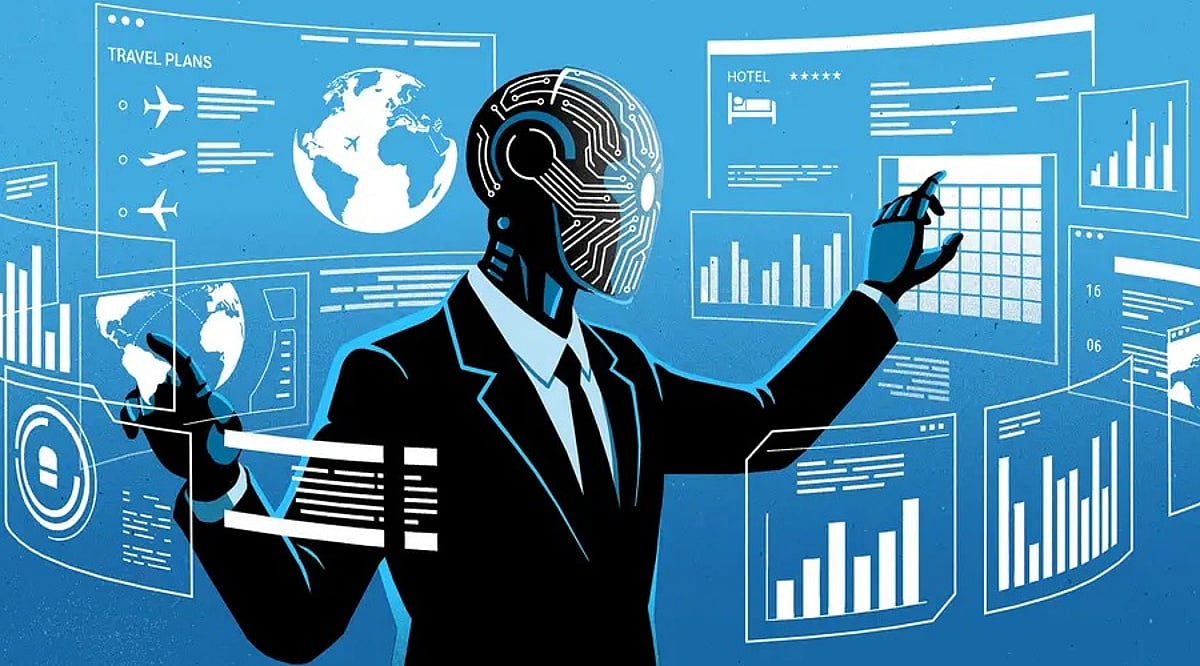
    Agentic AI Explained: Autonomy, Planning, and a $290 Billion Market by 2035

    What Is Agentic AI?

    Agentic AI represents a fundamental shift from traditional artificial intelligence. Instead of simply responding to a single prompt, agentic systems set their own path toward a goal, adapt to changing conditions, and complete multi-step tasks with minimal human intervention. This autonomy, combined with planning, memory, and tool use, enables them to pursue complex objectives in dynamic environments.

    The global market for agentic AI is projected to grow from USD 8.19 billion in 2025 to USD 290.62 billion by 2035, a compound annual growth rate of 42.88%. This rapid adoption reflects a real change in how enterprises view automation and intelligent systems.

    Core Concepts Behind Agentic Systems

    Agentic AI is built on several key capabilities:

    • Autonomy: Systems operate with minimal oversight once a goal is defined, though humans may still approve high-risk actions.
    • Goal-oriented behavior: Large objectives are broken into smaller tasks through task decomposition.
    • Reasoning and planning: The system compares options and settles on a workable sequence of actions.
    • Decision-making: Actions are chosen based on current context, not fixed scripts.
    • Adaptability: The system adjusts when conditions change mid-task.
    • Environmental awareness: New inputs are read and plans updated accordingly, crucial in fast-moving fields like finance or healthcare.
    • Learning from feedback: Reinforcement learning sharpens future choices through rewards and penalties.
    • Tool use: Agents can query databases, run calculations, or trigger business actions beyond their training data.
    • Memory: Agents recall earlier steps during long tasks, often enhanced by retrieval-augmented generation (RAG).

    The Basic Agentic AI Process

    Agentic systems operate on a continuous loop rather than a single exchange. A goal is defined, the system studies the situation, drafts a plan, and takes action. It then checks the results and learns from them, repeating the cycle until the objective is reached. This loop marks the clearest distinction between agentic AI and older, one-shot tools.

    The Evolution of Agentic AI

    The concept of agentic AI has roots stretching back eight decades:

    • Early Foundations (1943-1990s): Neural network theory, the Turing Test, and the Dartmouth conference (1956) set the intellectual groundwork. Shakey the Robot combined perception and planning in the early 1970s. Expert systems, backpropagation, and early reinforcement learning followed through the 1980s and 1990s.
    • Deep Learning and Reasoning (2012-2022): AlexNet (2012) demonstrated the power of deep neural networks for perception. DeepMind’s AlphaGo (2016) paired deep learning with reinforcement learning. The Transformer architecture (2017) reshaped language modeling. By 2022, research like ReAct fused reasoning with action, and ChatGPT brought large language models into everyday use.
    • The Agentic Era (2023-2026): Toolformer (2023) showed that language models could learn when to call outside tools. AutoGPT and BabyAGI popularized goal decomposition. The Model Context Protocol (2024) gave agents a common way to reach tools and data. Google’s Agent2Agent protocol (2025) allowed agents built on different platforms to communicate. Enterprises are now integrating these capabilities into orchestration, identity, and governance frameworks.

    Market Growth and Outlook

    According to Analytics Insight’s Global Agentic AI Market Report, the market is expected to surge from USD 8.19 billion in 2025 to USD 290.62 billion by 2035, at a CAGR of 42.88%. This growth reflects enterprise confidence in agentic AI’s ability to deliver real value. However, success will depend not only on model quality but also on reliability, governance, and clean integration. Organizations that master these fundamentals now will be best positioned to capture value as the technology matures.

    Frequently Asked Questions

    1. What is the main difference between agentic AI and traditional AI?
    Traditional AI generally completes one task at a time, such as answering a question or translating text. Agentic AI instead pursues a broader goal, planning steps and adapting to changing conditions on its own.

    2. What are AI agents?
    AI agents are self-contained software systems designed to gather information, make decisions, and act toward a specific objective. They serve as the individual building blocks that make up larger agentic AI systems and workflows.

    3. What core capabilities define agentic AI systems?
    Agentic AI relies on autonomy, goal-oriented behavior, reasoning, planning, decision-making, and adaptability. It also depends on memory, tool use, and learning from feedback, allowing systems to complete complex, multi-step tasks reliably over time.

    4. When did agentic AI evolution begin?
    Its roots trace back to early neural network research in 1943 and the founding of artificial intelligence in 1956. Recent progress accelerated after 2022, when reasoning models, tool use, and agent frameworks matured quickly.

    5. How large is the global agentic AI market expected to become?
    The global agentic AI market was valued at USD 8.19 billion in 2025. It is projected to reach USD 290.62 billion by 2035, growing at a CAGR near 42.88%.

  • 10 Real-World Machine Learning Use Cases Reshaping Industries

    10 Real-World Machine Learning Use Cases Reshaping Industries

    Machine learning (ML) has evolved from a niche technology into a core enabler across industries. From fraud alerts that block suspicious payments in seconds to medical scans that assist in early disease detection, ML identifies patterns in data and uses them to make predictions, decisions, or take actions. Today’s systems go beyond recommendation engines, embedding AI into real business processes. Here are ten practical ways machine learning is applied in the real world.

    1. Recommendations and Personalization

    Streaming services, online retailers, music apps, and social platforms use ML to predict what users may want next. By analyzing past choices and viewing history, systems leverage deep learning and embeddings to deliver personalized experiences. Personalization is now integrated into larger AI ecosystems.

    2. Fraud Detection and Financial Risk

    Banks, payment processors, and insurers deploy ML to detect unusual activity. Models examine account history, location, device data, and transaction timing. Anomalous patterns can trigger reviews or block transactions. ML also supports credit risk assessment and insurance fraud investigation.

    3. Healthcare and Medical Diagnosis

    ML models analyze medical images, patient records, and lab results. Hospitals use ML for disease risk prediction, patient triage, image analysis, drug discovery, and clinical decision support. For instance, India’s eSanjeevani platform applies AI for retinal checks and differential diagnosis, while PM-JAY uses ML for fraud detection.

    4. Predictive Maintenance in Industry

    Factory sensors capture temperature, vibration, pressure, energy use, and sound. ML learns normal operating patterns and flags potential failures before they occur. This reduces unplanned downtime in aircraft engines, vehicles, power systems, data centers, and robotics.

    5. Computer Vision and Quality Control

    Computer vision enables machines to interpret images and video. Manufacturers use ML to detect product defects on assembly lines. Healthcare systems inspect medical scans. Multimodal AI systems combine visual data with text and other inputs for richer analysis.

    6. Search, Speech, and Language

    Search engines, speech recognition, translation services, email filters, virtual assistants, and chatbots rely on ML. Models classify text, convert speech to text, rank search results, and generate summaries. Large language models now process text, images, audio, and video. Stanford’s 2026 AI Index highlights rapid gains in multimodal capabilities and real-world task performance.

    7. Forecasts and Supply Chains

    Retailers apply ML to estimate demand using historical sales, seasonality, promotions, pricing, weather, and other signals. These forecasts improve inventory management, delivery routing, energy demand planning, and pricing decisions.

    8. Cybersecurity and Threat Detection

    Cybersecurity teams face massive volumes of logs, network events, and device signals. ML identifies patterns that deviate from normal behavior, helping detect malware, phishing emails, suspicious logins, account compromises, and potential data breaches.

    9. Autonomous Systems and Robotics

    ML enables robots, drones, autonomous vehicles, and industrial systems to interpret sensor data and choose actions. Self-driving cars combine computer vision, sensor fusion, prediction, and route planning. Robots navigate large warehouses to move goods. Gartner lists physical AI as a major data and analytics trend.

    10. Software Development and AI Agents

    Software teams use ML for code generation, code review, bug fixing, testing, documentation, and issue analysis. Advanced AI agents connect models with development tools to automate multi-step workflows. Applied’s April 2026 report studied nearly 200 real-world AI use cases across 200+ companies, 25 industries, and 15 business functions—operations accounted for 38.6% and software development for 21.4%.

    The Shift from Prediction to Action

    The most significant change in ML is the move from isolated predictions to integrated actions. Modern systems link predictions with tools, data, and business processes. Gartner notes organizations are adopting AI-first business models. Deloitte reports that worker access to sanctioned AI tools rose 50% in 2025, and the number of companies with at least 40% of AI projects in production is expected to double within six months. This shift demands reliable data, clear controls, and rigorous evaluation. Successful AI initiatives may invest up to four times more in data and analytics foundations than less successful ones. ML now acts as a core layer shaping decisions, operations, software, and physical tasks across numerous industries.

  • CTO’s Roadmap for AI Agent Infrastructure: From Copilots to Autonomous Systems

    CTO’s Roadmap for AI Agent Infrastructure: From Copilots to Autonomous Systems

    Overview

    AI agents require infrastructure beyond traditional model APIs and chatbot frameworks. Identity, sandboxing, observability, data access, and tool controls become essential as autonomy grows. CTOs can scale agent deployments more safely by combining automation with strong governance.

    The Shift from Copilots to Autonomous Agents

    AI agents are moving from workplace assistants into operational systems. This shift changes what enterprises need from their technology infrastructure. A copilot usually waits for a user instruction. An autonomous agent can plan tasks, call tools, and act independently. This difference has major infrastructure implications. CTOs now need more than model access and application APIs. They need secure runtimes, reliable data, strong identity, observability, and control. The architecture must also support changing models and agent behavior.

    Start with a Clear Agent Architecture

    The first step is separating the agent into distinct layers. The model handles reasoning and generates the next action. An orchestration layer manages prompts, workflows, tools, and handoffs. Data services provide business context, retrieval, memory, and application information. The runtime executes agent tasks and manages their state. A governance layer controls permissions, policies, security, and human approvals. This structure makes systems easier to manage and upgrade. Microsoft Foundry now brings models, agents, tools, security, and governance together.

    Build a Runtime for Real Agent Work

    Agents need an environment for more than text generation. They may inspect files, run code, use APIs, and modify business data. This makes runtime isolation especially important. A poorly contained agent can turn a simple error into an operational incident. OpenAI’s Agents SDK now includes sandbox execution for controlled agent workflows. Its updated architecture supports long-running tasks across files and tools. CTOs should define resource limits before deploying autonomous systems. These limits can cover network access, execution time, spending, and tool permissions. High-risk actions should also require explicit approval to keep automation from becoming uncontrolled.

    Treat Identity and Access as Core Infrastructure

    An agent should never receive broad access by default. Its permissions should match the task it is performing. Use separate identities for agents, tools, and workloads. Apply role-based access controls and short-lived credentials where possible. Tool access deserves the same discipline. An agent should not call payment, database, or administrative systems without strict controls. Microsoft’s current agent platform supports Entra identity and role-based access control. It also supports network isolation and policy controls for enterprise deployments. This model creates clearer boundaries between an agent and corporate systems.

    Make Observability Part of the Agent Stack

    Traditional application monitoring is not enough for autonomous systems. Teams need to understand what the agent did and why. This requires tracing model calls, tool usage, latency, failures, and costs. It also requires evaluating task quality and safety over time. Microsoft Foundry supports agent tracing, evaluations, and production monitoring. Its telemetry can include tool calls, inputs, outputs, latency, and token usage. OpenAI’s Agents SDK also includes tracing and observability capabilities. CTOs should treat these signals like application performance data. Agent quality can drift after model, prompt, or tool changes.

    Design for Data, Memory, and Tool Integration

    Agents become useful when they can access relevant enterprise context, which may come from documents, databases, APIs, or business applications. Retrieval systems need strong permissions and reliable source data. Memory also needs clear rules around storage, retention, and user access. Tool integration should use stable interfaces and explicit contracts. Model Context Protocol is gaining attention for connecting agents with external tools. Infrastructure teams should avoid building every integration from scratch. Shared tool registries can simplify authentication, versioning, and governance. Microsoft’s Agent Service supports shared toolboxes and managed MCP endpoints.

    Put Governance Around Autonomous Actions

    Greater autonomy creates greater responsibility for enterprise leaders. Agents can make mistakes faster when they operate without constant human input. Guardrails should therefore cover inputs, tool calls, outputs, and sensitive actions. OpenAI recommends layered guardrails with authentication and authorization controls. Keep human intervention available for high-risk operations. Examples include large refunds, financial transfers, account changes, or destructive actions. CTOs should also define clear ownership for every deployed agent. Someone must be accountable for its performance, security, and business impact.

    Moving from Copilots to Autonomous Systems

    The infrastructure shift is gradual, not a single technology upgrade. Organizations can start with copilots and expand autonomy as controls mature. Early systems may only suggest actions. Later versions can execute approved workflows with limited supervision. Fully autonomous systems require stronger safeguards and deeper operational visibility. They also demand better testing before reaching production. For CTOs, the goal is not maximum autonomy. The goal is useful autonomy that remains observable, secure, and controllable. This principle can shape the architecture long before agents become business-critical.