
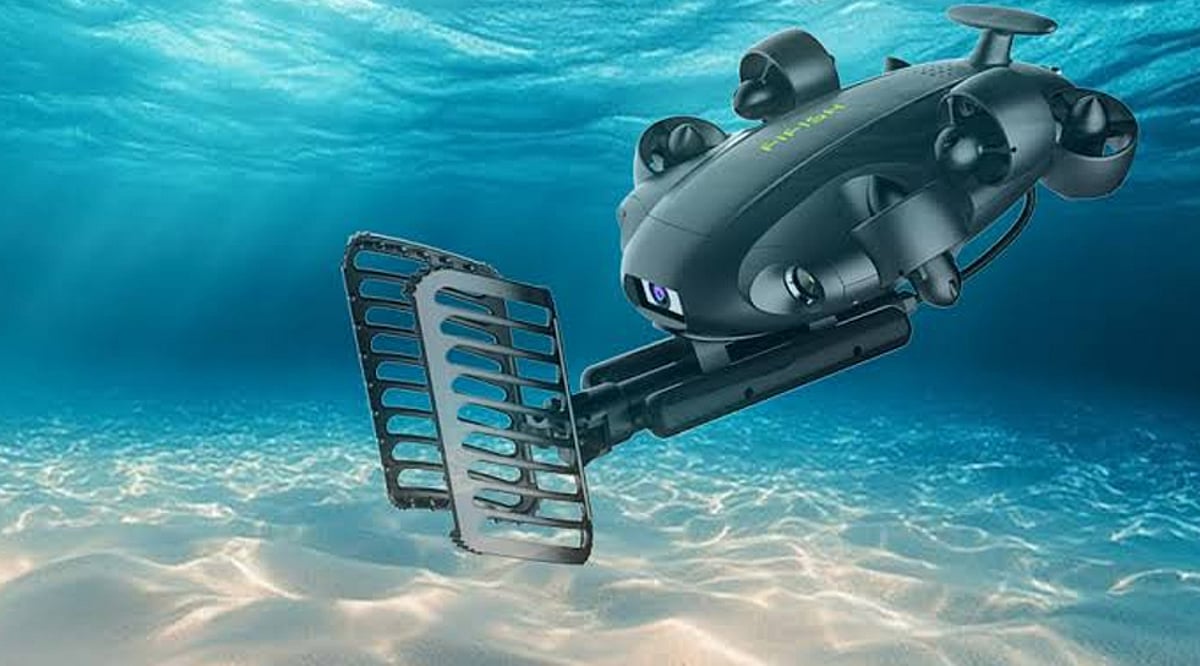
Ocean-monitoring drones are transforming marine research by enabling scientists to study vast, hard-to-reach oceanic environments without constant human presence at sea. These autonomous systems travel across oceans, collect measurements, and transmit information over extended periods, allowing researchers to gather frequent data on temperature, salinity, currents, marine life, and other key conditions.
Tracking Ocean Conditions: Autonomous drones monitor essential physical properties of seawater, measuring temperature, salinity, pressure, and other environmental parameters as they navigate different areas. Repeated surveys help scientists track changes over time and understand ocean circulation patterns, contributing to research on climate dynamics, marine ecosystems, and subsurface conditions.
Monitoring Marine Life: Equipped with cameras, acoustic sensors, and specialized instruments, drones collect data on marine animals and their habitats without requiring continuous human supervision. This quieter approach reduces disturbances often caused by traditional research vessels, enabling more accurate studies of animal movements, population trends, and habitat conditions.
Detecting Pollution: Drone-based sensors and imaging systems can identify changes in water quality, chemical composition, and visible contamination. Autonomous platforms repeatedly survey affected zones, helping researchers understand how pollutants spread and evolve over time. This capability supports environmental monitoring and improves knowledge of pollution sources and impacts.
Studying Climate Change: Because oceans play a critical role in Earth’s climate, long-term monitoring is essential. Drones access areas that are costly or difficult to reach with conventional methods, collecting months-long data series on ocean temperatures, carbon-related processes, currents, and other climate indicators.
Reaching Remote Waters: A major advantage of autonomous marine drones is their ability to operate in remote, challenging environments. Deploying research vessels is expensive and resource-intensive, while drones can execute specific missions with minimal oversight, covering larger areas and increasing observation frequency.
The Future of Marine Science: As sensors, artificial intelligence, navigation systems, and battery technology improve, ocean-monitoring drones will become even more capable. Future platforms will process more data autonomously, and combining drone data with satellite observations and conventional research will give scientists a comprehensive picture of changing marine environments and ocean ecosystems.
Leave a Reply