Tag: AWS

  • Amazon Restructures AGI Division, Lays Off Workers to Prioritize Core AI Initiatives

    Amazon Restructures AGI Division, Lays Off Workers to Prioritize Core AI Initiatives

    Amazon has laid off employees in parts of its Artificial General Intelligence (AGI) division as part of a broader restructuring aimed at sharpening its focus on AI projects that deliver the greatest customer impact. The move follows a series of workforce reductions across the company, including 16,000 job cuts announced in January.

    While the company has not disclosed the exact number of roles eliminated in this latest round, an Amazon spokesperson stated: “We’ve been building large AI models for several years, and it remains one of the most important things we’re working on. We’re sharpening our focus on the initiatives that matter the most for customers, so we can move faster on what counts. That focus means some difficult decisions, including eliminating some roles within parts of our AGI organization.”

    AI Ambitions Remain Strong

    These layoffs do not indicate a shift in Amazon’s commitment to artificial intelligence. Instead, they represent a reallocation of resources within its AI business. The company continues to develop its Nova line of foundation models and expand generative AI capabilities within Amazon Web Services (AWS). Amazon views AI as one of its top long-term priorities and plans to maintain significant investments in the field.

    Leadership Changes Precede Restructuring

    The workforce reduction follows notable leadership departures within Amazon’s AGI organization. Rohit Prasad, former head of the AGI business, left at the end of last year, and David Luan, who led the AGI Lab, departed in February. In December, Amazon consolidated its AGI operations under Senior Vice President Peter DeSantis, integrating them into a larger technology group that also oversees silicon development and quantum computing.

    According to reports, employees under Adeeb Shanaa, Vice President of AGI Data Services, and Vishal Sharma, Vice President of AGI Information, were among those affected. Amazon has not confirmed the full scope of the cuts.

    Ongoing Workforce Optimization

    The AGI layoffs come months after Amazon eliminated 16,000 roles in January as part of a company-wide restructuring to streamline operations. This latest development indicates that Amazon continues to reorganize its teams, concentrating efforts on areas deemed critical to its AI vision.

    Despite the job losses, Amazon has reiterated that AI remains central to its future strategy. The company believes the restructuring will eliminate redundancies and accelerate the delivery of AI products that provide significant value to customers.

  • What Happens in One Second in the Cloud: The Invisible Infrastructure Powering the Internet

    What Happens in One Second in the Cloud: The Invisible Infrastructure Powering the Internet

    Every second, billions of digital interactions rely on cloud infrastructure that spans data centers, fiber-optic networks, and edge computing facilities worldwide. This article explores what happens behind the scenes, how cloud platforms process massive workloads, why latency and energy consumption matter, and why the cloud has become the invisible backbone of the modern internet.

    The Scale of a Single Second

    When you tap a button on your phone and a video loads, a payment clears, or a map recalculates your route, the experience feels effortless. But behind that instant response, the global cloud infrastructure executes hundreds of millions of operations across server farms, fiber networks, and data centers spanning multiple continents. Amazon’s AWS processes roughly 100 million API calls every second. Google answers approximately 99,000 search queries in the same window. Microsoft Azure handles tens of thousands of authentication requests per second. Across the global internet, more than 3.5 million gigabytes of data are transmitted every minute, according to Domo’s 2025 Data Never Sleeps report.

    What the Cloud Actually Is

    The cloud is a global network of physical data centers—enormous buildings filled with racks of servers, storage hardware, and networking equipment. Amazon Web Services, Microsoft Azure, and Google Cloud operate facilities on every inhabited continent. These are not abstract digital spaces; they are physical structures that consume vast amounts of electricity, require continuous cooling, and are staffed around the clock by engineers.

    The Infrastructure Behind the Magic

    At the physical layer, submarine fiber-optic cables carry data between continents at the speed of light, connecting data centers through a network of cables stretching more than 1.3 million kilometers across the ocean floor. At the software layer, virtualization technology allows a single physical server to run hundreds of isolated virtual machines simultaneously. Container platforms like Kubernetes orchestrate millions of software instances across thousands of servers, automatically redistributing load when traffic spikes and routing around failures before users notice.

    The Latency Problem

    Every millisecond of distance between a user and the server handling their request adds delay. For a video call or an online game, even 50 milliseconds of additional latency is perceptible. Cloud providers build edge computing infrastructure—smaller, geographically distributed data centers positioned closer to population centers—to handle latency-sensitive applications locally. The global cloud is a nested hierarchy of facilities at different scales, each optimized for a different balance of capacity, cost, and proximity.

    The Energy Reality

    Global data centers consumed approximately 415 terawatt-hours of electricity in 2025, roughly 1.5% of total global electricity consumption, according to the International Energy Agency. That figure is growing rapidly as AI workloads intensify computational demands. A single large language model training run can consume as much electricity as several hundred households use in a year. Major cloud providers have made significant commitments to renewable energy, but the absolute energy consumption of the cloud continues to climb even as efficiency improves.

    Why This Matters

    Understanding that the cloud is a physical, energy-consuming, globally distributed system changes how we think about data sovereignty, the companies that hold the infrastructure on which economies depend, the impact of a single provider outage, and the environmental footprint of increasingly compute-intensive applications. The hidden engine behind the internet isn’t hidden because it is small—it is hidden because it is so large, so reliable, and so seamlessly woven into daily life that it has become invisible.

  • 5 Top AI Engineer Certifications to Land a Job in 2026

    5 Top AI Engineer Certifications to Land a Job in 2026

    Artificial intelligence is no longer confined to research labs—it now powers products, services, and operations across every industry. As companies invest heavily in generative AI, automation, and machine learning, the demand for skilled AI engineers continues to surge. Recruiters, however, are looking for more than theoretical knowledge; they want candidates who can apply AI to solve real-world problems.

    A recognized certification can strengthen your resume, validate your skills, and help you stand out during the hiring process. While it is not a substitute for practical experience, it complements a strong portfolio and improves your chances of landing interviews. Below are five industry-recognized AI certifications that can help you get hired in 2026.

    1. Google Cloud Professional Machine Learning Engineer

    The Google Professional Machine Learning Engineer certification is highly valued by employers for enterprise-scale AI roles. It covers the development, deployment, and management of machine learning models using Vertex AI and Google Cloud. Topics include model optimization, MLOps, monitoring, and responsible AI. This certification is ideal for professionals with some experience in machine learning and cloud computing.

    2. Microsoft Azure AI Engineer Associate (AI-102)

    This certification is designed for developers and cloud professionals who want to build AI-powered applications on Microsoft’s Azure platform. Learners gain hands-on skills with Azure AI services, Azure OpenAI, computer vision, speech services, and natural language processing. The course also emphasizes building secure and responsible AI applications.

    3. AWS Certified AI Practitioner

    AWS Certified AI Practitioner is an entry-level certification for those building a foundation in artificial intelligence. It introduces AI concepts, generative AI, prompt engineering, responsible AI, and AWS AI services. This is a practical starting point for IT professionals, software developers, and cloud engineers transitioning into AI roles.

    4. Databricks Certified Generative AI Engineer Associate

    As organizations deploy AI assistants and enterprise chatbots, generative AI skills have become highly sought after. This certification focuses on Retrieval-Augmented Generation (RAG), large language models, vector databases, prompt engineering, and AI agent development. It is aimed at engineers working on modern LLM-powered applications.

    5. IBM AI Engineering Professional Certificate

    IBM’s certification emphasizes project-based learning over theory. Participants learn Python, machine learning, deep learning, TensorFlow, and PyTorch through practical projects. This program is an excellent way for beginners to combine technical skills with a portfolio of AI projects.

    Final Takeaway

    Candidates are now evaluated on their ability to create rather than just their credentials. While a certification can make your profile stand out, practical experience is what gets you through the door. Recruiters prefer candidates who have built AI products, contributed to GitHub repositories, deployed models using cloud technology, and understand vector databases, prompt engineering, and MLOps. A relevant certification can give you the edge over other applicants, but remember: earning a certification is only the first step in your AI career journey.

    Frequently Asked Questions

    What is the best AI certification for beginners in 2026?

    AWS Certified AI Practitioner and IBM AI Engineering Professional Certificate are top choices for beginners. They cover AI fundamentals, generative AI, Python, and practical skills without requiring extensive machine learning experience.

    Which AI certification is most valued by employers?

    Google Cloud Professional Machine Learning Engineer and Microsoft Azure AI Engineer Associate are highly regarded, especially for enterprise AI, cloud computing, and production-scale machine learning roles.

    Do AI certifications guarantee a job?

    No. Certifications improve your resume and validate your knowledge, but employers also expect practical experience through AI projects, GitHub portfolios, cloud deployments, and problem-solving skills during technical interviews.

    Which certification is best for generative AI careers?

    The Databricks Certified Generative AI Engineer Associate is a strong choice for those interested in large language models, RAG, prompt engineering, vector databases, and enterprise AI applications.

    How should I prepare for an AI engineering role in 2026?

    Build a strong foundation in Python, machine learning, and cloud platforms. Earn a recognized AI certification, create real-world projects, and maintain an active portfolio to showcase your technical abilities.

  • Top Technology Stacks Every SaaS Startup Should Consider for 2026

    Top Technology Stacks Every SaaS Startup Should Consider for 2026

    Choosing the right technology stack is critical for SaaS startups aiming to build scalable, high-performance applications. In 2026, the landscape continues to evolve, offering powerful tools that combine speed, flexibility, and intelligent features. Below are the essential technologies your startup should evaluate.

    Frontend: React and Next.js

    React paired with Next.js remains a leading frontend combination. It delivers outstanding performance, a scalable architecture, and excellent user experiences. Its built-in SEO support is crucial for SaaS platforms that rely on organic discovery.

    Backend: Node.js and Python with FastAPI

    Node.js provides a robust runtime for building real-time services, scalable APIs, and distributed applications using JavaScript end-to-end. For startups integrating artificial intelligence, Python with FastAPI offers a powerful backend stack that supports rapid API development, automation, analytics, and enterprise-grade solutions.

    Databases: PostgreSQL and MongoDB

    For relational data, PostgreSQL stands out as a reliable open-source database with strong security, advanced querying, and proven scalability for growing businesses. When handling unstructured or rapidly changing data, MongoDB provides a flexible NoSQL alternative that supports agile development and adaptable storage.

    Containerization and Orchestration: Docker and Kubernetes

    Docker and Kubernetes simplify deploying, scaling, and managing applications. These containerization technologies enable seamless cloud-native software delivery across multiple environments, reducing infrastructure complexity for engineering teams.

    Cloud Platform: AWS

    AWS remains a comprehensive cloud provider offering scalable computing, storage, databases, security, AI services, and global infrastructure. It supports startup growth efficiently, allowing teams to focus on product development rather than hardware management.

    CI/CD: GitHub Actions

    Automated continuous integration and deployment streamline software releases. GitHub Actions improves development productivity, reduces errors, and accelerates feature delivery, making it an essential tool for modern engineering workflows.

    Intelligence Layer: OpenAI APIs

    OpenAI APIs empower SaaS platforms with AI-driven capabilities such as intelligent chatbots, content generation, personalized user experiences, and advanced automation. Integrating these APIs can differentiate your product in a competitive market.

    Selecting the right mix of these technologies can set your startup on a path to success in 2026. Evaluate your specific needs, team expertise, and growth projections to build a stack that scales with you.

  • Top 10 Data Analytics Certifications to Boost Your Career in 2026

    Top 10 Data Analytics Certifications to Boost Your Career in 2026

    In 2026, data analytics certifications remain a powerful tool for professionals aiming to validate their skills and stand out in a competitive job market. Whether you’re a beginner or an experienced analyst, the right certification can sharpen your expertise in SQL, visualization, reporting, and business intelligence—while signaling to employers that you can solve real-world problems with data.

    Below, we break down the ten most valuable data analytics certifications for 2026, covering everything from entry-level credentials to advanced, cloud-focused designations. Each certification is chosen for its relevance, industry recognition, and practical, hands-on focus.

    1. Google Data Analytics Professional Certificate

    An excellent starting point for beginners, this certification covers the fundamentals: cleaning data in spreadsheets, writing SQL queries, creating basic visualizations, and translating numbers into actionable business insights. No prior technical background is required, making it a solid first step toward a career in analytics.

    2. Microsoft Power BI Data Analyst Associate

    Ideal for business intelligence professionals, this certification focuses on data preparation, modeling, dashboard creation, and DAX (Data Analysis Expressions). It’s a perfect fit for organizations already using Microsoft products and needing skilled report creators.

    3. CompTIA Data+

    A vendor-neutral certification that covers data governance, reporting, and interpretation. It’s great for beginners who want a broad, foundational understanding of analytics without being tied to a specific platform. Data+ is especially useful for analysts who value versatility.

    4. IBM Data Analyst Professional Certificate

    This project-based certificate teaches Excel, SQL, Python, and dashboard creation. It’s designed to build practical skills and a portfolio—ideal for those who want to demonstrate hands-on ability to employers.

    5. Certified Analytics Professional (CAP)

    An advanced certification for seasoned analysts, CAP validates end-to-end analytical skills: problem formulation, methodology selection, data analysis, and business impact assessment. It’s best for professionals seeking strategic recognition in analytics.

    6. aCAP (Associate Certified Analytics Professional)

    Targeted at early-career professionals, aCAP introduces core principles, standards, and professional requirements. It’s a stepping stone for those not yet ready for the full CAP certification.

    7. Tableau Certified Data Analyst

    Focused on visualization and dashboarding, this certification proves you can connect to data, prepare it, analyze it, and communicate insights using Tableau. It’s particularly valuable for roles that require clear data storytelling.

    8. AWS Certified Data Analytics – Specialty

    For cloud-focused roles, this certification covers data pipelines, storage, analytics services, and large-scale workflow management on AWS. It’s suited for engineers and data professionals working in cloud-based environments.

    9. SAS Advanced Analytics Professional

    Essential for industries heavily reliant on SAS, this certification demonstrates advanced statistical and analytical abilities. It’s highly relevant for sectors like healthcare, finance, and insurance where SAS is a standard tool.

    10. Cloudera Certified Associate Data Analyst

    Relevant for big data environments, this certification validates SQL analysis and querying on Cloudera platforms. It’s ideal for analysts working with large datasets who need to prove their competence in handling massive data volumes.

    The Road Ahead

    In 2026, data analytics certifications are valued for their practical, hands-on focus. Employers prioritize credentials that prove real skill in SQL, dashboards, cloud tools, and business thinking. While certifications alone won’t guarantee a job, they give candidates a strong edge when combined with portfolio projects and real-world experience. The best strategy: choose one focused certification, build a portfolio, and demonstrate you can solve actual business problems with data.

    FAQs

    Which data analytics certification is best for beginners?
    Google Data Analytics Professional Certificate and IBM Data Analyst Professional Certificate are excellent beginner-friendly choices because they cover SQL, spreadsheets, visualization, and practical analytics skills through hands-on projects.

    Do employers value data analytics certifications in 2026?
    Yes. Certifications remain valuable because they demonstrate verified technical skills, especially when combined with practical experience, portfolio projects, and the ability to solve real business problems using data.

    Which certification is best for Power BI professionals?
    The Microsoft Power BI Data Analyst Associate certification is ideal for professionals working with dashboards, data modeling, DAX, reporting, and business intelligence using Microsoft’s analytics ecosystem.

    Is AWS Data Analytics certification suitable for beginners?
    No. AWS Certified Data Analytics – Specialty is better suited for professionals with cloud analytics experience and knowledge of AWS services, data pipelines, and large-scale data processing environments.

    Are certifications enough to get a data analytics job?
    Certifications improve your resume, but employers also expect practical projects, SQL knowledge, visualization skills, problem-solving ability, and experience demonstrating how you analyze and communicate business insights effectively.

  • Analyst Projects Amazon Could Reach $1 Trillion Annual Revenue by 2028

    Analyst Projects Amazon Could Reach $1 Trillion Annual Revenue by 2028

    Amazon is on track to become the first company to generate $1 trillion in annual revenue by 2028, according to a projection from Shay Boloor, Chief Market Strategist at Futurum Equities. The forecast highlights Amazon’s diversified business model, which spans e-commerce, cloud computing, advertising, logistics, and artificial intelligence.

    Diversified Portfolio Drives Growth

    Boloor shared his outlook on social media, stating, “$AMZN is on track to become the first company to cross $1 trillion in annual revenue by 2028.” He attributed the potential milestone to Amazon’s broad portfolio rather than a single segment, calling the company “one of the most important infrastructure companies in the world compounding across commerce, cloud, logistics, ads and AI all at once.”

    Amazon’s latest quarterly results reinforce this optimism. The company reported first-quarter revenue of $181.52 billion, surpassing analysts’ expectations of $177.30 billion. Earnings per share came in at $2.78, well above the consensus estimate of $1.66. AWS posted 28% year-over-year revenue growth, its fastest expansion in over three years, while the advertising business and retail operations also delivered double-digit sales growth.

    Massive AI and Cloud Investments

    Amazon plans to invest approximately $200 billion in capital expenditures during 2026 to expand its AI and cloud infrastructure. The company noted that major customer commitments, including over $100 billion from OpenAI, support this investment plan. Its custom chip business, powered by Graviton and Trainium processors, has surpassed a $20 billion annualized revenue run rate, growing at triple-digit rates while targeting lower operating costs.

    In a move to accelerate enterprise AI adoption, AWS launched a new Forward Deployed Engineering division with an initial $1 billion commitment. The unit will embed AI engineers directly into customer organizations for about 45 days to help build and deploy AI applications. AWS Vice President of Frontier AI Engineering and Services Francessca Vasquez said, “We have a ton of demand for customers who are asking for our help to really drive agentic AI patterns in their workflows.”

    New Engineering Unit Targets Enterprise AI

    The new division plans to deploy teams of five to six engineers to customer sites, working alongside business and security teams to accelerate AI deployment. AWS expects to staff the unit with thousands of engineers through external hiring and internal transfers. Initial customers include the National Basketball Association and electronics company Ricoh. This initiative places AWS alongside companies like Palantir Technologies, Salesforce, Anthropic, and Google Cloud that already offer embedded engineering services.

    Success for the program will be measured by how quickly customers build products and gain practical AI capabilities. As analysts continue to monitor spending and profitability, Amazon’s expanding AI investments, cloud growth, advertising business, logistics network, and retail operations remain central to projections that the company could approach the $1 trillion annual revenue milestone in the coming years.

  • Best Cloud Architecture Certifications to Boost Your Career in 2026

    Best Cloud Architecture Certifications to Boost Your Career in 2026

    Advance your cloud career with the industry’s most respected certifications. Here are the top cloud architecture credentials to earn in 2026:

    • AWS Certified Solutions Architect – Professional: A top credential for designing secure and scalable AWS cloud environments.
    • Microsoft Certified: Azure Solutions Architect Expert: Ideal for professionals building enterprise-grade cloud solutions on Microsoft Azure.
    • Google Professional Cloud Architect: Recognized globally for designing reliable and scalable Google Cloud infrastructure.
    • AWS Certified Solutions Architect – Associate: One of the best entry points for aspiring cloud architects.
    • Certified Kubernetes Administrator (CKA): Validates skills in managing Kubernetes clusters and containerized workloads.
    • Google Professional Cloud DevOps Engineer: Focuses on automation, monitoring, and continuous cloud delivery.
    • Microsoft Azure Administrator Associate: Builds practical skills for managing Azure infrastructure and cloud resources.
    • HashiCorp Terraform Associate: Demonstrates expertise in infrastructure automation using Terraform.

    Stay ahead in cloud computing by earning these certifications in 2026.

  • Today’s Top Tech Stories: OpenAI and Broadcom Debut Jalapeño AI Chip, Progcap Targets $45M Funding, and More

    Today’s Top Tech Stories: OpenAI and Broadcom Debut Jalapeño AI Chip, Progcap Targets $45M Funding, and More

    Good morning, tech enthusiasts! Here’s a quick roundup of the biggest headlines making waves today, from OpenAI’s new AI chip to major funding rounds and regulatory updates.

    OpenAI and Broadcom Launch Jalapeño AI Chip to Supercharge ChatGPT

    OpenAI and Broadcom have introduced the Jalapeño AI chip, designed to make large language models like ChatGPT faster, cheaper, and more power-efficient. The chip aims to reduce costs and improve AI performance, with deployment planned for late 2026. It will support ChatGPT and other OpenAI tools.

    Indian Fintech Progcap Plans $45 Million Fundraise for MSME Lending

    Indian fintech company Progcap is preparing to raise $45 million to expand its small-business lending operations. The funding will help improve its technology, reach more shop owners and traders, support women-led businesses, and strengthen financial inclusion across underserved areas in India.

    AWS CEO Says AI Won’t Stop Hiring New Graduates

    AWS CEO Matt Garman stated that AI will change how people work but will not replace the need for new employees. Amazon plans to hire 11,000 interns and fresh graduates in 2026, emphasizing that young workers bring fresh ideas and can quickly learn the AI skills needed for future jobs.

    Why 10 IT Jobs Are Hard to Fill in 2026

    Many companies are struggling to fill critical IT roles in 2026 due to a shortage of qualified candidates with skills in AI, cybersecurity, cloud, and data. To address this, businesses are increasingly investing in training existing employees rather than relying solely on external hires.

    EU Proposes Major Fines for Crypto Companies Violating MiCA Rules

    The European Banking Authority (EBA) has unveiled plans to impose significant fines on major crypto firms that breach the EU’s MiCA crypto regulations. The goal is to ensure uniform enforcement across member states, improve market fairness, and encourage compliance with the new laws.

    For more details, visit the original article on Analytics Insight.

  • Amazon CEO Andy Jassy Pledges $48 Billion India Investment After Meeting PM Modi

    Amazon CEO Andy Jassy Pledges $48 Billion India Investment After Meeting PM Modi

    Amazon has announced a massive $48 billion investment roadmap for India through 2030, following a meeting between CEO Andy Jassy and Prime Minister Narendra Modi. The plan focuses on artificial intelligence, cloud infrastructure, logistics expansion, job creation, and digital inclusion, reinforcing Amazon’s long-term commitment to India’s growth.

    During the meeting in New Delhi on June 25, 2026, Jassy revealed an additional $13 billion to expand AI and cloud infrastructure by 2030, bringing Amazon’s total planned investment in these areas to over $21 billion between 2026 and 2030. This investment will increase AWS data center capacity in Mumbai and Hyderabad, providing startups, enterprises, and governments with access to customized AI chips, AI managed services, secure cloud computing solutions, and developer tools.

    “We came to India over a decade ago and have since been serving customers, sellers, developers, start-ups, and enterprises through our different businesses. The response has been tremendous, with strong growth especially across our ecommerce, AI, and cloud businesses. As we grow Amazon in India, our business priorities continue to align with India’s priorities of democratizing access to AI, digitizing small businesses, creating jobs, and enabling exports,” Jassy said.

    Key Takeaways from Andy Jassy’s Meeting with PM Modi

    Amazon India also launched ‘Sammaan’, a comprehensive welfare program for thousands of delivery associates in its logistics network. Initiatives include scholarships to educate associates’ children, access to government benefits and financial inclusion programs, comprehensive insurance coverage, on-road safety measures, and more. As part of the program, Amazon will expand its Ashray rest centers to 250 locations this year, open to delivery associates across the industry.

    What it Means for India’s Digital Future

    Jassy thanked Prime Minister Modi for his leadership and highlighted the growing importance of India, where Amazon operates several businesses, including e-commerce, AI, cloud, and entertainment. “We are investing over $48 billion in the coming five years to meet the strong demand across our business in India and to help the country achieve these priorities. We are inspired by Prime Minister Modi’s vision of a Viksit and Atmanirbhar Bharat, and we are committed to being a long-term partner in India’s growth story,” he added.

    This investment from Amazon is expected to accelerate the digital revolution in India by improving its technological infrastructure, cloud computing, logistics, and innovation ecosystem. It signals that the rest of the world sees India as a digital powerhouse of the future.

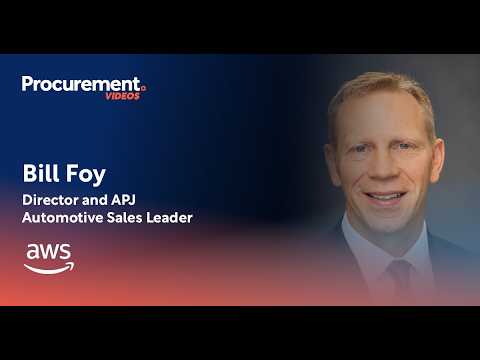
  • AWS Director Bill Foy on Using AI to Overcome Supply Chain Disruptions

    AWS Director Bill Foy on Using AI to Overcome Supply Chain Disruptions

    In a recent discussion, Bill Foy, Director and APJ Automotive Sales Leader at Amazon Web Services (AWS), highlighted the critical role of artificial intelligence in modernizing supply chains. According to Foy, 94% of companies have experienced supply chain disruptions, often due to legacy systems that lack real-time visibility.

    “Whether it’s a port strike, an earthquake, or a natural disaster, most companies don’t even know a problem exists until it’s downstream,” Foy explained. This fragmented data landscape poses a particular challenge for original equipment manufacturers (OEMs), who must stitch together information from disparate sources to maintain operations.

    AWS is addressing these issues by offering AI-driven solutions that provide end-to-end visibility and predictive analytics. By integrating machine learning models with existing enterprise systems, companies can detect disruptions early, optimize inventory, and automate decision-making. Foy emphasized that moving away from legacy infrastructure is not just an IT upgrade but a strategic imperative for resilience.

    “Modernizing with AI isn’t about replacing people—it’s about empowering them with data they can trust and act on in real time,” he added. As supply chains grow more complex, AWS’s focus on AI-powered modernization aims to reduce downtime and improve agility across industries, especially in automotive manufacturing.