Tag: Bitcoin

  • Crypto Market Highlights: Bitcoin ETF Inflows, Zcash Milestone, NEAR Rally, and Solana Speed Upgrade

    Crypto Market Highlights: Bitcoin ETF Inflows, Zcash Milestone, NEAR Rally, and Solana Speed Upgrade

    The cryptocurrency market saw several major developments on September 18, 2026. U.S. spot Bitcoin ETFs recorded $159.45 million in daily net inflows, Zcash surged to a 10-year high above $1,500, NEAR Protocol jumped nearly 28%, and Solana cut its target slot time from 300ms to 250ms. Meanwhile, JPMorgan analysts predicted Bitcoin could outperform gold in the coming months.

    Bitcoin ETFs See $159 Million Inflow

    According to SoSoValue, U.S. spot Bitcoin ETFs recorded total net inflows of $159.45 million on September 17. BlackRock’s IBIT led with $183.66 million in net inflows, bringing its historical total to $64.02 billion. Fidelity’s FBTC saw the largest net outflow at $16.64 million, with a cumulative inflow of $10.05 billion. The total net asset value of Bitcoin spot ETFs now stands at $96.25 billion, representing an ETF net asset ratio of 6.26%. Historical cumulative net inflows have reached $54.73 billion.

    Zcash Hits 10-Year High Above $1,500

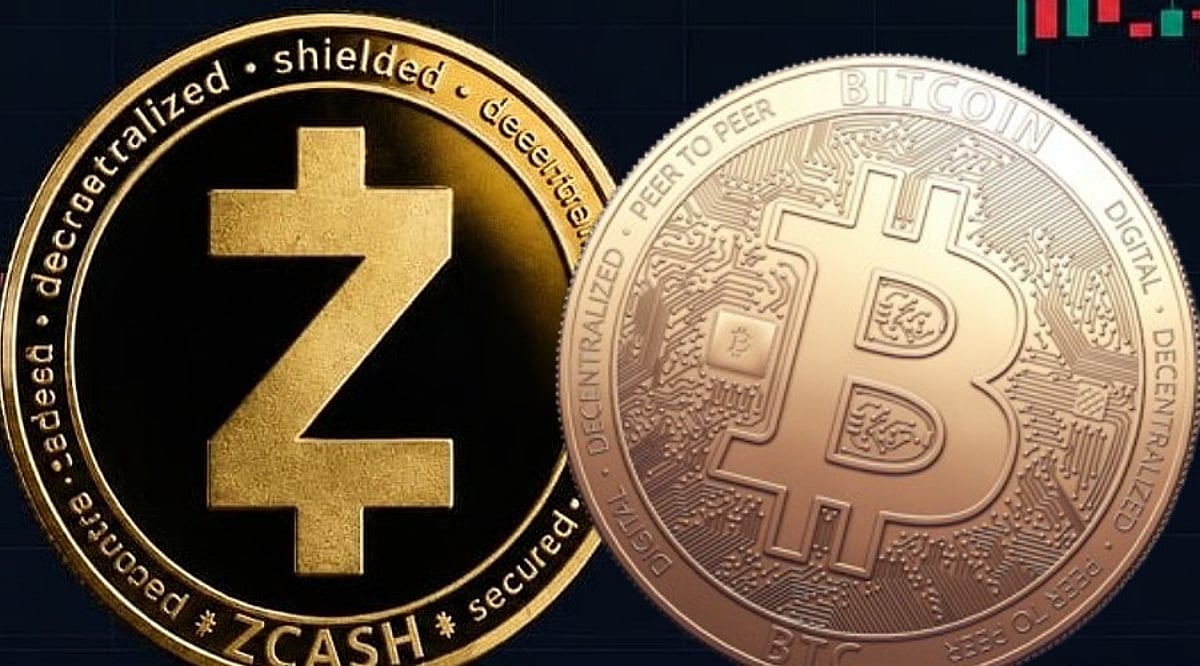
    Zcash (ZEC) surged past $1,500 on September 18, extending a roughly 215% rally from around $470 in mid-August. The token was up more than 10% over 24 hours and 46% over the past week. The rally is driven by institutional demand, short liquidations, and anticipation surrounding the NU7 network upgrade. Grayscale’s spot Zcash ETF (ZCSH), launched on August 25, has attracted over $500 million in assets under management. Paradigm co-founder Matt Huang also disclosed that the firm holds ZEC, calling it a privacy-focused counterpart to Bitcoin.

    NEAR Protocol Jumps 28%

    NEAR Protocol (NEAR) jumped nearly 28% to around $3.47 on September 18, extending its seven-day gain to over 40%. The surge followed the launch of confidential perpetual futures on near.com on September 17. The product allows traders to open positions without publicly linking them to their accounts. Hyperliquid provides execution and liquidity, while NEAR’s Confidential Intents infrastructure handles privacy. Users can access more than 50 perpetual markets while concealing position size, direction, and entry time.

    Solana Cuts Target Slot Time to 250ms

    Solana reduced its target slot time from 300 milliseconds to 250 milliseconds, increasing the network’s slot production rate by nearly 17%. The new setting went live on September 18, bringing Solana to four targeted slots per second, up from roughly 3.3 under the previous configuration. This change is the third stage of SIMD-0525, which aims to gradually reduce slot times from the original 400ms to a final target of 200ms. Shorter slot periods provide wallets, exchanges, and trading applications with more frequent network state updates.

    JPMorgan Sees Bitcoin Outpacing Gold

    In a report published on September 17, JPMorgan analysts predicted that Bitcoin will outperform gold in relative performance if institutional investors begin unwinding their defensive hedges in exchange-traded funds. While gold has led institutional recovery throughout 2026, with inflows erasing all prior capital losses, Bitcoin-backed instruments have only offset half of the redemptions. However, derivatives metrics suggest a different scenario, leading analysts to favor Bitcoin over gold in the near term.

    Frequently Asked Questions

    How much money flowed into Bitcoin spot ETFs?

    U.S. spot Bitcoin ETFs recorded total daily net inflows of approximately $159.45 million. BlackRock’s IBIT led with $183.66 million in net inflows.

    Why is the Zcash price rising?

    Zcash climbed above $1,500 amid institutional demand, short liquidations, and anticipation surrounding its NU7 network upgrade. ZEC has risen roughly 215% from its mid-August level near $470.

    Why did NEAR Protocol jump nearly 28%?

    NEAR surged to around $3.47 as trading activity increased following the launch of confidential-by-default perpetual futures. The product combines Hyperliquid execution and liquidity with NEAR’s Confidential Intents infrastructure.

    What does Solana’s 250ms target slot time mean?

    Solana reduced its target slot time from 300 milliseconds to 250 milliseconds, targeting four slots per second. The change is part of SIMD-0525, which ultimately aims to reduce target slot times to 200ms.

    Why does JPMorgan think Bitcoin could outperform gold?

    According to the report, JPMorgan analysts see potential for Bitcoin to outperform gold if institutional investors unwind defensive gold hedges. Their assessment also considers differences in derivatives positioning between the two assets.

  • Crypto Wealth Management Explained: Portfolios, Staking, Custody, and Risk in 2026

    Crypto Wealth Management Explained: Portfolios, Staking, Custody, and Risk in 2026

    Crypto wealth management has evolved far beyond simply buying and selling cryptocurrencies. Today, it encompasses a structured approach to portfolio construction, custody, staking, lending, tax planning, and risk management. As institutional participation expands in 2026, investors now have multiple avenues to gain and manage digital-asset exposure.

    How Crypto Wealth Management Works

    Traditional wealth management involves asset allocation, custody, investment tactics, and financial strategies. Crypto wealth management applies the same principles to cryptocurrency assets such as Bitcoin, Ethereum, stablecoins, and tokenized instruments.

    A portfolio may include directly held cryptocurrencies, spot-traded products, stablecoins, and tokenized assets from the real economy. The optimal structure depends on the investor’s goals, risk tolerance, liquidity needs, and jurisdiction.

    Custody is critical because owning cryptocurrency directly means managing private keys. Institutional investors often use qualified custodians, while individual investors can choose between custodial platforms and self-custody wallets.

    Portfolio diversification also matters. Bitcoin and Ethereum can behave differently from smaller cryptocurrencies, but crypto assets often remain highly correlated during major market declines. Holding several tokens does not automatically create meaningful diversification.

    Staking and Yield

    Proof-of-stake networks introduce staking: investors can lock or delegate eligible assets to participate in network validation and potentially earn rewards. Ethereum is a prime example. However, staking carries additional risks involving validators, smart contracts, liquidity, and intermediaries. Returns should be weighed against possible asset-price losses.

    Stablecoins have become increasingly important for treasury and liquidity management. They provide blockchain-based dollar exposure and settlement without requiring investors to hold their entire portfolio in volatile cryptocurrencies.

    Tokenized assets are expanding the investment universe. These instruments can represent Treasury securities, money-market products, or other traditional assets on blockchains, bridging conventional wealth management with digital infrastructure.

    Institutional Infrastructure Expands

    Institutional participation is broadening beyond Bitcoin. Crypto ETF markets in 2026 include exposure to Bitcoin, Ethereum, and other digital assets, giving investors regulated market instruments without direct wallet management. Meanwhile, blockchain networks host regulated financial products. On the XRP Ledger, institutions including Aviva Investors, abrdn, Ondo, and Société Générale have introduced tokenized financial instruments.

    Risk Management Remains Critical

    Crypto wealth management does not eliminate volatility. Investors still face market, custody, counterparty, regulatory, smart-contract, and liquidity risks. Leverage can magnify these risks substantially, while yield products may introduce exposure beyond the underlying cryptocurrency.

    Effective crypto wealth management focuses less on identifying the next high-return token and more on determining allocation, custody, liquidity, diversification, and acceptable downside. As digital assets integrate further with traditional finance, managing those risks becomes as important as selecting the assets.

    Frequently Asked Questions

    1. What is crypto wealth management?

    Crypto wealth management is the structured management of digital-asset portfolios using strategies involving asset allocation, custody, diversification, and risk management. It can include cryptocurrencies, stablecoins, staking products, ETFs, and tokenized traditional assets.

    2. How is crypto wealth management different from regular crypto investing?

    Regular crypto investing may focus primarily on buying and selling individual tokens. Wealth management takes a broader approach by considering portfolio allocation, custody, liquidity, taxation, diversification, yield opportunities, and acceptable levels of risk.

    3. What role does custody play in crypto wealth management?

    Custody determines how digital assets and their private keys are secured and controlled. Investors may use self-custody wallets, centralized custodians, or institutional custody services depending on their security requirements and investment structure.

    4. How can investors generate yield from a crypto portfolio?

    Proof-of-stake cryptocurrencies can potentially generate staking rewards through network participation. Other yield opportunities may involve lending or tokenized financial products, although each can introduce additional smart-contract, counterparty, liquidity, and market risks.

    5. What are the major risks of crypto wealth management?

    Key risks include cryptocurrency price volatility, private-key loss, counterparty failures, smart-contract vulnerabilities, liquidity constraints, and regulatory changes. Leverage and complex yield products can further increase potential losses, making risk management particularly important.

    Disclaimer: This article is for informational purposes only and does not constitute financial or investment advice. Always conduct your own research (DYOR) before making any investment decisions.

  • 7 Essential Metrics for Evaluating Bitcoin Treasury Companies

    7 Essential Metrics for Evaluating Bitcoin Treasury Companies

    Bitcoin treasury companies have emerged as a distinct segment of public markets, using equity, debt, and preferred securities to accumulate Bitcoin. However, evaluating these companies requires more than just comparing their Bitcoin holdings. Recent market conditions have shown that several major treasury companies trade below the gross value of their Bitcoin holdings, while differences in debt, preferred shares, and dilution significantly affect what remains attributable to common shareholders.

    1. Total Bitcoin Holdings

    The most straightforward metric is the total amount of BTC owned. Larger holdings provide greater Bitcoin exposure, but investors should also examine how those coins were financed. A company borrowing aggressively to purchase Bitcoin carries different risks than one using operating cash flow or equity issuance.

    2. Bitcoin per Diluted Share

    Absolute holdings can increase while shareholders become diluted. Bitcoin per diluted share measures whether BTC accumulation is actually increasing each shareholder’s economic exposure. If share issuance grows faster than Bitcoin holdings, total BTC may rise without improving per-share exposure.

    3. Market Net Asset Value (mNAV)

    Market net asset value (mNAV) compares a company’s valuation with the value of its Bitcoin holdings and other relevant assets. Premiums can make issuing equity attractive, as companies may raise capital above underlying asset value and purchase additional Bitcoin. Discounts can weaken that financing mechanism.

    4. Debt and Preferred Obligations

    Investors should examine convertible debt, secured borrowing, preferred securities, and maturity schedules. For example, Strategy reportedly reduced total debt to approximately $6.7 billion after retiring $1.5 billion of convertible debt during 2026. Debt becomes especially important during prolonged Bitcoin downturns.

    5. Bitcoin Acquisition Cost

    Average purchase price shows how far Bitcoin can decline before the market value of treasury holdings falls below the aggregate acquisition cost. However, accounting losses alone do not necessarily force selling. Liquidity and debt structures matter more.

    6. Funding Capacity

    Treasury companies frequently rely on capital markets to continue purchasing Bitcoin. Investors should track available equity programs, credit facilities, and preferred issuance capacity. Metaplanet reportedly used 83% of a $500 million credit facility while expanding its treasury to approximately 43,000 BTC.

    7. Liquidity and Cash Obligations

    Bitcoin holdings should be compared with interest payments, dividends, operating expenses, and upcoming maturities. A company can own substantial Bitcoin yet face financing pressure if cash obligations exceed available liquidity.

    Bitcoin treasury companies should not be valued solely by ranking BTC holdings. Investors need to examine per-share exposure, mNAV, leverage, acquisition costs, and financing sustainability together, particularly when market premiums disappear.

    Final Thoughts

    Bitcoin treasury companies require analysis beyond headline BTC holdings. Per-share exposure, leverage, mNAV, funding capacity, and liquidity together provide a clearer picture of whether a company’s Bitcoin strategy is financially sustainable.

    FAQs

    1. What is a Bitcoin treasury company?

    A Bitcoin treasury company is a business that holds Bitcoin as a significant part of its corporate treasury strategy. Some companies finance additional BTC purchases through equity issuance, debt, preferred securities, or operating cash flow.

    2. What is mNAV for a Bitcoin treasury company?

    Market net asset value, or mNAV, compares a company’s market valuation with the value of its Bitcoin holdings and other relevant assets and obligations. It can help show whether shares trade at a premium or discount to underlying assets.

    3. Why is Bitcoin per diluted share important?

    Bitcoin per diluted share measures BTC exposure after accounting for potential share dilution. A company can increase its total Bitcoin holdings while reducing or failing to improve each shareholder’s economic exposure if its share count rises faster.

    4. Why should investors examine a Bitcoin treasury company’s debt?

    Debt creates interest, repayment, and refinancing obligations regardless of Bitcoin’s market performance. High leverage can increase financial pressure during prolonged BTC downturns, particularly when a company has limited cash or near-term maturities.

    5. What metrics should be considered when comparing Bitcoin treasury companies?

    Key metrics include total BTC holdings, Bitcoin per diluted share, mNAV, debt and preferred obligations, average Bitcoin acquisition cost, funding capacity, and liquidity. Evaluating them together provides more context than BTC holdings alone.

    Disclaimer: This article is for informational purposes only and does not constitute investment advice. Cryptocurrency investments carry risk. Always conduct your own research before making investment decisions.

  • Bitcoin Clings to $75K Support After Fed’s Quarter-Point Hike and Senate Setback for CLARITY Act

    Bitcoin Clings to $75K Support After Fed’s Quarter-Point Hike and Senate Setback for CLARITY Act

    Bitcoin Holds Ground After Fed Decision

    Bitcoin traded near $76,000 on September 17 after the Federal Reserve raised interest rates by 25 basis points and the US Senate failed to advance the CLARITY Act. The cryptocurrency avoided another sharp decline after falling earlier in the week as traders responded to tighter monetary policy and uncertainty around US crypto rules.

    Bitcoin closed September 16 near $76,147, according to CoinGecko data. It had traded around $75,590 a day earlier after the Senate vote. The price action kept BTC close to the $75,000 support area, while traders watched the $77,000 to $78,000 range.

    Fed Raises Rates for First Time Since 2023

    The Federal Open Market Committee voted 12-0 on September 16 to raise the federal funds target range to 3.75% to 4%. The Fed said inflation remains elevated and said the increase would support a faster return toward its 2% goal. The move marked the central bank’s first rate increase since 2023.

    Fed Chair Kevin Warsh said the US economy appears to be strengthening and said he would be hard-pressed to describe broad financial conditions as restrictive. Updated Fed projections showed 16 of 18 policymakers expect at least one more rate increase in 2026. The median projection placed the federal funds rate at 4.1% at year-end.

    Bitcoin showed a limited immediate reaction to the decision. Markets had largely expected the quarter-point increase. However, higher short-term rates can raise returns on cash and fixed-income assets, giving traders another factor to consider when allocating money to non-yielding assets such as Bitcoin.

    Bitcoin ETF Outflows Extend After Fed Rate Decision

    US spot Bitcoin exchange-traded funds recorded $450.33 million in net outflows on September 15, according to SoSoValue data. The funds then recorded another $295.98 million in net redemptions around the September 16 session, bringing the two-session total to about $746 million.

    The outflows followed Bitcoin’s decline after the Senate vote and came as investors prepared for the Fed decision. Bitcoin had traded above $80,000 earlier in September. CoinGecko data show BTC closed at $81,265 on September 3 and at $76,147 on September 16.

    Traders continue to watch short-term price levels. Bitcoin has held around $75,000, while resistance sits near $77,000 to $78,000. A break below $75,000 would put lower support zones back in focus, while a move through resistance would bring the $81,600 area into view.

    CLARITY Act Stalls as Other Crypto Bills Move Forward

    The Senate failed to advance the CLARITY Act on September 15. Reuters reported a 50-49 vote, below the 60 votes needed to clear the procedural step. Four Republican senators joined Democrats in opposing advancement. The bill seeks to create a federal market structure for digital assets and define regulatory roles for the SEC and CFTC.

    The failed vote did not end congressional work on other crypto measures. On September 16, the House Financial Services Committee voted 28-21 to advance the American Reserve Modernization Act. The proposal would establish a Strategic Bitcoin Reserve at the Treasury and require the government to hold qualifying Bitcoin for at least 20 years.

    The House Ways and Means Committee also voted 38-5 to advance the Digital Asset Tax Certainty Act. The proposal addresses federal tax treatment for digital assets, including certain transaction fees, mining and staking income. Both measures still require further action in Congress before they can become law.

    Bitcoin entered September 17 near $76,000, with monetary policy, ETF flows and crypto legislation shaping trading conditions. Traders are watching whether the $75,000 area holds as markets adjust to the Fed’s new rate path.

  • Crypto Roundup: $296M Bitcoin ETF Outflows, Aave’s RWA Hub, and Strategy’s $950M Buyback

    Crypto Roundup: $296M Bitcoin ETF Outflows, Aave’s RWA Hub, and Strategy’s $950M Buyback

    Today’s crypto market is marked by significant capital movements and strategic expansions. Spot Bitcoin ETFs saw a combined daily net outflow of $295.98 million, led by BlackRock’s IBIT. Meanwhile, Aave is building an institutional real-world asset (RWA) hub on Avalanche, and Strategy has deployed nearly $1 billion to repurchase its preferred stock. Ripple also unveiled new AI payment capabilities, and Zcash surged 15% amid regulatory uncertainty.

    Bitcoin ETFs Record $295.98 Million in Outflows

    According to SoSoValue, Bitcoin spot ETFs experienced a net outflow of $295.98 million yesterday. BlackRock’s IBIT led the outflows with $144.11 million leaving the fund, while Morgan Stanley’s MSBT was the top gainer, attracting $3.47 million in net inflows. The total net asset value of all Bitcoin spot ETFs stands at $95.19 billion, with the historical cumulative net inflow reaching $54.57 billion.

    Aave Plans RWA Hub on Avalanche for Institutional Borrowing

    Aave is set to deploy a real-world asset hub on the Avalanche network, targeting institutional borrowers. Through this infrastructure, approved entities can use tokenized financial instruments as collateral to access digital fiat liquidity, enabling direct loans without liquidating underlying on-chain holdings. The initiative will run on Aave V4 and uses a Hub and Spoke architecture to partition credit markets into independent modules.

    Strategy Spends $950 Million on STRC Buybacks

    Strategy has been aggressively repurchasing its perpetual preferred stock (STRC) to push the price back toward the $100 par value. Between July 20 and September 13, the company bought back 9.96 million STRC shares, spending approximately $950 million—about 18% of trading volume during that period. Funding came from MSTR common stock sales ($765 million) and Bitcoin disposals ($161 million). STRC has rebounded from around $70 to nearly $99, and analysts note that reaching par value will allow Strategy to more effectively reissue the security and raise funds for Bitcoin purchases.

    Ripple Expands AI Payment Capabilities with MPP

    Ripple announced the XRPL AI Starter Kit 1.1, adding support for the Machine Payment Protocol (MPP) and an open wallet standard developed by Stripe and payment chain Tempo. This enables AI agents to pay for online services—such as data and computing power—using XRP, RLUSD, and other tokens. Jazzi Cooper, RippleX product lead, said the goal is to make XRP and RLUSD the preferred payment options for developers. MPP allows service providers to quote prices, agents to authorize payments, and providers to deliver resources upon authorization.

    Zcash Jumps 15% as Privacy Coins Gain Traction

    Zcash (ZEC) is trading at $1,330, up 15% in the last 24 hours. The surge is linked to the stalled CLARITY Act, which leaves US crypto market structure rules in limbo, driving traders toward privacy-focused coins that don’t rely on regulatory clarity. Paradigm co-founder Matt Huang publicly disclosed his firm’s ZEC position, calling Zcash “a private complement to Bitcoin.” Additionally, Zcash holders have backed proposals for faster transactions and bitcoin-style halving schedules, signaling strong community governance.

    Key Takeaways

    • Bitcoin spot ETFs saw a daily net outflow of $295.98 million.
    • Aave plans an institutional RWA hub on Avalanche using Aave V4.
    • Strategy spent $950 million on STRC buybacks to restore its Bitcoin financing capability.
    • Ripple’s new toolkit enables AI agents to pay for services with XRP and RLUSD.
    • Zcash rose 15% to $1,330 amid regulatory uncertainty and governance momentum.
  • Bitcoin Drops as Fed Rate Hike Strengthens Dollar and Raises Rate Risks

    Bitcoin Drops as Fed Rate Hike Strengthens Dollar and Raises Rate Risks

    Bitcoin extended its decline after the Federal Reserve raised interest rates by 25 basis points, lifting the benchmark range to 3.75%–4.00%. BTC has fallen more than 3% over three trading days, weighed down by a stronger dollar and expectations of further tightening.

    Fed Rate Hike Adds Pressure to Bitcoin

    Markets had priced in a more than 90% probability of the increase before the announcement, reflecting expectations for a more aggressive policy stance. Higher US rates tend to boost demand for bonds and support the dollar, while tighter financial conditions can reduce the liquidity available for risk assets such as Bitcoin.

    The dollar had already been strengthening ahead of the decision. The DXY index continued to push toward 100, a level that has attracted notable buying interest in recent sessions. A stronger dollar can also compete with Bitcoin for capital, as investors increasingly favor dollar-denominated assets when US bond yields become more attractive.

    Dollar Strength and Open Interest Shape BTC Trading

    Bitcoin demand has shown signs of cooling as the dollar gains ground and rate expectations remain firm. Short-term selling pressure has persisted as a result. Open interest across exchanges recently climbed to roughly $25.5 billion, indicating greater participation in Bitcoin derivatives. However, rising open interest combined with falling prices can also point to growing bearish positioning, especially while Bitcoin remains sensitive to liquidity and interest-rate expectations.

    2022 Tightening Cycle Offers a Limited Comparison

    History suggests the Federal Reserve rarely stops after a single increase. Since 1994, the central bank has gone “one and done” only once, and single hikes have remained uncommon across the 12 tightening cycles since 1955. Current market pricing points to another 75 basis points of tightening within six months.

    Bitcoin’s track record through tightening cycles is much shorter. The cryptocurrency traded through the 2015 cycle, although thinner liquidity makes that period less comparable to today. The 2022 cycle provides a closer reference because Bitcoin had developed a more mature market structure. BTC peaked near $69,000 in November 2021 before falling about 40% ahead of the March 2022 hike.

    Today, Bitcoin is also trading around 40% below its October high of $126,000. That decline places BTC near a drawdown level similar to the one seen before the 2022 tightening cycle began.

  • Bitcoin Could Rally to $350K as Apeing Presale Targets $0.01: Which Crypto Is the Next Big Opportunity?

    Bitcoin Could Rally to $350K as Apeing Presale Targets $0.01: Which Crypto Is the Next Big Opportunity?

    Bitcoin remains the market leader, while Solana continues to attract attention through its fast blockchain and growing ecosystem. Apeing ($APEING), however, brings a different story through its live memecoin presale, early entry pricing, and community-focused features. For buyers searching for the next big crypto, the contrast is clear: established networks offer market history, while a new presale creates an early entry moment.

    Apeing ($APEING) Presale Momentum

    Apeing ($APEING) brings meme culture and Ethereum-based token utility together in a presale built for early community members. Now in Stage 4, Banana Hoarders, priced at $0.0005, it has raised $93K+, with 320+ holders and 445M+ tokens sold. A $1,000 investment gets 2,000,000 tokens, potentially worth $20,000 at the $0.01 listing price, representing a 1,900% potential ROI.

    The project raised $6,000 within minutes, reached 90 million tokens sold and $10,000 raised in 30 minutes, then sold 150 million tokens in less than an hour. Stage 2 was launched in under an hour, while Stage 3 unlocked in 6 hours of the presale. With limited tokens allocated to each stage, early buyers have a chance to secure entry before the next price change.

    $0.01 Ahead? Apeing’s Listing Strategy

    Apeing ($APEING) plans to list at $0.01, with a strategy focused on liquidity, orderly trading, and long-term market development. The first listing is planned for a decentralized exchange on Ethereum, with liquidity prepared in advance and locked for eighteen months. Centralized exchange listings are planned afterward, targeting three to five exchanges, including a United States venue when timing and compliance align.

    The project also plans on-chain staking a few weeks after trading begins. Team tokens follow a one year lock and six month release, while unsold presale tokens are removed through the burn function when a stage ends. These features matter because buyers gain a clearer picture of the project’s market plan, token handling, and future utility.

    How Early Buyers Can Secure Apeing’s Presale Advantage

    Apeing ($APEING) gives early buyers a simple route into its community. Visitors can open the official presale website, enter a valid email address, follow the purchase instructions, and complete the transaction for their desired $APEING allocation.

    The advantage is clear: early participants can enter before later stages, while limited stage allocations create urgency around timing. The project also offers staking features designed to reward committed holders. For buyers looking for the next big crypto, early access means getting closer to the project before wider market attention arrives.

    Apeing Post-Listing Price Potential

    Apeing ($APEING) has a stated listing plan of $0.01, giving its presale a clear price target for early participants. The project’s Ethereum foundation, staking features, community activity, and phased listing approach support its market narrative. Its potential future value depends on demand, trading activity, and successful execution of the listing strategy.

    The following table presents illustrative scenarios based on the stated $0.01 listing plan.

    Scenario Potential Price Key Factors
    Strong Demand $0.05 – $0.10 High community engagement, successful exchange listings, staking adoption
    Moderate Demand $0.01 – $0.03 Steady trading, average community growth
    Low Demand Below $0.01 Weak market interest, listing delays

    Bitcoin Price Prediction 2026 to 2030: Can BTC Lead the Next Market Rally?

    Bitcoin remains the market’s biggest cryptocurrency by valuation and investor attention. Its fixed maximum supply of 21,000,000 BTC, institutional interest, whale activity, and blockchain adoption all influence sentiment. The supplied live figures place Bitcoin at $78,802.21, with a 24-hour trading volume of $30,135,042,409 and a market cap of $1,582,697,576,173.

    Bitcoin is up 1.89% in the last 24 hours. Its circulating supply is 20,084,431 BTC, and its CoinMarketCap ranking is #1. For a BTC price prediction, moving averages, trading volume, market cycles, and large investor demand can act like a market compass.

    Bitcoin Bull Run Forecast

    A Bitcoin bull run could be supported by increased institutional buying, stronger exchange-traded fund demand, improving global liquidity, and wider use of Bitcoin as a digital asset. The fixed maximum supply of 21,000,000 BTC may become more important when demand rises faster than available supply. Whale accumulation could also influence sentiment because large investors can affect market direction through major purchases.

    Bitcoin Bear Collapse Scenario

    A bear collapse could develop if global liquidity weakens, institutional demand slows, or investors move away from higher-risk assets. Bitcoin may also face pressure from regulatory uncertainty, reduced trading activity, and large holders selling into a declining market.

    Solana Price Prediction 2026 to 2030: Is SOL Ready for Another Breakout?

    Solana continues to attract crypto enthusiasts through its fast blockchain, developer activity, and growing ecosystem. The supplied live price is $103.34, with a 24-hour trading volume of $3,186,912,080 and a market cap of $60,646,589,157. Solana is up 1.99% in the last 24 hours, ranking #7 on CoinMarketCap. Its circulating supply is 586,892,413 SOL coins.

    For a Solana price prediction, network usage, applications, market sentiment, and developer growth remain key factors. If demand rises, SOL could benefit from renewed attention. If activity slows, price momentum may fade.

    Conclusion: Bitcoin, Solana and Apeing ($APEING) Create a New Crypto Opportunity

    Bitcoin and Solana remain major names in the crypto market, with their future shaped by adoption, liquidity, developer activity, and investor attention. Their price predictions show how market cycles can create new opportunities. Apeing ($APEING), meanwhile, brings a different angle through its live memecoin presale, Ethereum foundation, staking features, and planned $0.01 listing price.

    For buyers searching for the next big crypto, the project’s early entry structure creates a reason to explore the opportunity now. The presale is live, and limited stage allocations add urgency. The next big crypto story could already be underway. Visit the official Apeing presale website today and explore $APEING before the next stage arrives.

    For More Information:
    Website: Visit the Official Apeing Website
    Telegram: Join the Apeing Telegram Channel
    Twitter: Follow Apeing on X (Formerly Twitter)

    FAQs about the Next Big Crypto

    What is the next big crypto to watch?
    The next big crypto may be a project that combines strong community demand, useful blockchain features, and early market interest. Bitcoin, Solana, and Apeing ($APEING) offer different opportunities to follow.

    What is the next big crypto expected to explode?
    Apeing ($APEING) is attracting attention through its presale momentum, Ethereum foundation, and planned $0.01 listing price. Its early-stage structure makes it a project worth watching.

    Which crypto could be the next big crypto in 2026?
    Bitcoin and Solana remain important market names, while Apeing ($APEING) offers an early presale opportunity. Each project has a different market story.

    What is Apeing ($APEING)?
    Apeing ($APEING) is an Ethereum-based memecoin project with a live presale, community-focused features, staking options, and a planned $0.01 listing price.

    Why are buyers interested in Apeing ($APEING)?
    Buyers may find Apeing attractive because of its early entry pricing, limited stage allocations, staking features, and planned listing strategy. The project offers a way to join its community before wider market attention.

    Disclaimer: Analytics Insight does not provide financial advice or guidance on cryptocurrencies and stocks. Also note that the cryptocurrencies mentioned/listed on the website could potentially be risky, i.e. designed to induce you to invest financial resources that may be lost forever and not be recoverable once investments are made. This article is provided for informational purposes and does not constitute investment advice. You are responsible for conducting your own research (DYOR) before making any investments. Read more about the financial risks involved here.

  • Could Bitcoin Survive a Worldwide Internet Shutdown? A Look at Network Resilience

    Could Bitcoin Survive a Worldwide Internet Shutdown? A Look at Network Resilience

    Bitcoin is often described as a decentralized infrastructure, but its nodes typically rely on internet connectivity to exchange transactions and blocks. A global internet outage would create a serious operational problem, though it would not automatically erase Bitcoin or permanently destroy the network.

    Bitcoin Exists Across Thousands of Independent Copies

    Bitcoin’s blockchain is replicated across independent nodes rather than stored on a single central server. If ordinary internet connectivity disappeared globally, those copies would remain on computers and storage devices. Existing Bitcoin balances and historical transactions would therefore not simply vanish. The immediate challenge would be communication: nodes unable to communicate could not reliably propagate transactions or maintain a synchronized global view of new blocks.

    Mining Could Fragment

    Bitcoin miners need information about the latest valid block before efficiently extending the chain. During widespread connectivity loss, isolated groups could potentially continue producing blocks locally, creating competing versions of the blockchain. Once communication returned, Bitcoin’s consensus rules would determine which valid chain had the most accumulated proof-of-work. Transactions on losing branches could be reorganized, creating significant settlement uncertainty. Users would therefore have strong reasons to avoid treating transactions as final during severe network fragmentation.

    Bitcoin Has Communication Alternatives

    Traditional broadband is not Bitcoin’s only communication channel. Blockstream Satellite broadcasts the Bitcoin blockchain worldwide 24 hours a day, allowing users with appropriate receiving equipment to obtain blockchain data without conventional internet access. Blockstream describes the system as an additional resilience layer designed to protect Bitcoin access against network interruptions. Satellite broadcasting primarily solves the problem of receiving data; maintaining fully interactive transaction propagation still requires additional communication paths.

    Alternative Networks Could Help

    Bitcoin transactions are small pieces of signed digital information. In principle, they can be transported using radio, satellite links, mesh networks or other data channels before eventually reaching connected Bitcoin nodes. These systems would not reproduce today’s global internet capacity, but they could provide limited communication during localized outages.

    A Truly Global Outage Would Affect Much More Than Bitcoin

    A simultaneous worldwide internet failure would disrupt banks, stock exchanges, payment processors, cloud infrastructure and telecommunications alongside cryptocurrency. Bitcoin’s challenge would therefore be maintaining synchronization until global connectivity recovered.

    Why This Matters

    Bitcoin’s decentralization protects it from dependence on a single server or company, but decentralization does not eliminate communication requirements. Understanding this distinction shows where Bitcoin is resilient and where external infrastructure remains essential.

    Final Thoughts

    A global internet outage could severely disrupt Bitcoin transactions and temporarily fragment network activity, but it would not erase the blockchain. Bitcoin could resume synchronization when connectivity returns, while satellite and alternative communication systems provide additional resilience against less extreme disruptions.

  • KULR Technology Group Exits Bitcoin Holdings, Sells 764 BTC for $58.6 Million

    KULR Technology Group Exits Bitcoin Holdings, Sells 764 BTC for $58.6 Million

    US-listed KULR Technology Group has fully exited its Bitcoin position, selling its remaining 764 Bitcoin between August 20 and September 11 for gross proceeds of approximately $58.6 million. The weighted average sale price was about $76,633 per Bitcoin, according to a regulatory filing.

    KULR Cuts Bitcoin Holdings to Zero

    As of September 11, KULR held no Bitcoin after completing open-market sales to unrelated buyers. The company described the transactions as part of its treasury management activities. The filing did not disclose the cost basis for the coins sold or indicate whether the final disposal resulted in a realized gain or loss. However, the average sale price was below KULR’s reported average acquisition cost of about $100,579 per Bitcoin at the end of the second quarter.

    KULR first purchased Bitcoin in December 2024 and steadily increased its holdings. By August 2026, management had begun reversing that strategy as financial priorities shifted.

    Company Ends Mining and Repays Coinbase Loans

    The Bitcoin sale followed other steps that reduced KULR’s cryptocurrency exposure. The company ended its Bitcoin mining operation after the second quarter and repaid its Coinbase loans in full.

    Chief Executive Michael Kimmel said the measures aimed to limit stock dilution while reducing balance-sheet volatility. KULR also introduced a policy designed to improve financial visibility. Management redirected funds and operational resources toward growth in the company’s core energy business.

    The September 11 Bitcoin sale completed the treasury side of that shift, removing KULR’s remaining direct exposure to Bitcoin price changes. Previously, movements in Bitcoin could increase or reduce the value of assets on its balance sheet.

    USD 58.6 Million Sale Adds Liquidity

    The Bitcoin disposal generated approximately $58.6 million in gross proceeds and increased KULR’s available liquidity. The filing did not explain how the company plans to use that cash, leaving investors without details on whether the proceeds will go toward operations, debt reduction, acquisitions, or other balance-sheet priorities.

    KULR has not ruled out future Bitcoin purchases. The filing records the sale of its remaining holdings but does not prevent the company from rebuilding a position later.

  • Bitcoin ETFs Adopt In-Kind Creations as BTC Holds Key Support at $74.5K

    Bitcoin ETFs Adopt In-Kind Creations as BTC Holds Key Support at $74.5K

    Bitcoin faces renewed volatility as the SEC approves in-kind creations for spot Bitcoin ETFs and the US Senate rejects the Clarity Act, leaving regulatory uncertainty. Despite these headwinds, ETF inflows remain strong, with BTC testing critical support levels.

    Bitcoin ETF Structure Changes as Inflows Recover

    The SEC’s approval allows authorized participants to create or redeem spot Bitcoin ETF shares using either cash or Bitcoin directly, rather than relying solely on cash. This structural change could influence Bitcoin movement between institutional holders and the broader market.

    Major Bitcoin ETFs are seeing a recovery in flows after recent market weakness. The iShares Bitcoin Trust has attracted approximately $3.5 billion in net inflows over the past month, bringing its year-to-date flow total close to break-even.

    Michael Bucella, co-founder and managing partner of Neoclassic Capital, attributed the rebound to renewed spot and ETF buying following the August 19 liquidation washout. BTC gained nearly 20% during the past month, briefly moving above $81,000 in late August, though it remains almost 10% lower in 2026.

    Senate Setback Keeps Crypto Policy Uncertainty Elevated

    The US Senate narrowly rejected the Clarity Act, leaving cryptocurrency market participants facing continued uncertainty around federal regulation. This regulatory setback coincides with the SEC’s ETF structure change, presenting traders with mixed policy signals.

    Grayscale Investments research head Zach Pandl noted that investors increasingly use crypto within broader portfolio allocation strategies, driven by diversification concerns involving technology, artificial intelligence, bonds, and the dollar. Institutional allocation through ETFs remains a key component of Bitcoin demand.

    However, leverage across the broader cryptocurrency market creates additional risk. Bucella expressed concern about altcoin open interest and leverage, which remain near levels seen before the October 2025 market crash.

    Bitcoin Price Tests Support Below Short-Term Averages

    Bitcoin currently trades below its hourly MA-20 at $76,204 and MA-50 at $77,307, but remains above its MA-200 at $70,274. The Ichimoku Kijun places immediate resistance near $76,440, while support sits at $74,544. The expected short-term trading range extends from $74,544 to $77,062.

    Momentum indicators remain weak: MACD carries a Strong Sell reading, ADX signals Sell, and RSI stands at 41.08. Stochastic RSI and CCI indicate oversold conditions, while Bull/Bear Power also sits in oversold territory. The Awesome Oscillator remains neutral. The supplied outlook assigns a 71% probability to a downside move and 29% to an upside breakout.

    A confirmed break above $76,440 would strengthen the bullish short-term scenario. Conversely, losing $74,544 could increase bearish pressure. Bucella identified $83,000 to $86,000 as the next key area, noting Bitcoin faces long-term supply there before accessing stronger technical territory.

    A Brief Roundup

    Bitcoin faces competing market forces as in-kind ETF creations expand while the Clarity Act setback keeps regulatory uncertainty elevated. ETF inflows have recovered, but BTC remains below short-term moving averages. Traders are watching $74,544 support and $76,440 resistance before attention can return to the $83,000–$86,000 range.