Tag: Bitcoin

  • XRP Plunges 10% as US Senate Blocks CLARITY Act, Triggering Broad Crypto Selloff

    XRP Plunges 10% as US Senate Blocks CLARITY Act, Triggering Broad Crypto Selloff

    XRP led major cryptocurrencies lower on Wednesday after the US Senate failed to advance the CLARITY Act, a bill aimed at providing clearer regulatory guidelines for digital assets. The token dropped nearly 10% to $1.30 during Asian trading, marking the steepest decline among major cryptocurrencies.

    Broader Market Weakens

    The broader crypto market also weakened following the procedural defeat. Bitcoin slipped nearly 3% to just above $76,000, while Ether dropped almost 5% to around $2,410. Solana declined 5% to just above $97, and dogecoin lost nearly 5%. Zcash and Hyperliquid’s HYPE each fell close to 4%. BNB and Tron recorded smaller declines of about 1% each. The moves followed a broad reduction in risk exposure across major digital assets.

    XRP drew particular attention due to its connection with banking-focused digital asset activity and the RLUSD stablecoin. The CLARITY Act sought to establish clearer rules covering digital assets and their use within traditional finance.

    Senate Vote Falls Short

    The Senate failed to advance the bill in a 49-50 cloture vote, according to CoinDesk. The measure needed 60 votes to proceed to debate, and several Republicans joined the opposition. Negotiators had prepared more than 600 pages of compromise language, but disputes over ethics provisions became a central obstacle before the vote.

    Michigan Democratic Senator Elissa Slotkin said the ethics safeguards were ‘simply too thin.’ She also raised concerns about CFTC staffing, money laundering controls, and terrorist financing provisions. Slotkin also pointed to crypto-related financial interests involving President Donald Trump, his children, and Cabinet members, forming part of broader Democratic objections to the legislation.

    Crypto Stocks Slide as Fed Decision Looms

    Crypto-related equities recorded even steeper losses than major tokens. Coinbase fell nearly 9% to $174.42, while Circle dropped more than 9% to $88.26. Galaxy Digital declined 8%, Gemini lost 7%, and Bullish and Riot Platforms each fell 5%. Robinhood, MARA Holdings, CleanSpark, IREN, and Core Scientific dropped between 3% and 4%.

    Attention now shifts toward federal regulators. The Securities and Exchange Commission continues work on its proposed Reg Crypto framework and rules covering tokenized securities. At the same time, markets await the Federal Reserve’s rate decision Wednesday. Traders placed the probability of a rate increase near 93%, while the 10-year Treasury yield hovered around 5%.

  • How to Buy Crypto in India: A Step-by-Step Guide to KYC, Deposits, and App Trading

    How to Buy Crypto in India: A Step-by-Step Guide to KYC, Deposits, and App Trading

    Buying Crypto in India: What Beginners Need to Know

    For first-time buyers, getting started with cryptocurrency in India can feel complicated. In practice, most crypto trading apps follow a simple flow: create an account, finish KYC, deposit Indian rupees, and place an order. Before you invest, however, you need to choose a compliant platform and understand the fees, taxes, and risks involved.

    Step 1: Choose a Compliant Crypto App

    Select a crypto exchange or trading app that operates in India and supports INR transactions. Confirm that the platform is registered with the Financial Intelligence Unit-India (FIU-IND). FIU-IND requires virtual digital asset service providers involved in crypto-to-fiat exchange, crypto transfers, and custody to comply with the Prevention of Money Laundering Act (PMLA). This matters because the Indian government recently ordered the removal of websites and apps belonging to 15 VDA service providers over alleged PMLA non-compliance.

    Step 2: Complete Your KYC

    Register using your mobile number and email, then complete the app’s verification process. You will generally need your PAN and valid identification proofs. KYC helps the platform confirm your identity and meet anti-money-laundering rules. As a basic safety measure, never share your OTP, password, or crypto wallet recovery phrase with anyone who claims to be from the exchange.

    Step 3: Add Money to Your Account

    Once your KYC is approved, you can deposit Indian rupees into your trading account. Most platforms support UPI or bank transfers. Before depositing, check the platform’s minimum and maximum deposit limits, processing time, and applicable charges.

    Step 4: Buy Cryptocurrency

    After your INR balance is available, open the trading section and choose the cryptocurrency you want to purchase. Enter the amount you want to spend in INR or the quantity of crypto you want. The app will display the current price and applicable fees. Review the details and confirm your order if everything looks correct.

    Remember that crypto prices can move sharply in a short time. The government has warned that virtual digital asset and NFT transactions carry significant risks and may not provide regulatory recourse for losses.

    Step 5: Understand India’s Crypto Tax Rules

    Cryptocurrency gains are taxable in India. Under Income Tax Department rules, income from the transfer of virtual digital assets is taxed at 30%, plus applicable surcharge and 4% cess. A 1% TDS provision also applies to VDA transfers, subject to thresholds: ₹10,000 in aggregate consideration during the financial year for most people, and ₹50,000 for specified persons.

    Step 6: Keep Records for Tax Reporting

    Maintain detailed records of your crypto purchases and sales, transaction values, fees, and TDS. Good records make tax filing much simpler.

    FAQs

    Is cryptocurrency legal to buy in India?

    Yes, cryptocurrency can be bought and sold in India, but it is not recognized as legal tender. Use platforms registered with FIU-IND where applicable, and understand that crypto transactions carry financial, regulatory, and security risks.

    What documents are required for crypto KYC in India?

    Platforms generally require personal information, PAN, and valid identity documents. Exact requirements vary by platform. Share information only through the exchange’s official website or app, and never share OTPs or passwords.

    How can I deposit money into a crypto trading app?

    After KYC approval, add Indian rupees through supported payment methods such as UPI or bank transfer. Check minimum and maximum limits, processing times, and any applicable fees before depositing.

    How do I buy cryptocurrency using an Indian crypto app?

    Once INR is credited, go to the trading section, select the cryptocurrency you want, enter the amount in rupees or the desired crypto quantity, review the displayed price and fees, and confirm the order if the details are correct.

    What taxes apply when buying and selling cryptocurrency in India?

    Income from transferring virtual digital assets is generally taxed at 30%, plus applicable surcharge and 4% cess. A 1% TDS provision also applies subject to thresholds. Keeping detailed transaction, fee, purchase, and sale records can simplify tax reporting.

  • Bitcoin Steady Near $77,000 as Fed Rate Hike Probability Climbs to 85%

    Bitcoin Steady Near $77,000 as Fed Rate Hike Probability Climbs to 85%

    Bitcoin held near USD 77,000 on Monday as cryptocurrency markets braced for a crucial Federal Reserve meeting this week. Rate markets now place an 85% chance on a 25-basis-point rate increase. The leading cryptocurrency traded between roughly USD 77,000 and USD 77,200 during Monday morning and remains about 6% below its three-month high above USD 82,000 set earlier this month.

    Meanwhile, Ethereum traded near USD 2,540, while Solana held above USD 101. According to CoinDesk’s market snapshot, Ethereum gained about 2.9% and Solana rose 1.4%, while Bitcoin slipped slightly.

    Fed Rate Decision Takes Center Stage

    Traders are now focused on the Federal Reserve’s September 15-16 meeting after stronger inflation data shifted expectations. August consumer prices increased 0.4% from July and 3.4% from a year earlier. As a result, interest-rate markets moved toward expecting another rate increase, with the probability of a 25-basis-point hike climbing to roughly 85% before the meeting.

    Higher rates can affect cryptocurrency markets because Treasury securities become more attractive to yield-seeking investors. At the same time, borrowing costs rise for leveraged and speculative positions. Goldman Sachs reportedly abandoned its previous forecast for unchanged rates, shifting instead toward expecting a 25-basis-point increase as persistent inflation strengthened the case for tighter policy.

    Altcoins Rise as Technology Stocks Retreat

    Crypto markets showed relative strength even as technology shares weakened. Bitcoin gained about 1% over 24 hours to roughly USD 77,800, while Ether rose about 1% to USD 2,500. In contrast, the Invesco QQQ ETF fell 1.5% in U.S. pre-market trading. South Korea’s KOSPI dropped 3%, and memory-chip producer SK Hynix declined 6%.

    Those moves followed renewed concerns about artificial intelligence development. Anthropic CEO Dario Amodei called for slower development so safety measures could catch up. OpenAI CEO Sam Altman and Elon Musk also voiced agreement. Separately, Anthropic reportedly selected Nasdaq for its expected IPO, while Altman said OpenAI would not go public in 2026.

    Bitcoin had already faced pressure from hotter inflation, rising Treasury yields and higher oil prices. Those forces repeatedly blocked attempts to reclaim the USD 80,000 level.

    Bitcoin Faces USD 81,700 Breakout Test

    Bitcoin briefly approached USD 80,000 after Friday’s consumer inflation figures before giving back much of the advance. Traders now face a narrow range before the Federal Reserve decision. CryptoQuant identified approximately USD 81,700 as the next major level Bitcoin must clear before a new bullish phase gains stronger confirmation.

    The analytics firm described Bitcoin’s underlying trend as constructive after a roughly 24% rebound across two weeks. Still, several resistance levels remain above the current price. Additional resistance sits near USD 83,600 and USD 88,700. On the downside, CryptoQuant identified USD 70,000 as a potential support level. A stronger accumulation area sits between USD 62,000 and USD 65,000. Long-term holders have accumulated about 476,000 Bitcoin around that broader zone this year.

    Can Bitcoin clear USD 81,700 while markets adjust to another Federal Reserve rate increase? For now, Bitcoin remains between resistance near USD 80,000 to USD 82,000 and major support below the current market price.

    Final Thoughts

    Bitcoin remains near USD 77,000 as traders prepare for a Federal Reserve decision that markets increasingly expect will deliver a 25-basis-point rate increase. Ethereum and Solana have outperformed Bitcoin, while USD 81,700 remains the key upside level and USD 70,000 marks important downside support.

  • Bitcoin Faces Dual Catalysts This Week: Fed Rate Decision and CLARITY Act Vote

    Bitcoin Faces Dual Catalysts This Week: Fed Rate Decision and CLARITY Act Vote

    Bitcoin enters a volatile week with two major catalysts: the Federal Reserve’s interest rate decision and a Senate vote on the CLARITY Act. Meanwhile, Bitcoin Suisse plans to relocate up to 60 jobs abroad as part of its international expansion strategy.

    Fed Rate Decision Dominates Crypto Market Risk

    The Federal Reserve will announce its September interest rate decision on Wednesday. Markets currently assign an 85% to 90% probability of a 25-basis-point increase. The week’s calendar also includes August retail sales and an auction of 20-year securities, but the Fed decision remains the main event for crypto markets.

    Rate expectations strengthened after August employment data showed 162,000 new jobs—triple the forecasts. Producer inflation accelerated to 5.4% annually, while headline CPI reached 3.4%. Monthly core CPI also came in slightly hotter than expected. At the same time, oil stayed above USD 100, while U.S. diesel prices reached a new record.

    Bitcoin has already fallen from USD 82,400 to below USD 78,000 as rate-hike expectations increased. Crypto prices also fell after Fed Chair Kevin Warsh’s Jackson Hole speech several weeks ago. Traders will watch Warsh’s post-meeting press conference for signals about whether Wednesday’s move stands alone or starts another tightening cycle.

    CLARITY Act Vote Adds Tuesday Catalyst

    Before the Fed decision, the Senate will hold a cloture vote on the CLARITY Act at 2:15 p.m. Tuesday. The motion needs support from 60 senators to advance debate. Republicans released updated legislation last week with new rules for non-decentralized DeFi protocols. The text also clarified how credit unions can participate in crypto activities.

    On Sunday, Republicans published another final draft that included an ethics proposal President Donald Trump supports. That vote places another major policy event immediately before the Fed decision. Bitcoin and altcoins have already shown strong sensitivity to changing policy expectations, and their recent declines came as markets increased the probability of tighter monetary policy.

    Bitcoin Suisse Plans Overseas Job Shift

    Separately, Bitcoin Suisse plans to relocate as many as 60 positions from its Zug headquarters. The company will move mainly back-office and administrative roles to Bratislava or Vietnam. Employees received the plan during a Friday town hall. Bitcoin Suisse will determine the final number after a 10-day consultation, while the first layoffs will begin before year-end.

    Bitcoin Suisse began operations in 2013 with crypto trading and custody before adding staking and lending. It now plans to serve private clients, family offices and institutions. The company has secured a MiCAR license in Liechtenstein, licenses in Bermuda and full regulatory approval in Abu Dhabi. Group CEO Andrej Majcen said international growth now ranks as a priority.

    Majcen linked the relocation to lower operating costs rather than the current crypto downturn. Zug will remain the headquarters, and the Bitcoin Suisse name will continue. The company also remains open to acquisitions in Switzerland as it expands beyond its original focus on the domestic crypto market.

    Final Thoughts

    Bitcoin enters the week with two immediate policy tests: Tuesday’s CLARITY Act vote and Wednesday’s Federal Reserve decision. Meanwhile, Bitcoin Suisse is moving part of its workforce abroad as it expands its international wealth and asset management strategy.

  • Bitcoin ETFs Shed $460 Million as Ethereum Funds Extend Inflow Streak

    Bitcoin ETFs Shed $460 Million as Ethereum Funds Extend Inflow Streak

    Spot Bitcoin ETFs turned red for the first time since mid-August, losing more than $460 million over four business days last week. Ethereum ETFs moved in the opposite direction during the same stretch, pulling in fresh money as the underlying asset pushed toward an eight-month high.

    The shift played out across US-listed exchange-traded funds tracking both cryptocurrencies, with data from SoSoValue showing a clear split in investor sentiment. Bitcoin’s outflows followed a strong run in August, while Ethereum extended its winning streak into a fourth straight week.

    Bitcoin Funds Reverse Inflow Trend

    Bitcoin ETFs recorded their best week in months between August 17 and 21, pulling in over $1.9 billion as the price jumped from under $65,000 to nearly $80,000. That momentum carried into the following two weeks too, with $924 million and $986 million in net inflows. Last week broke that pattern.

    Outflows began on Tuesday at $46.65 million, followed by $120.24 million on Wednesday, $282.56 million on Thursday, and $13.29 million on Friday, the same day fresh inflation data landed. Total net inflows for Bitcoin funds slipped from $55.62 billion to $55.15 billion. Bitcoin’s price also swung sharply, dropping to $76,000 before climbing to $79,800 and settling back near its starting point.

    Ethereum ETFs Maintain Strong Inflows

    Ethereum ETFs followed a bumpier path early in the week, with $24.29 million leaving on Monday before $34.75 million came back in on Wednesday. Thursday saw another $29.76 million in outflows. Friday changed everything, as net inflows hit a two-week high of $216.41 million. Ethereum’s price spiked more than 8% within an hour of the inflation report, touching $2,670 before settling near $2,500.

    Only one of the last ten weeks saw Ethereum ETFs post outflows, and that dip stayed small at just $2.26 million. Total net inflows for Ethereum funds climbed from under $10.89 billion to $13.39 billion over that period.

    What’s Next for Crypto ETFs?

    Markets now turn their attention to the CLARITY Act, which heads to the US Senate next week, along with the Federal Reserve’s upcoming rate decision, both of which could shape investor flows into crypto ETFs going forward.

  • How Crypto Investment Strategies Evolved: From Bitcoin Holding to ETFs and AI in 2026

    How Crypto Investment Strategies Evolved: From Bitcoin Holding to ETFs and AI in 2026

    Cryptocurrency investing has changed substantially from Bitcoin’s early buy-and-hold culture. In 2026, investors can choose regulated exchange-traded products, diversified portfolios, stablecoins, tokenized assets and decentralized finance (DeFi) strategies. Institutional participation is also pushing crypto portfolio construction closer to traditional asset management.

    From Bitcoin Holding to Portfolio Allocation

    Early crypto investing largely revolved around purchasing Bitcoin directly and holding it through market cycles. That approach remains popular, but investors increasingly treat crypto as one component of a broader portfolio. The 2026 Bitwise survey found that among client portfolios already holding crypto, 64% had allocations above 2%, compared with 51% in 2024. Meanwhile, 42% of financial advisers said they could purchase crypto in client accounts, up from 19% in 2023.

    ETFs Changed How Investors Access Crypto

    Spot exchange-traded products have reduced the need for investors to manage wallets and private keys directly. Digital-asset ETPs reached more than USD 250 billion in assets at their peak before ending 2025 with USD 184 billion under management. Bitcoin products represented 78.2% of year-end assets, while Ethereum products held USD 26.5 billion, according to CoinDesk Research. Institutional preferences reinforce this shift. A 2026 Coinbase and EY-Parthenon survey of 351 institutional investors found 66% already had exposure through spot crypto ETPs, while 81% preferred accessing spot crypto through registered investment vehicles.

    Risk Management is Becoming More Important

    Crypto’s volatility has encouraged investors to focus increasingly on position sizing, liquidity and diversification rather than maximizing exposure. The same institutional survey found that 49% of respondents had increased their emphasis on risk management, liquidity and position sizing. Regulatory compliance and security or key-signing protocols were each identified by 66% as important considerations when selecting custodians.

    Stablecoins and Tokenization Expand the Strategy

    Investment strategies are also moving beyond cryptocurrencies themselves. Around 85% of surveyed institutions were using or interested in using stablecoins for internal cash management and money movement. Additionally, 63% expressed interest in investing in tokenized assets, while 64% of asset managers were interested in tokenizing their own assets. Traditional finance is accelerating this convergence. Nasdaq announced a USD 100 million investment in Kraken parent Payward on September 10, expanding a partnership focused on infrastructure for tokenized equities.

    AI is Entering Crypto Investing

    Artificial intelligence is increasingly used for market research, sentiment analysis, portfolio construction and execution. However, automation does not guarantee better returns. A September 2026 academic review found progress in AI-based prediction and investment workflows but no general AI architecture with demonstrated persistent, cross-market net alpha after accounting for execution costs and changing market conditions.

    Final Thoughts

    The next phase of crypto investing may look increasingly familiar to traditional finance: diversified exposure, regulated products, disciplined position sizing and stronger risk controls. The technology is changing, but one investment principle remains constant: greater access does not eliminate risk.

    FAQs

    1. How have cryptocurrency investment strategies changed over time? Early strategies largely focused on buying Bitcoin and holding it through market cycles. Investors can now use ETFs, diversified crypto portfolios, stablecoins, tokenized assets and institutional-grade investment products to build more structured exposure.
    2. Why have crypto ETFs become important for investors? Crypto ETFs provide exposure through regulated investment vehicles without requiring investors to directly manage wallets or private keys. Institutional adoption has increased as these products integrate more easily with conventional portfolios and brokerage accounts.
    3. How are institutional investors approaching cryptocurrency in 2026? Institutions are increasingly emphasizing portfolio allocation, liquidity, position sizing, custody and risk controls alongside potential returns. Many are also exploring stablecoins and tokenized assets as digital finance becomes integrated with traditional markets.
    4. What role do stablecoins and tokenized assets play in crypto investment strategies? Stablecoins can support liquidity, payments and cash management, while tokenization brings traditional assets such as equities and bonds onto blockchain infrastructure. Together, they expand crypto strategies beyond simply investing in volatile cryptocurrencies.
    5. Is AI changing cryptocurrency investment strategies? AI is increasingly used for market research, sentiment analysis, portfolio construction and automated execution. However, research has not established that AI can consistently generate superior returns across changing crypto markets after accounting for costs and risks.
  • Bitcoin Miner Jiang Zhuoer Sells Entire BTC Holdings at $77,226; Blockstream Refuses Ransom Demand

    Bitcoin Miner Jiang Zhuoer Sells Entire BTC Holdings at $77,226; Blockstream Refuses Ransom Demand

    Chinese mining pool operator Jiang Zhuoer has liquidated his entire Bitcoin position at $77,226 per BTC, marking a full exit from the cryptocurrency. The move comes amid rising expectations of a Federal Reserve rate hike after stronger-than-expected U.S. Producer Price Index data. Separately, Blockstream has rejected a ransom demand linked to the unauthorized transfer of approximately 4,000 BTC from the Liquid Network, with about 3,400 BTC already returned and 598.5 BTC still outstanding.

    Jiang Exits Bitcoin

    Jiang, founder of the BTC.TOP mining pool, confirmed he sold 100% of his Bitcoin holdings at $77,226. A day earlier, he noted that stronger U.S. Producer Price Index data increased the probability of a Federal Reserve rate hike to 70%. He also predicted that the next Consumer Price Index (CPI) reading would negatively impact markets. Jiang said he could open a short position if market conditions align with his strategy, though it remains unclear whether he will follow through if inflation data further hardens expectations for Fed policy.

    The sale contrasts with Jiang’s previously bullish comments. He had stated he was 90% certain the bear market had ended and expected Ethereum to outperform Bitcoin. He also planned to use remaining reserve funds to buy ETH, but the supplied information does not confirm whether that purchase was completed.

    Blockstream Rejects Ransom

    Blockstream announced it rejected a ransom demand linked to the Bitcoin that was moved without authorization from the Liquid Network. The company stated that the actors have returned approximately 3,400 BTC, leaving around 598.5 BTC outstanding. Blockstream emphasized it would not pay for the return of the Bitcoin or shift recovery costs to users.

    Earlier communications had described the actors as white hats, but Blockstream later rejected that label after the group withheld funds while demanding payment. Blockstream said it engaged in good faith to recover user funds but argued that paying a ransom would set an unacceptable precedent for open-source Bitcoin infrastructure.

    If the remaining funds are not returned, Blockstream plans to pursue lawful recovery channels, including law enforcement, exchanges, service providers, and forensic specialists. The company also highlighted Bitcoin’s public transaction history, which investigators can use to trace transferred assets and support recovery efforts.

    Liquid Accountability Questioned

    A citizen journalist challenged Blockstream’s framing of the dispute as a defense of Bitcoin principles, arguing that Liquid should remain separate from Bitcoin’s base network. The commentator described Liquid as a federated sidechain with an institutional structure and criticized Elements for accepting unbacked L-BTC while federation reserves released BTC. The writer characterized the incident as a sidechain solvency problem after a patch-and-deploy failure and called for greater accountability over the technical failure, while acknowledging that the return of 3,400 BTC reduced the potential impact on users. The commentator referred to the actors as former white hats who later became criminals, though this label is not a legal determination. Blockstream thanked developers and security teams that helped identify and patch weaknesses across related systems and assisted affected users during the incident.

    Conclusion

    Jiang Zhuoer exited Bitcoin at $77,226 after warning that U.S. inflation data could harden Fed policy expectations. Meanwhile, Blockstream rejected a ransom tied to the Liquid Network theft after recovering about 3,400 BTC, with roughly 598.5 BTC still outstanding as the company considers lawful recovery channels.

  • Bitcoin Faces Renewed ETF Withdrawals as Price Lingers Near $80,000

    Bitcoin Faces Renewed ETF Withdrawals as Price Lingers Near $80,000

    Bitcoin ETF Outflows Return

    Bitcoin faced fresh institutional selling this week as spot ETF outflows returned while BTC traded near USD 80,000. Reports cited about USD 165 million in withdrawals on September 10 and another USD 120 million on Wednesday. At the same time, Iran eased foreign exchange rules for Bitcoin and Tether use in international trade.

    ETF Outflows Test Bitcoin Recovery

    InteractiveCrypto reported that 2,148 BTC, worth about USD 165 million, left spot Bitcoin ETFs on September 10. Research firm Icrypex separately reported about USD 120 million in ETF outflows on Wednesday.

    Those withdrawals followed a stronger period for institutional demand. Bitcoin rose about 20% over the past month, while the iShares Bitcoin Trust attracted roughly USD 3.5 billion in net inflows during that period.

    The rebound came after the August 19 market washout. Michael Bucella of Neoclassic Capital said forced selling eased, then spot buying and ETF demand improved. Can renewed ETF demand push Bitcoin through the USD 83,000 to USD 86,000 supply zone?

    BTC Momentum Weakens

    Bitcoin remains below the four-hour MA-20 at USD 77,838 and the MA-50 at USD 78,929. The Ichimoku Kijun at USD 77,968 also acts as immediate resistance.

    Meanwhile, BTC remains above the daily MA-200 at USD 70,061. RSI stands at 41.43, while CCI shows modest selling pressure. MACD gives a strong sell signal, and ADX remains neutral.

    Stoch RSI and the Awesome Oscillator also remain neutral. Bull/Bear Power favors sellers, while subdued volatility supports a sideways intraday tone. The current range sits between USD 75,202 and USD 79,229.

    The supplied market assessment assigns a 72% probability to further downside and 28% to an upside break. A drop below support could deepen the retracement. A bullish shift requires stronger momentum above resistance.

    Iran Expands Crypto Trade

    Iran’s central bank relaxed foreign exchange rules on September 11. The change allows domestic businesses to use Bitcoin and Tether for international trade.

    The move expands a regulatory use case for digital assets inside Iran. The report described the immediate global market effect as limited, leaving ETF flows and price structure as stronger near-term Bitcoin drivers.

    Bitcoin still trades about 10% lower in 2026 despite its recent monthly rebound. Bucella said Bitcoin remains healthier than many other crypto assets, while altcoin leverage and open interest require more caution.

    He also noted that overall leverage and open interest resemble levels seen before the October 10, 2025 crash. That event erased USD 19 billion in crypto leverage in one day.

    Grayscale research head Zach Pandl said investors increasingly use crypto within broader portfolio allocation strategies. He linked that trend to diversification, rising bond yields, and concerns around dollar debasement.

    Conclusion

    Bitcoin’s rebound faces renewed pressure as ETF withdrawals return and short-term technical signals remain weak. Still, BTC holds above its daily MA-200 after gaining about 20% in a month. ETF demand, the USD 83,000 to USD 86,000 supply zone, and current support levels remain key market factors.

  • Crypto Self-Custody Explained: How It Works, Risks, and How to Stay Safe

    Crypto Self-Custody Explained: How It Works, Risks, and How to Stay Safe

    Self-custody gives cryptocurrency owners direct control over their assets by removing exchanges or banks from the key-management equation. Although this approach reduces counterparty risk, it also places full responsibility for security on the individual investor. Understanding how self-custody works—and where it can fail—is essential before moving funds off a centralized platform.

    How Crypto Self-Custody Works

    Cryptocurrency transactions are recorded on a blockchain, but the ability to authorize those transactions depends on cryptographic keys. On a custodial exchange, the platform controls the private keys. In a self-custody wallet, the user holds the keys and, by extension, full control over the assets.

    Self-custody wallets typically generate a 12- or 24-word recovery phrase. This phrase is the backup that can restore access to the wallet if the original device is lost, damaged, or replaced. However, losing the recovery phrase can mean losing access to funds permanently, because there is no central company that can reset the wallet or recover the keys.

    Hot Wallets vs. Hardware Wallets

    Self-custody comes in different forms. Hot wallets run on internet-connected devices such as smartphones and computers, making them convenient for frequent transactions. Hardware wallets, by contrast, keep private keys and signing information offline, making them a better option for long-term storage.

    Hardware wallets are not completely risk-free. In July 2026, vulnerabilities in seed generation affected multiple Coldcard wallets. TRM Labs reported that attackers stole approximately 1,816 BTC—worth around USD 116 million—from more than 5,200 wallets.

    Human Error Remains a Major Risk

    Assets can be lost without any breach of the underlying blockchain. Phishing attacks, malicious apps, exposed recovery phrases, and signing fraudulent transactions can all compromise a self-custody wallet. Because blockchain transactions are typically irreversible, one mistaken action can be permanent.

    Physical threats are also rising. Chainalysis estimates that attacks against cryptocurrency holders resulted in about USD 30 million stolen during the first half of 2026. Home invasions accounted for 37% of reported incidents, up from 26% in 2023.

    Blockchain Infrastructure Can Still Fail

    Self-custody does not eliminate risks in the infrastructure surrounding blockchains. On September 6, attackers withdrew roughly 4,000 BTC from the Bitcoin-based Liquid Network, initially worth about USD 319 million. TRM Labs reported that approximately 85%—USD 272 million—was returned after the vulnerability was patched, leaving about USD 47 million with the attackers.

    How to Reduce Self-Custody Risks

    • Keep recovery phrases offline and never share them with anyone.
    • Verify wallet software and transaction addresses before sending funds.
    • Keep device firmware and wallet applications updated.
    • Avoid signing unknown or suspicious transactions.
    • Separate long-term holdings from wallets used for DeFi or frequent transactions.

    These precautions can help reduce the chance of losing funds, but they do not eliminate risk entirely. Users must remain vigilant about both online and physical threats.

    Why This Matters

    Crypto theft remains a serious concern. According to TRM Labs, the first half of 2026 saw 207 hacks and USD 972 million stolen. These figures highlight the importance of wallet protection and of strengthening the digital-asset infrastructure that supports self-custody.

    Final Thoughts

    Self-custody offers direct ownership, not guaranteed protection. Investors trade the counterparty risk of centralized custodians for personal responsibility over keys, backups, and transactions. For users who are prepared to manage that responsibility carefully, self-custody can be a powerful way to maintain financial control. For others, a single security mistake can be irreversible.

    Frequently Asked Questions

    What does self-custody mean in cryptocurrency?

    Self-custody means the user controls the private keys required to access and transfer their crypto assets. Unlike custodial exchanges, no centralized platform holds the keys on the user’s behalf.

    What happens if you lose a self-custody wallet recovery phrase?

    A recovery phrase can restore access to a self-custody wallet if the original device is lost or damaged. If both wallet access and the recovery phrase are lost, the funds may be permanently inaccessible.

    Are hardware wallets safer than hot wallets?

    Hardware wallets can reduce exposure to online attacks by keeping signing information offline. However, vulnerabilities, phishing, compromised recovery phrases, and user errors can still cause losses.

    What are the biggest risks of crypto self-custody?

    Major risks include losing recovery phrases, phishing attacks, malicious wallet software, signing fraudulent transactions, and hardware vulnerabilities. Unlike traditional accounts, fraudulent or accidental blockchain transactions can often be irreversible.

    How can investors make crypto self-custody safer?

    Users should keep recovery phrases offline, verify wallet software and addresses, update firmware, and avoid unfamiliar transaction requests. Separating long-term holdings from frequently used wallets can also reduce exposure.

    Disclaimer: This article is for informational purposes only and does not constitute financial or investment advice. Cryptocurrencies carry significant risk, and you should conduct your own research before making any investment decisions.

  • 7 Key Differences Between XRP and Bitcoin: Speed, Supply, and Use Cases

    7 Key Differences Between XRP and Bitcoin: Speed, Supply, and Use Cases

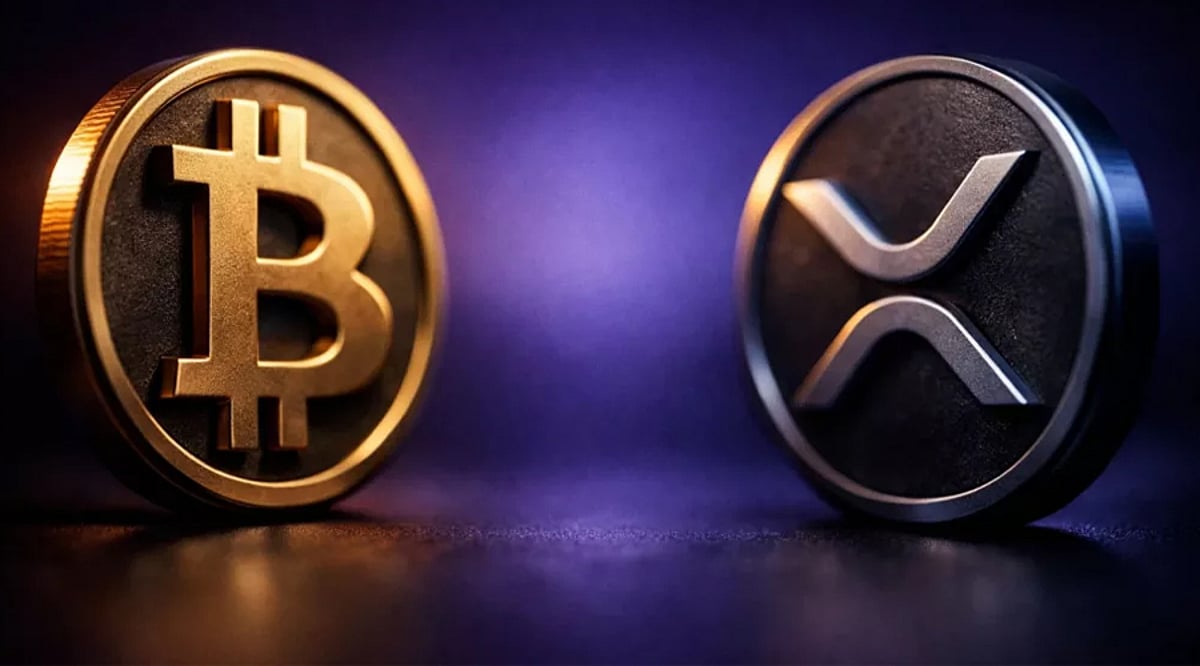
    While both XRP and Bitcoin are prominent cryptocurrencies, they differ significantly in design, purpose, and underlying technology. Here are seven critical distinctions that set XRP apart from Bitcoin.

    • Transaction Speed: XRP settles payments in 3–5 seconds, far faster than Bitcoin’s 10-minute block times, making XRP better suited for real-time cross-border transfers and high-frequency remittance applications.
    • Supply Cap: XRP has a fixed total supply of 100 billion tokens, most of which were pre-mined. Bitcoin’s capped supply is 21 million coins, mined gradually through proof-of-work mining rewards and halvings over decades.
    • Consensus Mechanism: XRP uses the Ripple Protocol Consensus Algorithm, which relies on trusted validators, while Bitcoin uses energy-intensive proof-of-work mining to secure its decentralized, permissionless network.
    • Primary Use Case: XRP targets fast, low-cost international payments for banks and financial institutions. Bitcoin primarily serves as a decentralized store of value and peer-to-peer digital cash.
    • Transaction Costs: XRP transactions cost fractions of a cent, significantly cheaper than Bitcoin’s often volatile network fees (especially during congestion). This makes XRP more economical for microtransactions and frequent transfers.
    • Governance Structure: XRP’s development is heavily influenced by Ripple Labs, a centralized company. Bitcoin evolves through decentralized community consensus, with no single entity controlling protocol upgrades or direction.
    • Mining Requirement: XRP requires no mining — all tokens were pre-created at launch. Bitcoin depends on continuous mining to issue new coins and maintain network security through computational work.

    Understanding these differences helps investors and users choose the right cryptocurrency for their specific needs, whether it’s fast remittances (XRP) or a robust store of value (Bitcoin).