Tag: blockchain

  • Solana (SOL) Bounces Off $60 Support: Oversold Signals and ETF Hopes Fuel Breakout Prospects

    Solana (SOL) Bounces Off $60 Support: Oversold Signals and ETF Hopes Fuel Breakout Prospects

    Solana’s native token, SOL, has staged a notable recovery after dipping near the critical $60 support level during a broad market correction. Strong buying pressure at this zone halted further declines, reigniting trader confidence and speculation about a potential breakout.

    At press time, SOL is trading around $66–$68, having touched lows close to $61 during the recent sell-off driven by Bitcoin’s brief drop near $60,000. Despite the broader weakness, Solana held one of its strongest support levels, signaling resilient demand.

    Technical Indicators Point to Oversold Reversal

    The Relative Strength Index (RSI) recently entered oversold territory, a historical precursor to short-term rebounds for SOL. Past data shows that similar oversold readings often preceded swift recoveries, and the bounce from $60 reinforces this pattern. Analysts now watch whether this rebound matures into a sustained uptrend or fades as a dead cat bounce.

    Correction Erased Earlier Gains, but Network Fundamentals Remain Strong

    Earlier this year, SOL traded above $90 before losing nearly 25% due to weak market sentiment, global economic uncertainty, and Bitcoin’s decline. However, the defense of $60 demonstrated strong buying interest at lower levels. Meanwhile, Solana’s blockchain continues to thrive: the network processed 25.3 billion transactions in Q1 2026, active addresses are near record highs, and stablecoin usage is rising. This divergence between price weakness and on-chain strength underpins long-term optimism.

    ETF Speculation and Rising Volume Lift Sentiment

    Renewed discussions around a potential spot Solana ETF have improved market sentiment. Although no official approval has been granted, the prospect of institutional inflows keeps traders hopeful. Additionally, 24-hour trading volume has surged past $3.8 billion, indicating renewed participation after panic selling subsided.

    Key Resistance at $70 in Focus

    Traders now eye the $70 resistance level. A decisive break above could trigger buying toward the $78–$80 range, where SOL traded before the correction. Failure to clear $70 might lead to a retest of $60. The coming sessions will be critical in determining the token’s short-term direction.

    Network Upgrade and Long-Term Outlook

    Solana’s development team continues advancing the Alpenglow upgrade, which aims to reduce transaction finality to ~150 milliseconds and boost validator performance. This technical improvement could strengthen Solana’s position in DeFi, gaming, and asset tokenization, adding to the positive long-term narrative.

    For now, SOL stands at a crossroads. Oversold signals, robust network activity, rising volume, and ETF hopes have revived breakout hopes, but the market awaits confirmation above $70 to validate a sustained recovery.

  • Bitcoin Network Activity Hits Record Highs Despite Flat Price Action

    Bitcoin Network Activity Hits Record Highs Despite Flat Price Action

    Bitcoin prices have remained stagnant for several months, but on-chain data reveals a sharp surge in network activity. This unusual divergence suggests Bitcoin is evolving beyond speculative trading into a utility-driven digital asset.

    Key Takeaways

    • Bitcoin network activity is near record highs despite stagnant market prices.
    • Lightning Network adoption and small transactions show growing real-world utility.
    • Strong miner investment and institutional demand indicate long-term confidence in Bitcoin.

    Recent blockchain data shows the Bitcoin network handled nearly 678,000 transactions in the last 24 hours—one of the highest daily figures this year. Approximately 104,500 BTC moved across the network daily, representing billions of dollars in value. Yet the price has not experienced major growth, creating a gap that has caught analysts’ attention.

    Small Transactions Drive Higher Activity

    According to CryptoQuant, Bitcoin network activity has approached record levels in 2026. Unlike previous market cycles dominated by speculative traders, today’s activity comes from regular wallet transfers, small payments, and new blockchain experiments. This shift reflects broader adoption and stronger real-world use.

    Lightning Network Expansion Supports Growth

    The Lightning Network now supports over 17,000 public nodes, nearly 40,000 payment channels, and about 4,900 BTC in capacity. This layer-2 solution enables near-instant, low-fee transactions, encouraging businesses to adopt Bitcoin payments. As more companies integrate Bitcoin, overall network usage rises even during calm market periods.

    Miners Continue Heavy Investment

    Bitcoin’s hashrate recently reached nearly 894 exahashes per second (EH/s)—close to a record. This indicates miners are investing heavily in hardware and infrastructure, signaling strong belief in Bitcoin’s future despite short-term price weakness.

    Institutions Help Keep Market Stable

    Large financial institutions are playing a larger role. VanEck’s May 2026 report showed Bitcoin gained nearly 11.8% in one month, but futures market activity remained lower than in previous bull runs. This suggests healthier demand from real buyers rather than leveraged speculators.

    Existing Users Become More Active

    Daily active Bitcoin addresses recently touched approximately 644,600 per day. However, new user growth is slower compared to past bull markets. This indicates that existing holders are using Bitcoin more frequently for regular transactions, reinforcing the network’s utility.

    Mining Industry Builds for the Future

    Several major mining companies are expanding into AI and high-performance computing while continuing Bitcoin mining. Despite reduced profits after the halving, infrastructure spending remains high, keeping network security near historic levels.

    Bigger Economic Factors Affect Price

    Bitcoin prices now depend on ETF demand, interest rate decisions, market liquidity, and institutional investment cycles. Network growth alone no longer guarantees immediate price increases, creating a temporary disconnect between strong fundamentals and market value.

    Strong Foundation Builds for Future Growth

    Rising transaction volume, rapid Lightning Network growth, record mining power, and higher user activity all point toward stronger adoption. History shows that strong growth in Bitcoin fundamentals often precedes major market moves. In 2026, this surge in network usage is one of the clearest signs that Bitcoin adoption continues to expand even when prices remain stagnant.

    FAQs

    1. Why is Bitcoin network activity rising while the market price stays flat? Users are shifting from speculative trading to real-world utility. Routine wallet transfers and small digital payments drive high transaction volumes without causing speculative price spikes.
    2. What role does the Lightning Network play? This layer-2 system enables near-instant, low-fee transactions. Expanding nodes and channels allow global businesses to process daily micro-payments efficiently.
    3. Why are miners expanding infrastructure despite weak price action? Miners prioritize long-term blockchain value. The near-record hashrate confirms heavy capital investment in new hardware, signaling institutional confidence.
    4. Are financial institutions changing how Bitcoin behaves? Yes. Capital is shifting toward direct spot buying rather than high-risk leveraged futures trading, creating a stable price floor during macroeconomic uncertainty.
    5. Does higher blockchain usage guarantee an immediate price surge? No. Bitcoin now responds to macroeconomic pressures like central bank interest rates and institutional ETF inflows, decoupling raw network utility from immediate price action.

    Disclaimer: This article is for informational purposes only and does not constitute investment advice. Always conduct your own research before making any financial decisions.

  • Top Polkadot Projects to Watch in 2026: DeFi, RWA, Privacy, and Infrastructure Growth

    Top Polkadot Projects to Watch in 2026: DeFi, RWA, Privacy, and Infrastructure Growth

    Polkadot’s ecosystem is experiencing robust growth in 2026, driven by expansion in decentralized finance (DeFi), rising tokenization of real-world assets (RWAs), privacy-focused blockchain applications, and major network upgrades that enhance adoption and long-term utility.

    Overview:
    Hydration and Acala lead Polkadot’s rapidly growing DeFi sector. Centrifuge provides strong exposure to the booming real-world asset tokenization market. Manta, Phala, and Hyperbridge strengthen privacy, security, and cross-chain infrastructure.

    The Polkadot ecosystem has entered a pivotal phase. Following the launch of Polkadot 2.0, the network now offers improved speed, stronger scalability, and smoother cross-chain communication. This major upgrade has shifted market attention from early blockchain experiments toward projects solving real-world problems.

    The greatest growth within the ecosystem is concentrated in three major sectors: decentralized finance, real-world assets, and privacy-focused applications. Several projects now stand out with strong development activity, rising adoption, and major updates across the network.

    Hydration Becomes a Strong DeFi Project

    Hydration has emerged as one of the most important DeFi projects within the Polkadot ecosystem. The platform acts as a central liquidity hub where users can swap assets, provide liquidity, and access various financial services in one place. Its greatest strength lies in Polkadot’s cross-chain technology, enabling assets from different parachains to move more seamlessly across the network. Many analysts now view Hydration as one of the strongest DeFi protocols built on Polkadot. As blockchain markets continue to expand, many ecosystems struggle with fragmented liquidity across chains. Hydration addresses this by creating greater capital efficiency and easier asset movement. Developer interest and user activity have steadily risen throughout the year.

    Acala Continues to Lead Financial Infrastructure

    Acala remains one of the oldest and most established financial projects on Polkadot. The platform offers various blockchain financial services, including stablecoins, lending systems, decentralized trading, and liquid staking solutions. Despite strong competition from newer projects, Acala maintains its important position in the ecosystem. The biggest focus has shifted toward liquid staking, which allows DOT holders to continue earning staking rewards while using their assets in DeFi applications. This has become more significant after Polkadot introduced major tokenomics changes in March 2026, altering validator rewards and staking economics across the entire network. As a result, protocols like Acala may experience stronger capital inflows in the coming months.

    Centrifuge Expands Real-World Asset Adoption

    Centrifuge has established itself as a leading contender in the rapidly expanding real-world asset marketplace. The project focuses on tokenizing traditional financial assets such as invoices, private debt, treasury-backed instruments, and trade receivables, enabling these assets to participate in blockchain-based lending. The RWA sector has become one of the fastest-growing areas in cryptocurrency. As of 2026, major financial institutions are increasingly interested in tokenization of finance, as blockchain offers transparency and high-speed settlement. By creating a direct pathway for Polkadot to access this growing market, Centrifuge has emerged as one of the year’s most significant long-term ecosystem projects.

    Manta Network Strengthens Privacy Technology

    Manta Network has established itself as one of the strongest privacy-focused blockchain projects on Polkadot. The project uses advanced zero-knowledge proof technology, enabling confidential transactions while maintaining secure network verification. Privacy has become a major topic because institutions and enterprise users need blockchain systems that protect sensitive financial data. Manta addresses this challenge by allowing selective data sharing without exposing complete transaction details. As blockchain adoption grows among larger institutions, privacy technology like Manta’s has become far more valuable.

    Phala Network Brings Private Cloud Computing

    Phala Network has gained significant attention for its focus on confidential computing. Unlike traditional privacy projects that primarily protect transaction data, Phala enables secure off-chain computation through trusted execution environments. This creates a distinct use case within the Polkadot ecosystem. The project opens new opportunities in sectors such as artificial intelligence, healthcare systems, financial services, and private smart contract execution. As blockchain and AI technology converge, confidential computing solutions have become an important part of future Web3 infrastructure. This trend ensures Phala continues to attract strong market attention.

    Hyperbridge Pushes Cross-Chain Expansion

    Hyperbridge has quickly become one of the most popular infrastructure projects on Polkadot. The project focuses on secure cross-chain communication via zero-knowledge cryptographic proofs (ZK proofs) instead of traditional validator-based bridges. Hyperbridge processed over 10 million finality proofs and managed approximately $92 million worth of transactions in 2026, demonstrating strong ecosystem adoption. However, in April 2026, a security exploit occurred involving bridged DOT pools, resulting in approximately $2.5 million in losses, prompting large-scale security reviews throughout the ecosystem. Despite this incident, Hyperbridge remains a vital component of Polkadot’s long-term interoperability strategy.

    Final Outlook for Polkadot in 2026

    Polkadot has entered a much stronger phase. The ecosystem now focuses less on early blockchain experiments and more on real products with practical value. DeFi projects like Hydration and Acala continue to expand financial activity across the network. Centrifuge provides exposure to the fast-growing real-world asset market. Privacy-focused projects such as Manta and Phala support enterprise blockchain adoption, while Hyperbridge helps improve cross-chain infrastructure. With the arrival of Polkadot 2.0, major tokenomics changes in March 2026, and stronger developer activity across the ecosystem, these projects stand out as some of the most important names to watch as Polkadot moves toward its next stage of growth.

    FAQs

    1. Why is Polkadot important in 2026? Polkadot 2.0 upgrades have improved network speed, scalability, and ecosystem growth.
    2. Which is the top DeFi project on Polkadot? Hydration and Acala remain the strongest DeFi projects in the ecosystem.
    3. What is Centrifuge used for? Centrifuge helps convert real-world assets like invoices and credit markets into blockchain assets.
    4. Which Polkadot project focuses on privacy? Manta Network and Phala Network are major privacy-focused blockchain projects.
    5. Why are these projects worth watching? They represent the strongest sectors driving Polkadot adoption in 2026.
  • How to Invest $500 in Crypto Today: A Balanced Portfolio for June 2026

    How to Invest $500 in Crypto Today: A Balanced Portfolio for June 2026

    With crypto markets showing signs of recovery in June 2026, a carefully planned $500 investment can balance stability and growth. Rather than betting everything on a single coin, spreading funds across five strong projects—Bitcoin, Ethereum, Solana, Chainlink, and Hyperliquid—offers a mix of safety, innovation, and upside potential.

    Bitcoin (BTC) – The Safe Foundation

    Bitcoin remains the most trusted crypto asset, with a market cap near $1.28 trillion. Institutional demand through spot ETFs continues to support its price, making it a reliable anchor for any portfolio. Investing $175 in BTC provides a stable base and reduces overall risk.

    Ethereum (ETH) – Technology Leader

    Ethereum powers thousands of dApps, DeFi platforms, and NFTs. Recent network upgrades have improved speed and scalability. At around $1,730, ETH offers strong value. A $125 allocation gives exposure to the second-largest blockchain without overexposure.

    Solana (SOL) – High-Growth Contender

    Solana’s fast, low-cost transactions attract developers in gaming and DeFi. With a market cap above $42 billion and price near $74, SOL offers significant growth potential—though with higher volatility. Allocating $100 taps into this upside while keeping the rest of the portfolio stable.

    Chainlink (LINK) – Infrastructure Play

    Chainlink connects smart contracts to real-world data, a critical function for tokenization and DeFi. As the ecosystem grows, LINK benefits from its role as infrastructure. A $50 position adds diversification and long-term value.

    Hyperliquid (HYPE) – Aggressive Speculation

    Hyperliquid has surged on the rise of decentralized futures trading. This newer token carries higher risk but also the chance for outsized gains. A $50 bet suits investors willing to accept volatility for potential rapid returns.

    Final Portfolio Allocation

    • Bitcoin (BTC): $175 – Stability and institutional trust
    • Ethereum (ETH): $125 – Strong technology and adoption
    • Solana (SOL): $100 – Fast network growth
    • Chainlink (LINK): $50 – Essential blockchain infrastructure
    • Hyperliquid (HYPE): $50 – High-risk, high-reward

    While the crypto market remains volatile after Bitcoin’s 50% correction earlier in 2026, clearer regulations, rising stablecoin adoption, and growing institutional participation strengthen long-term confidence. Projects with real use cases and solid technology are best positioned for the second half of the year.


    Frequently Asked Questions

    1. Why should I not invest all $500 in one cryptocurrency?
    Diversification protects your portfolio from major losses if a single coin underperforms.

    2. Is Bitcoin still a good investment in 2026?
    Yes, Bitcoin remains the strongest long-term crypto asset due to institutional adoption and market dominance.

    3. Why is Ethereum considered a strong choice?
    Ethereum powers smart contracts, DeFi, NFTs, and thousands of blockchain applications worldwide.

    4. Is Solana riskier than Bitcoin and Ethereum?
    Yes, Solana has higher volatility but also stronger growth potential thanks to its fast, low-cost network.

    5. Why is Hyperliquid considered an aggressive investment?
    It’s a newer project tied to decentralized futures trading, offering higher upside but significantly greater short-term risk.

  • XRP Hovers Near $1 as Ripple Broadens Blockchain Finance Strategy

    XRP Hovers Near $1 as Ripple Broadens Blockchain Finance Strategy

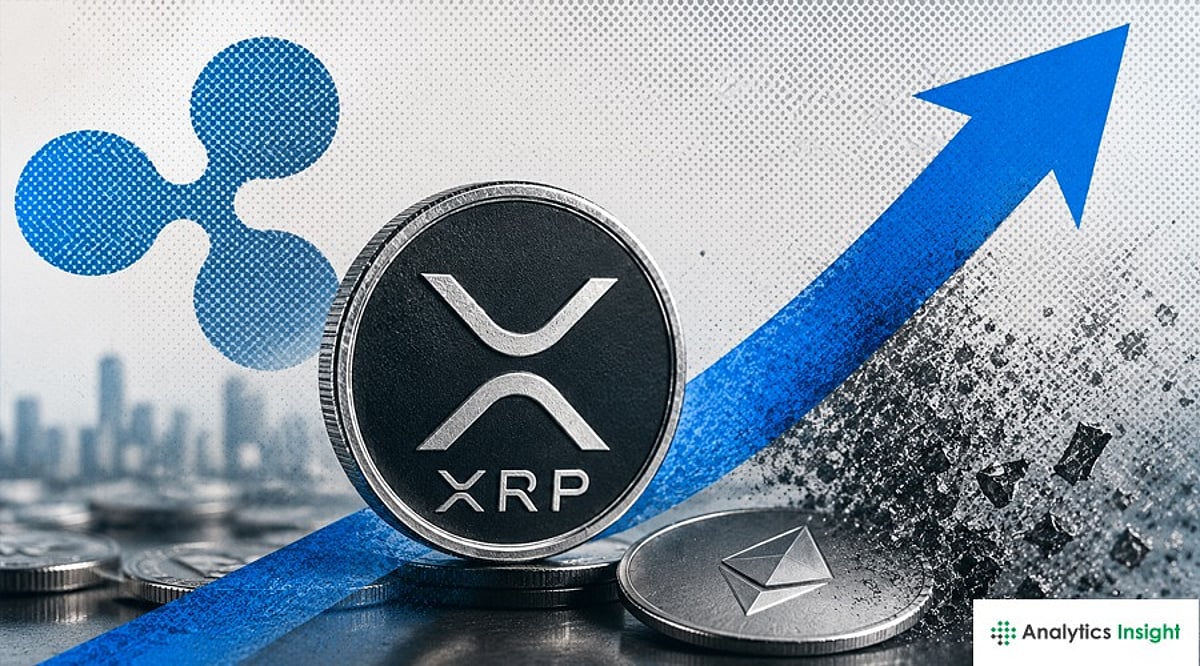
    XRP is trading near the $1 mark after falling roughly 70% from last year’s highs, even as Ripple continues to expand its blockchain infrastructure and financial services. The world’s sixth-largest cryptocurrency faces weak sentiment and renewed doubts about its recovery, but Ripple’s business is moving well beyond its original cross-border payments focus.

    Ripple Expands Beyond Cross-Border Payments

    Ripple initially built its business around helping financial institutions move money across borders faster and at lower cost. It has since widened its operations across blockchain finance. The company now works in real-world asset tokenization, which places traditional financial assets on blockchain networks. Financial firms are also exploring faster settlement and lower operating expenses.

    At the same time, Ripple has formed relationships with major institutions and reportedly built a business valued at nearly $50 billion. It has also invested billions in acquisitions and partnerships. These investments aim to create more services across Ripple’s broader ecosystem. Increased activity could support greater network use and additional demand over time.

    AI Payments Add Another Possible Growth Area

    Ripple has also explored possible links between blockchain payments and artificial intelligence. Some industry observers expect AI agents to use blockchain networks for automated transactions. Those observers have mentioned XRP Ledger as one possible settlement layer for such payments. The opportunity remains speculative and has not yet become a proven demand source.

    Even so, the discussion reflects Ripple’s search for applications beyond traditional payment services. The company continues positioning itself as a wider blockchain infrastructure provider. Its long-term strategy now spans payments, tokenization, acquisitions, and financial services. Each area could increase activity across the XRP ecosystem if adoption expands.

    Large Supply Complicates XRP Price Forecasts

    XRP price forecasts vary widely, ranging from a return toward $4 to aggressive projections between $20 and $100. Each target requires different adoption and investment levels. About 62 billion XRP coins remain in circulation. At $4 per token, XRP’s market value would approach $250 billion under the current supply. That valuation would place XRP above the current market value of many leading crypto projects. Higher targets would require far larger amounts of new capital.

    Can Ripple’s expanding infrastructure create enough demand to support a lasting XRP recovery? Many investors view a gradual $1 to $4 range as a more realistic multi-year scenario. Longer-term performance may depend on blockchain finance adoption, regulatory developments, and competition. Real-world asset tokenization remains early, although financial institutions continue investing in the sector.

    Conclusion

    XRP remains under pressure near $1, yet Ripple continues expanding across payments, tokenization, and blockchain infrastructure. Its broader strategy may support future network demand, although XRP’s large circulating supply limits extreme price projections. Investors should track adoption, regulation, and ecosystem growth before assessing its long-term potential.

  • How Blockchain Is Powering the Rise of Machine-to-Machine Transactions

    How Blockchain Is Powering the Rise of Machine-to-Machine Transactions

    As AI agents, smart meters, and connected devices begin executing payments independently, Layer 2 blockchain networks and programmable smart contracts are creating the foundation for a high-speed, machine-driven global transaction economy.

    The Shift from Human-Mediated to Machine-Mediated Commerce

    The digital economy is undergoing a structural shift. Machines are no longer passive processors of human instructions. They are active economic agents, purchasing bandwidth, settling energy trades, and coordinating supply chains without waiting for human approval. This transition from human-mediated to machine-mediated commerce is accelerating faster than most enterprise frameworks have anticipated.

    The global machine-to-machine (M2M) payment market is projected to grow from $11.29 billion in 2026 to $54.95 billion by 2034, expanding at a compound annual growth rate of 21.9%. The infrastructure that enables this growth requires speed, security, and borderless settlement. Traditional banking systems cannot provide that at scale, but blockchain can.

    What Are Machine-to-Machine Transactions?

    M2M transactions describe financial exchanges that occur directly between devices, with no human authorizing each step. Sensors, autonomous vehicles, smart meters, and AI agents all participate. The challenge is that traditional payment infrastructure was designed for human actors operating within banking hours, geographic boundaries, and institutional oversight.

    Blockchain addresses each of these limitations. Its decentralized ledger allows devices to transact peer-to-peer, with cryptographic verification replacing institutional authorization. Smart contracts execute payment terms automatically when pre-set conditions are met. No clearinghouse is required.

    How Blockchain Supports M2M Payments

    Smart Contracts as Autonomous Payment Engines

    Smart contracts are self-executing code deployed on a blockchain. When a smart meter records energy consumption beyond a threshold, a smart contract triggers immediate payment to the grid operator. No invoice, no approval workflow. The machine reads the condition and settles it.

    This automation removes the human bottleneck entirely. In logistics, a delivery drone can pay a warehouse node for storage space. In manufacturing, a production line component can authorize its own maintenance purchase. The transaction logic is embedded in code, not in process.

    Layer 2 Solutions and Scalability

    A common concern with blockchain is throughput. With Layer 2 solutions and advancements in blockchain infrastructure, scalability is no longer a barrier — systems can handle millions of machine transactions per second, which is crucial for IoT ecosystems. Payment channels and sidechains batch transactions off-chain and settle the net result on the main chain, preserving security without sacrificing speed or increasing per-transaction cost.

    Institutional Infrastructure Is Now Catching Up

    Mastercard has introduced Agent Pay for Machines, designed to help businesses support secure, continuous machine payments across cards, accounts, and stablecoins. This signals that established payment networks are repositioning around autonomous transaction flows, not resisting them. Autonomous AI agents are already executing payments, purchasing APIs, accessing compute resources, and interacting with digital services without direct human intervention. The infrastructure shift is no longer theoretical.

    Benefits of M2M Transactions Through Blockchain

    • Decentralization: No single point of failure controls the transaction flow. Machines transact on equal footing without relying on a central authority.
    • Low-Cost Microtransactions: Traditional gateways make sub-cent transactions economically unviable. Blockchain Layer 2 networks bring that cost to near zero.
    • Immutable Audit Trail: Every transaction is permanently recorded. This is critical for regulatory compliance in energy, healthcare, and logistics.
    • Programmable Conditions: Payment logic is embedded directly in smart contracts, removing manual verification at every step.
    • Cross-Border Native: A sensor in Germany can pay a data node in Singapore without currency conversion delays or correspondent banking fees.

    Blockchain’s cryptographic protocols ensure secure transactions, while its transparent ledger provides an immutable record of payments, essential for auditing and accountability in automated systems. The industries already deploying M2M blockchain infrastructure include automotive, energy utilities, retail, and manufacturing. Each sector benefits from the same core property: the ability to move value between machines at the speed of data.

    What This Means for the Digital Economy

    “As machines begin to settle transactions autonomously, the financial plumbing underneath the digital economy changes entirely. Blockchain provides the only settlement layer that is fast enough, cheap enough, and open enough to serve a machine-native economy. Businesses that integrate this infrastructure early will hold a structural advantage over those still relying on human-mediated payment rails.”

    Final Words

    The expansion of machine-to-machine transactions through blockchain is not a speculative outcome. The market data, institutional infrastructure, and technical foundations are already in place. A market growing toward $54.95 billion by 2034 does not emerge without structural demand driving it. What remains is the question of execution speed. Organizations that treat blockchain-based M2M infrastructure as a long-term consideration risk falling behind those treating it as a present-day operational priority. The machines are ready. The networks are ready. The financial logic is written. The window for early-mover advantage is open, and it will not stay open indefinitely.

    Frequently Asked Questions

    What are machine-to-machine transactions?

    Machine-to-machine transactions are automated financial exchanges between devices, systems, or AI agents that occur without direct human authorization at each step.

    Why is blockchain suited for M2M payments?

    Blockchain provides decentralized settlement, smart contract automation, low transaction costs, and an immutable audit trail, all of which traditional banking infrastructure cannot deliver at machine speed.

    What is the projected size of the M2M payment market?

    The global M2M payment market is projected to grow from $11.29 billion in 2026 to $54.95 billion by 2034, at a CAGR of 21.9%, according to Fortune Business Insights.

    Which industries are adopting M2M blockchain payments?

    Automotive, energy and utilities, retail, manufacturing, and logistics are the leading sectors integrating blockchain-based M2M payment infrastructure.

    What role do smart contracts play in M2M transactions?

    Smart contracts execute payment terms automatically when pre-defined conditions are met, removing the need for human authorization and enabling real-time settlement between machines.

  • Solana Surges Past $70 as ETF Inflows Hit $1.45 Billion – Is Institutional Demand Fueling the Next Rally?

    Solana Surges Past $70 as ETF Inflows Hit $1.45 Billion – Is Institutional Demand Fueling the Next Rally?

    Solana has reclaimed the crucial $70 price level, sparking renewed optimism across the cryptocurrency market. The move above this key resistance comes on the back of massive exchange-traded fund (ETF) inflows totaling $1.45 billion, alongside rising institutional participation and robust network activity. Analysts now eye targets at $75, $85, and even $97 if bullish momentum persists.

    Key Takeaways

    • Solana climbed from recent lows near $61.50 to trade between $71 and $72.
    • Spot Solana ETFs have attracted nearly $1.45 billion in cumulative inflows since launch.
    • Major financial institutions, including Goldman Sachs, now hold Solana ETF exposure worth $108 million.
    • Technical indicators show recovery, with the 14-day RSI bouncing from oversold levels.
    • Strong on-chain activity from projects like Jupiter and Pump.fun supports network fundamentals.

    ETF Demand Ignites Market Sentiment

    The primary driver behind Solana’s resurgence is surging demand for spot Solana ETFs. Throughout 2026, institutional investors have steadily increased allocations to Solana products, even during broader crypto market weakness. Data shows total inflows into Solana ETFs have reached $1.45 billion, signaling a structural shift in capital flow. This pattern mirrors earlier rallies seen in Bitcoin and Ethereum after their own ETF launches, where institutional buying provided a robust price floor.

    Institutional Giants Enter the Arena

    Another major catalyst stems from participation by traditional finance titans. Earlier this year, reports confirmed that Goldman Sachs holds approximately $108 million in Solana ETF exposure. Such institutional involvement boosts market confidence, as large investors typically commit for the long term, reducing volatility and supporting sustained upward movement.

    Network Activity Remains Strong

    Beyond ETF demand, Solana’s blockchain continues to thrive. High-traffic platforms such as the decentralized exchange aggregator Jupiter and meme token platform Pump.fun dominate network usage. Elevated transaction volume leads to higher fee generation and increased demand for SOL tokens, underpinning the asset’s fundamental value.

    Technical Indicators Turn Bullish

    From a technical standpoint, Solana’s 14-day Relative Strength Index (RSI) fell to 28 earlier this month, indicating oversold conditions historically preceding short-term recoveries. Price has since bounced from the $61.50 low, and the $65 support zone has held firm. The break above $70 has shifted market sentiment from bearish to cautiously optimistic.

    Risks and Caution

    Despite the positive momentum, risks remain. Broader market weakness persists; Bitcoin ETFs saw nearly $2.97 billion in outflows over a ten-session stretch earlier in June. If global financial uncertainty returns, risk assets like Solana could face renewed selling pressure. However, strong structural inflows provide a buffer that many other cryptocurrencies lack.

    What Lies Ahead for Solana?

    The immediate resistance stands at $75. A decisive breakout above that level could open the door to $85, where previous selling pressure emerged. Beyond that, the $97 mark represents a critical milestone for confirming a broader uptrend in the second half of 2026. The combination of institutional ETF demand, vibrant network activity, and improving technicals gives Solana a solid foundation for further gains.

    Disclaimer: This article is for informational purposes only and does not constitute financial advice. Cryptocurrency investments carry risk. Always conduct your own research before investing.

  • Top Cross-Chain Blockchain Projects Accelerating Crypto Innovation in 2026

    Top Cross-Chain Blockchain Projects Accelerating Crypto Innovation in 2026

    Introduction

    The blockchain ecosystem is evolving rapidly, with cross-chain interoperability becoming a cornerstone of crypto innovation. As we move into 2026, several projects are leading the charge in connecting disparate networks, enabling seamless asset transfers, and powering decentralized applications across multiple blockchains. Here are the most impactful cross-chain blockchain projects driving innovation this year.

    Chainlink CCIP

    Chainlink’s Cross-Chain Interoperability Protocol (CCIP) enables secure cross-chain messaging and token transfers. It helps developers connect multiple blockchain ecosystems with reliable interoperability and scalability, making it a foundational tool for multi-chain applications.

    Axelar Network

    Axelar provides decentralized cross-chain communication infrastructure, allowing applications to exchange assets and data seamlessly across numerous blockchain networks worldwide. Its universal connectivity simplifies integration for developers and enterprises alike.

    LayerZero

    LayerZero offers lightweight omnichain messaging technology that simplifies blockchain connectivity. It enables decentralized applications to operate across multiple ecosystems efficiently, reducing complexity and enhancing user experience.

    Wormhole

    Wormhole connects major blockchain networks through decentralized messaging, supporting cross-chain token transfers, NFTs, gaming assets, and enterprise blockchain integrations. It secures millions in value across ecosystems.

    Cosmos

    Cosmos uses the Inter-Blockchain Communication (IBC) protocol to create an ecosystem where independent blockchains exchange assets and information without centralized intermediaries. Its modular framework promotes sovereignty and scalability.

    Polkadot

    Polkadot connects specialized parachains through a shared security model, enabling scalable interoperability between blockchains designed for different decentralized applications and services. Its governance and flexibility attract a wide developer community.

    Synapse Protocol

    Synapse simplifies cross-chain asset transfers and liquidity management, helping decentralized finance platforms improve accessibility across multiple blockchain ecosystems. It focuses on user-friendly bridging solutions.

    THORChain

    THORChain enables native cryptocurrency swaps across different blockchain networks without wrapped assets, supporting decentralized liquidity and secure cross-chain trading experiences. Its non-custodial model maintains user control.

    Router Protocol

    Router Protocol builds cross-chain infrastructure that connects blockchain ecosystems, enabling decentralized applications to communicate, transfer assets, and expand user accessibility efficiently. It aims to bridge the gap between isolated networks.

    Conclusion

    These nine projects represent the forefront of cross-chain innovation in 2026, addressing the critical need for interoperability in an increasingly multi-chain world. Their combined efforts are driving the next wave of crypto adoption and decentralized application development.

  • RLUSD Supply on XRP Ledger Surpasses Ethereum as XRP Utility Prospects Improve

    RLUSD Supply on XRP Ledger Surpasses Ethereum as XRP Utility Prospects Improve

    Ripple USD (RLUSD) has achieved a significant distribution milestone, with the XRP Ledger (XRPL) overtaking Ethereum as the stablecoin’s largest native network. On-chain data shows approximately $801.8 million in RLUSD on XRPL, compared to about $795.6 million on Ethereum, giving Ripple’s blockchain a narrow lead in the $1.6 billion RLUSD market.

    However, the shift is largely attributed to Ethereum token burns rather than a surge in new demand on XRPL. About three-quarters of the RLUSD removed over the past month came from Ethereum through redemptions and burns, making the ‘flippening’ partly a result of treasury operations rather than a clear migration of users or trading activity.

    RLUSD now ranks among the ten largest stablecoins, with daily trading volume reaching approximately $166 million. The stablecoin’s activity on XRPL can involve XRP directly, as users pay transaction fees in XRP and the network can route trades through XRP when direct markets between two assets lack liquidity. This could create additional XRP use across payments, exchange transfers, and decentralized trading, provided users actively move the stablecoin and create active markets.

    Meanwhile, RLUSD has expanded into Japan through SBI VC Trade after receiving regulatory clearance, with Ethereum serving as the initial network for the Japanese rollout. An XRPL Foundation representative noted that Ethereum’s early role was expected and that XRPL-based RLUSD could join the Japanese market later, though no fixed timetable has been confirmed.

    The central question remains whether RLUSD on XRPL will generate sustained trading, payment, and liquidity activity to drive XRP demand, or if the supply shift will remain a technical milestone without lasting external volume.

  • Leading TON Blockchain Tokens by Market Cap in 2026

    Leading TON Blockchain Tokens by Market Cap in 2026

    The Open Network (TON) ecosystem continues to expand, with a diverse range of tokens powering decentralized applications, gaming, finance, and community engagement. Here are the top TON blockchain tokens by market capitalization in 2026:

    • Toncoin – The native cryptocurrency of TON, enabling transactions, staking, governance, and decentralized applications across the network.
    • USDT on TON – Tether’s stablecoin on TON provides fast, low-cost transactions, improving payments, trading, remittances, and DeFi accessibility worldwide.
    • Notcoin – A community-driven gaming token that gained popularity through Telegram integration, boosting user engagement and TON ecosystem adoption.
    • Dogs – A meme-inspired TON token leveraging Telegram’s massive user base, combining entertainment, rewards, and decentralized participation.
    • Catizen – A gaming-focused token supporting blockchain-based virtual pet experiences, rewarding players and driving decentralized gaming adoption.
    • Hamster Kombat – A play-to-earn gaming token on Telegram, attracting millions with engaging gameplay and blockchain-powered digital economies.
    • STON.fi – A decentralized exchange token facilitating liquidity, governance, and seamless token swaps across the TON network.
    • DeDust – An automated market maker protocol token enabling decentralized liquidity pools and efficient token exchanges for TON DeFi.
    • EVAA Protocol – A lending protocol token supporting decentralized borrowing and lending, helping users earn yields and improve financial utility within the TON ecosystem.