Tag: China AI

  • Alibaba Stock Rallies on New AI Chip and Flagship Model as China’s AI Ambitions Intensify

    Alibaba Stock Rallies on New AI Chip and Flagship Model as China’s AI Ambitions Intensify

    Alibaba shares rose in premarket trading on Tuesday after the Chinese technology giant unveiled its latest artificial intelligence chip and its most powerful flagship AI model to date. The announcements mark another step in China’s efforts to close the gap with US tech leaders, though significant challenges remain.

    Alibaba Unveils Its Most Powerful AI Chip

    The company introduced the Zhenwu V900, which it described as its most powerful AI chip to date. Alibaba said the new chip delivers three times the performance of its predecessor, which was released just four months ago. Alongside the chip, Alibaba also launched Qen3.8-Max, its most powerful flagship AI model so far.

    Data-Center Expansion Plans

    Alibaba CEO Eddie Wu said the company expects significant growth in annual AI chip shipment volumes. He also pointed to shortages across the global AI data-center supply chain as a constraint on the pace at which Alibaba can expand its computing infrastructure. Wu said Alibaba would work with partners to address these challenges.

    Alibaba Cloud is targeting more than 20 gigawatts of global data-center capacity by 2032. The company sees expanding computing infrastructure as a core part of its broader AI strategy as demand for AI services continues to grow.

    Alibaba Still Trails US AI Leaders

    Despite the latest announcements, Alibaba’s AI infrastructure still lags behind leading US companies. The Zhenwu V900 is considered competitive with NVIDIA’s Hopper hardware, which is now two generations old. The data-center gap is also significant: one major US player has said it intends to have enough power and cooling to support 20 gigawatts of computing capacity by the end of next year.

    Parv Sharma, senior analyst at Counterpoint Research, said China’s AI infrastructure is more supply-constrained because AI has become a strategic priority. He noted that Alibaba’s 20-gigawatt target by 2032 should be viewed against the scale already operated by US hyperscalers.

    US-China Talks Could Shape AI Competition

    Investors are also watching talks between US President Donald Trump and Chinese President Xi Jinping, particularly for any developments affecting AI technology and access to advanced chips. According to Barron’s, China’s ability to close the gap with the US could remain constrained unless access to cutting-edge chips improves.

    Before Tuesday’s trading session, Alibaba’s American depositary receipts had fallen 21% so far this year.

  • Daily Tech Digest: Bill Gates Issues AI Warning, Redmi Note 17 Pro Max Debuts, Apple’s India Struggle, China’s AI Alert, and Google Motion Assist

    Daily Tech Digest: Bill Gates Issues AI Warning, Redmi Note 17 Pro Max Debuts, Apple’s India Struggle, China’s AI Alert, and Google Motion Assist

    Today’s top tech stories cover a wide range of developments, from artificial intelligence warnings to new smartphone launches. Here’s a quick roundup of the most important headlines.

    Bill Gates’ AI Warning

    Microsoft co-founder Bill Gates has issued a fresh caution about the rapid advancement of artificial intelligence, urging policymakers and industry leaders to address potential risks before they escalate.

    Redmi Note 17 Pro Max 5G

    Xiaomi has unveiled the Redmi Note 17 Pro Max, a feature-packed 5G smartphone boasting upgraded specs, an improved camera system, and competitive pricing. The device is expected to shake up the mid-range market.

    Apple’s India Challenge

    Apple continues to face hurdles in expanding its footprint in India, from regulatory issues to supply chain complexities, as the company seeks to reduce reliance on China.

    China AI Alert

    Chinese authorities have issued a new alert regarding artificial intelligence, signaling tighter oversight and safety measures for AI applications within the country.

    Google Motion Assist

    Google has introduced Motion Assist, a new feature designed to help users with mobility challenges navigate devices more easily using gesture-based controls.

    Stay tuned for more updates on these stories and other tech news. Join our WhatsApp channel for exclusive content and real-time alerts.

  • Today’s Tech Roundup: Jio Bundles, Googlebook Leak, China’s AI Talent, Nokia Open-Source AI, and Oppo Find X10 Ultra Details

    Today’s Tech Roundup: Jio Bundles, Googlebook Leak, China’s AI Talent, Nokia Open-Source AI, and Oppo Find X10 Ultra Details

    Welcome to today’s roundup of the biggest tech stories. From new bundled plans and historical leaks to AI talent moves and smartphone camera innovations, here’s what you need to know.

    Jio Launches 3-in-1 Bundled Home Entertainment Plans

    Reliance Jio has introduced new 3-in-1 bundled plans that combine broadband, TV, and OTT subscriptions into a single package. The move aims to simplify home entertainment and compete with other integrated service providers in India.

    Googlebook Leak Reveals Early Laptop History

    A leaked document, dubbed “Googlebook,” has surfaced, offering an inside look at Google’s early laptop development. The leak provides details on design prototypes, hardware specifications, and the strategic thinking behind Google’s initial foray into the laptop market.

    China Invests Heavily in AI Talent Pipeline

    China is accelerating its push to develop artificial intelligence talent, with new government initiatives and university programs aimed at training thousands of AI specialists. This strategic investment underscores Beijing’s ambition to lead the global AI race.

    Nokia Open-Sources AI Video Technology

    Nokia has announced it will open-source its AI-powered video processing technology. The move is expected to spur innovation in video analytics, compression, and real-time enhancement, making advanced tools accessible to developers worldwide.

    Oppo Find X10 Ultra Camera Leak Emerges

    Details of the upcoming Oppo Find X10 Ultra have leaked, revealing a cutting-edge camera system with periscope zoom, improved low-light performance, and AI-driven computational photography features. The device is expected to challenge other flagship smartphones in the ultra-premium segment.

    Stay tuned for more updates on these developing stories.

  • Alibaba Introduces Qwen3.8 Max: A 2.4-Trillion-Parameter AI Challenger to Anthropic

    Alibaba Introduces Qwen3.8 Max: A 2.4-Trillion-Parameter AI Challenger to Anthropic

    Alibaba has officially unveiled Qwen3.8 Max, its largest and most advanced AI model to date. Announced on August 3, the 2.4-trillion-parameter model marks a major escalation in China’s rapidly intensifying artificial intelligence race and directly challenges Western rivals such as Anthropic.

    A Multimodal Powerhouse

    Qwen3.8 Max is built to handle text, images, videos, and other large files through its multimodal capabilities. According to Alibaba, the model can process up to one million tokens in a single context window, making it well-suited for complex, long-form tasks. The company also reports strong performance in coding, noting that the system independently completed a software project during a 16-day internal test.

    Efficiency Through Sparse Activation

    Alibaba designed Qwen3.8 Max with a sparse architecture that activates only a portion of the model’s parameters for each task. This approach helps reduce computing costs while maintaining high performance, a key consideration as AI models grow ever larger.

    Open Weights on the Horizon

    In a move that could accelerate adoption, Alibaba plans to release Qwen3.8 Max’s weights publicly during the week starting August 10. Open access will allow developers worldwide to download, modify, and build new applications on top of the model, potentially expanding its ecosystem significantly.

    Industry Reaction

    Analysts view the launch as a sign of China’s accelerating AI progress. Ling Vey-Sern, managing director at Union Bancaire Privee, noted, “The gap is probably much closer, and narrowing fast.”

    A More Competitive AI Landscape

    The release intensifies pressure on Anthropic, OpenAI, and other major AI companies. Alibaba also faces stiff competition at home from firms such as Moonshot AI, DeepSeek, Z.ai, and ByteDance. With Qwen3.8 Max, Alibaba is positioning itself as a serious contender in both the Chinese and global AI arenas.

  • H3: China’s New AI Video Model Challenges Global Competitors

    H3: China’s New AI Video Model Challenges Global Competitors

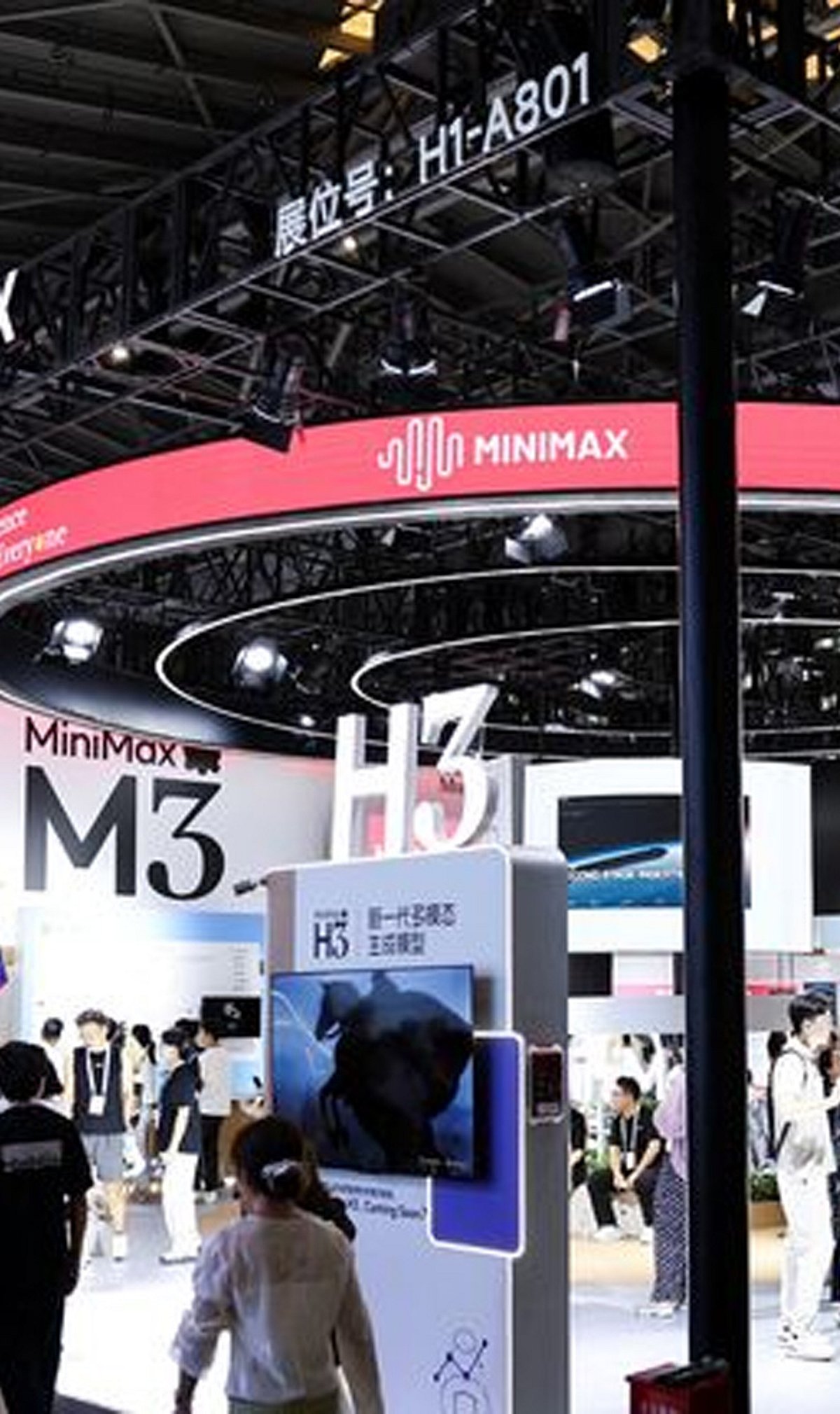
    Chinese AI startup MiniMax has officially launched H3, a new AI video model designed to generate high-quality, realistic videos from text prompts. The model emphasizes faster rendering and efficient performance, positioning itself as a strong competitor in the global AI video generation race.

    H3 is built with an enterprise focus, making it suitable for applications in marketing, education, and creative production. This launch reflects China’s continued investment in generative AI technologies and aims to make AI video creation more accessible to businesses and creators.

    By introducing H3, MiniMax strengthens China’s position in the global AI ecosystem, offering a powerful tool that rivals leading video generators from other countries. The model’s speed and quality are key differentiators, promising to deliver impressive results for a variety of professional use cases.

  • Which Nations Dominate the Global AI Race in 2026?

    Which Nations Dominate the Global AI Race in 2026?

    Key Takeaways

    • The US leads in advanced AI models, private investment, and AI infrastructure.
    • China dominates AI research, patents, and large-scale industrial AI deployment.
    • Countries like India, South Korea, Singapore, Japan, and the UAE are emerging as major AI innovators through focused national strategies.

    The global AI race in 2026 goes well beyond chatbots and image generators. Countries now compete to build faster AI chips, larger data centers, better cloud systems, smarter robots, and stronger research networks. Stanford’s AI Index 2026 puts the US ahead on private investment and advanced model development. China leads in AI research papers and patent filings, while South Korea ranks first in AI patents per person. No single country leads across every category.

    United States Stays Ahead in Advanced AI

    America is still at the forefront of the battle to dominate AI with a superior ecosystem of technology. Renowned AI corporations like OpenAI, Google DeepMind, Meta, Anthropic, Microsoft, and NVIDIA are based in the USA and continue to produce the most advanced AI models and chips worldwide. Private AI investments in the US reached $109 billion in 2024, far exceeding amounts in other countries, as reported in the Stanford AI Index 2026. These investments support startups, research laboratories, software, and computer systems. Major tech companies spend several billion dollars annually on data center construction, with analysts projecting AI infrastructure spending will soon reach $1 trillion.

    China Closes the Gap Quickly

    China has become the biggest challenger to the United States. The country now produces more AI research papers than any other nation and files the highest number of AI patents. Chinese universities, technology companies, and government-backed research centers continue expanding their AI work at a very fast pace. One of China’s greatest strengths is its ability to apply AI across many industries—factories, smart cities, healthcare, transport, and robotics—at scale, giving Chinese companies valuable real-world experience. During the 2026 World Artificial Intelligence Conference, China announced new international AI partnerships and placed greater focus on open-source AI models. Chinese technology companies also introduced more advanced AI systems and new AI chips that reduce dependence on foreign technology. Experts believe the performance gap between Chinese and American AI models has narrowed significantly compared to just a few years ago.

    South Korea Shows Big Results Despite Its Size

    South Korea may have a smaller population, but it continues to produce impressive AI results. According to the Stanford AI Index 2026, South Korea ranks first in the world for AI patents per person, demonstrating remarkable innovation relative to its population. The country also benefits from its leadership in semiconductor manufacturing. Strong electronics companies and government support have helped expand AI research and commercial use. AI now plays an important role in smart factories, healthcare, advanced electronics, and industrial automation. These strengths make South Korea one of the most important countries in the global AI supply chain.

    The United Kingdom and Europe Focus on Trusted AI

    The United Kingdom remains Europe’s strongest AI hub. London attracts large amounts of AI investment, while British universities continue to produce world-class research. The country also supports many successful AI startups developing business software, healthcare solutions, and advanced machine learning tools. Across Europe, countries such as France, Germany, and the Netherlands continue to invest in AI research, semiconductor technology, and public computing infrastructure. European governments place strong emphasis on safe and responsible AI, aiming to support innovation while protecting privacy, security, and public trust. This balanced approach has helped Europe build a strong reputation in responsible AI development.

    India Builds Strength Through Talent and Digital Growth

    India has established itself as one of the rapidly growing AI markets. A large technology workforce, a strong startup ecosystem, and increased digitalization have driven India’s quick development. International studies consistently confirm that India is among the best countries for AI business skills. AI is now utilized in healthcare, education, agriculture, banking, and government services. Public digital infrastructure has promoted AI adoption among millions of users. Business confidence is extremely high—Indian leaders are very willing to invest in AI. Supportive policies for AI research, education, and cloud development provide India with opportunities for further growth.

    Smaller Countries Also Make a Global Impact

    A UAE report notes that the nation is now among the highest AI adoption rates globally, with over 70% of the working-age population using AI tools regularly. National investments, international partnerships, and long-term AI policies have helped the UAE move toward becoming a global AI hub. Singapore strengthens its position with excellent digital infrastructure, research support, and business-oriented policies. Japan increases investments in AI-based robots to fill gaps caused by labor shortages. New partnerships between technology companies and manufacturers are driving rapid progress in industrial robots.

    The Global AI Race is Far From Over

    The AI race in 2026 is no longer only about who builds the smartest chatbot. The United States still leads in advanced AI models and private investment. China continues to expand its research strength and industrial use of AI at an impressive pace. South Korea, the UK, India, Japan, Singapore, and the UAE are all building focused national strategies to close the gap.

  • Moonshot AI’s Kimi K3 Tops Coding Benchmark, Intensifying US-China AI Rivalry

    Moonshot AI’s Kimi K3 Tops Coding Benchmark, Intensifying US-China AI Rivalry

    China’s Moonshot AI has unveiled its latest open-weight model, Kimi K3, which quickly climbed to the top of the Arena Frontend Code leaderboard, surpassing leading US-developed models in blind evaluations. The move signals a significant advance in China’s artificial intelligence capabilities and raises fresh concerns about the future of US dominance in frontier AI.

    Kimi K3 is a 2.8-trillion-parameter model with a 1-million-token context window, designed for complex reasoning, software development, and long-horizon agentic tasks. Moonshot AI markets it as an open-weight frontier model, though its superiority is limited to the specific benchmark; independent comparisons show it does not outperform every leading closed model across all tests.

    The release comes on the heels of DeepSeek and other Chinese AI successes, intensifying the debate around AI safety, intellectual property concerns, and model distillation. Critics question whether some Chinese models replicate behaviors from proprietary systems, while industry experts argue that knowledge transfer is a global issue. For the US AI industry, Kimi K3 is more than a new product—it is a clear indicator that China’s open-weight ecosystem is advancing rapidly, narrowing the competitive gap in frontier research, funding, and infrastructure.

  • China’s GLM-5.2 AI Model Gains Traction as US Competitors Face Export Restrictions

    China’s GLM-5.2 AI Model Gains Traction as US Competitors Face Export Restrictions

    China’s Zhipu AI has drawn fresh attention with the release of GLM-5.2, a model built for coding and long-running agent tasks. The open-weight release has gained interest among developers seeking lower costs, greater control, and access outside closed cloud platforms.

    The model arrives as OpenAI and Anthropic face temporary limits on their newest systems in the United States. That timing has placed GLM-5.2 at the center of a wider debate over performance, price, and the growing reach of Chinese open-source AI.

    GLM-5.2 Targets Coding and Long Agent Tasks

    Zhipu, which operates globally under the Z.ai brand, released GLM-5.2 in June. The company designed the model for software development, planning, testing, and other tasks that require many steps. It also supports a context window of up to one million tokens, allowing users to process large codebases or long documents in one session.

    Developers can download the model weights, adjust the system, and run it on private infrastructure. This gives companies more control over data, security, and operating costs. By contrast, many leading US models depend on paid cloud access and provider-controlled application programming interfaces.

    Benchmark Claims Draw Praise and Doubts

    Early tests have placed GLM-5.2 near leading proprietary models on selected coding and agent benchmarks. Reports have also shown lower token prices than several frontier systems. These comparisons have increased interest among companies that want capable models without the highest usage fees.

    Still, benchmark results require caution. Scores can change with prompts, tools, computing settings, and test rules. Zhipu published performance data for the model, but users will need broader independent testing across real business tasks.

    Harvey co-founder Gabe Pereyra said, “I’ve been consistently surprised by how quickly open source has caught up.” His comment reflects early interest, not proof that GLM-5.2 leads every category.

    Meanwhile, OpenRouter lists GLM-5.2 with a one-million-token context window and prices below several premium closed models. Traffic data has also shown rapid developer adoption. Yet high usage does not always show strong reliability, security, or long-term support.

    US Model Limits Strengthen the Open-Source Case

    The release also comes as the US government applies tighter controls to advanced American AI systems. OpenAI delayed broad access to its GPT-5.6 models at the government’s request and offered them first to selected partners. Anthropic also withdrew Fable 5 and Mythos 5 after an export-control order, although limited Mythos access later returned for approved US organizations.

    These restrictions have raised practical questions for companies that depend on a single model provider. An open-weight model cannot be removed from a private server after download. Enterprises can also fine-tune it and choose where it runs, although they must manage hardware, security, and maintenance themselves.

    Additionally, GLM-5.2 adds pressure to a market once led mainly by US developers. Chinese AI companies have used open releases, lower prices, and fast updates to reach users worldwide. Access to advanced chips still shapes development, but software efficiency and open distribution now play a larger role in the competition.

    For buyers, the choice will depend on more than benchmark scores. Companies will compare accuracy, operating cost, privacy, support, and legal risk. GLM-5.2 has earned attention on those measures, while independent testing will decide how widely enterprises adopt it across global markets.