Tag: chip stocks

  • Wall Street Futures Edge Higher as Oil Retreats and Bond Yields Ease

    Wall Street Futures Edge Higher as Oil Retreats and Bond Yields Ease

    US stock futures edged higher on Tuesday as oil prices fell and Treasury yields eased from recent highs. Chip stocks recovered in premarket trading, while investors awaited US jobs and inflation data for clues about the Federal Reserve’s next rate decision.

    At 8:45 a.m. ET, Dow Jones Industrial Average futures were up 0.17%, S&P 500 futures rose 0.14%, and NASDAQ 100 futures gained 0.28%. The gains followed a weaker session on Monday, when rising oil prices and Treasury yields weighed on stocks. The S&P 500 recorded its largest one-day percentage decline since late August.

    The latest premarket moves remained small, and futures can change before regular trading begins. Traders continued to weigh the cost of energy and borrowing against a recovery in some chip stocks. They were also watching for news on the war with Iran, which has disrupted oil shipments from the Middle East.

    Brent crude futures fell more than 1% on Tuesday as attention turned to signs of stronger oil exports from the Gulf. The decline followed Monday’s rise in crude prices after President Donald Trump rejected an Iranian proposal linked to reopening the Strait of Hormuz. Oil prices remained elevated even after Tuesday’s pullback.

    The pause in oil’s rise coincided with a modest easing in Treasury yields. The benchmark 10-year yield closed Monday at 5.241%, its highest close since 2007. It climbed above 5.26% early Tuesday before falling back. One later morning reading put the yield near 5.220%, while the 30-year yield was around 5.542%. Yields move in the opposite direction from bond prices.

    The levels kept borrowing costs in focus. Higher yields can raise financing costs for companies and households, while expensive oil can add to inflation. Australia’s central bank raised its interest rate to a 15-year high on Tuesday. In the US, traders were looking to upcoming economic reports for clues about the Federal Reserve’s next move.

    Several chipmakers rose after Monday’s sector-wide selloff. Marvell Technology, Micron Technology and Broadcom each gained about 1% before the opening bell. NVIDIA advanced 0.7% after adding USD 150 billion to its share repurchase authorization on Monday.

    Investors also assessed an Anthropic prospectus seen by Reuters for a possible public offering. It showed rapid growth alongside wider losses, while the AI company is targeting a valuation of more than USD 2 trillion. That figure is a proposed valuation, not the price of a completed listing. Separately, investors were due to hear from OpenAI CEO Sam Altman at the company’s DevDay event later Tuesday.

    The August job openings report and the Conference Board’s consumer confidence reading were due Tuesday. Inflation and employment figures later in the week were also on the calendar. At least six Federal Reserve officials, including New York Fed President John Williams, were scheduled to speak during the day.

    Among individual stocks, Summit Therapeutics rose about 20% in premarket trading. AstraZeneca said it would invest USD 2 billion in the company, and the two drugmakers plan to study their cancer treatments together. PepsiCo fell 1.1% after JPMorgan cut its rating from overweight to neutral. CarMax also gained before the open following its quarterly results.

  • US Stock Futures Rise as Oil Retreats and Fed Decision Looms

    US Stock Futures Rise as Oil Retreats and Fed Decision Looms

    US stock futures edged higher on Wednesday as investors focused on the Federal Reserve’s upcoming interest rate decision. Oil prices pulled back from recent highs, while Treasury yields remained near the 5% mark. The market also tracked fresh moves in technology stocks after two consecutive sessions of losses on Wall Street.

    At 7:00 a.m. ET, Dow E-minis were up 115 points, or 0.22%. S&P 500 E-minis gained 0.25%, and NASDAQ 100 E-minis rose 0.50%. Traders are pricing a 92.5% chance of a quarter-point rate increase, according to CME FedWatch data, up from 61.2% a week earlier. The Fed will announce its decision at 2 p.m. ET, with markets widely expecting a 25-basis-point hike that would lift the federal funds target range from 3.50%–3.75% to 3.75%–4.00%.

    Oil prices eased on Wednesday after a sharp rally the previous session. Brent crude fell below $108 a barrel, while West Texas Intermediate traded near $104. The drop followed U.S. industry data showing crude inventories rose by 7.1 million barrels in the week ended September 11. Despite the pullback, oil remained above $100 a barrel as supply concerns persist.

    The 10-year U.S. Treasury yield held around 5% after moving above that level on Tuesday, briefly reaching its highest since 2007. Higher bond yields have increased borrowing costs and added pressure on stocks, particularly companies reliant on heavy capital spending.

    In the technology sector, Intel led premarket gains with a more than 5% rise after reports that SK Hynix is in talks with the U.S. chipmaker about producing memory chips domestically. NVIDIA rose less than 1%, while Meta remained nearly flat. Microsoft and Apple edged slightly lower. The broader tech sector remains under scrutiny as AI executives call for a slower pace of advanced model development, raising questions about future spending on chips, data centers, and cloud infrastructure.

    Global markets also moved higher. Europe’s STOXX 600 gained around 0.3%, and a broad Asia-Pacific share index outside Japan rose 0.6%. Investors across major markets now await the Fed’s decision and remarks from Fed Chair Kevin Warsh, which will provide clues on the future path of interest rates. Oil prices, Treasury yields, and the Fed’s rate outlook remain the primary drivers of U.S. stock futures ahead of Wednesday’s opening bell.

  • Anthropic CEO Urges Slower AI Development, Sparking Pressure on Chip Stocks

    Anthropic CEO Urges Slower AI Development, Sparking Pressure on Chip Stocks

    Anthropic CEO Dario Amodei’s recent call to slow the pace of advanced AI development is creating near-term headwinds for semiconductor and technology stocks. However, sustained demand for chips, data centers, and computing infrastructure may limit the long-term market impact.

    Anthropic Advocates for Measured AI Progress

    In a September essay, Amodei urged AI companies to prioritize safety by adopting a more deliberate development pace. He emphasized that this is not a halt to training models but a call for stronger safety checks and independent third-party evaluations. OpenAI CEO Sam Altman supported the initiative, and xAI owner Elon Musk publicly agreed with Amodei’s stance. Anthropic has also committed to granting independent evaluators ongoing access to review its safety practices.

    Market Reaction and Chip Stock Vulnerability

    The warnings could amplify selling pressure on semiconductor stocks, which have already experienced weakness. The Nasdaq 100 has fallen over 4% from its June peak, and a U.S. chip-stock gauge dropped roughly 14%. Asian technology shares have declined nearly 8% in the same period. Portfolio manager Gary Tan of Allspring Global Investments noted that while short-term pressure is likely, the longer AI investment cycle remains intact. The market’s focus will be on whether slower model development alters future chip orders.

    AI Infrastructure Spending Remains Robust

    Despite the slowdown rhetoric, spending on AI infrastructure continues to underpin chipmakers and suppliers. Investments in processors, memory, networking equipment, cooling systems, data centers, and power capacity remain strong. Many projects are already underway, limiting the immediate effect of a slower model cycle on spending plans. Investment strategist Billy Leung of Global X Management pointed out that a longer development timeline could allow companies to generate more revenue from existing systems, shifting emphasis toward commercialization and broader AI adoption.

    Broader Market Conditions Add Pressure

    Technology stocks also face headwinds from rising interest rate expectations, which can weigh on high-growth, high-valuation names. As a result, semiconductor and AI shares remain sensitive to any changes in spending, earnings, or model development plans. Still, demand for computing power persists. Charu Chanana, chief investment strategist at Saxo Markets, suggested that added safeguards could spur further investment in cybersecurity and AI monitoring tools. Early market signals, such as SK Hynix-linked perpetual futures on Hyperliquid falling about 2.5% as of Sunday afternoon in Singapore, indicate caution before traditional markets reopen.

  • S&P 500 Holds Steady as Chip and Software Declines Offset Broader Market Gains

    S&P 500 Holds Steady as Chip and Software Declines Offset Broader Market Gains

    The S&P 500 traded near the flatline on Thursday as steep losses in chip and software stocks offset gains across most other sectors. Investors weighed corporate earnings, labor data, and ongoing negotiations over reopening the Strait of Hormuz.

    At 11:20 a.m. ET, the S&P 500 slipped 0.08% to 7,723. The Dow Jones Industrial Average added 0.49% to 54,350, while the Nasdaq Composite edged up 0.05% to 26,380.

    Western Digital and Sandisk Shares Tumble

    Western Digital shares fell 18.5% in early trading despite reporting fourth-quarter results above Wall Street estimates. Its fiscal first-quarter forecast disappointed investors. Sandisk shares dropped 11.3% after releasing its fiscal fourth-quarter results. Both companies forecast quarterly revenue above estimates, driven by demand for artificial intelligence infrastructure. However, investors focused on valuations after significant gains earlier this year — Western Digital had climbed about 200%, and Sandisk had gained around 400%.

    Hank Smith, investment strategy director at Haverford Trust, noted that expectations had reached demanding levels, calling the price action “some digestion going on in the market.”

    The Philadelphia Semiconductor Index declined 1.5% during early trading. Intel and AMD also traded lower, adding pressure to the technology sector. However, several chip stocks later recovered: Broadcom gained nearly 2%, Marvell Technology rose about 3%, and NVIDIA moved higher during the session.

    Software Earnings Add Pressure to Technology

    Software stocks also recorded steep declines following several earnings reports. Atlassian, Salesforce, Adobe, and Zscaler traded lower. AppLovin shares fell about 17% after missing quarterly revenue estimates. The stock had previously benefited from investor demand for AI-linked companies. Datadog dropped roughly 17% after management forecast slower revenue growth in the third quarter, raising questions about enterprise software demand and valuations.

    Peloton shares fell more than 14% after forecasting lower sales in the coming fiscal year, citing higher prices for equipment and subscriptions. Still, Microsoft and Amazon each gained around 1%, helping limit broader losses across major indexes.

    Most S&P 500 Sectors Trade Higher

    Despite technology weakness, nine of the S&P 500’s 11 sectors traded higher during the morning session. Energy, consumer staples, and healthcare led the gains. Parker-Hannifin rose 8.5% after forecasting annual profit above analysts’ estimates. Albemarle gained 6.7% after beating quarterly profit estimates. Diageo rose about 6% after announcing a three-year plan targeting $1.2 billion in savings.

    Restaurant Brands International reported adjusted earnings of $1.07 per share, above the expected $1.03. Revenue reached $2.52 billion, matching estimates. Burger King recorded an 8.5% increase in comparable restaurant sales, though other brands within the group delivered weaker results.

    Labor Data Sets Up July Jobs Report

    New applications for unemployment benefits increased slightly to 199,000 for the week ending August 1, below the Dow Jones estimate of 204,000. Layoffs fell to their lowest level in two years during July. Second-quarter productivity increased 1.4% (versus 0.8% prior), while unit labor costs rose 1.3% (below the 2.1% estimate). Investors will now examine Friday’s July employment report for clues about the Federal Reserve’s policy path. Fed Chairman Kevin Warsh has reduced forward guidance, increasing the market’s focus on incoming economic data.

    Iran Talks Keep Oil and Gold in Focus

    Brent crude traded near $80 per barrel as investors monitored negotiations involving Iran and Oman focused on reopening shipping routes through the Strait of Hormuz. An Iranian official said a temporary agreement would allow ships to travel without fees or tolls, but final conditions had not been settled. Deutsche Bank strategist Jim Reid noted “unresolved questions” about whether Iran could later charge vessels.

    Gold rose for a fourth consecutive session as geopolitical uncertainty supported demand. Spot gold gained 0.6% to $4,271.33 per ounce, and US gold futures rose 0.6% to $4,330.20. Earlier, spot prices reached their highest level since June 18.

    Conclusion

    Technology losses kept the S&P 500 near the flatline, despite gains across nine of its 11 sectors. Western Digital, Sandisk, AppLovin, and Datadog recorded the sharpest declines following earnings updates. Meanwhile, investors monitored Iran-Oman shipping talks and Friday’s July employment report, both of which could shape energy prices and Federal Reserve rate expectations.

  • South Korea’s Kospi Soars Nearly 18% as Chip Stocks Lead Historic Rebound

    South Korea’s Kospi Soars Nearly 18% as Chip Stocks Lead Historic Rebound

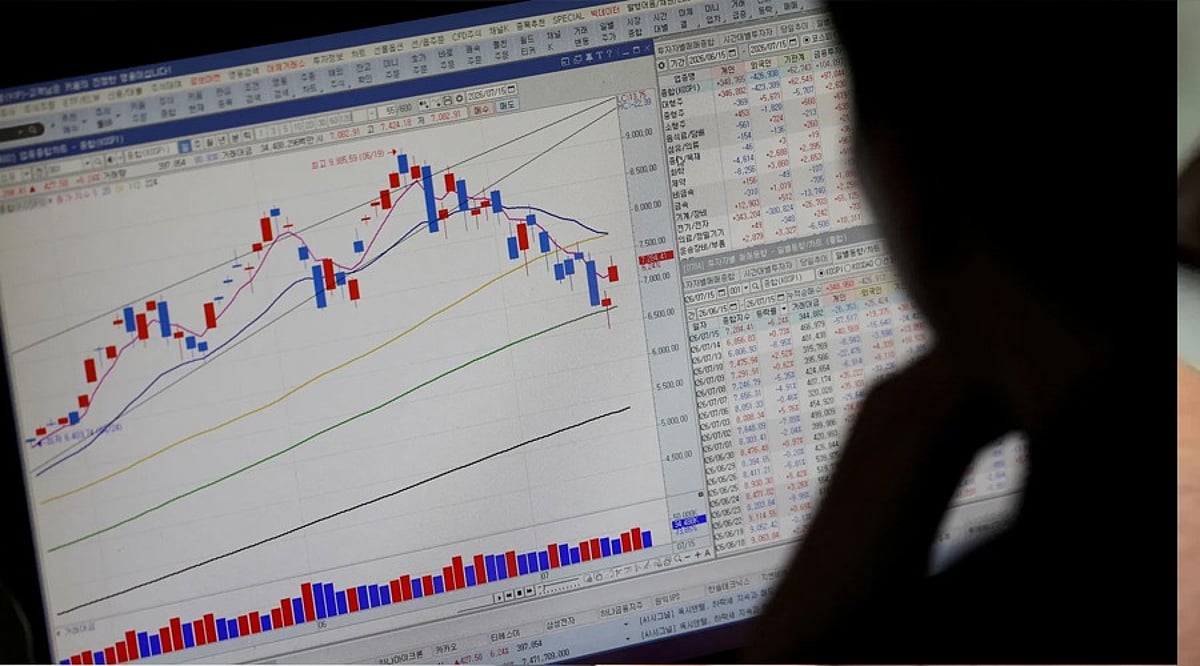
    South Korea’s Kospi index surged nearly 18% on Friday, July 31, heading for its largest one-day gain after three sessions of heavy losses. Chipmakers led the rebound, while Wall Street’s technology rally restored confidence across global markets.

    Chipmakers Drive the Record Kospi Rally

    The Kospi rose 18.27% to 6,615.60 earlier in the session. It later stood 17.9% higher at 6,695.45 as buying accelerated. Samsung Electronics climbed 28%, while SK Hynix jumped 30%. Both companies became the main drivers of the benchmark’s historic advance.

    The rally followed a three-day decline of more than 17%. Investors had sold technology shares amid concerns about an AI bubble and stronger Chinese competition. The Kospi still remained below its June record above 9,000. Before Friday, its largest daily rise was nearly 12% during the October 2008 financial crisis.

    Wall Street Rebound Restores Confidence

    Asian markets followed a strong technology-led session on Wall Street. United States chip stocks recorded their biggest one-day gain in more than a year.

    Microsoft shares surged 15.5%, marking their strongest session in nearly 18 years. Its quarterly profit exceeded expectations and suggested that large AI spending could support earnings. Amazon added 9.5% in after-hours trading following strong results. In contrast, Apple dropped more than 6% after warning that supply shortages could affect sales.

    Nasdaq 100 futures also moved higher after the index ended a six-day losing streak. TSMC gained about 10% and supported the wider Asian market advance.

    Bargain Buying Lifts Global Markets

    Investors returned to technology shares after the steep sell-off created lower entry prices. The renewed demand quickly lifted stocks that had suffered earlier in the week. Japan’s Nikkei 225 climbed 4% to 64,362.02. SoftBank Group advanced 13.8%, while chip equipment producer Tokyo Electron gained 6.2%.

    European markets also opened higher. Germany’s DAX rose 0.7%, France’s CAC 40 added 0.9%, and Britain’s FTSE gained 0.5%. United States futures increased 0.5%. Oil prices resumed climbing after Brent crude had edged lower as shipping conditions through the Strait of Hormuz showed improvement.

    The dollar recovered 0.5% to 160.28 yen after falling sharply overnight. Markets suspected intervention by Japanese and United States regulators near the 160-yen level.

    A Brief Roundup

    The Kospi’s nearly 18% surge followed a sharp rebound in Samsung Electronics, SK Hynix and other AI-linked shares. Wall Street’s technology gains and bargain buying strengthened the recovery. Investors will now watch economic data, oil prices, supply constraints and Middle East developments for signs that the rebound can continue.

  • Renewed AI Optimism Drives South Korean Chip Stocks to Record Gains

    Renewed AI Optimism Drives South Korean Chip Stocks to Record Gains

    South Korea’s stock market experienced a strong rebound on Friday, driven by a rally in semiconductor stocks after better-than-expected earnings from major US technology firms. Investor confidence in the long-term growth of artificial intelligence infrastructure was renewed, reversing recent declines.

    Semiconductor Stocks Lead the Rally

    The benchmark Kospi index surged over 18%, reaching its highest level in about a month. SK Hynix Inc. soared by a record 28%, buoyed by a rare direct share purchase by SK Group Chairman Chey Tae-won. Samsung Electronics Co. rose approximately 26%, while Samsung Electro-Mechanics gained nearly 30%. Hyundai Motor also posted strong growth of almost 8%.

    The rally helped recover losses from earlier in the week, which had been triggered by concerns over valuations and competition from Chinese memory-chip makers.

    Strong US Earnings Restore AI Confidence

    Microsoft reported strong growth in its Azure cloud business, and Amazon exceeded expectations in its cloud computing division, reiterating plans to continue investing in AI infrastructure. These results eased fears that enterprise investments in AI might slow down, prompting investors to rebalance toward semiconductor stocks, particularly those supplying high-performance memory chips and AI infrastructure.

    Domestic Support Boosts Sentiment

    SK Group Chairman Chey Tae-won purchased 3,620 shares of SK Hynix in the open market, his first direct investment in the company, worth approximately 4.8 billion won (about $3.2 million). The move was seen as a strong signal of confidence in the chipmaker’s long-term prospects.

    Additionally, the South Korean government announced plans to allocate nearly $13.9 billion to its sovereign wealth fund for strategic investments in AI, further supporting the sector’s outlook.

  • S&P 500 Dips as Chip Stocks Slump Despite US-Iran Ceasefire

    S&P 500 Dips as Chip Stocks Slump Despite US-Iran Ceasefire

    US stocks reversed early gains on Monday as a semiconductor selloff weighed on the broader market. The S&P 500 fell 0.2%, while the NASDAQ Composite lost 0.5%. Meanwhile, the Dow Jones Industrial Average gained about 258 points, or 0.5%.

    Markets opened higher after the United States and Iran paused attacks over the weekend. However, the relief rally faded as investors sold chip stocks. Lower oil prices supported travel shares and reduced pressure on bond yields, but technology losses pulled the S&P 500 into negative territory.

    Chip Stocks Pull Major Indexes Lower

    Semiconductor shares fell across the market during Monday trading. The VanEck Semiconductor ETF dropped 3.7%, extending Friday’s losses. Advanced Micro Devices and Teradyne each fell more than 7%, while Micron Technology declined more than 6%.

    The Philadelphia Semiconductor Index dropped about 4% after rising early in the session. Most companies in the index traded lower. NVIDIA also declined as investors assessed stronger Chinese competition and continued artificial intelligence investment. The sector has faced repeated selling during July after strong gains earlier in 2026.

    Investor attention also shifted to spending plans at major technology companies. Ken Mahoney of Mahoney Asset Management said, “The biggest risk is the continuation of the spend.” He also warned that slower spending growth could hurt chip suppliers that depend on large data-center orders.

    Oil Prices Slide After Fighting Pause

    Oil prices fell sharply after both sides halted attacks for a third night. Brent crude dropped about 6.8% to near $90.25 a barrel. West Texas Intermediate crude fell around 6.1% to $83.83. Brent had traded above $100 days earlier as shipping risks increased.

    US Ambassador to the United Nations Mike Waltz said the pause was ‘giving diplomacy some space.’ Iran denied holding direct talks with Washington. Still, Tehran confirmed discussions with Oman about maritime traffic in the Strait of Hormuz. Waltz also said more US military assets were moving into the region.

    The oil decline supported airlines, cruise operators and other companies with high fuel costs. Energy shares moved lower as crude prices fell. Europe’s STOXX 600 gained about 0.9%, while retail and travel stocks rose more than 2%. Asian markets also advanced.

    Fed Decision Returns to Market Focus

    The Federal Reserve will announce its interest rate decision on Wednesday. Most analysts expect the central bank to keep rates unchanged. However, market pricing showed about a one-in-three chance of a rate increase at the July meeting.

    Investors raised rate-hike bets after oil prices and new tariffs added pressure to the inflation outlook. Monday’s oil retreat reduced some concerns. The 10-year US Treasury yield fell about four basis points to 4.64%, while the dollar weakened against several major currencies.

    Fed Chair Kevin Warsh faces a difficult policy setting. Inflation remains above the central bank’s 2% goal, while recent labour and consumer data have stayed steady. Samy Chaar of Lombard Odier said policymakers were ‘not there yet’ on another increase and linked the next move to Middle East tensions.

    Big Tech Earnings Put AI Spending in Focus

    Amazon, Apple, Meta Platforms and Microsoft will report quarterly results this week. Their spending plans will receive close attention after Alphabet’s results raised concerns about artificial intelligence costs. Semiconductor companies rely heavily on orders from cloud and data-center operators.

    About one-third of S&P 500 companies will publish results this week. Earnings are tracking a 26.5% increase from a year earlier. Strong profit growth may support stocks, though investors are also watching cash flow and capital spending.

    The economic calendar includes second-quarter US gross domestic product, June inflation data, personal income and consumer spending. Weekly jobless claims, employment costs and consumer sentiment figures are also due. These reports will give markets more information on growth, prices and the next Federal Reserve decision.

    Also Read: Indian Stock Market Closes Higher: Sensex, Nifty Rally on Easing Crude Prices

  • Bitcoin Surges Past $65K as Chip Stocks Rebound and ETF Inflows Resume

    Bitcoin Surges Past $65K as Chip Stocks Rebound and ETF Inflows Resume

    Bitcoin climbed to a two-week high near $65,500 on Tuesday, fueled by a recovery in Asian chip stocks and renewed demand for U.S. spot Bitcoin ETFs. The cryptocurrency rose about 1% during the session and 5% over the past seven days, with daily trading volume approaching $33 billion as risk appetite improved across global markets.

    Asian Markets Lead the Recovery

    The MSCI Asia-Pacific gauge gained approximately 2%, snapping a three-session losing streak. Semiconductor shares led the rebound after a broad technology selloff. South Korea’s Kospi surged more than 3%, with Samsung Electronics and SK Hynix advancing. Taiwan’s Taiex climbed over 4% as Taiwan Semiconductor Manufacturing Company (TSMC) recovered. Japan’s Nikkei 225 also rose more than 3%, with chip-related companies like Kioxia, Advantest, and SoftBank among the strongest performers. The recovery followed concerns about high valuations in artificial intelligence and a pullback in global tech stocks.

    Major Cryptocurrencies Follow Bitcoin Higher

    At the time of writing, Bitcoin traded near $65,245, gaining 1.23% in 24 hours and 5.02% over the week, with daily volume around $32.18 billion. Other major cryptocurrencies also advanced: Ethereum hovered near $1,901, XRP stood at about $1.11, Solana traded near $77.73, BNB around $571, and Hyperliquid near $62.49. Dogecoin traded near $0.073 as the broader market recovered.

    ETF Inflows Add Momentum

    U.S. spot Bitcoin ETFs recorded $226.9 million in net inflows on Monday, marking the fifth consecutive session of positive flows and bringing total inflows to approximately $727.3 million over that period. This renewed buying comes after a difficult stretch in which more than $4 billion exited the funds during June, and a 13-session outflow streak removed about $4.37 billion between May and early June. During those outflows, large Bitcoin wallets accumulated roughly 270,000 BTC (valued at about $16.7 billion), providing additional demand support. The combination of ETF inflows and whale accumulation has reinforced Bitcoin’s recovery from the June low near $58,000–$60,000.

    Oil Prices and Geopolitics Support Risk Sentiment

    Oil prices also supported risk appetite. Brent crude fell about 1% toward $88 after reports of a proposed 10-day ceasefire between the United States and Iran. Although fighting remained active with no confirmed agreement, lower oil prices eased some market pressure that had weighed on sentiment over the previous two sessions.

    Outlook

    Bitcoin’s rise near $65,500 follows stronger chip stocks, lower oil prices, and renewed spot Bitcoin ETF inflows. Large wallet accumulation also supported demand after months of withdrawals. Investors should monitor ETF activity and broader risk markets for signs that the recovery can continue.

  • NASDAQ Futures Climb as Chip Stocks Rebound and Oil Prices Pull Back

    NASDAQ Futures Climb as Chip Stocks Rebound and Oil Prices Pull Back

    US technology stocks entered the new week after another sharp pullback led by semiconductor companies. The NASDAQ 100 has become more sensitive to daily moves in NVIDIA, Micron, AMD and Intel. Their rising market values have also increased their weight within the index.

    Wall Street futures moved higher on Monday as several chipmakers recovered before the opening bell. However, oil prices and the conflict involving the United States and Iran kept pressure on stocks. Investors also prepared for earnings from Alphabet, Tesla, IBM and Intel.

    Chip Stocks Drive Sharp NASDAQ Swings

    Semiconductor shares now play a larger role in NASDAQ 100 volatility. Assenagon says the weight of chip companies other than NVIDIA rose from about 15% to nearly 30%. Micron, AMD and Intel gained more influence as their valuations climbed during the AI rally.

    The asset manager said average one-year expected volatility for those companies moved above 80 points at times. That marked the highest level since the global financial crisis. Assenagon said, “Semiconductor stock volatilities are doing the heavy lifting.” Lower correlation between NASDAQ companies reduced part of the pressure, but it did not remove it.

    The Philadelphia Semiconductor Index also entered a bear market after closing more than 20% below its late-June record. Earlier data showed the index had gained 83% during 2026 before the July reversal. Chip funds then recorded large inflows and outflows as traders changed positions quickly.

    Apple and NVIDIA Trade the Top Market Spot

    Apple overtook NVIDIA on Friday to become the world’s most valuable listed company. Apple carried a market value of about $4.88 trillion. NVIDIA stood near $4.86 trillion after its shares fell 3.5%. Apple had not held the top position since April 2025.

    The change came as investors reviewed the prices attached to AI-linked companies. New model releases from China added competition within the sector. Meanwhile, concerns grew over the pace of spending on chips, servers and data centers. NVIDIA and other semiconductor companies had led much of the market’s 2026 advance.

    Bianca Botes of Citadel Global said, “The AI demand story is real,” but prices had moved ahead of earnings evidence. Recent losses in Micron, NVIDIA and other chipmakers showed how quickly sentiment could change. The moves also spread to South Korean technology stocks, including Samsung Electronics and SK Hynix.

    Oil Retreat and Earnings Lift Stock Futures

    NASDAQ 100 futures rose about 0.8% early Monday, while S&P 500 futures gained around 0.4%. Dow futures added about 0.3%. Memory chipmakers also advanced before the market opened. Micron, Western Digital, Seagate and SanDisk gained between 3.2% and 4.2%.

    Brent crude briefly moved above $90 per barrel after US forces struck Iran for a ninth straight day. Prices later eased after Iran said diplomatic contacts remained open. The early oil rise raised fresh concerns about transport costs, inflation and interest rates.

    Investors will now focus on quarterly results from major technology companies. Alphabet, Tesla, IBM and Intel will report during the week. Intel and Texas Instruments will provide new data on chip demand and AI infrastructure spending. Their reports could guide the next move across semiconductor stocks and the NASDAQ 100.

  • Daily Tech Roundup: Cognizant’s AI Hiring Push, OpenAI Codex Micro, Chip Stock Dip & Crypto Lows

    Daily Tech Roundup: Cognizant’s AI Hiring Push, OpenAI Codex Micro, Chip Stock Dip & Crypto Lows

    Good morning! Here is your quick scan of the latest developments in AI hiring, global markets, developer tools, startup funding, and cryptocurrency.

    What’s New Today

    Asian stocks fell after semiconductor stocks came under selling pressure, even as softer US inflation data helped bonds. Cognizant announced it will recruit 1,500 US graduates by 2026 to build its AI talent pool. Meanwhile, OpenAI launched Codex Micro, an AI-based macropad for developers.

    Fast-Track Insights

    The speed at which artificial intelligence produces code now exceeds the pace at which human engineers can review it, prompting startup Graphite to raise $15 million to automate code reviews. In the crypto space, nearly 40% of all altcoins are trading near their lows.

    Asian Shares Fall Despite Cooler US Inflation

    Asian shares edged lower due to declines in the tech and semiconductor sectors, while government bonds gained amid better-than-expected US inflation readings. Despite positive data, investor sentiment remains negative regarding the chip sector and the global economy. The next focus will be on earnings reports and monetary policy moves. Read More…

    Cognizant to Hire 1,500 US Graduates for AI Roles

    Cognizant has announced plans to hire 1,500 graduates across the USA by 2026. This initiative aims to augment the firm’s artificial intelligence capabilities and create a robust pipeline of AI talent. The move responds to increasing demand for AI professionals as companies intensify their use of AI technology. Read More…

    Graphite Raises $15 Million to Fix AI Code Review Bottleneck

    Graphite, co-founded by engineers from Dropbox and Palantir, has raised $15 million to address one of the biggest challenges in AI development: reviewing code written by AI. With coding assistants producing software at an unprecedented pace, Graphite’s platform helps developers automate the code review process. Read More…

    OpenAI Launches Codex Micro for Developers

    OpenAI has introduced Codex Micro, a programmable macro keyboard that gives developers access to AI-based coding utilities. This compact device allows users to assign hotkeys for prompts, automation, and programming, providing a more efficient workflow when developing with AI. Read More…

    40% of Altcoins Near Historic Lows: Buying Opportunity?

    According to the latest market analysis, nearly 40% of altcoins are currently trading around their historic lows due to continued selling pressure. Some market analysts believe this correction could present a buying opportunity if sentiment improves in the coming months. Read More…

    Join our WhatsApp Channel to get the latest news, exclusives, and videos on WhatsApp.