
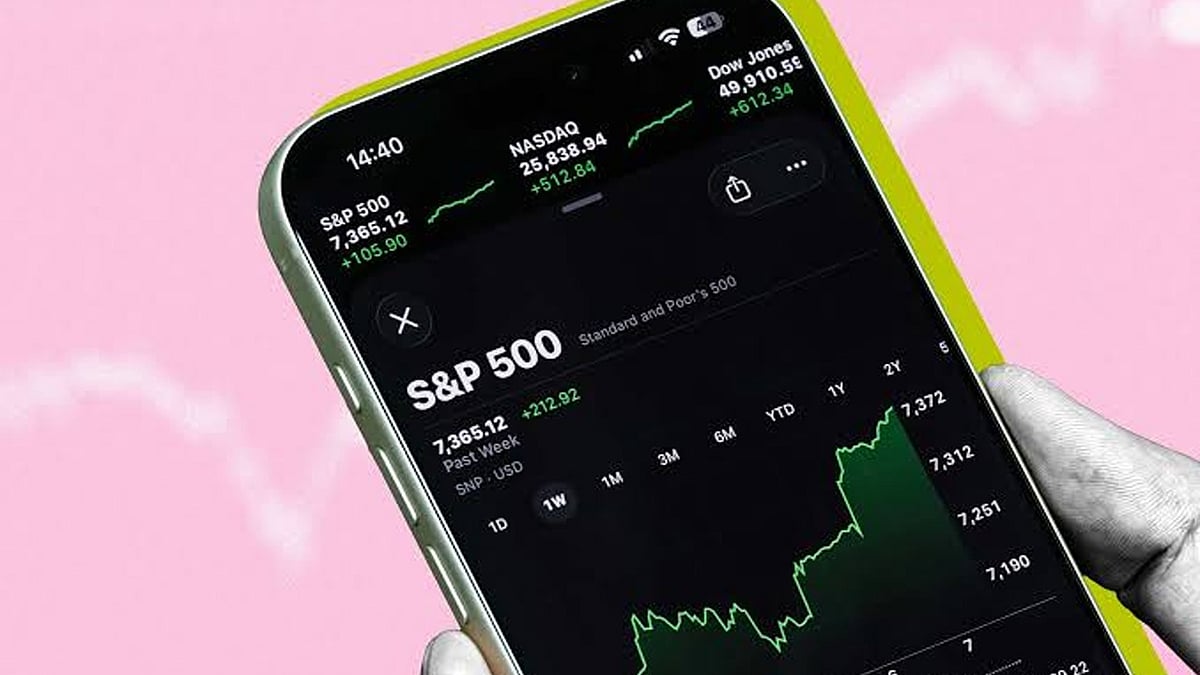
The S&P 500 traded near the flatline on Thursday as steep losses in chip and software stocks offset gains across most other sectors. Investors weighed corporate earnings, labor data, and ongoing negotiations over reopening the Strait of Hormuz.
At 11:20 a.m. ET, the S&P 500 slipped 0.08% to 7,723. The Dow Jones Industrial Average added 0.49% to 54,350, while the Nasdaq Composite edged up 0.05% to 26,380.
Western Digital and Sandisk Shares Tumble
Western Digital shares fell 18.5% in early trading despite reporting fourth-quarter results above Wall Street estimates. Its fiscal first-quarter forecast disappointed investors. Sandisk shares dropped 11.3% after releasing its fiscal fourth-quarter results. Both companies forecast quarterly revenue above estimates, driven by demand for artificial intelligence infrastructure. However, investors focused on valuations after significant gains earlier this year — Western Digital had climbed about 200%, and Sandisk had gained around 400%.
Hank Smith, investment strategy director at Haverford Trust, noted that expectations had reached demanding levels, calling the price action “some digestion going on in the market.”
The Philadelphia Semiconductor Index declined 1.5% during early trading. Intel and AMD also traded lower, adding pressure to the technology sector. However, several chip stocks later recovered: Broadcom gained nearly 2%, Marvell Technology rose about 3%, and NVIDIA moved higher during the session.
Software Earnings Add Pressure to Technology
Software stocks also recorded steep declines following several earnings reports. Atlassian, Salesforce, Adobe, and Zscaler traded lower. AppLovin shares fell about 17% after missing quarterly revenue estimates. The stock had previously benefited from investor demand for AI-linked companies. Datadog dropped roughly 17% after management forecast slower revenue growth in the third quarter, raising questions about enterprise software demand and valuations.
Peloton shares fell more than 14% after forecasting lower sales in the coming fiscal year, citing higher prices for equipment and subscriptions. Still, Microsoft and Amazon each gained around 1%, helping limit broader losses across major indexes.
Most S&P 500 Sectors Trade Higher
Despite technology weakness, nine of the S&P 500’s 11 sectors traded higher during the morning session. Energy, consumer staples, and healthcare led the gains. Parker-Hannifin rose 8.5% after forecasting annual profit above analysts’ estimates. Albemarle gained 6.7% after beating quarterly profit estimates. Diageo rose about 6% after announcing a three-year plan targeting $1.2 billion in savings.
Restaurant Brands International reported adjusted earnings of $1.07 per share, above the expected $1.03. Revenue reached $2.52 billion, matching estimates. Burger King recorded an 8.5% increase in comparable restaurant sales, though other brands within the group delivered weaker results.
Labor Data Sets Up July Jobs Report
New applications for unemployment benefits increased slightly to 199,000 for the week ending August 1, below the Dow Jones estimate of 204,000. Layoffs fell to their lowest level in two years during July. Second-quarter productivity increased 1.4% (versus 0.8% prior), while unit labor costs rose 1.3% (below the 2.1% estimate). Investors will now examine Friday’s July employment report for clues about the Federal Reserve’s policy path. Fed Chairman Kevin Warsh has reduced forward guidance, increasing the market’s focus on incoming economic data.
Iran Talks Keep Oil and Gold in Focus
Brent crude traded near $80 per barrel as investors monitored negotiations involving Iran and Oman focused on reopening shipping routes through the Strait of Hormuz. An Iranian official said a temporary agreement would allow ships to travel without fees or tolls, but final conditions had not been settled. Deutsche Bank strategist Jim Reid noted “unresolved questions” about whether Iran could later charge vessels.
Gold rose for a fourth consecutive session as geopolitical uncertainty supported demand. Spot gold gained 0.6% to $4,271.33 per ounce, and US gold futures rose 0.6% to $4,330.20. Earlier, spot prices reached their highest level since June 18.
Conclusion
Technology losses kept the S&P 500 near the flatline, despite gains across nine of its 11 sectors. Western Digital, Sandisk, AppLovin, and Datadog recorded the sharpest declines following earnings updates. Meanwhile, investors monitored Iran-Oman shipping talks and Friday’s July employment report, both of which could shape energy prices and Federal Reserve rate expectations.
Leave a Reply