Tag: CLARITY Act

  • CLARITY Act Stalls in Senate as Legislative Window Narrows Before August Recess

    CLARITY Act Stalls in Senate as Legislative Window Narrows Before August Recess

    The Digital Asset Market Clarity Act (CLARITY Act) remains stalled in the U.S. Senate after lawmakers missed an informal July 4, 2026, signing target. No cloture motion has been filed, and no floor vote has been scheduled, leaving the bill at Calendar No. 423. The legislation previously passed the House with bipartisan support and advanced through the Senate Banking Committee, but it still requires full Senate approval, reconciliation of separate committee versions, and the president’s signature to become law. With the Senate returning from recess on July 13 and the August 7 break approaching, time is rapidly running out.

    Senate Vote Faces Political and Procedural Hurdles

    The House approved the CLARITY Act on July 17, 2025, and the Senate Banking Committee advanced it in May 2026. Senate Majority Leader John Thune has not scheduled debate, and lawmakers have not filed the cloture motion needed to initiate floor proceedings. Republicans hold 53 seats. Senators Josh Hawley and Rand Paul oppose the bill, while Democratic Senators Ruben Gallego and Angela Alsobrooks supported it in committee with conditions. To overcome a filibuster, supporters need 60 votes, requiring between seven and nine Democratic supporters.

    Ethics Concerns and Policy Disputes

    President Donald Trump’s July 1, 2026, financial disclosure listed approximately $1.4 billion in cryptocurrency-related income during 2025, including roughly $635 million in royalties from the $TRUMP meme coin and over $500 million from World Liberty Financial token sales. The White House opposes any language targeting the president’s crypto holdings. An ethics amendment proposed by Senator Chris Van Hollen was rejected by the Senate Banking Committee 11–13. Senator Kirsten Gillibrand has stated that enforceable rules covering government officials’ crypto holdings are necessary before she supports the bill.

    Developer Protections and Stablecoin Yield Debate

    Section 604, which would exempt non-custodial software developers from money-transmitter registration requirements, remains a sticking point. The National District Attorneys’ Association argues it could complicate crypto-related criminal investigations. Separately, stablecoin yield provisions are contested. The American Bankers Association warns that the current language creates a potential loophole for interest-equivalent yields beyond limits in the GENIUS Act. Coinbase currently earns about $1.35 billion annually from USDC rewards, making this issue significant.

    Industry groups like Stand With Crypto continue urging Senate leaders to preserve developer protections and bring the bill to the floor. Meanwhile, Bitcoin traded at $63,046 at publication (July 7, 2026), reflecting a 6% weekly gain but remaining about 50% below its October 2025 record high of $126,173.

    What’s Next?

    With only about three weeks before the August recess, the bill needs Senate approval before the end of July to maintain momentum, according to Stifel policy strategist Brian Gardner. Beacon Policy Advisors warned that missing that window could end the legislation’s path in 2026. Reconciliation between the Senate Banking Committee and Senate Agriculture Committee versions also remains pending. The CLARITY Act’s fate now hinges on resolving ethics disputes, securing enough Democratic votes, and surmounting procedural obstacles in a tight timeframe.

  • Bitcoin Steady at $62K as Strategy’s $216M Sale Tests Market; Solana Leads Top Ten Gains

    Bitcoin Steady at $62K as Strategy’s $216M Sale Tests Market; Solana Leads Top Ten Gains

    Bitcoin weathered nearly $500 million in liquidations as long-term holder selling eased and US Treasury yields weakened, while improving ETF inflows and balanced futures positioning offered early signs of stabilizing market sentiment.

    Bitcoin Price Today: $62,048

    Bitcoin is trading near $62,048, down modestly over the past 24 hours after a choppy overnight session. The token remains capped below its 50-day and 200-day moving averages, keeping the medium-term trend cautious. Market cap sits around $1.24 trillion, with 24-hour volume near $21.3 billion. Support holds at $60,500, while resistance stands at $64,300, the level bulls need to reclaim.

    Speaking on the market, Akshat Siddhant, Lead Quant Analyst at Mudrex, said, “Bitcoin is trading above the $64,000 level, showing resilience despite Strategy’s sale of 3,588 BTC.” He added that the announcement briefly pushed Bitcoin toward $61,000 before buyers stepped back in. The volatility triggered nearly $500 million in liquidations within 24 hours.

    He further noted that falling US Treasury yields and a weaker dollar are improving the appeal of risk assets like Bitcoin. On-chain data also points to easing selling pressure, with long-term holder transfers to exchanges falling from 8,040 BTC to 4,130 BTC per day this week.

    According to the CoinSwitch Markets Desk, BTC rebounded to $64,000 from a low near $61,300, with the market shrugging off Strategy’s sale fairly quickly. The desk pointed to a 9% funding rate as a sign of balanced positioning rather than overheated leverage. It also flagged $265 million in ETF inflows in over two days as a shift after weeks of outflows, with support firming near $60,000.

    Riya Sehgal, Research Analyst at Delta Exchange, said, “Crypto markets are in a range recovery after Bitcoin’s drop toward the low-$61,000 area.” She noted the move followed Strategy’s disclosure of its sale, showing treasury flows can still shake spot sentiment. A four-hour close above $64,000 to $64,300 would strengthen the setup, she said, while a break below $62,000 could bring $61,000 back into focus.

    Meanwhile, Nischal Shetty, founder of WazirX, said Bitcoin is trading near $64,300, up 1.3%, with buying interest returning after recent volatility. He pointed to Bitcoin’s realized profit-to-loss ratio falling to a 43-month low, a level historically tied to market stabilization. Ethereum, he added, is supported by almost $153 billion in stablecoin supply sitting on its network.

    Crypto Prices Today: Top 10 Coins at a Glance

    Biggest Gainers: Solana, Ethereum — Solana leads the top ten today with a 1.40% gain, supported by rising network activity ahead of its planned Alpenglow upgrade. Ethereum follows with a 1.15% advance, holding above its short-term breakout zone near $1,780.

    Biggest Losers: Dogecoin, Hyperliquid — Dogecoin trails the group at -2.77%, remaining one of the more fragile tokens in any risk-off stretch. Hyperliquid also underperforms at -1.88%, cooling off after weeks of steady outperformance in derivatives trading.

    Crypto News Today Driving Market Sentiments

    Strategy’s Record Bitcoin Sale Raises Questions

    Strategy sold 3,588 BTC worth $216 million roughly, its largest single disposal since the company began its buy-and-hold strategy. The move is notable for a firm long associated with aggressive accumulation. Markets are now watching whether buyer demand can absorb the added supply without breaking support at $60,500.

    CLARITY Act Still Stuck in Senate

    The CLARITY Act has missed its symbolic July deadline after failing to secure the votes needed for cloture. The bill is meant to give institutions clearer rules for buying and holding crypto. Prediction markets have trimmed passage odds for the rest of the year.

    Spot ETF Flows Turn Mixed

    US spot Bitcoin ETFs logged $265 million in inflows over two sessions this week, snapping a stretch of outflows. Spot Ethereum ETFs also posted a second straight day of positive flows. Analysts caution the recovery remains fragile after June’s record redemptions.

    Satoshi Wallet Freeze Debate Resurfaces

    The proposal to freeze Satoshi Nakamoto’s dormant BTC holdings ahead of future quantum computing risks continues to divide the community. Critics argue the idea conflicts with Bitcoin’s core neutrality principle. Supporters say it protects the network from a future security threat.

    Investor and Market Outlook

    Bitcoin enters the week in a fragile but improving position. Strategy’s record sale tested buyer conviction directly, and price held its ground near $62,000 rather than breaking down. That resilience is a modestly encouraging signal, though the broader trend stays capped below key moving averages.

    The macro calendar remains active, with the CLARITY Act’s Senate path still unresolved and ETF flows only beginning to stabilize. Investors should track daily flow data, Bitcoin’s ability to hold above $60,500, and any fresh signal from Washington on crypto legislation. Avoiding excess leverage remains the practical priority until $64,300 is reclaimed with real volume.

    FAQs

    What is the Bitcoin price today? Bitcoin is trading near $62,048 today, down slightly over the past 24 hours. Support holds at $60,500, while resistance sits at $64,300.

    Why did Bitcoin dip this week? Strategy sold 3,588 BTC worth about $216 million, briefly pressuring price toward $61,000. Around $500 million in liquidations hit leveraged positions.

    What is the biggest crypto news today? Strategy’s record Bitcoin sale, the CLARITY Act missing its Senate deadline, and returning spot ETF inflows are the top stories.

    Which coins are gaining the most today? Solana leads with a 1.40% gain, followed by Ethereum at 1.15%. Dogecoin and Hyperliquid are the biggest laggards.

    What should crypto investors watch this week? Track daily ETF flow data, Bitcoin’s ability to hold above $60,500, and any Senate movement on the CLARITY Act.

    Disclaimer: Analytics Insight does not provide financial advice or guidance on cryptocurrencies and stocks. This article is for informational purposes only.

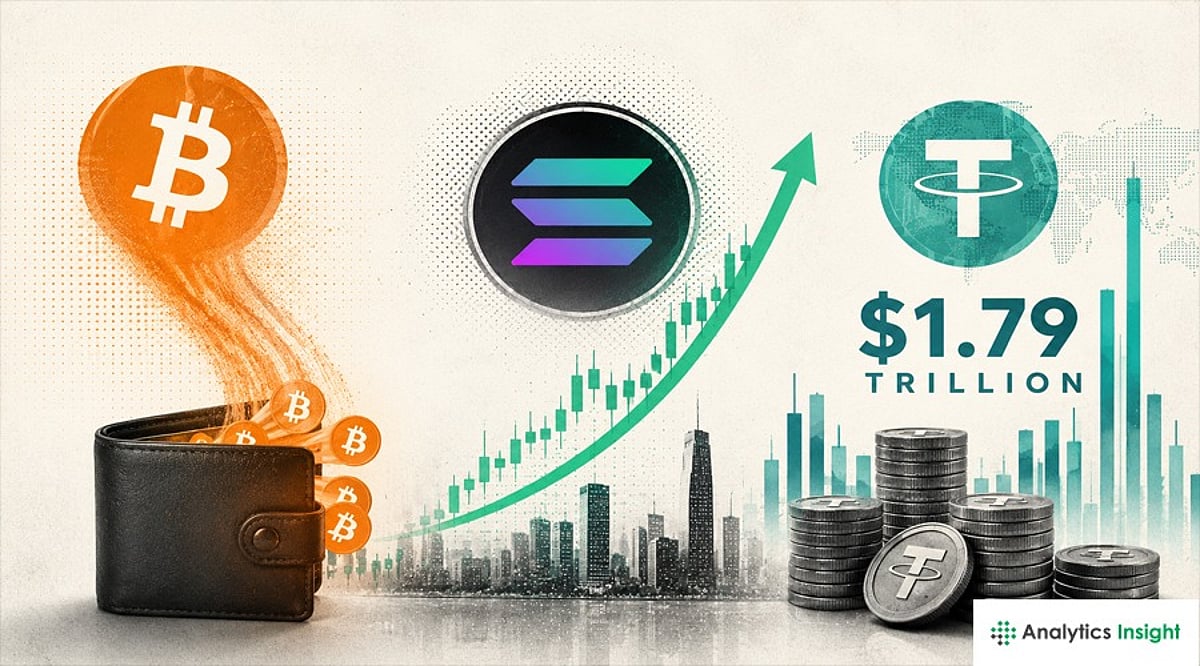
  • Bitcoin ETFs See $527M Weekly Outflow, Solana Rallies 14%, Stablecoin Volume Hits $1.79T – Crypto News Roundup

    Bitcoin ETFs See $527M Weekly Outflow, Solana Rallies 14%, Stablecoin Volume Hits $1.79T – Crypto News Roundup

    Bitcoin ETF Outflows Continue

    Bitcoin spot ETFs recorded a net outflow of $527 million last week, marking the eighth consecutive week of withdrawals. BlackRock’s IBIT saw $773 million exit, while Grayscale Bitcoin Trust (GBTC) reported $27.69 million in outflows. However, the Ark & 21 Shares ETF (ARKB) bucked the trend with $102 million in net inflows. Cumulative net inflows for IBIT remain strong at $59.99 billion, and the total net asset value of spot Bitcoin ETFs stands at $74.37 billion.

    Solana Maintains Momentum After 14% Rally

    Solana (SOL) surged over 14% last week and is currently trading around $80.89. While it has stalled below a key resistance level, indicators point to growing bullish momentum. Spot Solana ETFs attracted $5.75 million in net inflows, reversing the previous week’s outflows. Additionally, tokenized asset spot trading volume on the Solana network reached $5.7 billion in Q2, more than doubling from Q1’s $2.69 billion.

    Stablecoin Transaction Volume Reaches Record $1.79 Trillion

    According to Visa, stablecoin transaction volume hit an all-time high of $1.79 trillion in June, up 63% from May’s $1.1 trillion. USDC led with $1.21 trillion (67% of the total), while USDT accounted for $576 billion (32%). PayPal’s PYUSD ranked third with $2.42 billion.

    CLARITY Act Faces Key Senate Deadline

    The CLARITY Act, a major US crypto market structure bill, missed its July 4 target but still has a chance before the Senate’s summer break on August 7. The bill has passed the House and cleared the Senate Banking Committee. Senator Cynthia Lummis urged lawmakers to advance it, calling it “the foundation for the financial services of the 21st century.”

    Ethereum Plans Its ‘Biggest Rebuild’

    Ethereum co-founder Vitalik Buterin outlined “Lean Ethereum,” a multi-year plan to replace almost every major protocol component over three to four years while minimizing disruption to existing applications. This third major iteration follows the 2022 Merge. Quantum safety has been elevated as a top priority.

    Disclaimer: This article is for informational purposes only and does not constitute financial advice. Always conduct your own research before investing in cryptocurrencies.

  • CLARITY Act Moves to Senate Floor Amid Ethics Concerns Over Trump Crypto Income

    CLARITY Act Moves to Senate Floor Amid Ethics Concerns Over Trump Crypto Income

    The Digital Asset Market Clarity Act (CLARITY Act) advanced out of the Senate Banking Committee by a 15-9 vote on May 14, 2026, setting the stage for a full Senate debate. Two Democrats—Ruben Gallego of Arizona and Angela Alsobrooks of Maryland—joined all Republicans on the panel, giving the bill early bipartisan support as lawmakers seek federal rules for digital assets.

    Committee Chairman Tim Scott called the markup a bipartisan effort to deliver clear rules for cryptocurrencies. The bill now shifts to the Senate floor, where supporters must secure at least 60 votes for passage. Senate leaders are expected to release the final draft this week for public review. Senator Cynthia Lummis said lawmakers, banks, and industry groups should receive the draft around July 4.

    The Senate placed the bill on the legislative calendar as item No. 423 on June 1, 2026, making it eligible for floor consideration. However, scheduling has proven tricky. Initial hopes for a vote before the July 4 recess faded after the Senate adjourned until July 13. Senator Bill Hagerty indicated the vote is more likely after lawmakers return, noting that the GENIUS Act demonstrated how clear rules can lead to lasting crypto policy. “This will be something more a matter of focus after the 4th of July recess period, but I certainly hope to see it done before,” Hagerty said on June 18, 2026.

    With Republicans holding 53 seats, the CLARITY Act needs at least seven Democratic votes to reach the 60-vote threshold. Lawmakers must also reconcile the Senate Banking Committee version with a separate draft from the Senate Agriculture Committee, then merge with the House-passed bill (H.R. 3633, approved 294-134 on July 17, 2025) before sending it to the president. Industry groups are pressing for action before the August recess, and staff continue to negotiate unresolved issues behind the scenes.

    Adding a new layer of complexity, President Donald Trump’s 2025 annual financial disclosure revealed roughly $1.4 billion in crypto-related income, including royalties from his memecoin company, token sales from World Liberty Financial, and sales to an Abu Dhabi sheikh’s firm. Trump also reported holding over $100 million in various cryptocurrencies and smaller stakes in firms like Corewave.

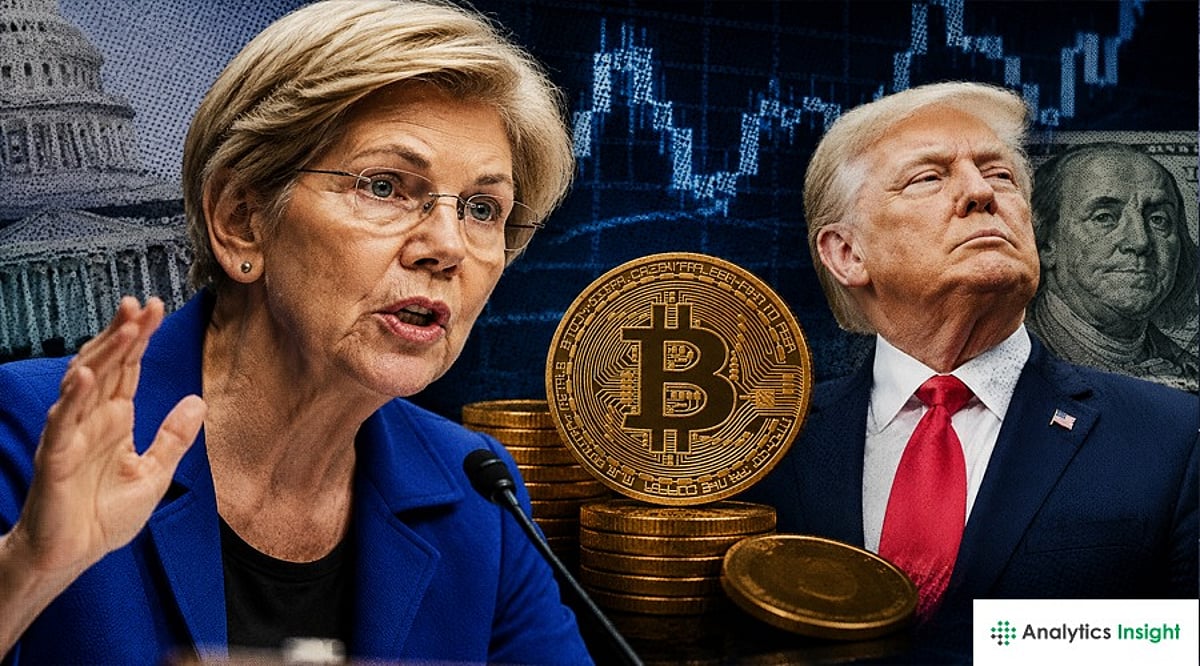
    In response, Senator Elizabeth Warren called for an ethics provision in the CLARITY Act, insisting the bill must prevent senior officials, lawmakers, and their families from profiting from crypto. Senator Gallego, who supported the bill in committee, said on X that he would work to address Trump’s crypto dealings and stressed the need for “real, enforceable standards” on ethics. Gallego did not commit to supporting the bill on the Senate floor, leaving the vote count uncertain.

    As the CLARITY Act heads toward a critical Senate test, its path depends on bipartisan support, final negotiations, and whether Congress can act before election-year pressure slows momentum.

  • Dogecoin Holds Near $0.077 as Whales Accumulate and Derivatives Activity Slows

    Dogecoin Holds Near $0.077 as Whales Accumulate and Derivatives Activity Slows

    Dogecoin traded near $0.0770 on Monday as the meme coin held a tight range following Friday’s 4% rebound. Retail activity cooled, derivatives volume declined, and whale wallets increased their DOGE holdings. Traders now watch whether buyers can clear resistance near $0.0770 and extend the move toward $0.085.

    DOGE Traders Hold Back as Volume Slips

    Dogecoin futures open interest stayed near $1.03 billion on Monday, according to CoinGlass data. That level showed that contract holders kept a wait-and-see approach during the last 24 hours. At the same time, the DOGE funding rate stood at 0.0089%, indicating traders still paid a premium for long positions, which pointed to broadly bullish positioning.

    Even so, derivatives volume dropped by more than 5% over the same period. That decline showed weaker trading activity and matched the cautious tone across the DOGE market.

    Whale Holdings Rise as On-Chain Signals Improve

    Large-wallet investors with more than 1 billion DOGE increased their holdings to 73.85 billion tokens, up from 72.73 billion tokens on Thursday. Still, whale holdings moved sideways over the last two days. Whale transactions also fell to 12 on Sunday, down sharply from 47 on Friday.

    Meanwhile, the share of DOGE supply in profit rose to 38.51% from 23.7% last week. Active Dogecoin addresses also climbed to 50,000, compared with 40,000 only days earlier.

    DogeOS, Supply Debate, and Key Price Levels

    Developers continue to work on the proposed DogeOS upgrade. The proposal seeks to add zero-knowledge proof verification through an opcode called OP_CHECKZKP. If approved, Dogecoin could gain layer-2 rollups and Ethereum Virtual Machine compatibility without a hard fork. That change could support DeFi, gaming, and identity applications on the network.

    Regulation also remains in focus as the proposed U.S. CLARITY Act carries about a 55% chance of passing. Some investors believe the bill could classify Dogecoin as a digital commodity and support future spot DOGE ETF products.

    The Dogecoin community also continues to discuss its inflation structure. A recent GitHub proposal calls for block rewards to fall from 10,000 DOGE to 1,000 DOGE. That change would reduce annual DOGE supply growth to 500 million tokens from 5 billion tokens. At the same time, daily trading volume stood near $978 million.

    From the chart, buyers need to defend the $0.075 support area. A move above $0.080 to $0.082 would improve confidence, while a break above the 100-day moving average near $0.094 would provide stronger confirmation of a recovery.

    What’s Next?

    Dogecoin remains near $0.077 as whales increase their holdings while retail trading activity slows. Derivatives volume has weakened, but funding rates show bullish positioning. The next move depends on key support and resistance levels, DogeOS progress, and CLARITY Act developments that could shape broader DOGE market confidence.

  • Bitcoin Reclaims $63,251 as ETF Inflows Return and CLARITY Act Stalls – July 6 Market Update

    Bitcoin Reclaims $63,251 as ETF Inflows Return and CLARITY Act Stalls – July 6 Market Update

    Bitcoin is trading near $63,251.48, up 0.68% over 24 hours and 5.91% higher on the week, as spot ETF inflows return after a record outflow streak in June. The token has climbed above its late-June lows near $58,000, with a market cap of approximately $1.26 trillion and 24-hour volume near $19.28 billion.

    Hyperliquid and BNB lead today’s gainers, while the CLARITY Act misses its symbolic July 4 signing deadline in the Senate. The Fear and Greed Index sits at 28, still cautious but improving from June’s extreme fear reading of 18.

    Market Dynamics and Analyst Commentary

    Akshat Siddhant, Lead Quant Analyst at Mudrex, noted: “Bitcoin climbed sharply over the weekend as thin liquidity during the holiday period amplified buying activity. Sentiment improved after spot ETFs attracted $224 million in net inflows, ending a six-day outflow streak. Bitcoin’s realized profit-and-loss ratio dropped to its lowest level in 43 months, a metric that has historically marked major bottoms. Mondays have stayed weak recently, so a failure to hold $64,000 could send BTC back toward $60,500.”

    Riya Sehgal, Research Analyst at Delta Exchange, added: “Bitcoin’s rebound has been supported by short covering and a weaker dollar after oil prices eased. US spot Bitcoin ETFs saw $223.5 million in net inflows on July 2, reversing the prior day’s $296 million outflow. Ethereum ETFs logged a second straight positive day. BTC stays capped below its 200 EMA near $63,920, making $64,000 the key breakout level.”

    According to the CoinSwitch Markets Desk: “BTC is holding near its highest level in two weeks after a modest bounce, but it has struggled below this zone for weeks. The Fed releases its meeting notes soon, and a hawkish tone could pressure prices again. Wednesday’s Fed update remains the one to watch.”

    Top 10 Crypto Prices at a Glance (July 6)

    • Biggest Gainers: Hyperliquid (+3.71%), BNB (+2.25%)
    • Biggest Losers: Solana (+0.13%), XRP (+0.48%)

    Key Crypto News Driving Sentiment

    Spot Bitcoin ETFs Snap Outflow Streak

    Spot Bitcoin ETFs recorded $223.5 million in net inflows this week, reversing a prior single-day outflow of nearly $300 million. Spot Ethereum ETFs also logged a second straight day of positive flows, signaling improving institutional appetite after June’s record redemptions.

    CLARITY Act Misses July 4 Deadline

    The White House had targeted July 4 for signing the CLARITY Act into law. Senate cloture math remains short of the 60 votes needed, and prediction markets have trimmed 2026 passage odds. A House Financial Services Committee hearing is expected later this month.

    Satoshi’s Bitcoin Freeze Debate Resurfaces

    Binance founder Changpeng Zhao suggested Satoshi Nakamoto’s estimated 1.1 million BTC should be frozen before quantum computing advances threaten old wallets. The proposal has split the community, with critics calling it a violation of Bitcoin’s core neutrality principle.

    Aptos Blockchain Flaw Patched After Disclosure

    Security researchers identified a critical flaw in the Aptos blockchain that could have exposed roughly $70 billion in crypto assets. The bug has since been patched, and the disclosure has renewed attention on smart contract audits across major chains.

    Investor and Market Outlook

    Bitcoin enters the second week of July in a cautiously improving position. The Fear and Greed Index sits at 28, still guarded but well above June’s extreme fear reading of 18. ETF inflows are returning, though a sustained move above $64,000 remains the key confirmation traders want before calling a firm bottom.

    The macro calendar stays active this week, with Fed meeting notes due and the CLARITY Act’s Senate path still unresolved. Investors should track daily ETF flow data, Bitcoin’s ability to hold above $60,500, and any fresh signal on the July 29 FOMC decision. Avoiding excess leverage remains the practical priority until $64,000 is reclaimed with volume.

    Frequently Asked Questions

    What is the Bitcoin price today? Bitcoin is trading near $63,251.48 today, up 0.68% over the past 24 hours and 5.91% higher on the week. Support holds near $60,500, while resistance sits at $64,000.

    Why is Bitcoin recovering in July 2026? Spot Bitcoin ETFs snapped a six-day outflow streak after fresh inflows arrived this week, easing the selling pressure that pushed BTC to a 21-month low in June. Improving on-chain metrics have also supported the bounce.

    What is the biggest crypto news today? The CLARITY Act missing its symbolic July 4 signing deadline, returning spot ETF inflows across Bitcoin and Ethereum, and the resurfacing debate over freezing Satoshi Nakamoto’s dormant wallet are the top stories driving sentiment today.

    Which coins are gaining the most today? Hyperliquid leads the top ten with a 3.71% gain, supported by rising on-chain trading volume. BNB follows closely at 2.25%, while Solana and XRP trail the broader market with smaller single-day moves.

    What should crypto investors watch this week? Monitor daily spot ETF flow data closely, along with any signal from the Fed’s upcoming meeting notes. Bitcoin’s ability to hold above $60,500 and reclaim $64,000 with strong volume remains the key technical trigger heading into late July.

  • Bitcoin Surges Past $62,000 as ETF Inflows Return and US Crypto Bill Gains Traction

    Bitcoin Surges Past $62,000 as ETF Inflows Return and US Crypto Bill Gains Traction

    Bitcoin rebounded above $62,000 in early July after a challenging June marked by record outflows from US spot Bitcoin ETFs. Renewed weekly net inflows of $526.64 million, growing attention to proposed US crypto legislation, and continued institutional interest have shifted focus to Bitcoin’s next market direction.

    Bitcoin Recovers After a Difficult June for ETFs

    Bitcoin ended June near a two-year low, falling to roughly $58,000. Market data revealed that US spot Bitcoin ETFs experienced approximately $8.9 billion in net outflows since early May, including about $4.51 billion in June alone — the weakest month for the ETF category since its launch.

    Santiment reported that retail investors increased small Bitcoin holdings during the second half of June, while larger holders reduced exposure. The analytics firm noted that large investors remained cautious, waiting for stronger signs that the market had reached a bottom.

    The report also highlighted a shift in capital toward AI and semiconductor stocks during June. According to Santiment, those sectors attracted investment that previously flowed into cryptocurrencies, reducing institutional demand for Bitcoin. HashKey researcher Tim Sun commented, “capital was reallocating across risk assets rather than that investors were losing their appetite for risk altogether.” He added that Bitcoin could attract that capital again if the AI sector slows.

    Fresh ETF Inflows and US Legislation Support Market Sentiment

    Market conditions improved during the first week of July as US spot Bitcoin ETFs posted $526.64 million in weekly net inflows despite ongoing uncertainty. This followed one of the largest monthly withdrawal periods on record for the ETF market.

    The positive inflow indicated that some institutional investors continued allocating capital to regulated Bitcoin products even after June’s decline. Analysts emphasize that ETF flow data remains a key metric because spot ETFs purchase actual Bitcoin rather than futures contracts.

    Bitcoin traded above $62,000 as investors tracked developments surrounding the proposed CLARITY Act in the United States. Prediction market data showed rising expectations that the legislation could advance before Congress begins its August recess. The bill has support from over 200 crypto companies, including Coinbase, Ripple, and Kraken. Supporters believe clearer regulations could encourage broader participation in digital asset markets, although lawmakers have not yet approved the legislation.

    Strategy, Blockchain Security, and Market Focus Remain in View

    Strategy (formerly MicroStrategy) also remained in the spotlight after Executive Chairman Michael Saylor introduced a Digital Credit Capital Framework designed to strengthen liquidity and support the company’s preferred stock obligations. Saylor also addressed concerns about Strategy’s Bitcoin position, stating that “the company had bought about 175,000 BTC this year” and adding that “he had not sold any of his personal stash.” Strategy currently holds more than 818,000 BTC, making it the world’s largest corporate Bitcoin holder.

    Meanwhile, blockchain security returned to focus after researchers disclosed that they identified and fixed a critical vulnerability on the Aptos blockchain before attackers could exploit it. Security firm Hexens said the issue could have affected infrastructure supporting as much as $70 billion in digital assets, although no funds were lost.

    Elsewhere, blockchain analytics firm Nansen estimated that holders of the TRUMP memecoin have accumulated about $3.8 billion in combined losses after the token declined sharply from its peak. As July progresses, traders continue to monitor ETF flows, regulatory developments, institutional activity, and broader market conditions for signs of Bitcoin’s next direction.

  • XRP Price Outlook for July 2026: Key Levels, ETF Inflows, and Regulatory Hurdles

    XRP Price Outlook for July 2026: Key Levels, ETF Inflows, and Regulatory Hurdles

    July 2026 has become a pivotal month for XRP as the cryptocurrency attempts to recover from a sharp June decline. Currently trading between $1.04 and $1.09, XRP is holding above the critical $1.00 support level. Market analysts are closely watching whether the token can break resistance at $1.10 to open a path toward $1.40–$1.60.

    June Correction and Market Pressure

    June was a difficult month for XRP holders. The token fell from around $1.30 to nearly $1.04, a 22% loss, and now sits about 70% below its 2025 peak near $3.65. Historically, July has been a positive month for XRP, with average gains close to 10%, offering some hope for a recovery if sentiment improves.

    Institutional Demand Remains Strong

    Despite the price drop, institutional investors continue to pour money into XRP-focused exchange-traded funds. XRP spot ETFs have recorded eight consecutive weeks of positive inflows, totaling approximately $1.47 billion. This sustained institutional buying signals confidence in XRP’s long-term value, even amid short-term weakness.

    Whale Accumulation and Network Activity

    On-chain data reveals that large XRP holders, or whales, have been quietly accumulating. Exchange outflows jumped nearly 200% in late June, indicating that investors are moving tokens to private wallets rather than selling. Additionally, new wallet creation has hit a three-month high, suggesting fresh market interest. Lower exchange supply often supports price recovery when demand rises.

    Regulatory Developments in Focus

    The proposed CLARITY Act in the United States could be a game-changer for XRP. This legislation aims to provide clear legal treatment for digital assets, including XRP. A positive outcome would boost institutional confidence and attract capital, while delays or negative decisions could trigger volatility. Regulatory uncertainty has long weighed on XRP, making this month’s developments crucial.

    Technical Levels to Watch

    The immediate support floor is $1.00; losing this level could lead to a decline toward $0.93 or even $0.80. On the upside, breaking above $1.10 is the first hurdle, followed by $1.25. If bullish momentum returns, analysts see potential for a move to $1.50.

    Price Scenarios for July 2026

    • Neutral: XRP trades in the $1.00–$1.20 range without a strong catalyst.
    • Bearish: A break below $1.00 could push the token to $0.85–$0.90.
    • Bullish: Successful breakout above $1.10 could lead to $1.40–$1.60.

    Broader forecasts still suggest XRP could finish 2026 between $2.00 and $2.80 if the crypto market recovers in the second half of the year.

    Final Outlook

    July 2026 is a make-or-break month for XRP. While retail fear lingers after June’s drop, relentless institutional ETF inflows and aggressive whale accumulation indicate that major players are betting on a rebound, especially with potential regulatory clarity from the CLARITY Act. The next few weeks will determine whether XRP can rally or face further correction.

  • Elizabeth Warren Pushes for Stricter Crypto Rules Following Trump’s $1.4 Billion Digital Asset Income

    Elizabeth Warren Pushes for Stricter Crypto Rules Following Trump’s $1.4 Billion Digital Asset Income

    Senator Elizabeth Warren has renewed her call for stronger cryptocurrency regulations after President Donald Trump’s 2025 financial disclosure revealed over $1.4 billion in income from digital asset ventures. The disclosure has intensified debates over potential conflicts of interest and the need for oversight of crypto-related earnings by public officials.

    Warren Targets Crypto Legislation

    Warren urged Congress to tighten the CLARITY Act, arguing that the legislation should prevent sitting presidents and their families from profiting from cryptocurrency businesses while in office. She stated that the bill must stop Trump and his family from benefiting from crypto ventures, highlighting concerns about self-dealing and ethical breaches.

    Several public figures have also weighed in. Wall Street financier Steve Rattner criticized the Trump family’s involvement, while investment manager Lawrence Lepard warned that the disclosure could trigger political backlash against the crypto industry. Former White House lawyer Ty Cobb described the situation as ‘the greatest onslaught of corruption in the history of mankind,’ according to media reports.

    Details of the Financial Disclosure

    The annual filing with the U.S. Office of Government Ethics listed cryptocurrency as a major income source for Trump in 2025. The report showed that his crypto ventures generated between $1.2 billion and $1.4 billion. Key components included:

    • Over $520 million from token sales linked to World Liberty Financial, a venture co-founded by Trump and his sons.
    • Approximately $635 million in royalties from the Official Trump memecoin.
    • About $1.8 million in Ethereum validator rewards from staking.
    • Bitcoin holdings worth over $50 million stored in a cold wallet.

    The White House did not immediately respond to requests for comment.

    Crypto Policy Under Scrutiny

    Since returning to office in January 2025, Trump has implemented crypto-friendly policies, including plans for a national strategic cryptocurrency reserve and the first White House crypto summit. The SEC dropped its enforcement case against Coinbase, and Congress approved the GENIUS Act, which mandates stablecoins to maintain one-to-one backing with U.S. dollars.

    Warren and four other Democratic senators have requested hearings on the administration’s crypto activities, citing investments from the United Arab Emirates into World Liberty Financial and potential national security risks. They have called for administration officials to testify under oath as Congress continues reviewing digital asset legislation.

  • Galaxy Research Lowers CLARITY Act Passage Odds to 50% Amid Senate Calendar Constraints

    Galaxy Research Lowers CLARITY Act Passage Odds to 50% Amid Senate Calendar Constraints

    Galaxy Research has reduced its estimate for the CLARITY Act becoming law in 2026, citing growing pressure on the US Senate calendar. The research firm lowered its forecast from 60% to 50%, emphasizing that the main challenge is timing rather than support for the legislation.

    Alex Thorn, Galaxy’s head of firmwide research, explained that lawmakers face a limited window to advance the crypto market structure bill before Congress enters its August recess. He noted that several legislative priorities continue to compete for Senate floor time.

    Scheduling Delays and Limited Senate Floor Time

    Galaxy Research said the latest revision reflects delays in the legislative process instead of concerns about the contents of the CLARITY Act. Thorn wrote that “as the Senate calendar tightens and a lack of progress in negotiations makes passage less likely than several weeks ago.”

    According to Thorn, the bill still lacks a unified Banking-Agriculture Committee text. In addition, Senate leaders have not announced a floor date or scheduled a motion to proceed. These missing steps have reduced confidence that lawmakers can complete the process within the available time.

    Galaxy previously reduced its estimate from 75% to 60% earlier in June. The latest adjustment brings the projected odds to an even 50-50 as lawmakers continue negotiations on unresolved sections of the proposal.

    Thorn stressed that the downgrade relates to legislative timing rather than the bill itself. The research team continues to view the legislation as capable of advancing if Congress schedules enough debate before the summer break.

    Other Legislative Priorities Increase Pressure on the CLARITY Act

    The Senate calendar has become more crowded after President Donald Trump stated that he would not sign a bipartisan housing bill unless Congress also passed the SAVE Act. Thorn said the dispute has reduced available floor time for other measures, including the CLARITY Act.

    He also noted that lawmakers must address other major items, including Section 702 of the Foreign Intelligence Surveillance Act and the National Defense Authorization Act for fiscal year 2027. These measures require Senate attention before the August recess.

    Thorn wrote, “For a 60-vote bill that still needs a merged Banking-Agriculture text, a motion to proceed, floor debate, an amendment process, and then House action on whatever the Senate produces, the runway is quickly declining into just a matter of weeks.”

    He added that Senate Majority Leader John Thune should announce floor time by early July. Without a scheduling decision, Thorn said the bill could move into September, when midterm political considerations may make difficult votes harder to schedule.

    Crypto Industry Continues to Watch the Bill’s Progress

    The CLARITY Act aims to establish a federal regulatory framework for digital assets in the United States. The proposal would divide oversight between the Securities and Exchange Commission and the Commodity Futures Trading Commission, while assigning primary authority over most crypto assets to the CFTC.

    The legislation has remained a major topic of discussion among lawmakers, digital asset companies, financial institutions and advocacy groups. While more than 200 crypto organizations have urged Congress to approve the bill, other groups have raised concerns about regulatory oversight and financial safeguards.

    The bill is scheduled for a House hearing on July 17 as lawmakers continue discussions. Industry participants are monitoring the Senate calendar closely because the remaining legislative timetable may determine whether the proposal advances this year.

    Despite lowering the probability estimate, Galaxy Research maintained that the legislation still has a realistic path forward. Thorn wrote, “We still think enactment this year has a strong chance — for a bill of this magnitude and complexity, 50-50 are pretty good odds.” The coming weeks are expected to determine whether Senate leaders allocate enough time to move the bill through the remaining legislative stages.