Tag: cloud computing

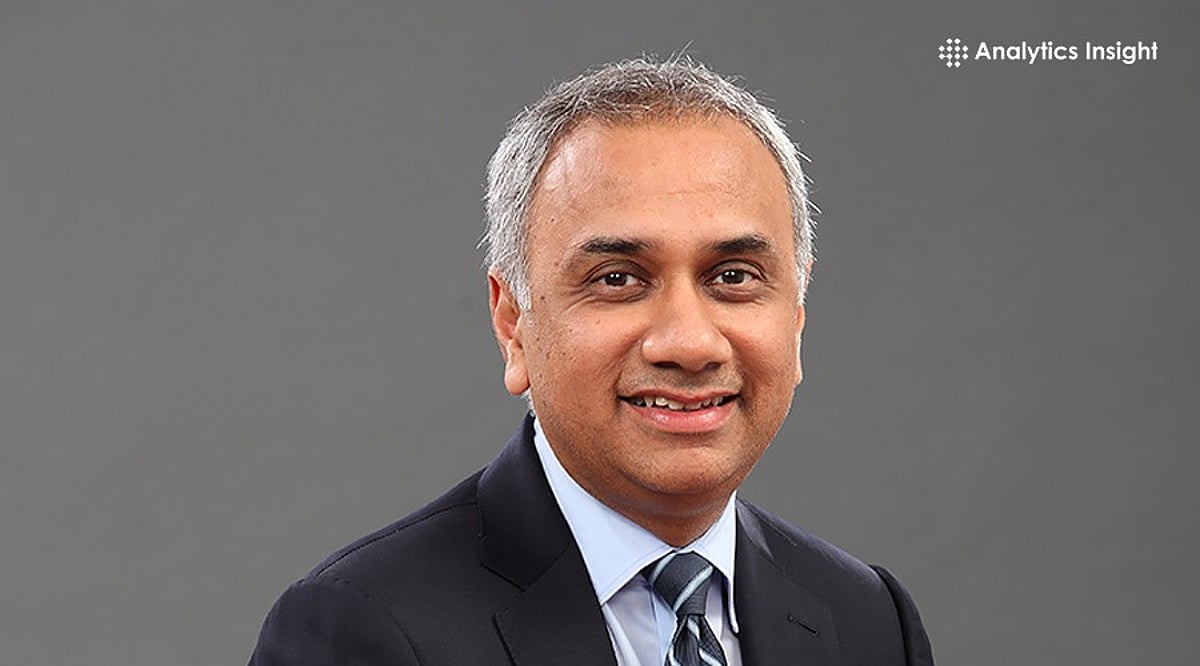
  • How Salil Parekh’s Quiet Leadership Steered Infosys Through Tech Turmoil

    How Salil Parekh’s Quiet Leadership Steered Infosys Through Tech Turmoil

    In an industry that rewards loud personalities and bold declarations, Salil Parekh has built his reputation doing the opposite. No viral statements, no constant media appearances, no carefully curated social media presence. Yet over the years, he has quietly become one of the most respected names in India’s IT industry, leading Infosys through one of the most turbulent periods in global technology.

    Since taking charge of Infosys in 2018, Parekh has helped the company grow amid rapid changes in the tech industry. Cloud computing, AI, automation, and digital services have become a much bigger part of business across the world. Through all these changes, Infosys has continued to grow steadily.

    The Journey Before Infosys

    Before joining Infosys, Parekh spent many years at Capgemini, where he held various leadership roles and worked with global clients across industries. Those years gave him deep experience in technology, consulting, and business operations. When Infosys announced him as CEO in 2018, the company was navigating a difficult period marked by leadership changes and internal disagreements. Many felt the company needed stability and calm leadership. Parekh entered quietly and focused on the work rather than creating headlines.

    A Different Kind of CEO

    One thing many people notice about Salil Parekh is his calm demeanor. He is not the type of business leader who tries to dominate every conversation. He speaks in a simple, measured way. Even during difficult times, he rarely appears reactive or dramatic. That style has helped him build trust over time. Inside Infosys, employees see him as practical and balanced — someone who listens carefully and focuses on long-term goals rather than short-term excitement. In a business world that often rewards loud personalities, his quieter approach stands out.

    Infosys Under His Leadership

    Infosys has transformed during Parekh’s tenure. The company expanded its digital and cloud services as businesses worldwide moved more operations online. Infosys also ramped up work in AI and automation to meet growing demand. The company continued signing large global deals and strengthening relationships with international clients. Employee training became a priority as technology evolved rapidly; Infosys invested heavily in helping workers learn new skills and adapt to shifting industry needs. The company’s global presence also grew stronger during these years.

    Navigating Difficult Times

    The tech industry has faced significant headwinds. Economic uncertainty affected business spending in many countries. Competition in the IT sector intensified, with companies vying for major contracts. Managing large teams across different countries brought challenges, especially during remote work periods. Then came the rapid rise of AI, pressuring technology companies to move faster and adapt to changing customer demands. Through all this, steady leadership proved essential. Instead of reacting with panic, Parekh kept the company focused on stability and long-term growth.

    Why His Leadership Style Matters

    Many business leaders today are known for their high visibility. Salil Parekh is respected for the opposite reason: he keeps a low profile and focuses on execution rather than publicity. Clients trust consistency, employees value stability, and investors look for leaders who remain calm during uncertain times. Parekh has built that reputation over years of consistent leadership. His style may not always generate headlines, but it has helped Infosys remain strong during a rapidly changing period for global technology.

    Final Thoughts

    Salil Parekh embodies a quieter style of leadership that many people still deeply value. He does not try to be the loudest voice in the room. Instead, he focuses on steady work, long-term growth, and keeping the company prepared for the future. As AI, cloud services, and automation continue to reshape the tech world, Infosys is navigating that shift under his guidance. His story is a reminder that strong leadership is not always about visibility — sometimes calm thinking, patience, and consistency matter even more.


  • Kasi Cloud’s Johnson Agogbua on Building Hyperscale AI-Ready Data Centers Across Africa

    Kasi Cloud’s Johnson Agogbua on Building Hyperscale AI-Ready Data Centers Across Africa

    Johnson Agogbua, Co-Founder and CEO of Kasi Cloud, has spent over three decades building internet infrastructure—from early internet protocols at UUNET Technologies to optical networking at Movaz and connecting billions at Meta and Reliance Jio. Now, he is applying that expertise to address Africa’s most critical infrastructure gap: hyperscale, AI-ready data centers.

    Founded with Mark Adams (formerly Chief Strategy Officer at Equinix), Kasi Cloud emerged from a simple question: why not Africa? The company launched in early 2020 amid the pandemic, which ironically allowed for deep market research and site selection. It acquired 4.2 hectares in Lagos, secured backing from the Nigerian Sovereign Wealth Fund and seed funding from DH Capital, and broke ground by 2022.

    Kasi differentiates itself with an “unstoppable capacity” philosophy—designing for Africa’s digital needs a decade ahead. This includes refactoring power architecture all the way to the rack level and building redundant carrier-neutral colocation space. A key partnership with Eaton cut delivery times by 50% and reimagined power for the African context. “We are not going to build a second-rate data centre in Africa,” Agogbua emphasizes. “World-class belongs in Africa as well.”

    The company’s hyperscale-first approach is a direct answer to the continent’s growing demand for cloud and AI infrastructure, positioning Kasi as a critical player in Africa’s digital transformation.

  • Kasi Cloud CEO Johnson Agogbua on Building Hyperscale AI-Ready Data Centers in Africa

    Kasi Cloud CEO Johnson Agogbua on Building Hyperscale AI-Ready Data Centers in Africa

    Johnson Agogbua, co-founder and CEO of Kasi Cloud, is leveraging three decades of internet infrastructure expertise to bring hyperscale, AI-ready data centers to Africa. In an exclusive interview, Agogbua details how his experience at UUNET Technologies, Movaz (now ADVA), Meta, and Reliance Jio has shaped Kasi Cloud’s mission to close Africa’s digital infrastructure gap.

    Founded with Mark Adams, former Chief Strategy Officer at Equinix, Kasi Cloud emerged from the simple question: why not Africa? The company formally launched in early 2020, just as the pandemic hit. Rather than stalling progress, COVID-19 allowed Agogbua to conduct deep market research while grounded in Nigeria. Kasi acquired 4.2 hectares in Lagos, secured backing from the Nigerian Sovereign Wealth Fund and seed funding from DH Capital (now Citizens Bank), and broke ground in 2022.

    Kasi Cloud differentiates itself through what Agogbua calls “unstoppable capacity”—a hyperscale-first design that anticipates Africa’s digital demands a decade ahead. The company redesigned data center power architecture from utility to rack level, partnering with global power management firm Eaton to cut delivery timelines by 50%. Kasi also built redundant carrier-neutral colocation space, with one visiting network CEO noting it was larger than any existing data center in Lagos.

    “We didn’t set out to be a data center company alone,” Agogbua explains. “We set out to solve problems… We imagined a world where the population says, ‘We are truly digital.’” He emphasizes that Kasi will not use hand-me-down technology: “World-class belongs in Africa as well.”

    The interview underscores a pivotal moment for AI and cloud infrastructure on the continent, with Kasi Cloud positioned to address an urgent need for scalable, AI-ready digital platforms.

  • Murakkab: New System Cuts AI Agent Energy Use and Cost by Over 70%

    Murakkab: New System Cuts AI Agent Energy Use and Cost by Over 70%

    Agentic workflows — AI-powered software systems that chain multiple models and tools to complete complex tasks — are becoming the backbone of cloud computing. But their fragmented design often wastes computation, energy, and money. Researchers from MIT and Microsoft have developed a new system called Murakkab that streamlines the design and deployment of these workflows, automatically optimizing them for speed, energy efficiency, and cost.

    With Murakkab, developers describe their application’s goal in plain language, and the system automatically selects the best AI models, tools, hardware configurations, and resource allocations. It adjusts these on the fly based on user priorities, such as minimizing costs or maximizing speed. In tests, Murakkab used only about 35% of the computation, 27% of the energy, and under 25% of the cost compared to traditional methods — without sacrificing performance.

    “Agentic workflows are getting very complicated and quickly becoming the backbone of what cloud providers are doing,” says Gohar Chaudhry, an MIT EECS graduate student and lead author of the paper presented at USENIX OSDI. “Energy usage is a huge concern, so we need to be very careful about how efficient these workflows are.”

    Murakkab also adapts dynamically when new models or hardware become available, eliminating the need for developers to manually reconfigure their systems. The researchers plan to expand the system to more complex workflows and larger computing clusters.