Tag: cloud computing

  • Money in Motion: The Key Technologies Transforming Digital Finance

    Money in Motion: The Key Technologies Transforming Digital Finance

    Digital finance is evolving at unprecedented speed. From artificial intelligence to biometric authentication, a range of technologies is changing how consumers and institutions handle money. Here is a closer look at the innovations reshaping payments, banking, and financial services.

    Artificial Intelligence

    AI is changing how banks and financial apps handle everyday money tasks. It can detect unusual transactions, assess risks, answer customer questions, and offer personalized financial services. AI also helps institutions process large amounts of data quickly, making digital payments and banking services faster, safer, and more responsive.

    Blockchain

    Blockchain provides a shared digital record that can track transactions without relying on a single central database. The technology supports cryptocurrencies, smart contracts, and other financial applications. Banks and businesses are exploring blockchain for faster settlements, cross-border payments, digital assets, and records that are easier to verify and trace.

    Mobile Payments

    Smartphones have become a central part of everyday finance. Users can pay bills, transfer money, shop online, and make purchases at physical stores through banking apps and digital wallets. QR codes and near-field communication have further simplified payments, reducing the need for cash and cards.

    Cloud Computing

    Cloud computing gives financial institutions flexible computing power and storage through internet-based systems. Banks use cloud infrastructure to run applications, manage data, and launch digital services without relying entirely on traditional hardware. It also supports faster updates and helps financial platforms handle changing customer demand.

    Open Banking

    Open banking allows customers to share financial information with authorized third-party services through secure APIs. This connects bank accounts with budgeting apps, payment platforms, lending services, and other financial tools. By making data easier to access with permission, open banking is creating more connected digital financial experiences.

    Biometric Authentication

    Biometric authentication uses features such as fingerprints, facial recognition, or voice patterns to confirm a user’s identity. It has become common across smartphones and financial applications, helping users access accounts and approve transactions. Biometrics make authentication quicker while adding another layer of identity verification to digital financial services.

  • Quantum Computing in 2026: Key Trends and Milestones Shaping the Next Phase

    Quantum Computing in 2026: Key Trends and Milestones Shaping the Next Phase

    Quantum computing is entering a pivotal phase in 2026, moving beyond the race for raw qubit counts to focus on logical qubits, error correction, scalable hardware, and practical workloads. Researchers are shifting from theoretical potential to systems that could bring quantum computers closer to real-world applications. Here are the key developments to watch this year.

    Quantum Error Correction Takes Center Stage

    Error correction is becoming a critical benchmark for quantum computers. Google’s Willow research demonstrated below-threshold error correction, where larger encoded systems reduced logical errors. The next milestones include longer-lived logical qubits, reliable logical gates and lower hardware costs, making error correction a primary focus for progress.

    Verified Quantum Advantage Gains Attention

    Google’s Quantum Echoes work reported a verifiable quantum advantage on its Willow processor, performing a calculation faster than leading classical approaches. The algorithm also pointed toward molecular-structure applications. Independent verification and strong classical comparisons remain important for establishing credible quantum advantage.

    Quantum Hardware Paths Diverge

    Superconducting, trapped-ion, neutral-atom, photonic and silicon-spin systems are taking different scaling approaches. Neutral atoms offer large arrays and flexible connectivity, while silicon-spin systems could benefit from links to established semiconductor manufacturing, creating diverse hardware ecosystems.

    Logical Qubits Matter More Than Raw Qubit Counts

    A large number of physical qubits does not automatically mean a useful quantum computer. Physical qubits are fragile, so error correction creates reliable logical qubits. Future progress will increasingly depend on logical-qubit performance, error rates and useful circuit operations rather than raw numbers.

    Quantum Computing Moves Toward Real-World Workloads

    Researchers are testing quantum systems for chemistry, materials science, optimisation and other specialised problems. Near-term systems are likely to combine classical computers with quantum processors rather than replace traditional computing infrastructure, focusing on hybrid workflows.

    Cloud Access Expands Enterprise Testing

    Quantum computing is increasingly available through cloud platforms, allowing businesses and researchers to test algorithms without owning quantum hardware. The next phase will focus on quantum-classical workflows, better simulators, hardware-neutral software and repeatable enterprise pilots.

    Post-Quantum Security Is Underway

    Quantum computing also creates a cybersecurity challenge. NIST finalised three post-quantum cryptography standards in 2024: ML-KEM, ML-DSA and SLH-DSA. Organisations are now preparing systems for migration away from quantum-vulnerable public-key cryptography.

    The Next Quantum Milestones to Watch

    Watch for more reliable logical qubits, lower error rates, independently reproducible quantum benchmarks, stronger quantum-classical workflows and measurable commercial applications. The key question is shifting from how many qubits exist to how reliably and economically they can perform useful work.

  • Oracle Layoffs in India: 1,500 Mid-to-Senior Staff Affected as Company Pivots to AI

    Oracle Layoffs in India: 1,500 Mid-to-Senior Staff Affected as Company Pivots to AI

    Oracle has initiated another round of layoffs in India, reportedly affecting 1,000 to 1,500 employees, primarily mid-to-senior-level staff in web development and maintenance roles. The cuts began on Monday, September 14, and are part of the company’s broader global restructuring aimed at reallocating resources toward artificial intelligence (AI), cloud services, and data centers.

    According to reports, the layoffs have also impacted senior employees at Oracle Financial Services Software. However, Oracle has not officially confirmed the number of employees affected or provided details on the impact to its Oracle Cloud Infrastructure teams in India.

    This latest round follows multiple workforce reductions earlier in 2026, as Oracle ramps up investment in AI infrastructure. In the fiscal year ending May 2026, the company reduced its global workforce by approximately 21,000 employees. Oracle’s capital expenditure reached $55.7 billion in fiscal 2026, with a significant portion directed toward data center expansion.

    The layoffs signal a strategic shift in Oracle’s priorities, with the company focusing on high-growth areas like cloud computing and AI, while scaling back traditional web development and product engineering teams. As demand for AI and cloud services grows, Oracle is raising additional funds to support its plans.

    Industry observers note that the restructuring reflects a changing skill demand within the company, as it builds more data centers and expands its cloud business. The exact number of affected employees in India remains unverified, and no official statement has been issued by Oracle regarding the layoffs.

  • Essential AI, GenAI, and Foundation Model Skills Reshaping Data Science Careers by 2026

    Essential AI, GenAI, and Foundation Model Skills Reshaping Data Science Careers by 2026

    Artificial intelligence is rapidly transforming the data science job market. A few years ago, most people associated the field with data scientists, analysts, and machine learning engineers. Today, the range of roles has expanded far beyond traditional expectations.

    According to the Analytics Insight Data Science Education Report 2026, new positions linked to generative AI, AI products, AI governance, and foundation models are emerging. These include GenAI Engineers, AI Product Managers, AI Governance Specialists, AI Solutions Architects, and Foundation Model Scientists. This shift also means the skills required for these jobs are evolving.

    The Rapid Growth of AI and GenAI Skills

    Generative AI has moved quickly from experimental projects to real-world business applications. Most companies now use AI for content creation, coding, or research. This growing adoption has created demand for professionals who can do more than just use AI chatbots. Businesses are looking for experts who understand and leverage these systems efficiently.

    For instance, GenAI Engineers work with large language models, data, AI applications, and testing. To streamline processes, they must understand how a model responds, where it can fail, and how its output can be improved.

    Prompt engineering has also gained popularity. Well-crafted prompts help AI tools produce clearer and more useful results. However, writing prompts is only part of the job. Professionals must also verify the accuracy of the output.

    Why does this matter? Because AI often makes mistakes. The report highlights that 56% of Indian companies see AI hallucinations as a challenge. An AI system may provide an answer that sounds correct but is actually wrong. This is why skills such as testing, fact-checking, and critical thinking are becoming increasingly important.

    Skills That Will Matter Most

    The report emphasizes that several technical skills remain essential, including machine learning, Python, big data, cloud computing, data engineering, deep learning, natural language processing, and computer vision.

    AI automation is also crucial. Many businesses want AI systems that handle routine tasks, helping employees save time. However, technical know-how alone is not enough. Professionals working with AI must be able to identify problems—whether poor data or models producing incorrect results. An AI system may behave differently when data or tasks change. In such cases, debugging and data-quality skills are vital for addressing issues.

    Responsible AI is another area gaining attention. Companies need people who can examine issues like bias, fairness, privacy, and how AI decisions are made. The report notes that nearly 51% of organizations have faced negative outcomes from unmanaged AI systems. It also points to a 53% talent gap in areas such as algorithmic bias audits and Explainable AI.

    The Road Ahead for AI Professionals

    The data science field is broader than it was a few years ago. AI and GenAI are creating new jobs and also transforming existing ones. For students and working professionals, the best approach is to build strong fundamentals. Machine learning, Python, data handling, and cloud skills still matter. These can then be combined with knowledge of GenAI, LLMs, AI automation, and foundation models.

    The Data Science Education Report 2026 shows where the market is heading. Future AI professionals will not just work with data; they will build AI systems, test them, fix problems, and help businesses use them responsibly.

    Frequently Asked Questions

    1. What are the most important AI skills in 2026? Machine learning, Python, cloud computing, data engineering, GenAI, AI automation, debugging, data quality, and critical thinking are among the top skills.
    2. What skills are needed for GenAI jobs? GenAI roles require knowledge of LLMs, AI applications, data, model testing, prompt design, and AI automation.
    3. What are Foundation Model skills? Foundation Model skills include understanding large AI models, testing their performance, adapting them for different tasks, and deploying them in real applications.
    4. Why is responsible AI important? Responsible AI helps companies address problems such as bias, privacy risks, unfair results, and unexplainable decisions.
    5. Will traditional data science skills still matter? Yes. Skills like Python, machine learning, statistics, and data engineering remain valuable. New AI skills build on these existing foundations.
  • Anthropic Targets Record $100B IPO With Potential $10B NVIDIA Investment

    Anthropic Targets Record $100B IPO With Potential $10B NVIDIA Investment

    Anthropic is reportedly planning the largest initial public offering in history, aiming to raise up to $100 billion at a valuation of approximately $2 trillion. The move has already generated significant buzz in the market, and NVIDIA is reportedly considering a $10 billion investment as part of the deal. The plan is not yet final and could change.

    The potential investment underscores the deepening relationship between NVIDIA and Anthropic. Over recent years, Anthropic has become one of NVIDIA’s biggest customers for chips, making NVIDIA a natural early investor in the IPO. The two companies are also expanding their broader partnership: Anthropic has agreed to purchase $30 billion in Microsoft Azure computing capacity powered by NVIDIA chips. Additionally, Amazon and Google are backing Anthropic with substantial resources. The company plans to spend more than $100 billion on Amazon’s AWS over a decade and has secured additional computing capacity through Google.

    Anthropic’s need for computing power is growing rapidly as demand for its Claude AI models surges. The company raised $65 billion in May at a valuation of $965 billion, and by July its annual revenue run rate had already crossed $65 billion. These deepening ties highlight how AI firms now depend on chips and cloud services to scale, and NVIDIA stands to benefit as Anthropic requires more computing power to train and run its models.

    Anthropic’s possible $100 billion fundraising could set a new benchmark for IPOs, and a $2 trillion valuation would demonstrate sustained investor enthusiasm for AI. NVIDIA’s potential $10 billion investment could provide a major boost to the offering, further cementing the link between the company building advanced AI models and the company supplying the hardware to run them. Anthropic’s market debut will serve as a critical test for the AI boom, revealing how much investors are willing to pay for next-generation AI companies.

  • Ashutosh Kulkarni: Elastic CEO Driving Enterprise AI and Cybersecurity Innovation

    Ashutosh Kulkarni: Elastic CEO Driving Enterprise AI and Cybersecurity Innovation

    Ashutosh Kulkarni is a seasoned technology executive and strategic business leader, best known as the Chief Executive Officer of Elastic. He has made significant contributions to artificial intelligence, enterprise search, cybersecurity, and cloud technologies. Prior to becoming CEO, Kulkarni held senior management roles at McAfee, Akamai Technologies, Informatica, and Sun Microsystems.

    Early Life and Education

    Kulkarni developed an early passion for engineering and technological innovation. He earned a Bachelor of Engineering degree from the University of Mumbai and a Master of Science in Computer Engineering from The University of Texas at Austin. He also holds an MBA in Marketing & Finance from the University of California, Berkeley.

    Professional Career

    Ashutosh Kulkarni began his career at Sun Microsystems before moving to Informatica, where he spent a decade leading cloud product initiatives. He then joined Akamai Technologies and later McAfee, holding various leadership roles. In 2021, he became Elastic’s Chief Product Officer, and in 2022, he was appointed CEO.

    Business Intervention in AI

    Under Kulkarni’s leadership, Elastic is advancing enterprise AI through an intelligent ecosystem that combines generative AI, agentic capabilities, AI-powered search, observability, performance monitoring, and cybersecurity to deliver scalable, secure, and high-performance digital experiences.

    AI Ecosystem

    Elastic’s unified AI ecosystem leverages Elasticsearch with leading AI platforms to provide vector search, RAG, safe deployment, and cloud-native capabilities, enabling businesses to build efficient and intelligent AI applications.

    Agentic Observability

    Agentic AI improves observability through log analysis, event detection, and natural language investigations. AI-driven insights accelerate root cause analysis, helping teams detect and resolve issues faster.

    AI Performance Monitoring

    AI enhances observability with distributed tracing, automated diagnostics, and AI-based troubleshooting, aiding in problem detection and improving application reliability.

    Agentic Security

    AI-powered security systems strengthen cyber defense through intelligent threat detection, automated investigations, explainable AI reasoning, and rapid incident response, improving visibility and minimizing response times.

    AI-Powered XDR Platform

    The AI-based XDR platform integrates automation, continuous monitoring, and intelligent threat analysis to effectively detect, investigate, and mitigate cyber threats.

    AI Infrastructure Intelligence

    AI-driven infrastructure observability provides anomaly detection, predictive insights, automated remediation, and natural language processing, speeding root cause analysis and increasing system resilience while reducing downtime.

    Business Achievements

    Ashutosh Kulkarni has expanded Elastic’s capabilities in AI, enterprise search, observability, and cybersecurity through innovative products and acquisitions. He has built strategic relationships with top technology companies such as OpenAI and NVIDIA. His leadership has driven consistent revenue growth and widespread enterprise adoption of Elastic’s software.

    Controversies

    As of now, there are no known controversies surrounding Ashutosh Kulkarni. He is widely respected for his expertise in enterprise AI, cloud computing, search technology, and observability. His leadership and technical skills have earned him an excellent reputation in the technology sector.

  • Is a Chromebook Ready for Everyday Use? Key Considerations for 2026

    Is a Chromebook Ready for Everyday Use? Key Considerations for 2026

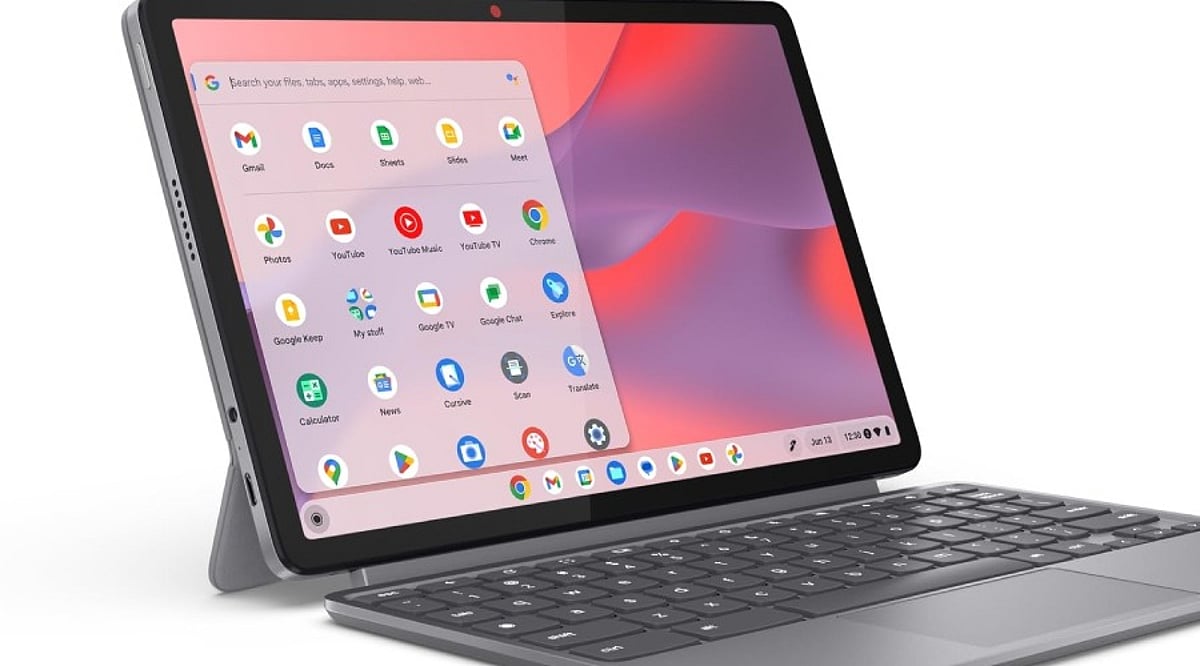
    Chromebooks have evolved far beyond their reputation as simple web-only devices. With the introduction of the Chromebook Plus line, improved hardware, long software support, and integrated AI tools, they now present a compelling option for daily computing. However, software compatibility with Windows and macOS applications remains a critical factor to evaluate before making a purchase.

    ChromeOS has matured into a robust platform for web research, email, document editing, video calls, media consumption, and cloud storage. Google services like Gmail, Drive, Docs, Sheets, and Slides work offline after initial setup—a vital feature for travelers, students, and professionals in areas with unreliable internet. The simplicity of the desktop, centered around the browser, appeals to users who rely primarily on online tools rather than heavy local software.

    The Chromebook Plus category represents a significant step forward. Models such as the Lenovo Chromebook Plus 14, equipped with MediaTek Kompanio Ultra 910 chips, 16GB of RAM, OLED displays, and over 13 hours of battery life, rival premium laptops. These devices handle multitasking with ease and offer a premium experience, making them suitable as a primary computer.

    AI features are now integral to Chromebook Plus. Gemini integration enables complex topic explanations, article summarization, cross-page comparisons, and in-browser task assistance. The “Help me Read” tool can summarize pages, answer questions about content, and simplify selected text. “Help me Write” assists in drafting, rewriting, shortening, or adjusting tone. While not a replacement for a creative workstation, these tools boost productivity in office, academic, and research contexts.

    Long-term value is another strength. Google now offers up to 10 years of automatic updates for eligible Chromebooks. Older models (pre-2021) may receive extended updates at the cost of losing Android app and Google Play Store access, but newer devices avoid this trade-off. Models with update support through 2033, 2035, or 2036 justify a higher initial investment.

    However, software limits persist. ChromeOS excels with web apps, Android apps, Linux tools, and cloud services. Applications built exclusively for Windows or macOS—such as Adobe Photoshop, Premiere, DaVinci Resolve, specialized CAD tools, certain enterprise software, and many local PC games—remain hurdles. Web versions of Microsoft 365 and cloud gaming services can cover some gaps, but they don’t replace every desktop application. A thorough check of essential apps before purchase is essential.

    Hardware recommendations for a primary Chromebook: at least 8GB of RAM and 128GB of storage, a 1080p webcam for quality video calls, a comfortable keyboard and trackpad, USB-C charging, and Wi-Fi 6E or Wi-Fi 7 support. Display quality matters more on a daily driver than on a secondary device. A premium configuration could include 8–16GB RAM, 256GB storage, a 14-inch 16:10 display, and robust build quality. Prices for premium Chromebooks can reach over $800.

    In summary, the Chromebook Plus lineup offers strong hardware, AI capabilities, and long-term support. The decision hinges on software: if all critical applications have viable web, Android, or Linux alternatives, ChromeOS provides a smooth, efficient daily experience. If not, a traditional laptop remains the safer choice.

    Frequently Asked Questions

    Q: Can a Chromebook be used as a main computer?
    A: Yes—it handles browsing, email, documents, video calls, media, cloud storage, and many productivity tasks effectively.

    Q: Is Chromebook Plus better than a regular Chromebook?
    A: Generally yes for demanding daily use; Plus models offer stronger hardware, better multitasking, and additional AI capabilities.

    Q: How long do Chromebooks receive updates?
    A: Google provides eligible ChromeOS devices with up to 10 years of automatic updates, depending on the model.

    Q: Can Chromebooks run Windows applications?
    A: Not all Windows apps have native ChromeOS versions. Web, Android, Linux, and cloud services cover some needs but not every desktop program.

    Q: What should I check before buying a Chromebook?
    A: Verify essential software compatibility first, then consider RAM, storage, display, webcam, keyboard, trackpad, ports, wireless connectivity, battery life, and the device’s update-support period.

  • Qualcomm Secures Potential $60 Billion AI Chip Deal with Amazon for AWS

    Qualcomm Secures Potential $60 Billion AI Chip Deal with Amazon for AWS

    Qualcomm and Amazon have entered into a long-term agreement to develop custom chips for Amazon Web Services (AWS), a deal that could be worth up to $60 billion depending on future orders. While the exact financial terms have not been officially disclosed, reports indicate that Amazon has not yet placed an order for that full amount. As part of the agreement, Qualcomm issued an Amazon affiliate a warrant to acquire up to 25 million Qualcomm shares at an exercise price of $161.26 per share. The warrant expires on September 3, 2036, and can be exercised without cash.

    The partnership will focus on chips designed for large-scale AI systems and high-speed optical connections. This move marks a strategic shift for Qualcomm, which is looking to reduce its reliance on the smartphone chip market. In the June 2026 quarter, Qualcomm’s handset revenue fell 19.6% year over year. The company aims for its data center business to exceed $15 billion in revenue by fiscal 2029. Meanwhile, Amazon will continue to use its own Graviton, Trainium, and Nitro chips alongside Qualcomm’s technology.

    Can Qualcomm Challenge NVIDIA?

    Qualcomm is entering a market dominated by NVIDIA, which reported $89 billion in data center revenue in its most recent quarter and has built a massive business around AI chips. Amazon also has its own AI chips, which could make the competitive landscape even tougher for Qualcomm. The Amazon deal gives Qualcomm a major customer and a platform to demonstrate its chip capabilities in a broader market. However, a single deal is unlikely to be enough to rival NVIDIA’s entrenched position. While this partnership may help Qualcomm reduce its dependence on smartphone chips, early data center deals may yield lower profit margins than its phone business.

    The $60 billion figure is not guaranteed revenue; future orders will determine how much business Qualcomm actually receives from Amazon. For now, the deal provides Qualcomm with a strong entry into the rapidly growing AI chip market.

  • 10 Must-Have Skills for Computer Engineers to Thrive in the AI Era

    10 Must-Have Skills for Computer Engineers to Thrive in the AI Era

    AI Literacy Is Becoming Essential

    AI is rapidly integrating into everyday software development, making AI literacy a critical skill for computer engineers. Current industry data shows that AI is now one of the most requested skills in job postings. Engineers should understand how AI models work and how to use them effectively in real-world development projects.

    Strong Programming Still Matters

    While AI tools can generate code, solid programming knowledge remains vital. Languages like Python, Java, and JavaScript continue to appear frequently in technology job requirements. Engineers need to understand code well enough to build systems, identify errors, test outputs, and improve applications with AI assistance.

    Data Skills Give Engineers an Edge

    AI systems depend heavily on reliable data, making data handling an important engineering skill. Engineers should know how to work with databases, analyze information, and build data pipelines. Understanding data quality also helps engineers identify problems before they affect AI models and software applications.

    Cloud Computing Is Now a Core Skill

    AI applications often require significant computing resources, making cloud knowledge increasingly important. India’s cloud-native developer community has grown rapidly, with hybrid cloud now widely used among developers. Engineers should understand cloud deployment, infrastructure, storage, and scalable application design.

    Cybersecurity Needs Stronger Attention

    AI is creating new opportunities for cyberattacks while also helping security teams detect threats. Computer engineers need to understand secure coding, system vulnerabilities, identity controls, and basic threat detection. Recent cyber incidents have highlighted how AI can make attacks faster and more sophisticated.

    Engineers Need to Work With AI Agents

    AI agents are evolving from simple question-answering systems toward tools that can perform multi-step tasks. Engineers will need to understand how these systems operate, connect with software, and work within controlled permissions. Verification and testing are becoming more important as AI systems take on more coding work.

    Critical Thinking Still Sets Engineers Apart

    AI can produce code, analyze information, and suggest solutions, yet engineers still need to judge whether the output is correct. Critical thinking helps identify errors, weak assumptions, security risks, and unreliable AI results. This human oversight is becoming especially important as companies use AI across software and business workflows.

  • Cloud Computing vs Software Development: Which Tech Career Pays More in 2025?

    Cloud Computing vs Software Development: Which Tech Career Pays More in 2025?

    The debate between cloud computing and software development careers has intensified as both fields offer lucrative opportunities. This article breaks down salary potential for key roles in each domain, helping you decide which path aligns with your financial and professional goals.

    Cloud Engineering Roles

    Cloud Engineer: Cloud engineers design, deploy, and maintain scalable infrastructure. As businesses accelerate migration and modernization, these professionals command strong salaries.

    Cloud Architect: Cloud architects craft complex technology environments and migration strategies. This highly specialized role consistently ranks among the best-paid positions in tech.

    Cloud Security Engineer: Cloud security engineers protect infrastructure, applications, and data from cyber threats. Their specialized expertise attracts increasingly competitive compensation packages.

    Software Development Roles

    Software Developer: Software developers build applications, websites, and platforms. Experienced professionals earn competitive salaries across technology companies, startups, and enterprises.

    Full-Stack Developer: Full-stack developers handle both frontend and backend development. Their versatility creates strong earning opportunities across companies and tech-driven businesses.

    Backend Developer: Backend developers create server-side systems, APIs, and databases. Salaries increase significantly with programming expertise, scalability knowledge, and experience.

    Hybrid and Emerging Roles

    DevOps Engineer: DevOps engineers bridge development and operations, automating deployments and infrastructure. They earn premium salaries for specialized technical and automation expertise.

    Machine Learning Engineer: Machine learning engineers combine programming, mathematics, and AI. They often earn premium salaries because specialized AI skills remain highly sought-after globally.

    Career Growth Potential

    Both cloud and coding careers can become lucrative, but specialized skills, certifications, leadership responsibilities, and emerging technologies significantly influence earnings. The key is to choose a niche that matches your interests and invest in continuous learning.