Tag: Compliance

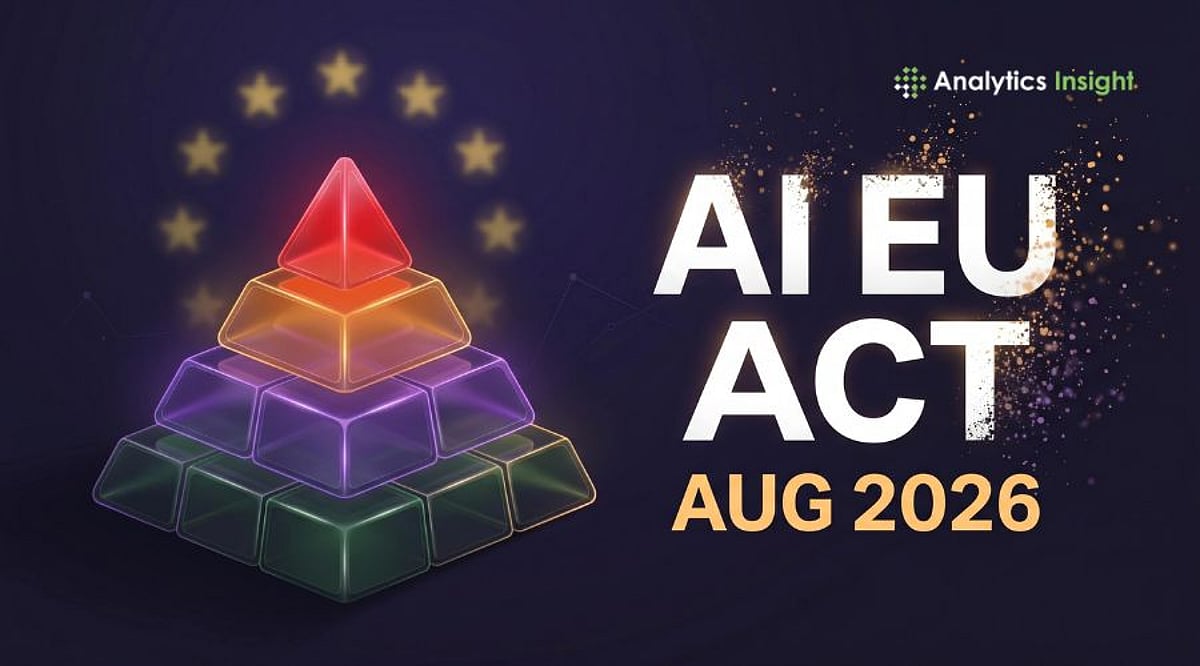
  • EU AI Act’s August 2 Deadline: New Transparency and Labeling Requirements for AI Systems

    EU AI Act’s August 2 Deadline: New Transparency and Labeling Requirements for AI Systems

    The European Union is advancing toward full enforcement of its artificial intelligence regulations under the EU AI Act. Beginning August 2, 2026, new transparency and compliance obligations will apply across all member states. These rules mandate disclosure when AI interacts with users, clear labeling of synthetic content, and oversight of general-purpose AI systems.

    Legal uncertainty persists as proposed delays under the Digital Omnibus package remain unratified. Violations could result in penalties of up to 7% of global annual turnover in serious cases.

    Key Transparency Rules Taking Effect in August 2026

    From August 2, 2026, providers of AI systems that directly interact with people must make that interaction obvious, unless it is already apparent. Systems generating synthetic audio, images, video, or text must mark outputs in a machine-readable format where technically feasible.

    Deployers also have responsibilities: users of emotion recognition or biometric categorization systems must inform individuals exposed to those tools. Those deploying deepfake systems must disclose when image, audio, or video content has been artificially created or altered.

    The European Commission confirms that Article 50 transparency obligations apply from the August 2 deadline. A voluntary code of practice for marking and labeling AI-generated content has been published, but legal duties under the AI Act remain in effect.

    Penalties and High-Risk Rule Uncertainty

    The penalty structure underscores the deadline’s significance. Breaches of prohibited AI practices can incur fines up to €35 million or 7% of global annual turnover. Other violations, including Article 50 transparency duties, may reach €15 million or 3% of global annual turnover. Submitting false, incomplete, or misleading information to authorities can result in fines up to €7.5 million or 1% of global annual turnover. Member states must establish enforcement rules with consideration for small businesses and startups.

    Confusion surrounds the high-risk timeline. The Council of the EU and Parliament reached a political agreement on May 7 to delay standalone high-risk AI rules to December 2, 2027, while systems embedded in products would shift to August 2, 2028. Companies treat this change as tentative until the legal process completes, making the original August 2 date critical for planning—especially for firms using AI in biometrics, hiring, education, infrastructure, or public services.

    Italy Moves Early as AI Adoption Rises

    Italy has outpaced many EU peers in preparation. Its Law 132/2025 established a national AI framework aligned with the EU AI Act, assigning oversight to the Agency for Digital Italy and the National Cybersecurity Agency. On June 10, 2026, the Italian government gave preliminary approval to two implementing decrees under that law. The draft measures prohibit fully automated hiring, dismissal, and disciplinary decisions affecting workers’ rights, pending parliamentary review.

    ISTAT data shows AI adoption among Italian firms with at least 10 employees rose to 16.4% in 2025 from 8.2% in 2024 and 5.0% in 2023. However, skills remain a barrier: 58.6% of non-AI-using firms cited lack of skills, while 47.3% pointed to unclear regulation. This gap pressures businesses to map AI tools, classify risks, assign responsibility, and document human oversight before the August deadline.

  • Cregis 2026 Review: Unified Crypto Infrastructure for Enterprise Operations

    Cregis 2026 Review: Unified Crypto Infrastructure for Enterprise Operations

    Digital assets are becoming part of how mainstream finance runs, and that change has exposed a structural problem. Most companies still manage wallets, fund movement, compliance, and custody on separate tools. Each one works on its own, but getting them to work together takes constant effort.

    This is the gap Cregis has spent close to a decade closing. Rather than offering a standalone wallet or payment product, it provides an enterprise infrastructure platform that brings together wallet infrastructure, fund flow orchestration, and institutional governance into a unified operational framework.

    Cregis Product Architecture Overview

    By the company’s own account, Cregis has never pivoted. It grew by answering one question over and over: How can enterprises manage digital assets more safely and efficiently? Over time, customer demand revealed three recurring infrastructure needs – wallet management, fund movement, and asset custody. Those three needs became the pillars the Cregis platform is building on: the wallet layer (WaaS), the fund flow layer (Flow), and the custody layer (Custody).

    Cregis at a Glance – Quick Overview

    There is a lot to unpack with Cregis, so before we get into the details, here is a simple overview of what it is and what it does:

    • Wallet-as-a-Service (WaaS): the control layer that lets enterprises build crypto wallets into their own products via a single API, with MPC security splitting private keys into separate pieces.
    • Flow: the movement layer that orchestrates fund movement between wallets, accounts, entities, and operational workflows, covering collection, routing, payouts, treasury movement, and settlement.
    • Custody: the governance layer, built on bank-grade Hardware Security Modules (HSMs), combining secure key management with governance policies, approval workflows, compliance validation, and audit trails.

    Cregis Wallet-as-a-Service (WaaS): The Control Layer

    For most enterprises, digital asset operations begin with wallet infrastructure. This is where Cregis’s Wallet-as-a-Service, or WaaS, sits within the broader platform architecture. Companies need crypto wallets inside their own product, and building that infrastructure securely is hard and slow. WaaS gives them that whole stack as ready infrastructure. With a single API, one can build crypto wallets into a product so they generate addresses and process transactions. The controls are built for how a company operates. Approvals can require several sign-offs, the company defines its own risk rules, and address management keeps pace as volume climbs. Underneath all of it works MPC, the security model that splits each private key into separate pieces. No one person or device ever holds the full key.

    Cregis Flow: The Movement Layer

    Flow is the fund flow orchestration layer of the platform. The capability is not a payment processor or a checkout tool. The work happens one level deeper, in how digital assets move between wallets, accounts, entities, and the operational workflows a finance team runs every day. Collection, routing, payouts, treasury movement, and settlement all run through this one layer. Funds can be pooled from accounts on many chains, routed to the appropriate internal destinations, and paid to partners on whatever schedule the business sets, with manual steps automated. That covers the full lifecycle of a company’s funds, from the point they enter to the point they leave. The Payment Engine works as a component within Flow and extends Cregis to FX brokers, cross-border payment firms, and the wider fintech infrastructure.

    Cregis Custody: The Governance Layer

    As institutional adoption of digital assets grows, secure storage is only part of the challenge. Banks and enterprises also need stronger controls over how assets are managed, approved, and moved. To support these requirements, Cregis introduced Trust Vault in 2025. Designed for institutional digital asset operations, including custody, treasury, payments, stablecoin and RWA issuance, Trust Vault serves as the trusted key management and governance foundation behind the company’s institutional infrastructure. Built on bank-grade Hardware Security Modules (HSMs), Trust Vault combines secure key management with governance policies, approval workflows, compliance validation, and audit trails in a single operational framework. Together, these capabilities form the foundation of Cregis Custody, the company’s upcoming institutional custody offering.

    TronGas Station and the Operations Hub: The Supporting Tools

    Around those three core capabilities, a couple of smaller tools deal with the practical headaches that show up once you run crypto at volume. TronGas Station cuts your gas costs for USDT transfers on the Tron network. You pay a small fixed fee in USDT per transaction and skip the usual need to buy and stake TRX, which Cregis says saves up to 60 percent. The Operations and Security Hub ties the rest of the platform together and hands you role-based permissions, approval rules, transaction analytics, and round-the-clock monitoring.

    Security and Compliance

    Before a serious buyer signs off on infrastructure like this, the security review is usually the longest part of the conversation. Cregis has a lot to work with in that review, and most of it holds up. For institutions with higher security requirements, sensitive keys can be protected inside bank-grade Hardware Security Modules (HSMs), and CertiK has audited the smart contracts. Nine years in, the company reports zero security incidents. On the compliance side, Cregis has also built the certifications that institutional procurement teams typically expect: SOC 2 Type I and SOC 2 Type II, and ISO 27001. Compliance carries through to how money moves. Cregis screens transactions through Elliptic, so the system flags high-risk addresses and tainted funds before they reach your wallets.

    Who Cregis Is For

    Cregis fits a range of businesses that handle crypto, but several specific businesses can get the best value out of it: Banks, financial market infrastructures (FMIs), and exchanges; Forex platforms; PSPs, fintechs, and financial institutions; and Web3 companies.

    Cregis vs. Competitors

    Most providers in this space operate across different parts of the digital asset infrastructure stack. Fireblocks provides institutional-grade custody and wallet infrastructure; Cobo offers wallet infrastructure alongside developer-focused tooling; Dfns provides infrastructure for embedded wallet use cases. Cregis takes a more integrated approach, combining wallet infrastructure, fund flow orchestration, and operational governance into a single platform for end-to-end enterprise fund movement.

    The Trade-offs

    Pros

    • Proven track record: Cregis has operated since 2017 with no major security incidents, more than $300 billion in cumulative transaction volume, and over 4,000 clients across 50+ countries.
    • Strong balance of capability and cost: Cregis offers a broader range of enterprise capabilities while maintaining a more accessible commercial model.
    • Compliance built into operations: Governance controls, approval workflows, AML screening, and audit trails are integrated into everyday fund operations.

    Cons

    • Enterprise-oriented onboarding: Cregis is designed primarily for institutional and enterprise clients, meaning access and evaluation typically require sales-led onboarding.
    • Enterprise deployment model: Pricing and architecture vary depending on deployment type.
    • No quick self-serve trial: full access runs through a demo and sales process, with only a limited free tier to test first.

    Final Thoughts

    Cregis is built around a simple idea: managing the full lifecycle of digital asset operations through a single platform. Rather than replacing one point solution with another, it aims to reduce the operational complexity that comes from managing multiple vendors and disconnected workflows. For teams operating at scale, especially exchanges, payment providers, brokers, and Web3 companies with complex transaction flows, this consolidation reduces fragmentation across tools and operational layers. At the same time, the platform is modular, which means smaller teams or narrower use cases can still start with specific components—such as wallet infrastructure or payment flows—and expand over time as needs evolve.

  • MiCA Deadline Forces Thousands of European Crypto Firms to Shut Down

    MiCA Deadline Forces Thousands of European Crypto Firms to Shut Down

    Crypto companies across Europe are reaching the end of the MiCA transition period, with July 1 marking the point when older national registrations will no longer be enough to stay in business. From that date, only firms that secured a MiCA license can continue offering crypto services across the region, placing many existing operators under pressure.

    Industry figures show the gap between previously registered firms and those that completed the new licensing process. More than 3,000 virtual asset service providers (VASPs) were registered before MiCA, yet only 244 have obtained authorization as crypto-asset service providers (CASPs). Meanwhile, the European Securities and Markets Authority has instructed firms without approval to wind down their activities in an orderly manner while protecting customer assets.

    MiCA Deadline Leaves Many Firms Without Authorization

    MiCA became fully applicable across Europe after introducing stablecoin rules in June 2024 and broader crypto regulations later that year. Existing providers were granted a transition period that expires on July 1, allowing time to obtain authorization from national regulators. Licensed firms can then operate throughout the European Economic Area, which includes the European Union, Norway, Iceland, and Liechtenstein.

    Meanwhile, the European Securities and Markets Authority (ESMA) has instructed unauthorized crypto firms to close their operations in an orderly manner once the transition period ends. The regulator also asked companies to safeguard customer assets during the process. Industry executives expect the new framework to reduce the number of active providers across the region.

    Erald Ghoos, CEO of OKX Europe, estimated that “80% of the crypto players won’t survive after MiCA.” He added that “It’s not only because of MiCA itself, it’s because of the whole width and heaviness of the European regulatory burden.” According to Ghoos, firms offering stablecoin services may also require Payment Institution or Electronic Money Institution licenses, adding further compliance requirements.

    Compliance Costs Create Challenges for Smaller Companies

    Industry participants say the financial burden extends beyond the minimum capital required for authorization. Patrick Gruhn, founder and CEO of Perpetuals.com Ltd, said firms need between €50,000 and €150,000 in regulatory capital depending on their license category. However, obtaining authorization can cost as much as €700,000 during the first year, followed by annual compliance expenses that may reach €250,000 for smaller firms.

    Gruhn also stated that legal fees alone can approach €100,000, while the authorization process may take between 12 and 24 months before companies can begin regulated operations. He noted that although many businesses could disappear, numerous pre-MiCA registrations belonged to shell entities with limited activity. According to Gruhn, many compliance jobs created under the new framework may also offset employment losses elsewhere.

    Several companies have reportedly explored acquisitions rather than completing the licensing process themselves. Ghoos said some firms approached OKX Europe after determining they could not meet the regulatory costs required under MiCA.

    Poland Reflects the Wider Licensing Challenge

    Poland presents one of the clearest examples of the transition’s effect. The country previously had around 2,000 registered VASPs, yet only one company has obtained a MiCA license. Legislative delays and regulatory hurdles slowed the licensing process, leaving many firms without authorization ahead of the deadline.

    Mateusz Kara, CEO of Morphic Financial Group, said “It will change the business landscape of crypto entities a lot.” He added, “As far as I know, we are the only ones that have a MiCA license right now.” Kara also stated that many firms could be forced to cease operations during the second half of the year.

    Meanwhile, legal experts expect enforcement to differ among European jurisdictions. John Salmon, partner at Hogan Lovells, said “None of us know what’s going to happen,” noting that some countries introduced legislation later than others. However, his colleague Lavan Thasarathakumar said “Any regulator, jurisdiction, or member states allowing firms to continue to operate under their existing national law would be deemed in breach of EU regulations.”

    BitGo Europe has also introduced a regulated custody option that allows firms to transfer customer wallets instead of pursuing their own MiCA authorization. CEO Mike Belshe described the transition as ‘a setback,’ adding that “European users will become the biggest victims of the end of this transitional period.”

  • Continuous Compliance Automation: Transforming Enterprise Infrastructure from Reactive Audits to Real-Time Governance

    Continuous Compliance Automation: Transforming Enterprise Infrastructure from Reactive Audits to Real-Time Governance

    From manual audit sprints to always-on monitoring, enterprises are rethinking how they handle compliance across complex, hybrid infrastructures. The transformation toward continuous compliance is being driven by experts like Nadeem Siddiqui, whose work in large-scale enterprise environments has contributed to advancing how organizations operationalize governance across hybrid infrastructure.

    As enterprise infrastructure becomes increasingly distributed across hybrid and cloud-native environments, organizations are re-evaluating how they manage compliance at scale. Traditional audit-driven models, often reliant on periodic reviews and manual validation, are proving insufficient in environments where configuration changes occur continuously. Industry trends indicate a growing shift toward embedded, automated compliance frameworks that operate in real time.

    Among the professionals contributing to this transition is Nadeem Siddiqui, a senior software engineer and subject-matter expert in configuration management and infrastructure automation. Siddiqui’s work focuses on designing scalable systems that integrate compliance directly into operational workflows, enabling organizations to move from reactive audit cycles to continuous governance.

    Operating within a large enterprise environment comprising approximately 15,000 to 20,000 endpoints, with a majority of systems deployed in the cloud, Siddiqui has played a central role in the design and architectural advancement of a compliance and configuration intelligence platform known internally as Compass. The platform enables real-time monitoring of configuration states, policy enforcement, and automated remediation across both cloud-native and on-premises systems.

    Rather than relying on fragmented tools and manual data collection, the system consolidates compliance insights into centralized dashboards that provide visibility into drift events, policy violations, and remediation activities. This approach has significantly reduced operational friction associated with audit preparation, allowing teams to access structured compliance evidence on demand while maintaining continuous oversight of infrastructure changes.

    The platform’s adoption across U.S. member firms within the organization reflects its role in standardizing compliance practices at scale, enabling consistent policy enforcement and improving visibility across thousands of systems in production environments.

    Siddiqui’s contributions to the design and architectural evolution of this platform reflect a broader shift in how compliance is operationalized in large organizations. By translating regulatory and security control requirements into enforceable technical policies, he has enabled consistent compliance enforcement across diverse environments.

    In addition to system design, Siddiqui has worked closely with cross-functional teams, including cybersecurity, audit, DevOps, and site reliability engineering, to align compliance objectives with engineering practices. This integration ensures that compliance checks are embedded within delivery pipelines rather than introduced as late-stage controls, reducing risk while improving deployment efficiency.

    Beyond his engineering contributions, Siddiqui has also engaged in research and thought leadership in the field of intelligent infrastructure. He is the author of the peer-reviewed research paper, AI-Driven Compliance and Configuration Intelligence at Scale: An Explainable, Human-Centered Framework for Enterprise Infrastructure, which was presented at an academic conference. The work explores how artificial intelligence can enhance compliance systems by enabling predictive insights, explainability, and adaptive governance models.

    His research emphasizes the importance of human-centered design in automated compliance systems, highlighting the need for transparency and interpretability in AI-driven decision-making. This perspective aligns with broader industry discussions on responsible AI adoption within enterprise infrastructure.

    Siddiqui also contributes to the advancement of the field through his involvement in academic and technical review processes. He serves on editorial boards and actively evaluates scholarly work, helping in the development and distribution of research across automation, compliance engineering, and infrastructure systems.

    As organizations continue to expand their reliance on distributed architectures, continuous compliance is expected to evolve even more, especially with the integration of predictive analytics and AI-driven risk detection. In this sense, Siddiqui’s work demonstrates how embedding governance rights into infrastructure and operational pipelines can boost resilience, scalability, and real-time visibility—all of which matter greatly for enterprises facing increasingly complex regulatory and security landscapes.

    Industry trends suggest that methods mixing automation with data-driven insights and cross-functional alignment will shape the next generation of enterprise compliance frameworks. In this context, contributions like those by Nadeem Siddiqui show how compliance continues to transform from a periodic obligation into a continuous, integrated capability.

  • 2026 Guide to the Best Managed Security Service Providers (MSSPs) in the UAE

    2026 Guide to the Best Managed Security Service Providers (MSSPs) in the UAE

    Overview

    Compare the leading Managed Security Service Providers (MSSPs) in the UAE, including Help AG, CPX, Deloitte Middle East, Orixcom, and global cybersecurity firms. Learn how to evaluate MSSPs based on SOC maturity, managed detection and response (MDR), regulatory compliance, incident response, and UAE-specific cybersecurity requirements. Understand the importance of selecting an MSSP that aligns with your organization’s industry, compliance obligations, and operational security needs.

    Why the UAE Market Is Different

    Search for ‘best MSSP UAE 2026,’ and most results are self-promotional vendor blogs ranking themselves first. Yet the underlying need is real: UAE organizations face tighter regulations, a persistent shortage of skilled SOC analysts, and rising attack volumes in banking, healthcare, and government. Outsourcing security operations has shifted from optional to near-standard practice. The real question is not who’s ranked number one, but which provider fits your regulatory and operational reality.

    The regulatory backdrop here is more specific than most regions. NESA (UAE Information Assurance) standards apply broadly; Dubai ISR governs entities in the emirate; ADHICS sets healthcare-specific controls; and financial institutions answer to SCA guidelines on top of ISO 27001:2022. A provider excellent in the US or Europe but unfamiliar with these frameworks will cost you time during onboarding. This is also why ‘sovereign SOC’ has become a genuine differentiator: government-linked entities and critical infrastructure operators increasingly require data residency and analyst teams physically based in the UAE.

    What Separates a Real MSSP from a Reseller with a Dashboard

    The honest test is whether a provider runs its own SOC with its own analysts, or resells someone else’s platform with a support layer. Genuine SOC maturity shows up in specific, checkable things: 24/7 monitoring with named analyst headcount, documented incident response timelines, alignment to frameworks like MITRE D3FEND or NIST CSF, and a low noise-to-signal ratio so your team isn’t drowning in false alerts. MSSPs are no longer optional extensions of IT; they are core strategic pillars for resilience, but only those with real SOC operations behind the sales pitch deliver.

    Providers Actually Worth Evaluating

    Help AG, CPX, Deloitte Middle East, Orixcom, and select global providers with local SOC presence each offer distinct strengths. Evaluate them against your sector’s compliance needs and desired level of threat intelligence integration.

    Questions to Ask Before Signing Anything

    • Pricing transparency: Does the quote include onboarding, tool licensing, and scaling costs? Hidden fees are a common buyer complaint.
    • Compliance frameworks: Which UAE-specific frameworks has the provider been audited against, not just globally?
    • Client references: Ask for a real client in your sector, not a generic case study. A healthcare provider’s ADHICS needs look nothing like a bank’s SCA requirements.
    • Incident response: What happens during an actual breach? Response time commitments are meaningless if escalation routes through three time zones before reaching someone who can act.

    Key Takeaways

    The right MSSP for a Dubai-based fintech startup and the right one for an Abu Dhabi government entity are rarely the same company, regardless of any ranked list. Match the provider to your regulatory exposure and sector first. The marketing rankings can wait.

    Why This Matters

    As cyber threats evolve and regulatory requirements tighten, organizations across the UAE need continuous security monitoring and rapid incident response. Choosing the right MSSP helps businesses strengthen cyber resilience, meet local compliance standards, reduce operational risk, and address the growing shortage of skilled cybersecurity professionals.

    FAQs

    What is a Managed Security Service Provider (MSSP)?

    A Managed Security Service Provider (MSSP) delivers outsourced cybersecurity services such as 24/7 threat monitoring, managed detection and response, incident management, vulnerability assessments, compliance support, and Security Operations Center (SOC) services to help organizations strengthen their security posture.

    Why are MSSPs becoming more important in the UAE?

    Growing cyber threats, stricter regulatory requirements, and a shortage of skilled cybersecurity professionals have increased demand for MSSPs. They help organizations improve security operations while meeting standards such as NESA, Dubai ISR, ADHICS, and financial sector regulations.

    How do I choose the best MSSP in the UAE?

    Organizations should evaluate SOC maturity, response times, local regulatory expertise, data residency capabilities, incident response processes, compliance experience, industry knowledge, pricing transparency, and proven success supporting businesses within the UAE.

    What services do MSSPs typically offer?

    Most MSSPs provide managed detection and response (MDR), 24/7 SOC monitoring, vulnerability management, threat intelligence, incident response, firewall management, endpoint protection, cloud security monitoring, compliance support, and continuous risk assessments.

    Why is a local SOC important for UAE organizations?

    A locally operated SOC supports compliance with UAE data residency requirements and enables faster incident response. Organizations in regulated sectors often prefer MSSPs with analysts based in the UAE who understand local regulations and security requirements.

  • How Intelligent CI/CD and Infrastructure Automation Cut Operational Risk in Financial Services

    How Intelligent CI/CD and Infrastructure Automation Cut Operational Risk in Financial Services

    In financial services, the cost of a failed software release is rarely limited to engineering. A single production issue can disrupt payments, delay transactions, lock out customers, and draw immediate scrutiny from risk and compliance teams. As banks expand across cloud-native systems, digital channels, and modern payments infrastructure, the pace of change has increased sharply. So has the need to make every release path more controlled, predictable, and resilient.

    That pressure is now visible well beyond internal technology teams. Reuters reported in March 2026 that more than 40% of cyber incidents reported to the UK’s Financial Conduct Authority in 2025 involved a third party, including outages at Cloudflare and AWS. In Australia, regulators intensified scrutiny of ASX after software-upgrade failures and trade-processing glitches, and Reuters reported that an announcements-platform outage in December 2025 placed about 80 companies into a trading halt after the exchange linked the disruption to a software deployment for a security upgrade. In April 2026, S&P Global downgraded ASX after ASIC found governance and risk-management failures, underscoring how technology execution can now influence not only resilience but institutional credibility.

    Against that backdrop, Amol Agade’s work is best understood not simply as delivery acceleration, but as a response to a broader problem in regulated technology operations: how to increase the pace of change without weakening control. His focus in DevOps, automation, and regulated delivery has been on building release systems that detect risk earlier, reduce avoidable friction, and improve audit readiness before changes ever reach production.

    Over the past decade, his work has centered on modernizing how mission-critical banking platforms are built, tested, provisioned, and released. By embedding predictive checks, policy-based controls, and stronger automation into CI/CD pipelines, he has helped teams move away from fragile, manually coordinated release processes and toward more repeatable, governed systems. In practice, that has meant standardizing how infrastructure is provisioned, how deployment decisions are evaluated, and how operational evidence is captured across engineering workflows.

    The operational gains are most visible before changes reach production. In programs where predictive checks and policy-driven controls were standardized, deployment-related incidents fell by more than two-fifths. Infrastructure preparation that once required days of manual coordination was reduced to less than 30 minutes in standardized environments, while environment-related defects fell materially as provisioning became more consistent. In some systems, automated diagnostics and telemetry-driven analysis also shortened recovery times significantly by identifying likely causes earlier and reducing dependence on ad hoc troubleshooting.

    Security and compliance readiness improved as well. With automated patching, configuration management, and more consistent guardrails built into delivery workflows, compliance performance moved from uneven baseline coverage to a far more dependable level, in some cases improving from roughly two-thirds of target coverage to well above 90 percent. Agade’s contribution has also been organizational: treating automation not merely as a convenience, but as a risk-control strategy. Standard Terraform modules, reusable delivery patterns, and embedded compliance rules created a common language for safer change across engineering teams and adjacent platform partners.

    The broader lesson is becoming harder for financial institutions to ignore. In an environment where regulators are tightening incident-reporting expectations and market operators are being penalized for technology failures, intelligent CI/CD and infrastructure automation are no longer just productivity tools. They are increasingly part of how financial institutions defend trust, reduce operational risk, and deliver change safely at scale. Agade’s work fits into that larger shift: not as a stand-alone success story, but as a practical example of how governed automation is becoming a core discipline in modern banking operations.