Tag: computer vision

  • 10 Real-World Machine Learning Use Cases Reshaping Industries

    10 Real-World Machine Learning Use Cases Reshaping Industries

    Machine learning (ML) has evolved from a niche technology into a core enabler across industries. From fraud alerts that block suspicious payments in seconds to medical scans that assist in early disease detection, ML identifies patterns in data and uses them to make predictions, decisions, or take actions. Today’s systems go beyond recommendation engines, embedding AI into real business processes. Here are ten practical ways machine learning is applied in the real world.

    1. Recommendations and Personalization

    Streaming services, online retailers, music apps, and social platforms use ML to predict what users may want next. By analyzing past choices and viewing history, systems leverage deep learning and embeddings to deliver personalized experiences. Personalization is now integrated into larger AI ecosystems.

    2. Fraud Detection and Financial Risk

    Banks, payment processors, and insurers deploy ML to detect unusual activity. Models examine account history, location, device data, and transaction timing. Anomalous patterns can trigger reviews or block transactions. ML also supports credit risk assessment and insurance fraud investigation.

    3. Healthcare and Medical Diagnosis

    ML models analyze medical images, patient records, and lab results. Hospitals use ML for disease risk prediction, patient triage, image analysis, drug discovery, and clinical decision support. For instance, India’s eSanjeevani platform applies AI for retinal checks and differential diagnosis, while PM-JAY uses ML for fraud detection.

    4. Predictive Maintenance in Industry

    Factory sensors capture temperature, vibration, pressure, energy use, and sound. ML learns normal operating patterns and flags potential failures before they occur. This reduces unplanned downtime in aircraft engines, vehicles, power systems, data centers, and robotics.

    5. Computer Vision and Quality Control

    Computer vision enables machines to interpret images and video. Manufacturers use ML to detect product defects on assembly lines. Healthcare systems inspect medical scans. Multimodal AI systems combine visual data with text and other inputs for richer analysis.

    6. Search, Speech, and Language

    Search engines, speech recognition, translation services, email filters, virtual assistants, and chatbots rely on ML. Models classify text, convert speech to text, rank search results, and generate summaries. Large language models now process text, images, audio, and video. Stanford’s 2026 AI Index highlights rapid gains in multimodal capabilities and real-world task performance.

    7. Forecasts and Supply Chains

    Retailers apply ML to estimate demand using historical sales, seasonality, promotions, pricing, weather, and other signals. These forecasts improve inventory management, delivery routing, energy demand planning, and pricing decisions.

    8. Cybersecurity and Threat Detection

    Cybersecurity teams face massive volumes of logs, network events, and device signals. ML identifies patterns that deviate from normal behavior, helping detect malware, phishing emails, suspicious logins, account compromises, and potential data breaches.

    9. Autonomous Systems and Robotics

    ML enables robots, drones, autonomous vehicles, and industrial systems to interpret sensor data and choose actions. Self-driving cars combine computer vision, sensor fusion, prediction, and route planning. Robots navigate large warehouses to move goods. Gartner lists physical AI as a major data and analytics trend.

    10. Software Development and AI Agents

    Software teams use ML for code generation, code review, bug fixing, testing, documentation, and issue analysis. Advanced AI agents connect models with development tools to automate multi-step workflows. Applied’s April 2026 report studied nearly 200 real-world AI use cases across 200+ companies, 25 industries, and 15 business functions—operations accounted for 38.6% and software development for 21.4%.

    The Shift from Prediction to Action

    The most significant change in ML is the move from isolated predictions to integrated actions. Modern systems link predictions with tools, data, and business processes. Gartner notes organizations are adopting AI-first business models. Deloitte reports that worker access to sanctioned AI tools rose 50% in 2025, and the number of companies with at least 40% of AI projects in production is expected to double within six months. This shift demands reliable data, clear controls, and rigorous evaluation. Successful AI initiatives may invest up to four times more in data and analytics foundations than less successful ones. ML now acts as a core layer shaping decisions, operations, software, and physical tasks across numerous industries.

  • The Future of Retail: 2027 Trends in AI, Robotics, and Connected Store Technology

    The Future of Retail: 2027 Trends in AI, Robotics, and Connected Store Technology

    Retail is entering a new phase as artificial intelligence, computer vision, connected stores, and automated commerce become more deeply integrated into the shopping experience. The transformation is no longer limited to online marketplaces — physical stores are also deploying advanced technologies to improve inventory management, personalize customer journeys, and reduce checkout friction.

    Research from Deloitte, Gartner, McKinsey, NRF, KPMG, and Intel points to several technologies that could shape the smart retail landscape in 2027. Here’s a closer look at the trends retailers and consumers should watch.

    Agentic AI Could Change How People Shop

    AI agents are emerging as a new retail channel. These systems can search for products, compare prices, build shopping baskets, and eventually complete purchases on behalf of consumers. Deloitte advises retailers to prepare product data and technology systems for this shift, making information accessible to AI-driven purchasing decisions.

    AI-Driven Personalization

    Artificial intelligence is playing a growing role in how retailers tailor recommendations, promotions, and customer experiences. Deloitte’s 2026 retail outlook found that 67% of surveyed retail executives expected AI-driven personalization capabilities within the following year. The goal is to deliver more relevant experiences based on customer behavior and preferences.

    Computer Vision Enters Physical Stores

    Computer vision is becoming an important part of the smart-store technology stack. Camera-based systems can monitor shelves, understand customer behavior, automate checkout, and identify potential losses. This helps stores respond to situations in real time while reducing manual monitoring for routine retail operations.

    RFID Improves Inventory Tracking

    RFID systems can detect multiple items simultaneously and provide better item-level inventory information. Compared with traditional barcode scanning, RFID offers a more efficient way to track products, stock levels, restocking, and checkout processes.

    Smart Carts and Frictionless Checkout

    Smart carts are gaining attention as a way to minimize friction at checkout. These carts combine sensors, displays, payment options, and AI to help customers navigate the store without necessarily passing through a traditional checkout counter. Gartner lists smart carts as a technology retailers should consider.

    Edge Computing Gains Importance

    The growing number of cameras, sensors, AI systems, and connected devices in stores is increasing demand for faster data processing. Edge computing processes data closer to where it is generated, reducing latency and supporting real-time decisions. Intel and Comcast identify edge computing as a key part of connected retail infrastructure.

    Robotics Moves into Retail Operations

    Robots and smart automation are moving beyond warehouses and into day-to-day store tasks, including stock tracking and other frontline jobs. Gartner expects robots and drones to be used more widely across companies, so stores may adopt self-directed systems over the next few years.

    AR Brings Immersive Shopping Experiences

    Augmented reality could play a larger role in shopping. AR lets consumers visualize products, try items virtually, or see how products fit into their surroundings before buying. Shopify identifies 3D and AR shopping experiences as an important part of retail’s digital transformation, especially as retailers bridge digital and physical shopping.

    Stores Become More Connected

    The traditional distinction between online and offline shopping is becoming less important as retailers connect inventory, customer data, fulfillment, and store experiences. McKinsey expects physical stores to increasingly focus on fulfillment, convenience, product validation, and differentiated experiences, transforming them into connected parts of a wider retail network.

    AI Governance and Cybersecurity

    As retailers let AI systems operate more independently, security, privacy, and clear rules become more important. NRF has pointed to dangers tied to agentic AI, while KPMG highlights governance gaps, fragmented technology platforms, and cyber risk as key roadblocks for wider AI use in retail.

    Heading into 2027, retail technology decisions won’t just be about plugging in AI tools. Retailers will need strong back-end systems and guardrails to handle the security and privacy issues that come with more connected stores. Overall, the trends point to a retail world where AI, automation, connected systems, and physical locations continue to blend. Each retailer may choose different tools, but the direction is clear: more tasks become automated, shoppers get more tailored help, and the point of sale becomes less of a hassle.

    FAQ: Smart Retail Trends for 2027

    What are the biggest smart retail trends for 2027?

    AI agents, smart carts, computer vision, RFID, robotics, augmented reality, and connected stores are expected to shape retail experiences.

    How could AI agents change shopping?

    AI agents could search products, compare prices, build shopping baskets, and eventually complete purchases automatically for consumers.

    What role will computer vision play in retail?

    Computer vision can monitor shelves, understand customer behavior, support automated checkout, and help retailers identify potential losses.

    Why are smart carts becoming important?

    Smart carts combine sensors, displays, payment systems, and AI, helping shoppers navigate stores while reducing checkout friction.

    Will physical stores remain important in 2027?

    Yes. McKinsey expects stores to increasingly focus on fulfillment, convenience, product validation, and differentiated shopping experiences.

  • How Robots Are Becoming More Human-Like: 7 Technologies That Boost Machine Awareness

    How Robots Are Becoming More Human-Like: 7 Technologies That Boost Machine Awareness

    Robots are rapidly gaining capabilities that mimic human perception and interaction. Advances in sensors, artificial intelligence, and data fusion allow machines to understand their environment, handle objects with care, and respond to changing conditions. Here are seven key technologies driving this transformation toward more human-like awareness.

    Computer Vision

    Computer vision helps robots interpret camera input and recognize objects, people, spaces, and movements. Modern vision systems enable machines to identify surroundings, detect changes, estimate distances, and react appropriately. This awareness moves robots beyond rigid preprogrammed instructions, allowing them to adapt to real-world environments.

    Tactile Sensors

    Tactile sensors give robots a sense of touch by detecting pressure, contact, texture, and force. These sensors help robotic hands gauge how firmly to grip objects, supporting delicate operations like handling fragile items, assembling parts, or safely interacting with humans in collaborative settings.

    Spatial Awareness

    Spatial awareness technologies let robots understand their position and movement within physical spaces. Using a combination of sensors and mapping systems, robots can identify obstacles, measure distances, and build internal models of their surroundings. This enables navigation through rooms, factories, warehouses, and public areas while adjusting paths as conditions change.

    Artificial Intelligence

    AI enables robots to process information, recognize patterns, and make decisions based on context. Machine learning helps systems improve responses through experience and accumulated data. AI ties together multiple sensory inputs, allowing robots to interpret situations rather than blindly follow fixed commands.

    LiDAR Technology

    LiDAR uses laser pulses to measure distances and generate detailed three-dimensional maps of environments. Robots use LiDAR data to detect obstacles, map spaces, and estimate their location. The technology is essential for autonomous navigation, helping machines operate reliably even when surroundings contain moving people, objects, or changing pathways.

    Force and Motion Sensing

    Force and motion sensors help robots understand how their bodies interact with objects and surfaces. These systems detect changes in pressure, acceleration, balance, and movement. Such feedback allows robots to adjust actions while walking, lifting, pushing, or manipulating objects, resulting in smoother, more controlled physical interactions.

    Multimodal Perception

    Multimodal perception combines data from cameras, microphones, touch sensors, and other inputs. Instead of interpreting each signal independently, robots fuse multiple sources to grasp situations more comprehensively. This approach helps machines understand spoken commands alongside gestures, objects, and environmental shifts, bringing their interactions closer to human-like awareness.

  • Battlefield AI: Key Lessons from Ukraine’s Real-World Implementation

    Battlefield AI: Key Lessons from Ukraine’s Real-World Implementation

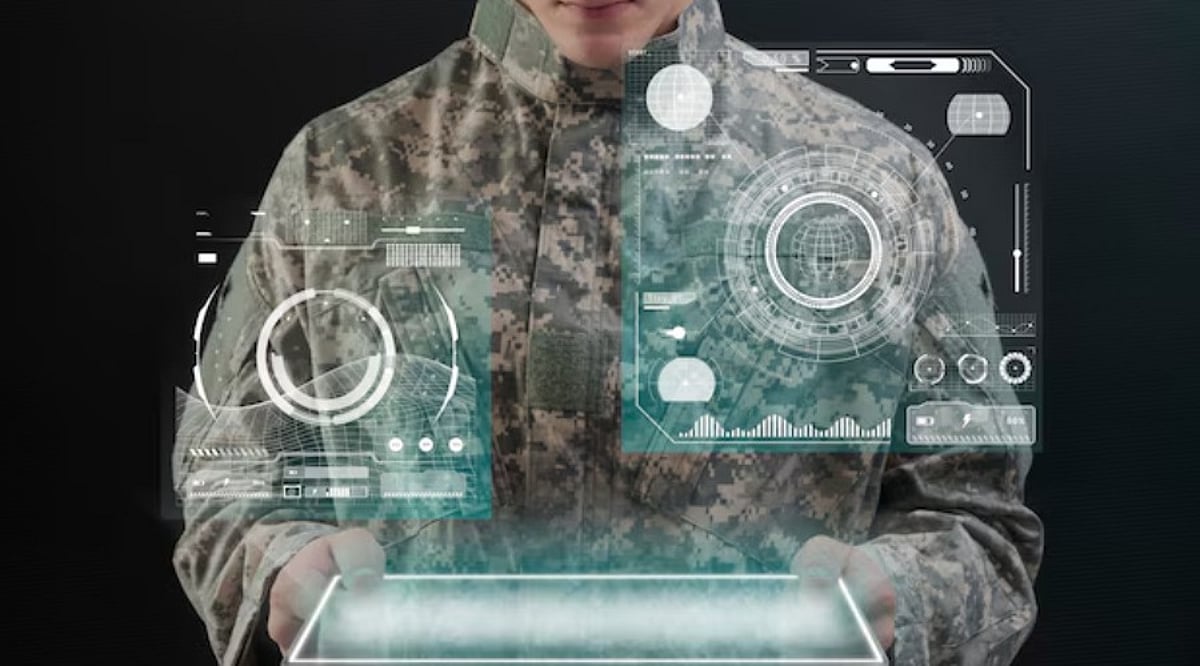
    There is a significant gap between an AI model that performs well in a test environment and one that can be effectively deployed in the field. In the lab, teams see a number in a report. On the battlefield, the question becomes: what will that number be in a week if imaging conditions shift, new targets emerge, connectivity degrades, or the model runs on different hardware?

    Ukraine faces these questions daily. That’s why its experience matters far beyond its borders. In Ukraine, AI systems receive what laboratory development often lacks: a constant stream of real-world data, continuous testing under actual conditions, and tight feedback loops between users and developers.

    In March 2026, Ukraine’s Ministry of Defense announced it would open access to real battlefield data for international partners to train AI models. This move underscores a critical insight: for computer vision, the gap between a curated dataset and reality can be enormous. In tests, cameras see objects clearly. In combat, the same object might be partially obscured by smoke, viewed from an unfamiliar angle, poorly lit, or appear entirely different from training data. A high benchmark score then tells little about real-world performance.

    Data Becomes Part of the System

    This principle is central to Valkyria, a Ukrainian defense AI company. Valkyria works with machine learning, computer vision, autonomous systems, and embedded AI, testing solutions in active combat. Developers don’t work with hypothetical “combat” datasets; they use data that actually occurs in production. Instead of training a model once and checking accuracy, they must constantly monitor current data, identify where the model makes mistakes, and adapt to changes since the last deployment.

    Hardware Constraints Are Not an Afterthought

    Benchmarks also hide another problem. A model that runs in 40 milliseconds on a powerful lab GPU may take 180 milliseconds on the target edge device, making it useless for its intended task. The model might not even fit within available computing resources. For defense AI, this is a typical engineering reality. The system must run on a specific platform with defined power, memory, and compute limits. Optimization cannot wait until after the model is ready; the hardware must be considered during development. Valkyria, for example, builds on embedded and edge platforms like NVIDIA Jetson, Hailo-8, and TI Jacinto/TDA4. An FP32 checkpoint that works perfectly in the lab must undergo quantization, compiler-level optimization, profiling, and adapt to completely different constraints in the field.

    The Battlefield Changes Faster Than Development Cycles

    Ukraine’s experience also shows that system requirements can evolve faster than a typical development cycle. What worked yesterday may need refinement today. Conditions, data, equipment, and methods of application change. The U.S. military has noted a similar dynamic: in 2025, the commander of U.S. European Command highlighted that systems can quickly lose effectiveness due to environmental changes, requiring rapid adaptation from industry. Therefore, deployment cannot be the final stage. Instead, it follows a cycle: field data → training → model → deployment → testing → feedback → new field data. The faster a team completes this cycle, the more quickly it can adapt to new conditions. This may be one of the most valuable lessons from Ukraine for the global defense tech market.

    From Benchmark to Operational Readiness

    The U.S. Government Accountability Office reached a similar conclusion from a different angle. In its analysis of AI in weapon systems, the GAO specifically highlighted challenges with data quality, integration into existing systems, and continuous monitoring of deployed capabilities. AI requires large volumes of data and ongoing monitoring; standard software development approaches are insufficient. As a result, the key question for defense AI is shifting from “How well does the model perform?” to “How well does the entire system perform—on the right hardware, with real data, under the conditions it was designed for?”

    For Valkyria, this is no theoretical question. The company builds AI/ML software to bridge this gap, from computer vision and autonomous systems to edge deployment and field testing. Ukraine’s experience demonstrates why this approach is increasingly critical. Winning a benchmark isn’t enough. The model must survive deployment, real data, hardware limitations, and field feedback—and then improve. That is the next level of defense AI: not just building a model, but learning to rapidly transform reality into the next version of a working system.

  • Why Background Removal and Upscaling Outperform Image Generation in Commercial Workflows

    Why Background Removal and Upscaling Outperform Image Generation in Commercial Workflows

    In most large-scale commercial workflows, the bulk of compute time is spent on unglamorous tasks: separating subjects from backgrounds, removing unwanted objects, upscaling low-resolution files, and compositing subjects into new scenes. These operations run millions of times daily behind product listings, marketplace tiles, and ad creative. They don’t make for flashy keynote slides, but they form the backbone of reliable image processing at scale.

    The Edge Case Is the Edge

    Cutting a subject from a photo sounds trivial until you hit the boundary. Alpha matting must decide not only which pixels belong to the subject, but what fraction of each boundary pixel belongs there. A pixel at the rim of a wine glass contains both glass and wall. The hardest categories are predictable: hair, fur, chain-link mesh, tulle, backlit subjects, transparent objects, motion blur, and items whose colors blend into the background. A model that handles a matte-finish shoe perfectly may fail on a tulle skirt, and a pipeline that assumes uniform quality across a catalog will ship those failures silently.

    Narrow Models Beat Broad Ones

    Task-specific models consistently outperform general-purpose ones in this domain, and the reason has nothing to do with parameter count. Ask a text-to-image system to remove a background, and it often re-renders the subject instead. The output looks plausible, but the product in that image is no longer the original product. Generative systems optimize for plausibility—an image that a human accepts as coherent. Commercial image editing demands fidelity: preserving every stitch, every specific shade, pixel for pixel, while everything around it changes. These are different objectives, and a model tuned for one is a liability at the other.

    The practical solution is an ensemble pipeline: a segmentation model produces the matte, an inpainting model handles removal, a super-resolution model handles upscaling, and the generative model is confined to the region where invention is actually desired.

    Measurement Is Thin in Image Pipelines

    Most teams running image operations at volume lack a proper evaluation set. They have a handful of test images chosen for their difficulty, plus a subjective sense that quality is acceptable. When a provider updates a model without announcement, they discover the change through customer complaints. The remedy is already prescribed by frameworks like the NIST AI Risk Management Framework (v1.0, January 2023): a frozen benchmark set that includes hard categories, a quality metric that correlates with human rejection, and a regression check that fires when a model version changes.

    The Consumer End Collapsed the Stack

    Platforms like Pixelcut combine matting, object removal, upscaling, and background removal into a single app. The same consolidation has happened across the consumer market; what used to require five separate tools and compositing knowledge is now a sequence of taps on a phone. But the abstraction hides important details: a user cannot tell whether a poor result came from matting failure, aggressive compression, or a request routed to a different model due to capacity constraints. That opacity is harmless for social media posts but consequential for merchants whose listing images constitute their entire sales pitch.

    Batch Is the Real Requirement

    Single-image quality is a showroom metric. Volume workflows care about throughput that holds across hundreds of images without per-item babysitting, deterministic output so reruns reproduce results, per-image failure handling to flag hard mattes rather than ship bad cutouts, and a stable version contract so catalog appearance doesn’t change overnight. The last property is the one most commonly discovered by accident.

    Fidelity, Plausibility, and the Returns Desk

    An edited product image functions as an advertising claim. Invented texture, nudged colors, or generated reflections that imply a finish the item doesn’t have each become a representation a customer can act on. Returns and chargebacks are where the cost eventually lands. Whether a model hallucinates detail is both a technical question and a compliance question.

    Where the Next Gains Come From

    Not from bigger models. The gains available in this layer are mostly systems work: routing each image to the cheapest model capable of handling it, caching aggressively because catalogs are repetitive, moving inference on-device where latency and unit cost matter more than peak quality, and attaching provenance metadata so downstream systems know what was altered and how. Provenance is shifting fastest from nice-to-have toward procurement requirement as platforms push disclosure obligations upstream.

    Why the Unfashionable Layer Wins

    The demo-friendly part of computer vision is generation, where competition is fiercest and differentiation shortest-lived. The durable positions are being built in the parts nobody screenshots: reliable mattes on difficult materials, batch behavior that surprises no one, and evaluation good enough to catch regressions before a customer does. Measurable, unglamorous, and considerably harder to copy than a prompt.

  • 10 Computer Vision Unicorn Startups Redefining Industries in 2026

    10 Computer Vision Unicorn Startups Redefining Industries in 2026

    Computer vision has become one of the fastest-growing areas of artificial intelligence, enabling machines to interpret images and video like humans. Businesses now leverage this technology to improve factory operations, inspect products, guide autonomous vehicles, detect fraud, monitor workplaces, and assist doctors with medical imaging. As AI advances, computer vision opens new business opportunities across many sectors. Industry reports project the global computer vision market will surpass $30 billion by 2030, and investors continue to back companies building practical AI solutions instead of experimental products.

    Several startups have already achieved unicorn status (valuations above $1 billion). Many have raised fresh funding, signed major enterprise deals, and expanded into new markets. Here are ten computer vision unicorn startups worth watching in 2026.

    Key Takeaways

    • Computer vision unicorns solve real business problems across multiple industries.
    • Strong funding and billion-dollar valuations reflect growing investor confidence.
    • These startups will drive the next phase of enterprise AI adoption.

    Shield AI

    Shield AI is a leading defense-focused AI company founded in 2015. Its Hivemind software enables aircraft to operate without GPS, relying on computer vision and sensors to navigate buildings, roads, and targets. In 2026, Shield AI is valued at nearly $12.6 billion, thanks to new investments and increased defense collaborations. Governments worldwide are expected to boost spending on autonomous defense solutions, positioning Shield AI for further growth.

    Netradyne

    Netradyne transforms commercial fleet safety with AI-powered dashboard cameras that analyze driver behavior in real time. It rewards safe driving and detects distracted driving, phone use, fatigue, harsh braking, lane changes, and road hazards. The company became India’s first unicorn of 2025 after a $90 million Series D round from Point72 Asset Management, Qualcomm Ventures, and Pavilion Capital. Netradyne now processes over 4 trillion sensor data points annually across more than 550,000 connected vehicles, helping logistics companies lower accidents and insurance costs.

    Gecko Robotics

    Gecko Robotics builds robotic inspection systems for large factories, power plants, oil refineries, and defense facilities. Its robots use advanced cameras and AI to detect corrosion, cracks, leaks, and structural damage early. The company crossed unicorn status in 2025 and works with major industrial firms and government organizations. As predictive maintenance investment grows, Gecko Robotics stands out as a top industrial AI company.

    Tractable

    Tractable revolutionizes insurance claims with computer vision. Customers upload photos of damaged vehicles or property, and the AI estimates repair costs in minutes. This speeds up claims, reduces fraud, and improves customer experience. Hundreds of insurers across North America, Europe, and Asia now rely on Tractable, which continues to expand as digital claims become standard.

    Runway

    Runway is a popular AI video creation platform. Its software removes objects, tracks motion, edits clips, changes backgrounds, and generates new videos from simple scripts, saving hours of manual editing. With strong investor backing and partnerships with media companies, Runway is well positioned for growth in enterprise AI.

    Covariant

    Covariant addresses the challenge of robotic grasping in warehouses. Its AI combines computer vision and machine learning to enable robots to identify and handle a wide variety of products, regardless of size, shape, or packaging. This improves efficiency, reduces costs, and speeds up operations. As e-commerce drives warehouse automation, Covariant expects strong revenue growth in 2026.

    Voxel

    Voxel uses computer vision to improve workplace safety. Its AI platform connects to existing security cameras in factories, warehouses, and industrial sites to detect safety violations like improper lifting, forklift hazards, and unauthorized access. By preventing accidents, Voxel helps businesses reduce injuries and financial losses. Stricter safety regulations are driving increased adoption.

    Magic Leap

    Magic Leap develops advanced augmented reality headsets equipped with computer vision that maps rooms, tracks eye movements, recognizes objects, and overlays information. The technology aids medical specialists, factory workers, engineers, and military personnel. Initially known for hardware, Magic Leap’s software has become equally valuable.

    Verkada

    Verkada modernizes enterprise security with cloud-connected AI cameras. Its platform recognizes faces, reads license plates, counts people, tracks occupancy, and detects unusual activity across thousands of cameras. Security teams receive instant alerts. Businesses choose Verkada for smarter security without large on-site infrastructure, making it one of the fastest-growing companies in the market.

    Afresh

    Afresh applies computer vision to grocery store inventory management. The AI analyzes product images and inventory data to predict demand for fresh produce, reducing food waste and improving stock availability. Retailers using Afresh see better profit margins and sustainability, gaining attention across the retail industry.

    Why This Matters

    Computer vision now supports tasks once done manually, helping businesses save time, lower costs, improve safety, and make faster, more accurate decisions. As AI adoption grows, companies leading computer vision innovation will shape the future of healthcare, manufacturing, transportation, retail, defense, and many other sectors.

    Final Thoughts

    Computer vision technology has evolved rapidly, powering unmanned vehicles, warehouse robots, insurance systems, workplace safety, and smart cameras. Companies like Shield AI, Netradyne, Gecko Robotics, Tractable, Runway, Covariant, Voxel, Magic Leap, Verkada, and Afresh are solving real organizational problems with strong funding and billion-dollar valuations, proving market confidence.

    FAQs

    1. What is a computer vision startup? A computer vision startup develops AI software that allows machines to understand and analyze images, videos, and visual data for real-world applications.
    2. What makes a startup a unicorn? A startup becomes a unicorn when its private valuation reaches $1 billion or more.
    3. Which industries use computer vision the most? Healthcare, manufacturing, logistics, retail, automotive, insurance, defense, agriculture, and security are the biggest users.
    4. Why do investors support computer vision startups? These companies build scalable AI solutions that improve efficiency, reduce costs, increase safety, and create long-term business opportunities.
    5. Why should businesses watch these startups in 2026? These companies lead innovation with advanced AI products, strong funding, expanding customer bases, and technologies that will influence enterprise automation.
  • Landing AI: Empowering Enterprises with Agentic AI and Computer Vision Solutions

    Landing AI: Empowering Enterprises with Agentic AI and Computer Vision Solutions

    Landing AI, founded in 2017 by AI pioneer Andrew Ng, is a leading company specializing in data-centric computer vision and AI-powered document extraction. The firm enables organizations to build, deploy, and scale AI models efficiently, with a strong focus on manufacturing and complex unstructured document workflows through agentic document extraction.

    About the Company

    Landing AI develops artificial intelligence software that transforms large volumes of visual and document data into actionable insights. By leveraging data-centric AI and computer vision technologies, the company helps enterprises implement AI systems across multiple industrial sectors, including manufacturing, healthcare, and logistics. Its main platforms—LandingLens and Agentic Document Extraction (ADE)—allow users to build AI models with minimal programming, converting difficult visual data and unstructured documents into organized, structured data.

    Products and Services

    Landing AI offers two core platforms: LandingLens for building computer vision systems and Agentic Document Extraction (ADE) for extracting structured data from documents. These tools enable organizations to automate analytics and enterprise workflows using data-centric artificial intelligence. The company also provides API access, consulting services, and strategic partnerships to support deployment.

    Leadership

    Under the leadership of founder Andrew Ng, a renowned figure in AI, Landing AI has assembled a team of experts driving innovation in computer vision and document automation. The company’s leadership focuses on practical, scalable AI solutions for real-world enterprise challenges.

    Revenue Streams

    Landing AI generates revenue through subscriptions to its LandingLens SaaS platform, enterprise AI solutions, API access for agentic AI tools, strategic partnerships, and consulting services for deploying data-centric computer vision applications.

    Target Markets

    The company serves B2B clients across industries such as manufacturing, finance, healthcare, logistics, agriculture, and technology. Geographically, its solutions are adopted by organizations in North America, Europe, Asia-Pacific, and other global regions. Key client segments include enterprises looking to enhance their computer vision systems, document automation processes, and data extraction capabilities.

  • Top Computer Vision APIs and AI Models to Watch in 2026: A Comprehensive Guide

    Top Computer Vision APIs and AI Models to Watch in 2026: A Comprehensive Guide

    Computer vision APIs and AI models have become essential for OCR, facial recognition, image analysis, and visual reasoning. This guide compares leading platforms, including Google Cloud Vision, AWS Rekognition, Azure AI Vision, Clarifai, Imagga, and multimodal AI models, helping businesses choose the right solution.

    Overview

    Computer vision has moved well past simple object detection. Today’s APIs and models handle everything from document OCR and facial analysis to open-ended visual reasoning, and the right choice depends heavily on what a team is actually building. With hyperscalers, specialized platforms, and multimodal language models all competing for the same use cases, picking a computer vision stack in 2026 means weighing accuracy, cost, and ecosystem fit rather than chasing a single “best” answer.

    The Hyperscaler Trio Still Anchors Most Production Systems

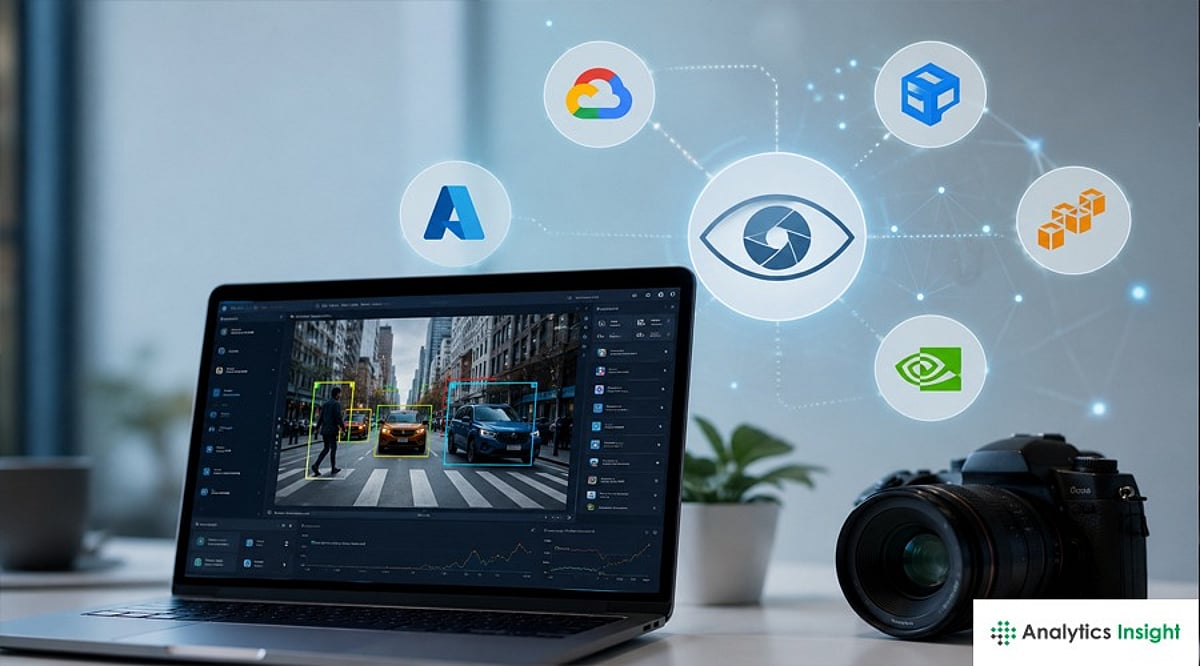
    Google Cloud Vision, AWS Rekognition, and Azure AI Vision continue to be the default starting point for almost all teams due to their unique strengths. Google Cloud Vision wins on OCR precision and number of label classes, which is above 10,000, with good support for multilingual text detection and hence is great for document scanning and e-commerce catalogs. AWS Rekognition wins on face-based functionality and video recognition and comes pre-integrated with S3, Lambda, and Kinesis Video Streams for organizations that want to use AWS. Azure AI Vision is a part of the new Azure AI Foundry Tools, and for enterprise teams on Microsoft identity & compliance services, it is clearly the winner, although its pricing model for Vision, Custom Vision, Face, and Document Intelligence services might be quite confusing.

    Specialized Platforms Fill Gaps Hyperscalers Leave Open

    Apart from the “big three”, Clarifai and Imagga offer their services to those teams that require more flexibility than label-based tools can provide. With Clarifai, you get access to pre-trained models, visualized no-code model building, and a marketplace of 300+ community models, which makes it one of the best options for teams without dedicated machine learning engineers but wishing to create custom classifiers. Imagga is marketed as an inexpensive solution providing tagging and classification of images for about $0.60 per 1,000 images along with color detection and intelligent image cropping.

    Multimodal Language Models are Reshaping What ‘Vision’ Means

    The biggest shift in 2026 isn’t a new API; it’s the rise of vision-capable large language models like GPT-4o, GPT-5.4 Vision, and Claude’s vision capabilities. Unlike traditional cloud vision APIs that return a fixed list of labels, these models can reason about an image, answer open-ended questions about its content, and extract information in custom formats without retraining. This makes them a better fit whenever a task requires contextual understanding rather than a predefined label taxonomy, reading a messy handwritten form and inferring intent, for instance, rather than simply detecting that text is present.

    Comparing the Leading Computer Vision Options

    [Insert comparison table or bullet list summarizing Google Cloud Vision, AWS Rekognition, Azure AI Vision, Clarifai, Imagga, GPT-4o Vision, Claude Vision, YOLO, SAM 2, CLIP, SigLIP – as per source text but rewritten for clarity]

    Open-Source Models Remain a Serious Option

    For teams with in-house ML infrastructure, open-source models continue to close the gap with commercial APIs. YOLO-based object detectors remain the go-to for real-time detection tasks, while Meta’s Segment Anything Model (SAM 2) has become a standard tool for precise image segmentation. CLIP and SigLIP-style embedding models have also gained traction, since they produce reusable vectors that power similarity search and clustering rather than fixed labels, a meaningfully different approach from the labeled-output model that cloud APIs are built around.

    Choosing Right Stack for Your Use Case

    No clear victor emerges from the comparison above. Teams who develop pipelines that use large quantities of documents find that Google Cloud Vision works better for them; those with a native AWS infrastructure find more value in Rekognition, while those who use Microsoft software find greater utility in closer integration with Azure services. At the same time, the need for vision to include actual visual understanding is moving the industry towards multimodal LLMs. The best generic advice in 2026 remains unchanged: always try at least two or three solutions on your actual data since accuracy and cost both vary significantly once you move past vendor demo datasets.

    Why This Matters

    Computer vision now powers everything from document automation and medical imaging to autonomous systems and AI assistants. Choosing the right API or AI model directly impacts development speed, operating costs, accuracy, and scalability, making platform selection a critical decision for businesses investing in AI-powered applications.

    Frequently Asked Questions

    What is a computer vision API?

    A computer vision API enables software applications to analyze and interpret images or videos using artificial intelligence. It can detect objects, recognize faces, extract text through OCR, classify images, and automate visual inspection without requiring developers to build AI models from scratch.

    Which is the best computer vision API in 2026?

    There is no single best option for every project. Google Cloud Vision excels in OCR, AWS Rekognition is ideal for facial recognition and video analysis, Azure AI Vision suits Microsoft enterprises, while GPT-4o Vision and Claude Vision are stronger for contextual image understanding.

    What is the difference between traditional computer vision APIs and multimodal AI models?

    Traditional computer vision APIs return predefined outputs such as labels, detected objects, or extracted text. Multimodal AI models like GPT-4o Vision and Claude Vision go further by understanding context, answering questions about images, summarizing visual content, and extracting structured information.

    Is Google Cloud Vision better than AWS Rekognition?

    The answer depends on the use case. Google Cloud Vision generally offers stronger OCR capabilities and broader image labeling, while AWS Rekognition provides better facial analysis, video recognition, and seamless integration for organizations already using the AWS cloud ecosystem.

    When should businesses choose open-source computer vision models?

    Open-source models such as YOLO, SAM 2, and CLIP are ideal for organizations with machine learning expertise and dedicated infrastructure. They provide greater flexibility, customization, and lower long-term costs but require more technical effort than managed cloud APIs.

  • How AI-Powered Robotics Are Helping Farmers Slash Pesticide Use by 70%

    How AI-Powered Robotics Are Helping Farmers Slash Pesticide Use by 70%

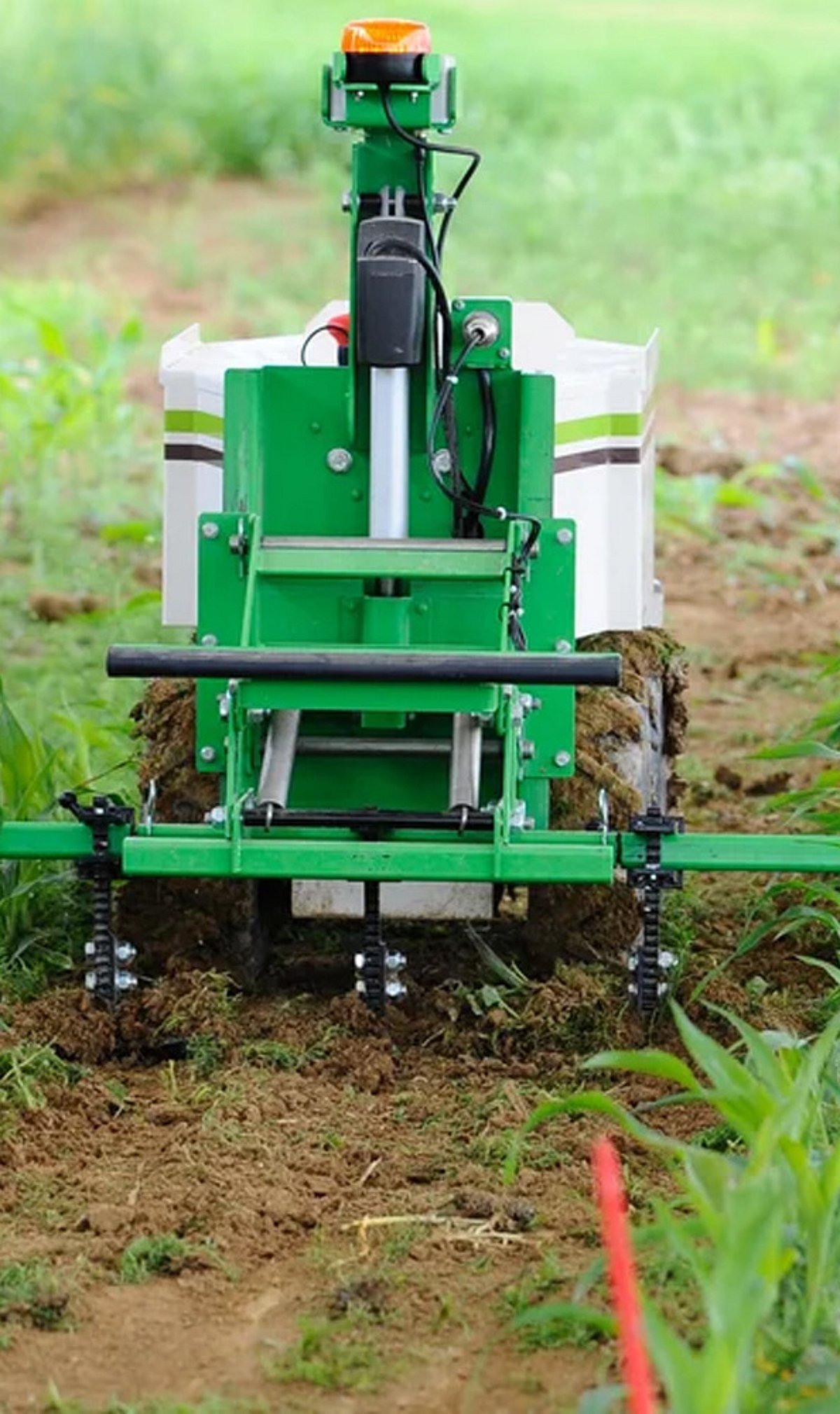
    Precision agriculture is entering a new era thanks to a robotics startup that uses artificial intelligence and computer vision to drastically reduce pesticide use. By identifying weeds individually and applying chemicals only where needed, these autonomous machines help farmers cut pesticide consumption by up to 70 %, lowering costs and reducing environmental harm.

    Precision Spraying Robots

    Equipped with AI-driven algorithms, the spraying robots scan fields row by row, distinguishing crops from weeds in real time. Instead of blanket spraying, they target only the unwanted plants, significantly cutting the volume of chemicals released into the soil and air.

    Computer Vision Technology

    Advanced cameras and machine learning models enable the robots to differentiate between crops and weeds with high accuracy. This ensures that every drop of pesticide or herbicide is applied precisely where it is needed, minimizing waste and preventing damage to healthy plants.

    Reduced Farming Costs

    With lower pesticide consumption comes a direct decrease in operational expenses. Farmers can maintain or even improve crop yields while spending less on chemicals, which boosts profitability and makes farming more economically sustainable.

    Sustainable Agriculture

    By reducing chemical runoff, precision spraying protects local biodiversity, conserves soil health, and promotes environmentally responsible farming. This approach aligns with global efforts to make agriculture more sustainable and resilient.

    Higher Crop Productivity

    Healthy crops receive fewer unnecessary chemical treatments, leading to stronger growth and more consistent yields. Targeted application also reduces the risk of pesticide resistance, ensuring long-term effectiveness.

    Autonomous Field Operations

    These self-driving robots navigate fields independently, covering large areas with minimal human supervision. They can operate day and night, handling repetitive tasks efficiently and freeing up farm workers for other critical duties.

    Water Conservation Benefits

    Because the robots apply chemicals only where needed, they also reduce the amount of water used in spraying operations. This helps conserve precious water resources, especially in regions prone to drought.

    Scalability for Large Farms

    The robotics platform is designed to adapt to farm sizes ranging from small family plots to vast commercial fields. Autonomous operation and data-driven insights make it easy to scale up without requiring proportional increases in labor or resources.

    The Future of Smart Farming

    Robotics, artificial intelligence, and data analytics are transforming agriculture into a high-tech, sustainable industry. As these technologies become more affordable and accessible, the vision of fully automated, environmentally friendly farming is quickly becoming a reality.

    Want to stay updated on the latest in agtech and robotics? Join our WhatsApp channel for exclusive news and insights.

  • Leading OpenCV Innovators: Top Companies and Startups for 2026

    Leading OpenCV Innovators: Top Companies and Startups for 2026

    OpenCV (Open Source Computer Vision Library) continues to power groundbreaking innovations across industries. In 2026, several companies and startups stand out for their advanced computer vision solutions built on OpenCV. Here are the top innovators:

    OpenCV.ai

    Develops enterprise computer vision solutions for manufacturing, healthcare, retail, quality inspection, and AI-powered visual automation across diverse industries globally.

    Roboflow

    Simplifies computer vision development through dataset management, annotation, model training, deployment tools, and collaborative AI workflows for developers everywhere.

    LandingAI

    Builds industrial computer vision solutions enabling manufacturers to automate inspections, improve quality assurance, and optimize production using artificial intelligence.

    V7 Labs

    Offers advanced image annotation platform accelerating AI model development with automated labeling, collaboration features, and computer vision workflow optimization.

    Covariant

    Develops AI-powered robotics using computer vision for warehouse automation, object recognition, logistics optimization, and intelligent robotic picking operations globally.

    AnyVision

    Provides facial recognition and visual intelligence technologies supporting security, retail analytics, smart infrastructure, and enterprise computer vision deployments responsibly worldwide.

    Deep Vision AI

    Delivers custom computer vision applications for healthcare, manufacturing, surveillance, and automation using advanced OpenCV-powered artificial intelligence technologies effectively.

    Scandit

    Specializes in smart barcode scanning, augmented reality, inventory management, and mobile computer vision solutions enhancing enterprise productivity and customer experiences.

    Viso.ai

    Enables organizations to deploy, manage, and scale computer vision applications through cloud-based infrastructure supporting enterprise artificial intelligence initiatives efficiently.