Tag: cryptocurrency security

  • Top Two-Factor Authentication (2FA) Methods for Securing Your Crypto Accounts

    Top Two-Factor Authentication (2FA) Methods for Securing Your Crypto Accounts

    Cryptocurrency is a prime target for hackers, and a strong password alone cannot guarantee safety. Two-factor authentication (2FA) adds a vital second layer of security, requiring an additional step beyond your password. This extra measure can thwart many common online attacks, even if your password is compromised. Here are the best 2FA methods to protect your crypto assets.

    Hardware Security Keys: The Gold Standard

    Hardware security keys, such as YubiKey, Google Titan Key, or SoloKey, are widely considered the safest 2FA option. These small devices connect or tap during login and only work with legitimate websites, making them highly resistant to phishing attacks. They do not rely on your phone number, eliminating the risk of SIM swap scams. For those holding significant crypto or planning long-term storage, hardware keys are the top recommendation.

    Passkeys: Fast and Phishing-Resistant

    Passkeys are gaining traction as a password replacement. They use biometrics like fingerprints or face scans, offering a 93% login success rate compared to 63% for traditional passwords. Passkey logins average 8.5 seconds versus 31.2 seconds for passwords—nearly four times faster. Many crypto exchanges now support passkeys for their phishing resistance and enhanced security.

    Authenticator Apps: A Reliable Alternative

    If you don’t have a hardware key, authenticator apps are a strong choice. Popular options include Google Authenticator, Microsoft Authenticator, Authy, Aegis, and 2FAS. These apps generate time-based codes that work offline and do not rely on your phone number, protecting against SIM swap attacks. While they can be vulnerable to phishing if you enter codes on fake sites, they are far safer than SMS or email verification.

    SMS and Email: Weaker Options to Avoid

    SMS codes are not recommended for crypto accounts due to SIM swap risks—hackers can take over your number and intercept codes. Email verification is similarly weak; if your email is hacked, all your crypto login codes are exposed. These methods should be avoided for high-value accounts.

    Which 2FA Method Should You Choose?

    Experts rank hardware security keys as the best, followed by passkeys, then authenticator apps. SMS and email are at the bottom. For maximum safety, use a hardware key; if not possible, opt for passkeys or an authenticator app. Combining a strong password with robust 2FA significantly reduces the risk of theft. A few extra seconds during login can save your digital assets.

    Frequently Asked Questions

    1. What is two-factor authentication (2FA)? It adds a second security step after your password to access your account.
    2. Which 2FA method is best for crypto? Hardware security keys are the safest due to phishing and SIM swap protection.
    3. Are authenticator apps better than SMS codes? Yes, because they don’t rely on your phone number, making them much safer.
    4. Why is SMS authentication not recommended? Hackers can steal your number via SIM swap attacks to receive your codes.
    5. Can passkeys replace passwords? Yes, they offer faster, safer logins and are supported by many crypto platforms.
  • Hot Wallets vs Cold Wallets: A Complete Security Comparison for Cryptocurrency Holders

    Hot Wallets vs Cold Wallets: A Complete Security Comparison for Cryptocurrency Holders

    Cryptocurrency has become more popular than ever, with millions of people now owning Bitcoin, Ethereum, and other digital coins. As the number of crypto owners grows, hackers continue to search for new ways to steal digital assets. Wallet security has become one of the most important aspects of crypto ownership.

    A crypto wallet does not actually store coins—it stores the private keys that give access to those coins on the blockchain. If someone obtains those private keys, they can take the crypto. This makes wallet security just as important as choosing the right cryptocurrency. Two of the most common options are hot wallets and cold wallets. Both have advantages, but they also carry different risks.

    What Is a Hot Wallet?

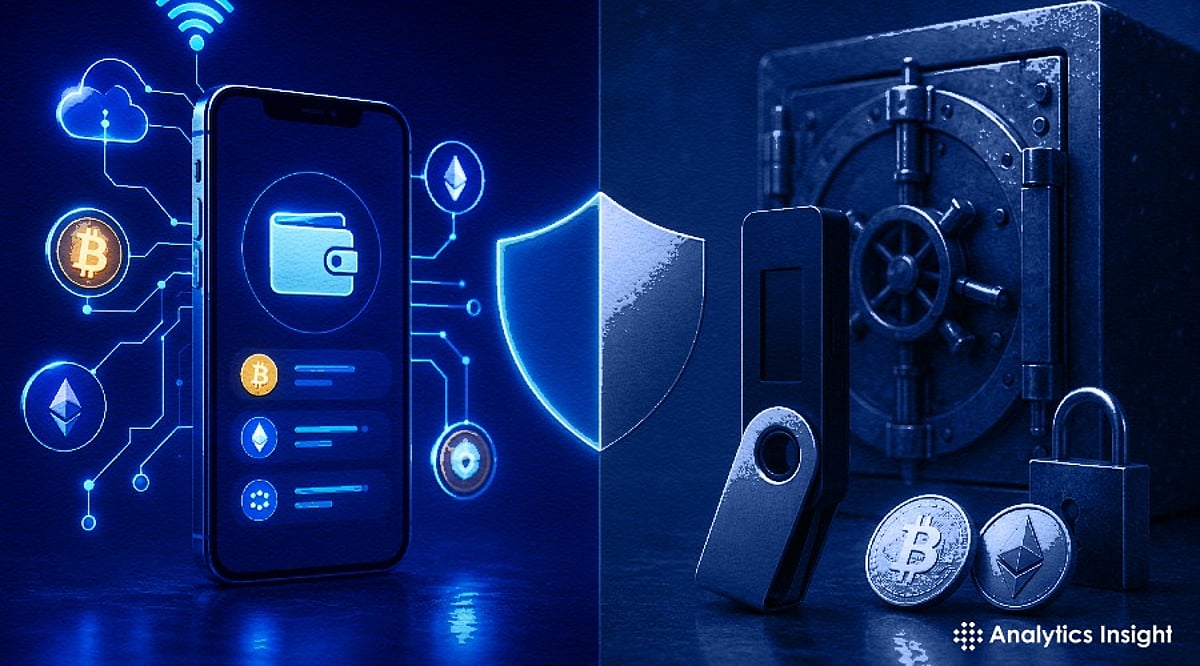
    A hot wallet is a wallet that stays connected to the internet. It can be a mobile app, desktop software, browser extension, or web wallet. Popular examples include MetaMask, Trust Wallet, Phantom, and Coinbase Wallet.

    The biggest benefit of a hot wallet is speed. It allows fast access to crypto at any time, making it a good choice for frequent traders, NFT buyers, decentralized finance users, and those who make regular crypto payments. Everything happens quickly because there is no need to connect an extra device before each transaction.

    However, the internet connection also creates the biggest weakness. Hackers can use many methods to reach online wallets: fake websites, phishing emails, harmful browser extensions, malware, and fake apps remain common tricks. Recent security research also found that some browser extension wallets may expose user privacy through address tracking and other online methods. This shows that online wallets require careful use even when they come from trusted companies.

    What Is a Cold Wallet?

    A cold wallet stores private keys without an internet connection. Hardware wallets such as Ledger and Trezor are the best-known examples. Paper wallets and air-gapped devices also belong to this category.

    Because the wallet stays offline, hackers cannot directly reach the private keys through the internet. Even if a computer has malware, crypto stored in a cold wallet usually remains safe—unless the attacker also gains physical access to the device and its recovery information.

    Many long-term investors prefer cold wallets because they offer much stronger protection. Security experts continue to recommend offline storage for large crypto holdings. Although cold wallets require a few extra steps before sending crypto, many people accept this small inconvenience for the added safety.

    Which Wallet Offers Better Security?

    Cold wallets generally provide better security than hot wallets. The main reason is that they remain offline. Most cyber attacks depend on internet access, so an offline wallet removes many common risks.

    Hot wallets focus more on convenience than maximum protection. They make daily transactions simple, but they also create more opportunities for hackers. A single mistake—such as opening a fake website or approving a harmful transaction—can lead to the loss of digital assets.

    Cold wallets are not perfect, however. A lost hardware wallet, forgotten PIN, damaged device, or missing recovery phrase can also cause permanent loss of crypto. Good storage habits remain important because there is no customer support that can recover lost private keys.

    Recent Security Incidents

    Recent events have shown that wallet security requires much more than good technology. In 2025, the Bybit cryptocurrency exchange suffered one of the biggest crypto thefts in history. Attackers manipulated the transaction approval process connected to the company’s cold wallet system and stole about $1.5 billion worth of Ethereum-related assets. The incident proved that even cold storage requires strict security procedures and careful verification before every transaction.

    Another major attack happened in 2024 when Indian crypto exchange WazirX lost hundreds of millions of dollars after attackers found weaknesses in its multisignature wallet system. The event showed that advanced wallet technology alone cannot stop every attack if operational security becomes weak.

    Security experts also warned about a new malware called Crypto Clipper. Microsoft researchers discovered that this malware can replace copied wallet addresses with the attacker’s address before a transaction takes place. It can also steal seed phrases and collect screenshots from infected computers. Online wallets remain the main target because they stay connected to the internet.

    Which Wallet Should You Choose?

    There is no single wallet that fits every situation. The best choice depends on how you use crypto. Hot wallets work well for small amounts that need quick access. They make trading, payments, and blockchain activities much easier because everything happens within seconds.

    Cold wallets are a better choice for large investments that remain untouched for a long time. Many experienced investors keep most of their crypto in a cold wallet while placing only a small amount in a hot wallet for daily use. This method reduces the chance of losing valuable assets if an online wallet becomes compromised.

    Simple Ways to Keep Your Crypto Safe

    Strong security habits matter just as much as the wallet itself. Recovery phrases should always stay offline in a secure place where no one else can reach them. Wallet software and device firmware should remain updated because updates often fix newly discovered security problems.

    Every wallet address deserves careful checking before sending crypto, because malware can secretly change copied addresses. Private keys and recovery phrases should never appear online or be entered into unknown websites. Official wallet applications remain the safest option, as fake apps continue to appear on the internet.

    Final Verdict

    When it comes to cryptocurrency protection, cold wallets are the best option due to their offline nature, which eliminates the risk of many online attacks. They are mostly used by long-term investors and people with high-value crypto holdings.

    However, hot wallets have their own importance. The speed and simplicity they provide for exchanges, payments, and decentralized apps are valuable. It is important to note that hot wallets are riskier because they are online.

    Therefore, the best strategy involves using both types of wallets together. A hot wallet can handle small payments while a cold wallet keeps larger assets safe. Recent attacks on Bybit and WazirX made it clear that proper security is not just about technology—it also requires good practices, careful verification, and responsible handling of private keys.

  • Ethereum Phishing Scam Drains Nearly $1M as BitMine Nears 5% of Total Supply

    Ethereum Phishing Scam Drains Nearly $1M as BitMine Nears 5% of Total Supply

    A cryptocurrency user lost nearly $1 million after unknowingly approving a malicious Ethereum transaction that allowed attackers to drain almost the entire wallet balance. Blockchain security platform Scam Sniffer reported that the victim lost 999,999 Tether (USDT) after signing a fraudulent token approval request on Wednesday.

    On-chain records show the attackers first attempted to transfer a rounded $1 million, but the transaction failed since the wallet held slightly less. Moments later, the attackers recalculated the available balance and successfully withdrew every remaining token. Meanwhile, Ethereum treasury company BitMine disclosed that it now controls more than 5.74 million ETH, placing it close to its stated goal of owning 5% of Ethereum’s total token supply.

    Phishing Attack Exploits Token Approval

    Scam Sniffer said the attackers relied on a phishing approval request rather than stealing private keys. The malicious approval granted permission to move the victim’s tokens without requiring another signature. According to the platform, the attackers initially failed when they tried withdrawing as much as $1 million through multicall transactions. Soon afterward, their script recalculated the balance and transferred the exact amount left in the wallet.

    Security researchers continue to identify approval phishing as one of the most common social engineering threats in crypto. Victims often believe they are confirming routine transactions while unknowingly granting unlimited spending permissions.

    According to blockchain security firm CertiK, phishing scams caused $723 million in losses across 248 incidents during 2025. In those cases, attackers convinced users to approve malicious token permissions that later enabled unauthorized transfers.

    Earlier this month, another crypto holder reportedly lost about $1.65 million after connecting to a fake exchange and signing a malicious smart contract. Researcher Ryan Coleman said the approval gave attackers unlimited wallet access, allowing an automated sweeper to drain the assets.

    Separate On-Chain Loss Shows Different Threat

    Besides phishing attacks, researchers recently reported another major on-chain loss involving transaction routing. A trader lost nearly $2 million after a decentralized exchange routed an Ether swap through a low-liquidity pool.

    GoPlus Security said the incident resulted from transaction routing instead of phishing. The routing allowed a same-block arbitrage trade to capture most of the transaction’s value.

    Following the incident, Scam Sniffer advised users to review every signature request carefully. The platform also recommended avoiding rushed approvals and using scam detection tools or browser extensions before signing wallet transactions.

    BitMine Nears Five Percent Ethereum Ownership

    At the same time, BitMine disclosed that it holds 5,742,237 ETH, representing about 4.8% of Ethereum’s 120.7 million token supply. The company now sits only 0.2 percentage points below its stated ownership target.

    The company reported total crypto assets, cash, marketable securities, and strategic holdings worth $11.1 billion as of June 28. It also said 4,879,157 ETH remained staked as of July 5, representing about 85% of its Ethereum holdings.

    Based on an ETH price of $1,800, BitMine valued its staked assets at approximately $8.8 billion. Furthermore, the company projected current annualized staking revenue of $235 million and estimated annual rewards of $277 million if all holdings remain fully staked through MAVAN and its staking partners.

    CryptoSlate’s Ethereum market data listed Ethereum’s total supply at about 120.68 million ETH and its market capitalization near $209 billion on July 6. Consequently, BitMine’s growing treasury has entered the broader discussion surrounding exchange liquidity, institutional treasury demand, staking participation, and large-holder activity.

    What’s Next?

    An Ethereum phishing scam drained nearly $1 million after a victim approved a malicious transaction, while separate on-chain losses exposed transaction routing risks. Meanwhile, BitMine expanded its Ethereum treasury to 5.74 million ETH, bringing its holdings close to 5% of the network’s total supply. Users should carefully verify every wallet approval before signing.

  • The Safest Crypto Exchanges in 2026: Custodial vs Non-Custodial Security Compared

    The Safest Crypto Exchanges in 2026: Custodial vs Non-Custodial Security Compared

    Choosing a crypto exchange based on coin selection or fees is common, but the real question in 2026 is: which platform is most secure and trusted? History is littered with costly failures—FTX evaporated billions overnight, Bybit lost $1.5 billion in February 2025 despite MiCA licensing, Binance paid a $4.3 billion U.S. AML settlement and suffered two major hacks, and Celsius froze withdrawals without warning.

    This guide evaluates leading custodial platforms with hard data, then introduces a structurally different model: non-custodial instant swaps, exemplified by ChangeNOW.

    What Security Means in 2026

    The old checklist—cold storage, 2FA, encryption—is no longer sufficient. Every serious exchange has those, yet breaches still happen. Today’s evaluation focuses on five factors:

    • Custody model: Does the platform hold your funds? If yes, those funds become a target.
    • Track record: Has the platform been breached? Were customer funds affected? How was it handled?
    • Proof of reserves: Can the platform cryptographically prove it holds what it claims?
    • Incident response: Insurance funds, recovery processes, and law enforcement cooperation.

    Top Trusted Crypto Platforms

    ChangeNOW: The Non-Custodial Option

    ChangeNOW is not a traditional exchange. It is a non-custodial instant swap service that never holds your funds. You send from your own wallet to a one-time deposit address; ChangeNOW routes the swap across its liquidity network and delivers the output directly to your wallet—usually in under one minute.

    This eliminates the fundamental risk of custodial platforms: a concentrated pool of user funds. ChangeNOW’s security record is clean—zero major breaches since 2017. It joined the Crypto Defenders Alliance in 2026, launched Private Transfers for reduced on-chain visibility, and boasts a 98% swap success rate across 1,500+ assets and 110+ blockchains.

    Kraken

    Kraken stores customer funds in air-gapped cold storage with 24/7 armed security. It was the first major exchange to run verifiable proof-of-reserves audits (since 2014) and publishes quarterly reports via a registered CPA firm. Account protections include FIDO2 hardware keys, Global Settings Lock, and zero SMS recovery. Kraken holds ISO/IEC 27001:2022 and SOC 2 Type 1 certifications. In March 2026, its Wyoming-chartered bank gained a Federal Reserve master account. Track record: zero customer fund losses in 15 years.

    Limitations: Standard fees run 1–1.5%; competitive rates require Kraken Pro.

    Coinbase

    The most regulated U.S. exchange, NASDAQ-listed (COIN), with mandatory quarterly audited disclosures. 98% of customer crypto is in geographically distributed offline cold storage using military-grade Cross Domain Solution technology. Multi-Party Computation (MPC) splits private keys across secure environments. Coinbase holds MiCA, FCA, and New York BitLicense. No platform-wide hack or customer fund loss has occurred.

    Limitations: A €21.5 million AML fine from Ireland’s Central Bank undercuts its compliance image. Standard interface fees reach 3.99% for card purchases.

    Binance

    The world’s largest exchange by volume. Its Secure Asset Fund for Users (SAFU) holds ~$1 billion, funded by 10% of trading fees. AI-powered monitoring issues 15,000+ security alerts daily. Two notable breaches occurred: a $570 million BNB Chain bridge vulnerability (2022) and a $40 million theft (2019), both covered by SAFU with no customer losses.

    Limitations: CEO Changpeng Zhao pleaded guilty to criminal charges in a $4.3 billion U.S. settlement for AML violations.

    Bitget

    Bitget’s Protection Fund exceeds $300 million, and monthly Merkle Tree proof-of-reserves reports show reserve ratios above 180% for BTC, ETH, and USDT. Over 95% of assets are in cold storage. Bitget holds ISO 27001 and ISO 27701 certifications. No major platform breach to date.

    Limitations: Seychelles incorporation means lighter regulatory oversight. The Protection Fund is platform-managed, not guaranteed insurance.

    The Problem Custodial Exchanges Share

    Kraken, Coinbase, Binance, and Bitget all hold your funds. Despite best-in-class security, Bybit (MiCA-compliant) lost $1.5B. Binance was hacked twice. Coinbase paid a €21.5M AML fine. The risk is structural: when a platform holds your funds, you carry counterparty exposure. Non-custodial models like ChangeNOW eliminate this risk entirely.

    Final Verdict

    Kraken is the best custodial exchange for security. Coinbase offers the most regulatory accountability. Binance has the largest protection fund. Bitget has the most transparent reserves. All require trust. ChangeNOW does not—it never takes possession of your assets. Nine years, zero breaches, 8 million users, and 98% success rate demonstrate what happens when security is built into the model.

    For active traders needing order books and margin, Kraken is the custodial choice. For everyone else, ChangeNOW makes counterparty risk optional.

    FAQs

    What is the difference between custodial and non-custodial architecture? In custodial architecture, a third party manages your private keys like a bank. In non-custodial, you retain ownership and the service never holds your funds.

    Is ChangeNOW safe? Yes. It never holds your funds, eliminating counterparty risk.

    Which exchange has the best security? Kraken has the finest track record among custodial exchanges. ChangeNOW offers unparalleled structural security.

    What happened to Bybit in 2025? Bybit suffered the largest exchange hack in crypto history, losing $1.5 billion despite MiCA compliance.

    Can ChangeNOW be hacked? Any platform can be targeted, but there is no pooled user funds or stored keys to steal at scale.