
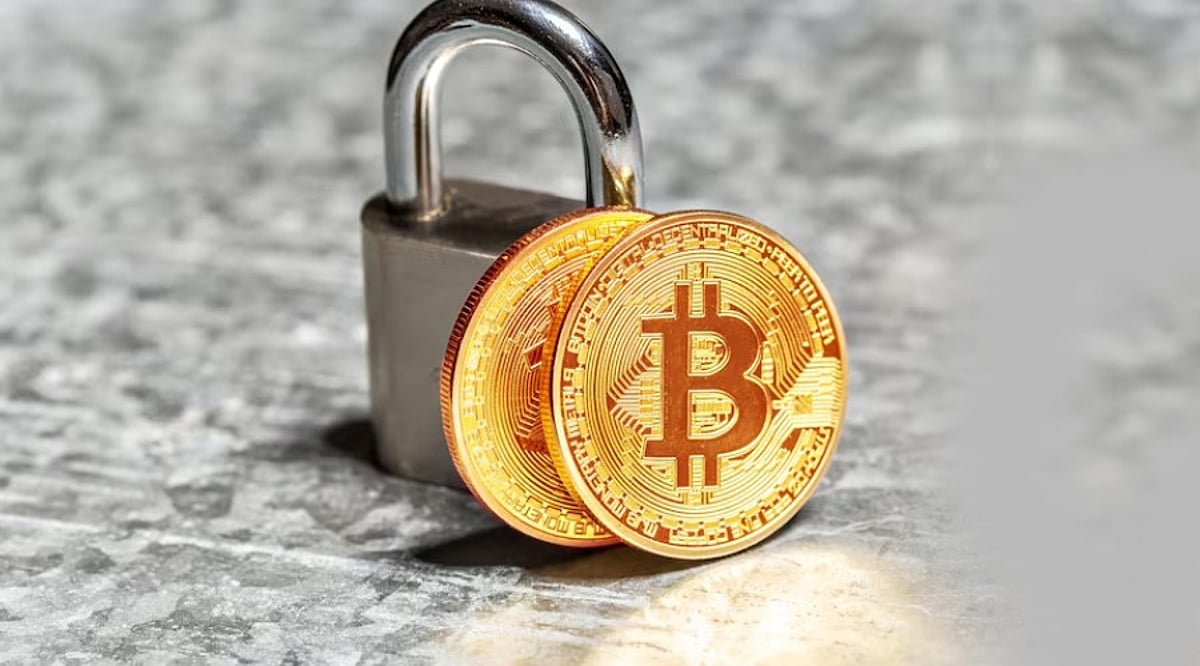
Cryptocurrency security is evolving rapidly as digital assets grow in value and attack methods become more sophisticated. Traditional single-key wallets no longer suffice for high-value custody. Today, the future of crypto security lies in layered defenses combining artificial intelligence, distributed approval mechanisms, and programmable account models.
AI-Driven Threat Detection and Response
Illicit crypto flows reached an estimated $158 billion in 2025, with AI-enabled scams increasing nearly fivefold, according to Chainalysis and TRM Labs. Attackers now deploy deepfake calls that impersonate executives, adaptive phishing sites, and realistic fake QR codes. In response, security firms are leveraging AI for defense. In March 2026, Chainalysis introduced blockchain intelligence agents that enable non-experts to conduct complex investigations by drawing on over 10 million past cases. TRM Labs launched an AI assistant that transforms plain-language questions into full on-chain investigations, producing wallet risk scores in under 400 milliseconds. These tools shift crypto security from static rules to adaptive, learning systems—though their effectiveness depends on data quality and human oversight.
The Rise of Multi-Signature Wallets
Multi-signature (multisig) wallets require multiple independent approvals before any transaction executes. A common setup is 2-of-3 for individuals and 3-of-5 or more for organizations. Safe, the leading multisig platform (formerly Gnosis Safe), now protects over $100 billion in assets across 30+ blockchains and has not suffered a contract-level exploit since 2018. The value of multisig was demonstrated in 2022 when a DAO signer attempted to move $750,000 without authorization—the transaction failed because other signers refused to approve it.
MPC Wallets: A Different Approach to Key Security
Multi-Party Computation (MPC) wallets split a single private key into encrypted shares distributed across devices or individuals. Transactions are signed collaboratively so the full key is never assembled in one place. Fireblocks, a leader in this space, supports over 2,400 organizations, including more than 80 banks. Unlike multisig, which records approvals on-chain for transparency, MPC signs off-chain, offering greater speed, flexibility, and privacy. Many platforms, including Safe, now offer both options.
Account Abstraction: Programmable Wallets
Account abstraction, based on Ethereum’s ERC-4337 standard, transforms wallets into smart contracts with user-defined rules—who can sign, how recovery works, and how gas fees are paid. Since its 2023 launch, over 40 million smart accounts have been deployed. Coinbase’s smart wallet, built on this model, eliminates seed phrases by using device passkeys (Face ID or Windows Hello). Lost devices don’t mean lost funds—recovery is possible through pre-set guardians. This approach serves users who will never manage hardware wallets or key shares.
Post-Quantum Cryptography: Preparing for the Long Term
A 2025 Federal Reserve study highlighted the “harvest now, decrypt later” risk: attackers can copy encrypted blockchain data today and wait for quantum computers to crack it. Bitcoin’s public transaction history is a prime target, especially older address types with weaker cryptography. While experts debate urgency (a16z crypto argues relevant quantum computers are unlikely before 2030), governments are acting. A US executive order signed in June 2026 mandates federal migration to post-quantum cryptography. For crypto, this means a slow, planned migration for long-lived holdings.
How to Prepare: Individuals, DAOs, and Institutions
- Individuals: Pair a hardware wallet with basic multisig to defend against AI-driven phishing.
- Teams and DAOs: Implement formal signer thresholds and timelocks—mandatory delays between approval and execution—to catch compromised signatures.
- Institutions: Track quantum migration timelines to protect assets held for a decade or more.
The future of crypto security isn’t about a single winning technology; it’s about layers. Computation closes device-compromise gaps, agreement closes single-actor risks, code closes recovery gaps, and monitoring closes detection-speed gaps. Security has moved from hiding one secret well to building systems that fail safely when any part breaks.
Key Takeaways
- AI both generates scams and accelerates fraud investigations in crypto security.
- Multisig wallets remove single-actor risk by requiring multiple approvals.
- MPC wallets eliminate single-device risk by splitting keys into computed shares.
- Account abstraction replaces seed phrases with programmable, passkey-based recovery.
- Quantum migration is a long-term priority for long-lived holdings, not an immediate deadline.
Frequently Asked Questions
How is AI improving cryptocurrency security?
AI detects unusual transaction patterns, identifies phishing attempts, monitors blockchain activity in real time, and helps prevent fraud before funds are stolen.
What are multi-signature wallets, and why are they more secure?
They require approval from two or more private keys per transaction, reducing unauthorized access risk and eliminating single points of failure.
What is MPC, and how does it differ from multi-signature?
MPC splits one private key into encrypted shares so transactions are signed without exposing the full key on any device. Multisig uses multiple independent keys with on-chain approvals; MPC signs off-chain.
What emerging technologies will shape the future of crypto security?
Key technologies include AI-driven fraud detection, MPC wallets, post-quantum cryptography, zero-knowledge proofs, secure hardware wallets, and advanced on-chain monitoring systems.
How can individuals improve the security of their cryptocurrency holdings?
Enable multi-factor authentication, use hardware or multi-signature wallets, protect recovery phrases offline, verify transaction details carefully, and stay alert to AI-powered phishing and social engineering attacks.
Leave a Reply