Tag: cryptocurrency

  • Aave Proposes USDe Rate Hike Across Five Markets While AI Server Goes Live

    Aave Proposes USDe Rate Hike Across Five Markets While AI Server Goes Live

    Aave Community Considers Higher USDe Borrowing Costs

    LlamaRisk, a risk analysis firm, has proposed increasing borrowing costs for USDe across five Aave V3 markets. The recommendation, issued on September 9, targets the Core, Plasma, Monad, Mantle, and Avalanche deployments. If approved, the base variable borrow rate would rise from 5% to 6%, while the Slope1 parameter would be reduced by one percentage point in each market. The changes aim to tighten costs for users who borrow USDe and recycle it into yield-bearing sUSDe.

    The affected markets currently hold approximately $323.8 million in USDe debt against $1.18 billion supplied. Modeled borrower APRs would increase by 13 to 89 basis points depending on utilization. Avalanche, with the highest utilization, would see the smallest modeled increase at 13 basis points, while Mantle, with the lowest utilization, would absorb nearly the full base rate hike.

    Aave Labs Launches Official AI Server for Protocol Data

    Separately, Aave Labs has launched an official AI server that supports the Model Context Protocol (MCP), accessible at mcp.aave.com. The server provides AI assistants with live protocol data and transaction preparation capabilities for both Aave V3 and V4 through a single connection. It uses the same calculations as Aave’s official interfaces, including Hub and Spoke accounting and Risk Premium.

    Read tools cover chains, markets, reserves, rates, caps, risk parameters, and historical APY data. They also return protocol deposits, borrows, wallet health factors, rewards, transaction history, and V4 position-level health information. Most tools accept a version setting of v3, v4, or all for comparison.

    User Control Remains Paramount

    The AI server can prepare supply, borrow, withdraw, repay, collateral, eMode, reward-claim, and liquidation transactions. It can also simulate an action and show the resulting health factor before preparing anything. However, every prepared transaction is returned unsigned. The server holds no private keys and cannot move user funds. Users must approve and sign transaction requests or EIP-712 typed data through their own wallets.

    Aave described a liquidation-protection use case where an agent monitors a position’s health factor. If it falls below 1.5, the agent prepares a USDC repayment and waits for user signature before any transaction proceeds. The server also trims responses to reduce unnecessary fields, cutting reserve detail from about 17 KB to about 1 KB.

    Conclusion

    LlamaRisk’s proposal would raise USDe borrowing costs across five Aave V3 markets while adjusting Slope1 to soften the increase at higher utilization. Separately, Aave’s AI server gives assistants live protocol data and transaction-building tools while keeping every final approval and wallet signature with the user.

  • Bitcoin Hovers Near $77,081 as CPI Report and Middle East Tensions Test Key Support Levels

    Bitcoin Hovers Near $77,081 as CPI Report and Middle East Tensions Test Key Support Levels

    Market Overview

    Bitcoin steadied near USD 77,081 on Friday, September 11, recovering part of this week’s losses after hotter producer price data and rising Middle East oil tensions fueled caution across risk assets. Today’s US Consumer Price Index (CPI) report, due at 8:30 am Eastern Time, is the market’s key catalyst.

    Ethereum, Solana, and XRP posted modest gains alongside Bitcoin. Zcash surged again, outpacing the broader market by a wide margin on shielded pool demand. Total crypto market capitalization remained near USD 2.61 trillion.

    Bitcoin Price Today

    Bitcoin traded at USD 77,081.66, up 1.5% over the past 24 hours (CoinGecko). Its market cap stood at USD 1.55 trillion. Trading volume reached USD 29.97 billion. Bitcoin gained 4.6% over the past seven days.

    Analyst Commentary

    • CoinSwitch: BTC slipped below USD 77,000 after US producer prices rose 5.4% year on year. A 74% chance of a Fed rate hike this month is priced in. Must reclaim USD 78,000–79,000.
    • Mudrex: Bitcoin extended declines across four sessions, testing USD 76,000–77,000. Nearly USD 190 million in liquidations hit. Support at USD 76,000 must hold.
    • Delta Exchange: Key support USD 75,600–76,200, resistance USD 77,600–78,000. Implied volatility near 40 signals sharp move expected around CPI.
    • WazirX: Broad profit-taking noted. Support USD 76,000, resistance USD 78,000.

    Biggest Gainers and Losers Today

    Zcash led with a 12.4% daily gain, extending its weekly advance past 15%. Hyperliquid rose 5.6%, XRP added 3.1%. No top coin posted a 24-hour decline.

    Crypto News Impacting Prices

    US Producer Prices Fuel Inflation Concerns

    August producer prices rose 5.4% year on year, slightly above forecasts. Fed rate hike odds for this month climbed toward 74%. Bitcoin briefly slipped below USD 77,500.

    Iran-Linked Oil Tensions Keep Crude Elevated

    Crude trading near USD 100/barrel added to inflation worries. Bitcoin remained resilient thanks to steady spot demand.

    CLARITY Act Faces Senate Vote

    The Senate will hold a cloture vote on the CLARITY Act on September 15. A 60-vote threshold is needed. Ethics provisions and stablecoin rewards remain divisive.

    Zcash Rally Continues

    Zcash jumped 12.4% in 24 hours, gaining over 15% weekly. Rising shielded pool adoption and heavy mining demand supported the move.

    Bitcoin Liquidations Near USD 190M

    Bitcoin’s slide toward USD 76,000 triggered close to USD 190 million in liquidations within an hour. Long-term holders’ share of realized profits fell sharply.

    Investor Outlook

    Today’s CPI report is critical. A soft print could ease yields and support a push toward USD 80,000. A hot reading could reinforce hawkish bets and pressure Bitcoin toward USD 75,000. The CLARITY Act vote on September 15 adds a second layer of uncertainty. Desks recommend disciplined position sizing.

    FAQs

    1. What is the Bitcoin price today?

    Bitcoin trades near USD 77,081.66, up 1.5% in 24 hours. Support near USD 76,000, resistance near USD 78,000.

    2. Why is today’s CPI report important?

    The CPI print shapes Fed rate expectations. Cooler reading could support Bitcoin; hotter reading risks hawkish bets.

    3. What is the biggest crypto news today?

    Zcash’s rally past USD 1,000, hotter PPI data, and the CLARITY Act Senate vote.

    4. Which coins are performing best?

    Zcash (+12.4%), Hyperliquid (+5.6%), XRP (+3.1%). No top coin declined.

    5. What should investors watch this week?

    CPI report, CLARITY Act vote, and any escalation in Iran-linked oil tensions.

  • Ethereum Price Prediction Reaches $3,341 by 2032 as Apeing Presale Accelerates Past 400M Tokens Sold

    Ethereum Price Prediction Reaches $3,341 by 2032 as Apeing Presale Accelerates Past 400M Tokens Sold

    What if the next big crypto story is already unfolding while the market watches Ethereum and Uniswap? That question is putting fresh attention on Apeing, a meme coin project whose presale is already live at $0.0004. With Stage 3 in progress and the next stage priced at $0.0005, the project has entered the spotlight at a time when early-stage crypto is drawing renewed interest.

    Ethereum and Uniswap bring established ecosystems and proven market narratives to the table. Apeing takes a very different path. Its 33-stage presale is built around limited stage allocations, rising prices between stages, community participation, and an upcoming exchange listing. For readers searching for the next big crypto, the contrast is hard to miss: established giants on one side and a live early-entry opportunity on the other.

    Apeing is also adding utility to its meme-driven identity through features such as tiered staking rewards. The combination of culture, community energy, and a structured presale gives $APEING a distinct position among crypto presale opportunities in 2026. With the current stage already moving forward, the chance to access an earlier price may not remain available once the presale advances.

    Apeing as the Next Big Crypto Opportunity

    Apeing is a meme coin brand built around culture, community participation, and utility. Its ecosystem combines meme-driven energy with features such as staking, referrals, and competitive Ape Wars activities. For traders searching for the next big crypto, Apeing is already in motion. Its live presale is progressing through 33 stages, with prices increasing as each stage advances.

    Stage 3, Paper Hand Panic, has a 300 million $APEING allocation and a combined allocation of 650M tokens. The current price is $0.0004, while the next stage is set at $0.0005. The supplied data also records 240 holders and more than $75,000 raised.

    Apeing’s $0.0004 Window Is Already Filling

    The appeal is simple: Stage 3 is live, but its price is temporary. Once the stage advances, the scheduled price moves from $0.0004 to $0.0005. Apeing’s stated listing price is $0.01, giving early buyers a clear benchmark when researching the best crypto presale 2026 opportunities. The project also features tiered staking with advertised rewards of 10%–85%, alongside Ape Referral and Ape Wars.

    A 33-Stage Presale With a Moving Price

    Each Apeing crypto presale stage has a defined allocation and price. That means early participants access an earlier price, while later stages become progressively more expensive. For anyone exploring an early stage crypto project, the current numbers make Stage 3 the key point of focus: $0.0004 now, $0.0005 next.

    What If $APEING Reaches $0.01?

    Purely as a hypothetical example, $2,000 at $0.0004 would buy 5 million $APEING before applicable fees or mechanics. At the stated $0.01 listing price, those tokens would hypothetically be worth $50,000.

    Why Apeing Is on the Early Crypto Radar

    Apeing is an Ethereum ERC-20 token with a fixed maximum supply of 16.75 billion $APEING. Its combination of a live presale, staged pricing, staking, and community mechanics gives it a distinct early-stage profile. For those searching for the next big crypto or a crypto presale 2026, Apeing’s Stage 3 is the current focal point, with $0.0004 available before the scheduled move to $0.0005.

    Ethereum Price Prediction: Established Strength Meets a New Crypto Cycle

    Ethereum remains one of the most established cryptocurrency projects in the market. Its smart contract network supports a huge range of decentralized applications, tokens, and financial protocols. That gives Ethereum a very different market narrative from a young token operating through a presale.

    The supplied Ethereum price prediction data places ETH at $2,617.75 in 2027, $2,748.63 in 2028, $2,886.07 in 2029, $3,030.37 in 2030, $3,181.89 in 2031, and $3,340.98 in 2032. The reference price in the supplied data is $2,493.09. The five-year projection reaches $3,181.89, representing a stated 27.63% increase.

    The short-term Ethereum price prediction data also points toward modest movement. ETH is projected at $2,493.43 on September 10, 2026, $2,495.43 on September 16, and $2,503.11 by October 9. The supplied technical data shows a bearish four-hour signal from the 50-day moving average, while the 200-day moving average is trending upward. RSI remains neutral, with a recent bullish divergence.

    That combination creates an interesting contrast. Ethereum represents an established network with years of development behind it, while Apeing is targeting people looking for an early-stage crypto story. For searches around the next big crypto, the difference between mature market infrastructure and a live token presale becomes especially important.

    Uniswap Price Prediction and the DeFi Market Narrative

    Uniswap has built a major identity around decentralized exchange activity and liquidity. Its UNI token therefore carries a market narrative linked closely to decentralized finance and the wider growth of on-chain trading.

    The supplied Uniswap price prediction places UNI at $6.94 in 2027, $7.29 in 2028, $7.65 in 2029, $8.03 in 2030, $8.43 in 2031, and $8.86 in 2032. UNI is listed at $6.61 in the supplied reference data, while the five-year projection reaches $8.43, also representing a stated 27.63% increase.

    The shorter-term Uniswap price prediction places UNI around $6.61 on September 10 and September 16, 2026, before potentially reaching $6.63 by October 9. Technical signals are mixed. The four-hour 50-day moving average is trending downward, while the 200-day moving average has risen since September 4. RSI remains neutral, while a recent bullish divergence suggests changing momentum.

    The Uniswap price prediction story is therefore tied to an established DeFi ecosystem. Apeing takes a different route. Instead of competing with Ethereum or Uniswap on maturity, the project is positioning itself around culture, community participation, utility, and a live presale. That difference is central to the next big crypto search trend.

    Conclusion

    Based on the latest research and market trends, Ethereum and Uniswap continue to represent established parts of the cryptocurrency landscape, while Apeing is creating a separate early-stage narrative through its live presale. The current $0.0004 Stage 3 price, scheduled $0.0005 next stage, 33-stage structure, staking rewards, and planned $0.01 listing price give the project a distinct position among emerging tokens.

    For readers searching for the next big crypto, Apeing is one project worth watching as its presale progresses. The live Apeing presale can be explored through the official website, while official channels provide the latest stage and pricing information. For anyone hunting for the next big crypto, the current stage represents a live point in the project’s evolving story rather than a future launch waiting to begin.

    Disclaimer: This article is provided for informational purposes and does not constitute investment advice. You are responsible for conducting your own research (DYOR) before making any investments. Cryptocurrencies are highly volatile and may result in total loss of capital.

  • Global Crypto Intelligence Network: How Governments and Exchanges Are Tracking Digital Assets

    Global Crypto Intelligence Network: How Governments and Exchanges Are Tracking Digital Assets

    Cryptocurrency was once widely viewed as a financial system that could operate largely outside traditional government surveillance. That assumption is becoming increasingly difficult to maintain. Governments, cryptocurrency exchanges, blockchain analytics firms and stablecoin issuers are building infrastructure that can connect on-chain transactions to real-world identities. While public blockchains remain decentralized, the intelligence layer surrounding them is becoming increasingly interconnected.

    Blockchain Analytics is Becoming a Major Intelligence Tool

    Public blockchains such as Bitcoin and Ethereum permanently record transactions. Wallet addresses may be pseudonymous, but investigators can follow funds as they move between wallets, exchanges, bridges and other blockchain services. The scale of illegal cryptocurrency activity explains why governments are investing heavily in these capabilities. According to Chainalysis’ 2026 Crypto Crime Report, illicit cryptocurrency addresses received at least $154 billion during 2025, representing a 162% year-over-year increase. The surge was largely driven by sanctioned entities, which received 694% more cryptocurrency than in 2024. However, Chainalysis estimates that illicit transactions still represent less than 1% of attributed crypto transaction volume.

    Stablecoins are Increasingly Important to Investigators

    Bitcoin is no longer the dominant cryptocurrency used for illicit transactions. Stablecoins accounted for approximately 84% of illicit cryptocurrency transaction volume in 2025, according to Chainalysis. Sanctions evasion is one area receiving particular attention. The ruble-backed A7A5 stablecoin processed approximately USD 93.3 billion in transactions in less than one year, according to Chainalysis’ sanctions analysis. Iran-linked cryptocurrency activity has also expanded. Chainalysis estimates that Iran’s Islamic Revolutionary Guard Corps and associated networks received more than USD 3 billion during 2025.

    Exchanges Connect Wallets with Real-World Identities

    Blockchain analytics can identify where cryptocurrency travels, but centralized exchanges can provide another important piece of information: identity. Most regulated exchanges operate Know Your Customer (KYC) systems. When funds arrive at an exchange, investigators may potentially connect blockchain addresses with verified customer accounts through appropriate legal processes. This creates an intelligence chain combining blockchain transaction data with off-chain records.

    FATF is Looking Beyond Centralized Exchanges

    Regulators are now examining transactions that never reach traditional exchanges. In March 2026, the Financial Action Task Force (FATF) published recommendations addressing stablecoins and peer-to-peer transactions involving unhosted wallets. FATF said more than 250 stablecoins were circulating by mid-2025, with their combined market capitalization exceeding USD 300 billion. The report encouraged governments and private-sector companies to strengthen monitoring and risk controls around stablecoin transactions.

    What Does this Mean for Crypto Users?

    Cryptocurrency has not become completely traceable. Mixers, cross-chain transfers and privacy technologies can make investigations considerably more difficult. However, blockchain transactions create something cash often does not: a permanent digital trail. As blockchain analytics improves, exchanges, stablecoin companies and governments increasingly cooperate, making crypto’s surrounding infrastructure significantly more observable. The important distinction for users is therefore straightforward: pseudonymity should not be confused with guaranteed anonymity.

    Also Read: How Real-Time Blockchain Monitoring Could Change the Future of Crypto Security

    FAQs

    1. What is a global crypto intelligence network? A global crypto intelligence network combines blockchain transaction data, exchange records, compliance information and government investigations. It helps authorities trace cryptocurrency movements and potentially connect wallet addresses with real-world entities.
    2. How do governments track cryptocurrency transactions? Governments can use blockchain analytics tools to follow transactions between wallets, exchanges, bridges and other crypto services. Information from regulated exchanges can also help investigators connect blockchain activity with verified customer accounts.
    3. Why are stablecoins important for crypto investigations? Stablecoins have become a major part of global cryptocurrency transaction activity, including some illicit transactions. Regulators are therefore increasing scrutiny of stablecoin transfers, issuers and transactions involving self-hosted wallets.
    4. Can cryptocurrency transactions be completely anonymous? Most public blockchains are pseudonymous rather than fully anonymous. Wallet addresses may not directly reveal someone’s identity, but transaction histories are public and can sometimes be linked to individuals through exchanges or other data.
    5. What role does FATF play in cryptocurrency regulation? The Financial Action Task Force develops international standards aimed at reducing money laundering and terrorist financing risks. Its crypto guidance increasingly covers stablecoins, virtual asset providers and peer-to-peer transactions involving unhosted wallets.
  • Bitcoin Market Analysis: 7 Critical Signals Every Crypto Investor Should Monitor

    Bitcoin Market Analysis: 7 Critical Signals Every Crypto Investor Should Monitor

    Bitcoin investors are entering a pivotal macroeconomic period. Institutional demand continues to support the cryptocurrency, but rising Treasury yields, oil prices, inflation concerns, and shifting interest-rate expectations could create substantial volatility. After climbing to around USD 81,000, Bitcoin has slipped to approximately USD 77,000, even with support from spot Bitcoin ETF inflows and renewed strategic buying. Here are seven signals investors should track closely.

    1. Spot Bitcoin ETF Flows

    ETF flows have become one of the clearest indicators of institutional Bitcoin demand. Large, sustained inflows can create additional buying pressure, while extended periods of withdrawals may signal weakening demand. According to SoSoValue, Bitcoin ETFs drew USD 986.9 million in the week ending September 4, with the largest single-day inflow of USD 731 million on September 3 led by BlackRock’s IBIT at USD 454 million. Investors should monitor daily net flows rather than focusing solely on Bitcoin’s price.

    2. Federal Reserve Interest Rates

    Monetary policy could be especially important in September. As of September 11, markets priced a 72.4% probability of a 25-basis-point rate cut by the Federal Reserve, according to the CME FedWatch Tool. Higher interest rates tighten financial conditions and increase returns from lower-risk assets, potentially drawing capital away from cryptocurrencies.

    3. US Treasury Yields

    The benchmark US 10-year Treasury yield rose to approximately 4.965% on September 11, nearing the psychologically important 5% level. Higher yields can make non-yielding and speculative assets like Bitcoin less attractive.

    4. US Dollar Strength

    The US Dollar Index stood around 99.081 on September 11, supported by higher yields and geopolitical uncertainty. A persistently stronger dollar can create a more challenging environment for crypto markets.

    5. Corporate Bitcoin Accumulation

    Corporate buying remains a key demand indicator. Strategy purchased 4,603 BTC for roughly USD 369.7 million between August 24 and August 30, increasing its holdings to approximately 845,050 BTC acquired at an average price of USD 75,412. Such large purchases can reduce available supply and signal institutional confidence.

    6. Oil Prices and Inflation

    Brent crude climbed to around USD 108.96 per barrel on September 11 as Middle East tensions escalated. Higher energy prices can fuel inflation, potentially encouraging central banks to maintain tighter monetary policy for longer.

    7. Regulatory Developments

    Regulation remains a major variable. Rules covering stablecoins, crypto exchanges, custody, and digital-asset classification could determine how easily banks and institutional investors participate in the market.

    What Could Drive Bitcoin Next?

    Bitcoin currently faces competing forces. Institutional accumulation and ETF demand provide potential support, but rising yields, stronger inflation, and tighter monetary policy could pressure risk assets. Investors should therefore watch Bitcoin alongside ETF flows, interest rates, Treasury yields, the dollar, corporate accumulation, oil, and regulation rather than relying solely on price movements.

    FAQs

    1. What are the key signals Bitcoin investors should watch? ETF flows, Federal Reserve policy, Treasury yields, dollar strength, corporate BTC purchases, oil prices, and regulatory developments.
    2. How do Bitcoin ETF flows affect BTC prices? Strong inflows can increase institutional demand and buying pressure; persistent outflows may signal weakening investor appetite.
    3. Why do Federal Reserve interest rates matter for Bitcoin? Higher rates tighten financial conditions and make yield-generating assets more attractive; lower rates can boost liquidity and risk appetite.
    4. How does corporate Bitcoin accumulation affect the market? Large corporate purchases reduce available supply and demonstrate institutional confidence, acting as a positive demand signal.
    5. What could determine Bitcoin’s next major price move? The balance between institutional demand and macroeconomic pressure, including ETF flows, interest rates, inflation, Treasury yields, and regulatory changes.
  • Litecoin vs Bitcoin: Which Crypto Should You Hold, Spend, or Convert in 2026?

    Litecoin vs Bitcoin: Which Crypto Should You Hold, Spend, or Convert in 2026?

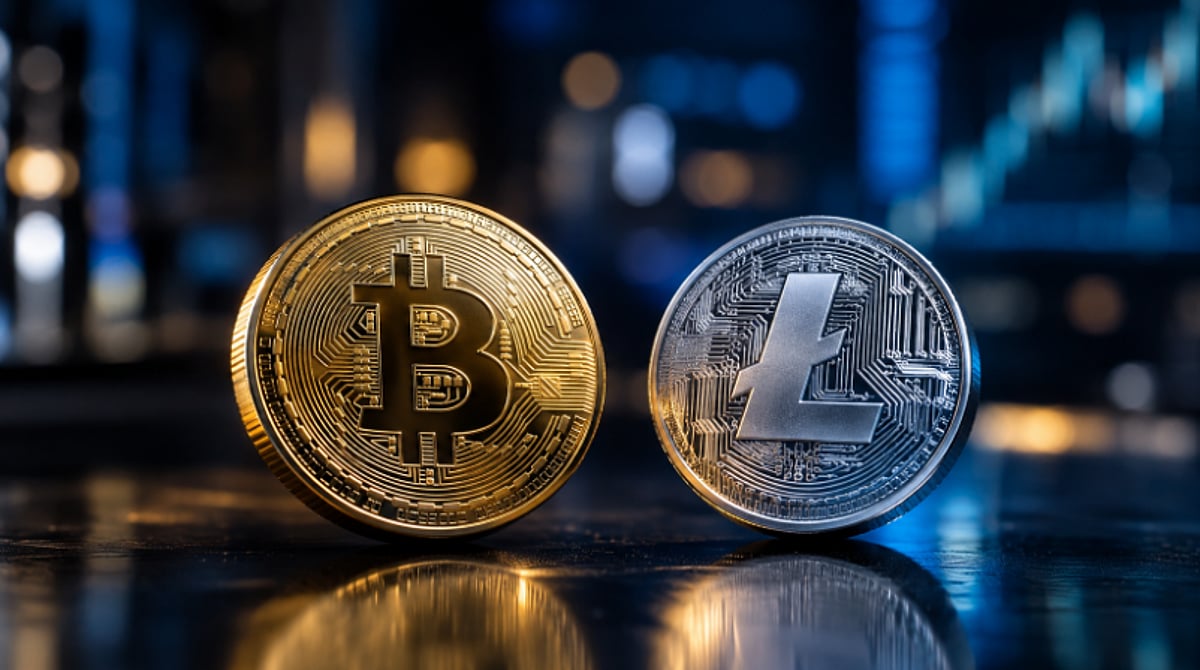
    Gold and silver. That’s the comparison everyone reaches for with Litecoin and Bitcoin, and it’s not wrong exactly – it’s just incomplete. Both have SEC-regulated ETFs now, in 2026. Both got classified as commodities by U.S. regulators. And yet their markets went in almost opposite directions. Network activity, liquidity, who’s actually buying and why – all of it diverged. What people use each coin for on a random Tuesday looks nothing alike either.

    Key Takeaways

    • Litecoin confirms blocks in 2.5 minutes, four times faster than Bitcoin’s 10. Doesn’t tell the whole story though – Bitcoin’s Lightning Network eats up most of that speed advantage for actual payments.
    • Both have spot ETFs. The money behind them doesn’t compare at all: Bitcoin’s ETFs hold tens of billions, Litecoin’s pulled in exactly zero during its first week and was still sitting around $5.5 million by mid-2026.
    • March 2026: Litecoin’s MWEB feature got exploited. Bitcoin’s base layer? Clean since 2009.
    • Moving LTC to BTC doesn’t require a centralized exchange account anymore. Non-custodial tools do it wallet-to-wallet.

    Bitcoin and Litecoin at a Glance

    Bitcoin. 2009. Proof-of-work, capped at 21 million coins, and a near-religious resistance to changing the protocol. That conservatism is arguably the whole reason Bitcoin ended up as crypto’s reserve asset. Early September 2026, it’s trading high-$70,000s to low-$80,000s, holding somewhere around 57-61% of total crypto market cap.

    Litecoin. Its story starts with Charlie Lee forking Bitcoin’s code back in 2011. Shorter blocks. Scrypt instead of SHA-256. A supply cap set four times higher, at 84 million coins. These days LTC sits around $50-55, market cap close to $4 billion – ranked anywhere from 18th to 26th, depending which tracker you trust.

    Head-to-Head: Where the Networks Actually Differ

    Speed and fees first. Four times faster by design, that part’s not in dispute. Fees are where it gets messy: Bitcoin can cost a few cents or several dollars, purely depending on how congested the network is that day. Litecoin stays cheaper across the board, fractions of a cent up to maybe fifteen cents. Don’t trust either number as gospel though – pull up something like mempool.space for the live rate. And remember Lightning Network exists; it handles a real chunk of Bitcoin’s payment volume instantly and almost free, off-chain.

    Security next. Bitcoin’s base layer: no network-level exploit, ever, since it launched. Litecoin can’t say the same anymore. March 2026, a bug in the MWEB privacy feature got used to fake a peg-out worth roughly 85,000 LTC. They caught it, recovered the funds, patched the hole. Good response. Doesn’t erase that it happened, though – something to weigh before parking serious money on either chain.

    Institutional access is where the gold/silver framing really falls apart. Canary Capital got the first spot Litecoin ETF (LTCC) trading on Nasdaq back in October 2025, right alongside the commodity classification that put Litecoin on equal regulatory footing with Bitcoin. So the setup was there. The demand wasn’t. Zero net inflows in LTCC’s first five trading days. Still just $5.5 million by mid-2026 – compare that to the $60+ billion BlackRock’s Bitcoin ETF pulled in alone. A couple of public companies bought in anyway (Lite Strategy, Luxxfolio), which counts for something. Just not a loud something.

    Use cases, finally. Litecoin’s lower fees make it the pick for smaller transfers you’re doing often. Bitcoin does something different – it sits there, mostly, backed by liquidity nothing else in crypto really matches. A lot of people just run both. Litecoin for whatever needs to move right now, Bitcoin for the position nobody touches.

    Moving Between LTC and BTC

    Nobody really picks one of these and locks the door on the other. Most people rebalance instead – build up Bitcoin, then peel off a slice into Litecoin the moment a payment needs to move fast. Works backwards too: fold Litecoin back into Bitcoin once volatility starts feeling uncomfortable. None of this needs a centralized exchange sitting in the middle anymore. A LTC to BTC swap on a non-custodial platform goes straight from your own wallet – no third-party custody involved first.

    Is Litecoin a Good Investment Right Now?

    Nobody has a clean answer to that, and anyone who claims they do is probably trying to sell you something. Litecoin’s been stuck well below its all-time high for years now; the ETF launch didn’t budge that. What it does have going for it: fifteen years without going down, a supply cap that can’t be changed, and a privacy feature (MWEB) that’s actually gaining traction – balances there passed 500,000 LTC by late 2025, up from under 100,000 just a year earlier. Resident’s guide to Litecoin as an investment digs into the case further, if you want the longer version.

    Verdict: Hold, Spend, or Convert?

    Liquidity and institutional weight – that’s Bitcoin’s case, and it’s still the default for anyone prioritizing those. Litecoin earns its spot for cheap, fast transfers, assuming you’re fine holding a smaller-cap asset that just had a rough security year. Most people don’t actually need to choose, though. Core position in Bitcoin, some Litecoin kept liquid for when speed matters, convert between the two as things change. That’s the boring, practical answer.

    FAQ

    Is Litecoin faster than Bitcoin? On the base layer, yes – roughly 2.5 minutes per block against Bitcoin’s 10. Though once you bring Lightning Network into it, Bitcoin can actually settle faster than either chain running alone.

    Is Litecoin cheaper to use than Bitcoin? Generally, yes, but congestion changes the math daily on both sides. Check a live fee tracker – don’t trust whatever number you read here or anywhere else as fixed.

    Does Litecoin have a spot ETF like Bitcoin? It does. Canary Capital’s LTCC has been on Nasdaq since October 2025. Size-wise, though, it’s nowhere close to Bitcoin’s ETF category.

    Can I convert Litecoin to Bitcoin without a centralized exchange? Yes – non-custodial swap services do direct wallet-to-wallet conversion. No third-party deposit required first.

  • 7 Red Flags to Spot Before Investing in Any Memecoin

    7 Red Flags to Spot Before Investing in Any Memecoin

    Memecoins can be tempting with their viral appeal and explosive price action, but they come with significant risks. Before you put your money into the next trending token, watch out for these seven warning signs that could signal trouble.

    1. Anonymous or Hidden Team

    If the team behind a memecoin is completely anonymous, there is little accountability. Developers can disappear after attracting investors or launch projects with questionable intentions. Always look for a known and verifiable team before investing.

    2. Extreme Hype and Social Media Frenzy

    Memecoins that rely heavily on social media hype can see prices skyrocket quickly, but the excitement can vanish just as fast. If the buzz is driven more by memes than by real utility, be prepared for a potential crash.

    3. Weak Liquidity

    Low liquidity means you may not be able to sell your tokens without causing a sharp price drop. This can leave you exposed during market swings, making it difficult to exit your position when you need to.

    4. Concentrated Holdings

    When a small number of wallets control a large share of the token supply, their selling decisions can lead to sudden and severe price declines. Check the distribution of tokens before buying to see if whales dominate the market.

    5. Locked Liquidity Concerns

    Unlocked or poorly managed liquidity pools allow developers or insiders to withdraw funds, creating a serious risk for buyers. Ensure that liquidity is locked and audited by a reputable third party.

    6. Unrealistic Promises

    Guaranteed returns, huge profits, or instant growth are red flags. Legitimate investments cannot promise predictable gains. If it sounds too good to be true, it probably is.

    7. Suspicious Token Contract

    Hidden fees, restricted selling, or unusual contract permissions can prevent you from trading freely after purchase. Always review the token’s smart contract and audit reports to ensure there are no hidden traps.

    Additionally, be wary of memecoins without a clear purpose, community, or development plan, as they may rely entirely on speculation. A sudden price surge without meaningful news or adoption could also indicate coordinated buying, making the token especially risky to chase.

    Stay informed and always do your own research before diving into the world of memecoins.

  • Key Tech Developments Today: Samsung-Mistral AI Partnership, EaseMyTrip Share Pledge, Singapore Hiring Trends, Coinbase Wallet Rebrand, and OpenAI’s Safety Pause

    Key Tech Developments Today: Samsung-Mistral AI Partnership, EaseMyTrip Share Pledge, Singapore Hiring Trends, Coinbase Wallet Rebrand, and OpenAI’s Safety Pause

    Samsung and Mistral AI Launch Semiconductor Infrastructure Alliance

    The partnership, announced at a state summit in Paris between South Korea and France, will see Samsung integrate Mistral’s AI tools—including its Mistral Large model—into its chip operations. This collaboration aims to create customized, on-premises AI systems for Samsung’s semiconductor infrastructure, giving the company fresh tools to reshape how it designs and manufactures chips.

    EaseMyTrip Promoter Pledges Shares Worth ₹212 Crore

    Nishant Pitti, promoter of online travel company Easy Trip Planners (EaseMyTrip), has pledged 34.51 crore shares valued at ₹211.92 crore with Motilal Oswal Financial Services for personal use. According to a stock exchange filing, the pledge was created on August 24 and represents 8.66% of EaseMyTrip’s total share capital. After the transaction, Pitti’s total encumbered shares stand at 44.87 crore, or 11.26% of the company.

    Top Hiring Industries in Singapore for Fresh Graduates

    Fresh graduates in Singapore continue to find opportunities in financial and insurance services, professional services, information and communications, and healthcare and social services. Despite employers becoming more selective and AI reshaping entry-level roles, these sectors remain active for new talent.

    Coinbase Wallet Returns as Base App Shifts to Trading Focus

    Coinbase has confirmed through its Google Play listing that the Base App has reverted to the Coinbase Wallet name, with the product now concentrating on multichain trading, transfers, and earning features. Ryan Kass, head of Coinbase Wallet product, stated that the wallet will serve as a “test kitchen” for products and assets that may not appear on Coinbase’s centralized exchange. Long-tail tokens will be available once minted on supported networks, and additional chains will be connected after launch.

    Sam Altman Signals AI Slowdown as OpenAI Weighs Safety Over Speed

    OpenAI CEO Sam Altman has indicated that the company could slow the development of advanced artificial intelligence systems as concerns over safety and control intensify. According to Bloomberg, Altman said the company is open to slowing AI development. The comments come amid growing questions from researchers and technology leaders about whether safety measures can keep pace with rapidly improving AI capabilities.

  • Real-World Asset Tokenization on Solana: Mechanisms and Market Impact

    Real-World Asset Tokenization on Solana: Mechanisms and Market Impact

    Real-world asset (RWA) tokenization transforms ownership or economic rights in traditional assets such as Treasury bills, investment funds, equities, or commodities into blockchain-based tokens. Solana is emerging as a key network for this market, leveraging low-cost settlement and token standards with built-in compliance controls.

    How Real Assets Are Represented On-Chain

    Tokenization begins when an issuer identifies an underlying asset—such as a share in a fund, a Treasury security, or an equity exposure held through a regulated structure. The issuer then creates blockchain tokens that represent defined rights to that asset. Solana’s current infrastructure relies on the Token-2022 program, which enables features like transfer restrictions, account freezing, permanent delegates, and confidential transfers. These controls are essential because regulated securities cannot always be transferred freely to any wallet.

    Compliance Enforced at the Token Level

    Solana supports transfer hooks and allowlists that verify a recipient’s eligibility before processing a transaction. Permissioned environments can also restrict markets to Know Your Customer (KYC)-verified participants. This model allows blockchain settlement to remain programmable while maintaining regulatory restrictions. According to Solana, tokenized-asset transactions can settle with sub-second finality and fees typically below USD 0.001.

    The RWA Market Reaches USD 7 Billion

    Solana’s official RWA portal currently indexes roughly USD 7 billion in tokenized value across 2,693 assets. Twenty-four-hour real-world asset volume recently reached approximately USD 290.6 million. Products include tokenized Treasuries, public-market funds, ETFs, commodities, and equities. Key institutional participants include Franklin Templeton, Ondo Finance, and Securitize-linked products.

    Tokenized Assets Enter DeFi

    The key advantage of tokenization over traditional electronic ownership is composability. A tokenized asset can move directly between wallets, exchanges, lending markets, and collateral systems. Jupiter routes tokenized public-market assets into swaps and portfolio flows, while Kamino connects certain RWA exposure with lending and collateral markets. Raydium provides secondary-market liquidity for tokenized equities. Solana also supports delivery-versus-payment (DvP), allowing a tokenized asset and payment token to be exchanged atomically in a single transaction.

    Key Considerations

    Tokenization does not automatically make an illiquid asset liquid. The legal claim, issuer quality, custody, and redemption process remain critical. However, Solana can reduce the operational friction involved in issuing, transferring, and trading regulated assets. The bigger question is whether its USD 7 billion RWA ecosystem will develop deep secondary-market liquidity and attract institutional participation. If that happens, tokenization could move Solana beyond crypto-native trading and toward infrastructure for always-open capital markets.

    Frequently Asked Questions

    1. What is real-world asset tokenization on Solana?

    It involves creating blockchain-based tokens that represent ownership or economic rights in traditional assets such as Treasuries, funds, equities, or commodities. These tokens can be transferred and used on Solana.

    2. What role does Token-2022 play in Solana tokenization?

    Token-2022 provides issuers with additional controls, such as transfer restrictions, account freezing, permanent delegates, and confidential transfers. These features make tokenized assets more suitable for regulated financial products.

    3. How does Solana support compliance for tokenized assets?

    Solana uses transfer hooks, allowlists, and permissioned environments to restrict transactions to eligible or KYC-verified participants, allowing regulatory controls to operate alongside blockchain settlement.

    4. How large is Solana’s RWA market?

    As of the latest data, roughly USD 7 billion in tokenized value exists across about 2,686 assets, with recent 24-hour RWA trading volume around USD 290.6 million.

    5. Can tokenized assets on Solana be used in DeFi?

    Yes. Tokenized assets can move into swaps, lending markets, and collateral systems through platforms such as Jupiter, Kamino, and Raydium, depending on the asset’s structure and permissions.

  • Caplin Systems Launches White-Label Trading Platform Unifying FX and Digital Assets

    Caplin Systems Launches White-Label Trading Platform Unifying FX and Digital Assets

    Caplin Systems Launches White-Label Digital Asset Trading Platform

    Caplin Systems has launched a hosted, end-to-end white-label digital asset solution for institutional trading firms. The platform combines FX and digital asset workflows inside one interface, targeting OTC desks, brokers, traditional finance firms, and crypto market makers. According to the company, firms can cut development timelines by up to 80% and launch in as little as 12 weeks.

    Targeting Manual Trading Workflows

    The launch addresses trading desks that still rely on fragmented manual processes as digital assets mature. Some firms quote through chat while staff track exposure via spreadsheets. Others build proprietary systems or use AI-assisted development to close these gaps. Caplin notes that such projects often involve long deployment cycles, maintenance demands, and security concerns.

    Caplin presents its hosted model as an alternative to bespoke infrastructure and rigid third-party platforms, avoiding volume-based fees, technical debt, and ongoing infrastructure overhead.

    Platform Serves OTC, TradFi, and Market Makers

    Caplin built the solution around three market segments with different operating requirements. OTC desks and brokerages can automate execution and increase trading capacity without adding staff. Traditional finance firms receive trade-level audit trails and data lineage for digital asset activity. Crypto market makers can use the platform as a distribution layer for trading portals and client access.

    Steven Singh, Caplin’s Head of Product, stated that client distribution technology has struggled to keep pace with digital asset growth. He noted that the company extended 26 years of institutional FX experience into the hosted product, allowing firms to avoid multi-year internal software projects and platforms tied to specific liquidity pools.

    Unifying FX and Digital Asset Trading

    The Caplin Platform provides secure authentication, centralized entitlements, and continuous performance for round-the-clock markets. It offers firms one branded workspace for traditional FX and digital assets. The system is vendor-neutral through open integrations with liquidity providers, risk engines, and custody partners. Its customizable architecture lets firms configure the environment instead of accepting a fixed platform design.

    The platform also supports hybrid execution workflows, allowing firms to automate electronic trading while digitizing high-touch sales inquiries within the same environment. This setup supports both automated and relationship-driven trading processes.

    Caplin has made the white-label digital asset solution available immediately. The London-headquartered company specializes in web-based financial trading technology, including single-dealer platforms and client-side trading applications. Its FICC tools support fixed income, commodities, and currencies, including cryptocurrencies.

    Conclusion

    Caplin Systems has launched a hosted platform that combines FX and digital asset trading for institutional firms. The solution targets manual workflows, lengthy builds, and fragmented infrastructure. Caplin says firms can launch in 12 weeks, connect external providers, automate execution, and manage multi-asset trading through one branded environment.