Tag: cryptocurrency

  • US Seizes $52 Million in Crypto and Shuts Down Xinbi Telegram Channels in Major Crackdown

    US Seizes $52 Million in Crypto and Shuts Down Xinbi Telegram Channels in Major Crackdown

    U.S. authorities have restrained approximately $52 million in scam-related cryptocurrency and seized Telegram channels operated by Xinbi Guarantee, a Chinese-language marketplace that served scam-center operators and vendors. The coordinated action involved Treasury sanctions, Department of Justice wallet seizures, and raids in Madagascar.

    Blockchain analytics firm Elliptic revealed that years of tracking Xinbi wallets enabled the U.S. Secret Service to act against the marketplace, which provides fraud websites, money laundering services, and recruitment for scam compounds in Southeast Asia. Elliptic first exposed Xinbi in May 2025 and now estimates at least $24 billion in transactions since 2022, ranking behind Huione Guarantee’s $31 billion.

    Xinbi Pay, a related payments platform, processed an additional $6 billion, mostly using Tether’s USDT on the TRON blockchain. The United Kingdom sanctioned Xinbi in March 2026, and prosecutors seized two payment wallets holding about $12 million, targeting 47 more wallets. The Justice Department credited Tether for assisting the operation.

    In response to the freezes, Xinbi exchanged roughly $2.8 million in remaining USDT for Decentralized USD (USDD), which lacks an issuer freeze function. However, Elliptic noted that USDD’s backing includes USDT, which issuers can freeze. The Telegram channel seizures disrupted a key communication and commerce route for merchants.

    Separately, Strike Force agents spent two weeks in Madagascar assisting local authorities against 13 Chinese-run scam compounds, leading to nearly 400 arrests and the seizure of over 3,200 electronic devices. About 30 detainees were identified as Chinese leaders and repatriated. The Strike Force has restrained about $938 million in cryptocurrency since its launch in November 2025, with the Xinbi action adding approximately $52 million in one day.

  • Ledger Consolidates Security and IT Leadership Amid Surging AI Crypto Attacks

    Ledger Consolidates Security and IT Leadership Amid Surging AI Crypto Attacks

    Ledger SAS has appointed Oded Blatman as chief information officer and chief security officer, combining technology and security oversight in a single leadership role as AI-driven threats expand across the crypto industry. The Paris-based hardware wallet maker said Blatman will oversee cyber and infrastructure security, product security, physical and workplace security, internal IT, and enterprise risk.

    One Role for Security and Technology

    Blatman joins Ledger after five years as CIO and CISO at Fireblocks. He previously served as global CISO at Bank Hapoalim and held both CIO and CISO roles at ClickSoftware. At Fireblocks, he led global security and enterprise technology during a period of international expansion and rising operational complexity, experience Ledger says fits its broader effort to strengthen organizational resilience.

    Ledger described the combined CIO and CSO structure as a deliberate organizational change. The company said information systems and security now require closer coordination as tokenization, AI agents, and institutional digital-asset use develop together.

    AI Makes Crypto Attacks Faster and More Scalable

    Blatman said artificial intelligence is reducing the cost and time attackers need to search for weaknesses, while also allowing attacks to become more sophisticated and operate at greater scale. As phishing campaigns and deepfake impersonation schemes become more advanced, Ledger said security teams must evolve at a comparable pace.

    The appointment follows a rise in reported crypto security incidents. Data from DefiLlama cited by Ledger shows hackers stole about $1.4 billion across 250 attacks in 2026 so far, after losses reached $2.7 billion across 146 attacks in 2025.

    Recent Incidents Add Pressure on Digital Asset Defenses

    Several high-profile incidents have put digital-asset companies on alert. About $320 million in Bitcoin left the Liquid Network during a hack earlier this week. Trezor also disclosed a breach involving one of its shipping providers last week, exposing personal information belonging to tens of thousands of customers. Earlier this year, a Coldcard hack raised further questions about offline wallet security.

    Ledger said hardware-backed verification remains central to protecting high-value digital ownership, and pointed to secure software, resilient operations, and verifiable human intent as additional layers of protection.

    Leadership Backed by Deep Security Experience

    Blatman said Ledger’s hardware-security work, user trust, and Donjon research team provided a strong foundation for the role, and that he joined to connect product security, enterprise technology, and resilience. Chairman and CEO Pascal Gauthier said Ledger considers security central to its business and that Blatman’s experience protecting systems at Fireblocks and Bank Hapoalim prepared him to oversee both information technology and security.

  • AI-Driven Surveillance: How Artificial Intelligence Is Reshaping Crypto Security and Monitoring

    AI-Driven Surveillance: How Artificial Intelligence Is Reshaping Crypto Security and Monitoring

    Blockchain networks are transparent by design, but artificial intelligence (AI) is turning that transparency into a powerful surveillance tool. Instead of manually tracing wallet addresses, AI systems can now analyze millions of transactions, identify behavioral patterns, and flag suspicious activity in near real time. This is creating a new layer of oversight across the global cryptocurrency economy.

    Automated Blockchain Monitoring

    Every public blockchain transaction generates data: wallet addresses, values, timestamps, token movements, and smart contract interactions. Analytics firms combine this information with known exchange wallets, sanctioned addresses, hack incident records, and criminal clusters. Machine learning models then search for patterns that would be difficult for human analysts to detect manually.

    The scale of blockchain security incidents remains substantial. CertiK reported more than $1.31 billion in losses across 344 incidents during the first half of 2026. Wallet compromises caused approximately $444.5 million in losses, while phishing accounted for another $366.3 million. Automated monitoring is becoming essential to keep pace with such threats.

    Detecting Hidden Wallet Relationships

    Criminals rarely leave stolen funds in one address. They might split assets across hundreds of wallets, swap tokens, use bridges, and eventually move funds toward exchanges or other liquidity venues. AI can analyze transaction timing, recurring counterparties, and asset flow patterns to infer whether seemingly separate addresses belong to the same operation.

    This capability proved crucial after the Liquid Network exploit in September, when approximately 4,000 BTC (worth around $320 million) were initially withdrawn. Chainalysis tracked the incident as funds moved through the Bitcoin ecosystem, and about 85% of the funds were ultimately returned. Real-time monitoring can help exchanges identify suspicious deposits before criminals complete the laundering process.

    AI in Security Auditing

    Surveillance increasingly begins before money is stolen. CertiK launched an AI Auditor system in 2026 designed for protocol upgrade reviews, pre-deployment testing, and post-audit verification. In testing against 35 real-world Web3 security incidents from 2026, it reported an 88.6% cumulative exact hit rate. AI agents can scan smart contracts for unusual state changes or vulnerabilities and combine that with live blockchain behavior.

    The Privacy Trade-Off

    Greater monitoring creates tension between security and financial privacy. Blockchains originally attracted users partly because they could transact without exposing identities to every intermediary. However, once analytics companies combine wallet histories with exchange Know Your Customer data, pseudonymous addresses can sometimes be linked to real people. AI makes this process faster and more scalable.

    Final Thoughts

    Crypto surveillance is evolving from retrospective investigation into continuous risk detection. That could help exchanges freeze stolen assets, identify sanctions exposure, and stop attacks earlier. But it also means public blockchain activity may become increasingly traceable.

    The next debate will focus on balance: how far automated financial surveillance should go before security gains begin undermining the privacy that originally attracted many users to crypto.

    Frequently Asked Questions

    How is AI used in crypto surveillance?

    AI systems analyze blockchain transactions, wallet behavior, and fund movements to identify suspicious patterns. They can connect seemingly unrelated addresses based on timing, counterparties, and transaction flows.

    Can AI help detect crypto hacks faster?

    Yes. Real-time monitoring can flag unusual withdrawals, transfers, or smart contract activity shortly after an exploit begins, enabling faster responses.

    How is AI applied to smart contract security?

    AI auditing systems scan protocol code, upgrades, and transaction logic for vulnerabilities. CertiK’s AI Auditor reported an 88.6% cumulative exact hit rate across 35 real-world 2026 security incidents.

    Why does AI surveillance raise privacy concerns?

    Public blockchain addresses are pseudonymous, not fully anonymous. Combining wallet histories with Know Your Customer data and AI analysis can make it easier to link blockchain activity to real individuals.

    What is the future of AI-powered blockchain monitoring?

    Crypto security is moving toward continuous monitoring rather than relying only on post-incident investigations. The challenge lies in improving fraud detection without excessive surveillance or weakened user privacy.

    Disclaimer: This article is for informational purposes only and does not constitute investment advice. Cryptocurrencies are risky assets, and you should conduct your own research before making any investment decisions.

  • Today’s Tech Roundup: India’s Chip Plant, Mistral’s €3B Raise, Karnataka Job Openings, and Crypto Regulation Update

    Today’s Tech Roundup: India’s Chip Plant, Mistral’s €3B Raise, Karnataka Job Openings, and Crypto Regulation Update

    Good morning! Here’s your quick roundup of today’s biggest developments across semiconductor manufacturing, European AI funding, government recruitment, crypto policy, and banking technology.

    Fast-Track Insights

    • PM Modi virtually laid the foundation stone for the HCL-Foxconn joint venture, India Chip Pvt. Ltd, at the Yamuna Expressway Industrial Development Authority in Jewar, Greater Noida, marking a key step in India’s semiconductor self-reliance push.
    • Mistral raised €3 billion in a Series D round at a post-money valuation of over €21 billion, led by Samsung Electronics with Scaleup Europe Fund and PSG Equity as co-leads, the largest equity round ever closed by a European tech company.
    • Karnataka’s School Education Department released the GPSTR Recruitment 2026 notification for 15,000 teaching vacancies across government primary and secondary schools, with district-wise notices published between 10 and 12 August.
    • Coinbase CEO Brian Armstrong said the Clarity Act is likely to pass given broad backing from crypto firms, law-enforcement groups and banks, even as the bill remains stalled in the Senate.
    • A 2026 study by Cambridge Judge Business School, BIS, IMF and WEF found that 81% of financial firms now use AI in some form, though only 14% consider it transformational to their strategy.

    PM Modi Lays Foundation Stone of Semiconductor Unit in Uttar Pradesh

    Prime Minister Narendra Modi today virtually laid the foundation stone of the HCL-Foxconn Joint Venture project – India Chip Pvt. Ltd. at the Yamuna Expressway Industrial Development Authority in Jewar in Greater Noida of Uttar Pradesh. The establishment of the HCL-Foxconn semiconductor facility marks a significant milestone in India’s journey towards technological self-reliance and reflects the Prime Minister’s vision of positioning India as a trusted global destination for high-end electronics and semiconductor manufacturing.

    Mistral Raises €3B to Advance Sovereign, Open-Weight AI

    Mistral today announced that it has raised €3 billion in a Series D funding round at a post-money valuation of more than €21 billion, the largest equity fundraising round ever completed by a European technology company, three years after the company’s launch. Samsung Electronics led the round, joined by co-leads Scaleup Europe Fund, managed by EQT, and existing investor PSG Equity. The round will significantly expand Mistral’s frontier research, scale compute capacity, and accelerate commercial growth and international footprint. The company now operates across 20 countries and supports 125+ global enterprises’ mission-critical AI transformation, including Airbus, ASML, and HSBC.

    GPSTR Recruitment 2026: 15,000 Teaching Vacancies in Karnataka

    The Karnataka School Education Department has officially released the GPSTR Recruitment 2026 Notification. A total of 15,000 vacancies have been announced for teaching positions across government primary and secondary schools in Karnataka for the 2026–27 academic session. The notification was issued on 12 August 2026, with district-wise recruitment notices published through the Karnataka Gazette (e-Rajyapatra) portal between 10 and 12 August 2026, along with amended Karnataka Education Department Services (Department of Public Instruction) Recruitment Rules, 2026.

    Coinbase CEO Sees U.S. Crypto Regulation Advancing Regardless of Clarity Act Vote

    The Clarity Act, which seeks to establish a U.S. federal framework for digital assets, is likely to pass given broad support from crypto firms, law-enforcement groups and several banks, Coinbase CEO Brian Armstrong said. The legislation was ready to be supported by the Senate, Armstrong told CNBC’s “Squawk Box Asia” on Thursday, saying people he has spoken with are on board with the legislation.

    How AI Is Transforming Banking and Financial Services in 2026

    AI now plays a growing role in core banking work, from fraud checks and credit decisions to customer support and market research. A 2026 global study from Cambridge Judge Business School, the Bank for International Settlements, the International Monetary Fund, and the World Economic Forum found that 81% of financial firms use AI at some level. Only 14% consider AI transformational for strategy and competitive advantage. The gap shows that adoption has spread, but big change remains limited.

  • Apeing Blazes Through Two Presale Stages in Under Six Hours as Meme Coin Momentum Builds

    Apeing Blazes Through Two Presale Stages in Under Six Hours as Meme Coin Momentum Builds

    Meme Coin Market Heats Up as Apeing’s Presale Gains Traction

    The cryptocurrency market is buzzing as meme coins continue to capture trader attention. While established tokens like Cheems and Shiba Inu show positive price action, Apeing ($APEING) is making waves with its accelerated presale stages. In less than six hours, Apeing blasted through two presale stages, quickly moving into Stage 3, dubbed “Paper Hand Panic,” at a price of $0.0004 per token. This rapid progress positions Apeing as a standout contender in the current meme coin presale wave.

    Apeing’s Presale: Stage 3 Live with Strong Early Metrics

    Apeing is built on Ethereum as an ERC-20 token and follows a structured 33-stage presale model. Currently in Stage 3 at $0.0004, the project reports over $68,000 raised, more than 211 token holders, and over 380 million $APEING tokens sold. Stage 4, set at $0.0005, represents a 25% increase from the current price, offering early participants a clear entry point before costs rise. Apeing’s stated listing price of $0.01 implies a potential upside of 2,400% from Stage 3 and 9,900% for Stage 1 investors who entered at $0.0001.

    DEX-First Strategy and Exchange Expansion Plans

    Apeing’s roadmap begins with a decentralized exchange (DEX) first listing, ensuring a smooth transition from presale to open-market trading. The project plans to expand to additional exchanges after the initial DEX listing, creating a clear path from early token distribution to broader market availability. This approach, combined with Ethereum’s robust network, underpins Apeing’s long-term ecosystem development.

    How to Participate in the Apeing Presale Before Stage 4

    To join the presale, users connect a compatible Ethereum wallet to Apeing’s official platform, select Stage 3, enter the desired purchase amount, and confirm the transaction. Participants need sufficient ETH for gas fees. After purchase, tokens can be claimed per project instructions. Apeing also offers a staking system with tiers from “Chimp” to “Giga Ape.” A minimum $25 purchase unlocks a referral code, rewarding referrers with 10% of the referred buyer’s spending and giving buyers an extra 10% in tokens.

    Cheems and Shiba Inu: Recent Price Movements

    Cheems ($CHEEMS) gained 4.94% over the past 24 hours, trading at $0.00007680, while Shiba Inu ($SHIB) rose 1.15% to $0.000005452. These moves highlight ongoing interest in meme coins, though Apeing draws attention through its presale momentum rather than exchange trading. The combined activity underscores a dynamic split in the meme coin market: established tokens rely on price action, while newer projects like Apeing build narratives through structured sales.

    Apeing’s 33-Stage Presale: A Unique Structure

    The 33-stage model is a key differentiator. With each stage setting a fixed price, early buyers benefit from lower entry points. Stage 3 is active now, and Stage 4 at $0.0005 is the next major milestone. Apeing’s ecosystem includes staking, a referral program, and a dedicated community on Telegram and Twitter. The project’s transparent, stage-based approach appeals to traders seeking structured opportunities in the crypto presale 2026 landscape.

    Frequently Asked Questions About the Meme Coin Presale

    What is a meme coin presale?

    A meme coin presale is an early token offering that allows investors to buy meme-based cryptocurrency before it lists on exchanges, often featuring staged pricing and community incentives.

    How does a meme coin presale work?

    Users connect a compatible wallet, select the active stage, enter a purchase amount, and confirm the transaction. Tokens are distributed according to project terms after the presale.

    What is Apeing’s current presale price?

    Apeing is in Stage 3 at $0.0004. The next stage, Stage 4, is priced at $0.0005.

    What is Apeing’s stated listing price?

    Apeing’s planned listing price is $0.01, representing significant potential upside from current presale stages.

    Conclusion: Meme Coin Presale Momentum Continues

    As Cheems and Shiba Inu post gains, Apeing is rapidly advancing through its presale stages. With over $68K raised, 211+ holders, and Stage 3 live at $0.0004, the project offers a compelling entry point before Stage 4’s 25% price increase. Apeing’s 33-stage structure, DEX-first strategy, and ecosystem features make it a notable player in the crypto presale 2026 scene. For more information, visit the official Apeing website or join their Telegram and Twitter channels.

    Disclaimer: This article is for informational purposes only and does not constitute financial advice. Cryptocurrencies are risky investments; always do your own research before participating.

  • 7 Essential Strategies to Safeguard Your Cryptocurrency

    7 Essential Strategies to Safeguard Your Cryptocurrency

    Cryptocurrency security is paramount in a digital landscape where threats evolve constantly. Whether you’re a seasoned investor or new to crypto, implementing robust protective measures can prevent theft and loss. Below are seven critical steps to keep your digital assets safe.

    Use a Hardware Wallet

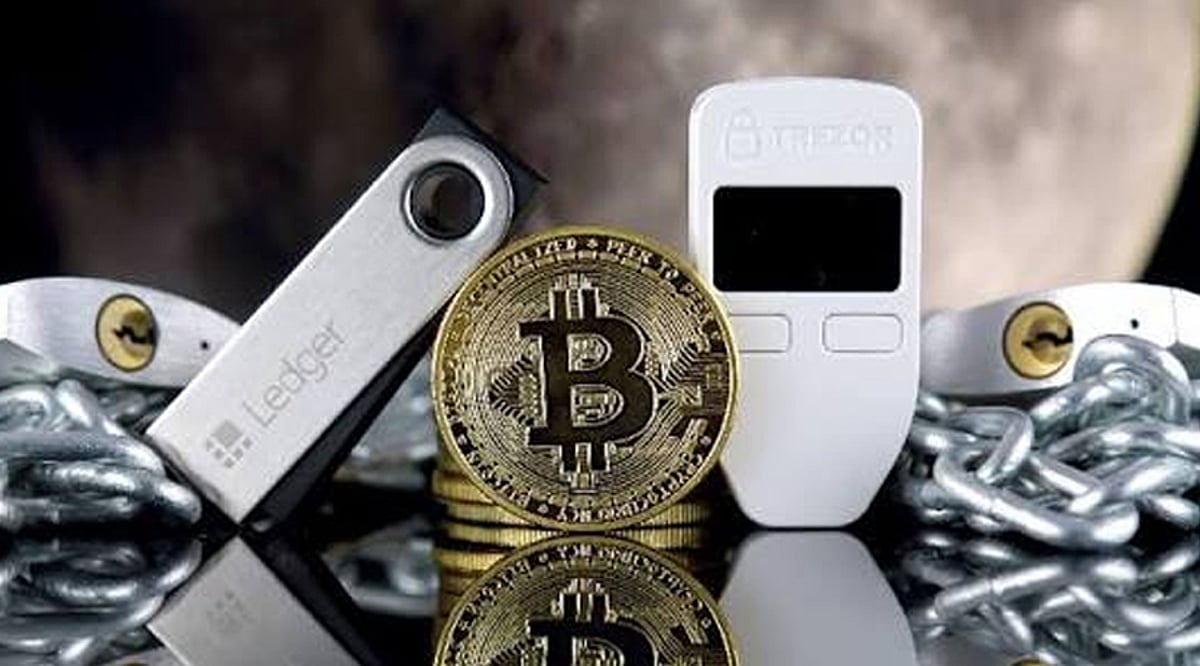
    Hardware wallets keep cryptocurrency private keys offline, reducing exposure to online threats. Devices such as Ledger and Trezor provide an additional security layer for long-term holdings. Always purchase wallets from official sources, protect recovery phrases carefully, and follow the manufacturer’s security instructions when setting up and accessing your assets.

    Secure Your Private Keys

    Private keys provide access to cryptocurrency holdings and should never be shared. Store them securely and avoid saving them in easily accessible digital locations. Losing a private key can permanently restrict access to funds, while exposing it can allow unauthorized transactions. Treat private keys as highly sensitive financial information.

    Protect Your Recovery Phrase

    A recovery phrase can restore access to a cryptocurrency wallet, making its protection essential. Write the phrase down and store it somewhere secure and private. Avoid screenshots, cloud storage, emails or messaging apps. Never share recovery phrases with anyone claiming to provide wallet support or security assistance.

    Enable Multi-Factor Authentication

    Multi-factor authentication adds another layer of protection to cryptocurrency exchanges and related accounts. Whenever available, use an authenticator application or security key instead of relying exclusively on SMS. Strong authentication reduces the risk of account compromise, particularly if passwords are exposed through phishing attacks, data breaches or reused credentials.

    Create Strong, Unique Passwords

    Use long, unique passwords for cryptocurrency exchanges, wallets and associated email accounts. Avoid reusing passwords across multiple services because one compromised account can create additional security risks. A reputable password manager can help generate and store unique credentials, reducing the temptation to use predictable passwords or repeat the same password.

    Beware of Scams and Phishing

    Cryptocurrency users frequently encounter fake websites, investment schemes, impersonation attempts and phishing messages. Verify website addresses before entering credentials or approving transactions. Be particularly cautious about unexpected messages requesting payments, private keys or recovery phrases. Legitimate wallet providers and exchanges will not require users to reveal sensitive recovery information.

    Keep Software and Backups Updated

    Regularly update wallet applications, operating systems and security software to address known vulnerabilities. Maintain secure backups where appropriate and verify that recovery information remains accessible. For larger holdings, consider separating funds between wallets and keeping long-term assets offline. Security should combine technology, careful habits and protection against human error.

  • Top 7 Meme Coins to Watch: Apeing Presale Gains Momentum with $70K Raised and 2400% ROI Potential

    Top 7 Meme Coins to Watch: Apeing Presale Gains Momentum with $70K Raised and 2400% ROI Potential

    Meme coins continue to be a hot topic in the crypto market, with established names like Dogecoin, Shiba Inu, and Pepe drawing attention while newer projects compete for market share. As trading activity heats up, investors are scanning for the next potential opportunity. One emerging project, Apeing, is currently in a live presale stage that has already raised over $70,000 and is attracting interest for its structured price progression.

    1. Apeing Presale: Early Entry at $0.0004 Before Price Increase

    Apeing (ticker: $APEING) is running its presale in stages. Currently in Stage 3, tokens are priced at $0.0004, with a limited allocation of 300 million tokens. The next stage will increase the price to $0.0005, and the project has stated a listing price of $0.01. This creates a significant gap between the presale entry and the planned listing level, appealing to those seeking early-stage opportunities. Apeing is built as an Ethereum ERC-20 token with a fixed supply of 16.75 billion $APEING, 40% allocated to the presale. It also offers tiered staking rewards ranging from 10% to 85% APY across four levels.

    To join the Apeing presale, visit the official website, connect a compatible wallet, select the current stage, enter your purchase amount, and confirm the transaction. The current allocation and pricing are available through official channels.

    2. Shiba Inu (SHIB): Established Ecosystem with Strong Community

    Shiba Inu has evolved from a Dogecoin parody into a broad ecosystem featuring Shibarium, decentralized applications, and community initiatives. Its large community and market cap keep it a staple among meme coin portfolios.

    3. Floki (FLOKI): Utility Beyond Meme Culture

    Floki has positioned itself with a broader ecosystem including DeFi, gaming, and token utilities. Its focus on practical applications alongside meme-driven branding helps maintain visibility in the crypto market.

    4. Dogecoin (DOGE): The Original Meme Coin Leader

    Dogecoin remains the benchmark for the entire meme coin category. Its brand recognition, liquidity, and community support continue to influence the broader narrative.

    5. Pepe (PEPE): Viral Internet Meme Coin

    Pepe quickly rose to prominence through its internet-native community and viral branding. Its fast growth demonstrated the power of meme culture in crypto, and it remains a major player.

    6. Official Trump (TRUMP): Politics Meets Meme Coins

    Operating on Solana, the Official Trump token merges political identity with meme culture. Its market profile is tied to the Trump brand and the intersection of politics, internet culture, and crypto.

    7. Brett (BRETT): Base-Native Meme Coin

    Brett has built a dedicated following within the Base ecosystem, benefiting from its association with Ethereum’s Layer 2 network. Its community-driven branding keeps it relevant among emerging meme coins.

    Conclusion

    From established ecosystems like Shiba Inu and Dogecoin to newer presale opportunities like Apeing, the meme coin market offers diverse options. Apeing’s live presale at $0.0004 with a limited allocation and a stated $0.01 listing price provides an early-stage angle that could appeal to those seeking high-growth potential. Always conduct your own research before investing.

  • Step-by-Step Guide to Setting Up a Binance Account in India: KYC, Deposits, and Crypto Buying Tips for 2026

    Step-by-Step Guide to Setting Up a Binance Account in India: KYC, Deposits, and Crypto Buying Tips for 2026

    Binance remains accessible to eligible Indian users in 2026 after registering as a reporting entity with the Financial Intelligence Unit–India. Opening an account is straightforward, but users must understand identity verification, funding methods, and Indian tax requirements before buying cryptocurrency.

    FIU registration places Binance under applicable anti-money-laundering reporting obligations. It should not be confused with an RBI banking licence or a guarantee that every Binance product is available in India.

    Step 1: Create a Binance Account

    It is better for users to visit the official Binance website or app instead of downloading the program via links received on social media. Usually, to register, users have to provide their email address or mobile number to be verified. Enabling two-factor authentication before adding funds and setting limitations on withdrawals will make it less likely for the account to be hacked.

    Step 2: Complete KYC

    Identity verification is required before accessing core exchange services. Binance’s India verification process includes PAN information alongside an accepted identity document, residence information, and facial or liveness verification. Existing customers can also be asked to complete re-verification when requirements change. Users should enter information exactly as it appears on official documents, as inconsistent details can delay verification.

    Step 3: Choose a Funding Method

    Funding options depend on what Binance displays for the verified account. Binance supports direct crypto deposits, card purchases, available fiat payment methods, and peer-to-peer trading in various markets. Indian users may also encounter Binance P2P, where buyers pay a verified counterparty using the payment method listed in the advertisement while Binance holds the cryptocurrency in escrow. P2P is different from depositing INR directly into a Binance bank account. Users should check the funding options currently shown inside their own account before transferring money.

    Step 4: Buy Cryptocurrency

    Once funded, users can choose the desired cryptocurrency and enter an order. A market order executes against available liquidity, while a limit order lets the trader specify the maximum buying price or minimum selling price. Binance currently lists its regular spot fee at 0.10% for both makers and takers. Paying eligible fees with BNB can reduce the listed rate by 25% to 0.075%.

    Step 5: Withdraw Carefully

    For crypto withdrawals, users must choose both the destination address and the blockchain network. Binance warns that sending funds through an incompatible network can lead to permanent loss. A small test transfer can be useful before moving a large amount.

    Why This Matters

    Opening an exchange account is only the first step. Indian users also need to account for KYC, applicable taxes, trading fees, and custody risk. Before buying, confirm the final transaction cost and network. For long-term holdings, investors should also decide whether exchange custody or a self-custody wallet better matches their security requirements.

    Final Thoughts

    Creating a Binance account in India is relatively straightforward, but users should understand KYC, funding methods, taxes, and trading fees before depositing funds. Security also matters, especially when withdrawing crypto, where users must carefully verify the wallet address and blockchain network.

    FAQs

    1. Is Binance available in India in 2026? Yes. Binance is accessible to eligible Indian users and is registered as a reporting entity with the Financial Intelligence Unit–India.

    2. What documents are needed for Binance KYC in India? Binance’s verification process can include PAN details, an accepted identity document, residential information, and facial or liveness verification.

    3. How can Indian users fund a Binance account? Funding options may include crypto deposits, cards, available fiat routes, and Binance P2P. Users should check the methods currently available in their verified account.

    4. What are Binance’s spot trading fees? Binance lists a regular spot trading fee of 0.10% for makers and takers. Eligible users paying fees with BNB can reduce the rate to 0.075%.

    5. What should users check before withdrawing crypto from Binance? Users should verify the wallet address, cryptocurrency, and blockchain network before confirming a withdrawal. Sending funds through an incompatible network can result in permanent loss.

  • 7 Cryptocurrencies Heating Up: Is Apeing the Next 100x Gem to Watch?

    7 Cryptocurrencies Heating Up: Is Apeing the Next 100x Gem to Watch?

    What happens when meme culture meets serious crypto momentum? Which project could grab attention before the next big move? Avalanche, Litecoin, TRON, Cardano, Solana, and Stellar each bring a distinct mix of community, culture, technology, or brand power. Now, Apeing’s presale is officially live, adding a fresh name to the crypto presale list as the meme coin sector continues attracting major interest.

    For those tracking the next 100x crypto, timing matters. Apeing blends meme culture, community energy, and a utility-focused vision, giving its live presale a compelling early-stage narrative. Tokens are already being swept up quickly, and with the current stage moving fast, the window to secure an allocation is getting tighter by the moment.

    1. Apeing Presale at Stage 3: Rapid Token Sales Could Make It the Next 100x Crypto

    The Apeing presale stands out in the crypto presale list as it is quickly shifting from an opening-stage story to a race against a shrinking allocation. Apeing has officially moved into its live presale, and the current Paper Hand Panic Stage 3 is priced at $0.0004. According to the latest supplied stage figures, over 350 million tokens have already been sold. With over $68K raised and 211 holders, almost half of the available allocation has already been taken, creating the kind of urgency that can quickly turn a new presale into a major talking point.

    Apeing’s Stage 3 has a 300 million token allocation. The project states a potential ROI of 2,400% at the current $0.0004 price. The next stage price is set at $0.0005, as the current allocation continues to move quickly. Recent crypto coverage has also highlighted growing interest around Apeing’s presale and its planned $0.01 listing value.

    For anyone tracking the next 100x crypto, these numbers make the current stage especially interesting. Tokens are being sold rapidly, while the remaining allocation continues to shrink. Once the Stage 3 allocation is filled, the presale moves forward, and the price can change, meaning the $0.0004 entry belongs specifically to the current window. The more tokens that are taken, the less of this stage remains. With 58% of stage 3 already allocated, the live Apeing presale is moving quickly, giving those following the next 100x crypto category a reason to pay close attention before the current stage closes. The current allocation is already nearly halfway gone, so those interested in Apeing can join the live presale before Stage 3 moves on.

    The Earlier You Enter, the Earlier Your Apeing Story Starts

    Stage 3 gives participants the chance to enter Apeing at the very beginning of its presale journey. The project’s tokenomics, staking model, referral mechanics, and staged structure are being introduced while the presale is still in its opening phase. That makes Stage 3 more than simply the first phase on the calendar, as it represents the earliest point at which you can become part of the Apeing ecosystem.

    How to Buy Apeing

    If you want to get in at the beginning of Apeing’s presale journey, the process starts on the official Apeing website. Open the live presale, check the available purchase details, and enter the amount you want to use for $APEING. Follow the on-screen instructions to complete the transaction, then keep your wallet and private keys secure.

    2. Avalanche: AVAX Keeps Pushing for More Network Activity

    Avalanche focuses on fast transactions, scalable infrastructure, and flexible blockchain development. Its ecosystem supports DeFi, gaming, and decentralized applications, giving AVAX utility across multiple use cases. The key factor to watch is whether growing activity can drive greater demand for the network. With its speed and developer-friendly structure, Avalanche continues to hold an important place in crypto.

    3. Litecoin: The Payment-Focused OG

    Litecoin remains one of crypto’s longest-running payment-focused networks, offering faster and cheaper transactions than Bitcoin. Its established history has helped LTC maintain strong recognition across the industry. Its next growth phase depends on continued adoption for everyday transfers and payments. As digital payments expand, Litecoin still has a clear role to play.

    4. TRON: TRX Thrives on Transaction Activity

    TRON has built its ecosystem around digital content, decentralized applications, and high-volume transactions. It has also become widely used for stablecoin transfers, giving the network significant real-world activity. That usage remains central to TRX’s story. Continued transaction volume and ecosystem development could further strengthen the network’s practical utility.

    5. Cardano: ADA Takes the Research-First Route

    Cardano stands apart with its research-driven approach to blockchain development. Its proof-of-stake network supports smart contracts and decentralized applications while focusing on scalability and sustainability. ADA’s future largely depends on growing activity across the ecosystem. More applications and users could give Cardano greater practical relevance over time.

    6. Solana: SOL Is Built for Speed

    Solana has gained attention for fast transactions and low costs, supporting activity across DeFi, gaming, NFTs, and consumer applications. Its large developer ecosystem has also helped drive network usage. SOL benefits directly from this activity through transactions and network participation. Continued adoption could keep Solana among the most active blockchain ecosystems.

    7. Stellar: XLM Keeps Money Moving

    Stellar focuses on fast, accessible digital payments and cross-border transfers. Its network is designed to make moving different forms of value more efficient. XLM supports activity across the Stellar ecosystem, while growing interest in digital payments and tokenized assets could create more opportunities for the network.

    Final Words: Which Next 100x Crypto Could Define the Next Move?

    Avalanche, Litecoin, TRON, Cardano, Solana, and Stellar represent a broad mix of cryptocurrencies spanning meme-driven communities, established digital assets, scalable blockchain networks, payment-focused projects, and ecosystems built around decentralized applications, giving each a place within the wider crypto market.

    Apeing adds a different angle because its presale is already live. Its current Stage 3 price is $0.0004, its stated allocation is moving forward, and the project has positioned itself around meme culture, community energy, and utility. For anyone tracking the next 100x crypto, the current Apeing presale stage is the part of the lineup demanding the closest attention. The next 100x crypto story may ultimately be shaped by community strength, execution, timing, and cultural relevance. Apeing’s live presale gives the next 100x crypto search a new project to watch now. Those looking for the next 100x crypto can explore the Apeing presale while the current stage remains active and its limited allocation continues to move.

    For More Information:
    Website: Visit the Official Apeing Website
    Telegram: Join the Apeing Telegram Channel
    Twitter: Follow Apeing ON X (Formerly Twitter)

    FAQs About the Next 100x Crypto

    What is the next 100x crypto?

    The phrase next 100x crypto generally refers to a cryptocurrency that could potentially experience very large growth from an early valuation. In this lineup, Apeing is the project directly connected with that search theme because its live presale provides an early-stage market entry narrative.

    Why is Apeing included in this crypto presale list?

    Apeing is included in the crypto presale list because its presale is officially live, its current stage has a limited allocation, and its project identity combines meme culture, community engagement, and a utility-focused vision.

    What is a “100x” crypto?

    A 100x crypto is a token whose price increases 100 times from its original value. For example, a $1,000 investment would become $100,000 if the token achieved a 100x increase.

    How can you find the next 100X crypto?

    Look for factors such as a low market cap, strong market narratives, active communities, useful technology, and transparent tokenomics. Early-stage projects such as live crypto presales can also attract attention because they enter the market at an earlier valuation.

    Are 100x gains guaranteed?

    A 100x increase is an ambitious growth scenario. Crypto prices can change significantly based on market conditions, adoption, liquidity, and community interest.

  • AlphaPepe Presale Hits 11,600 Holders as XRP Traders Eye Potential $8 Rally

    AlphaPepe Presale Hits 11,600 Holders as XRP Traders Eye Potential $8 Rally

    AlphaPepe, a meme token that combines artificial intelligence tools with decentralized exchange features, has crossed 11,600 holders and raised over USD 2.6 million through its ongoing presale. The presale price remains at USD 0.02931 per ALPE token, with a planned DEX launch scheduled for the first quarter of 2027 at an initial listing price of USD 0.08.

    According to the project, more than 100 new holders are joining each day. Earlier presale stages sold out quickly as the fundraising cycle progressed. The presale will close in Q1 2027, and public price discovery will begin shortly after the token launches on decentralized exchanges.

    Bonus Drop Incentive Attracts Early Adopters

    AlphaPepe has introduced a Bonus Drop feature that rewards qualifying buyers with additional ALPE tokens. Users can reveal bonuses of 10%, 30%, 50%, 100%, or even 200% extra tokens after making a purchase. More than 300 buyers have already taken advantage of the program. Each revealed bonus remains active for 48 hours and applies only to purchases made during that window. Previous buying activity can also improve the chance of receiving larger bonus percentages.

    Latoken Partnership Expands Exchange Reach

    AlphaPepe has announced Latoken as its fourth centralized exchange (CEX) partner before the token begins public trading. The project indicated that additional CEX partnerships are expected before the launch. Online speculation about a potential tie-up with a higher-tier exchange has not been confirmed, and those claims remain unverified.

    Alongside the exchange roadmap, AlphaPepe is connected to AlphaSwap, described as its first AI-powered decentralized exchange product. AlphaSwap Early Access is already live, offering pre-swap intelligence, risk checks, trend signals, and other tools designed to inform traders before they swap volatile tokens. This product development gives ALPE a utility layer beyond its meme coin branding.

    XRP’s USD 8 Scenario Hinges on Sustained Demand

    Meanwhile, XRP price analysis continues to focus on several catalysts: ETF flows, the growth of RLUSD stablecoin, XRP Ledger activity, tokenization use cases, and rising institutional interest. However, reaching USD 8 would require sustained liquidity and continued buying pressure. A breakout would depend on traders pricing in XRP Ledger developments and institutional involvement, rather than just headlines.

    AlphaPepe and XRP operate at different market stages. XRP is an established crypto asset trading on major exchanges, while ALPE is still in presale and has not yet entered public price discovery. XRP’s USD 8 target relies on proven demand in an existing market, whereas AlphaPepe’s next key milestones are its presale closure and the Q1 2027 DEX launch.