Tag: cryptocurrency

  • Crypto Roundup: Bitcoin ETF Inflows Hit $170M, XRP Gains RLUSD Lending, TRON Surpasses 15B Transactions

    Crypto Roundup: Bitcoin ETF Inflows Hit $170M, XRP Gains RLUSD Lending, TRON Surpasses 15B Transactions

    Bitcoin Spot ETFs See $170 Million in Net Inflows

    According to data from SoSoValue, U.S. spot Bitcoin ETFs recorded a total net inflow of $170.09 million yesterday. BlackRock’s IBIT led the charge with $111.43 million in daily net inflows, bringing its historical total to $60.59 billion. Fidelity’s FBTC followed with $33.36 million, reaching a cumulative net inflow of $9.95 billion. The overall net asset value of Bitcoin spot ETFs now stands at $77.58 billion, reflecting an ETF net asset ratio of 6.06% and a historical cumulative net inflow of $51.49 billion.

    XRP Holders Can Now Borrow RLUSD on Ethereum

    Flare has integrated FXRP into Sentora’s $280 million RLUSD vault on Morpho, enabling XRP holders to use their assets as collateral to borrow Ripple’s RLUSD stablecoin—without selling their XRP. This marks the first time an XRP-based asset has been accepted as collateral in an institutionally curated lending vault on Ethereum mainnet, opening the door for XRP to participate in institutional decentralized finance (DeFi). Holders can convert XRP into FXRP, bridge it to Ethereum, deposit it into the vault, and borrow RLUSD, thereby increasing capital efficiency.

    TRON Crosses 15 Billion Transactions

    TRONSCAN data shows the network has processed more than 15 billion confirmed transactions as of press time, with over 12.56 million transactions in the preceding 24 hours. Total registered accounts reached 396.74 million, after adding about 158,871 accounts in the same period. The milestone reflects cumulative network operations including token transfers, smart contract calls, and staking activity. TRON DAO reported that the blockchain processed 950 million transactions in Q1 2026, a 0.62% increase from the previous quarter.

    Former FBI Agent Accused of Stealing $1 Million in Crypto

    Patrick Steven Yaroch, a former FBI agent, has been charged with interstate transportation of stolen goods and receipt of stolen goods after allegedly stealing approximately $1 million in cryptocurrency from wallets under FBI custody. Court documents indicate that the thefts occurred between early 2025 and July 2026, during which Yaroch worked in the Counterintelligence and Espionage Division with Top Secret security clearances. He is accused of accessing internal systems to retrieve recovery phrases for wallets seized in investigations targeting a foreign adversary.

    Tether Reports Strong Q2 2026 Operating Profits

    Tether announced $1.5 billion in net operating profit for Q2 2026, a 50% quarter-on-quarter increase. USDT supply grew to $184.6 billion, and the global user base surpassed 650 million. The company’s Q2 attestation showed $187.75 billion in assets against $183.64 billion in liabilities, resulting in a $4.11 billion surplus. Tether also added 14 tons of gold during the quarter, pushing its gold reserves past 146 tons, and increased its Bitcoin holdings to 98,932 BTC, valued at $5.8 billion.

  • Whale Accumulates $1M in Worldcoin (WLD) as Token Holds Key Support Level

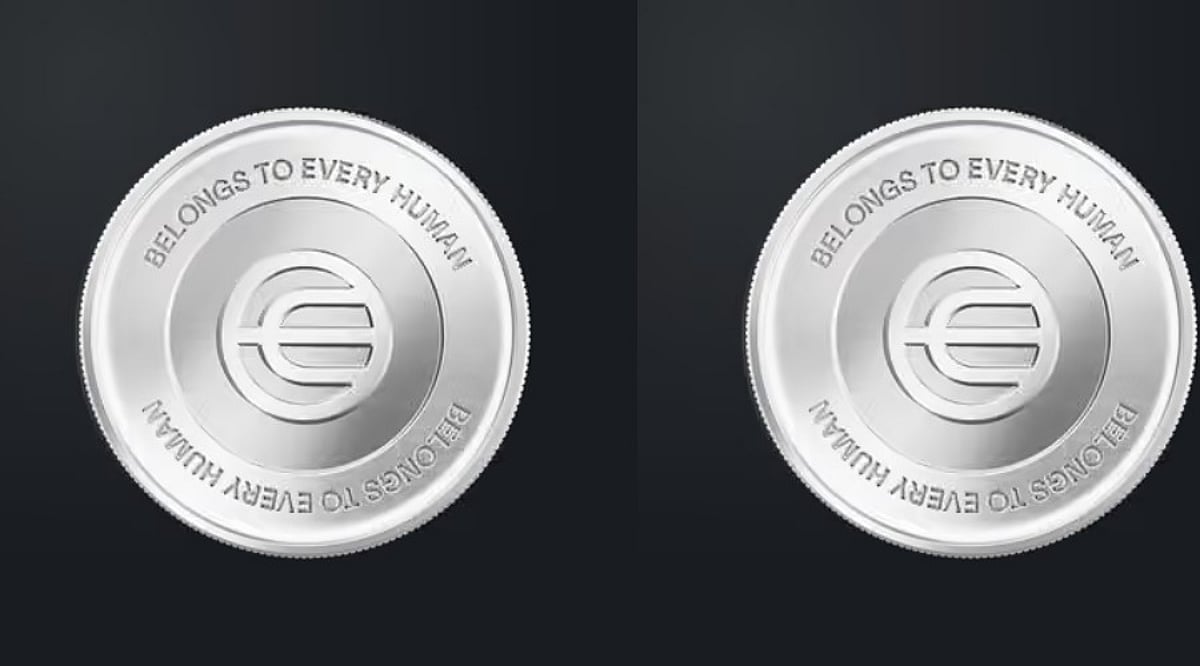
    Whale Accumulates $1M in Worldcoin (WLD) as Token Holds Key Support Level

    Worldcoin (WLD) has captured market attention after a large investor, commonly referred to as a whale, accumulated 3.32 million WLD tokens worth approximately $1.028 million through a series of purchases on Binance. The tokens were acquired at an average price of roughly $0.3095, placing the buys near WLD’s critical support zone.

    Instead of executing a single large trade, the investor spread the purchases across multiple transactions over different time intervals. This strategy likely reduced slippage and allowed the wallet to build a substantial position without triggering an immediate price spike.

    Adding to the significance of the move, the same wallet had previously purchased approximately $10.41 million worth of WLD before selling nearly $10 million, generating an estimated realized profit of around $670,000. The renewed accumulation suggests the investor sees value at current levels, but broader market indicators show that one large buyer alone has not yet confirmed a recovery.

    Spot Selling Pressure Remains Strong

    Despite the million-dollar purchase, Worldcoin’s spot-market order flow remained dominated by sellers. The Spot Taker Cumulative Volume Delta (CVD) continued to show that aggressive sell orders exceeded market buys. This indicates that sellers absorbed the whale’s demand without allowing WLD to produce a significant breakout. The muted price reaction also suggests that broader market participants remain cautious and have not followed the investor with comparable buying activity.

    For a more sustainable recovery, spot buyers would need to regain control of order flow. Until then, the whale purchase may remain an isolated accumulation event rather than evidence of a market-wide shift.

    Retail Trading Activity Increases

    Retail participation rose sharply after the whale activity gained attention. The Trading Frequency Surge indicator entered the ‘Too Many Retail’ zone, signaling a rapid increase in smaller trades. Higher retail interest can help liquidity, but it may also increase short-term volatility. Retail traders tend to jump in after major wallet movements become public, so the market can react more sharply to headlines and quick shifts in mood.

    A stronger trend would likely require continued accumulation from larger investors alongside consistent spot buying, rather than a rally driven mainly by short-term retail speculation.

    WLD Holds Critical $0.30 Support

    Worldcoin stabilized near $0.30 after several weeks of declines. The token remains below the major resistance level at $0.40, but bearish momentum appears to be weakening. The Moving Average Convergence Divergence (MACD) indicator is still under its signal line, although the two lines are starting to converge. Meanwhile, the shrinking negative histogram hints that the selling push is losing steam.

    A bullish crossover, paired with WLD holding support at $0.30, could increase the recovery chances toward $0.40. However, if the price slips under $0.30, that would invalidate the setup and might drag the correction further.

    Frequently Asked Questions

    How much Worldcoin did the whale purchase?

    The investor accumulated 3.32 million WLD tokens worth approximately $1.028 million. The purchases were executed on Binance at an average price of around $0.3095.

    Why is the whale purchase considered bullish?

    The investor has a profitable history of trading WLD and appears to view current prices as attractive. However, one large purchase alone is not enough to confirm a wider market recovery.

    What does Spot Taker CVD indicate for WLD?

    Spot Taker CVD remains seller-dominant, meaning aggressive sell orders continue to exceed market buys. This suggests broader demand remains weak despite the whale’s accumulation.

    What are the key support and resistance levels for WLD?

    The major support level is around $0.30, while the immediate resistance is near $0.40. Holding support and forming a bullish MACD crossover could improve the chances of a move higher.

    Is Worldcoin ready for a rebound?

    WLD shows early signs of stabilization, including weakening bearish momentum and support near $0.30. A sustainable rebound would still require stronger spot buying and continued institutional accumulation.

  • Top Crypto Wallets by User Base: How Millions Manage Digital Assets

    Top Crypto Wallets by User Base: How Millions Manage Digital Assets

    Crypto wallets are essential tools that allow users to store, send, and receive digital assets securely. As cryptocurrency adoption grows, these wallets are becoming more accessible and user-friendly, enabling millions of people worldwide to manage their investments and participate in decentralized finance (DeFi) and Web3 ecosystems.

    Binance Wallet

    Integrated into the Binance exchange, this wallet serves millions globally, providing easy access to trading, DeFi services, and comprehensive digital asset management.

    MetaMask

    MetaMask remains one of the most popular Ethereum wallets, allowing users to connect seamlessly with decentralized applications (dApps), NFTs, tokens, and blockchain-based financial platforms.

    Trust Wallet

    Trust Wallet supports thousands of cryptocurrencies across multiple blockchains, giving users full control over their assets with strong built-in security features.

    Coinbase Wallet

    Coinbase Wallet offers self-custody storage, enabling users to manage cryptocurrencies, NFTs, and dApps without relying on centralized exchanges.

    Phantom Wallet

    Originally built for Solana, Phantom now supports multiple blockchain networks, making token management, staking, and NFT trading fast and convenient.

    OKX Wallet

    OKX Wallet provides multi-chain compatibility, allowing users to access DeFi, swap tokens, and explore Web3 applications through a single platform.

    Ledger Live

    Ledger Live works with Ledger hardware wallets, combining offline cold storage with an intuitive interface for securely managing digital assets and staking.

    Why Wallets Matter

    Crypto wallets continue to grow in importance as blockchain adoption increases. They help millions of people safely manage investments, digital collectibles, and decentralized financial opportunities worldwide.

  • On-Chain Activity Surges for Ethereum, Solana, and Avalanche Despite Steep Token Price Declines

    On-Chain Activity Surges for Ethereum, Solana, and Avalanche Despite Steep Token Price Declines

    Ethereum, Solana, and Avalanche have recorded significantly higher on-chain activity and lower transaction costs over the past year, even as their native tokens lost roughly half or more of their value. A new staking report from Bitwise attributes the improvement to larger blockspace, cheaper transactions, and rising institutional participation. However, token prices remain far below their 2025 peaks, signaling that blockchain performance and market sentiment are no longer moving in lockstep.

    More Activity at Lower Cost

    Bitwise found that activity expanded while user fees declined across all three proof-of-stake networks. The report attributes this shift mainly to protocol upgrades rather than weaker demand. Ethereum, Solana, and Avalanche increased network capacity to process more transactions at lower cost. As a result, users gained cheaper access while developers received more room to build applications.

    Previous market cycles often treated congestion and expensive transactions as signs of strong demand. Now, greater capacity allows networks to handle heavier use without creating the same fee pressure. Lower costs also reduced protocol revenue because the networks earn much of their direct income from transaction fees. Developers accepted that trade-off to improve scalability and encourage wider adoption.

    Institutional Staking, Declining Yields

    Proof-of-stake networks depend on validators who lock digital assets to secure transactions and receive staking rewards. Institutional investors drove much of the additional Ethereum entering validator pools during the second quarter. Exchange-traded products, corporate treasuries, and other large holders increased their staking exposure.

    More than 40 million ETH—roughly one-third of Ethereum’s circulating supply—had entered staking by the end of the period. BitMine, the largest public Ethereum treasury company, reported staking nearly 4.9 million ETH from total holdings of about 5.8 million ETH.

    However, staking yields continue to decline because rewards now reach a larger group of validators. More participants share the available token issuance and transaction-fee income. Bitwise estimates that about 93% of Ethereum staking rewards and more than 90% of Solana rewards came from newly issued tokens.

    That structure increases token supply and dilutes holders who do not stake. Meanwhile, lower fee revenue raises further questions about long-term staking economics.

    Liquid staking products also continue attracting attention because they let holders earn rewards while retaining usable tokenized assets. Investors can deploy those assets as collateral, supply them to lending markets, or place them in liquidity pools. Institutions can therefore combine staking income with broader capital use.

    Token Market Performance

    Developers continue launching applications, institutions add staked assets, and users remain active across decentralized finance platforms despite weaker token valuations. The trend suggests that practical blockchain use now plays a larger role in network activity. Meanwhile, token prices remain tied to market sentiment and wider economic conditions.

    For developers, lower fees and greater capacity support broader adoption. For investors, falling yields, inflation-funded rewards, and weaker fee income create different measures for assessing returns.

    Ethereum, Solana, and Avalanche processed more activity at lower costs despite sharp token-price declines. Institutional staking also expanded, although yields and protocol revenue fell. The data show that investors must evaluate network usage, token issuance, fee income, and staking returns separately from short-term market performance.

  • RWA Perpetual Trading Volume Nearly Equals Bitcoin on Major Exchanges as Wright Reignites Protocol Debate

    RWA Perpetual Trading Volume Nearly Equals Bitcoin on Major Exchanges as Wright Reignites Protocol Debate

    Perpetual futures tied to tokenized stocks and commodities generated $61.7 billion in seven-day volume on Hyperliquid and Binance, nearly matching Bitcoin’s perpetual turnover. According to data from Talos, the RWA perpetual volume reached 99.2% of Bitcoin’s perpetual volume across both venues during the week ending July 31, 2026.

    Tokenized equity contracts contributed 57.8% of the tracked RWA volume, while commodities accounted for 28.2%. These contracts allow traders to gain price exposure without directly owning the underlying tokenized assets. Meanwhile, on-chain real-world asset value stood near $36.8 billion, excluding stablecoins, as reported by RWA.xyz.

    Hyperliquid recorded $25.1 billion in RWA perpetual volume from July 13 to July 19, representing about 52% of its $48.2 billion weekly total. For the first time, RWA derivatives surpassed every other perpetual category combined on Hyperliquid. The exchange relies on on-chain execution, oracle pricing, and automated liquidation systems. In contrast, Binance operates through centralized custody, exposing users to exchange counterparty risk.

    Early figures for the following week showed RWA perpetual volume reaching $37.2 billion, exceeding Bitcoin perpetual volume by about 9%, according to the Talos dashboard. Equity-linked contracts contributed $22.8 billion, commodities added $9.1 billion, and indexes produced $4.2 billion. Despite this growth, RWA perpetuals represented only about 7.5% of the broader $821.4 billion futures market tracked by Talos.

    Amid this market activity, Craig Wright revived a long-running dispute over Bitcoin governance. Wright argued that Bitcoin’s base protocol should remain permanently fixed, with competition occurring above rules that developers, miners, companies, or foundations cannot change. He accused supporters of developer-led upgrades of defending committee control while labeling fixed rules as centralized. His comments reignited debate over whether immutable rules outweigh the need to address vulnerabilities and new technical demands.

    Bitcoin traded at $63,012 on August 2, down 2.46% over seven days, with a market value near $1.26 trillion and $12.9 billion in daily volume. RWA perpetual contracts carry liquidation risks when leveraged positions move sharply against traders, and near parity with Bitcoin on two venues does not represent dominance across the entire crypto-derivatives market.

  • Coldcard Bitcoin Wallet Sweeps Top $114 Million as Replace-by-Fee Rescue Window Opens

    Coldcard Bitcoin Wallet Sweeps Top $114 Million as Replace-by-Fee Rescue Window Opens

    Early Monday, a fourth wave of sweeping attacks targeted Bitcoin addresses generated by Coldcard wallets, pushing observed losses to approximately 1,816 BTC—worth around $114 million. Researchers have identified a narrow rescue window enabled by replace-by-fee (RBF), which allows victims to override unconfirmed theft transactions by paying a higher fee.

    Narrow Rescue Window

    Galaxy Research’s Alex Thorn flagged the active wave while transactions remained in Bitcoin’s mempool. He noted that attackers enabled replace-by-fee on their pending transfers, meaning victims who detect a targeted address can move their coins first by offering miners a higher fee. Thorn urged users to check balances, remove funds from affected devices, and raise transaction fees promptly.

    Thorn had no direct victim report when he published the warning. Instead, he relied on matching transaction patterns and chose speed while users still had time to respond.

    Predictable Seed Generation

    The first sweep began July 30, removing 1,083 BTC from 1,196 addresses within 41 minutes. Two weekend waves raised observed losses to 1,367 BTC across 4,585 addresses. The fourth wave lifted the possible total to about 1,816 BTC from more than 5,200 addresses. Thorn tracked activity across blocks 960,778 through 960,792.

    Researchers counted 218 transactions that targeted 462 victim addresses. The wave averaged about 14 sweeps per block, compared with 0.3 during a pre-incident control period. The flaw traces to a March 2021 firmware build that sent seed generation to a predictable software randomizer rather than the wallet chip’s hardware randomizer. As a result, anyone who identifies the relevant range can reproduce affected keys offline.

    Coinkite released emergency firmware for all affected models after the flaw was discovered. The manufacturer also instructed users who created seeds with the flawed software to move funds and use wallet addresses generated from fresh seeds.

    Transaction Patterns

    Every spent coin arrived after the Coldcard firmware boundary was identified by researchers. The attackers also sent each victim’s funds to a fresh destination with no previous transaction history. Unlike earlier waves, the fourth used one destination per victim instead of shared collector addresses, making the new activity harder to map through common destinations.

    None of the first three waves reached multisignature setups, matching a flaw tied to single-key seeds. Researchers also removed six old destination addresses as attacker-generated addresses should lack earlier activity. According to CryptoQuant Research Head Julio Moreno, small Bitcoin holders moved 39,600 BTC on July 31—transfers under 1 BTC reached about $2.5 billion that day. The last comparable total reached 39,900 BTC on November 16, 2022, days after FTX failed. Daily active addresses also climbed from 645,000 to almost one million, marking the highest level since December 2024. The increase centered on sending addresses rather than receiving addresses as news of the Coldcard flaw spread.

    Brief Roundup

    Four Coldcard-linked sweeps may have taken about 1,816 BTC from more than 5,200 addresses. Replace-by-fee gives users a narrow chance to override pending thefts. Anyone who created a seed with affected firmware should check funds, move coins to a fresh-seed wallet, and raise fees when necessary.

  • GRAM Token Drops to $1.29 After Brief Telegram App Store Removal

    GRAM Token Drops to $1.29 After Brief Telegram App Store Removal

    GRAM, the cryptocurrency associated with Telegram, fell to $1.29 on August 4 after Telegram temporarily disappeared from Apple’s App Store for several hours. Existing users were still able to use the app, but the unavailability for new downloads sparked panic selling across crypto markets.

    Apple confirmed the removal was due to a safety guideline violation involving prohibited abusive content. The brief outage triggered a sharp sell-off, as Telegram is a critical platform for crypto communities, projects, and trading groups worldwide. Traders feared reduced access could diminish Telegram’s activity and slow GRAM’s broader adoption.

    During the sell-off, trading activity surged dramatically. According to CoinGlass data, GRAM derivatives volume jumped 490% to $123.27 million, while open interest rose 1.2% to $93.28 million. Selling pressure dominated across perpetual contracts, and the Long/Short Ratio fell below one, indicating a bearish sentiment. GRAM’s Relative Strength Index dropped to 38, signaling strong selling momentum, and the token moved below its nine-day moving average near $1.40.

    Telegram returned to the App Store after nearly four hours. The company responded via its official X account, stating, “Reports of my demise are greatly exaggerated.” Apple said the app was restored after Telegram removed the reported content and banned the associated user. This easing of fears helped GRAM recover to $1.38 from its low of $1.29.

    The next price move depends on how quickly market confidence returns. If GRAM can sustain a bullish run above $1.42, it could break resistance at $1.46 and minimize further losses. Investors are closely watching the token’s trajectory as the broader crypto market reacts to the incident.

  • Angel Investor Jason Calacanis Praises Solana and Bittensor as SOL Holds Key Support Level

    Angel Investor Jason Calacanis Praises Solana and Bittensor as SOL Holds Key Support Level

    Prominent angel investor Jason Calacanis has renewed his criticism of Bitcoin while praising Solana and Bittensor as projects that deliver usable products. His remarks came as SOL traded near $74 within a key weekly demand zone, with traders watching to see if support holds and whether the price can break its short-term downtrend.

    Calacanis Shifts from Solana Skepticism

    Calacanis said he would advise his brother to sell half of any Bitcoin holdings and redirect the proceeds into “productive projects” such as Solana and Bittensor. He noted that both networks are delivering new products rather than relying solely on future promises, marking a clear shift from his earlier public stance on Solana.

    In late 2024, Calacanis said he had never owned SOL and questioned whether the network offered meaningful applications beyond market speculation. He repeated that position through early 2025 while stating he owned only Bitcoin. More recently, he has pointed to entrepreneurs building on TAO and SOL, though he has not disclosed any investment in either token or any direct relationship between Solana Labs and his venture firm.

    Bitcoin Strategy Criticism Remains

    Calacanis still describes himself as a longtime Bitcoin holder, but he has repeatedly criticized Strategy (formerly MicroStrategy) co-founder Michael Saylor. He argues that Strategy has grown too influential within the Bitcoin market and distorted the broader narrative. Calacanis urges investors to buy Bitcoin directly instead of gaining exposure through Strategy shares, saying the company’s financing model creates risks that direct ownership avoids.

    He has stated he would never buy Strategy stock, even after a steep price decline, and rejected any taxpayer-funded rescue if the company faced serious financial trouble. His criticism focuses on Strategy’s financing structure rather than Bitcoin ownership itself.

    SOL Holds Weekly Demand Near $74

    Solana is trading inside a broad weekly demand zone stretching from about $64 to $75. Buyers have responded several times within that range, making the region central to the current Solana price outlook. SOL recently slipped below a previous low near $68 before recovering above it, a move that may represent a liquidity sweep.

    However, the 12-hour chart structure continues to show lower highs and a descending trendline. A decisive move above the $80 to $84 resistance area could open a path toward $92.91, then approach a market-structure level near $98. On the downside, $68.44 remains the nearest important support. A weekly close below that level could expose the lower demand area near $64, weakening the immediate bullish setup.

    Until SOL clears the descending trendline and completes a successful retest, a move toward $90 remains conditional. Another decline may also help traders assess whether the market has formed a bottom resembling Solana’s 2022 price structure.

    Conclusion

    Calacanis has shifted from questioning Solana’s utility to describing SOL and TAO as productive networks, while maintaining his criticism of Bitcoin-linked Strategy shares. For traders, SOL’s next signal depends on holding $68.44 and breaking $80–$84 before the projected move toward $90 gains confirmation.

  • Bitcoin Bounces to $63,500 After Trump Halts Iran Strike Plans

    Bitcoin Bounces to $63,500 After Trump Halts Iran Strike Plans

    Bitcoin price recovered toward $63,500 on Sunday after the United States cancelled planned military strikes against Iran. The move followed a diplomatic push involving Middle Eastern governments.

    Bitcoin had fallen near $62,200 on Saturday as renewed conflict fears pressured risk assets. It then gained about $1,500 after President Donald Trump announced the pause. BTC traded around $63,450, up 0.65% over 24 hours, while the broader crypto market rose 0.50%.

    Trump Cancels Planned Iran Strikes

    Trump said the United States had prepared action but agreed to stop the planned attack. He said Iran and regional governments requested time to pursue an agreement.

    The proposed framework seeks the immediate reopening of the Strait of Hormuz. It also covers Iran’s nuclear programme and a wider halt to hostilities. Trump said the military was still “locked and loaded” while talks aimed to “rapidly make a deal”. Israel also backed the pause, according to his statement.

    However, the announcement does not confirm a completed agreement. Iran had not publicly accepted the proposed terms when reports appeared. The Strait also stayed closed, leaving shipping and energy markets exposed to further developments.

    Bitcoin still reacted within hours as traders reduced positions linked to renewed escalation. Similar de-escalation announcements have supported crypto prices during the conflict. Yet previous agreements broke down, which kept the latest recovery measured.

    Bitcoin Price Tracks Broader Market Recovery

    The Bitcoin price gain slightly exceeded the crypto market’s 0.50% advance. That close link suggests the move followed broader market direction rather than fresh Bitcoin demand. No new major negative event appeared during the rebound. Selling pressure also eased after the earlier fall. Thin weekend trading likely increased the speed of the move from $62,200.

    Meanwhile, derivatives activity cooled. Data cited by CoinMarketCap showed total crypto open interest falling 27% over 24 hours. Bitcoin liquidations also dropped 40% to about $54 million.

    Lower open interest can reduce pressure from crowded leveraged trades. It can also limit forced selling after sharp price changes. Here, reduced leverage gave Bitcoin room to recover from nearby support.

    Even so, the bounce has not erased concerns around exchange-traded fund outflows and weak institutional demand. Those issues weighed on Bitcoin before the Iran announcement. Geopolitical news provided the immediate trigger, but market flows may decide whether the gain lasts.

    BTC Faces $64,000 Resistance

    Bitcoin traded above its seven-day simple moving average near $63,352. It also held above the $63,150 Fibonacci support identified in the market brief.

    A sustained move above $64,000 would place buyers above the current trading range. Failure to hold $63,150 could expose the $62,000 area again. Sunday’s intraday range reached $63,541 and fell to $62,280.

    Additionally, traders are watching the August 14 deadline for second-quarter Form 13F filings. Managers controlling at least $100 million in eligible securities must report quarterly holdings to the Securities and Exchange Commission.

    Those filings may show changes in institutional Bitcoin ETF positions through June 30. However, the reports carry a delay and may not reflect current holdings.

    Bitcoin now sits between geopolitical relief and cautious market positioning. The next move depends on reopening Hormuz, lower military risk, and a clear break from the current range near term.

  • Top Altcoins Poised to Dominate the Crypto Market in H2 2026

    Top Altcoins Poised to Dominate the Crypto Market in H2 2026

    The cryptocurrency market is entering the second half of 2026 with a renewed focus on utility, adoption, and real-world applications. While Bitcoin continues to command significant attention, several altcoins are emerging as strong contenders for market leadership. Investors are shifting away from hype and toward projects with robust technology, active user bases, institutional backing, and clear growth trajectories.

    This article explores the most promising altcoins for H2 2026, including Ethereum, Solana, Chainlink, XRP, BNB, Sui, Bittensor, Render, Hyperliquid, and Ondo. Each represents a major trend such as artificial intelligence (AI), real-world assets (RWA), decentralized finance (DeFi), payments, and blockchain infrastructure.

    Ethereum (ETH): The Undisputed Blockchain Leader

    Ethereum remains a cornerstone of the crypto ecosystem, trading around $1,850–$1,900 with a market capitalization of approximately $213–$220 billion. Its vast ecosystem supports thousands of decentralized applications (dApps), DeFi platforms, and blockchain services. Institutional investors view Ethereum as a premier network for tokenized assets and digital products.

    Key growth drivers for H2 2026 include the expansion of Layer-2 networks, which enhance transaction speed and reduce costs, and the tokenization of real-world assets (RWA). Favorable market conditions could push ETH toward $3,500–$5,000, with a conservative estimate of $2,200–$2,800.

    Solana (SOL): The High-Speed Challenger

    Solana is a major player in the smart contract space, trading near $75–$80 with a market cap of $40–$45 billion. Its platform offers fast transaction speeds, low fees, and robust support for DeFi, payments, and digital asset initiatives. The growing adoption of stablecoins and real assets on Solana further strengthens its position.

    However, Solana faces increasing competition from other Layer-1 blockchains and must manage high market expectations.

    Chainlink (LINK): Bridging Crypto and Traditional Finance

    Chainlink provides essential data services that connect blockchains to external information, a role that becomes increasingly critical as financial institutions explore tokenized assets and blockchain systems. Trading at $12–$15 with a market cap of $8–$10 billion, LINK offers strong potential for two-fold growth or more during a bullish market phase.

    The growth of RWA creates a major opportunity for Chainlink, as banks and investment firms require secure data feeds for blockchain applications.

    XRP: The Global Payment Network

    XRP continues to attract attention with its focus on fast international transfers and financial settlement. Trading around $1–$1.10 with a market cap near $120 billion, its future growth depends on regulatory progress and wider institutional adoption. Given its already large market value, real adoption and market confidence will be key.

    BNB: The Exchange Ecosystem Token

    BNB remains one of the largest cryptocurrencies, priced near $575–$600 with a market cap above $77 billion. Its value derives from utility within the Binance ecosystem, blockchain activity, and DeFi services. While BNB enjoys strong market recognition, regulatory challenges pose the biggest risk to future growth.

    Sui (SUI): A Next-Generation Layer-1 Project

    Sui represents a newer generation of blockchain networks, trading near $0.80 with a market cap of approximately $2.5 billion. It uses the Move programming language and focuses on speed, gaming, and dApps. Its smaller market size offers higher growth potential but also carries greater risk, as it must continue to attract users and developers.

    Bittensor (TAO) and Render (RENDER): AI Crypto Leaders

    Artificial intelligence remains one of the strongest themes in crypto for 2026. Bittensor focuses on decentralized AI networks, while Render provides decentralized GPU computing services. TAO attracts interest through its AI infrastructure model, and Render benefits from rising demand for computing power to support advanced AI systems.

    Both assets offer high growth potential but are subject to sharp price fluctuations during market shifts.

    Hyperliquid (HYPE) and Ondo (ONDO): Future Finance Trends

    Hyperliquid focuses on decentralized trading and on-chain derivatives, gaining attention from users seeking alternatives to traditional exchanges. Ondo represents the RWA sector, specializing in tokenized financial products and institutional blockchain adoption. Both align with key crypto themes for H2 2026: DeFi and asset tokenization.

    Final Outlook for H2 2026

    The strongest altcoin opportunities for H2 2026 center around Ethereum, Solana, Chainlink, Bittensor, Ondo, and Render. These projects are tied to major trends such as blockchain adoption, AI, institutional finance, and digital asset infrastructure.

    Large-cap assets like ETH, SOL, LINK, XRP, and BNB offer greater stability, while smaller projects like TAO, RENDER, SUI, HYPE, and ONDO provide higher growth potential with increased risk. The next phase of the crypto market may favor projects with real technology, active ecosystems, and clear practical use cases over short-term speculation.

    Frequently Asked Questions

    1. Which altcoins could lead the crypto market in H2 2026? Ethereum, Solana, Chainlink, XRP, Bittensor, Render, and Ondo are among the altcoins with strong growth potential.
    2. Why is Ethereum considered a top altcoin for 2026? Ethereum remains a leading blockchain with a large ecosystem, institutional interest, DeFi activity, and strong support for tokenized assets.
    3. Can AI crypto projects perform well in H2 2026? AI-focused projects such as Bittensor and Render may gain attention as demand for decentralized AI infrastructure continues to grow.
    4. Are smaller altcoins better than large-cap cryptocurrencies? Smaller altcoins can deliver higher returns, but they also carry higher risks compared with established assets like ETH, SOL, and LINK.
    5. What crypto trends could shape H2 2026? Artificial intelligence, real-world asset tokenization, decentralized finance, blockchain payments, and institutional adoption may influence the next market cycle.

    Disclaimer: This article is for informational purposes only and does not constitute investment advice. Cryptocurrency investments carry significant risk. Always conduct your own research (DYOR) before making any investment decisions.