Tag: cryptocurrency

  • Dogecoin Price Analysis: Bearish Momentum Persists as DOGE Hovers Near Yearly Low

    Dogecoin Price Analysis: Bearish Momentum Persists as DOGE Hovers Near Yearly Low

    Dogecoin (DOGE) Struggles Near Yearly Low, Bears Dominate

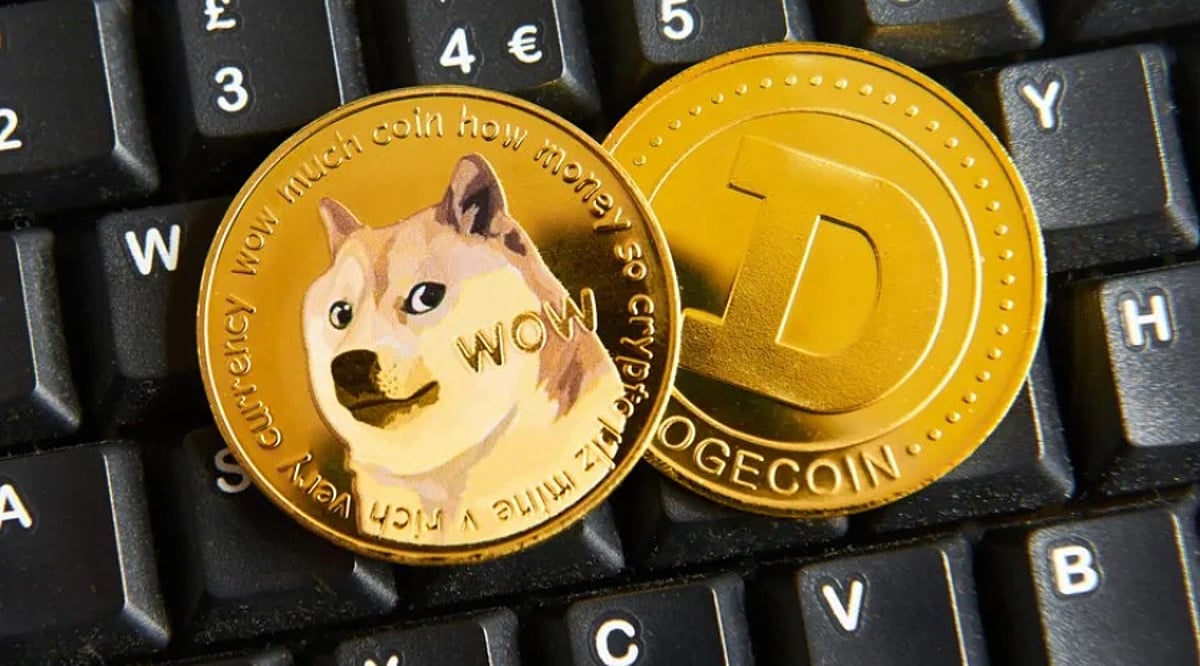
    Dogecoin (DOGE) continues to face downward pressure, trading near its yearly low of $0.069. The token is currently at $0.07188, down 0.58% in the last 24 hours, and remains below all key moving averages, signaling weak momentum. The bearish sentiment is reinforced by derivatives data and technical indicators that suggest a prolonged recovery remains elusive.

    Derivatives Data Points to Widespread Bearish Sentiment

    According to CoinGlass data, DOGE’s long-to-short ratio has fallen to 0.7211, its lowest level in over a month. A ratio below 1.0 indicates that short positions outweigh long positions, reflecting traders’ expectations of further declines. Funding rates also turned negative at -0.003% on Friday, though they have since recovered to 0.067%. This negative funding rate historically suggests that short sellers are paying to keep their positions, a bearish sign.

    Additionally, spot Dogecoin ETFs have seen minimal activity in the past two weeks, offering no support to the token’s price during its recent drop.

    MVRV Ratio Drops Below 0.8, Historically a Bearish Zone

    DOGE’s Market Value to Realized Value (MVRV) ratio has fallen below 0.8, indicating that the average holder is sitting on unrealized losses. This level has historically appeared during periods of low market confidence, such as the accumulation phases before major rallies in 2017 and 2021. However, past behavior suggests that such zones can persist for extended periods without an immediate recovery.

    Technical Analysis: Resistance Levels and Key Support

    The nearest resistance levels are the 20-day EMA at $0.0765, followed by the 50-day EMA at $0.0819 and the 100-day EMA at $0.0893. The 200-day EMA at $0.1057 remains a significant hurdle for any bullish reversal. Since late June, DOGE has traded sideways between $0.071 and $0.078, suggesting buyers have not yet taken control.

    The Relative Strength Index (RSI) stands at 36.36, recovering from oversold conditions earlier in July but still well below the 50 midline. Trading volume increased by 26.74% to $365 million over the past 24 hours, hinting at heightened activity. For a bullish reversal, DOGE must reclaim the $0.0765 level, followed by a move above $0.082. On the downside, a break below $0.071 could expose the token to further losses toward $0.065.

    Frequently Asked Questions

    Why is Dogecoin price under pressure?

    Dogecoin remains under pressure due to its proximity to yearly lows, a lack of momentum, bearish derivatives data, limited ETF inflows, and low investor confidence.

    What does DOGE’s long-to-short ratio indicate?

    The long-to-short ratio of 0.7211 shows that short positions outnumber long positions, indicating traders expect further downside rather than a quick recovery.

    Why is the MVRV ratio below 0.8 important for Dogecoin?

    An MVRV ratio below 0.8 places Dogecoin in a historically stressed valuation zone. Similar levels preceded past accumulation phases, but recovery may take time.

    What resistance levels should DOGE reclaim?

    DOGE needs to reclaim the 20-day EMA near $0.0765, then the 50-day EMA around $0.0819. Clearing the 100-day EMA near $0.0893 would be a stronger bullish signal.

    What happens if Dogecoin falls below $0.071?

    A break below $0.071 would weaken the short-term structure and could lead to a decline toward the $0.065 support area.

    Disclaimer: This article is for informational purposes only and does not constitute financial advice. Cryptocurrency investments are risky; always conduct your own research (DYOR) before investing.

  • Bitcoin Slips to $63,870: Can BTC Reclaim the $64,400 Resistance Level?

    Bitcoin Slips to $63,870: Can BTC Reclaim the $64,400 Resistance Level?

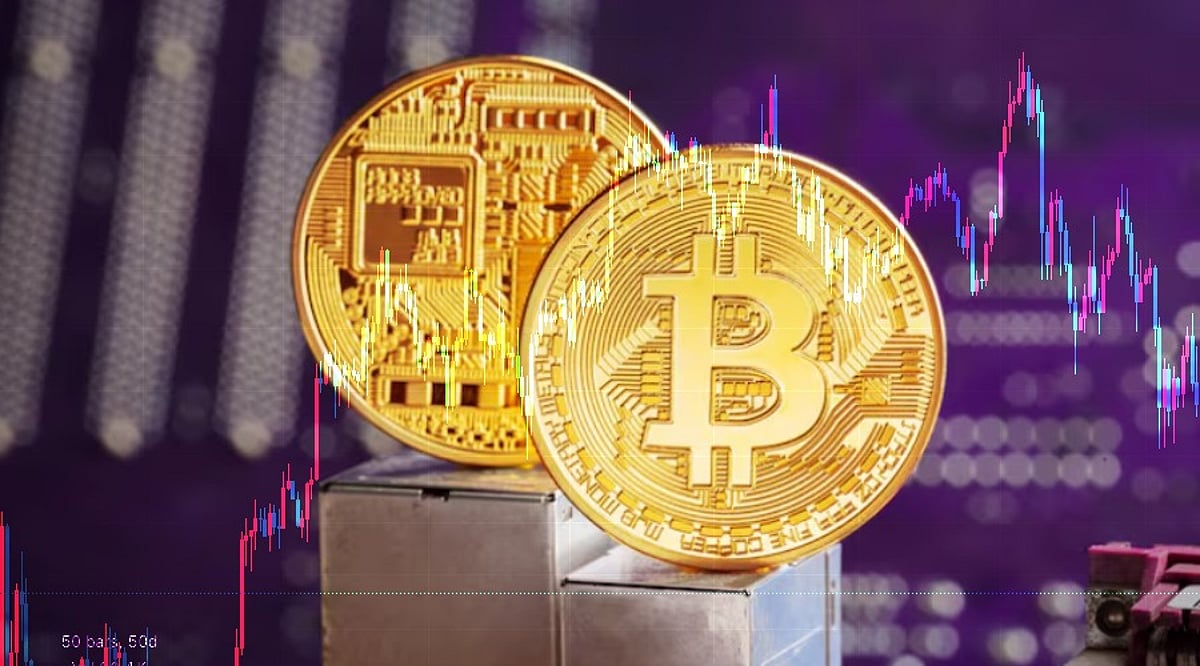
    Bitcoin is currently trading near $63,870 after a sharp intraday decline that pushed the price below the critical $64,000 mark. Buyers stepped in to defend the $63,800 area, but bearish momentum remains strong. The short-term outlook depends on BTC’s ability to reclaim the $64,400 resistance level.

    Key Takeaways

    • Bitcoin trades near $63,870 after a sharp intraday selloff.
    • Key support stands at $63,700, while resistance begins near $64,400.
    • Fresh Bitcoin ETF inflows offer support, but bearish momentum remains strong.

    Bitcoin Technical Analysis

    The latest TradingView chart reveals a clear bearish trend on the 5-minute time frame. Bitcoin has formed a series of lower highs and lower lows, signaling that sellers remain in control. The price now sits below the 20-period, 50-period, and 200-period moving averages, indicating weak short-term momentum. Earlier in the session, Bitcoin failed to hold above the $64,800 to $65,000 zone. Heavy selling with large red candles and elevated volume suggests institutional or large trader participation. The lack of a strong recovery after the drop reinforces the current weakness.

    RSI Shows Selling Pressure May Slow

    The Relative Strength Index (RSI) dropped close to 30, a level often associated with oversold conditions. It has since edged slightly higher to near 32. This modest uptick suggests that the most intense selling pressure may have eased for now. However, the RSI remains well below the neutral 50 mark, confirming that bearish momentum still dominates. A meaningful recovery would require much stronger buying activity.

    Important Support and Resistance Levels

    Bitcoin is hovering near a crucial support zone at $63,700. If this level fails, the next support is around $63,500. A breakdown below these levels could trigger another wave of selling. On the upside, immediate resistance lies at $64,000, followed by $64,400. The strongest resistance zone is between $64,800 and $65,000, where sellers were active earlier in the day. A clear break above this area would be needed to shift sentiment bullish.

    Market Trend Remains Weak

    The overall market structure favors bears. Bitcoin trades below all key short-term moving averages and continues to make lower highs. Trading volumes have risen during the decline, confirming the bearish conviction. While buyers managed to halt the drop near $63,800, the resulting bounce is tepid and lacks the strength to signal a sustainable recovery.

    Latest Bitcoin News

    Spot Bitcoin ETFs have recorded fresh inflows after a period of outflows, providing some support. However, the inflows remain modest compared to prior outflows. Investors are also watching Federal Reserve policy expectations and geopolitical developments. Reports indicate that automated trading systems contributed to the latest selloff, briefly pushing Bitcoin below $63,000 before a partial recovery.

    Outlook

    Bitcoin remains under short-term bearish pressure despite the recent bounce. The price is around $63,900, but chart patterns favor sellers. A bullish reversal would require a decisive break above $64,400. If support at $63,700 breaks, a retest of $63,500 is likely. The next few trading sessions will be critical as the battle around $64,000 could set the near-term direction.

    FAQs

    What is Bitcoin’s current price? Bitcoin is trading around $63,870 after a sharp drop below $64,000. The short-term momentum remains bearish.

    Why did Bitcoin fall below $64,000? Strong selling pressure from automated trading systems and large institutional traders drove the price lower, with insufficient buying volume to absorb the selling.

    What are the important support levels? Immediate support is at $63,700. A break below this could lead to a move toward $63,500.

    What resistance levels should traders watch? Watch $64,000 as immediate resistance, followed by $64,400. The strongest zone is $64,800–$65,000.

    What could move Bitcoin next? ETF flows, Federal Reserve updates, geopolitical news, and whether buyers can push past key resistance levels will be decisive.

  • MEXC Launches Zero-Fee Stock Futures Campaign, Offers $5M SNDK Prize Pool

    MEXC Launches Zero-Fee Stock Futures Campaign, Offers $5M SNDK Prize Pool

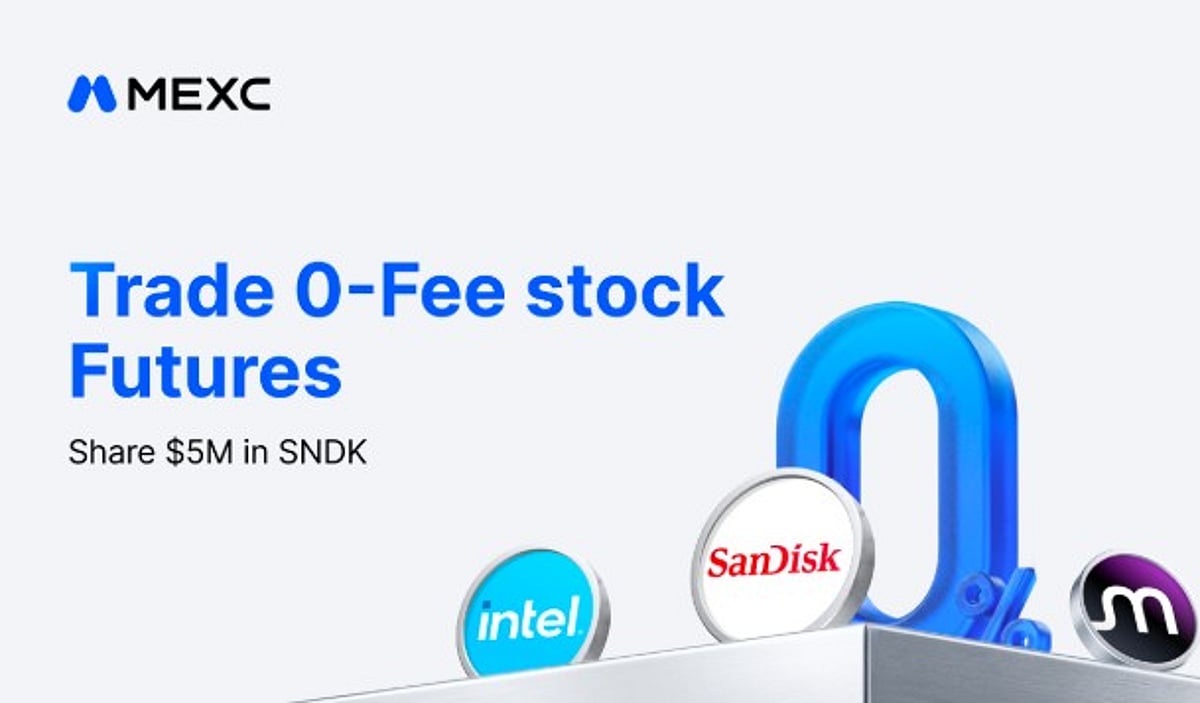
    MEXC, a leading digital asset trading platform known for its zero-fee trading model, has announced a new Stock Futures campaign that allows users to share a $5,000,000 prize pool in SNDK Position Airdrops. The campaign aims to help traders capitalize on opportunities in the U.S. stock market by eliminating trading costs and providing attractive incentives.

    Under the campaign, users can trade eligible stock futures products with zero fees. New participants can complete simple tasks to earn rewards tied to popular stocks. All users who trade Stock Futures during the campaign period will qualify for a share of the $5 million SNDK airdrop pool.

    This initiative underscores MEXC’s commitment to its core pillars: ‘0 Fees’ and ‘Infinite Opportunities.’ The platform’s Stock Futures product offers round-the-clock volatility management, 7×24 trading, dynamic leverage up to 200x, and access to a wide range of popular global assets. Beyond stock futures, MEXC also provides RealStocks through a partnership with a regulated securities broker, enabling users to buy actual U.S. stock shares using USDT, complete with full ownership rights, dividends, and benefits.

    MEXC continues to expand its product lineup and reward programs, seeking innovative ways to deliver value to its global user base. For full details and participation instructions, users can visit the official MEXC Stock Futures campaign page.

    About MEXC

    MEXC is one of the fastest-growing cryptocurrency exchanges worldwide, trusted by more than 40 million users across 170+ markets. With a user-first philosophy, it offers industry-leading zero-fee trading and access to over 3,000 digital assets. The platform serves as a gateway to infinite opportunities, allowing users to trade cryptocurrencies alongside tokenized assets such as stocks, ETFs, commodities, and precious metals.

    Risk Disclaimer: This content is for informational purposes only and does not constitute investment advice. The cryptocurrency market is highly volatile. Investors should conduct their own research and assess potential financial risks before making any trading decisions.

  • How Paybis Rose to Become a Leading Crypto Exchange in the US Market

    How Paybis Rose to Become a Leading Crypto Exchange in the US Market

    Navigating the world of digital finance can be challenging, especially for beginners. For crypto enthusiasts in the United States, online exchanges must deliver a strong combination of fast transaction speeds, ease of use, high institutional trust, and deep knowledge of market regulations. Many traditional trading platforms are designed for institutional or professional day traders, featuring complex order books, charting interfaces, and technical jargon that intimidate the average retail consumer.

    Due to this complexity, there has been strong demand for alternative service providers that remove friction while maintaining strong security and transparency. Traders who buy Bitcoin on Paybis appreciate how the platform connects conventional fiat payment systems with the new digital economy. By simplifying the process and focusing on user-friendliness, Paybis has steadily increased its presence in the highly competitive US market, becoming a favorite for beginners and experienced users alike who value efficiency above all.

    Paybis Overview

    Paybis is a cryptocurrency exchange and digital wallet platform designed to make buying, selling, and exchanging digital assets as easy as possible. Instead of complicating things with margin trading mechanisms or liquidity pools, the platform focuses on direct, simple fiat-to-crypto transactions. According to Paybis, its service is available in over 180 countries, indicating extensive global reach.

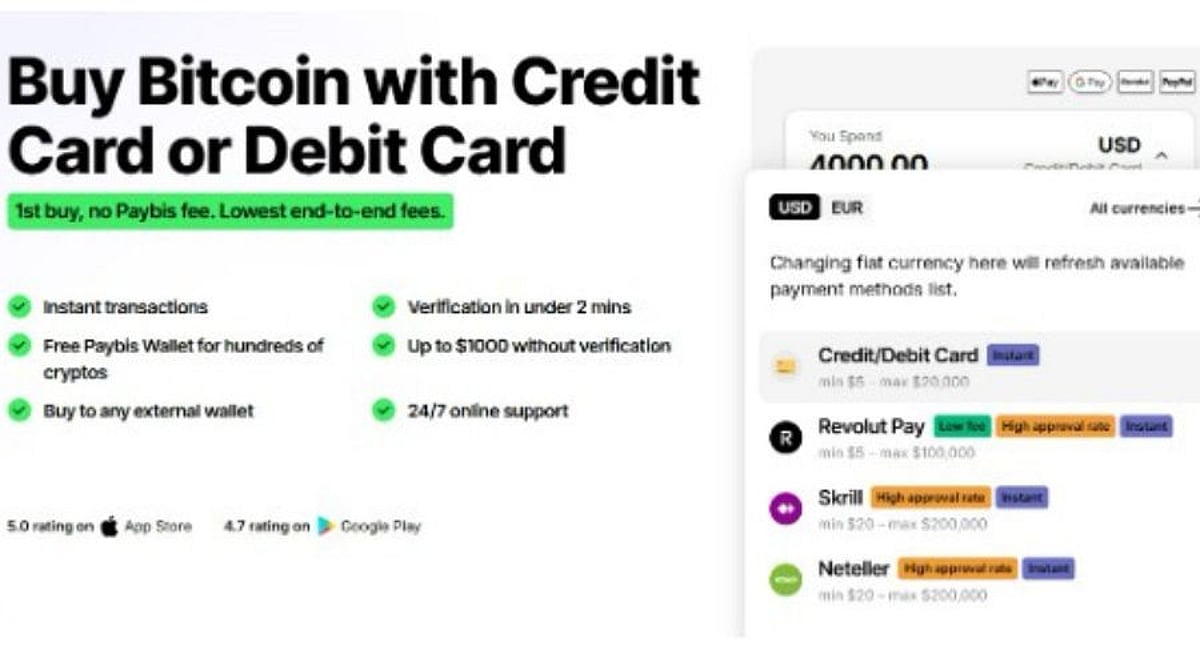
    The platform’s user experience design is built on minimizing traditional onboarding friction. This is evident in its quick user verification system, multiple payment options, and clear, visible pricing with no hidden fees. By allowing users to pay through familiar methods like credit or debit cards, Paybis mirrors a standard e-commerce checkout, lowering technical barriers often associated with blockchain.

    Paybis Regulatory Status

    Paybis operates in compliance with regulations across multiple jurisdictions, ensuring transparency and peace of mind for its growing user base.

    US Compliance Through FinCEN Registration

    Paybis operates in the United States through its official registration as a Money Services Business (MSB) with the Financial Crimes Enforcement Network (FinCEN). The company holds licenses to legally operate in 48 US states, demonstrating its commitment to navigating complex state-level regulations. This regulatory registration serves as a powerful trust signal for American users comparing crypto platforms, as it ensures the exchange follows strict Anti-Money Laundering (AML) and Combating the Financing of Terrorism (CFT) protocols. An MSB registration with FinCEN means the business complies with federal reporting and oversight systems.

    New MiCA and PSD2 Licenses in Europe

    Paybis’ EU branch has been officially recognized as a Crypto Asset Service Provider (CASP) under the Markets in Crypto-Assets (MiCA) regulation and has received a new Payment Institution License under the Revised Payment Services Directive (PSD2). By aligning with MiCA—one of the most detailed and strict digital asset laws worldwide—Paybis has opened its internal controls, capital adequacy, and customer protection mechanisms to regulatory scrutiny. The PSD2 Payment Institution license also enables highly integrated, secure, and efficient payment transactions across European countries. For American customers, this global regulatory compliance signals that they are dealing with a regulated crypto service provider that respects cross-border compliance—a key differentiator from less regulated or unregulated crypto services.

    Paybis Benefits for US Users

    Here are some of the key features and real advantages Paybis offers to customers. In addition to these online features, users who want a portable, integrated management solution can use the official Paybis app. The app covers the entire ecosystem—speedy verification, safe storage, and instant card payments—all accessible on mobile devices, allowing users to manage their accounts easily on the go.

    Why Choose Paybis as Your Crypto Exchange?

    Finding the perfect cryptocurrency exchange involves weighing convenience, speed, and a reliable, secure environment. Paybis is an excellent choice for those seeking a faster, simpler, and less troublesome alternative to formal trading desks. Users want to pay instantly with debit and credit cards, check out easily, complete identification verification quickly, see fees clearly, and have a good variety of assets to choose from.

    Supported by 24/7 customer service and a network of worldwide regulatory compliance, Paybis offers a stable, transparent, and reliable platform for managing digital transactions.

    Disclaimer: This article is for informational purposes only and does not constitute financial or investment advice. Cryptocurrency investments carry risk, and you should conduct your own research before making any investment decisions.

  • BlockDAG’s 95x Opportunity Nears Its End as XRP Holds Strong and Aster Struggles to Recover

    BlockDAG’s 95x Opportunity Nears Its End as XRP Holds Strong and Aster Struggles to Recover

    The cryptocurrency market is caught in a tug-of-war this week, with buyers and sellers competing for control. XRP shows cautious strength near $1.107, while Aster crypto struggles to defend the $0.620 support level. Meanwhile, BlockDAG is surging ahead with a potential 95x return opportunity that is closing in just hours.

    XRP Price Prediction: Bulls Target Key Breakout

    XRP is trading around $1.107 after bouncing off the key $1.070-$1.078 support zone. Bulls are now aiming to break and hold above $1.12, which could pave the way for a move toward $1.184. On-chain data reveals whale wallets accumulated approximately 70 million XRP between July 11 and July 15, while Binance’s XRP reserves have dropped to about 2.61 billion tokens—their lowest level since February 2026. Fewer coins on exchanges may reduce near-term selling pressure. However, the RSI at 48.57 indicates only gradual momentum improvement, with mixed technical signals. The XRP price prediction hinges on whether buyers can turn $1.12 into solid support.

    Aster Price Update: Buyers Defend $0.620

    Aster crypto is trading around $0.627, down about 0.86% over the past 24 hours amid broader market pressure. Buyers continue to defend the $0.620 support level, but the token has struggled to break above the $0.630–$0.640 resistance zone. The RSI stands at 46.86, showing neither buyers nor sellers have gained full control, while the MACD points to weak momentum. Trading volume increased to $58.88 million, reflecting active market interest, but buying pressure has not been strong enough to drive prices higher. A break above $0.640 could improve sentiment, while a drop below $0.620 may trigger further short-term losses.

    BlockDAG: Final Hours to Secure 95x ROI

    BlockDAG’s ecosystem is accelerating on multiple fronts. The X1 mobile mining app, already used by over 4 million people, just received an upgrade for a smoother user experience. BDAG AI has officially launched, bringing artificial intelligence tools into the network and contributing to a $500 million jump in valuation. Additionally, the BlockDAGX exchange is set to open within days, offering spot trading, futures trading, and dedicated apps for Apple and Google Play.

    What makes this opportunity stand out is that the entry price remains at a strikingly low $0.00000033, while the buyback rate is set at $0.03, working out to a potential 95x return. This has placed BlockDAG at the forefront of the best crypto to buy conversation. The project’s casino has already attracted over 13,000 users and processed wagers exceeding $150 million in a single month, showcasing strong adoption. With the chance to sell at $0.03 ending in just hours, anyone looking to maximize returns needs to act now.

    Which Is the Best Crypto to Buy Today?

    The XRP price prediction depends on whether $1.12 can flip into solid support, potentially opening the path toward $1.184. Aster crypto needs a clean break above $0.640 to shift sentiment, while a slip below $0.620 could send it lower. Both tokens remain caught between cautious buyers and hesitant sellers. BlockDAG, however, is not waiting for confirmation. With a $500 million valuation jump, an incoming exchange, and a casino processing $150 million in monthly wagers, the project is stacking real traction. The $0.03 buyback unlocking a potential 95x ROI—with only a few hours left—makes BlockDAG the clearest pick for the best crypto to buy in 2026.

    Disclaimer: This article is for informational purposes only and does not constitute investment advice. Always conduct your own research before making any investments.

  • XRP Double-Digit Potential: Ripple Price Forecast for the Next Bull Run

    XRP Double-Digit Potential: Ripple Price Forecast for the Next Bull Run

    Ripple’s stronger fundamentals, ETF inflows, regulatory progress, and institutional adoption improve XRP’s long-term outlook. While $4–$7 appears realistic, a $10+ price requires exceptional market conditions.

    Key Takeaways

    • Ripple’s legal clarity and institutional partnerships have significantly strengthened XRP’s long-term fundamentals.
    • Spot XRP ETFs and growing XRP Ledger adoption could drive higher institutional demand.
    • A $10+ XRP is possible but depends on a powerful crypto bull market and continued adoption.

    XRP remains one of the most talked-about cryptocurrencies as the market waits for the next major bull run. Ripple has spent the last few years building its payment network, expanding business partnerships, and securing better legal clarity in the United States. These developments have renewed interest in XRP, even though its price has not reached previous record levels. Many investors now wonder whether the token can finally break into double digits and trade above $10.

    As of mid-July 2026, XRP trades between $1.40 and $1.45. Its market value stands at more than $80 billion, which keeps it among the biggest cryptocurrencies in the world. While the current price is far below the all-time high, recent developments have created fresh optimism for the next market cycle.

    XRP Has Stronger Fundamentals Than Before

    Ripple today finds itself in a much stronger position compared to a few years back. The firm has solved many of its legal problems in the United States, one of the principal issues surrounding XRP. This legal clarity has allowed financial organizations to test Ripple’s payment solutions with ease.

    Ripple has added new features to XRP Ledger and rolled out RLUSD stablecoin. At the same time, the emergence of spot XRP exchange-traded funds (ETFs) has opened up great opportunities for institutional investors. These instruments give market participants exposure to the XRP cryptocurrency without them having to purchase and store cryptocurrencies.

    Despite the positive developments, XRP has failed to meet higher expectations when it comes to its price. Analysts believe that cautious investors, global economic uncertainty, and doubts regarding Ripple’s current offerings have affected XRP sales adversely.

    Latest News Supports Long-Term Growth

    Spot XRP ETFs have attracted more than $1 billion in total inflows since their launch. This shows that institutional investors have started to build positions in the asset.

    The XRP Ledger has also seen more activity in tokenized real-world assets. Today, hundreds of millions of dollars worth of assets exist on the network. This growth shows that the blockchain has started to move beyond simple payment transfers.

    Another positive development comes from new crypto regulations. Discussions around laws such as the CLARITY Act have increased confidence across the digital asset market. Clear rules often encourage banks, investment firms, and large financial institutions to participate more actively.

    These developments have strengthened XRP’s long-term outlook, even though the market has not fully reflected them in the current price.

    Can XRP Reach $10?

    A move from around $1.40 to $10 would require a gain of more than 600%. While this may sound difficult, the cryptocurrency market has delivered similar gains during previous bull runs.

    One major factor could be institutional adoption. Ripple continues to work with banks and payment providers that want faster and cheaper cross-border transactions. If more financial institutions use Ripple’s technology, demand for XRP could increase over time.

    Spot XRP ETFs may also play an important role. These investment products give pension funds, hedge funds, and asset managers easier access to XRP. If ETF inflows continue to rise during a strong crypto market, buying pressure could become much stronger.

    Regulatory clarity is another important factor. For several years, legal uncertainty limited XRP’s growth. As those concerns continue to fade, more institutions may feel comfortable investing in the asset.

    The overall crypto market will also influence XRP’s future. Bitcoin usually leads every major bull cycle. After Bitcoin reaches new highs, investors often shift money into large altcoins such as XRP. This pattern has appeared in several previous market cycles.

    What Could Stop XRP From Reaching Double Digits?

    Although the outlook has improved, several challenges still remain.

    Ripple’s RLUSD stablecoin is gaining traction in the company’s payment strategy. As a result, some analysts think that the use of this stablecoin may diminish the need to have XRP in certain transactions, which could reduce the potential benefits of Ripple’s business growth for XRP.

    There are concerns about competition. Networks such as Solana, Ethereum, and Stellar prove to be rivals in the sphere of payment services and blockchain adoption. They all want to attract financial organizations and programmers.

    Various global economic factors can influence the price of XRP. High interest rates, low economic growth, and low investor confidence could lead to decreasing demand for cryptocurrencies. Even the best projects may struggle in such hard times.

    XRP Price Forecast for the Next Bull Run

    The future price of XRP depends on how the market develops over the next few years.

    • Conservative outlook: $2 to $3 if crypto demand remains weak or institutional adoption slows.
    • Balanced forecast: $4 to $7. Many analysts consider this the most realistic outcome if Bitcoin reaches new highs, ETF inflows continue to grow, and Ripple expands its business.
    • Optimistic outlook: Above $10. This scenario would require several positive events to happen simultaneously: Bitcoin needs another strong bull run, institutional investors need to increase their exposure through ETFs, Ripple needs wider adoption across payment networks, and crypto regulations need to stay supportive.

    If all these factors come together, XRP could trade between $7 and $10, while the strongest market conditions could push the token slightly above the $10 mark.

    Why This Matters

    Growing institutional adoption, regulatory clarity, and new spot ETFs give XRP its strongest fundamentals yet. Understanding these drivers helps investors assess whether current developments can realistically push the token toward double-digit price targets.

    Final Thoughts

    XRP enters the next bull market with stronger fundamentals than ever before. Ripple has made major progress in legal clarity, institutional partnerships, blockchain development, and investment products. These improvements have created a stronger foundation for future price growth.

    Even so, a move above $10 should still be viewed as an ambitious target rather than an expected outcome. A price between $4 and $7 appears more realistic under normal bull market conditions. However, if institutional demand continues to rise, ETF investments grow, regulations remain favorable, and the overall crypto market enters another powerful rally, XRP could finally have a realistic chance to reach double-digit prices.

    FAQs

    1. Can XRP realistically reach $10? Yes, but it would require strong institutional adoption, sustained ETF inflows, favorable regulations, and a major crypto bull market.
    2. What is the most realistic XRP price target for the next bull run? Many analysts consider the $4–$7 range the most achievable under healthy market conditions.
    3. How do spot XRP ETFs impact the price? Spot ETFs make XRP more accessible to institutional investors, potentially increasing demand and long-term buying pressure.
    4. What are the biggest risks to XRP’s growth? Competition from other blockchains, macroeconomic uncertainty, slower adoption, and reduced utility if stablecoins replace some XRP use cases.
    5. Why are investors optimistic about XRP now? Improved legal clarity, expanding Ripple partnerships, XRP Ledger growth, tokenized real-world assets, and increasing institutional interest have strengthened confidence in XRP’s future.

  • Top 8 Cryptocurrencies Over $10 Billion Market Cap in 2026: Performance and Adoption

    Top 8 Cryptocurrencies Over $10 Billion Market Cap in 2026: Performance and Adoption

    The cryptocurrency market continues to evolve, with large-cap assets maintaining their dominance through strong adoption and technological innovation. In 2026, several cryptocurrencies with market capitalizations exceeding $10 billion are leading the charge. Here’s a closer look at the best performers.

    Bitcoin (BTC)

    As the world’s largest cryptocurrency, Bitcoin remains the benchmark for long-term investors. Its established track record and institutional adoption solidify its position as a store of value.

    Ethereum (ETH)

    Ethereum dominates the decentralized finance (DeFi) and smart contract space. Continuous network upgrades, including scalability improvements, enhance its utility and developer appeal.

    Solana (SOL)

    Solana is known for lightning-fast transactions and a rapidly expanding developer ecosystem. Its high throughput and low fees make it a favorite for decentralized applications.

    XRP

    XRP continues to expand cross-border payment solutions, attracting growing institutional interest. Its focus on efficient global transactions keeps it relevant in the financial sector.

    BNB

    BNB powers one of the world’s largest blockchain ecosystems, the Binance platform. It offers multiple real-world utilities, including transaction fee discounts and participation in token sales.

    Dogecoin (DOGE)

    Dogecoin remains one of the most recognized community-driven digital assets. Its widespread acceptance and active community contribute to its enduring popularity.

    Cardano (ADA)

    Cardano focuses on research-driven blockchain innovation and sustainable scalability. Its peer-reviewed approach and commitment to interoperability set it apart.

    Chainlink (LINK)

    Chainlink provides secure blockchain oracles that connect smart contracts with real-world data. Its critical role in DeFi and enterprise solutions ensures continued demand.

    These large-cap cryptocurrencies are not only performing well but also driving the next wave of blockchain adoption. Investors and enthusiasts should keep an eye on their developments throughout 2026.

  • BTC Holds Steady Near $64K as Oil Rally and AI Uncertainty Rattle Markets

    BTC Holds Steady Near $64K as Oil Rally and AI Uncertainty Rattle Markets

    Bitcoin remained near $64,200 on Monday as traders weighed a sharp jump in oil prices against ongoing market disruption from Moonshot AI’s Kimi K3 release. Ether outperformed at $1,860, while most major tokens saw minimal movement.

    The cryptocurrency market stayed mixed. XRP held near $1.09, Solana traded around $76, BNB eased to $565, and Dogecoin remained close to $0.07. HYPE fell 10% on the week to $60.

    Oil and AI Reset Risk Appetite

    Brent crude rose as much as 4% to $91.42 a barrel, its highest level since June, following wider US and Iranian strikes that extended beyond military targets. This surge revived inflation worries just after soft US price data had eased them. Rising oil prices also pressured risk assets across markets, including crypto.

    At the same time, equities continued digesting Friday’s AI-led selloff. Moonshot AI’s Kimi K3, an open-weight Chinese model, took the top spot on a widely watched coding benchmark.

    Crypto Follows the Broader Risk Trade

    The Kimi K3 release hit semiconductor shares and pulled crypto lower into the weekend. The pressure spread into Asia on Monday, where South Korea’s Kospi fell 3.5% after a holiday break. US futures steadied later in the session. The Nasdaq 100 rose 0.5%, but the market still faced questions about the strength of the AI trade.

    For crypto, the two shocks pulled in different directions. War-driven oil supported inflation concerns and rate pressure. Meanwhile, AI weakness hit chip stocks that bitcoin has tracked closely during the month.

    With major US economic data largely out of the way, the focus this week shifts to corporate earnings. Alphabet reports on Tuesday, Tesla on Wednesday, and Intel on Thursday.

    Armstrong Rejects Mining Alarm

    Coinbase CEO Brian Armstrong dismissed Chamath Palihapitiya’s warning that AI demand could threaten Bitcoin mining. Armstrong said Bitcoin’s difficulty adjustment keeps price separate from hash power.

    Palihapitiya argued that miners could earn 10 to 20 times more by selling electricity to AI operators. He described the shift as structural, while also saying he could be wrong. He also said marginal liquidity now favors prediction markets and equities over bitcoin, pointing to daily prediction market activity that often exceeds $300 million.

    Armstrong answered that falling hash power does not determine Bitcoin’s price. He said the network adjusts automatically and keeps block production near ten minutes. He linked Bitcoin’s value to sovereign deficits rather than mining power. His remarks matched recent views that frame BTC as digital gold instead of a payments network.

    Investors will now watch major corporate earnings for further market direction.

  • Cardano’s Van Rossem Hard Fork Goes Live After Full On-Chain Governance Approval

    Cardano’s Van Rossem Hard Fork Goes Live After Full On-Chain Governance Approval

    Cardano activated its van Rossem hard fork on July 18, 2026, after final approval came through its decentralized on-chain governance system. The upgrade took effect at the boundary of epoch 644, moving the network to Protocol Version 11. It stayed within the Conway ledger era, making van Rossem an intra-era hard fork. This marked a significant milestone as one of the first major blockchain upgrades executed entirely through binding on-chain votes.

    Governance Bodies Back the Upgrade

    The hard fork received approval on July 13 from all three governance groups required under Cardano’s post-Chang framework. DReps backed the action with 77.63% support, clearing the 60% threshold. Stake pool operators also approved the upgrade, with their support reaching 52.7%, just above the 51% requirement. The Constitutional Committee completed the process with six approvals; the rule required five committee votes, and one member did not vote.

    Cardano’s Governance Model Enters a New Phase

    The activation marked a major test for Cardano’s governance structure. The system emerged through the Chang and Plomin upgrades, which gave ADA holders, stake pool operators, and the Constitutional Committee formal roles in protocol decisions. Earlier Cardano upgrades relied more heavily on founding entities or temporary governance structures. Van Rossem differed because the network authorized the change through its own on-chain process.

    Intersect, Cardano’s member-based ecosystem organization, coordinated the upgrade process. It convened a Hard Fork Working Group that included Input Output, the Cardano Foundation, EMURGO, Midnight, infrastructure providers, and other contributors.

    Testing, Technical Changes, and Market Tone

    The group focused on testing and readiness rather than final authority. Cardano ran checks across SanchoNet, Preview, and Preprod before activation. Preview moved to Protocol Version 11 on May 8. Preprod followed on June 10 after developers fixed compatibility issues affecting tools such as Ogmios and Kupo.

    Van Rossem introduces targeted changes to Plutus smart contracts, ledger consistency, and node security without changing transaction structure. It expands built-in functions across Plutus V1, V2, and V3. The upgrade also adds more efficient case expressions for basic types, arrays, optimized multi-asset value operations, modular exponentiation, and improved list handling. Additional changes cover BLS12-381 cryptographic operations and stronger uniqueness protections for stake pool verification keys. A separate Plutus cost-model update passed on June 18, which prepared pricing for the new functions before activation.

    ADA traded at $0.165 on Monday after a mild recovery in the previous week. Even so, the token remained below its 50-day, 100-day, and 200-day exponential moving averages. Price action also stalled after the early-July rebound. Sellers continued to defend lower Fibonacci retracement levels from the April-to-June decline. The RSI stayed just under 50, while MACD held only slightly above zero. Funding rates turned positive on Friday and stood at 0.0061% on Monday. However, the long-to-short ratio remained at 0.90, showing bearish positioning in derivatives markets.

    Conclusion

    Cardano activated the van Rossem hard fork through its on-chain governance system after approval from DReps, stakeholder operators, and the Constitutional Committee. The upgrade moved the network to Protocol Version 11 and added Plutus and security improvements while ADA traded with mixed market signals.

  • FBI Arrests 21-Year-Old in Steam Malware Scheme That Stole $220,000 in Cryptocurrency

    FBI Arrests 21-Year-Old in Steam Malware Scheme That Stole $220,000 in Cryptocurrency

    A 21-year-old Florida man has been arrested for allegedly helping run a malware campaign that used malicious games on Steam to steal more than $220,000 in cryptocurrency from users. The arrest follows an FBI investigation that traced stolen funds through digital gift cards and food delivery orders.

    According to an FBI criminal complaint, the campaign operated between May 2024 and February 2026, infecting nearly 8,000 devices and compromising almost 80 cryptocurrency wallets. The malware was hidden in games uploaded to Steam, allowing attackers to gain access to victims’ systems and steal digital assets.

    The accused, Zyaire Wilkins of North Lauderdale, Florida, has been charged with conspiracy to obtain information by computer for private financial gain. If convicted, he faces a maximum sentence of 10 years in prison.

    Eight Steam Games Named in Complaint

    Investigators allege the group distributed eight malware-infected games through Steam over nearly two years. Once installed, the games deployed malware capable of accessing cryptocurrency wallets on infected computers. The games named in the complaint include:

    • BlockBlasters
    • Chemia
    • Dashverse (DashFPS)
    • Lampy
    • Lunara
    • PirateFi
    • Tokenova

    Some of the titles were removed from Steam after security concerns were reported. The FBI says the games were promoted through Discord, Telegram, X (formerly Twitter), and LinkedIn, targeting users known to own or trade cryptocurrency.

    FBI Followed Cryptocurrency Transactions

    The investigation advanced after agents traced stolen cryptocurrency used to purchase more than 150 digital gift cards through Bitrefill. According to court documents, many of those gift cards were redeemed for Uber Eats orders. Investigators used the associated phone numbers, delivery addresses, and transaction records to identify Wilkins as a suspect.

    The criminal complaint was filed in Washington state, where Valve, the company behind Steam, is based.

    Investigation Underway

    Federal agents claim that this was a team effort and that investigations are ongoing. They are trying to find more victims and establish the role played by other suspects. The FBI says this malware attack affected around 8,000 devices, accessed 80 crypto wallets, and stole at least $220,000 worth of cryptocurrency.

    Wilkins faces charges but has not been found guilty. The accusations made in the criminal complaint will be proved or refuted in court.