Tag: cryptocurrency

  • Stargate LLM Emerges as Crypto’s First Real Utility Token as XRP and Cardano Struggle in 2026

    Stargate LLM Emerges as Crypto’s First Real Utility Token as XRP and Cardano Struggle in 2026

    Most people would struggle to explain what XRP or Cardano does for them personally on a day-to-day basis. XRP moves money across borders faster than a bank wire; Cardano is infrastructure for developers building elsewhere. Neither gives an ordinary holder a reason to open their wallet unless they are checking a price or making a trade. This gap—crypto’s long-standing criticism—has now become its most visible problem as XRP slides to $1.04 and Cardano drops nearly 40% in a single month.

    Stargate LLM aims to answer that criticism directly. It is a coin you spend inside an actual AI platform—chat, image generation, video, a coding assistant—through the same wallet that holds it. Its presale offers a 50X price ratio from first batch to launch, giving participants a stake in a token with a non-circular use case.

    XRP Price: Stuck Below $1.10 With No Clear Catalyst

    Through early July, XRP started near $1.30 and slid to close the month around $1.04–$1.14, its weakest level since late 2024. The token is barely holding the $1 psychological floor; technical indicators show it oscillating near key moving averages with no clear direction. Broader market fear has outweighed positive developments: spot XRP ETFs have pulled in roughly $1.48 billion in cumulative inflows since launch, and Ripple secured full MiCA compliance across all 30 countries in the European Economic Area. Mastercard also named Ripple a settlement partner in its new AI-payments network. Yet none of that good news has moved the price because XRP’s core function—cross-border settlement—does not give everyday holders a reason to interact with it daily.

    Cardano News: A Multi-Year Low Despite Real Upgrades

    Cardano’s ADA dropped nearly 40% in June alone, hitting levels unseen since 2020. This decline occurred even as the Ouroboros Leios scalability upgrade cleared testnet and the Midnight privacy sidechain rolled out with institutional backing from Google Cloud and Vodafone. Whale wallets kept accumulating through the slide, growing their share of total supply, yet daily transactions fell to a 45-day low and smart contract activity dropped sharply from its early-June peak. A separate exploit drained $2.4 million in ADA from hundreds of addresses, though a recovery path has since been confirmed. Cardano’s roadmap remains ambitious, but infrastructure progress does not automatically create a reason for regular people to use the token beyond holding or trading.

    Stargate LLM: A Crypto That Actually Does Something

    Crypto’s recurring criticism is that most tokens ultimately do the same handful of things: move money, sit as a speculative position, or facilitate a transaction that could happen through traditional finance anyway. Stargate flips that structure. It is a coin you spend, and on the other side of that spending is a real product: chat, image and video generation, a coding assistant, and an agent marketplace. That is a non-circular use case: value is not just moved or speculated on; it is spent on something people actually want to use, the same way a subscription gets spent on a product.

    The presale reflects that logic: ten batches from $0.0005 to $0.0125, building toward a $0.025 launch target—a 50X ratio for Batch 1 participants. Of the fixed 150 billion coin supply, 96% goes to community and presale participants. For anyone asking which crypto to buy now while XRP and Cardano search for relevance beyond payments, Stargate offers a meaningfully different bet.

    The Bottom Line

    XRP and Cardano are not failing because their technology is broken. Both have real teams, upgrades, and roadmaps. They are running into the same wall crypto has hit for years: payments and infrastructure promises do not give a token daily relevance the way an actual product does. Stargate LLM’s coin takes a different path: it gets spent inside a platform people log into to use AI—chat, image and video generation, a coding assistant—the same way a subscription gets used, not just held or traded. For anyone tired of watching established coins struggle to justify themselves beyond speculation, that is the difference worth understanding.
    Explore Stargate LLM: Website | Buy | Telegram | X/Twitter

  • Dogecoin Price Forecast: Can DOGE Reach $0.12 After Defending the $0.077 Support Level?

    Dogecoin Price Forecast: Can DOGE Reach $0.12 After Defending the $0.077 Support Level?

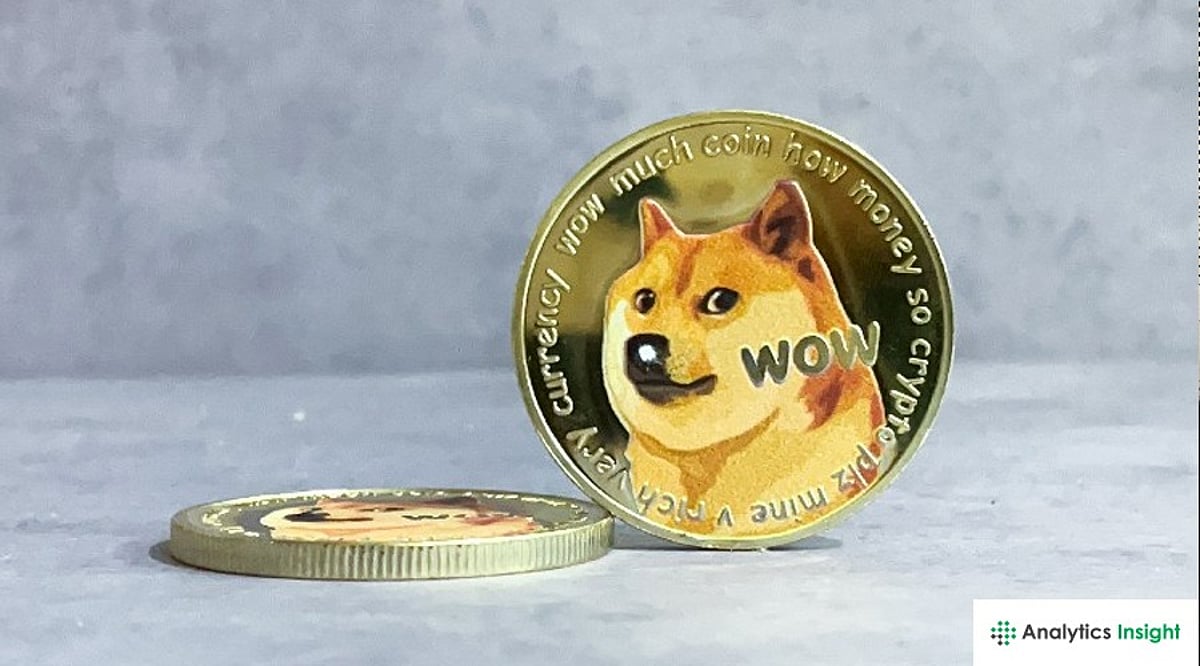
    Dogecoin (DOGE) is currently holding strong near the critical support level of $0.077, sparking renewed optimism among traders and analysts. The question on everyone’s mind: Can this meme coin rally to $0.12 and beyond? Let’s dive into the technical and market factors that could drive a potential breakout.

    Why the $0.077 Support Matters

    In technical analysis, support levels are crucial areas where buying interest typically emerges, preventing further price declines. For Dogecoin, the $0.077 region has been a reliable demand zone during recent trading sessions. Each time DOGE approached this level, buyers stepped in, pushing the price back up. This repeated defense suggests that sellers have not yet gained full control, providing a strong foundation for a potential recovery.

    While a support level doesn’t guarantee higher prices, it does offer a base for future upward movement. As long as DOGE holds above $0.077, traders will remain watchful for a breakout.

    Resistance Levels Stand in the Way

    Despite the solid support, Dogecoin faces several hurdles before a rally to $0.12 becomes viable. The first significant resistance lies between $0.078 and $0.081. A decisive move above this area would indicate fresh buying strength. Next, the $0.082 to $0.09 range poses a psychological barrier where sellers may emerge.

    According to analysts, a clean break above $0.09 could open the door to $0.10. If bullish momentum persists, the next major target would be $0.12. However, each resistance level requires confirmation through strong trading volume to validate the breakout.

    Strong Volume and Market Sentiment

    Price increases backed by weak volume often fizzle out. For Dogecoin, a sustainable rally requires both higher prices and increased trading activity. Strong volume signals genuine buyer conviction, reducing the risk of a sudden pullback. Market participants are closely watching volume patterns as a key indicator of the rally’s health.

    Broader Crypto Market Influence

    Dogecoin rarely moves in isolation. The broader cryptocurrency market, particularly Bitcoin’s direction, often dictates DOGE’s trajectory. Recent positive sentiment across the crypto sector—boosted by optimistic comments from U.S. political leaders—has helped DOGE maintain stability near its support level. A strong overall market environment would provide tailwinds for Dogecoin’s potential rally.

    Whale Activity Boosts Confidence

    Large holders, or “whales,” have been accumulating Dogecoin, indicating confidence in future price appreciation. Whale accumulation typically occurs after careful market analysis, making it a bullish signal. Additionally, network activity remains healthy, with active wallet addresses showing consistent participation—a positive sign for long-term adoption.

    What Could Derail the Rally?

    The primary risk is a breakdown below $0.077. If that happens, selling pressure could escalate, leading to a decline toward $0.072 and potentially $0.06. A break below key support would invalidate the bullish setup and signal a deeper correction.

    Outlook and Key Takeaways

    Dogecoin stands at a critical juncture. Holding the $0.077 support keeps the bullish case alive, while successfully breaching resistance levels—especially with strong volume—could pave the way for a rally to $0.12. Traders should monitor the $0.081 to $0.082 area as the first major test. Until a confirmed breakout occurs, the market remains in a waiting phase. Nonetheless, improved sentiment, whale activity, and market strength provide a positive backdrop.

    Frequently Asked Questions

    1. Can Dogecoin realistically rally to $0.12? Yes. Maintaining support at $0.077 and breaking above $0.081 and $0.09 with strong volume makes the $0.12 target achievable.
    2. Why is the $0.077 level so important? It serves as a crucial demand zone where buyers have repeatedly stepped in, proving sellers lack control and establishing a recovery base.
    3. What are the key resistance levels? Initial resistance is between $0.078 and $0.081, followed by $0.09 and $0.10 psychological barriers.
    4. How do whales and volume impact DOGE? Increased volume confirms buyer conviction during breakouts, while whale accumulation signals professional investor confidence.
    5. What happens if Dogecoin falls below $0.077? A breakdown would invalidate the bullish structure and likely lead to a sell-off toward $0.072 and potentially $0.06.
  • XRP Price Outlook: Could the Token Climb Back to $2 in 2026?

    XRP Price Outlook: Could the Token Climb Back to $2 in 2026?

    Key Takeaways

    • XRP requires a stronger crypto market to revisit the $2 level.
    • Institutional ETF demand could be a major price catalyst.
    • Ripple’s business expansion and legal clarity support long-term confidence.

    XRP remains one of the most closely watched assets in the cryptocurrency market. After a strong rally in previous years, the token entered 2026 with lower prices as the broader market lost momentum. A return to $2 is possible, but not guaranteed. The coming months will determine whether XRP starts another significant recovery or stays near current levels.

    Current Price Situation

    As of July 2026, XRP trades around $1.30 to $1.35. The token has fallen about 26% since the start of the year and remains nearly 63% below its July 2025 peak of roughly $3.65. Despite this decline, XRP still ranks among the largest cryptocurrencies by market capitalization. Its strong community, established use case, and connection to Ripple’s payment business keep traders attentive. The current price leaves room for a major recovery if market conditions improve.

    The Broader Crypto Market Will Lead the Way

    XRP’s future value depends heavily on the overall cryptocurrency market. Historically, XRP has performed well during bullish cycles, often gaining momentum alongside Bitcoin. When Bitcoin rallies, investor confidence typically spreads across the market, creating favorable conditions for XRP. If Bitcoin sees a new rally, XRP could attract renewed buying interest. Conversely, if Bitcoin trades sideways or weakens, XRP may struggle to break above the key $2 resistance level. Market sentiment remains the most important factor.

    Institutional Demand Could Be a Game Changer

    Institutional investors are far more important in the crypto market than in previous years. A major development for XRP in 2026 is easier access through exchange-traded funds (ETFs). These products allow professional investors to gain exposure to XRP via regulated financial markets. Strong inflows into XRP ETFs could increase liquidity and attract new capital. Greater institutional participation may also reduce price swings driven by short-term retail trading. If ETF demand continues to grow, XRP could receive the support needed for another major price move.

    Regulatory Clarity Boosts Confidence

    Regulation has been one of the biggest challenges for XRP over the past several years. Legal uncertainty created hesitation among individual and institutional investors. However, that situation has improved significantly. Much of the major legal dispute surrounding Ripple has reached a resolution, giving XRP a clearer regulatory position than many other cryptocurrencies. This removes an important source of uncertainty. A stable legal environment could encourage more financial companies and large investors to consider XRP as part of their digital asset strategy.

    Ripple’s Business Growth Matters

    XRP’s success also depends on Ripple’s business expansion. Ripple continues to build payment solutions focused on faster and cheaper international money transfers. More business partnerships could increase real-world use of the XRP ecosystem. Banks, payment companies, and financial institutions remain important targets for Ripple. New agreements, higher payment volumes, and continued business expansion could strengthen confidence in XRP. Any major acquisition or technology upgrade could also improve the long-term outlook. Strong business growth often creates positive sentiment around the cryptocurrency linked to the Ripple network.

    Market Activity Offers Clues

    Trading activity often provides useful signals about future price direction. ETF flows, whale transactions, exchange balances, and blockchain data are important indicators for XRP. Large investors, often called whales, control significant amounts of XRP. Periods of whale accumulation have often preceded strong price rallies. While this does not guarantee higher prices, it remains one of the signals that many market analysts follow closely. Healthy trading volume and rising market activity could also support a stronger recovery.

    Risks Remain

    Several challenges could prevent XRP from reaching $2 during 2026. A weak crypto market would make a recovery much harder. Low demand for XRP ETFs could reduce fresh investment. Slower adoption of Ripple’s payment services may weaken long-term confidence. Profit-taking by large holders could place extra selling pressure on the market. Global economic uncertainty, higher interest rates, or lower demand for risk assets could also affect cryptocurrency prices across the board.

    Why This Matters

    This analysis outlines a realistic roadmap for XRP’s 50% recovery to the $2 milestone. For digital asset investors, XRP’s current consolidation represents a critical turning point heavily reliant on institutional capital from newly launched ETFs and post-litigation regulatory clarity.

    Can XRP Reach $2 Again?

    A rise from about $1.33 to $2 would require an increase of roughly 50%. Such a move falls within the normal price swings that XRP has shown in previous market cycles. Several market analysts continue to publish positive long-term forecasts for XRP, some even expecting prices well above $2 under favorable conditions. However, these predictions depend on stronger crypto market performance, continued institutional investment, Ripple’s business expansion, and stable economic conditions.

    For now, XRP still has a realistic chance to return to $2 during 2026. Success will depend on several important developments rather than a single event. If market confidence improves and Ripple continues to strengthen its business, XRP could regain lost ground and move closer to that important price level.

    Frequently Asked Questions

    1. Can XRP reach $2 again in 2026? Yes. Reaching $2 requires a 50% increase from current levels. This is highly achievable if broader crypto market momentum recovers and institutional interest through ETFs remains steady.
    2. What is the biggest factor behind XRP’s price? The overall direction of the crypto market, especially Bitcoin’s price action, remains the primary catalyst. General investor sentiment dictates whether XRP can break through key resistance levels.
    3. Why are XRP ETFs important? ETFs provide regulated access for institutional investors. This opens the door to massive professional capital inflows, which boosts market liquidity and helps stabilize extreme price volatility.
    4. How does Ripple affect XRP? XRP is the liquidity bridge for Ripple’s payment network. New bank partnerships and higher cross-border transaction volumes directly increase the token’s real-world utility and long-term investor confidence.
    5. What could stop XRP from reaching $2? A prolonged crypto bear market, weak ETF demand, slow enterprise adoption by financial institutions, aggressive whale profit-taking, or broader global economic downturns could easily cap price growth.

    Disclaimer: This article is for informational purposes only and does not constitute investment advice. Cryptocurrency investments are risky; always do your own research (DYOR) before making any financial decisions.

  • Dogecoin Price Eyes Breakout as $300M Whale Transfer From Binance Sparks Attention

    Dogecoin Price Eyes Breakout as $300M Whale Transfer From Binance Sparks Attention

    Dogecoin is holding near a crucial long-term support zone, with analysts closely watching whether the current structure can spark the next major market cycle. Meanwhile, a massive $300 million transfer of nearly 4 billion DOGE from Binance to an unidentified wallet has drawn fresh attention to whale activity.

    Market analysts have zeroed in on the support range between $0.05 and $0.07, which they believe is a key accumulation area. If buyers defend this level, the path could open for a fivefold recovery and a longer-term target above $4.20. One analyst, known as Don, noted that each previous major rally in Dogecoin began after an extended return to a similar support zone. The current price action resembles those historical patterns, leaving room for a significant advance if momentum shifts.

    Another analyst, polaris_xbt, emphasized that limit orders are positioned within the $0.05–$0.07 range, with the first resistance target at $0.15–$0.20 and a potential extension to $0.30–$0.35 if the recovery continues. However, a sustained break below $0.05 would weaken the accumulation structure and delay any bullish outlook.

    On the on-chain front, Whale Alert reported a transfer of approximately 4 billion DOGE from a Binance hot wallet to an external address, valued at nearly $300 million at current prices. The transaction carried a minimal network fee, suggesting a preference for speed over cost. Large exchange withdrawals often signal that major holders are moving assets to private wallets for long-term storage, or preparing for over-the-counter or institutional custody. The destination wallet remains unidentified, adding to market speculation.

    Recent whale activity has been increasing alongside broader strength in the meme coin sector. Data from CoinMarketCap shows that the top 1% of Dogecoin addresses control over 60% of the circulating supply, making large transfers a key factor for potential volatility. Traders are interpreting these outflows as possible accumulation, though the lack of clarity on the destination keeps the market cautious.

    As Dogecoin continues to trade above its critical support zone, all eyes remain on whether the $300 million whale transfer signals a shift in sentiment or simply a routine move. The coming days will be crucial for determining if DOGE can break out into a new cycle or if it will face further consolidation.

  • Solana Price Jumps 11% as Institutional Adoption and Network Milestones Drive Momentum

    Solana Price Jumps 11% as Institutional Adoption and Network Milestones Drive Momentum

    Solana extended its recovery this week, climbing approximately 11% to trade near $81 after briefly spiking above $82. The rally was fueled by a combination of network upgrades, surging on-chain activity, institutional capital inflows, and new governance initiatives that reignited investor enthusiasm.

    Institutional Adoption Accelerates

    Institutional interest gained significant traction after Securitize tokenized $295 million worth of NYSE-listed common stock on Solana following its SPAC debut. Concurrently, the Solana Foundation introduced its Governance Proposals framework, establishing a formal on-chain validator voting system that expands the network’s governance capabilities.

    Network Activity Reaches New Highs

    Network usage hit unprecedented levels: Solana processed over one billion weekly non-vote transactions for the first time, while tokenized asset spot trading volume soared to a quarterly record of $5.77 billion. These metrics underscore Solana’s expanding role in real-world asset tokenization.

    Investor demand remained robust, with spot Solana ETFs attracting roughly $5.75 million in net inflows, even as other cryptocurrency investment products continued to see capital outflows.

    Technical Indicators Point to Key Resistance

    From a technical perspective, Solana has recovered from its June decline after buyers defended the long-term support zone near $73, aligning with the 0.786 Fibonacci retracement level. The price has reclaimed the previous breakdown area around $80.14 and is attempting to establish it as a new support level.

    Momentum indicators have strengthened alongside the recovery. The daily Relative Strength Index (RSI) has climbed above 62 after rebounding from oversold conditions, while the Supertrend indicator continues to signal bullish momentum with dynamic support near $69.60.

    A sustained move above the $83 resistance level could open the path toward $90. However, if SOL fails to hold above $80, the price may revisit support around $75.40.

    Shorter-term indicators also remain constructive. On the four-hour chart, Solana continues trading above its 20-, 50-, 100- and 200-period moving averages, with the 20-period simple moving average near $81.40 providing immediate support. Although the Aroon indicator continues to favor buyers, a slight decline in Aroon Up suggests bullish momentum has moderated as the market awaits another catalyst.

    Solana Foundation Appoints New Security Chief

    Michael Coates announced on X that he has joined the Solana Foundation as its Chief Information Security Officer (CISO). He will oversee security initiatives as institutional adoption continues to expand.

    Coates explained that Solana now processes tens of billions of dollars in daily stablecoin volume while handling more transactions each day than much of the broader cryptocurrency industry combined. He also highlighted the network’s growing tokenization activity, including the launch of tokenized SpaceX shares.

    Coates brings extensive cybersecurity experience to the role. He previously served as Head of Security at Mozilla during the browser competition era and later became Twitter’s first CISO as the platform expanded globally. He subsequently founded enterprise security company Altitude Networks, which entered the digital asset sector after its acquisition by CoinList.

    At the Solana Foundation, Coates said his priorities include strengthening operational security, improving application security practices, and addressing risks unique to digital assets. He also plans to work with policymakers and industry standards organizations on cybersecurity regulations affecting the crypto sector.

    Discussing the evolving threat landscape, Coates noted that attackers remain highly motivated to target digital assets while the misuse of artificial intelligence continues to introduce new security challenges. At the same time, he said AI can significantly improve defensive capabilities when deployed effectively, referencing his congressional testimony on the subject earlier this year.

    This hiring is part of a larger pattern where crypto firms snap up veterans from tech, cybersecurity, and regulatory bodies to match the influx of Wall Street capital. A similar move occurred last year when Sygnum brought on former CFTC Chairman Christopher Giancarlo as a senior policy advisor.

    What’s Next?

    Solana price strengthened as institutional adoption expanded, network activity reached record levels, and technical indicators turned more bullish. The appointment of a new security chief also reflects the ecosystem’s growing maturity. Investors will closely watch whether SOL can sustain support above $80 and break the $83 resistance.

  • Bitcoin Shows Independent Price Action: Is the Rebound a Trend Reversal or Just a Bounce?

    Bitcoin Shows Independent Price Action: Is the Rebound a Trend Reversal or Just a Bounce?

    Bitcoin has started to exhibit price action of its own following a recent rally from $57,742 to the current level at $62,770.67. However, macroeconomic uncertainty, derivatives hedging, and fresh geopolitical risks persist, keeping recovery pressure on the market.

    Fed Signals Ease Inflation Concerns

    The rebound started when Fed Chair Kevin Warsh avoided announcing a rate cut but said that the inflation outlook had eased slightly in recent weeks. He also reiterated the Fed’s policy of sustaining the 2% inflation target. The market focused more on the first half of the message. Traders started to ease back on hopes of further hikes after inflation concerns eased and US employment data weakened. For Bitcoin, this mattered because higher interest rate expectations usually reduce the valuation space for risk assets. The rebound above $60,000 was not just a technical bounce but rather a genuine step up. Rates signaled a repricing of “rate-hike pressure” and unwinding of previous panic trades.

    Liquidations Fuel the Bitcoin Rebound

    According to CoinGlass, Bitcoin’s drop toward $57,700 triggered nearly $395 million in liquidations. This indicates the sell-off was not triggered by normal selling but also by forced selling from leveraged sell positions. Markets often rebound after forced liquidations subside. Once macro news becomes less negative, short sellers begin to reduce risk. The short covering puts buying pressure and can speed up the buying trend. Similarly, Bitcoin hit $62,000 when both Ethereum and Solana also recovered, causing $281 million worth of bearish liquidations. This indicates that spot demand was not the only factor affecting the recovery rate, but rather the derivatives positioning as well.

    Options Market Still Signals Caution

    While the rally is underway, traders are not yet convinced that a trend change is underway. Traders on Deribit purchased around $50 million in put options, and Bitcoin and Ethereum put/call skew remained negative, indicating demand for downside protection. The derivatives market continues to buy insurance, but the spot market is rebounding. Traders who felt the trend had completely turned would probably see premiums declining more quickly. The broader trend is also looking fragile, with a ‘death cross’ on technical charts providing some caution.

    Altcoins Join the Recovery

    Bitcoin bounced back above $60,000, along with Ethereum, Solana, and Dogecoin. Capital is starting to move into the large-cap altcoins, and Ethereum has surged by approximately 12% during the past week. CoinMarketCap reported that the altcoin season index increased to its highest level in three months at 52. This is a sign of the increase in risk appetite, but it’s not an official altcoin season.

    Why This Matters

    This rebound highlights Bitcoin’s battle between macro relief and geopolitical friction. While easing Fed inflation concerns and short liquidations fuel short-term recovery, persistent options hedging and rising West Asia tensions prove that institutional investors still treat crypto as a high-risk asset.

    Technical Structure

    On Wednesday, the US military executed strikes against Iran in retaliation for three ships struck by Tehran in the Strait of Hormuz. Brent crude oil price rose 3.26% to $76.58, following a 5% jump the previous day, while Bitcoin was losing ground. Bitcoin trades below $63,000, reflecting a capped recovery below its 50-day Exponential Moving Average (EMA) at $65,581. The 200-day EMA at $75,459 sits well above the 50-day EMA, retaining a broader bearish bias. The Relative Strength Index (RSI) at 48 is moving flat near the midline while the Moving Average Convergence Divergence (MACD) holds above the signal line as the histograms contract, hinting at only residual buying interest. Bitcoin should clear the 50-day EMA at $65,581 for a steady bullish recovery that could target the $70,000 threshold, followed by the 200-day EMA at $75,459.

    FAQs

    1. Why did Bitcoin rebound from recent lows? Bitcoin rebounded after inflation concerns eased and weak US employment data reduced expectations of further rate hikes. Short-covering after heavy liquidations also added buying pressure.
    2. Is Bitcoin’s rebound a confirmed trend reversal? Not yet. Bitcoin has recovered above $60,000, but it remains below the 50-day EMA at $65,581 and the 200-day EMA at $75,459, keeping the broader trend cautious.
    3. What role did liquidations play in Bitcoin’s recovery? According to CoinGlass, Bitcoin’s fall near $57,700 triggered nearly $395 million in liquidations. After forced selling, short-covering helped accelerate the rebound toward $62,000.
    4. Why is the options market still cautious on Bitcoin? Traders continue to buy downside protection through put options, showing that the derivatives market has not fully accepted the rebound. This suggests investors still fear another downside move.
    5. What price level must Bitcoin clear for bullish momentum? Bitcoin needs to break above the 50-day EMA near $65,581 to strengthen recovery momentum. Above that, the next key upside levels are $70,000 and the 200-day EMA near $75,459.
  • Bitcoin Holds Above $60,000 as $64,000 Resistance Caps Upside

    Bitcoin Holds Above $60,000 as $64,000 Resistance Caps Upside

    Bitcoin is trading near $62,264 after a volatile session that saw the price reach an intraday high of $64,151 before retreating. The cryptocurrency continues to hold above the key support zone between $58,000 and $60,000, while the resistance near $64,000 remains a formidable barrier for bulls.

    Short-Term Trend Shows Balance

    The short-term trend appears neutral with a slight bullish bias. Bitcoin has successfully defended the $58,000–$60,000 support area multiple times, indicating strong buyer interest at those levels. The recent rejection from above $64,000, however, reminds traders that selling pressure remains active near that resistance.

    Market analysts view the pullback as a healthy profit-taking phase rather than a trend reversal. Such consolidation often follows strong upward moves and can set the stage for the next leg higher.

    Medium-Term Outlook Still Positive

    The medium-term outlook remains constructive, though caution is warranted. Institutional and retail interest continues to grow, but global macroeconomic factors — including inflation data, central bank decisions, and geopolitical events — still influence Bitcoin’s daily price action.

    Key Support and Resistance Levels

    On the downside, the first major support sits at $60,000, with stronger support at $58,000. A successful defense of these levels could attract fresh buying. On the upside, initial resistance is at $64,000, followed by $66,000 and the psychological $70,000 mark. A decisive breakout above $64,000 on strong volume would reinforce bullish sentiment.

    ETF Inflows Provide Tailwind

    Spot Bitcoin ETFs continue to be a major driver of sentiment. After six consecutive days of outflows, recent data shows net inflows of approximately $224 million. This return of institutional capital has helped stabilize the market and signals continued institutional interest in Bitcoin.

    Whale Activity and Exchange Reserves

    Large holders (“whales”) remain active, but selling pressure from major investors has eased compared to earlier sessions. Many long-term investors are holding rather than selling during dips, reflecting confidence in Bitcoin’s longer-term prospects. Additionally, exchange reserves remain relatively low, reducing the potential for sudden sell-offs.

    Bullish and Bearish Scenarios

    A move above $64,000 with strong volume could open the path toward $66,000 and eventually $70,000. Conversely, a drop below $60,000 would raise caution, and a break of $58,000 could trigger more aggressive selling.

    Currently, Bitcoin’s price action suggests a market at a decision point. Support is holding, resistance is firm, and the next major move will likely depend on how Bitcoin navigates this range.

    FAQs

    1. What is Bitcoin’s latest price? Bitcoin is trading near $62,264 after an intraday high of $64,151.
    2. What are the key support levels? Main support is at $60,000 and $58,000.
    3. Why are Bitcoin ETFs important? They attract institutional investment, boosting confidence and supporting prices.
    4. What is the next major resistance? $64,000, then $66,000 and $70,000.
    5. What is the current market outlook? Short-term neutral with a slight bullish bias; medium-term positive if key support holds.

    Disclaimer: This article is for informational purposes only and does not constitute investment advice. Cryptocurrencies are volatile and involve risk. Always do your own research before investing.

  • How Crypto Derivatives Drove $20.57 Trillion in Trading Volume in Q1 2026

    How Crypto Derivatives Drove $20.57 Trillion in Trading Volume in Q1 2026

    Despite a 22.30% drop in the combined cryptocurrency market cap from $2.96 trillion to $2.3 trillion in the first quarter of 2026, trading activity surged to a staggering $20.57 trillion. This massive capital turnover was driven not by retail spot buying but by an institutional pivot toward derivatives, which now command nearly 90% of total volume. The market has shifted from simple accumulation to complex hedging, yield strategies, and professional risk management.

    The Institutional Pivot to Complex Instruments

    Capital behavior in early 2026 confirms that sophisticated counterparties dictate price discovery. Over-the-counter data from Wintermute shows options notional trading grew 3.8x, and trade counts expanded 2.1x compared to early 2025. These metrics point to a decisive move toward systematic yield generation and structured execution rather than simple directional spot bets. Demand for capital-efficient exposure also pushed the number of CFD underlying tokens from 15 to 46 over the past year, indicating institutions are diversifying beyond major assets into broader markets.

    Operating in this environment requires highly reliable infrastructure. Large-scale execution naturally filters out venues with thin order books, forcing market makers and asset managers to operate where execution certainty is guaranteed. “As trading activity normalized in Q1, market structure became clearer: derivatives continued to lead price discovery, while liquidity consolidated on platforms able to support scale,” notes Binance Co-CEO Richard Teng. “In a lower-volume environment, Binance’s consistent leadership across both spot and perpetual markets reflects the value users place on deep liquidity and reliable execution.”

    Absorbing the ETF and Treasury Inflows

    The influx of structured capital helps explain the persistent demand for derivative instruments. According to Grayscale, spot crypto exchange-traded products have recorded net inflows of $87 billion since January 2024. As traditional funds enter the digital asset space, authorized participants and market makers must immediately hedge their massive exposures to maintain delta-neutral positions. Spot markets simply cannot support this level of sustained institutional hedging. These entities rely heavily on deep perpetual futures markets to manage risk efficiently.

    CryptoQuant data demonstrates this imbalance clearly: perpetual futures generated $3.5 trillion in monthly volume by the end of Q1, entirely surpassing the $0.8 trillion processed in spot markets. Derivatives act as the primary sponge for these massive institutional flows. Market makers facilitating ETF transactions or managing corporate treasury allocations use perpetual swaps and options to lock in pricing and minimize volatility exposure. The underlying market structure has fundamentally adapted to support traditional financial mechanics, moving the core of crypto trading permanently into the derivatives sector.

    Centralization of the $4.5 Trillion Surge

    As overall activity pulled back, liquidity became distinctly concentrated. Total centralized exchange trading volume cooled 48% from its October 2025 peak, settling at $4.3 trillion in March 2026. Rather than fragmenting during this slowdown, institutional volume clustered on the most liquid venues to minimize counterparty risks. Reporting from CoinGlass confirms this structural consolidation: Binance captured 34.9% of the Top 10 derivatives volume, processing roughly $4.90 trillion for the quarter.

    Looking specifically at the perpetual futures sector, Binance leads with $1.4 trillion in monthly volume, effectively doubling the $0.7 trillion handled by OKX. This concentration culminated in Binance recording a cumulative 2026 perpetual volume of $4.5 trillion by the end of March. This market share distribution is a direct result of institutional demand for deep, slippage-free order books. High-frequency trading systems and advanced hedging strategies break down on platforms lacking sufficient depth. Asset managers and proprietary trading firms direct capital toward venues that can consistently support large-scale derivative execution without compromising entry and exit pricing.

    The Future of Market Mechanics

    The first quarter of 2026 indicates a paradigm shift. The historical four-year cycle driven by retail spot accumulation has been replaced by steady, derivative-heavy institutional volume. As exchange-traded funds, corporate treasuries, and hedge funds become prominent market participants, their operational requirements command how the entire industry functions daily. Trading volume now favors efficiency and depth over speculative retail momentum. Strict risk protocols demand robust platforms. As the ecosystem matures, venues offering the deepest liquidity across futures, options, and spot markets will command the space regardless of underlying price action. Liquidity naturally begets liquidity. The infrastructure that successfully absorbs this institutional complexity will remain the primary engine of cryptocurrency price discovery moving forward.

  • Founders Fund-Backed N1 Acquires 01 Exchange to Challenge Crypto Exchange Leaders

    Founders Fund-Backed N1 Acquires 01 Exchange to Challenge Crypto Exchange Leaders

    N1, a Layer 1 blockchain supported by Founders Fund, has announced the acquisition of 01 Exchange, a decentralized derivatives platform originally built on N1’s trading infrastructure. The move signals N1’s ambition to compete directly with established cryptocurrency exchange giants.

    01 Exchange, which was incubated within the N1 ecosystem, has processed over $3 billion in trading volume and attracted more than 25,000 users. Under the acquisition agreement, the exchange’s application layer, trading product, market structure expertise, and community will become part of N1’s broader network strategy.

    Rather than relying primarily on independent third-party applications to drive ecosystem activity, N1 is bringing its infrastructure, liquidity, and flagship trading product under a single network. The company says this approach is designed to align product development, distribution, and network economics more closely while reducing the fragmentation that has historically existed across many Layer 1 ecosystems.

    “01 Exchange has already shown what is possible on N1, and bringing it into the network lets us move faster, deepen liquidity, and deliver a more integrated trading experience,” said Dima Romanov, CEO and co-founder of N1. “With N1 2.0, our next version, we’re expanding that foundation across RFQ markets, vaults, equities, mobile, and other on-chain financial products. We believe vertically integrated networks will define the next generation of exchanges, and N1 is being built to lead that shift.”

    The acquisition comes ahead of the N1 2.0 upgrade, the next major version of the network. The upgrade is planned to introduce deeper liquidity, request-for-quote (RFQ) markets, vaults, equities, and additional on-chain financial products. N1 also plans to launch native applications for iOS and Android, extending access to its trading infrastructure through a mobile experience.

    Existing 01 Exchange users will not be required to migrate assets as part of the transition. The exchange will continue operating under the N1 brand, with the new version expected to be deployed without requiring any user migration. Points earned before the N1 launch will continue to be recognized.

    The transaction is expected to close within the next six months, while the operational transition will begin immediately. The deal is expected to be structured entirely in equity and tokens.

    About N1

    N1 is a Layer 1 blockchain with unrestricted scale and ultra-low latency. Designed to support next-generation crypto apps, it features horizontal scalability, sub-ms latency, and ultra-high throughput. Every app operates in its own isolated environment, resulting in zero state congestion.

    Disclaimer: This article is provided for informational purposes and does not constitute investment advice. Cryptocurrencies mentioned may be risky and could result in financial loss. Always conduct your own research before making any investments.

  • CertiK Named Preferred Security and Compliance Vendor for Hub71, Boosting Abu Dhabi’s Digital Asset Ecosystem

    CertiK Named Preferred Security and Compliance Vendor for Hub71, Boosting Abu Dhabi’s Digital Asset Ecosystem

    NEW YORK, New York [July 6, 2026] — CertiK, the largest Web3 security services provider, today announced its selection as an official vendor for Hub71, the global tech ecosystem based in Abu Dhabi Global Market (ADGM). The partnership gives Hub71 portfolio companies preferred access to CertiK’s security and compliance services as they build and scale in one of the world’s fastest-growing digital asset hubs.

    As part of the partnership, Hub71 portfolio companies will receive a 20% discount across CertiK’s full range of services, backed by a total subsidy pool of $200,000 available to eligible companies in the ecosystem. Hub71 startups will also receive free access to the CertiK Compliance Tool, CertiK’s platform for navigating licensing applications — including with the ADGM Financial Services Regulatory Authority (FSRA) and the UAE Central Bank — and for managing ongoing regulatory compliance.

    The partnership comes as digital asset regulation in the UAE and beyond has moved from an exploratory phase into active, cross-jurisdictional enforcement. For early-stage companies, that shift has raised the stakes around licensing readiness, AML compliance, and smart contract security from day one, rather than as later-stage concerns.

    Through the partnership, Hub71 companies gain direct access to CertiK’s suite of services, including smart contract audits, penetration testing, and ongoing security monitoring, alongside compliance support tailored to the licensing pathways most relevant to companies building in and around ADGM. The CertiK Compliance Tool is designed to help founders track requirements across jurisdictions as they expand internationally, reducing the time and cost typically associated with multi-jurisdictional licensing.

    The collaboration reinforces CertiK’s role as a trusted security and compliance partner for high-growth digital asset ecosystems globally, and reflects Hub71’s continued investment in giving portfolio companies access to the infrastructure and expertise needed to scale responsibly.

    About Hub71

    Hub71 is Abu Dhabi’s global tech ecosystem, created to help ambitious startups build, scale, and access new markets from the UAE. Backed by Mubadala, ADQ, and ADGM, and headquartered within Abu Dhabi Global Market, Hub71 connects founders with capital, corporate and government partners, and a growing community of tech companies across fintech, Web3, AI, and other high-growth sectors. Since its launch, Hub71 has supported hundreds of startups with funding access, business setup support, and a network designed to accelerate their growth in the region and beyond.

    About CertiK

    CertiK is the largest Web3 security services provider, founded in 2017 and headquartered in New York. Based on breakthroughs in formal verification technology achieved by professors from Yale University and Columbia University, CertiK has become a trusted risk management partner for regulators, institutions, and Web3 innovators.

    CertiK delivers AI-powered, full-lifecycle risk management solutions that integrate directly into institutional clients’ system development lifecycles (SDLC). Backed by the industry’s largest Web3 security database, CertiK embeds AI at the very forefront of code development, code auditing, formal verification, and product deployment, while integrating it into on-chain and off-chain real-time scanning, helping organizations manage risk throughout the entire digital asset lifecycle and transform reactive security into proactive governance.

    To date, CertiK has detected more than 117,000 vulnerabilities and protected over $600 billion in digital assets across 150+ countries and regions. Operating under SOC 2 Type II and ISO 27001 standards, CertiK also works closely with regulators across multiple jurisdictions, contributing to digital asset policy development and regulatory consultation efforts worldwide.