
Tag: CUDA

  • How Jensen Huang Built NVIDIA Into the AI Infrastructure Powerhouse

    How Jensen Huang Built NVIDIA Into the AI Infrastructure Powerhouse

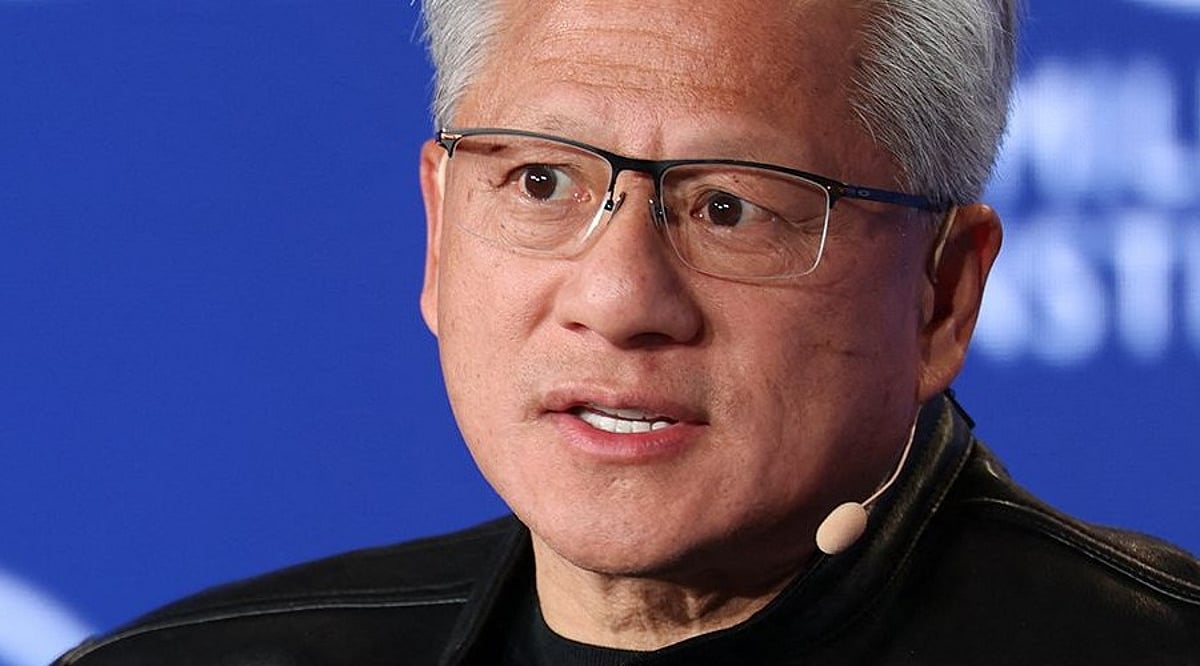
    Jensen Huang, NVIDIA’s founder and CEO, saw early that the AI boom would depend not just on chatbots but on massive data centers packed with chips, memory, networks, and power systems. His strategy turned NVIDIA from a graphics chip company into a foundational supplier for the entire AI economy.

    The GPU Became the Start of a Much Bigger System

    Huang’s key bet was that a graphics processor could do far more than graphics. NVIDIA built CUDA, a software platform that lets developers use its GPUs for advanced computing. That choice gave the company a strong base when AI models began demanding huge amounts of compute.

    For the quarter ended July 26, 2026, NVIDIA posted $96.2 billion in revenue, up 106% year-over-year. Data Center revenue reached $89.0 billion, up 117%. Net income hit $59.7 billion, with a gross margin of 75%. NVIDIA expects $108 billion in revenue for the next quarter and about 70% revenue growth for fiscal 2028, though supply limits still affect that outlook.

    Vera Rubin Turns the Rack into One AI Computer

    NVIDIA’s latest move takes the strategy further. The Vera Rubin platform combines Rubin GPUs, Vera CPUs, NVLink 6, ConnectX-9 network chips, BlueField-4 DPUs, Spectrum-6 systems, and Groq 3 LPX. Several racks can act as one large AI computer.

    NVIDIA says Vera Rubin can deliver 10 times the agent throughput of the Grace Blackwell platform at scale. The platform is designed for AI agents that call tools, search data, write code, and take many steps before completing a task. Such workloads need fast chips, fast memory, and fast links between every part of the system.

    A data center can no longer rely on raw GPU speed alone. Memory, storage, network systems, security, and power all affect the final cost of each AI response. NVIDIA now sells an architecture that connects these pieces.

    Power, Capital and Cloud Capacity Join the Strategy

    Huang has also moved closer to the physical side of AI infrastructure. NVIDIA now treats land, power, and data center space as key resources. In August, the company partnered with SB Energy to secure land, power, and shell capacity at the PORTS-Pike Technology Campus in Ohio. OpenAI will serve as the tenant.

    Capital has become another part of the plan. NVIDIA announced partnerships with Apollo, BlackRock, Blackstone, Brookfield, Goldman Sachs, and KKR. These platforms aim to mobilize more than $500 billion in third-party capital for AI infrastructure over time. The capital does not count as NVIDIA revenue; the goal is to give AI companies and cloud providers access to large pools of long-term infrastructure money.

    AWS and NVIDIA plan to deploy 2 million additional NVIDIA GPUs across AWS infrastructure in 2027–2028. The deal also covers Vera CPUs, network systems, open models, data tools, and robotics.

    NVIDIA has also expanded its reach into software. On September 3, the company agreed to acquire Hugging Face for $12.93 billion. The deal would give NVIDIA a deeper role in the open AI software ecosystem and help expand access to models, tools, and AI infrastructure.

    Huang’s Real Advantage is the Full Stack

    The central idea behind Huang’s strategy is not a single GPU. It is control of the system around the GPU. NVIDIA supplies compute, software, network systems, and rack architecture. It now has a role in power access, infrastructure finance, and developer software as well.

    That model helps explain why the company can grow as AI hardware becomes more complex. Every new AI workload creates demand across several layers at once.

    The next test will come from agentic AI, where one request can trigger hundreds or thousands of steps. That workload can create far more demand for compute than a simple chatbot response. NVIDIA has built Vera Rubin around that shift.

    Huang’s long bet has reached a new stage. NVIDIA no longer sells only the engine for AI. It sets the factory around it, from the first line of code to the data center floor.
  • NVIDIA vs AMD: Which Chip Stock Offers Better Returns in 2026?

    NVIDIA vs AMD: Which Chip Stock Offers Better Returns in 2026?

    The global technology market has transformed rapidly, driven by artificial intelligence. AI has become one of the biggest growth areas worldwide, and semiconductor companies now sit at the center of this shift. Among all chipmakers, NVIDIA and AMD have captured the most investor attention. Both companies play a vital role in the future of computing, but the key question remains: which stock looks better for investment right now?

    The answer depends on business strength, growth rate, market position, and future opportunities. Both companies offer strong potential, but there are major differences between them.

    NVIDIA’s Strong Position in the AI Market

    NVIDIA currently leads the AI chip market with a commanding share. The company controls more than 75 percent of the global AI GPU market. Graphics Processing Units (GPUs) power advanced artificial intelligence systems, large data centers, and machine learning models. Major technology companies such as Microsoft, Amazon Web Services, Google, and OpenAI rely heavily on NVIDIA hardware. This strong demand has helped NVIDIA build a dominant industry position.

    Revenue Growth Shows NVIDIA’s Strength

    Financial growth remains one of the biggest reasons behind NVIDIA’s popularity among investors. Recent reports show that NVIDIA recorded nearly 73 percent year-over-year revenue growth. The company’s data center business alone generated around $62 billion. Profit margins also remain extremely strong. NVIDIA currently maintains gross margins close to 75 percent, reflecting excellent business efficiency. High profitability allows more investment in research, product development, and shareholder rewards.

    The Power of CUDA Creates a Huge Advantage

    One major reason behind NVIDIA’s success is its software ecosystem called CUDA. Developers worldwide use CUDA to build AI models and software applications. This creates an advantage beyond hardware itself. Even when competitors offer strong chips, many companies hesitate to switch because their systems already depend on NVIDIA software tools.

    AMD Offers Higher Growth Potential

    AMD stands as NVIDIA’s biggest competitor in advanced chips. Although AMD remains much smaller in the AI accelerator market, the company has started to gain serious momentum. AMD reported around 34 percent revenue growth, showing healthy expansion. Data center revenue currently stands near $5.4 billion, far below NVIDIA, but the company continues to grow at a strong pace. Since AMD operates from a smaller base, faster stock growth becomes possible if market share expands in the coming years.

    AMD Builds Strong Products Across Multiple Areas

    AMD continues to strengthen its position through several important products. EPYC server processors have gained popularity in enterprise computing. Ryzen processors continue to perform well in consumer markets. The Instinct MI series AI accelerators also help AMD compete directly with NVIDIA in artificial intelligence hardware. Unlike NVIDIA, AMD has lower profit margins near 55 percent, indicating stronger competition and lower pricing power.

    Risks Investors Should Understand

    NVIDIA remains the safer company, but risks still exist. The company already has an enormous market value, making extremely large future gains harder to achieve. Any slowdown in AI spending could also affect investor confidence. AMD carries different risks. The company still remains far behind NVIDIA in AI GPUs. Its software ecosystem, called ROCm, still lacks the maturity of NVIDIA’s CUDA platform. Lower margins also show weaker overall profitability.

    Final Comparison and Investment Decision

    Both companies remain strong investments, but they serve different investor goals. NVIDIA offers better business quality, stronger profits, market leadership, and lower risk. It appears more suitable for long-term investors who prefer stability and steady growth. AMD offers greater upside potential given its smaller size. If AMD captures even 10 to 15 percent more AI market share, stock performance could rise faster than NVIDIA’s. At present, NVIDIA ranks as the stronger and safer investment choice. AMD remains the better option for investors who seek higher return potential and accept higher risk.

    Frequently Asked Questions

    1. Why does NVIDIA rank ahead of AMD right now?
    NVIDIA commands over 75 percent of the global AI GPU market, delivering exceptional financial performance with superior data center revenue and premium pricing power that outpaces its closest competitors.

    2. Does AMD have growth potential despite lower market share?
    AMD offers considerable growth potential. Operating from a smaller market base means expanding its data center presence or capturing minor market share shifts can trigger accelerated stock appreciation.

    3. What gives NVIDIA a competitive advantage?
    NVIDIA’s proprietary CUDA software ecosystem creates deep customer lock-in. Developers globally build AI models using these integrated tools, making it logistically difficult for enterprises to switch hardware providers.

    4. Is AMD considered a risky investment?
    AMD carries an elevated risk as its AI software platform, ROCm, is less mature than NVIDIA’s ecosystem. It also operates with lower profit margins, reflecting stiffer market competition.

    5. Which stock suits long-term investors better?
    NVIDIA is highly suited for long-term investors seeking financial stability. Its absolute market leadership, massive corporate profitability, and robust full-stack ecosystem minimize downside risk across changing technology cycles.

    Disclaimer: This article is provided for informational purposes only and does not constitute investment advice. You are responsible for conducting your own research before making any investments.