
Tag: custom silicon

  • Why Tech Giants Are Developing Custom AI Chips to Cut Costs and Boost Performance

    Why Tech Giants Are Developing Custom AI Chips to Cut Costs and Boost Performance

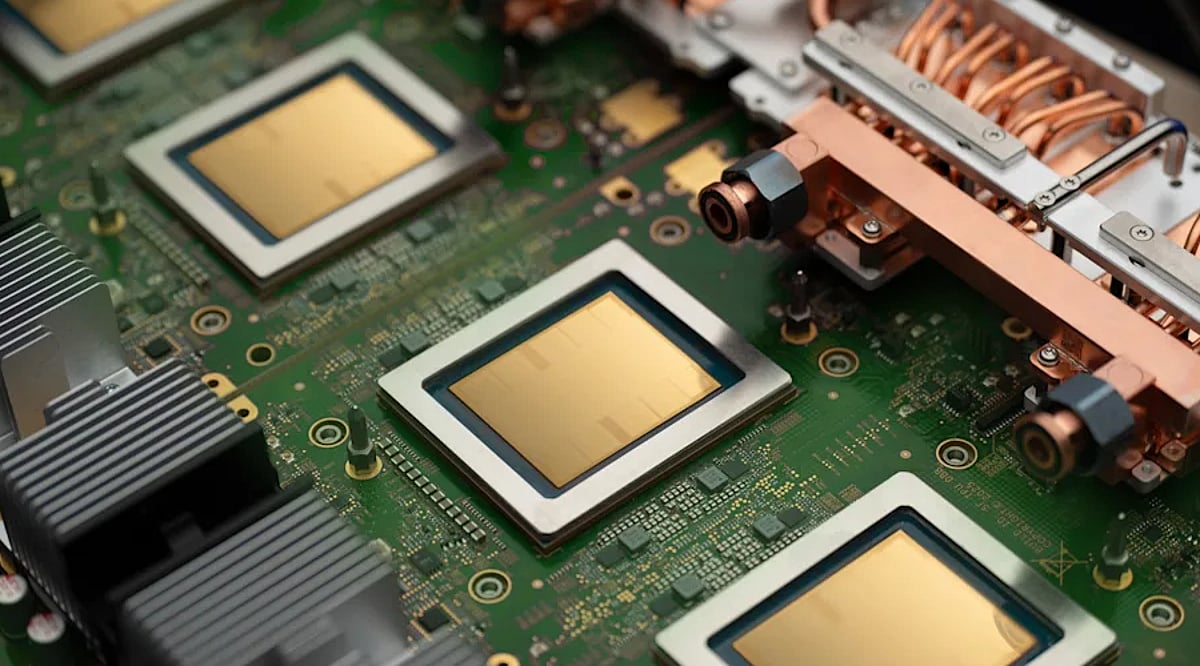
    Nvidia’s AI GPUs have become a cornerstone of the AI infrastructure boom, but their high cost is driving major technology companies to develop custom chips. Purpose-built AI silicon can be tailored for specific workloads, helping companies control expenses and improve performance at scale.

    Google, Amazon, Microsoft, and Meta are all creating their own AI accelerators to reduce reliance on merchant GPUs. Google uses TPUs, Amazon has Trainium, Microsoft develops Maia, and Meta has MTIA. These chips are designed around each company’s unique AI workloads and data center requirements.

    The primary benefit is lower inference cost. Custom ASICs can be optimized for specific AI tasks rather than supporting every possible workload. Amazon reports that its Trainium chips can enhance price-performance, while its latest Trainium3 systems target reduced operating costs for large AI workloads.

    Building custom AI chips also diversifies the supply chain. Broadcom and Marvell help turn hyperscaler chip designs into production-ready ASICs, while Arm provides CPU architecture and licensing. This process connects chip design with advanced manufacturing and packaging.

    Memory and networking are equally critical. AI accelerators require high-bandwidth memory and fast inter-chip connections. Companies such as Micron, Astera Labs, Credo, and Arista operate across memory, connectivity, Ethernet, and data-center networking needed for large AI systems.

    Manufacturing and advanced packaging remain essential parts of the AI chip ecosystem. TSMC is a major foundry for advanced AI chips, while CoWoS packaging supports high-performance accelerator systems. Samsung also provides semiconductor manufacturing capacity. The supply chain extends from wafers to HBM and packaging.

    The AI chip race does not end with the processor. Higher-density AI racks require advanced networking, optical connections, power systems, and cooling. Companies across these areas support the growing infrastructure. Custom AI silicon is therefore becoming a full ecosystem spanning chips, memory, factories, networking, power, and cooling.
  • MediaTek Allocates $5 Billion to AI Data Center Chips as Smartphone Revenue Slips

    MediaTek Allocates $5 Billion to AI Data Center Chips as Smartphone Revenue Slips

    MediaTek has approved a $5 billion discretionary financing framework to accelerate its expansion into custom AI data center chips. The board approved the plan on July 31, granting the company flexibility to raise capital as customer demand and production needs increase.

    The move comes as MediaTek seeks to diversify revenue beyond smartphones. Its mobile chip sales fell 20% year-over-year in the June quarter, pressured by higher component costs and weaker handset demand. The company reported quarterly revenue of NT$152.18 billion (about $4.71 billion), up 1.2% from a year earlier, but net income declined 12.3% to NT$24.6 billion.

    CEO Rick Tsai stated during the earnings call: “This flexible framework provides us with the optionality, when needed, to agilely support our long-term growth and large data center opportunities.” The approval does not require immediate use of the full amount; MediaTek can arrange financing when needed for chip development, manufacturing capacity, advanced packaging, memory supplies, and production work tied to customer orders.

    MediaTek has expanded its data center capabilities through custom chip design and high-speed connectivity products. In June, it announced services covering advanced chip processes, packaging, memory, interconnects, and rack-level integration — all part of its custom silicon offering for cloud companies building AI infrastructure.

    The company raised its 2027 custom AI chip market estimate to $80 billion, up from a prior range of $70–80 billion. It also increased its target market share to 15–20%, from 10–15%. Earlier, MediaTek had doubled its 2026 AI accelerator revenue target to $2 billion. The company now expects its data center AI business to generate over $2 billion in 2026. Its first custom AI chip will enter production in the fourth quarter, with a second product reaching volume production in 2028.

    Custom chips allow cloud companies to design processors for specific AI workloads rather than relying solely on standard products. MediaTek provides design services and supporting technology, while customers set performance, power, and system requirements for their data centers.

    Tsai noted that global smartphone shipments are expected to decline about 15% in units this year. Industry estimates showed an 11% drop in the second quarter, the weakest June quarter since 2013. Memory shortages have also raised handset prices and reduced demand. MediaTek has started raising prices across parts of its product range to reflect higher supply-chain costs.

    Investor reaction was strong: MediaTek shares closed 9.9% higher on the day of the announcement and had gained 148.6% during 2026. The company’s market value reached approximately $176 billion, making it Taiwan’s second-largest listed company.

  • Meta to Begin Production of Custom Iris AI Chip in September, Targets 14 GW Computing Capacity

    Meta to Begin Production of Custom Iris AI Chip in September, Targets 14 GW Computing Capacity

    Meta Platforms has announced plans to begin production of its in-house artificial intelligence chip, code-named Iris, in September as part of a broader strategy to expand custom hardware development and reduce reliance on external suppliers. The move, outlined in an internal company memo reviewed by Reuters, aims to boost Meta’s computing capacity to 14 gigawatts next year while supporting the growing demands of AI workloads across Facebook, Instagram, and other services.

    Iris AI Chip: A Step Forward for Meta’s MTIA Program

    The Iris chip is part of Meta’s MTIA (Meta Training and Inference Accelerator) program. According to the memo, the chip completed bug testing in just six weeks with no major issues—a notable achievement for a program that has faced earlier delays since its launch over five years ago. Broadcom is assisting with design, while Taiwan Semiconductor Manufacturing Co (TSMC) is expected to handle production. The chip will not immediately replace GPUs from Nvidia and AMD but will complement them, supporting large-scale AI training and inference workloads.

    The memo notes that adopting the latest GPUs at Meta’s scale “has been a heavy lift, and it has cost us time,” underscoring the company’s push for greater control over its AI hardware stack. Meta declined to comment on the Reuters report.

    Computing Capacity Expansion: 14 GW by Next Year

    Meta plans to deploy 7 gigawatts of computing infrastructure this year, having added 1 gigawatt in the first half and expecting to add another 5.5 gigawatts by year-end. The company then aims to double total capacity to 14 gigawatts next year. To put that in perspective, 1 gigawatt can power approximately 800,000 homes, highlighting the immense energy requirements of large-scale AI data centers.

    This expansion comes as major tech firms ramp up AI infrastructure spending. Meta expects to spend up to $145 billion on AI infrastructure this year, part of a projected $700 billion in Big Tech spending on AI technology.

    Reducing Supplier Dependence with Custom Silicon

    Meta’s custom chip initiative is designed to reduce cost pressures tied to purchasing advanced AI chips from external suppliers like Nvidia and AMD. It also enables faster hardware iteration: Meta unveiled Iris under its technical name in March, along with three other AI processors, and plans to release a new chip roughly every six months through 2027—a much faster cycle than the industry standard of one year or more.

    Mike Gualtieri, a vice president and principal analyst at Forrester, commented, “You can’t become an AI titan if you are dependent on another company for chips.” He added that hyperscalers and SpaceX are also pursuing custom chip designs as model usage becomes more price-driven.

    Long-Term Supply Deals Support Data Center Growth

    To support its data center buildout, Meta has secured multi-year supply agreements with Samsung Electronics for memory chips, Sandisk for flash storage, and Sumitomo Electric for fiber-optic equipment. These deals are critical as AI demand strains the global chip supply chain, driving up prices for memory, storage, and AI processors. Sandisk declined to comment, while Samsung and Sumitomo Electric did not respond to Reuters requests.

    Morgan Stanley analysts have described rising chip and memory prices as “chipflation,” a broader concern for the technology sector. Meanwhile, companies like Apple have raised prices on some products amid memory supply constraints.

    Meta shares initially fell after the Reuters report but later recovered, trading up 4.6% in late afternoon trading after the company announced developer access to an AI coding model that competes with tools from OpenAI and Anthropic.

  • Anthropic Reportedly Discusses Custom AI Chip Development with Samsung

    Anthropic Reportedly Discusses Custom AI Chip Development with Samsung

    Anthropic is reportedly exploring the development of a custom AI chip and has held discussions with Samsung over a potential collaboration, according to The Information. The move places the AI startup among a growing number of technology firms seeking greater control over hardware as demand for AI computing surges.

    Earlier reports from Reuters indicated that Anthropic was considering in-house chip design to address concerns about AI hardware availability and supply constraints. However, key details of the proposed processor—including its intended use, integration into server systems, and performance targets—remain unconfirmed.

    According to the report, Anthropic has not finalized the chip’s specifications and declined to comment on the discussions with Samsung. The company reiterated that its current infrastructure strategy continues to rely on chips from Google, Amazon, and NVIDIA, and that there are no further updates on potential collaboration talks with Samsung at this time.

    The reported move reflects a wider trend among AI companies investing in custom silicon to improve efficiency and reduce dependence on dominant chip suppliers—particularly NVIDIA, which leads the market for AI accelerators used in large-scale model training and inference. As demand for AI computing expands across industries, firms are looking for greater control over cost, performance, and supply chains.

    Anthropic’s discussions come shortly after other major technology firms advanced their custom chip efforts. OpenAI recently introduced its first custom inference chip, Jalapeno, developed with Broadcom. Amazon continues to scale its Trainium chips for AI training workloads, and Google is expanding access to its Tensor Processing Units (TPUs) via its cloud infrastructure.

    Samsung already plays a pivotal role in the global semiconductor supply chain, manufacturing advanced chips for companies like NVIDIA and exploring partnerships with others such as Google. The talks between Anthropic and Samsung underscore the increasing convergence of AI software development and semiconductor manufacturing, as firms pursue tighter integration between hardware and AI systems.