
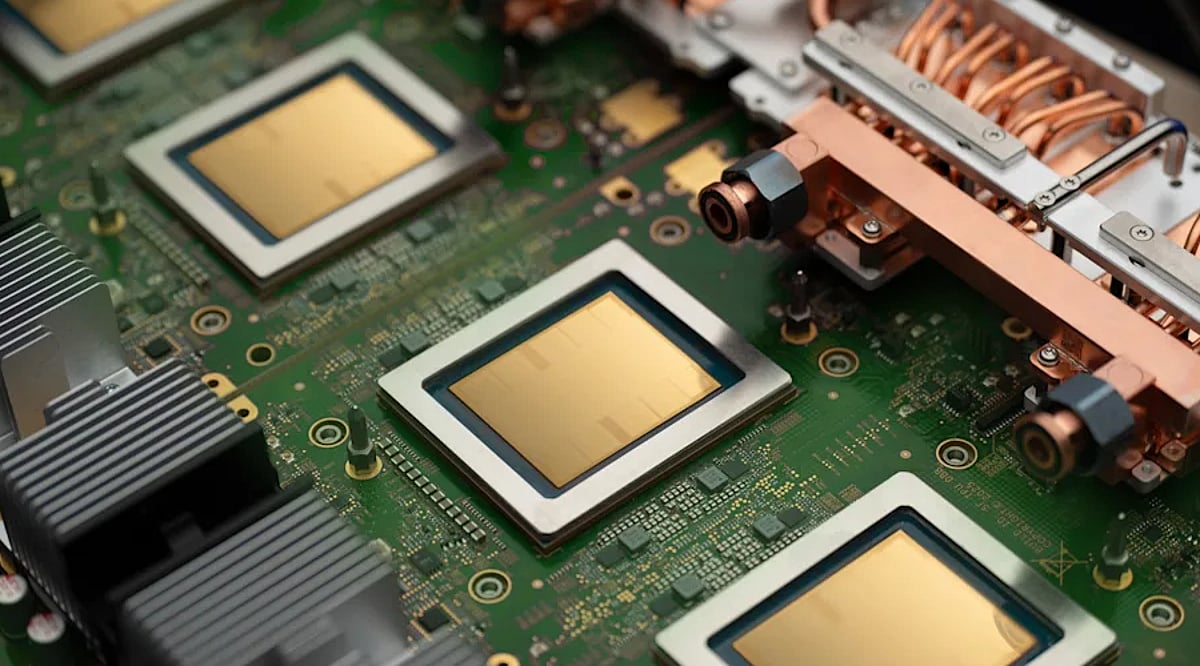
Nvidia’s AI GPUs have become a cornerstone of the AI infrastructure boom, but their high cost is driving major technology companies to develop custom chips. Purpose-built AI silicon can be tailored for specific workloads, helping companies control expenses and improve performance at scale.
Google, Amazon, Microsoft, and Meta are all creating their own AI accelerators to reduce reliance on merchant GPUs. Google uses TPUs, Amazon has Trainium, Microsoft develops Maia, and Meta has MTIA. These chips are designed around each company’s unique AI workloads and data center requirements.
The primary benefit is lower inference cost. Custom ASICs can be optimized for specific AI tasks rather than supporting every possible workload. Amazon reports that its Trainium chips can enhance price-performance, while its latest Trainium3 systems target reduced operating costs for large AI workloads.
Building custom AI chips also diversifies the supply chain. Broadcom and Marvell help turn hyperscaler chip designs into production-ready ASICs, while Arm provides CPU architecture and licensing. This process connects chip design with advanced manufacturing and packaging.
Memory and networking are equally critical. AI accelerators require high-bandwidth memory and fast inter-chip connections. Companies such as Micron, Astera Labs, Credo, and Arista operate across memory, connectivity, Ethernet, and data-center networking needed for large AI systems.
Manufacturing and advanced packaging remain essential parts of the AI chip ecosystem. TSMC is a major foundry for advanced AI chips, while CoWoS packaging supports high-performance accelerator systems. Samsung also provides semiconductor manufacturing capacity. The supply chain extends from wafers to HBM and packaging.
The AI chip race does not end with the processor. Higher-density AI racks require advanced networking, optical connections, power systems, and cooling. Companies across these areas support the growing infrastructure. Custom AI silicon is therefore becoming a full ecosystem spanning chips, memory, factories, networking, power, and cooling.
Leave a Reply