Tag: data center

  • Why Tech Giants Are Developing Custom AI Chips to Cut Costs and Boost Performance

    Why Tech Giants Are Developing Custom AI Chips to Cut Costs and Boost Performance

    Nvidia’s AI GPUs have become a cornerstone of the AI infrastructure boom, but their high cost is driving major technology companies to develop custom chips. Purpose-built AI silicon can be tailored for specific workloads, helping companies control expenses and improve performance at scale.

    Google, Amazon, Microsoft, and Meta are all creating their own AI accelerators to reduce reliance on merchant GPUs. Google uses TPUs, Amazon has Trainium, Microsoft develops Maia, and Meta has MTIA. These chips are designed around each company’s unique AI workloads and data center requirements.

    The primary benefit is lower inference cost. Custom ASICs can be optimized for specific AI tasks rather than supporting every possible workload. Amazon reports that its Trainium chips can enhance price-performance, while its latest Trainium3 systems target reduced operating costs for large AI workloads.

    Building custom AI chips also diversifies the supply chain. Broadcom and Marvell help turn hyperscaler chip designs into production-ready ASICs, while Arm provides CPU architecture and licensing. This process connects chip design with advanced manufacturing and packaging.

    Memory and networking are equally critical. AI accelerators require high-bandwidth memory and fast inter-chip connections. Companies such as Micron, Astera Labs, Credo, and Arista operate across memory, connectivity, Ethernet, and data-center networking needed for large AI systems.

    Manufacturing and advanced packaging remain essential parts of the AI chip ecosystem. TSMC is a major foundry for advanced AI chips, while CoWoS packaging supports high-performance accelerator systems. Samsung also provides semiconductor manufacturing capacity. The supply chain extends from wafers to HBM and packaging.

    The AI chip race does not end with the processor. Higher-density AI racks require advanced networking, optical connections, power systems, and cooling. Companies across these areas support the growing infrastructure. Custom AI silicon is therefore becoming a full ecosystem spanning chips, memory, factories, networking, power, and cooling.

  • Anthropic Inks $11.6 Billion Deal with Akamai to Boost AI Computing Infrastructure

    Anthropic Inks $11.6 Billion Deal with Akamai to Boost AI Computing Infrastructure

    Anthropic has signed a massive $11.6 billion, seven-year contract with Akamai Technologies to secure computing power for its artificial intelligence operations. The deal expands upon an earlier $1.8 billion computing agreement between the two companies.

    Under the terms, Akamai will provide Anthropic with access to central processing units (CPUs), as demand for general-purpose chips continues to rise in data centers supporting AI services. The surge in usage of Anthropic’s Claude software, particularly for coding and other tasks, has driven the need for additional computing resources. The AI developer is also purchasing computing capacity from other major tech firms, including Alphabet’s Google and Elon Musk’s SpaceX.

    As part of the agreement, Akamai issued Anthropic a warrant allowing the AI company to purchase Series B shares at $111.33 each. The warrant converts into 7.7 million common shares. A portion of the warrant, representing about 2% of Akamai’s common stock, will vest alongside the computing agreement, which is expected to start in the second half of next year. The remaining portion will become available over the seven-year contract.

    Akamai estimates that capital spending tied to this deal will total about $5.5 billion, more than six times last year’s spending. Most of the investment will go toward servers, chips, and networking equipment, with the bulk expected next year. Akamai CEO Tom Leighton noted that the company’s cloud business is “growing obviously extremely fast” and that revenue from cloud contracts could soon eclipse sales from other segments.

    Revenue from the Anthropic business is expected to reach $150 million to $300 million next year, with an annual run rate of about $1.7 billion by 2028. Leighton described the warrant as a “serious step” that could bring the two companies closer together, marking the first time Akamai has agreed to such a warrant in a cloud deal.

    The deal comes amid investor concerns over circular AI deals, where cloud, hardware, and AI companies buy each other’s products while also making direct investments. Nevertheless, Anthropic’s commitment underscores the intense competition for computing resources in the AI sector.

  • AMD Surpasses $1 Trillion Market Capitalization as AI Chip Demand Fuels Growth

    AMD Surpasses $1 Trillion Market Capitalization as AI Chip Demand Fuels Growth

    AMD Reaches $1 Trillion Market Cap

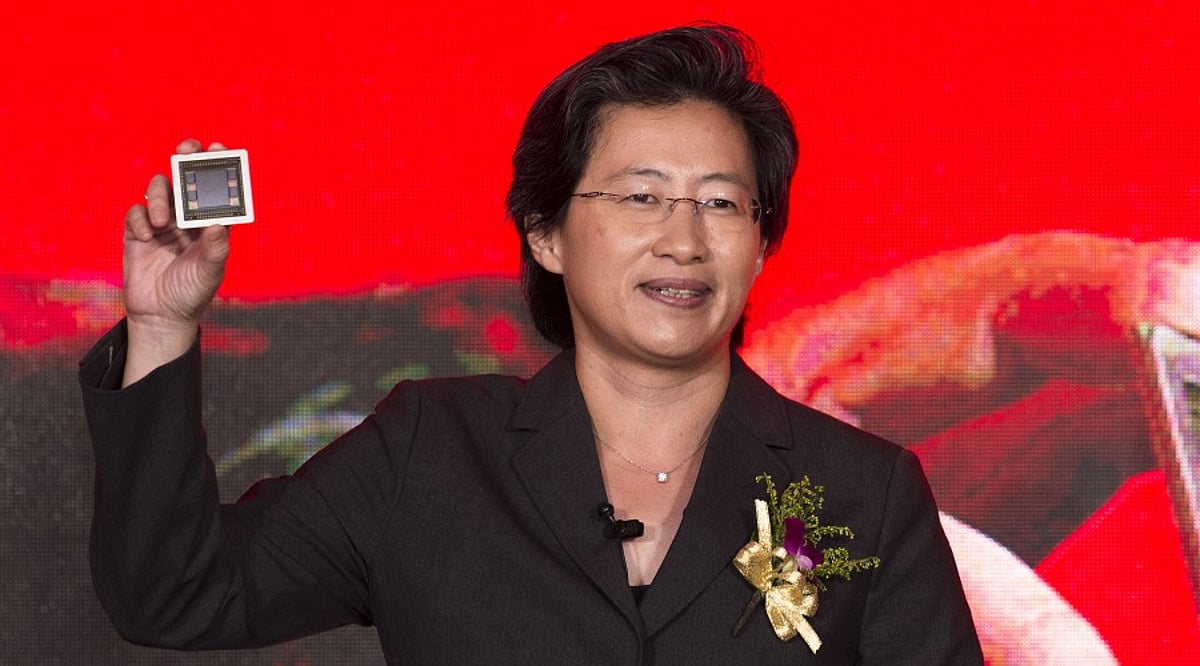
    Advanced Micro Devices (AMD) crossed the USD 1 trillion market capitalization mark for the first time, as CEO Lisa Su’s push into artificial intelligence continues to drive investor interest. AMD shares touched a record price of USD 615.52 on September 21 after rising nearly 10% in a single session. This makes the company the fourth American chipmaker to enter the trillion-dollar club after NVIDIA, Broadcom and Micron. AMD’s stock has gained 185% this year and nearly 300% over the past 12 months.

    “AI is driving a significant expansion in demand for compute across all of our markets,” Su said in AMD’s second-quarter results statement.

    Data Center Business Drives Growth

    AMD reported a 50% increase in second-quarter revenue to a record USD 11.5 billion. Data center sales rose 107% to USD 6.7 billion, accounting for 58% of total revenue. The company has guided for about USD 13 billion in third-quarter revenue and expects data center revenue to more than double in 2027. AMD also expects server revenue to grow more than 80% in the second half of 2026.

    “Demand for both accelerators and CPUs is growing well above our prior expectations,” Su told analysts on the earnings call.

    Major Deals with Anthropic, OpenAI and Oracle

    Major deals with technology companies have supported AMD’s AI strategy. Anthropic has agreed to deploy up to 2GW of AMD Instinct MI450 GPUs in Helios, with the first gigawatt expected in the first half of 2027. AMD has committed up to USD 5 billion in equity investment in Anthropic. OpenAI signed a 6GW supply agreement with AMD last October, while Oracle is building a publicly available cluster featuring 50,000 MI450 GPUs.

    AMD Still Trails NVIDIA in AI Accelerators

    NVIDIA remains far ahead in the AI accelerator market despite AMD’s rapid growth. It is currently valued at about USD 5.4 trillion and holds an estimated 81% market share, compared with AMD’s 13%. AMD’s third-quarter results will be its next major update. The company has guided for nearly USD 13 billion in revenue and a 56% non-GAAP gross margin, as investors assess whether its AI expansion can support its trillion-dollar valuation.

  • Alibaba Unveils Zhenwu V900 AI Chip to Power Domestic AI Ecosystem and Massive Data Center Expansion

    Alibaba Unveils Zhenwu V900 AI Chip to Power Domestic AI Ecosystem and Massive Data Center Expansion

    Alibaba has taken a significant step in advancing China’s domestic AI capabilities with the unveiling of its latest artificial intelligence chip, the Zhenwu V900. Developed by Alibaba’s semiconductor unit T-Head, the new accelerator is designed to handle both AI training and inference tasks, marking a key milestone in the company’s push to build a full-stack AI ecosystem.

    According to Alibaba, the V900 delivers three times the performance of its predecessor, the Zhenwu M890 chip, which was launched in May. While the company did not provide independent benchmark results to support this claim, the V900 is scheduled to enter mass production and commercial release in the first quarter of 2027.

    Zhenwu V900 Specifications

    The V900 comes equipped with 216GB of memory and offers 1,200GB/s of chip-to-chip bandwidth. It also supports FP8 and FP4 precision formats, which are becoming increasingly critical for efficient AI inference and large-scale model workloads.

    Alibaba stated, “The chip can be connected into clusters containing as many as 500,000 accelerators. This architecture is designed to handle demanding AI workloads that require thousands of processors to work together.”

    The company is also integrating the V900 with its broader hardware stack, including networking and storage components, allowing Alibaba to control more of the infrastructure required to train and deploy large AI models. This strategy directly links Alibaba’s chip development with its AI model roadmap, as more powerful accelerators provide the computing capacity needed for increasingly large models.

    Alibaba Expands AI Infrastructure

    Alibaba is also planning a major expansion of its cloud infrastructure. CEO Eddie Wu stated, “Alibaba Cloud aims to increase its global data-center capacity to more than 20 gigawatts by 2032.”

    The V900 highlights Alibaba’s effort to develop chips, AI models, and cloud infrastructure as one integrated ecosystem. This initiative comes as Chinese technology companies accelerate domestic AI chip development amid restrictions on access to advanced foreign processors.

    The tech giant further explained that demand for AI computing is growing rapidly while supply constraints limit the pace of expansion. Alibaba also plans to bring AI supernodes into commercial operation this quarter.

  • AMD Reaches $1 Trillion Market Cap on Surging AI Chip Demand

    AMD Reaches $1 Trillion Market Cap on Surging AI Chip Demand

    AMD’s market value surpassed $1 trillion for the first time, driven by surging demand for AI chips and record data center sales.

    The chipmaker’s share price jumped approximately 10% on September 21, reaching a record high of $615.52. The stock gained about 25% in five trading sessions as investors focused on AMD’s AI chip and data center growth.

    Strong Financial Performance

    AMD reported second-quarter revenue of $11.54 billion, up 50% year-over-year. Data center sales reached $6.7 billion, more than double the figure from the same period last year. CEO Lisa Su stated that the company expects to double its data center sales again in 2027.

    AI Chips Drive Growth

    The growth is not just from traditional PC and server processors but increasingly from AI chips. Companies are heavily investing in AI computing, requiring more chips to run these systems. AMD is capitalizing on this demand to expand its data center business and compete for a larger share of the AI hardware market.

    AMD is shifting its strategy from selling individual chips to offering complete systems that include processors, AI accelerators, networking equipment, and other hardware. This approach provides customers with a comprehensive solution for building and running AI infrastructure.

    Market Position

    The $1 trillion milestone underscores how AI has transformed AMD’s business. However, the company still trails behind NVIDIA, which has a market valuation of over $5 trillion. AMD will need to refine its strategies to become a stronger competitor in the AI chip market.

  • NVIDIA Stock at $219: Key Drivers Behind Its $5.3 Trillion Market Cap and AI Spending Outlook

    NVIDIA Stock at $219: Key Drivers Behind Its $5.3 Trillion Market Cap and AI Spending Outlook

    NVIDIA (NVDA) closed near USD 219.34 on September 17, 2026, giving the company a market capitalization of roughly USD 5.30 trillion. The chipmaker became the first in history to cross the USD 5 trillion mark in October 2025, and it has stayed above that level ever since.

    Record Revenue and Data Center Growth

    NVIDIA’s fiscal Q2 2027 results showed record revenue of USD 96.2 billion, up 106% year-over-year. Data Center revenue reached USD 89.0 billion, up 117%, driven primarily by Blackwell systems and early production shipments of the next-generation Vera Rubin platform. GAAP gross margin came in at 75.0%, with diluted EPS of USD 2.46. The company guided Q3 revenue to USD 108.0 billion, plus or minus 2%, and noted that figure assumes no Data Center compute revenue from China.

    Trillion-Dollar Demand Outlook

    CEO Jensen Huang stated at NVIDIA’s GTC event that the company expects at least USD 1 trillion in demand and purchase orders for its Blackwell and Vera Rubin chips through 2027. This forward-looking outlook is not a signed order book, and analysts will watch actual shipments against that projection. NVIDIA’s disclosed purchase and supply commitments had climbed to about USD 279 billion by the end of fiscal Q2, reflecting the company’s efforts to lock in capacity.

    AI Spending Durability Under Scrutiny

    While demand for AI computing is evident, the key question is whether hyperscalers, AI labs, and enterprises can sustain the pace of capital spending. This uncertainty came into focus on September 14, when the Philadelphia Semiconductor index fell 5.9% and NVIDIA shares dropped about 3.4%. The selloff followed warnings from AI industry executives about the pace and economics of AI infrastructure spending, marking one of several sector-wide declines this year tied to debt-funded data center buildouts. NVIDIA’s future growth depends heavily on that spending pace holding up.

    China, Competition, and Valuation

    NVIDIA’s current guidance excludes Data Center compute revenue from China due to ongoing US export restrictions. Any policy shift could affect revenue, product mix, and margins. The company’s competitive edge rests on its CUDA software ecosystem, combined hardware and networking lineup, and deep ties with major cloud and AI customers. Custom chips from cloud providers, including Google’s TPU line, and AMD’s accelerators pose longer-term threats, though neither has slowed NVIDIA’s momentum so far. The stock’s low dividend yield reflects a focus on growth over shareholder payouts.

    Final Thought

    NVIDIA’s stock price reflects a company posting real, verified growth while carrying a demand outlook that assumes years of heavy AI infrastructure spending. The September selloff was a reminder that markets are pricing confidence in that spending pace, not just the chips themselves. The next earnings report, scheduled for November 25, will provide fresh evidence on whether Data Center growth holds its current speed and whether customer AI budgets remain strong.

  • Bill Gates-Backed Fervo Energy Inks Record Geothermal Deal with Google for Utah Data Center

    Bill Gates-Backed Fervo Energy Inks Record Geothermal Deal with Google for Utah Data Center

    Fervo Energy, a geothermal power company backed by Bill Gates, has signed a landmark 396-megawatt power purchase agreement with Google, significantly expanding their existing partnership. The deal, announced this week, covers electricity from Fervo’s Cape Station project in southwestern Utah, with power delivery expected to begin in the third quarter of 2028.

    Google plans to use this carbon-free electricity as a foundational energy source for a potential new data center in the state. The agreement marks the largest enhanced geothermal power purchase deal ever signed, coming at a time when hyperscalers across the United States are racing to secure reliable electricity for growing artificial intelligence infrastructure demands.

    Under the terms, power will be delivered through four separate 99-megawatt blocks over a 15-year term. Google also holds an option to expand its purchase by roughly 600 additional megawatts by June 2030, which could push total contracted capacity to nearly one gigawatt.

    Fervo CEO Tim Latimer emphasized that the agreement demonstrates enhanced geothermal systems are ready to power next-generation computing infrastructure. “As demand for reliable electricity grows, customers like Google need energy resources that can be deployed at scale, operate around the clock, and deliver where power is needed,” Latimer said.

    Lucia Tian, Google’s Director of Advanced Energy Technologies, noted that the project will drive real economic benefits for the local community and help lower long-term energy costs by making geothermal power more affordable and accessible.

    The partnership dates back to 2021, when Google first collaborated with Fervo to jointly develop next-generation geothermal projects. Their pilot project in Nevada, known as Project Red, went live in 2023 and continues to supply power to the local grid, including Google’s own data centers in the state. In June 2024, the two companies signed a smaller 115-megawatt deal in Nevada alongside utility NV Energy.

    Fervo leverages drilling techniques borrowed from the oil and gas industry to tap underground heat more efficiently. This approach is quickly becoming an attractive alternative to solar and wind, as it can deliver steady, round-the-clock power without depending on weather conditions.

  • Qualcomm Secures Potential $60 Billion AI Chip Deal with Amazon for AWS

    Qualcomm Secures Potential $60 Billion AI Chip Deal with Amazon for AWS

    Qualcomm and Amazon have entered into a long-term agreement to develop custom chips for Amazon Web Services (AWS), a deal that could be worth up to $60 billion depending on future orders. While the exact financial terms have not been officially disclosed, reports indicate that Amazon has not yet placed an order for that full amount. As part of the agreement, Qualcomm issued an Amazon affiliate a warrant to acquire up to 25 million Qualcomm shares at an exercise price of $161.26 per share. The warrant expires on September 3, 2036, and can be exercised without cash.

    The partnership will focus on chips designed for large-scale AI systems and high-speed optical connections. This move marks a strategic shift for Qualcomm, which is looking to reduce its reliance on the smartphone chip market. In the June 2026 quarter, Qualcomm’s handset revenue fell 19.6% year over year. The company aims for its data center business to exceed $15 billion in revenue by fiscal 2029. Meanwhile, Amazon will continue to use its own Graviton, Trainium, and Nitro chips alongside Qualcomm’s technology.

    Can Qualcomm Challenge NVIDIA?

    Qualcomm is entering a market dominated by NVIDIA, which reported $89 billion in data center revenue in its most recent quarter and has built a massive business around AI chips. Amazon also has its own AI chips, which could make the competitive landscape even tougher for Qualcomm. The Amazon deal gives Qualcomm a major customer and a platform to demonstrate its chip capabilities in a broader market. However, a single deal is unlikely to be enough to rival NVIDIA’s entrenched position. While this partnership may help Qualcomm reduce its dependence on smartphone chips, early data center deals may yield lower profit margins than its phone business.

    The $60 billion figure is not guaranteed revenue; future orders will determine how much business Qualcomm actually receives from Amazon. For now, the deal provides Qualcomm with a strong entry into the rapidly growing AI chip market.

  • AMD Stock Drops 7% Despite Record Q2 Revenue as AI Expectations and SpaceX’s NVIDIA Deal Weigh

    AMD Stock Drops 7% Despite Record Q2 Revenue as AI Expectations and SpaceX’s NVIDIA Deal Weigh

    Advanced Micro Devices (AMD) shares closed 7% lower on Wednesday, even as the company reported record second-quarter revenue of $11.54 billion and a 107% surge in data-center sales. The decline highlights how elevated market expectations and external pressures, including SpaceX’s decision to exclusively use NVIDIA chips, overshadowed strong financial results.

    AMD Q2 Revenue Up 50%

    AMD posted revenue of $11.54 billion, up 50% from $7.69 billion a year earlier, and above the $11.28 billion analyst consensus cited by Reuters. Non-GAAP earnings reached $1.66 per share, while GAAP earnings were $1.38 per share. Data-center revenue rose 107% to $6.72 billion, accounting for 58% of quarterly sales, driven by demand for EPYC server processors and Instinct graphics processors.

    The company forecast third-quarter revenue near $13 billion, with a possible $300 million swing, exceeding the $12.52 billion analyst estimate. However, analysts noted that investors had set a higher bar after recent customer deals. Gross margin improved to 54% under standard accounting, up from 40% a year earlier. Operating income hit $1.99 billion, compared with a $134 million loss, and net income jumped 163% to $2.30 billion.

    SpaceX Chooses NVIDIA for AI Systems

    SpaceX CEO Elon Musk announced that the company would build its AI computing systems exclusively with NVIDIA hardware, calling NVIDIA’s architecture “the best” during SpaceX’s earnings call. NVIDIA shares rose 3.4% while AMD stock fell. Musk’s statement shifted from his earlier position that his companies could source processors from AMD, NVIDIA, and others. AMD CEO Lisa Su expressed “tremendous respect” for Musk and said AMD expects to work with SpaceX over time.

    AMD continues to serve large technology companies and expand its AI product line. Its Helios rack-scale systems, using MI450 accelerators, support AI training and inference, with shipments expected to rise in the second half of 2026.

    Wells Fargo Raises AMD Price Target to $700

    Wells Fargo analyst Aaron Rakers raised AMD’s price target from $615 to $700 while maintaining an Overweight rating, even as the market focused on valuation and near-term growth. Other analysts described the results as solid but noted a “very high bar” (TD Cowen) and that the quarter beat consensus but missed more optimistic forecasts (Deutsche Bank). Supply constraints, including TSMC’s N3 process and CoWoS packaging through 2027, remain on investors’ watchlists.

    CEO Lisa Su expects data-center revenue to more than double by 2027, with server revenue growth of 80% in the second half of 2026 and over 70% year-over-year in 2027. AMD stock closed at $482.53, down 6.6%, erasing nearly $59 billion in market value.

  • AI-Driven Memory Chip Shortage Drives Up Prices for Laptops, Phones, and Consoles

    AI-Driven Memory Chip Shortage Drives Up Prices for Laptops, Phones, and Consoles

    Artificial intelligence spending is fueling a global memory chip shortage, pushing up prices for laptops, smartphones, gaming consoles, and other consumer electronics. Manufacturers are prioritizing high-bandwidth memory (HBM) for AI data centers, leaving fewer conventional DRAM chips for everyday devices.

    The supply squeeze, nicknamed “RAMaggedon,” has caused RAM prices to surge. In Hong Kong, computer shop manager Ken Tam reports that 16 GB of RAM now costs about HK$1,500, up from HK$300–HK$400 previously. Business has fallen by half since September as customers balk at the higher costs.

    Analysts note that memory prices for PCs and smartphones have climbed five to six times year-over-year. Samsung Electronics, SK hynix, and Micron have benefited from strong HBM demand, but the production shift has reduced supplies of standard DRAM used in consumer devices.

    The shortage is altering buying behavior. Some users are upgrading older computers instead of buying new ones. In Tokyo, graphic designer Charles Brousse says RAM, graphics cards, and motherboards have reached “ridiculous levels,” forcing his custom computer service to ask clients to supply their own parts.

    Higher component costs are also hitting game consoles. Reports indicate price increases for Sony PlayStation and Microsoft Xbox products. Software prices are rising as companies bundle AI tools—Microsoft 365 saw a sharp price hike in February following heavy AI investment.

    AI data centers add further inflationary pressure by consuming large amounts of electricity and water. The U.S. now hosts over 4,600 active data centers. Economists warn that data centers can raise wholesale electricity prices, contributing to a 4% rise in residential electricity costs (inflation-adjusted). Moody’s Analytics chief economist Mark Zandi estimates that AI-related inflation costs households “just over $375 more” per year.

    Automakers are also feeling the pinch, with higher costs for in-vehicle computer systems. Samsung’s finance chief expects the shortage to deepen in 2027 and persist through 2028.