Tag: data centers

  • New York’s Data Center Pause Underscores Big Data’s Critical Importance

    New York’s Data Center Pause Underscores Big Data’s Critical Importance

    New York has become the first US state to halt approvals for new hyperscale data centers, imposing a one-year moratorium on permits for facilities requiring 50 megawatts or more of electricity. The move signals growing concerns about the rapid expansion of AI infrastructure and its environmental and utility impacts.

    Big Data Is Integral to Modern Life

    The decision reflects state officials’ need for more time to assess how large data centers affect air quality, electricity demand, water usage, and long-term utility costs. While not intended to stop support for essential facilities, the pause highlights the ongoing debate about digital infrastructure’s future. AI has dramatically increased demand for data centers because advanced machine learning systems require enormous computing power to process information.

    Whether querying a chatbot, streaming a film, or shopping online, data is constantly collected and analyzed. Streaming services use viewing habits to recommend content; music platforms monitor listening behavior for personalized playlists; eSports organizers analyze performance data for player statistics and audience engagement. Even the online casino sector relies on big data to understand player interactions, identify gameplay trends, and support mathematical models for odds and probabilities while detecting unusual activity.

    The Future of Data Infrastructure

    As AI and cloud computing continue to grow—driven largely by entertainment and other sectors—demand for more powerful data centers is expected to rise. New York’s pause shows governments grappling with environmental concerns and future energy demands, exploring alternatives. Even if regulatory frameworks change, big data will remain central to many industries.

    The moratorium responds to numerous pending proposals in New York, each requiring immense power to cool thousands of servers. Far from a setback, the pause demonstrates the state’s serious approach to AI’s future, aiming to navigate growth without threatening local infrastructure. Such pauses give governments time to find innovative ways to sustain AI and big data without draining energy supplies. Facilities are moving away from traditional air conditioning toward natural outside air combined with liquid cooling to reduce energy waste. On-site renewable generation and small nuclear reactors are also being developed specifically to power data center operations.
  • Masayoshi Son Bets on Nuclear Fusion to Power AI’s Growing Energy Demands

    Masayoshi Son Bets on Nuclear Fusion to Power AI’s Growing Energy Demands

    SoftBank founder Masayoshi Son has identified nuclear fusion as a potential long-term solution to one of artificial intelligence’s most pressing challenges: energy consumption. Speaking about the future of AI infrastructure, Son argued that fusion power could supply the massive electricity demands of next-generation data centers.

    Son emphasized that as AI adoption accelerates, electricity consumption will rise sharply. While some may view natural gas as a quick fix, he believes nuclear fusion is the superior endgame for sustainable AI growth.

    Demand for Power Grows with the Rise of AI

    As corporations race to advance AI systems and expand data center capacity, the need for electrical power will intensify. Son projected that the world will require approximately 3 terawatts of additional data center capacity by 2040 to support future AI developments. Traditional energy sources, he warned, may fall short of meeting this escalating demand.

    Fusion Might Be the Solution in the Long Term

    Son described fusion—the process that powers the Sun—as the most promising energy source for AI data centers. Although commercial fusion is not yet viable due to ongoing technical hurdles, he believes it has the potential to transform AI infrastructure economics over the long haul.

    SoftBank Doubles Down on AI

    These comments align with SoftBank’s aggressive AI strategy. The Japanese conglomerate has invested heavily across the AI ecosystem, backing companies like Arm and OpenAI while expanding into chips, robotics, and data center infrastructure. Son has repeatedly compared AI’s transformative potential to—or beyond—the internet revolution, urging businesses to embrace AI rather than hesitate.

    The Bigger Picture

    The AI revolution is creating not just a demand for computing power but also for adequate energy supplies. Major tech firms are exploring a mix of natural gas, nuclear power, and renewables to meet their needs. For Son, fusion represents the ultimate endpoint—a way to power the next stage of AI without energy constraints, even though its commercial application remains a work in progress.

  • DeepSeek Weighs New Funding Round Weeks After Record $7 Billion Raise

    DeepSeek Weighs New Funding Round Weeks After Record $7 Billion Raise

    Chinese artificial intelligence startup DeepSeek is already exploring another funding round, barely a month after completing its first-ever external fundraising. The move underscores the soaring capital demands of the global AI race, where companies are spending aggressively on computing infrastructure and custom chips to stay ahead.

    According to a Financial Times report, DeepSeek has begun preliminary discussions with potential investors for a new funding round that could value the company at about $71 billion before the investment. If completed, the proposed valuation would mark a sharp rise from the roughly $52 billion post-money valuation it secured after raising nearly $7 billion in late May.

    The fresh capital is expected to support expansion plans, particularly the construction of proprietary data centers and the purchase of additional AI processors needed to power next-generation models and AI agents.

    New fundraising efforts can be viewed as a large amount of money needed to build the complex infrastructure that would enable the development of cutting-edge artificial intelligence technology. Due to increased competition, more money will be spent on building computational power, not only via third-party cloud infrastructure.

    DeepSeek also builds AI chips for the inference stage, which involves the reaction of already-trained models to user queries. The firm intends to reduce its dependence on foreign hardware, optimize performance, and lower costs. It was previously reported that DeepSeek used Huawei Ascend processors alongside its existing hardware.

    DeepSeek has quickly gained a reputation as one of the most-watched Chinese AI startups because of the attention and appreciation of V3 and R1 models both internationally and among experts in the field. This success raised doubts about China’s ability to compete with leading US-based AI companies and made the startup a representative of China’s AI developers.

    With the successful completion of the proposed fundraising, DeepSeek will have significantly more financial resources to invest in infrastructure construction and chip development in the competitive AI environment.

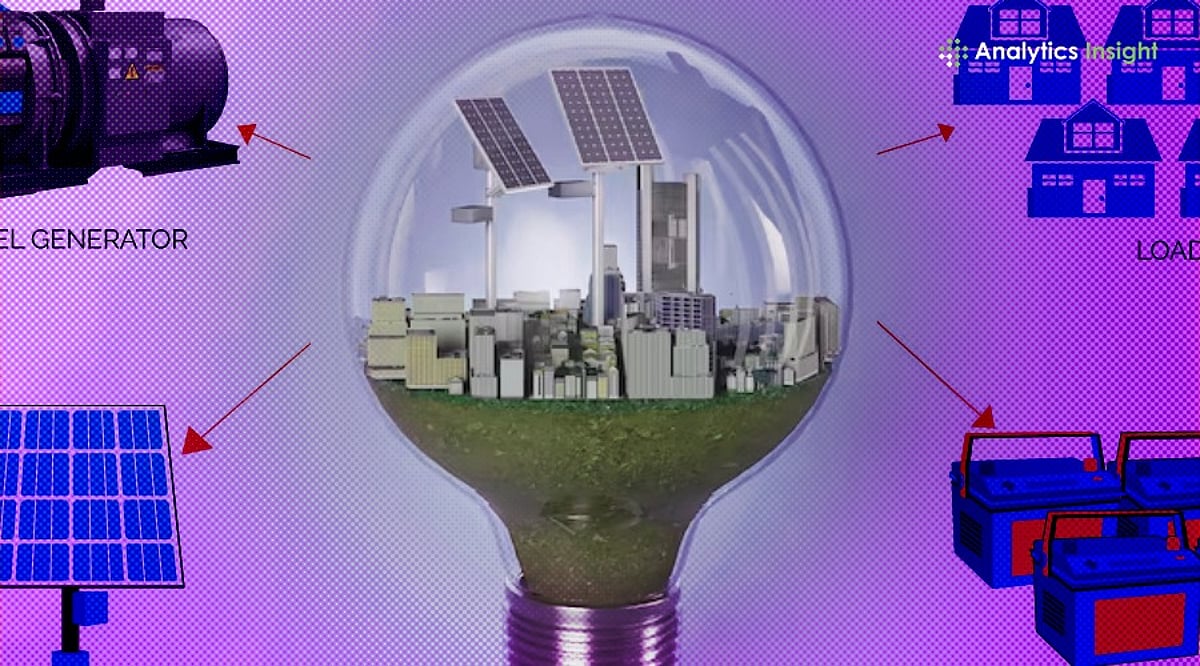
  • AI-Enabled Smart Microgrids: Transforming Energy Systems with Predictive Intelligence and Autonomous Optimization

    AI-Enabled Smart Microgrids: Transforming Energy Systems with Predictive Intelligence and Autonomous Optimization

    AI is transforming microgrids from rule-based energy systems into intelligent, self-optimizing networks. By combining predictive analytics, renewable forecasting, and autonomous energy management, AI improves grid reliability, lowers operating costs, and supports the growing power demands of data centers, industries, and smart communities.

    From Passive Systems to Predictive Ones

    Traditional microgrids relied on relatively simple rule-based controllers: if battery storage drops below a threshold, switch to backup generation. AI-enabled systems operate very differently, using machine learning models such as LSTM neural networks to forecast solar and wind output, anticipate demand spikes hours in advance, and adjust dispatch decisions before a shortfall occurs. Research comparing forecasting techniques has shown LSTM networks achieving strong accuracy for wind generation prediction, while random forest models have performed particularly well for solar forecasting—both feeding directly into how confidently a microgrid can rely on renewable sources rather than falling back on diesel generation as a safety net.

    The Market Is Scaling Fast, and AI Is the Reason Why

    The global microgrid market was valued at roughly $28.9 billion in 2025 and is projected to grow at a compound annual rate of around 18% through the early 2030s, according to Global Market Insights. A narrower but faster-growing segment—AI-integrated microgrids purpose-built for data centers—is expected to expand from $4.8 billion in 2025 to $20.9 billion by 2034. That growth is being driven largely by AI’s own power appetite: hyperscale data centers need reliable, high-density power that public grids increasingly can’t guarantee, making AI-optimized microgrids as much an enabler of the broader AI boom as a beneficiary of it.

    Who’s Building the Intelligence Layer

    A handful of established industrial players and newer software specialists are shaping how AI actually gets embedded into microgrid operations. Key companies include:

    • Schneider Electric
    • Siemens
    • Tesla Energy
    • ABB
    • Eaton
    • Heila Technologies

    Predictive Maintenance Is Quietly Cutting Costs

    Beyond forecasting and dispatch, AI is reshaping how microgrids stay operational in the first place. By continuously analyzing sensor data from batteries, inverters, and generation assets, machine learning models can flag early signs of equipment degradation well before a failure actually occurs. This shifts maintenance from a fixed, calendar-based schedule to a condition-based one, reducing unplanned downtime and avoiding the kind of costly emergency repairs that used to be treated as simply unavoidable in distributed energy systems.

    Real-World Deployments Show the Financial Case

    The economic argument for AI-driven microgrids is no longer theoretical. Schneider Electric’s EcoStruxure Microgrid deployment at a California winery, Domaine Carneros, cut carbon emissions by 375 tonnes and saved roughly $70,000 annually through smarter load management alone. At a larger scale, research into hydrogen-integrated microgrids combining LSTM forecasting with optimization algorithms has shown grid import reductions of over 35% and improvements in energy self-sufficiency from roughly 71% to nearly 90%—figures that would be difficult to reach with static, rule-based control systems.

    What’s Next for AI-Driven Microgrids

    The next phase of development looks likely to center on two things: tighter integration with digital twins that simulate microgrid behavior before changes are made in the real world, and deeper participation in energy markets, where systems like Tesla’s Autobidder let storage assets buy and sell power autonomously based on real-time price signals. As renewable penetration keeps climbing and AI’s own electricity demand keeps growing in parallel, the pressure on microgrids to get smarter is only going to intensify.

    Why This Matters

    As renewable energy adoption accelerates and electricity demand rises from AI workloads and data centers, intelligent microgrids have become essential for grid resilience. AI enables real-time optimization, predictive maintenance, and efficient energy distribution, helping businesses and communities reduce costs, improve reliability, and support a more sustainable energy future.

  • Envirotech Vehicles Completes Azio AI Merger Early, Targeting $487B AI Infrastructure Market

    Envirotech Vehicles Completes Azio AI Merger Early, Targeting $487B AI Infrastructure Market

    Envirotech Vehicles, Inc. (NASDAQ: EVTV) has successfully completed its merger with Azio AI Corporation ahead of schedule, closing on July 2, 2026. The accelerated transaction positions the combined company to capitalize on the rapidly growing artificial intelligence infrastructure market, which the International Data Corporation (IDC) projects will reach $487 billion in global spending in 2026 and exceed $1 trillion by 2029.

    Strategic Transformation and Immediate Focus

    The merger marks a pivotal step in EVTV’s transformation into an AI datacenter provider, offering enterprise GPU compute, digital power solutions, data center development, and digital asset infrastructure. By amending the transaction structure, the parties expedited closing, enabling the combined company to begin operations as a fully integrated public entity much sooner than originally anticipated. Management is now concentrating on commercialization, infrastructure deployment, and long-term growth.

    Operational Milestones

    In recent months, EVTV has made significant progress at its South Texas development site, deploying six megawatts of off-grid power for modular data centers. The company also secured rights to a 548-acre site with the potential to scale up to 500 megawatts — capacity suitable for future AI hyperscale data centers. Management believes these achievements demonstrate meaningful operational momentum already in place, including established customer commitments and active commercial execution.

    Leadership Changes

    In connection with the merger closing, Phillip Oldridge stepped down as CEO, and Jason Maddox moved from President to CFO. The Board appointed Simon Yu as President and Chris Young as CEO, effective immediately. Young brings experience from Clubhouse Media Group and Amplify, while Yu is a serial entrepreneur with a track record of taking companies public and scaling businesses to billion-dollar valuations.

    Market Opportunity and Strategy

    The completion of the merger comes at a time when global investment in AI infrastructure is accelerating. Enterprises increasingly demand high-performance computing, GPU resources, and scalable digital power. The combined company plans to monetize power assets across multiple revenue streams, including AI data centers, enterprise compute infrastructure, power hosting, and digital asset mining operations.

    Transaction and Operational Highlights

    • Successfully merged with Azio AI under an amended agreement.
    • Approximately six megawatts of off-grid digital infrastructure deployed at South Texas site.
    • Development footprint exceeds 548 acres with potential for up to 500 MW capacity.
    • Positioned to accelerate commercialization across AI infrastructure, GPU compute, digital power, and digital asset mining.
    • Merger consideration: 2,655,157 shares of common stock and 973,450 shares of non-voting convertible preferred stock.
    • Chis Young appointed CEO and Chairman; Simon Yu appointed President; Jason Maddox appointed CFO.

    For more information, visit Azio AI or contact Phoenix MGMT & Consulting at Press@PhoenixMGMTConsulting.com.

  • Samsung Reports 1,800% Profit Surge Driven by AI Memory Chip Boom

    Samsung Reports 1,800% Profit Surge Driven by AI Memory Chip Boom

    Samsung Electronics has announced a staggering 1,800% jump in operating profit for the first half of 2026, fueled by explosive demand for its advanced memory chips used in artificial intelligence systems. The South Korean tech giant estimates an operating profit of 89.4 trillion won (approximately $58.4 billion) for the period, compared to the same timeframe last year.

    Revenue also soared, with the company projecting sales of 171 trillion won in the quarter—a 129% increase year-over-year. Samsung plans to publish its full results later this month.

    The earnings highlight a dramatic shift in the semiconductor landscape driven by the global AI boom. Data centers and AI systems require high-performance memory chips, and supply remains tight, enabling Samsung and rival SK Hynix to raise prices and boost margins.

    Marc Einstein of Counterpoint Research called the estimate “among the best quarterly performances ever,” attributing the surge entirely to AI demand. Samsung is one of the world’s largest memory chip makers and supplies key players like NVIDIA and Google.

    According to IDC, the memory industry is experiencing a unique demand cycle concentrated in data center and AI infrastructure, which is expected to keep chip supplies tight for the next year. IDC analyst Bryan Ma noted that strong AI-related demand will continue to pressure supply.

    Despite the robust earnings forecast, Samsung’s shares fell 7% to 8% in Seoul trading, as some investors had anticipated even higher profits. However, the company’s market value has doubled since the start of the year, and SK Hynix has surged over 200%.

    South Korea’s Kospi index has risen more than 80% in 2026, driven by chip makers. The government recently announced plans to invest at least $880 billion in Samsung and SK Hynix-related projects to expand chip production. Analysts caution that the key risk is whether AI memory demand will sustain beyond next year.

    For now, Samsung remains a top beneficiary of the global AI infrastructure race.

  • Micron Stock Gains 16% After $9.8B Revenue Beat and $22B in AI Supply Deals

    Micron Stock Gains 16% After $9.8B Revenue Beat and $22B in AI Supply Deals

    Micron Technology shares surged more than 16% in pre-market trading Thursday after the company reported stronger-than-expected fiscal third-quarter results and provided an upbeat outlook. The memory chip maker’s performance underscores sustained demand for artificial intelligence infrastructure.

    Revenue reached $9.8 billion for the quarter, exceeding Wall Street analyst estimates and marking a significant year-over-year increase. Profit also came in ahead of forecasts as demand for memory chips rebounded sharply.

    The company attributed much of its success to heavy spending by large technology firms on data centers and AI systems, which require large volumes of high-performance memory chips. The trend has allowed Micron to sell more products at improved prices.

    Looking ahead, Micron forecast revenue between $10.2 billion and $10.6 billion for the current quarter, signaling continued healthy demand across the technology sector.

    Additionally, Micron announced 16 long-term supply agreements covering cloud computing, data centers, and automotive industries. These contracts are expected to generate approximately $22 billion in cumulative revenue over the next several years, providing stable cash flows and reducing exposure to demand volatility.

    High bandwidth memory (HBM) products, which are critical for advanced AI servers, are seeing rising demand as more enterprises invest in AI capabilities. The company’s HBM lineup has become a key growth driver.

    The positive earnings report lifted other chip stocks as well. Qualcomm rose about 12% pre-market, Intel gained nearly 6%, and shares of AMD and Nvidia also moved higher as investor sentiment returned to the sector after earlier concerns over high valuations and slowing growth.

    Micron stock has already posted substantial gains over the past year. The latest earnings reinforce the view that the company will continue benefiting as businesses allocate more capital toward artificial intelligence and data center expansion.

  • MIT Spinout Ferveret Uses Nuclear-Inspired Cooling to Slash Data Center Energy and Water Use

    MIT Spinout Ferveret Uses Nuclear-Inspired Cooling to Slash Data Center Energy and Water Use

    Data centers are expanding rapidly to support the rise of artificial intelligence, and their energy consumption is projected to account for up to 17 percent of U.S. electricity by the end of the decade. Currently, about one-third of that power goes toward cooling the chips that run AI models. A new startup founded by two MIT researchers aims to change that by adapting a technique originally designed for nuclear reactors.

    Ferveret, co-founded by former MIT postdoc Reza Azizian and MIT Professor Matteo Bucci, has developed a liquid cooling system that uses no water and significantly less electricity than traditional air-based methods. The system submerges computer servers in a specialized fluid that absorbs heat far more efficiently than air. What sets it apart from other liquid cooling solutions is the size and behavior of the bubbles it generates: Ferveret’s Adaptive Phase Cooling (APC) technology produces much smaller bubbles that detach from the server surfaces more frequently, accelerating the heat transfer process.

    The company is already testing its technology with several major players, including CleanSpark, FuriosaAI, and Switch, one of the largest data center operators in the U.S. In collaboration with UCLA’s computer science department, Ferveret demonstrated that its APC solution improves computational power efficiency by 15 percent compared to state-of-the-art liquid cooling. When combined with the startup’s power control software, the system can boost the number of tokens generated per watt by up to 35 percent, according to the company.

    “Our goal is to make data centers as sustainable as possible and help them use every single watt of power to generate tokens, which are the most useful outputs,” says Azizian. “Our system enables the operation of more powerful chips, it helps data centers waste a lot less energy, and it accomplishes all that with zero water consumption.”

    The founders’ journey began during Azizian’s postdoc at MIT in 2013, where he worked with Bucci on heat transfer in nuclear reactors. After stints at Microsoft and Nvidia, Azizian realized the cooling inefficiencies in data centers firsthand. “I thought, ‘Holy crap, this is not how you cool facilities,’” he recalls. The pair founded Ferveret in 2021, applying decades of knowledge from nuclear engineering to optimize heat removal in computing environments.

    Ferveret’s system uses a liquid with a low boiling point and no toxic PFAS chemicals. The process, inspired by subcooled boiling in reactors, creates bubbles that quickly recondense, hastening the cooling cycle. The modular design—each server fits into a small box—makes deployment easier than traditional immersion tanks. The company also offers control software that dynamically adjusts power to each server for maximum efficiency.

    Beyond energy savings, the water-free cooling opens new possibilities for data center location. “The sun shines in places where you don’t have much water, so the advantage of us being water-free is we allow you to build data centers where you have solar energy but nothing to cool the data center down,” says Bucci. This could enable data centers in regions like Africa, the Middle East, and parts of America that lack water resources.

    Ferveret is part of Nvidia’s Inception program and is in talks with major cloud computing companies. The startup plans to announce expanded partnerships later this year as it scales its technology to support the growing AI industry without straining the planet.

  • Kasi Cloud CEO Johnson Agogbua on Building Hyperscale AI-Ready Data Centers in Africa

    Kasi Cloud CEO Johnson Agogbua on Building Hyperscale AI-Ready Data Centers in Africa

    Johnson Agogbua, co-founder and CEO of Kasi Cloud, is leveraging three decades of internet infrastructure expertise to bring hyperscale, AI-ready data centers to Africa. In an exclusive interview, Agogbua details how his experience at UUNET Technologies, Movaz (now ADVA), Meta, and Reliance Jio has shaped Kasi Cloud’s mission to close Africa’s digital infrastructure gap.

    Founded with Mark Adams, former Chief Strategy Officer at Equinix, Kasi Cloud emerged from the simple question: why not Africa? The company formally launched in early 2020, just as the pandemic hit. Rather than stalling progress, COVID-19 allowed Agogbua to conduct deep market research while grounded in Nigeria. Kasi acquired 4.2 hectares in Lagos, secured backing from the Nigerian Sovereign Wealth Fund and seed funding from DH Capital (now Citizens Bank), and broke ground in 2022.

    Kasi Cloud differentiates itself through what Agogbua calls “unstoppable capacity”—a hyperscale-first design that anticipates Africa’s digital demands a decade ahead. The company redesigned data center power architecture from utility to rack level, partnering with global power management firm Eaton to cut delivery timelines by 50%. Kasi also built redundant carrier-neutral colocation space, with one visiting network CEO noting it was larger than any existing data center in Lagos.

    “We didn’t set out to be a data center company alone,” Agogbua explains. “We set out to solve problems… We imagined a world where the population says, ‘We are truly digital.’” He emphasizes that Kasi will not use hand-me-down technology: “World-class belongs in Africa as well.”

    The interview underscores a pivotal moment for AI and cloud infrastructure on the continent, with Kasi Cloud positioned to address an urgent need for scalable, AI-ready digital platforms.

  • Top AI Stories This Week: Anthropic Halts Claude, SpaceX Acquires Cursor, Meta Admits Mistakes

    Top AI Stories This Week: Anthropic Halts Claude, SpaceX Acquires Cursor, Meta Admits Mistakes

    Anthropic Disables Claude Models After US Export Control Order

    Anthropic recently launched Claude Fable 5, touted as the world’s most powerful cybersecurity model. However, just days after its release on June 9, the US government issued a sudden export control order over concerns that the model’s automated hacking capabilities were evading regulatory boundaries. Both Mythos 5 and Fable 5, the two variants of Anthropic’s advanced AI tier, were affected. While Mythos 5 remains restricted for government use under Project Glasswing, the public-facing Fable 5 was recalled on June 12, leaving users and developers questioning the balance between AI power and safety.

    SpaceX to Acquire Cursor Developer Anysphere for $60 Billion

    Following its blockbuster Nasdaq debut, SpaceX is making a bold move into enterprise AI by acquiring Anysphere, the company behind the popular AI coding agent Cursor. The deal, valued at $60 billion in SpaceX shares, is expected to close by September 2026. This acquisition comes shortly after SpaceX’s IPO, which valued the company at over $2 trillion and propelled it past Amazon to become the world’s fifth-largest company by market cap. The move signals SpaceX’s ambition to integrate cutting-edge AI tools into its operations.

    Meta CEO Acknowledges Mistakes in AI Restructure

    Meta CEO Mark Zuckerberg has admitted to internal missteps during the company’s aggressive reorganization toward an AI-native structure. In a company memo, he acknowledged the friction caused by rapid changes and consecutive layoffs, but assured employees that no more company-wide layoffs are expected this year. Meta has invested billions in AI technology to optimize operations, mirroring industry trends, but the speed of transformation has created unprecedented challenges. Zuckerberg emphasized his focus on providing stability while acknowledging that mistakes were made and more may follow.

    AMD Partners with Imperial College London to Boost UK AI Research

    AMD has formed a partnership with Imperial College London to advance AI research infrastructure and computational capacity in the UK. The collaboration will combine AMD’s computing platforms with Imperial’s research strengths in scientific and healthcare disciplines. Key focus areas include AI model development, sovereign computing infrastructure, and talent programs. AMD will provide access to its accelerated computing systems and ROCm open software platform, enabling researchers to optimize AI models for engineering design, multi-physics simulation, and materials discovery.

    Gartner: AI Servers Drive 26% Spike in Data Center Energy Consumption

    Global data center electricity consumption is projected to reach 565 TWh in 2026, a 26% increase from 447 TWh in 2025, according to Gartner. The surge is driven by compute-intensive AI workloads, and power availability is becoming a critical constraint for scaling AI capacity. Linglan Wang, Lead Economist at Gartner, warns that data center power security is now the new battleground for protecting margins in the global AI race.